Louisville, Kentucky — Four years after my first U.S. marathon, I returned to Floyds Fork for a hometown loop that closed the PhD chapter.
Foreword | Hometown Finale · Doctor ZZ's Last Lap
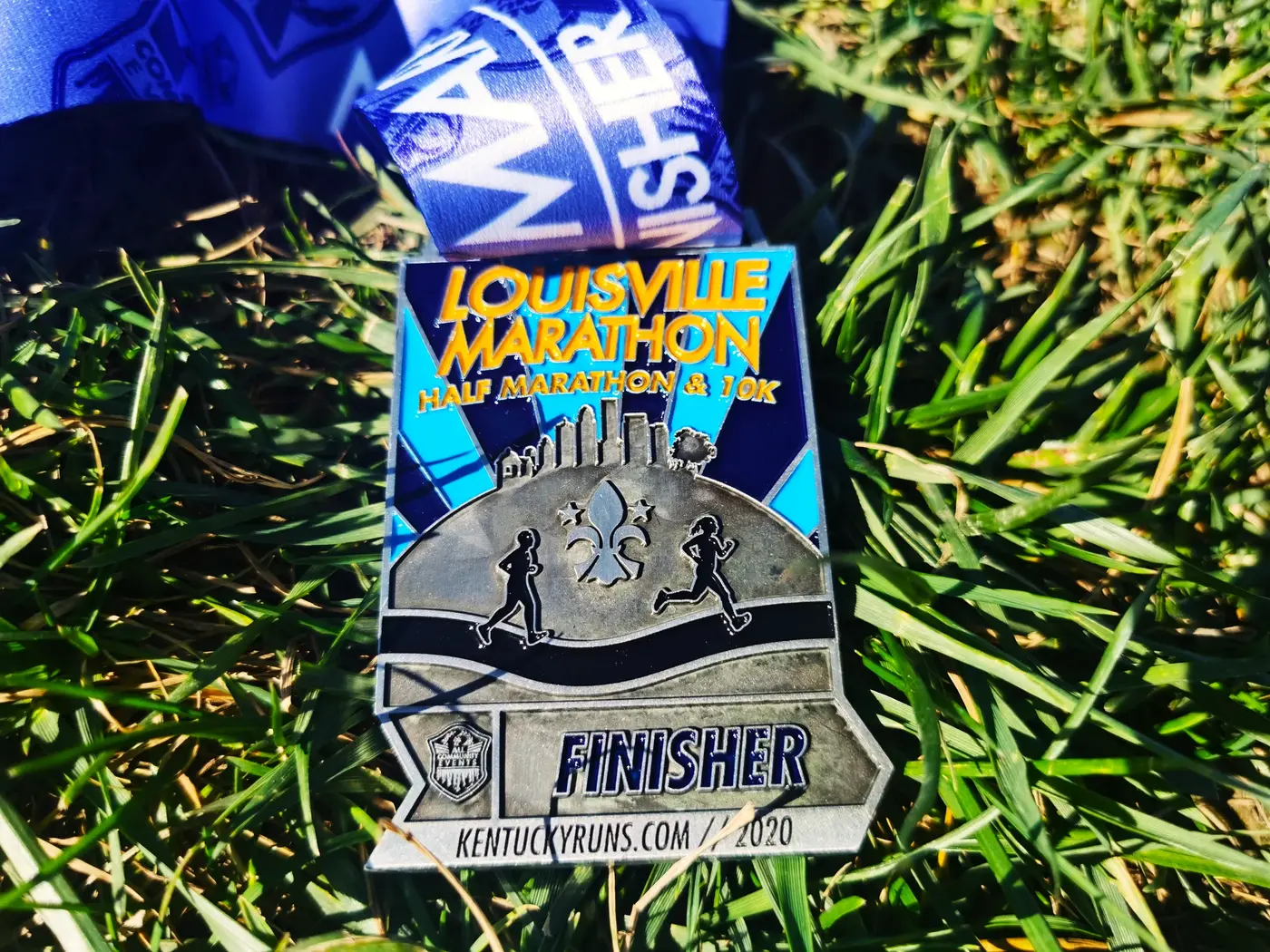
The first official marathon I ran in the United States was the Louisville Marathon.
At the end of 2020, the pandemic was getting serious. I had been in the United States for almost a year, and I ran my first U.S. marathon in Louisville wearing a mask, under autumn sun that was a little too enthusiastic. I was slow, exposed, and very much a beginner.
Four years later, in the fall of 2024, I signed up again. This time I had more hair, lighter steps, better shoes, and a new identity: my dissertation defense was done, and all that remained was the graduation ceremony. Not bad. Dr. ZZ's academic marathon was finally entering the finish chute.
This race was not part of Dr. ZZ's Run50 new-state checklist. But for me, it was the closing act of a five-year PhD life.
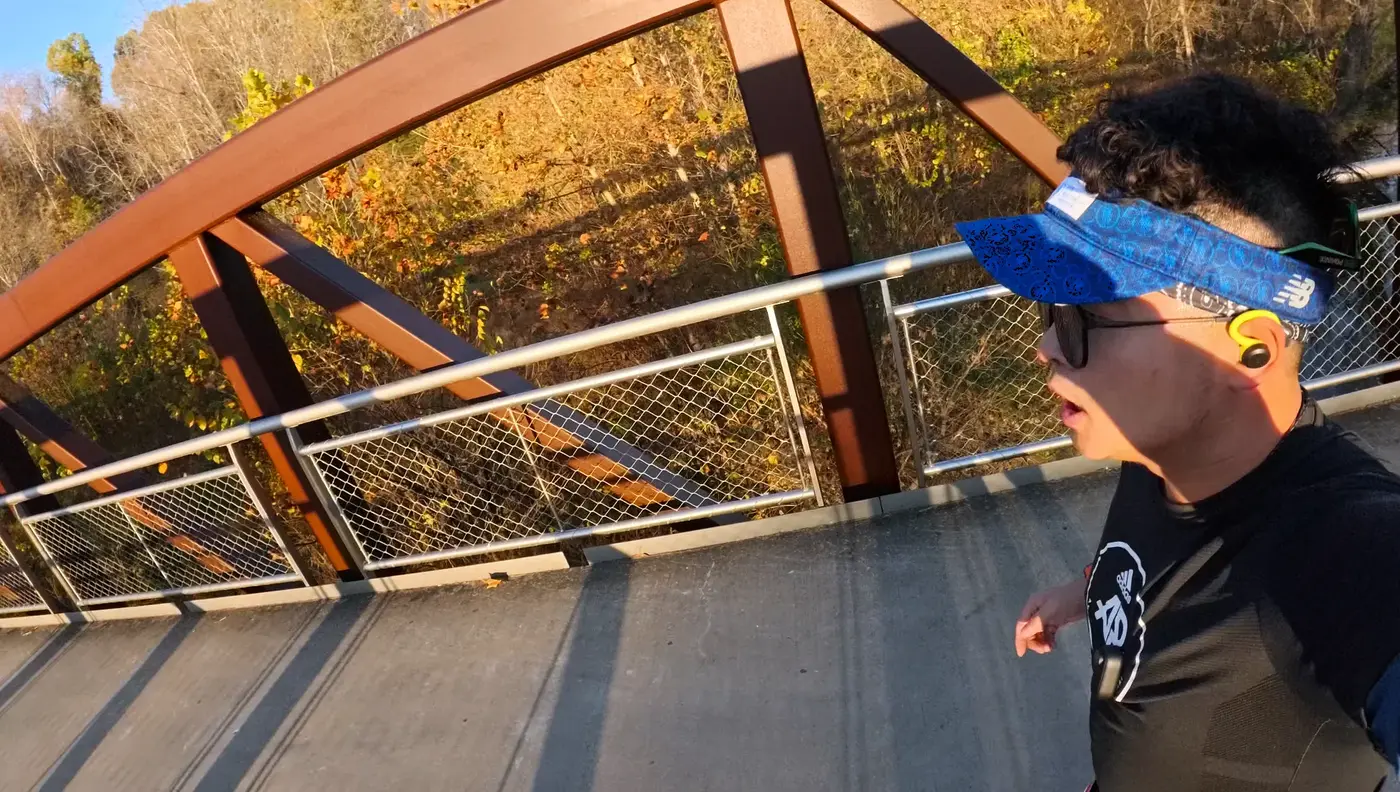
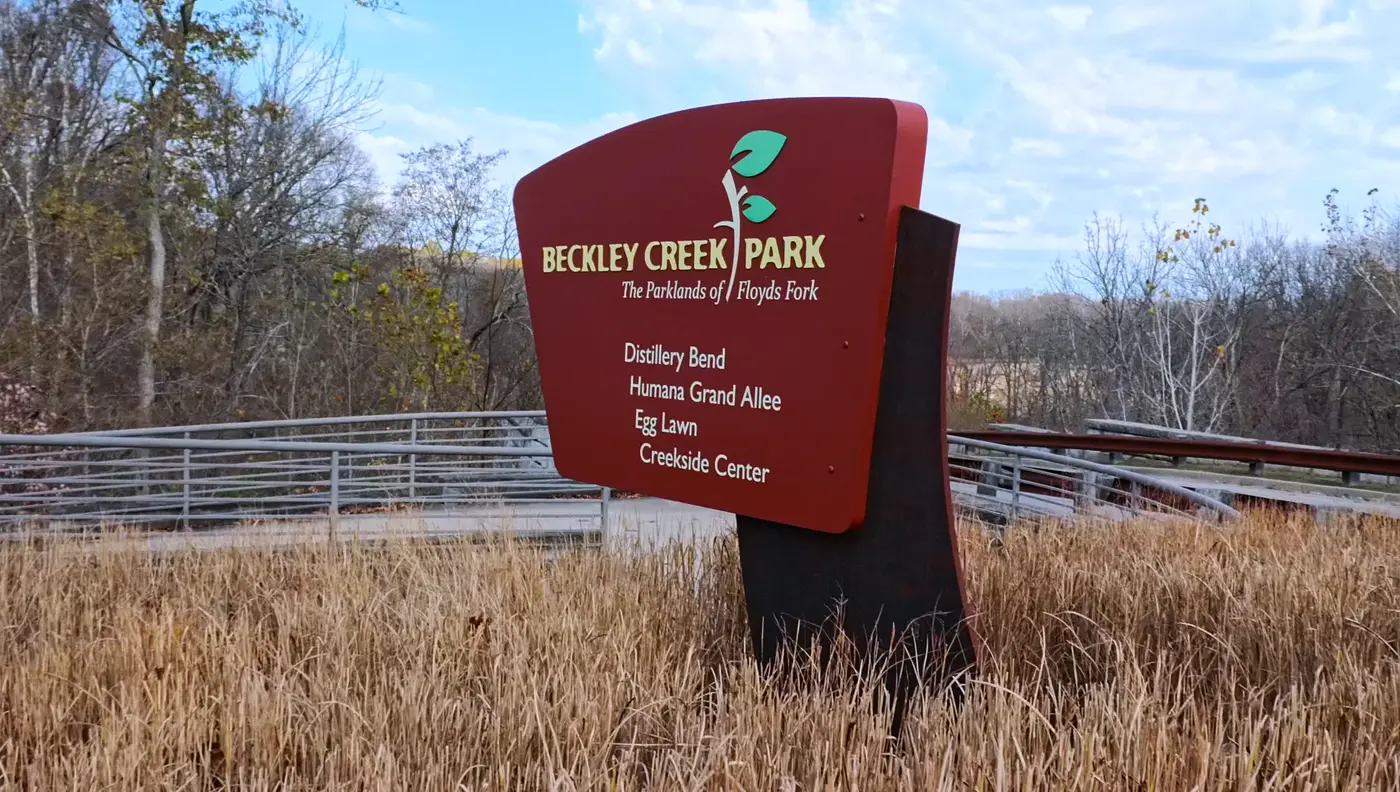
The Louisville Marathon course sits in Floyds Fork Park on the east side of town. No big-city noise, just winding paved paths, woods, and small bridges, ideal terrain for overthinking your entire life. The finish is on Egg Lawn, and the course is USATF certified and Boston-qualifier eligible.
To be honest, BQ still has very little to do with me, at least for now. But this marathon has marked two turning points in my life, like a complete loop: 2020, the beginning of my American marathon life; 2024, the end of my PhD chapter.
That feels like a proper beginning and ending. The Louisville Marathon has watched me go from mask to tassel, from a rookie marathoner in America to someone who has run in 22 states. I am still not fast, but at least I have become a slightly legendary Doctor Runner.
Chapter 1 | Early Start · Ten Fresh Miles
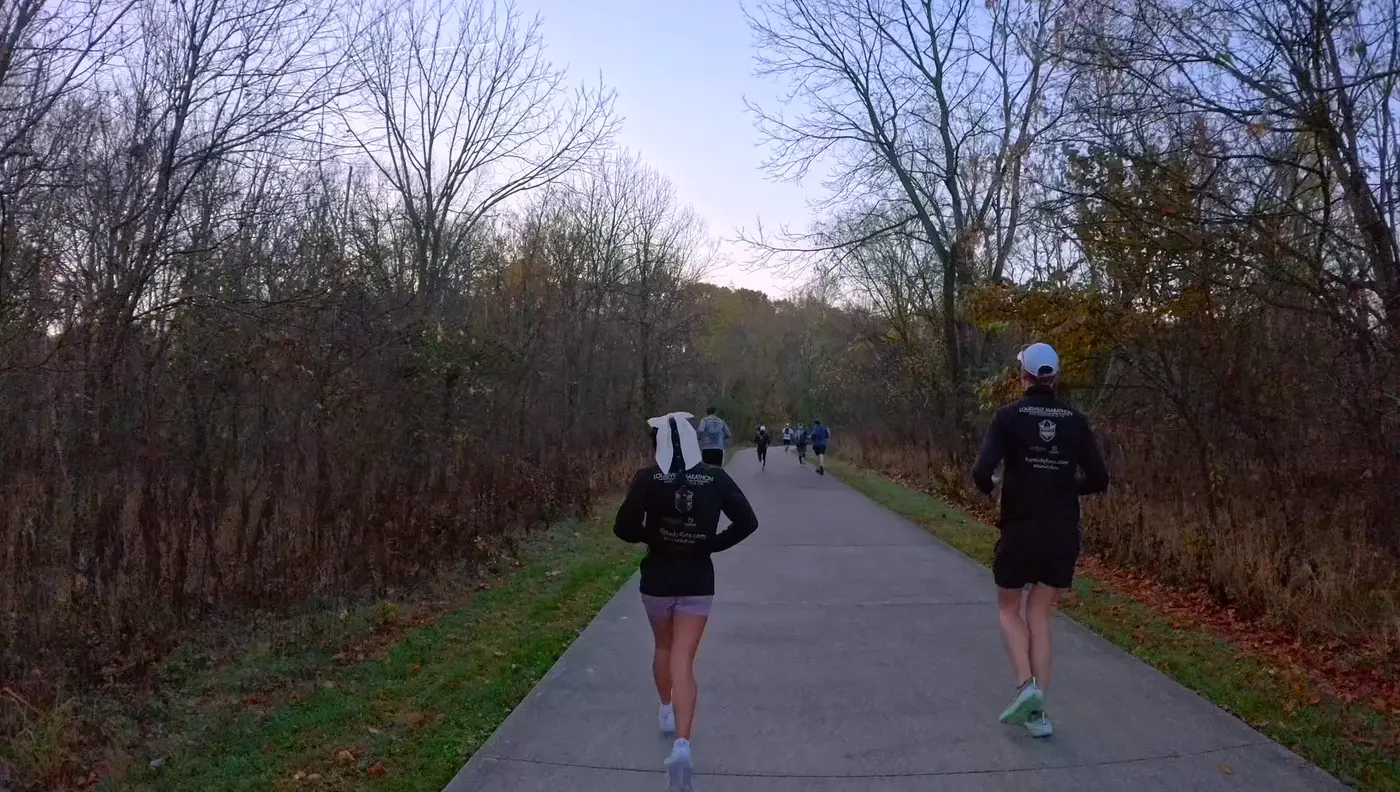
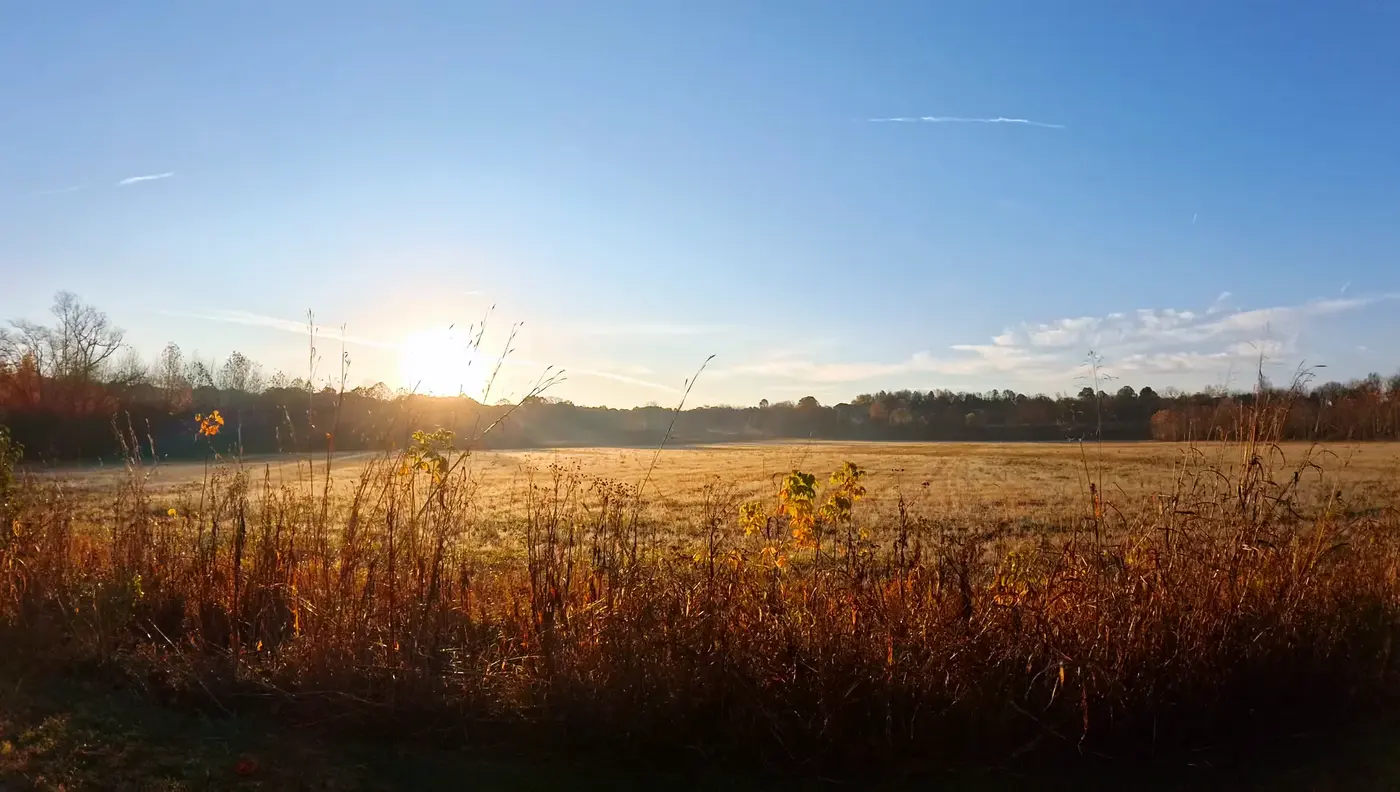
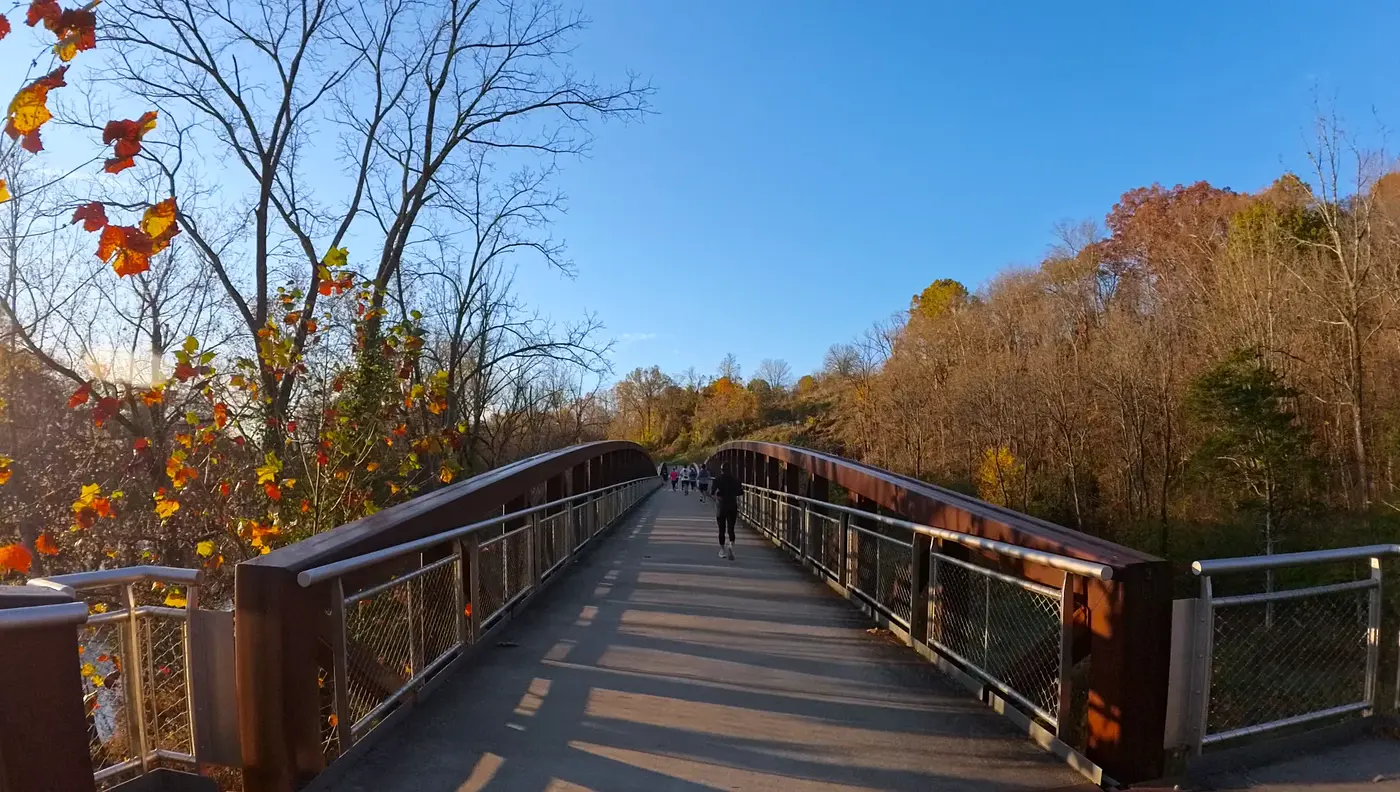
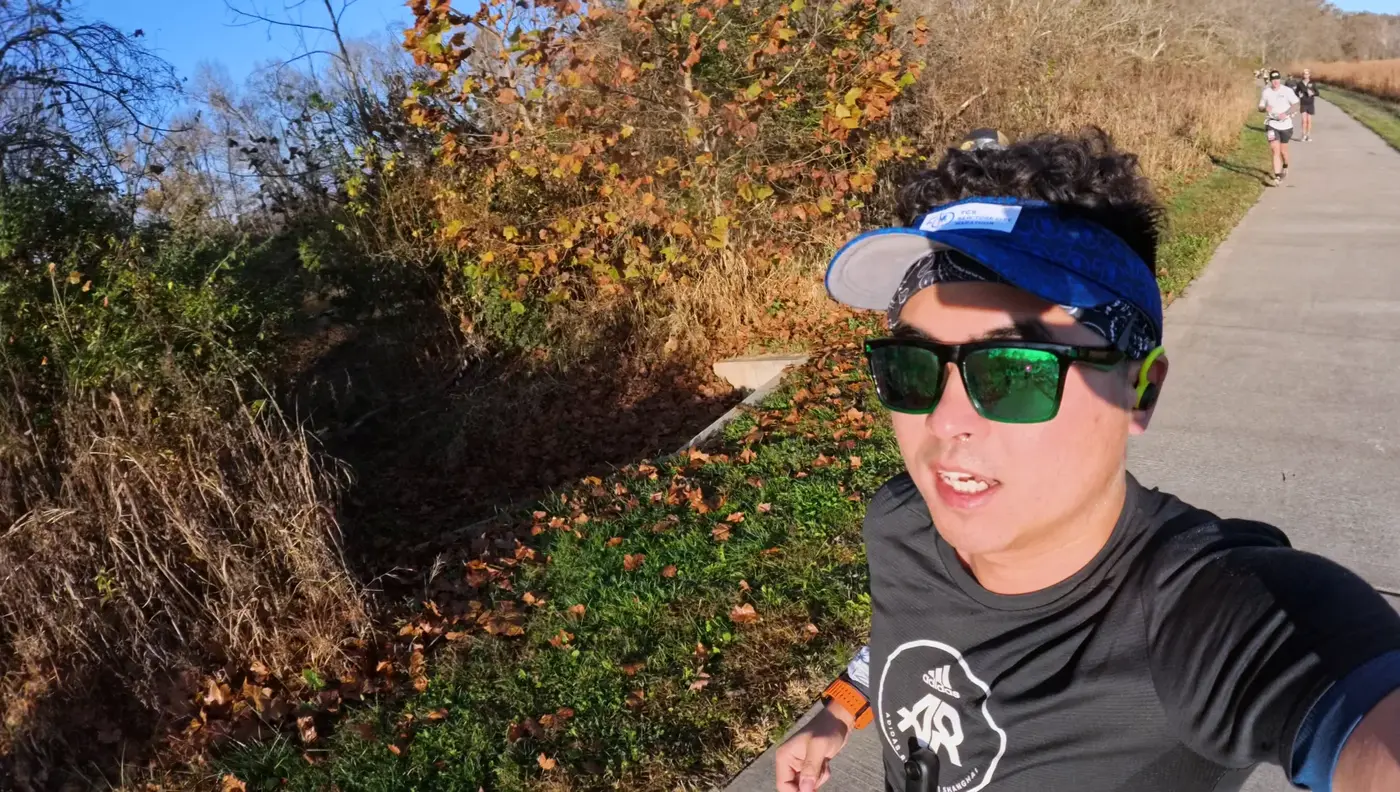
Autumn in Louisville had turned yellow. Leaves fell one by one, and the ground crunched underfoot. The horizon slowly lit up, layered over yellow fields, and everything looked quietly comfortable.
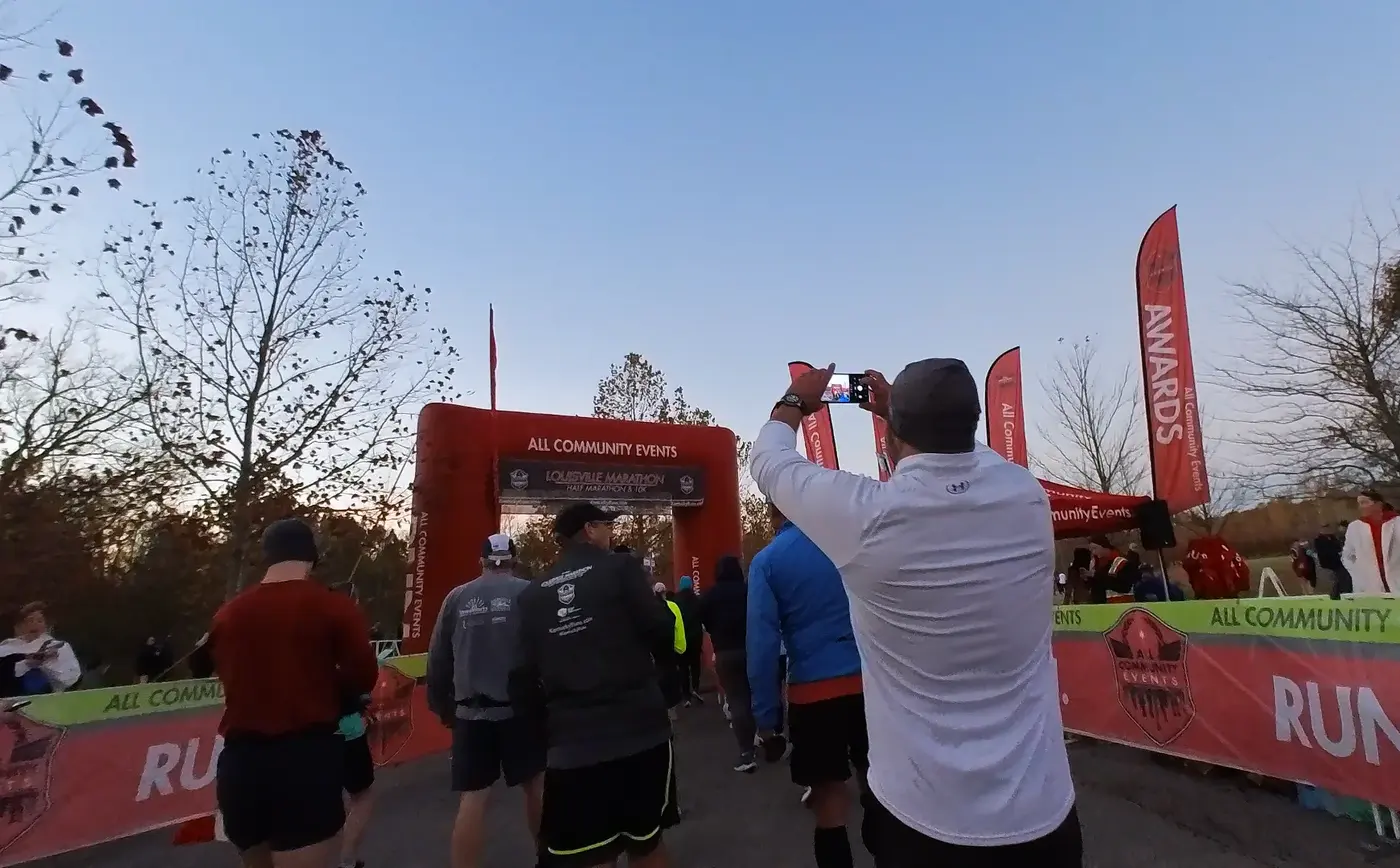
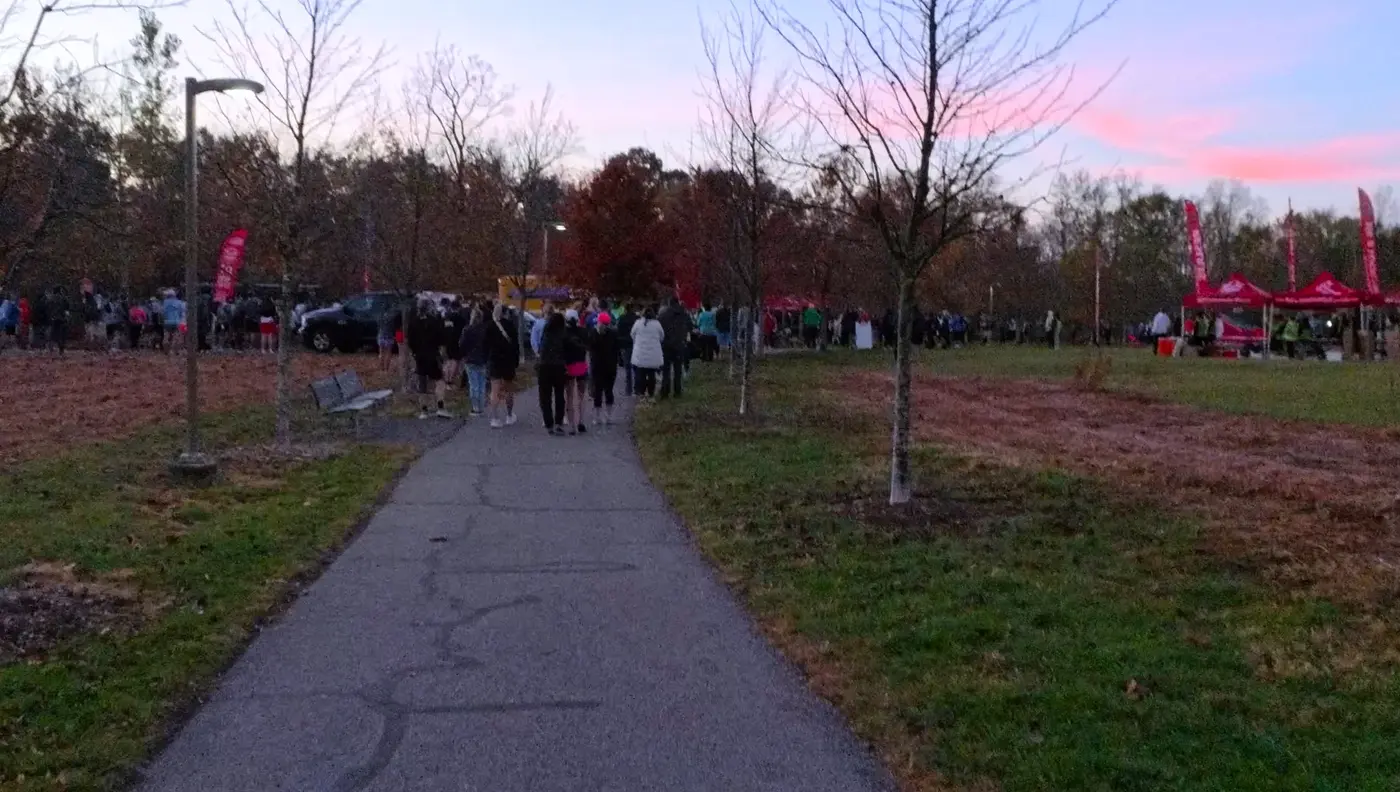
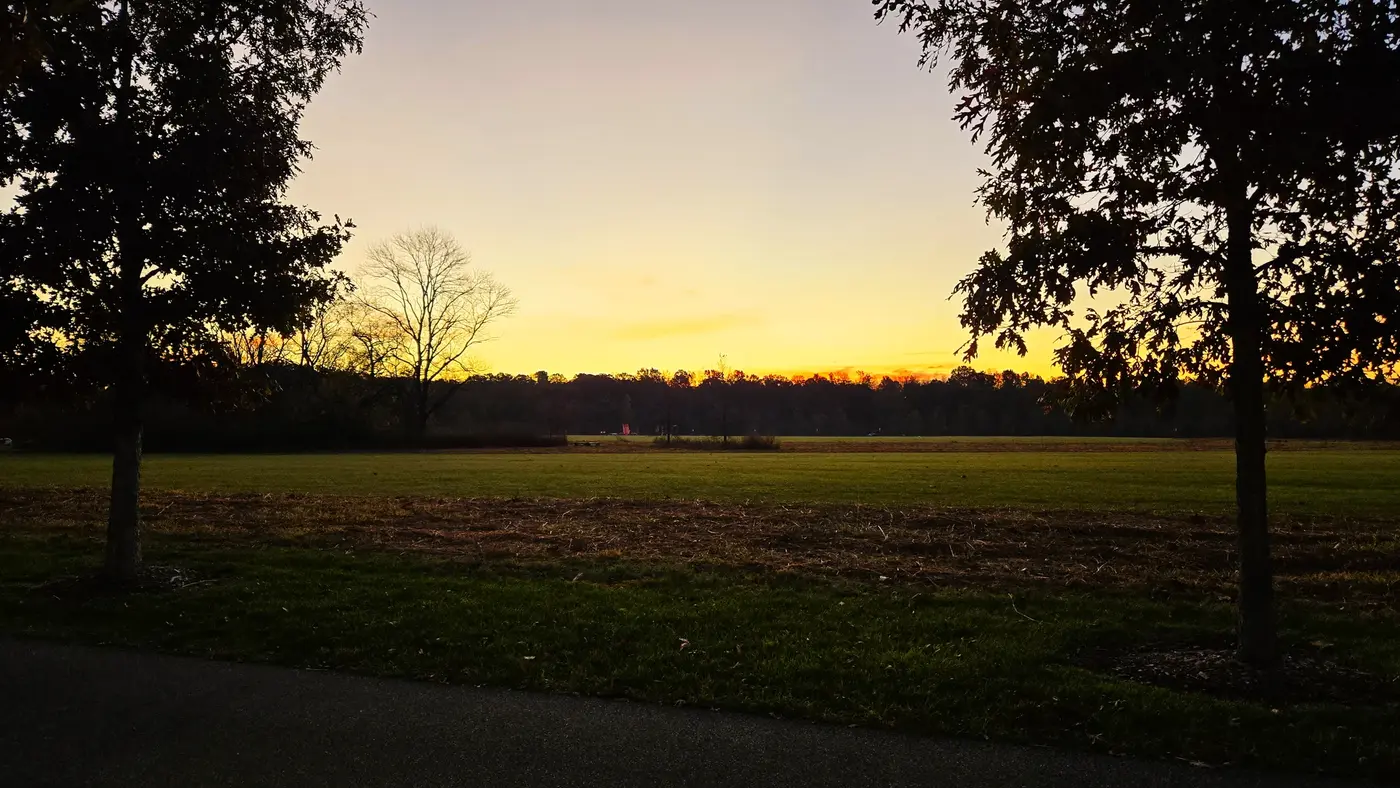
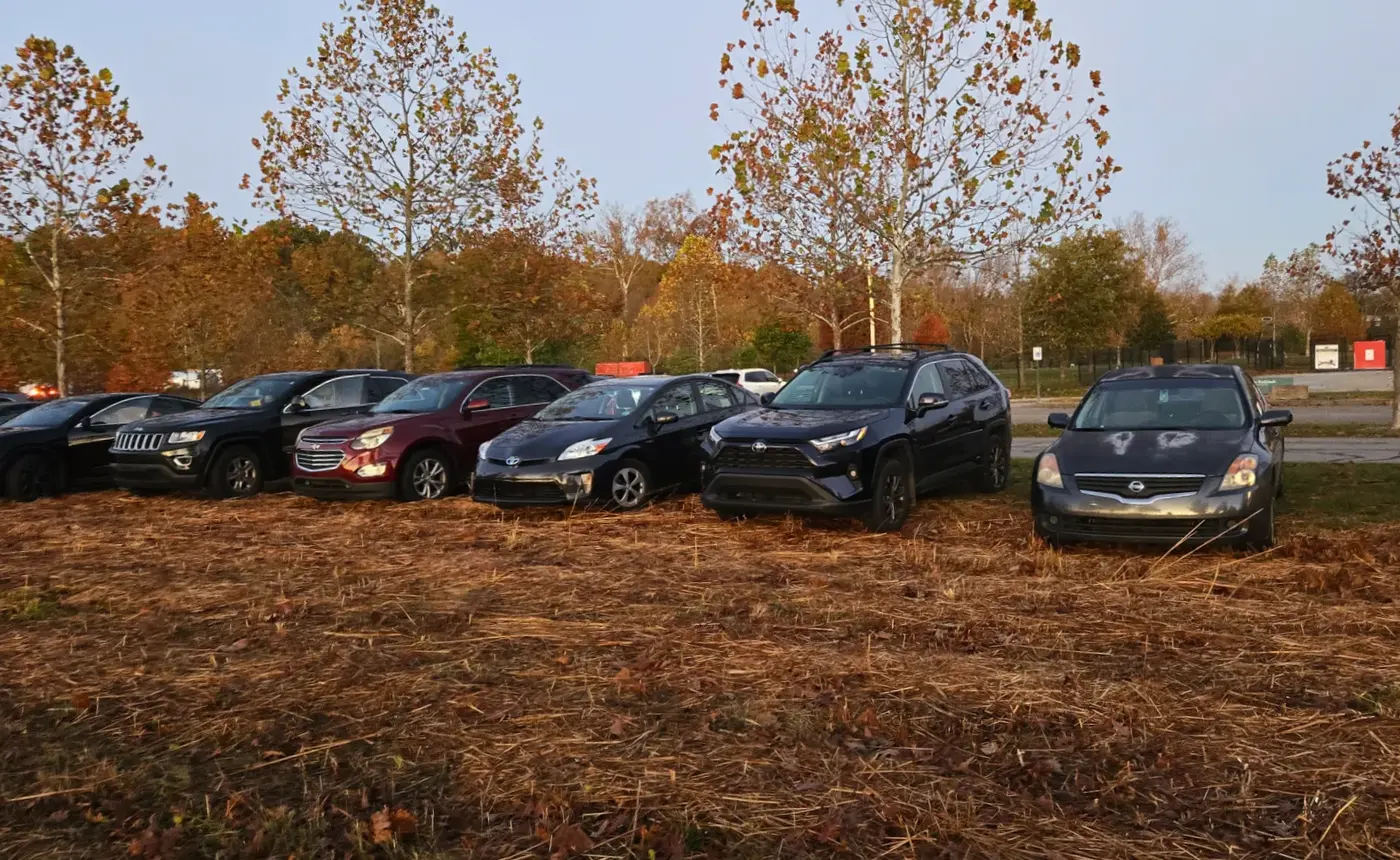
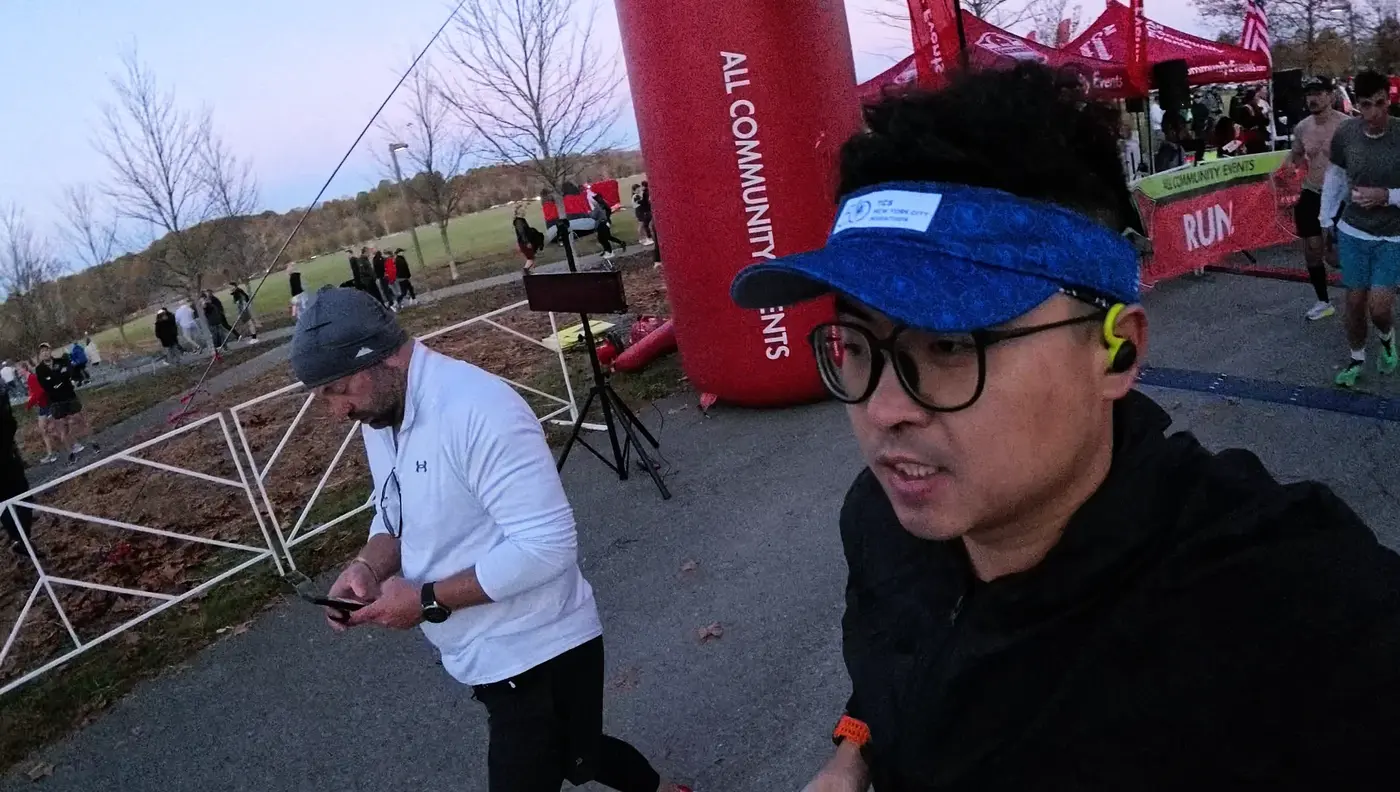
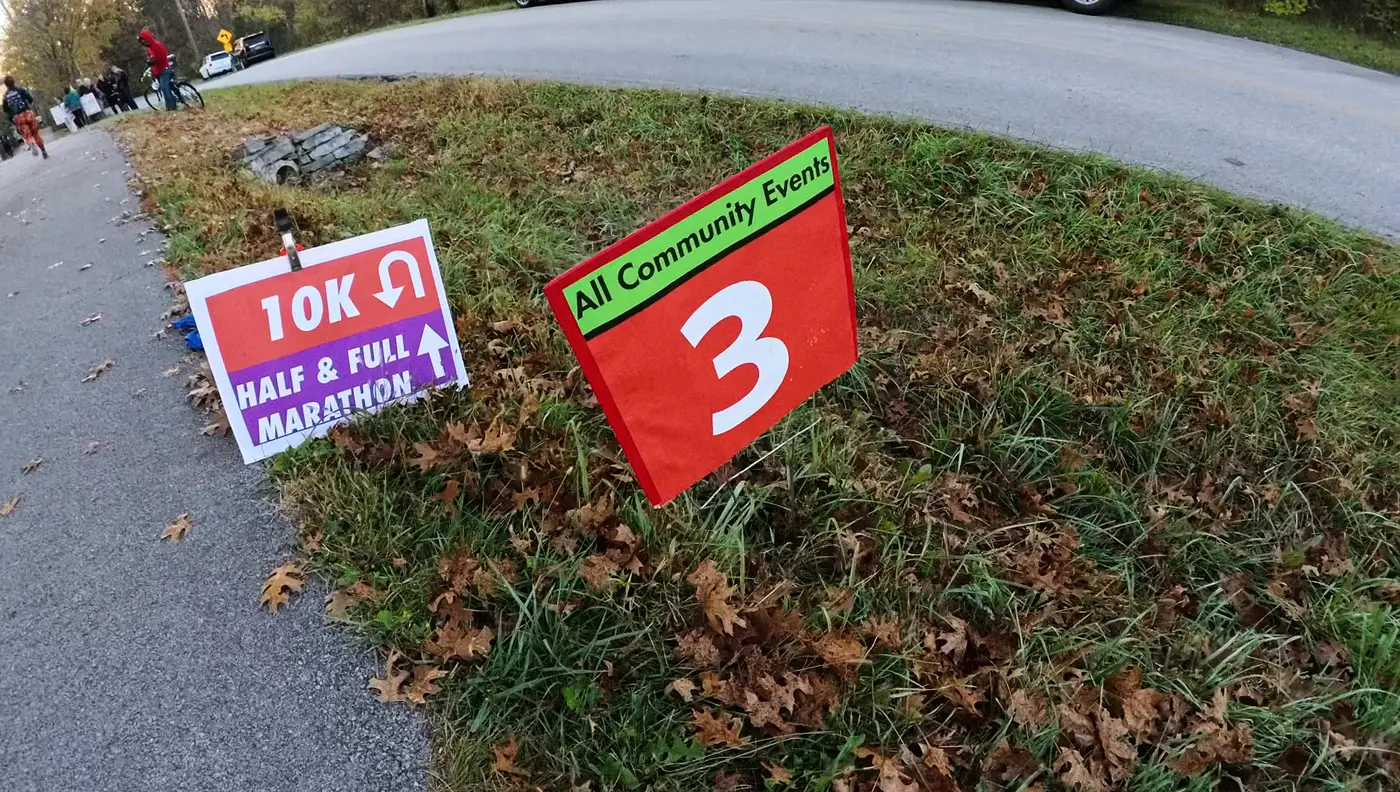
I parked in the grass lot and followed the crowd toward the start. The race is not huge, but there were plenty of people, and the red arch was easy to spot. Runners stood in small groups, warming up and chatting. I wore an old jacket and planned to toss it once I got warm.
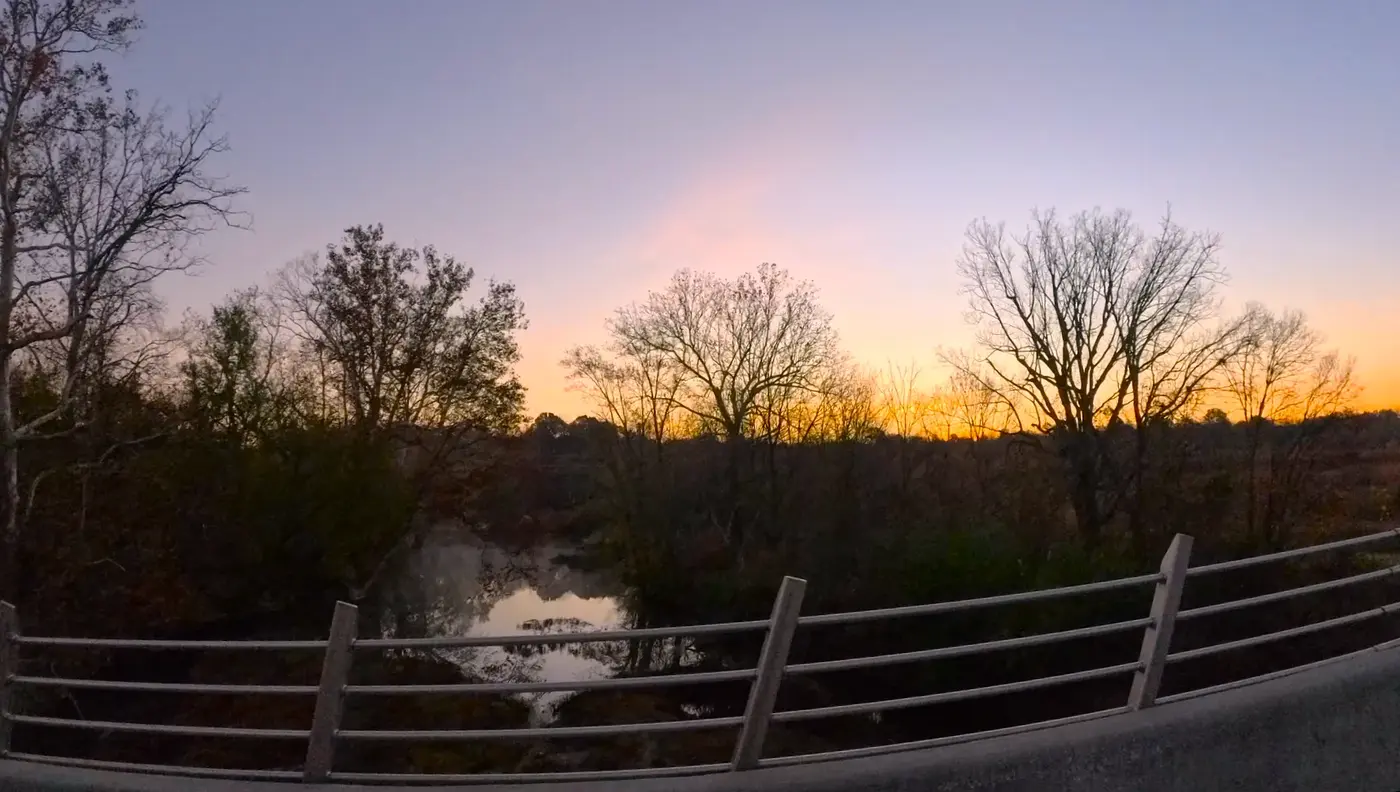
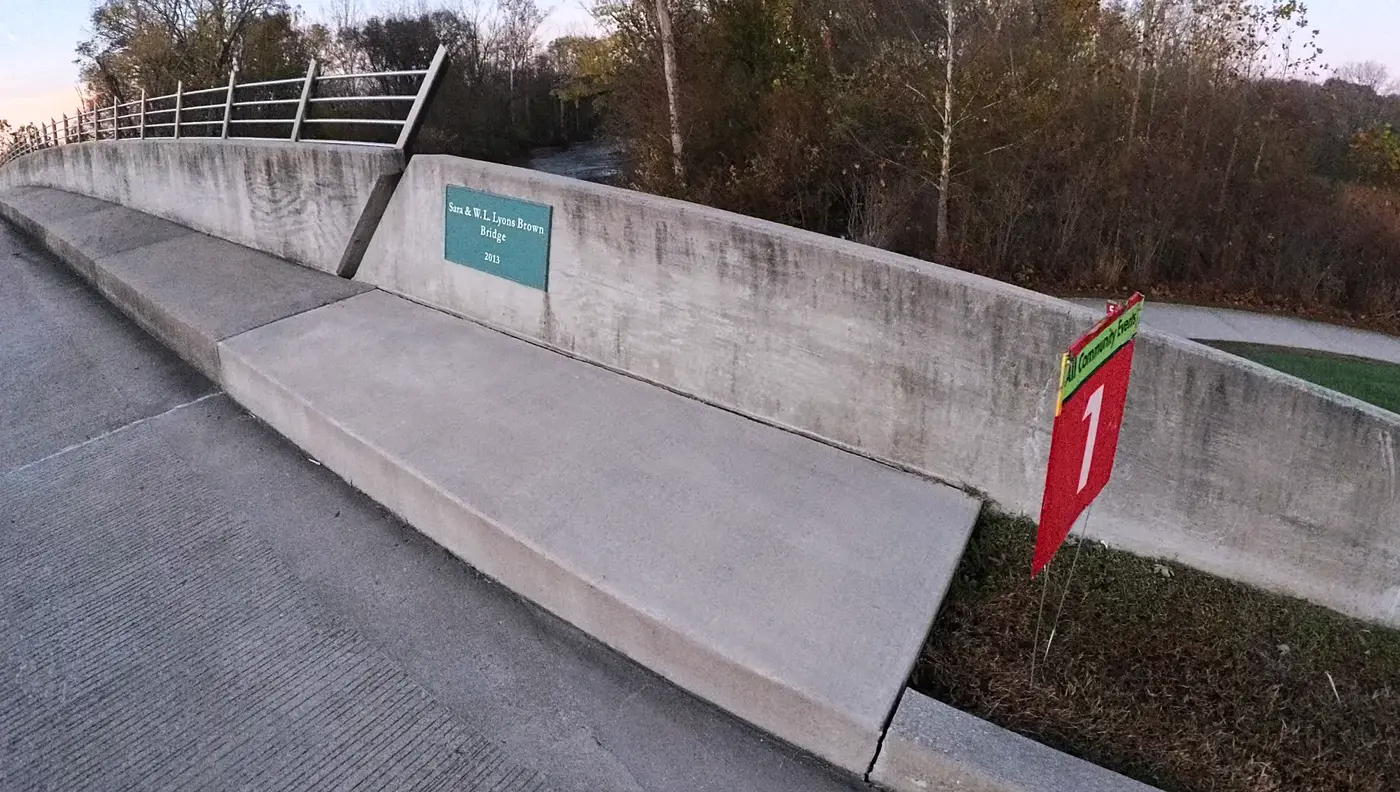
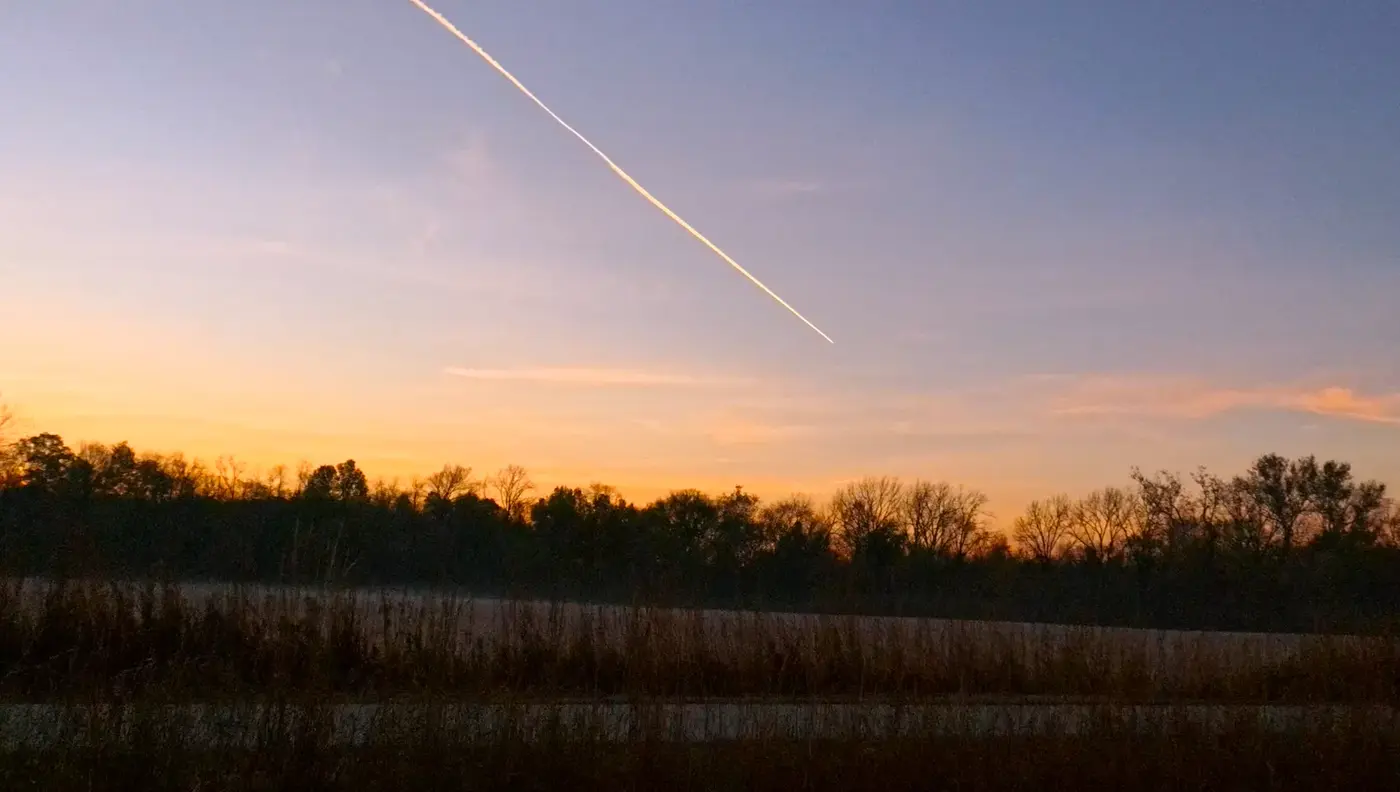
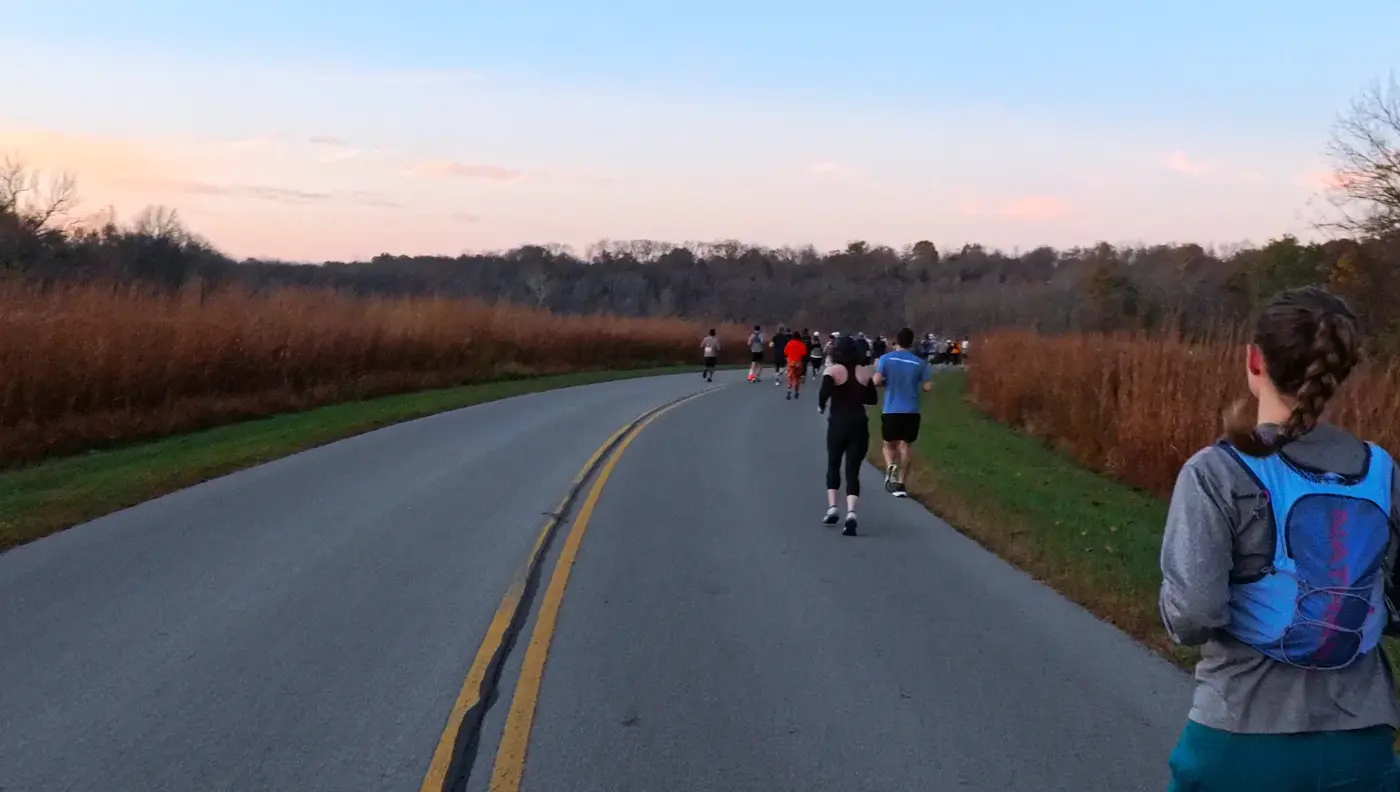
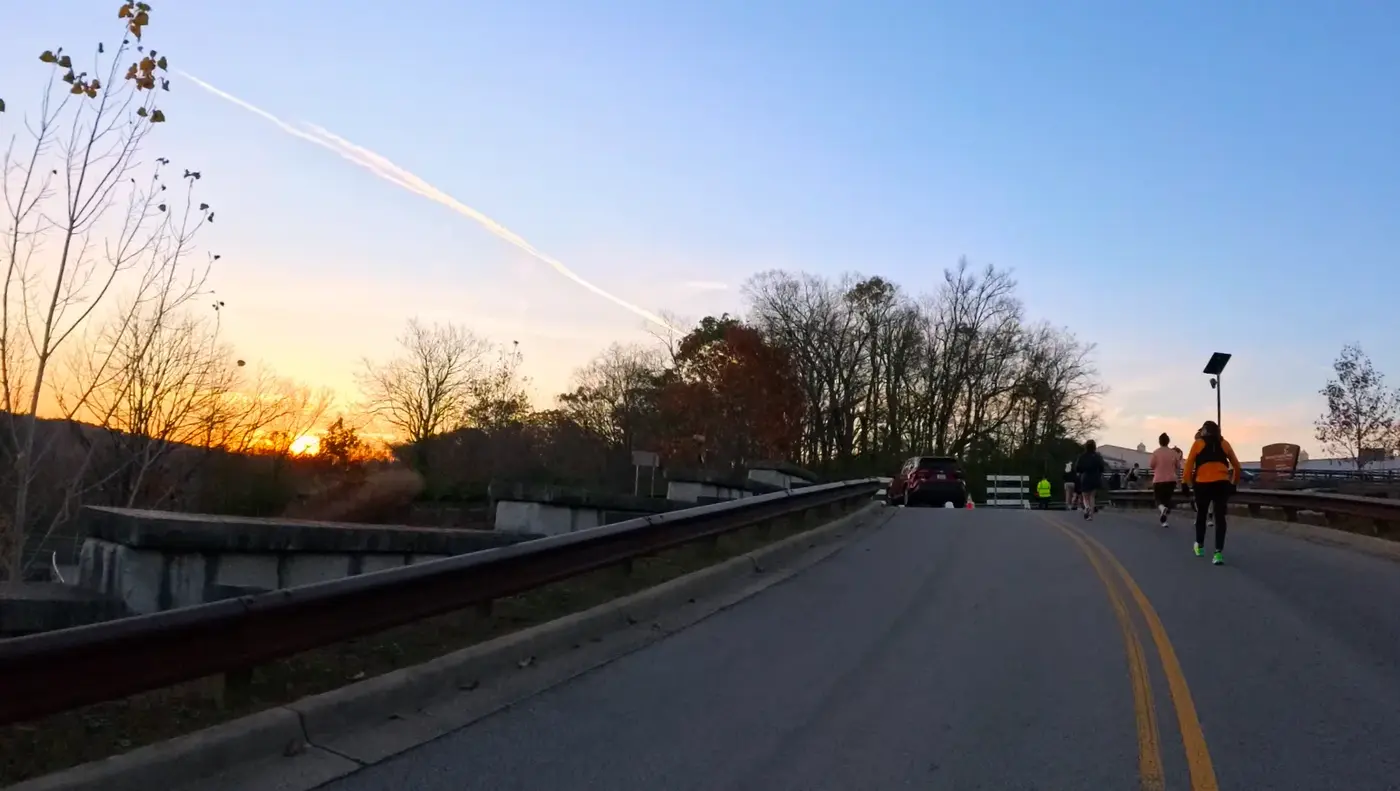
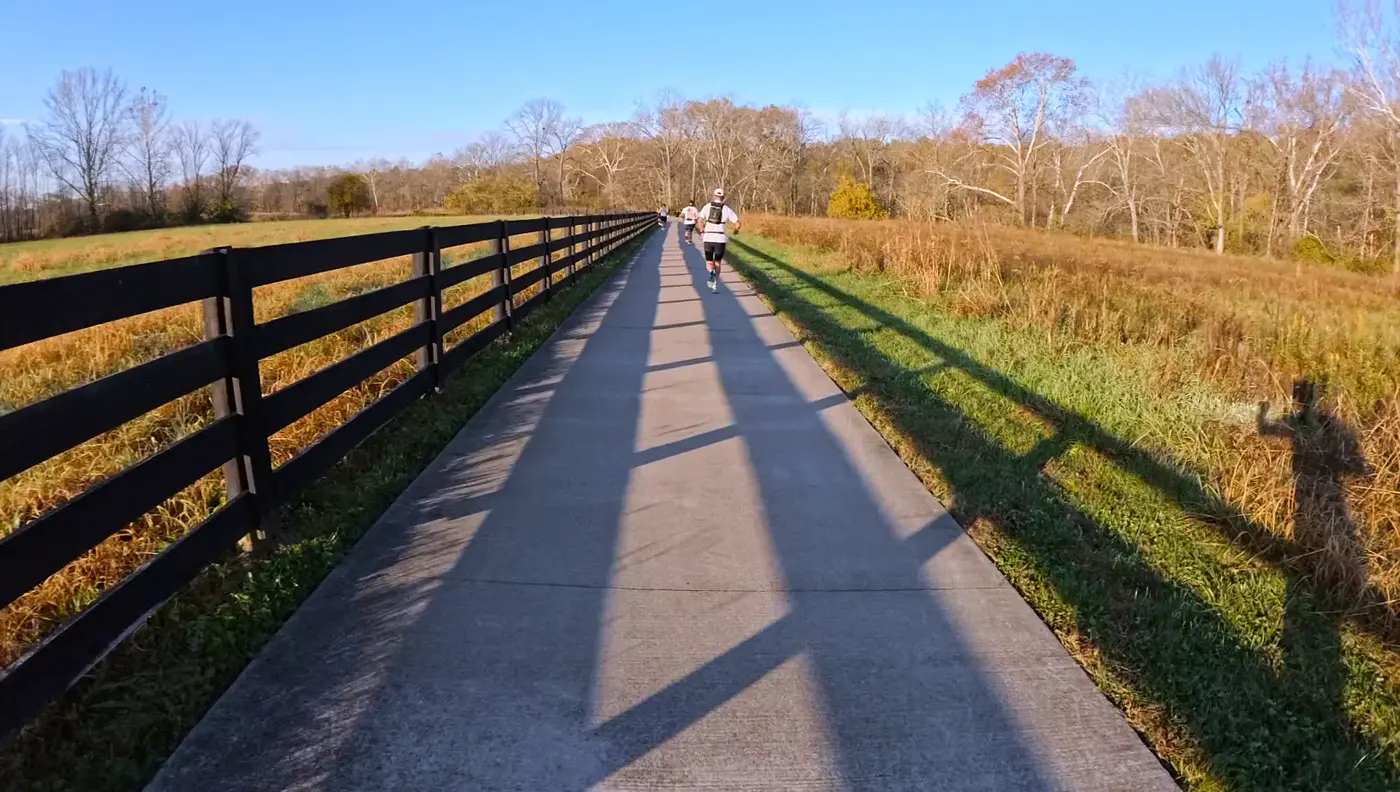
Once we started, the air was cool and clean. It was not crowded, and everyone had room to settle into their own rhythm. The sky felt high, the grassland wide, and I moved forward with the stubborn confidence I had when I first began my PhD.
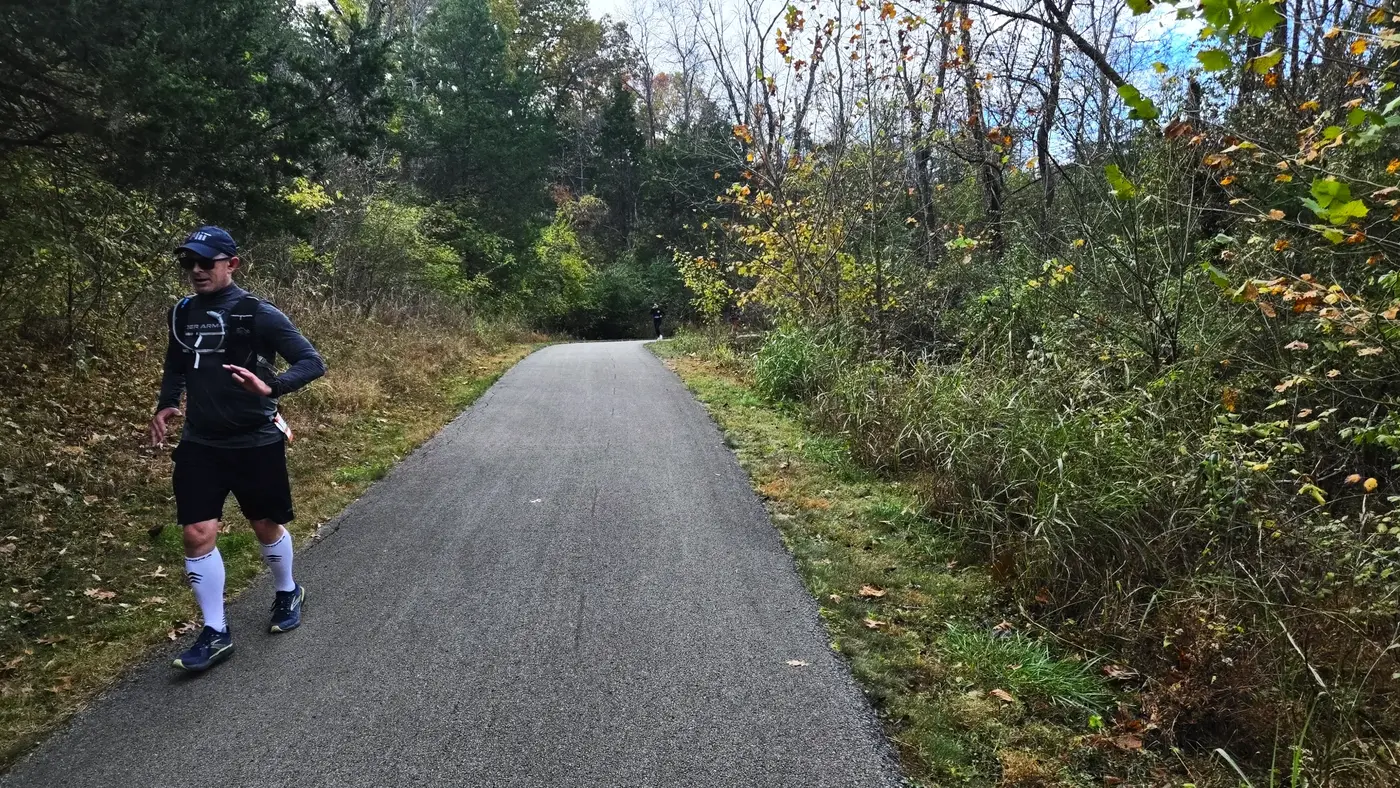
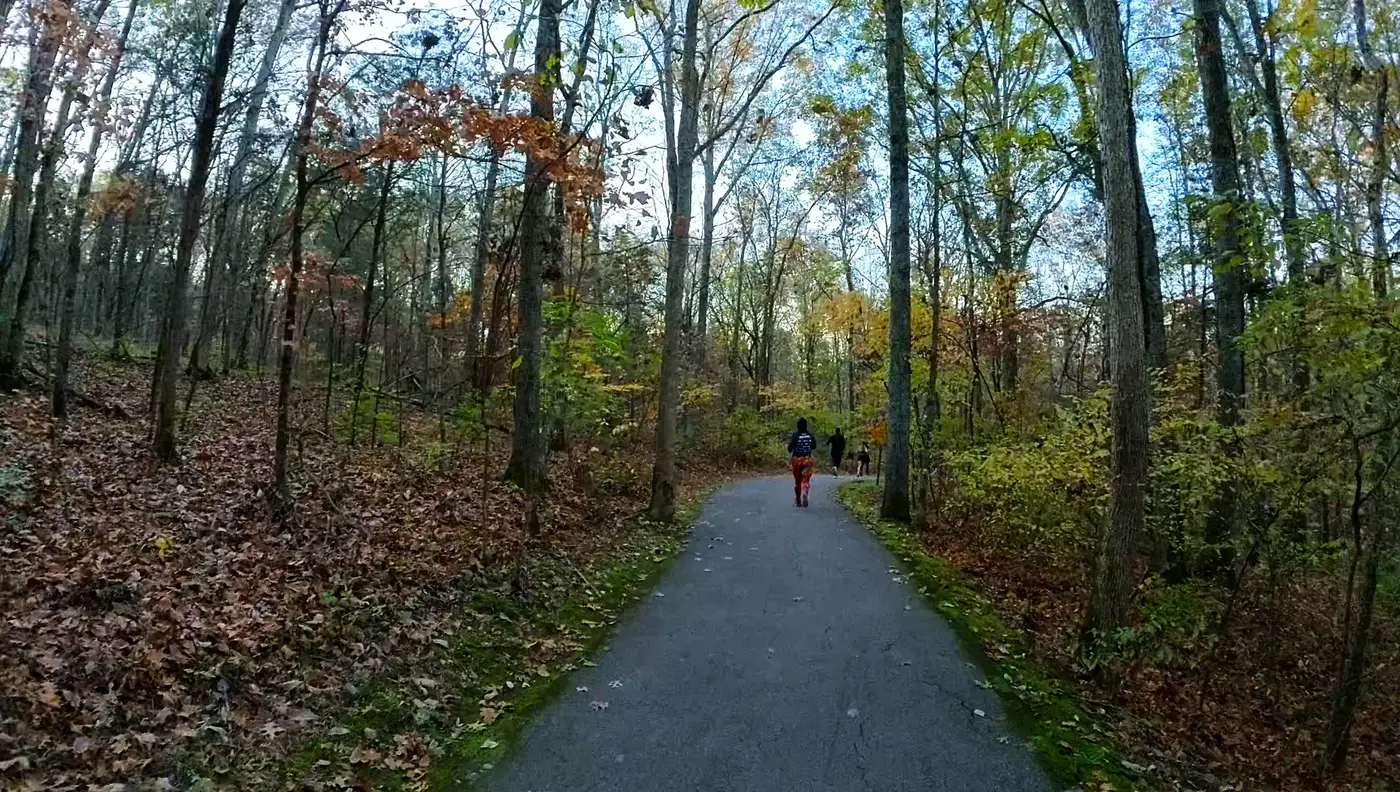
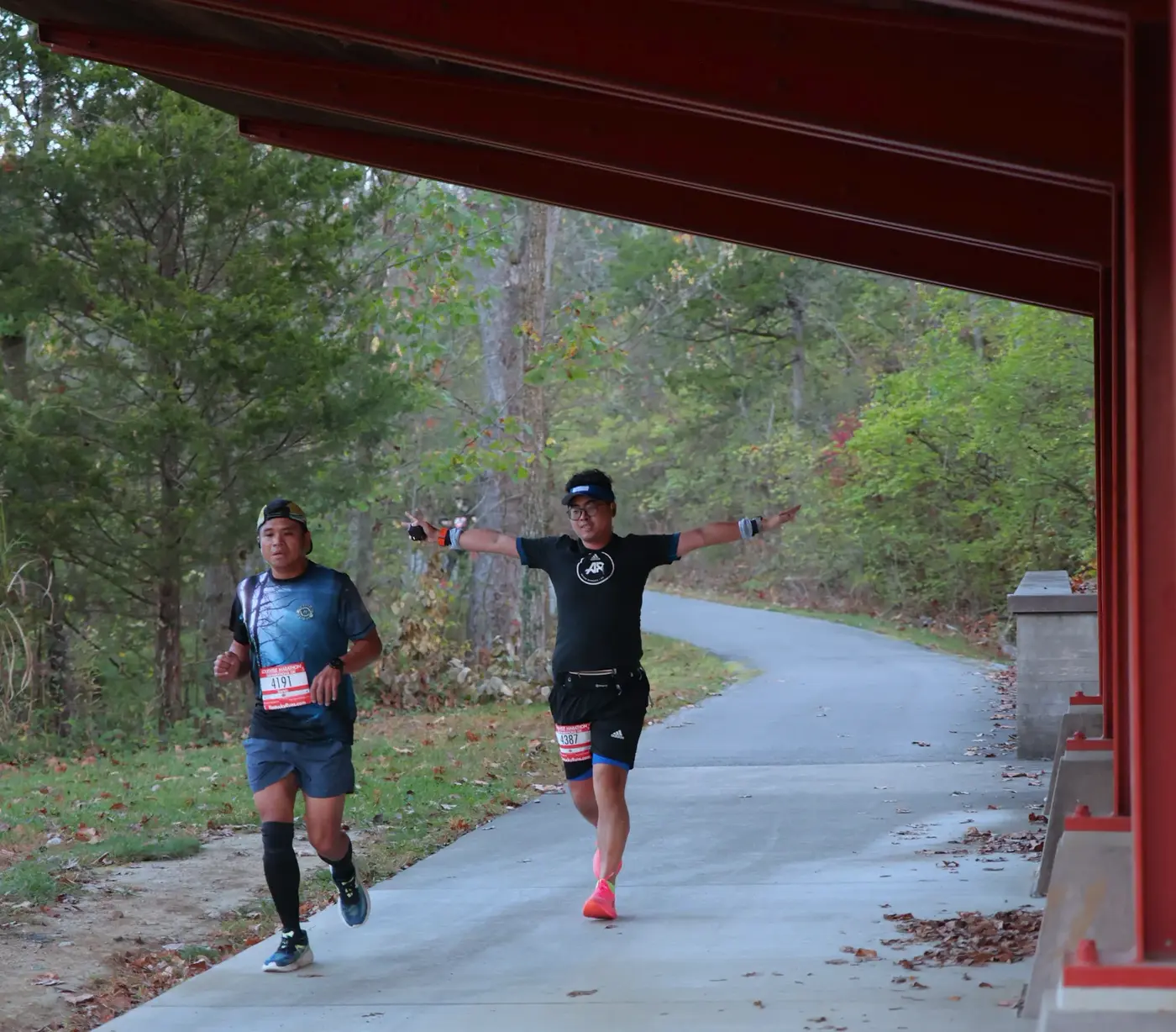
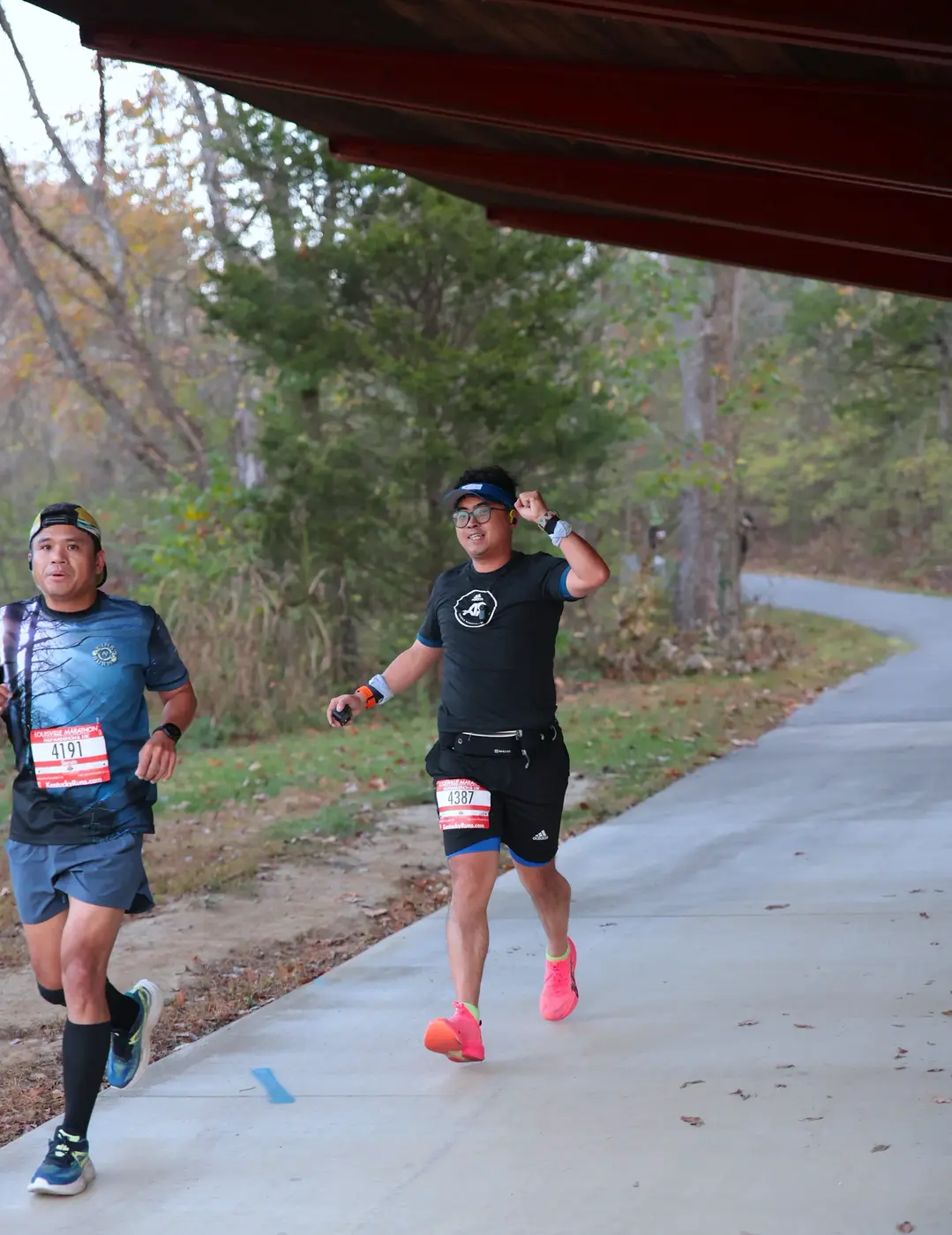
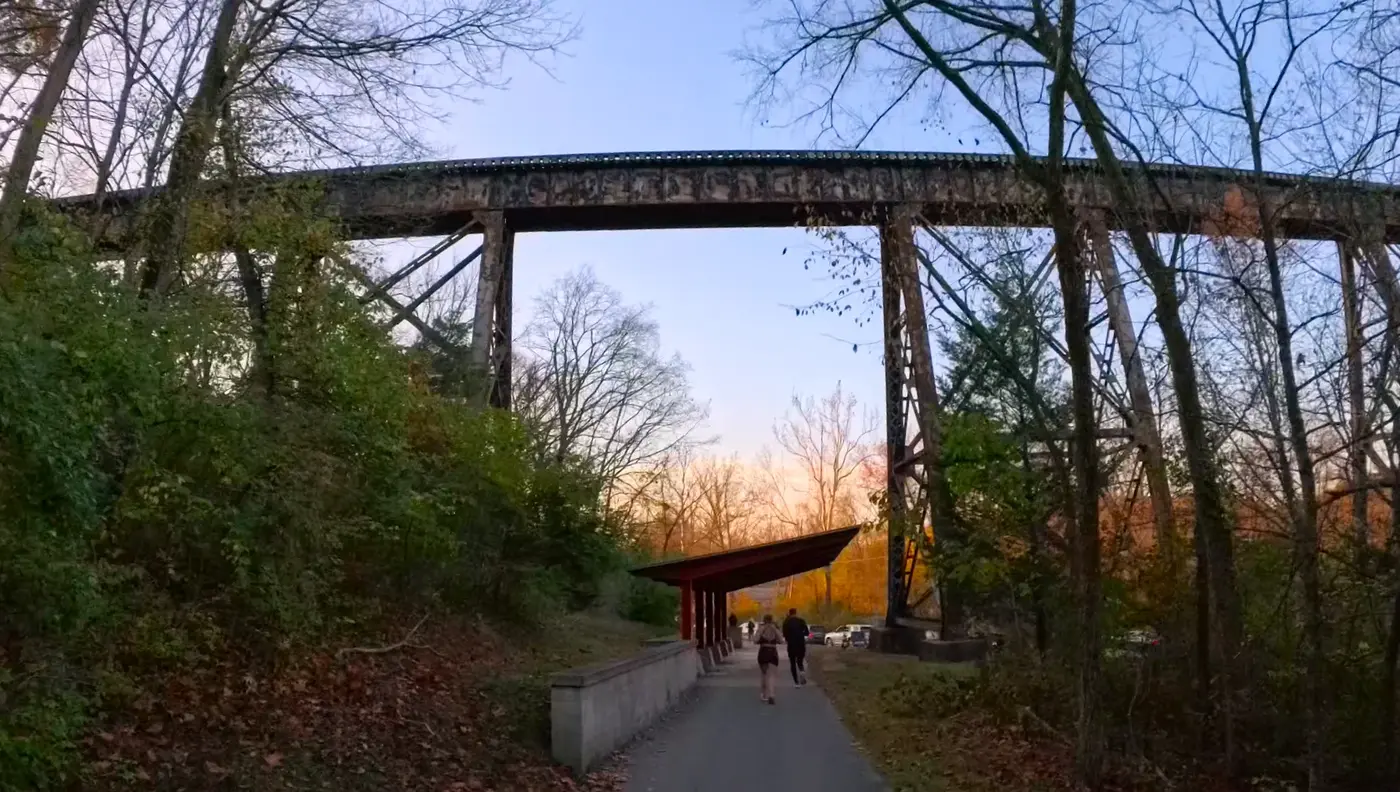
The sun had just come up, and the river flashed gold. Two miles in, the woods still held some green. Around mile 3, the course passed under the tall Norfolk Southern Railway Bridge. Beneath it were photos and flowers for a girl, likely a community memorial.
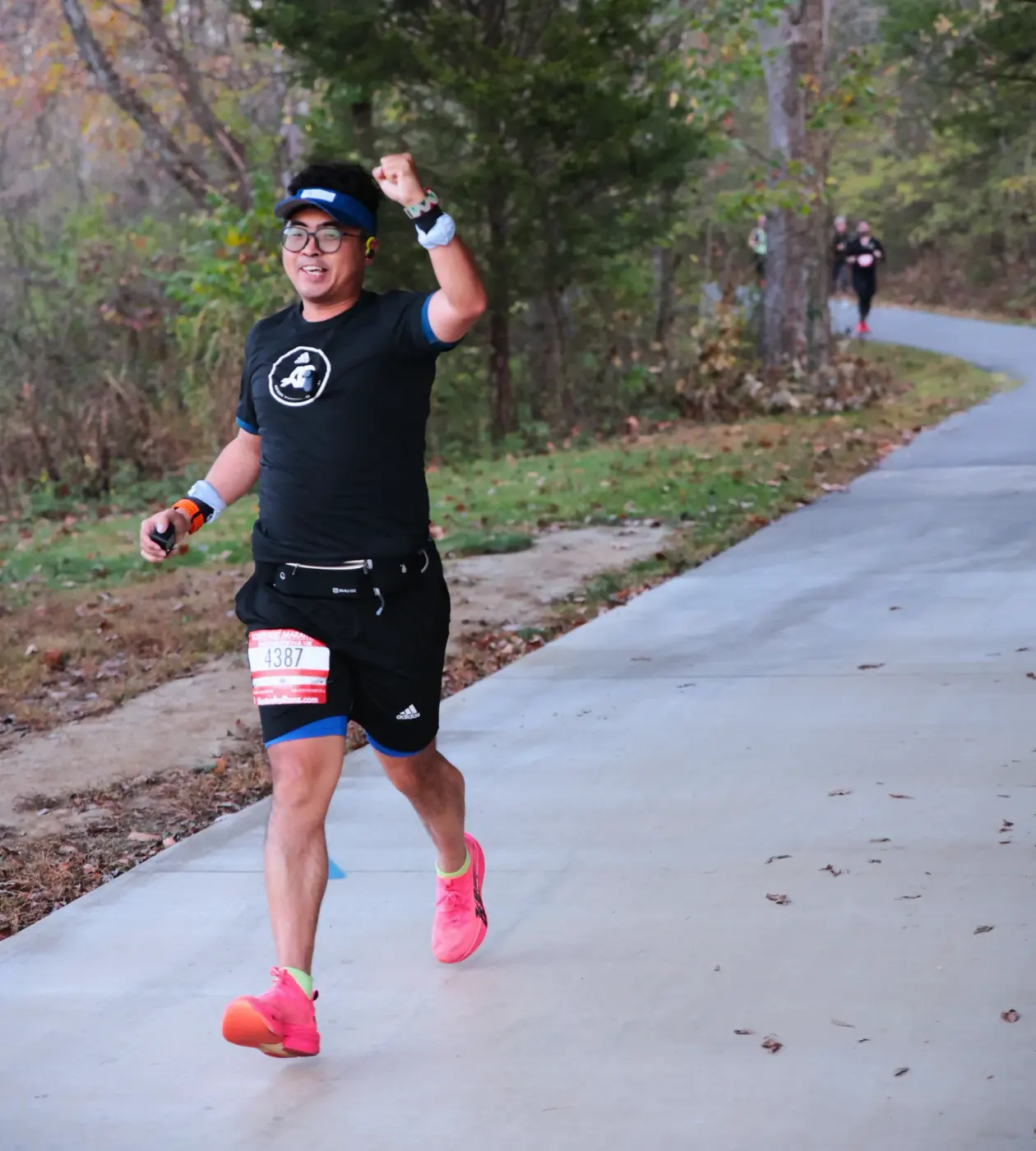
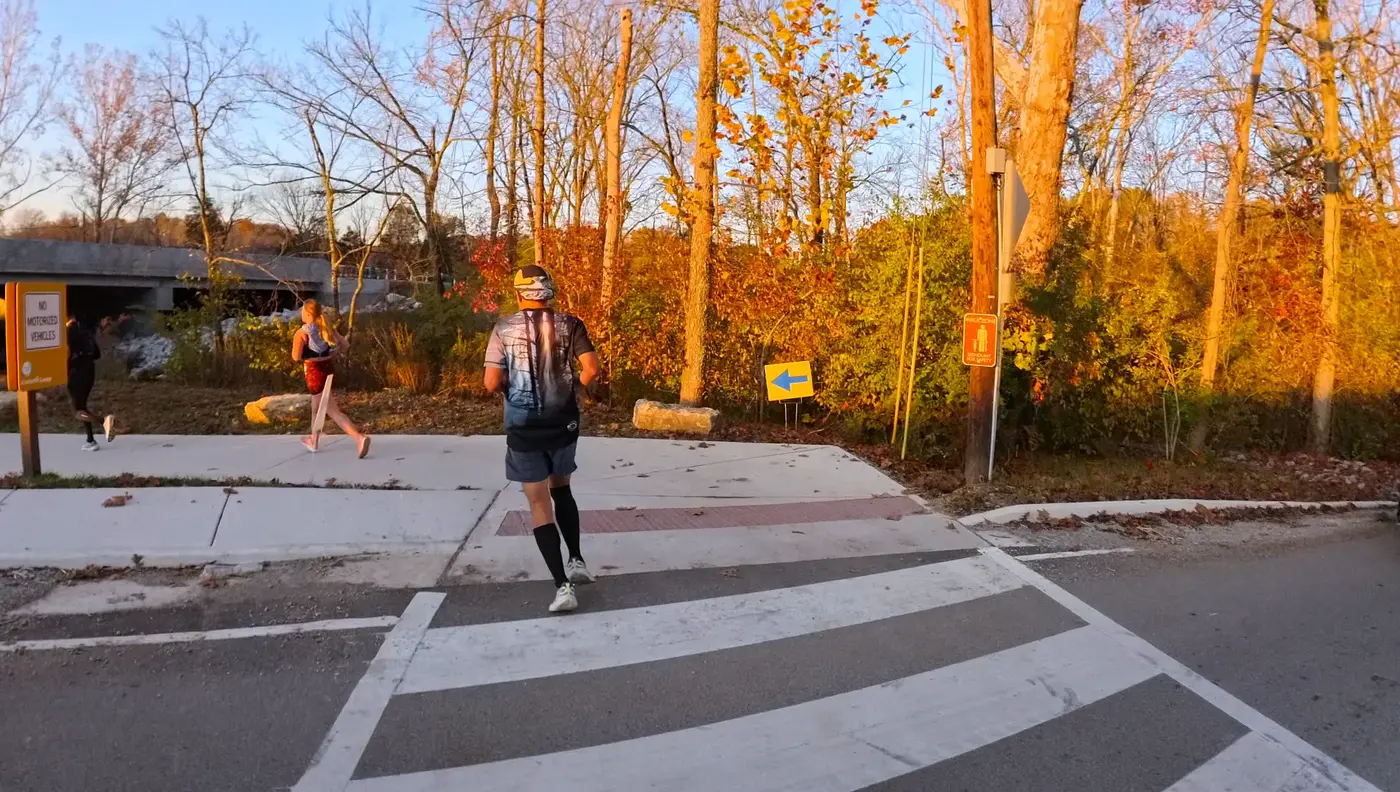
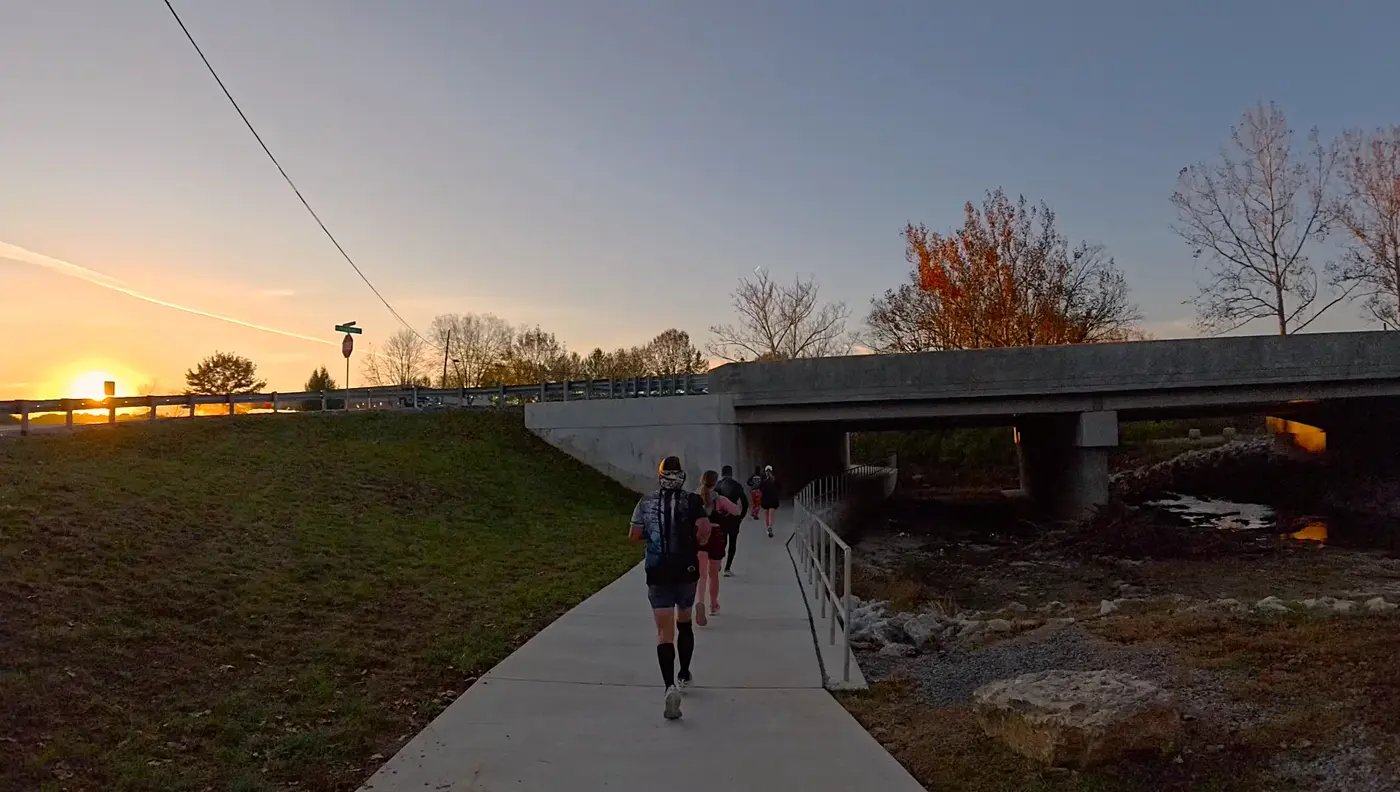
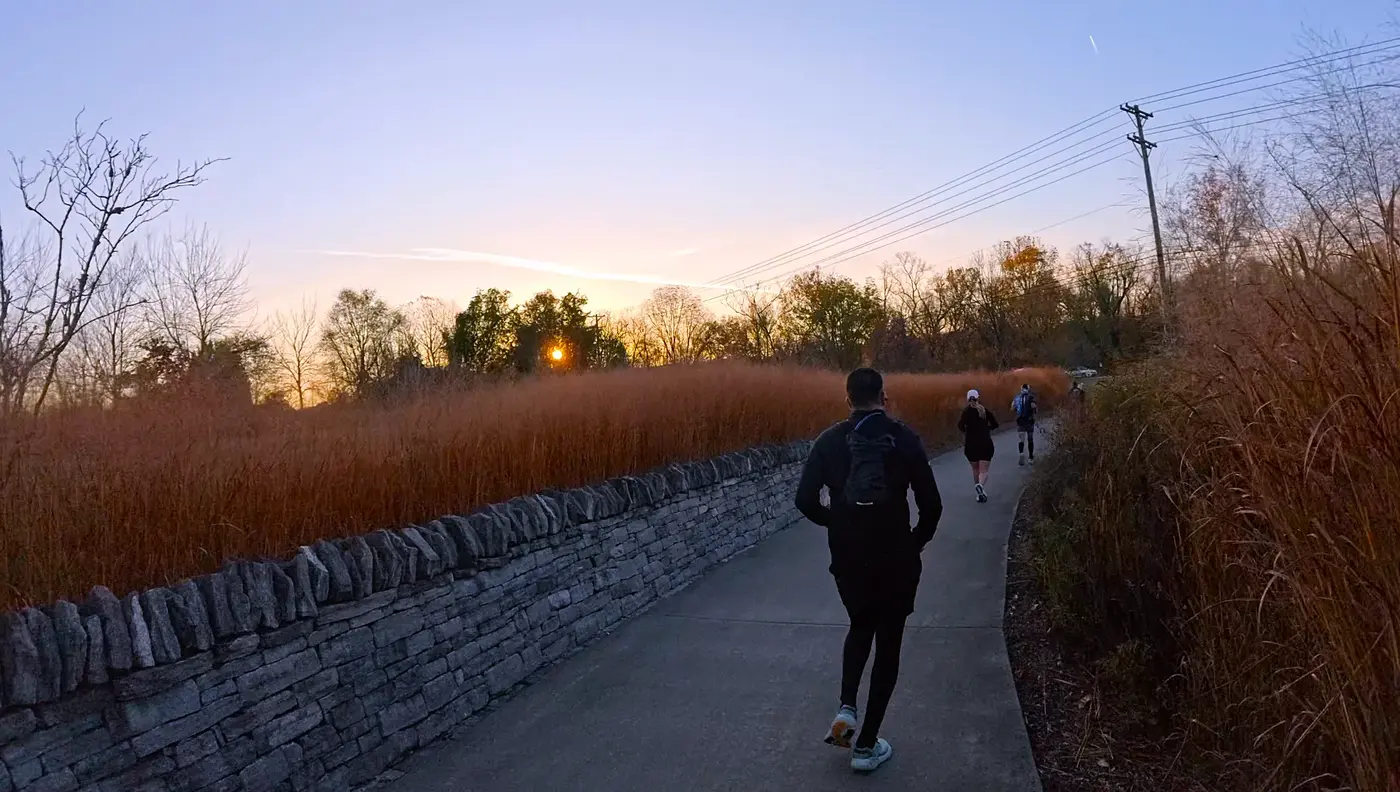
After about five miles, the sun was fully up. Reeds spread out on both sides, and the side light stretched my shadow long across the ground. It felt like I was running beside another version of myself.
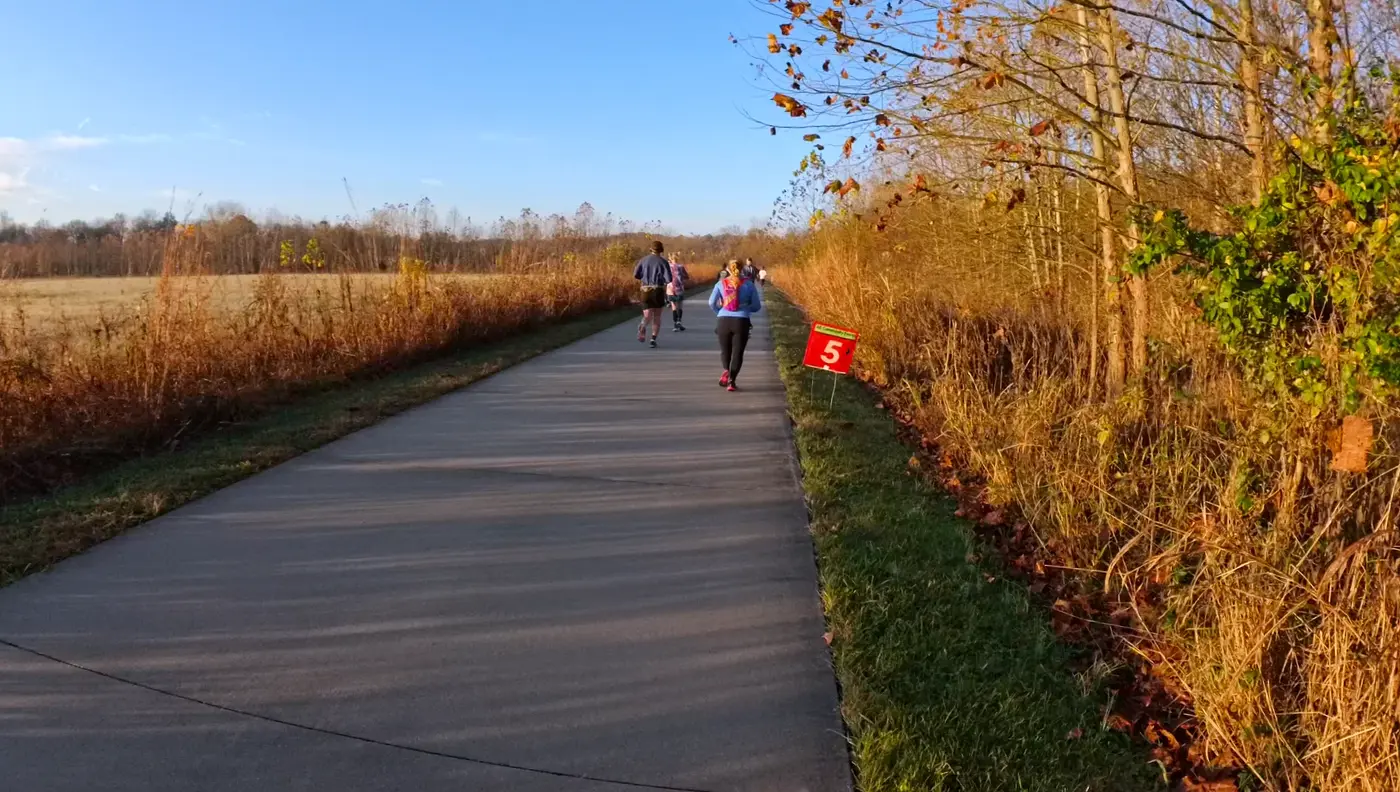
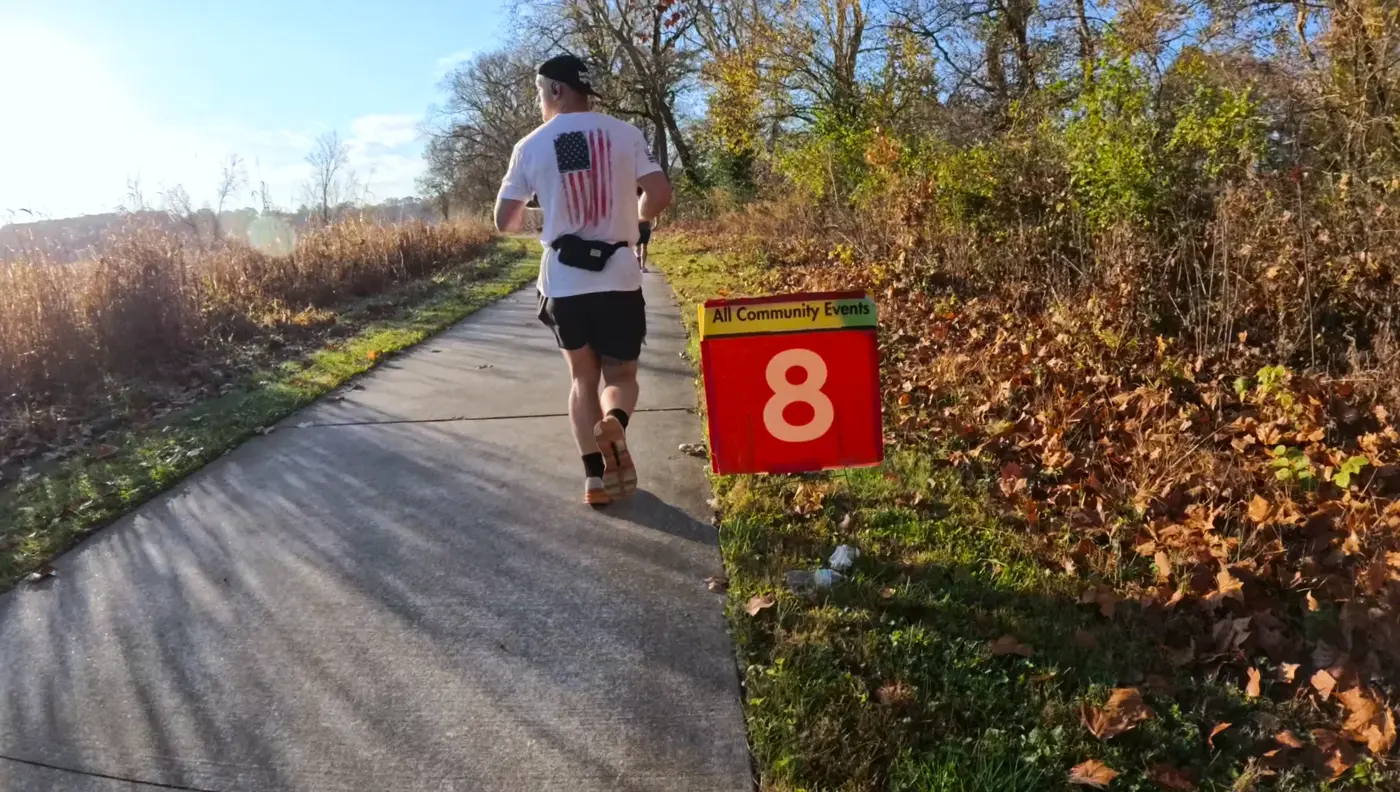
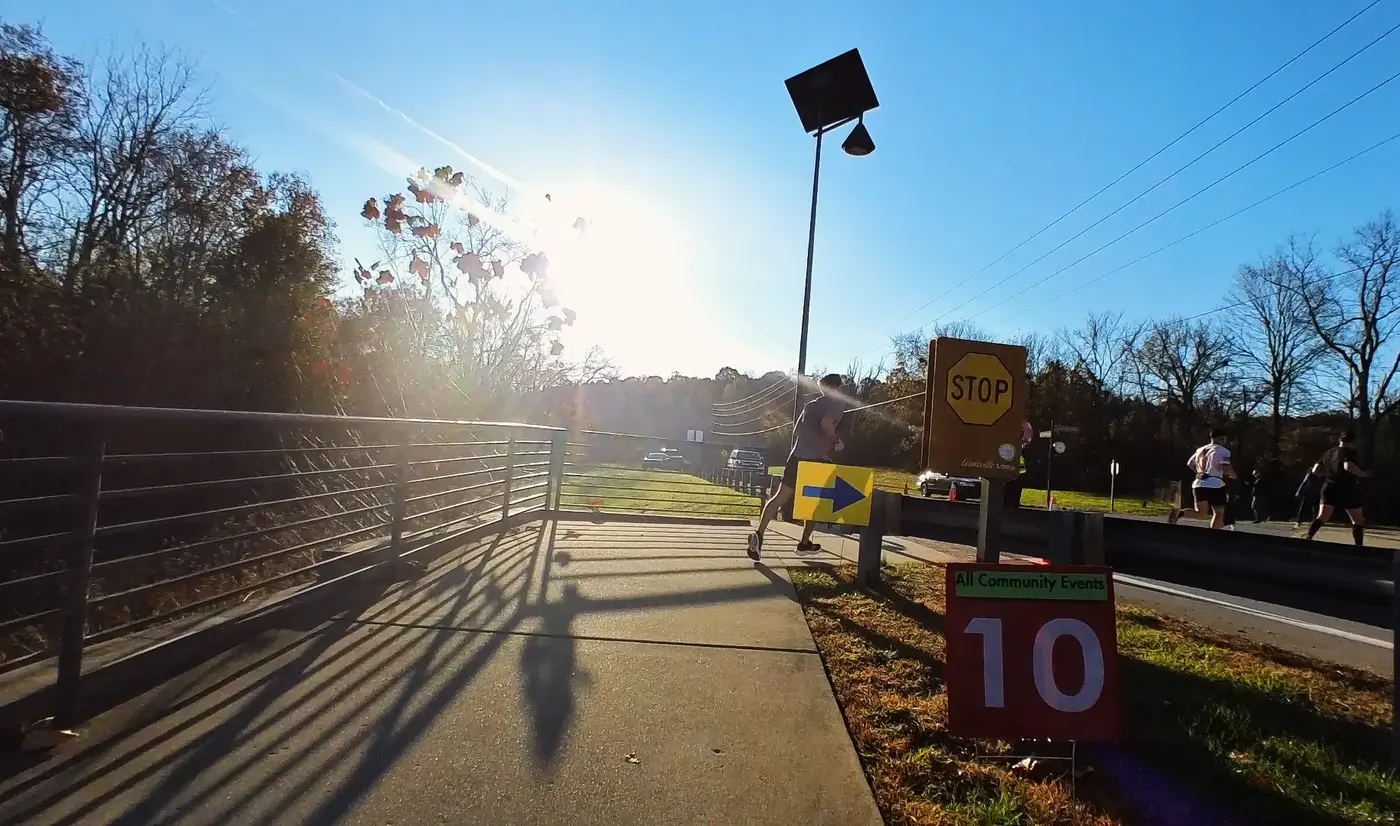
Before I knew it, I reached 10 miles. I had not been running slowly, at least by my standards. After that, the light grew harsher and the sun started aiming directly at me.
Chapter 2 | Hitting the Wall · Coming Back to Life
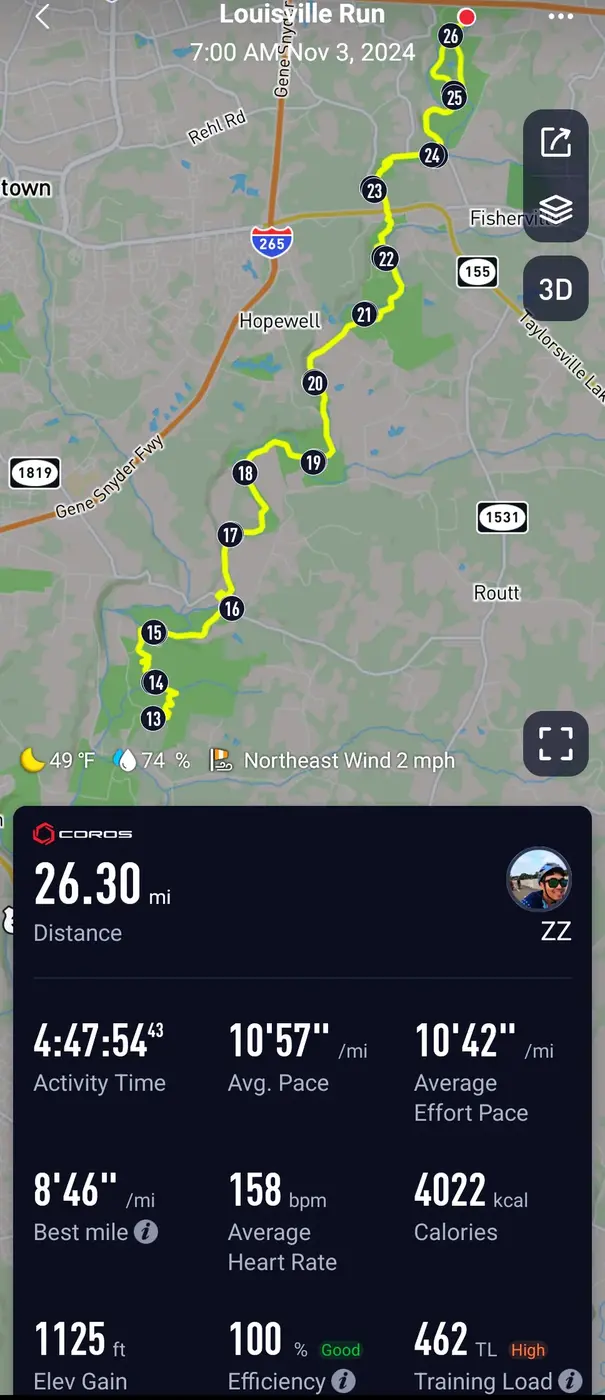
The first half went pretty well. My watch hit 13 miles just under two hours. For someone who had not been training well lately and whose belly was still expanding its territory, that was honestly not bad.
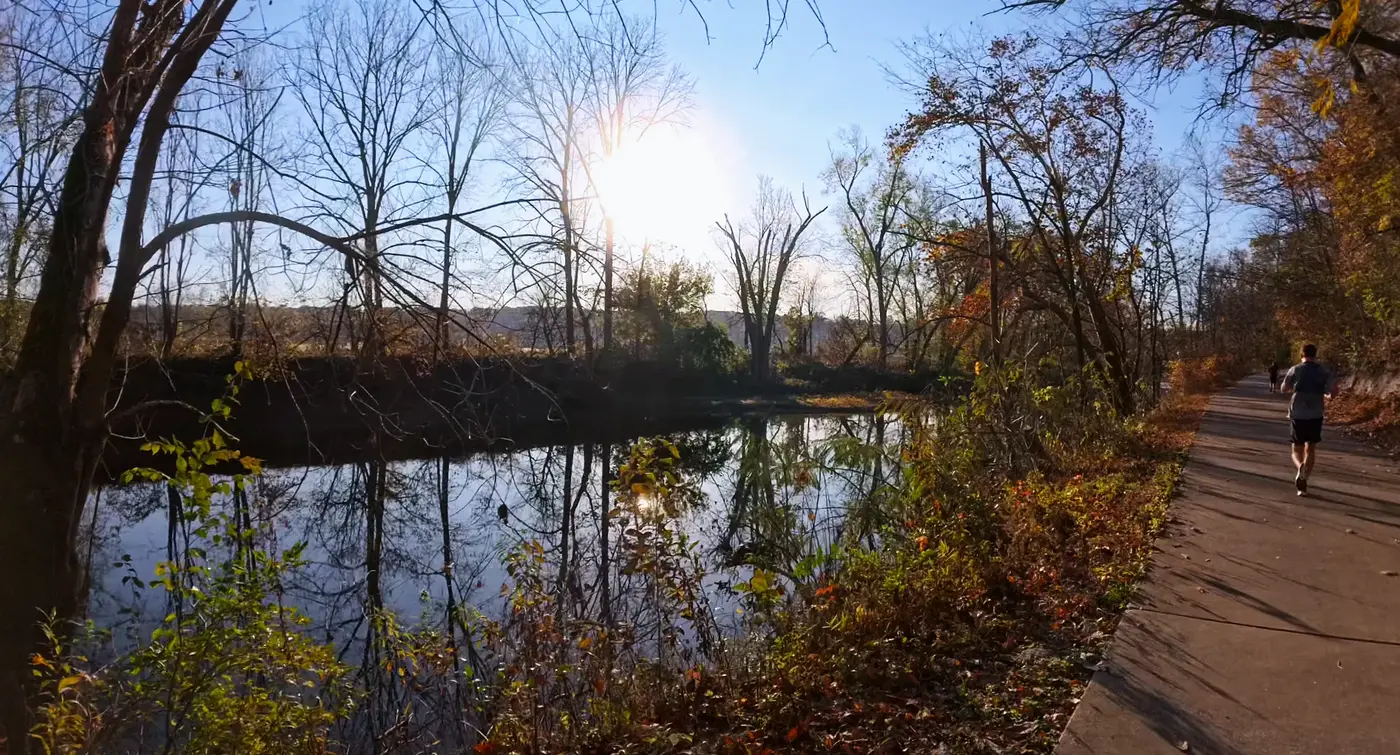
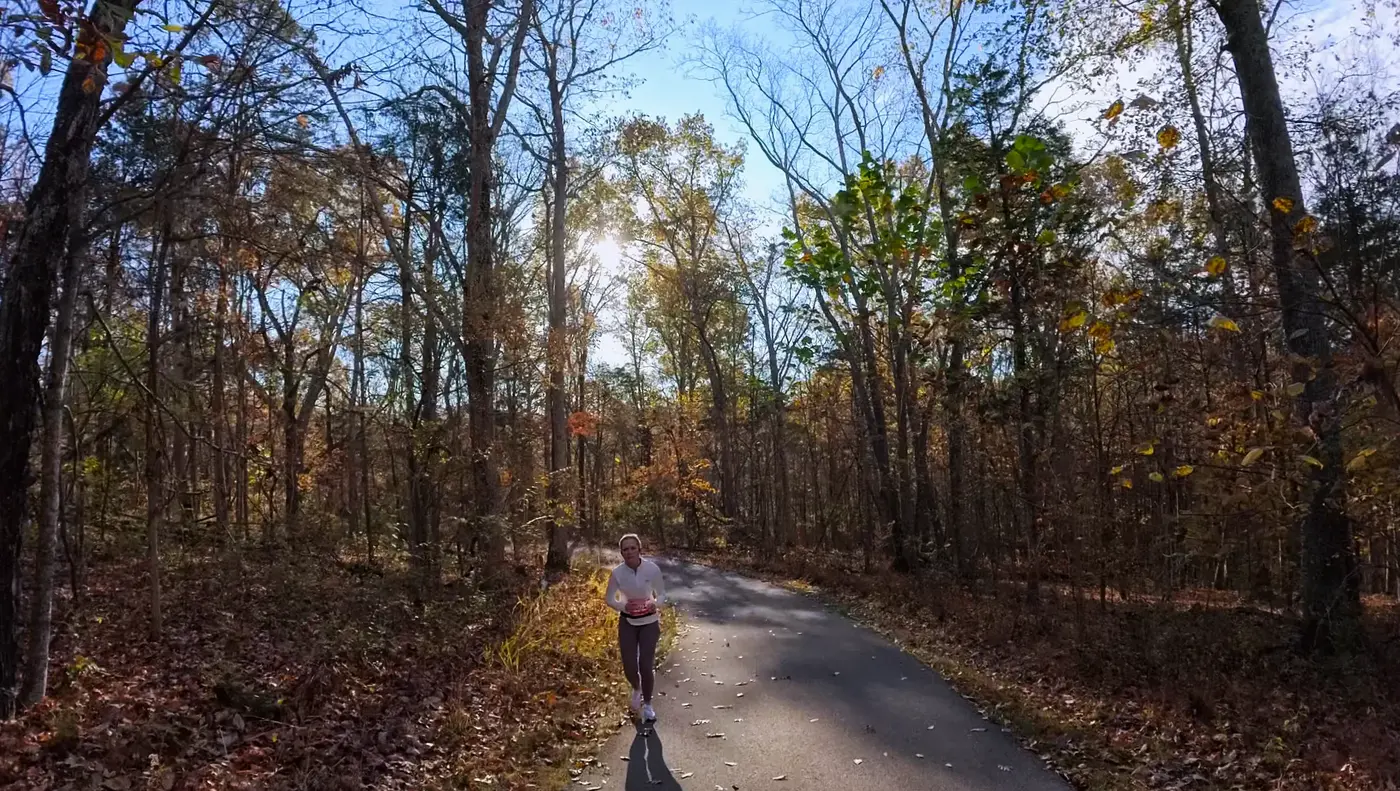
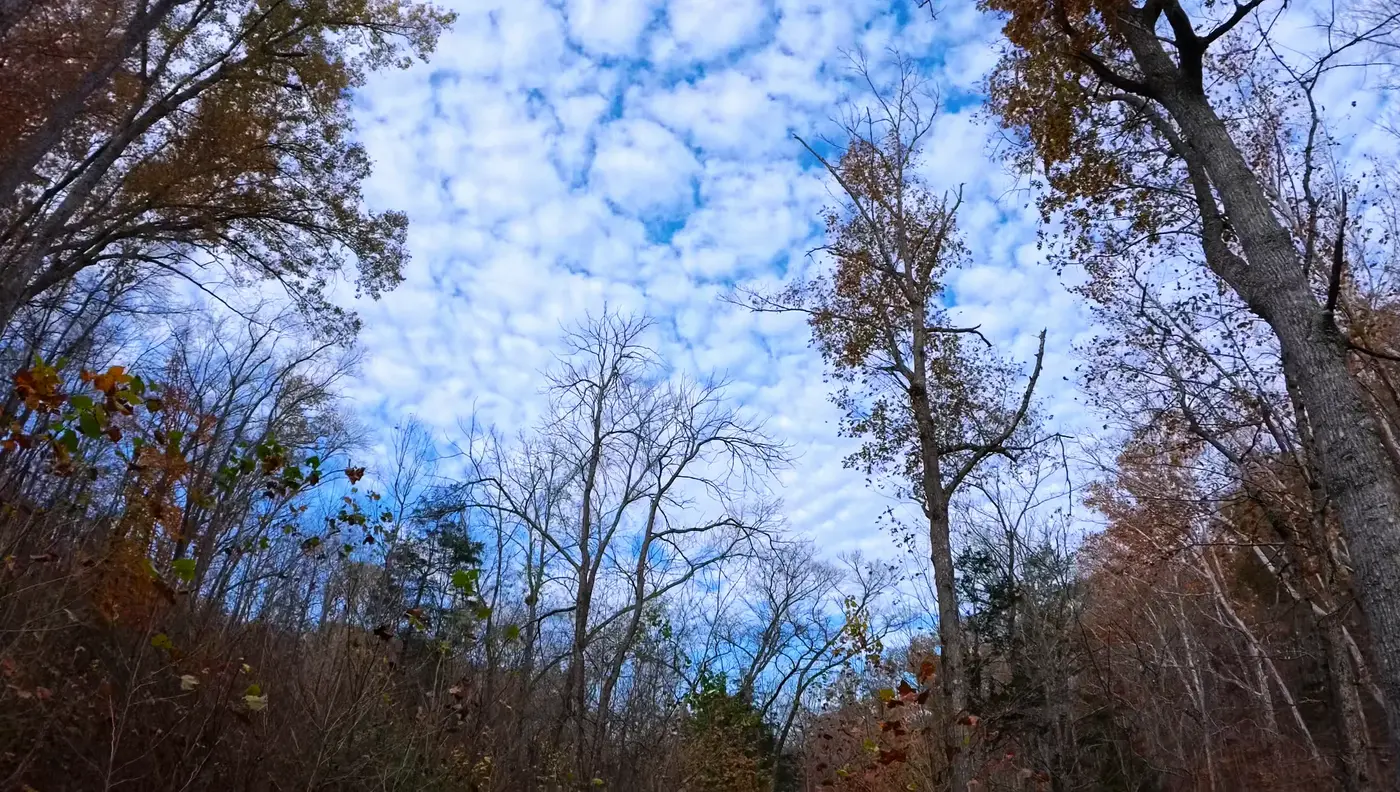
After halfway, though, the scenery began to repeat: same woods, same riverbanks, same meadows. Spectators thinned out. Runners thinned out. It was just me and my breathing. The sun climbed higher, the air grew stuffy, and by mile 16 my breath was short and my legs felt like lead.
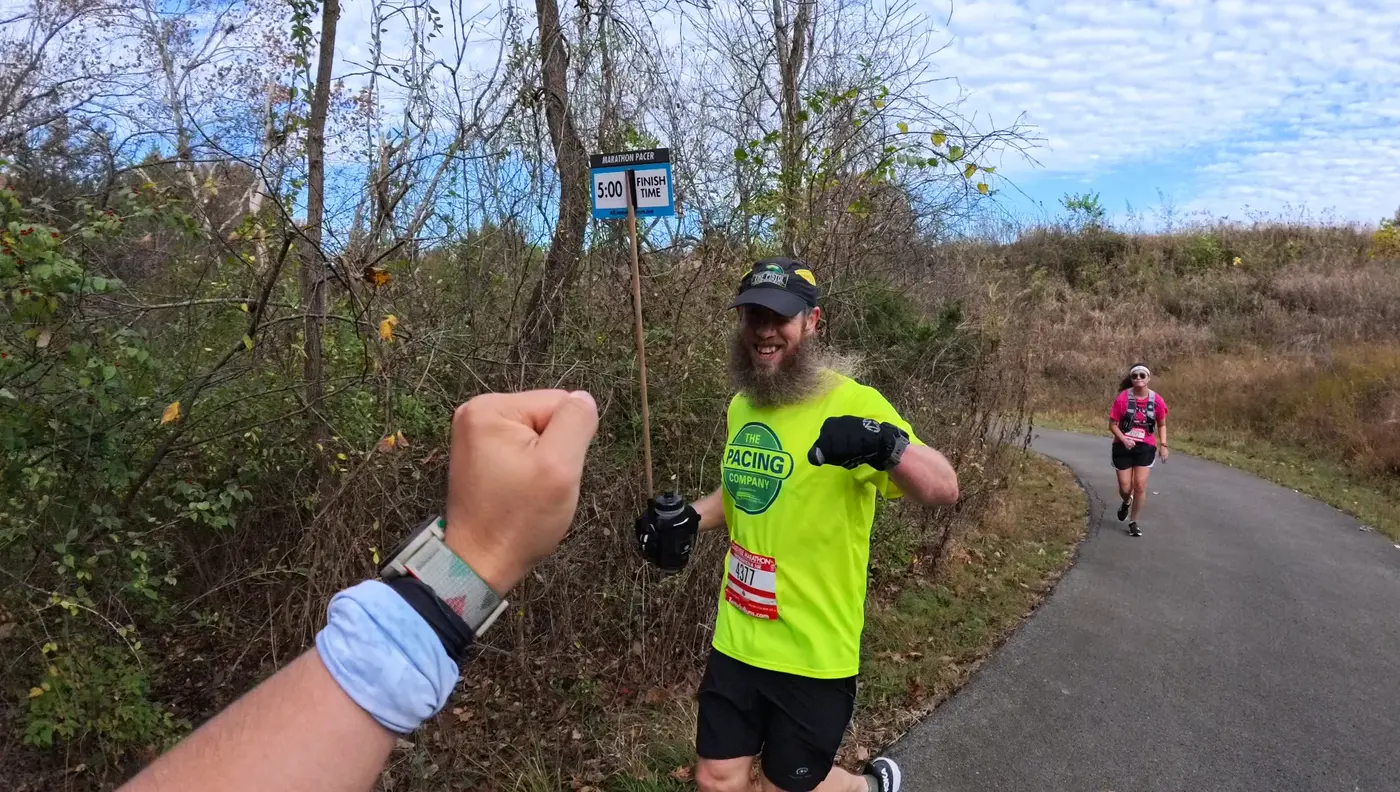
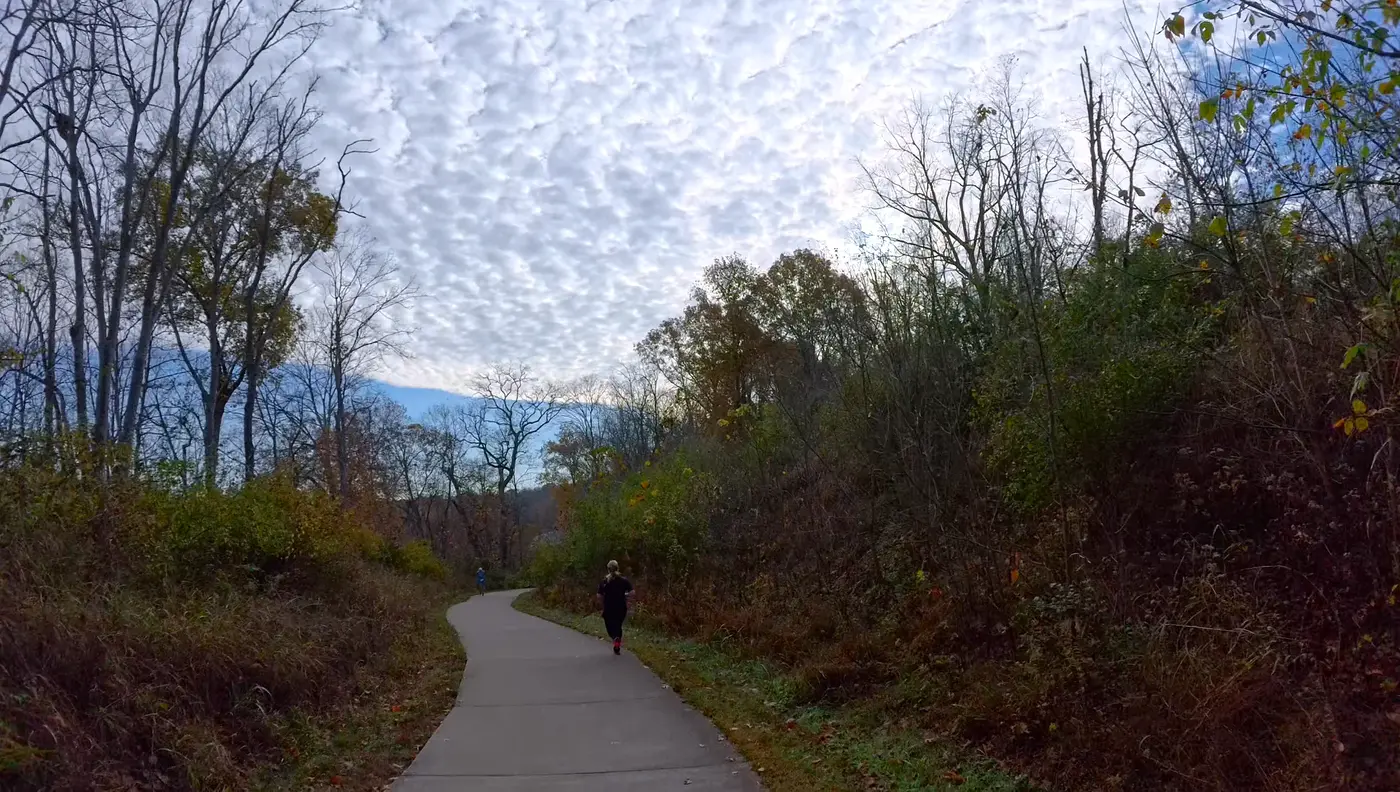
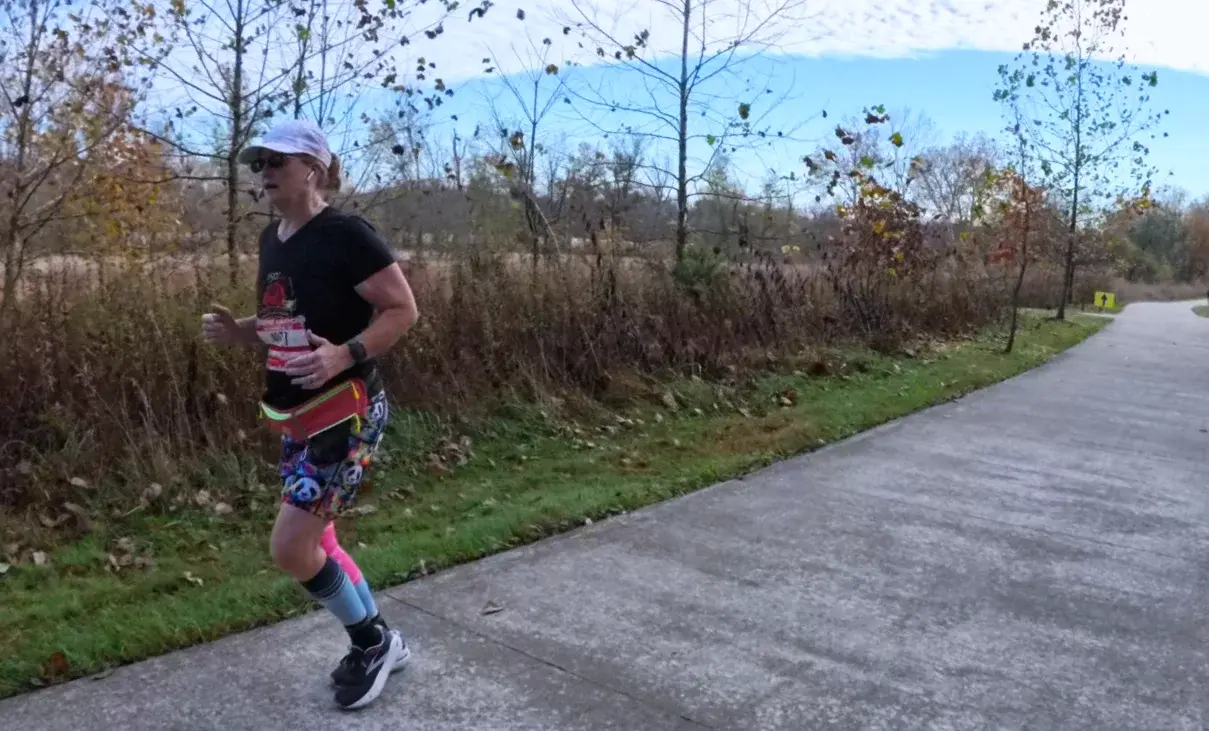
It felt exactly like the middle of a PhD: funding getting cut, simulations crashing, a kid needing milk, and then your advisor suddenly tossing in a new project and asking you to drop everything to write yet another proposal. Absolutely no nutrition, but you still have to chew the pie-in-the-sky promise with a smile and pretend it has a rich aftertaste.
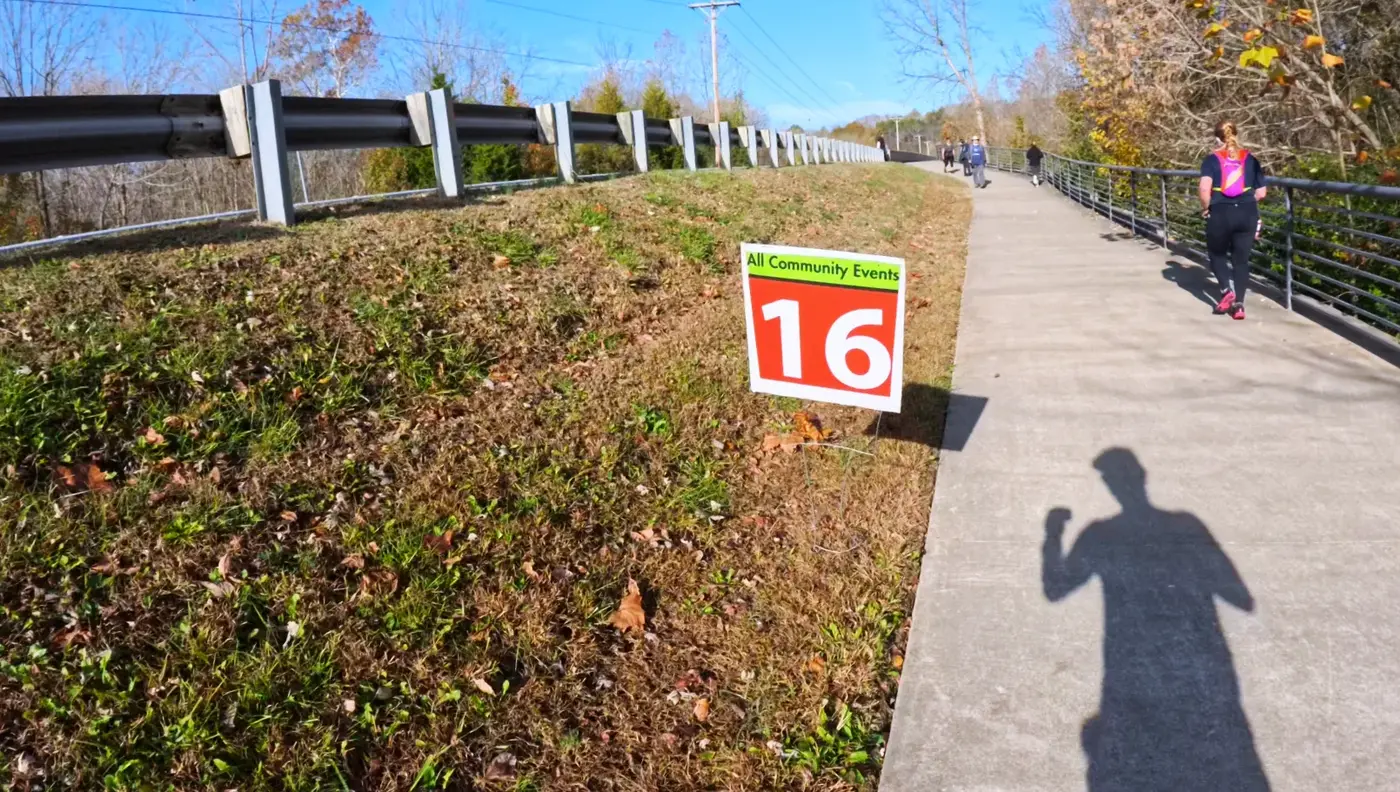
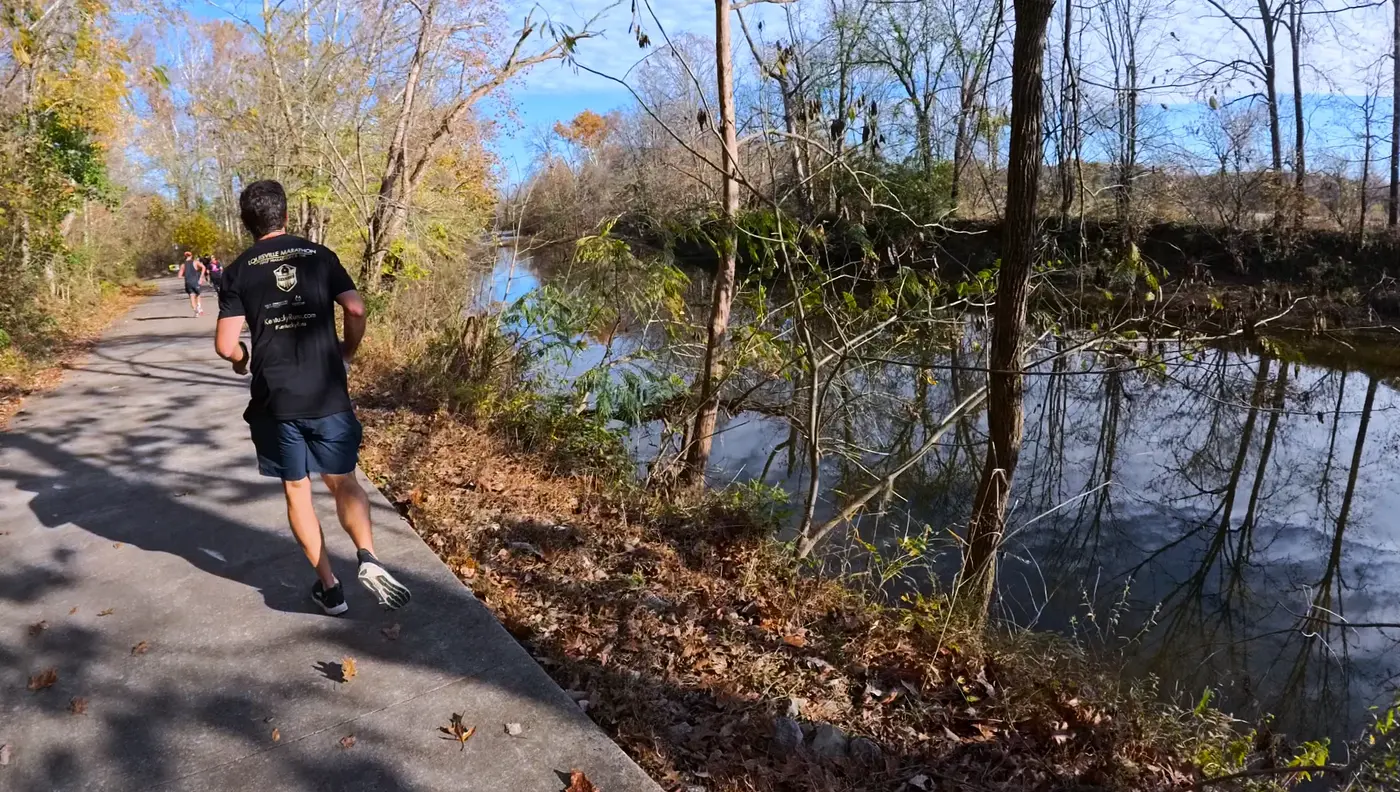
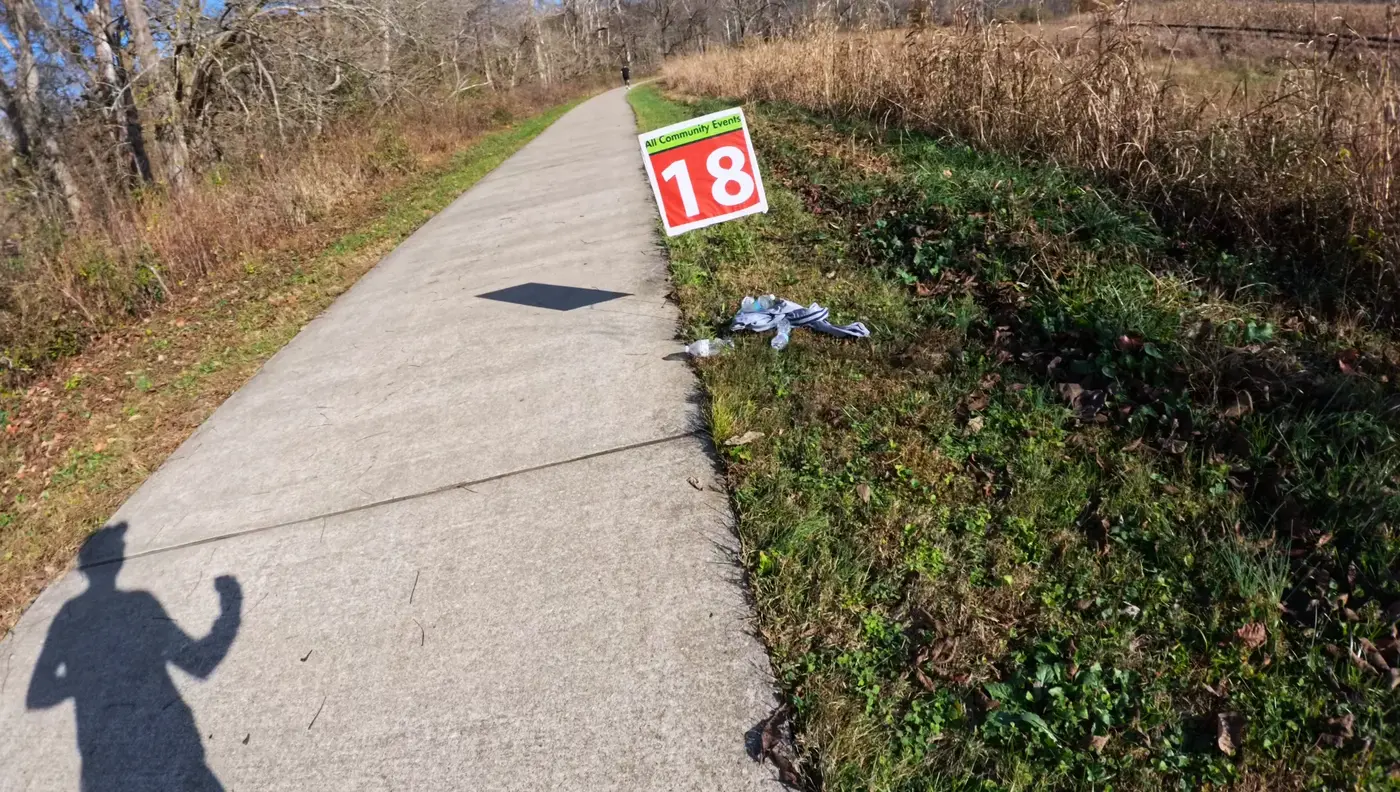
Just when I was drifting, a familiar face appeared on the course: Gleen, still looking exactly the same, carrying the 5-hour pacer sign and cheerfully leading his group forward. I said hi, and my mood snapped back. It was like running into a fellow PhD student and hearing, "You haven't graduated yet either?" Instant emotional balance.
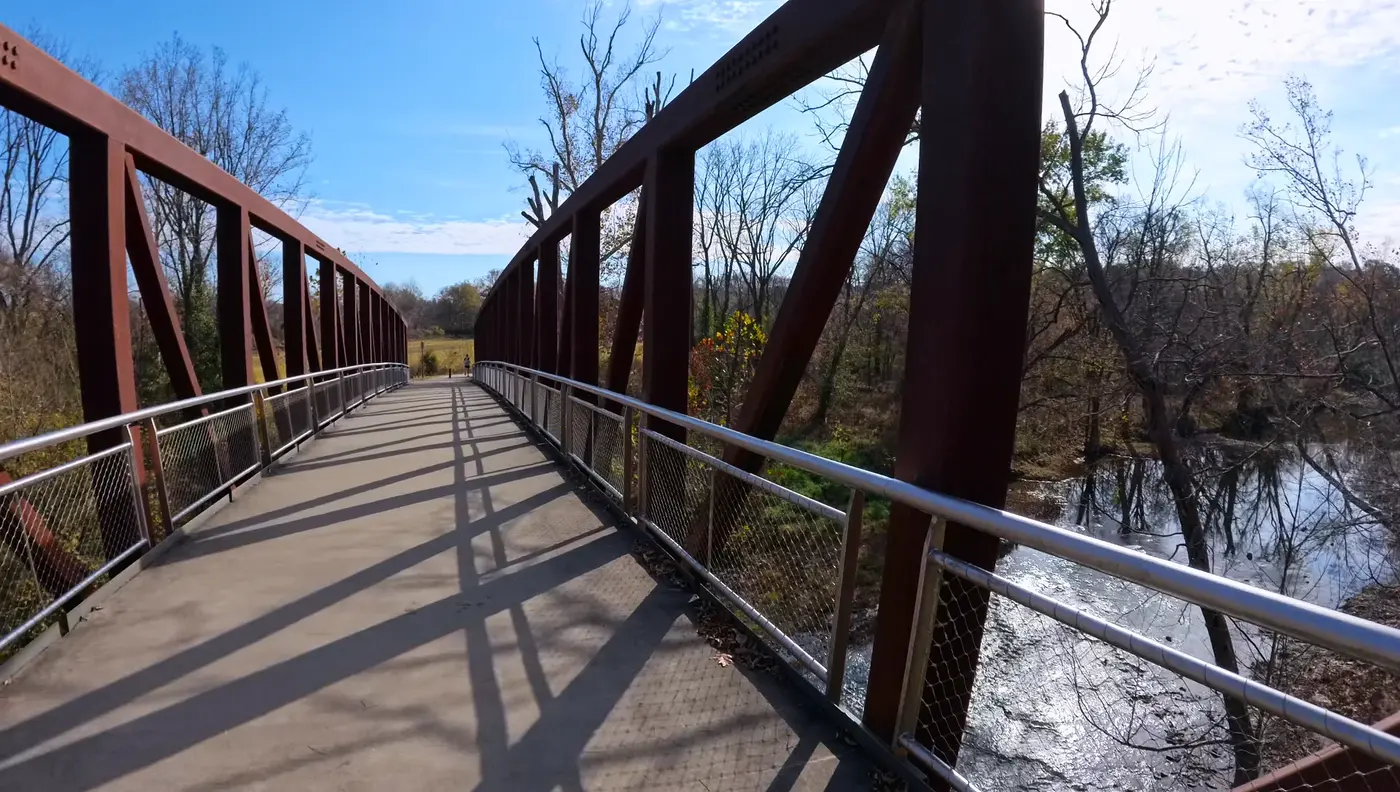
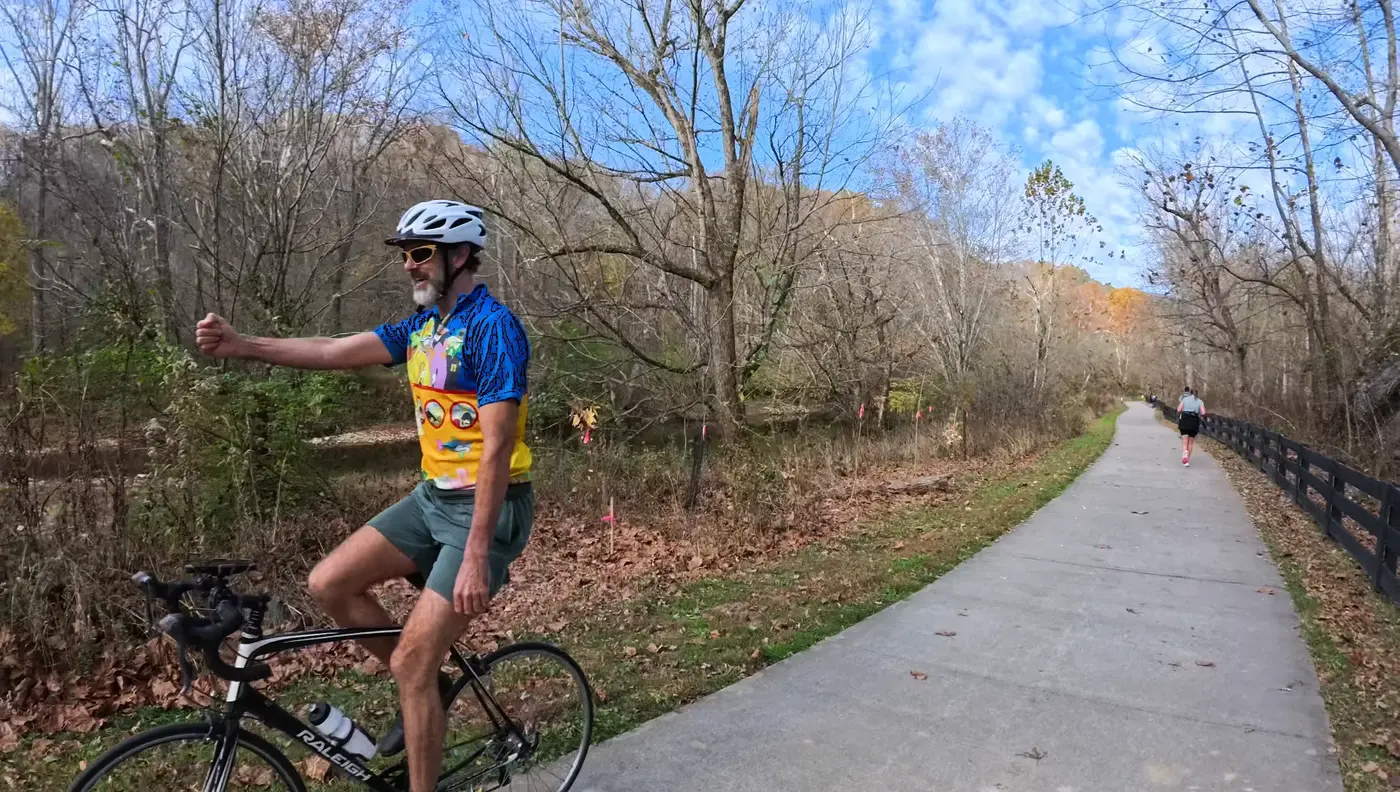
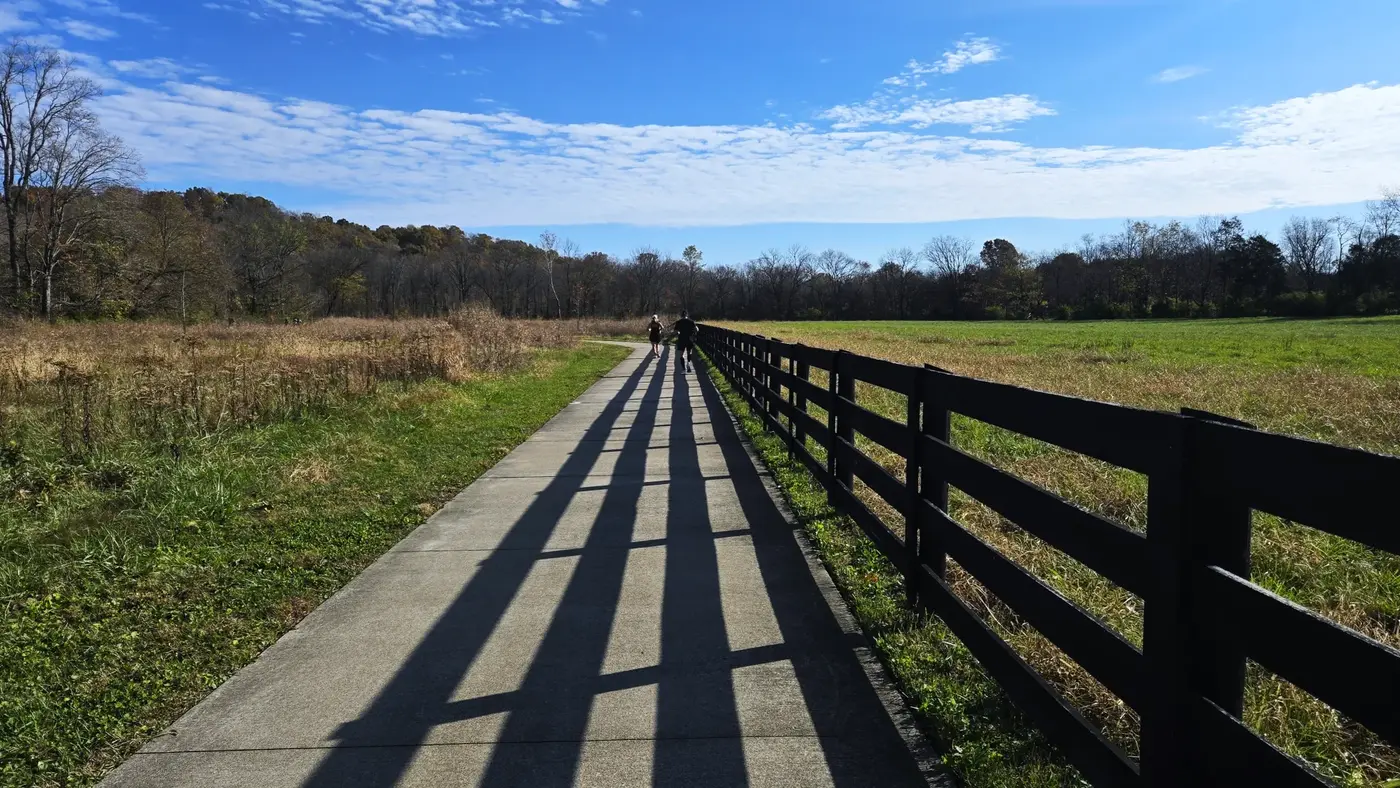
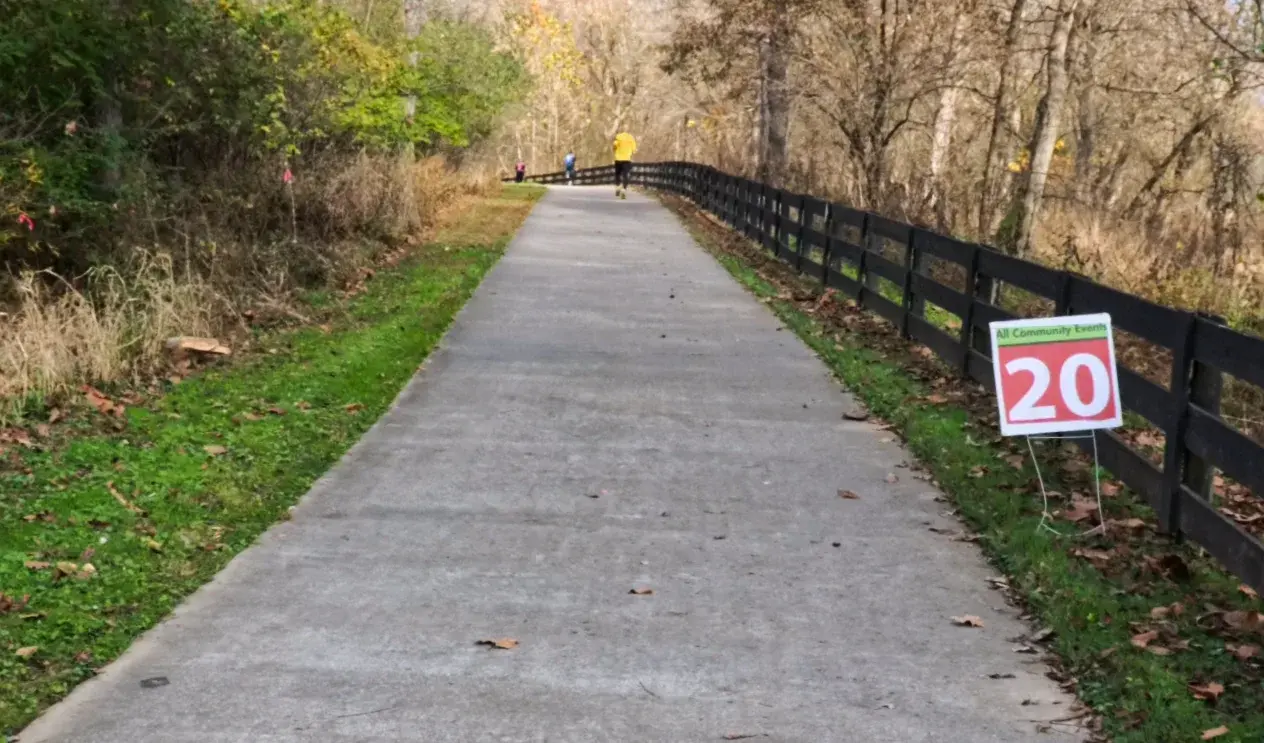
A little farther on, the fueling finally kicked in. Around mile 20, my body seemed to switch modes. My rhythm steadied, and my head cleared.
Chapter 3 | The Finish · Little Red Flowers and a Black-Gold Medal
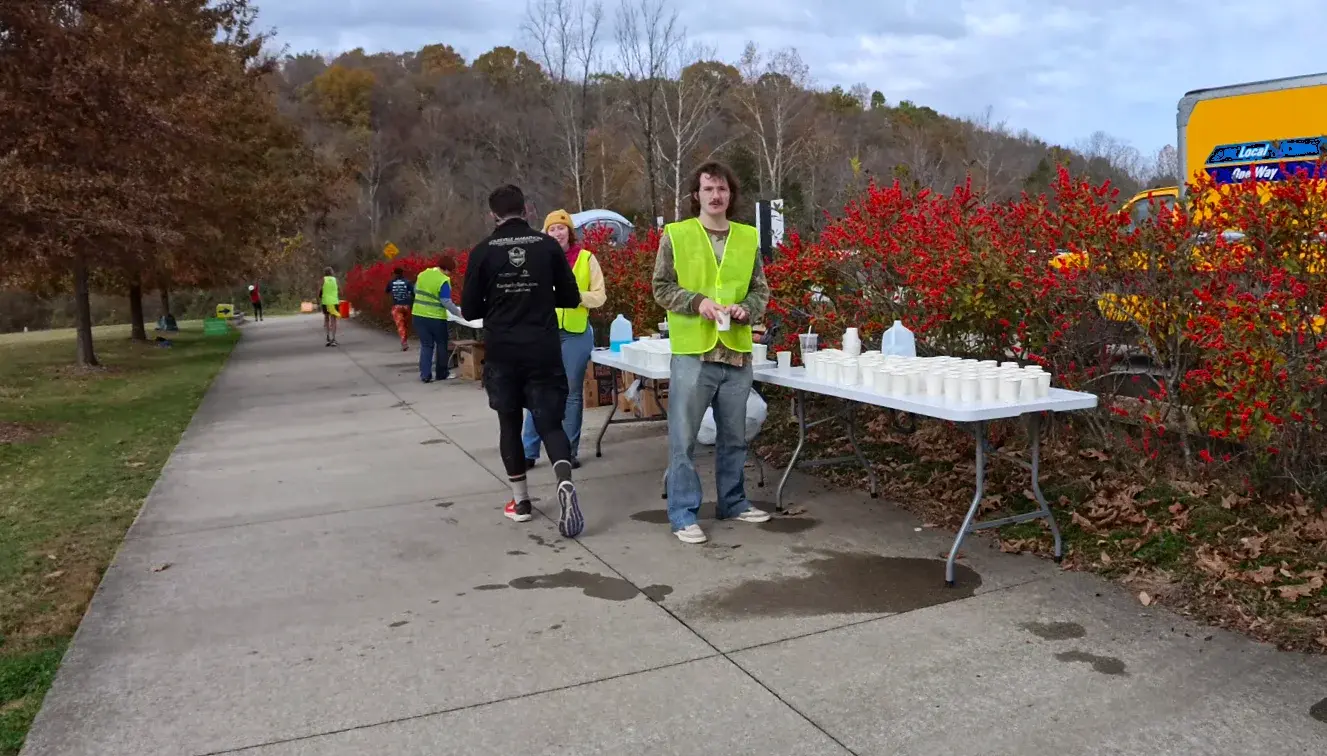
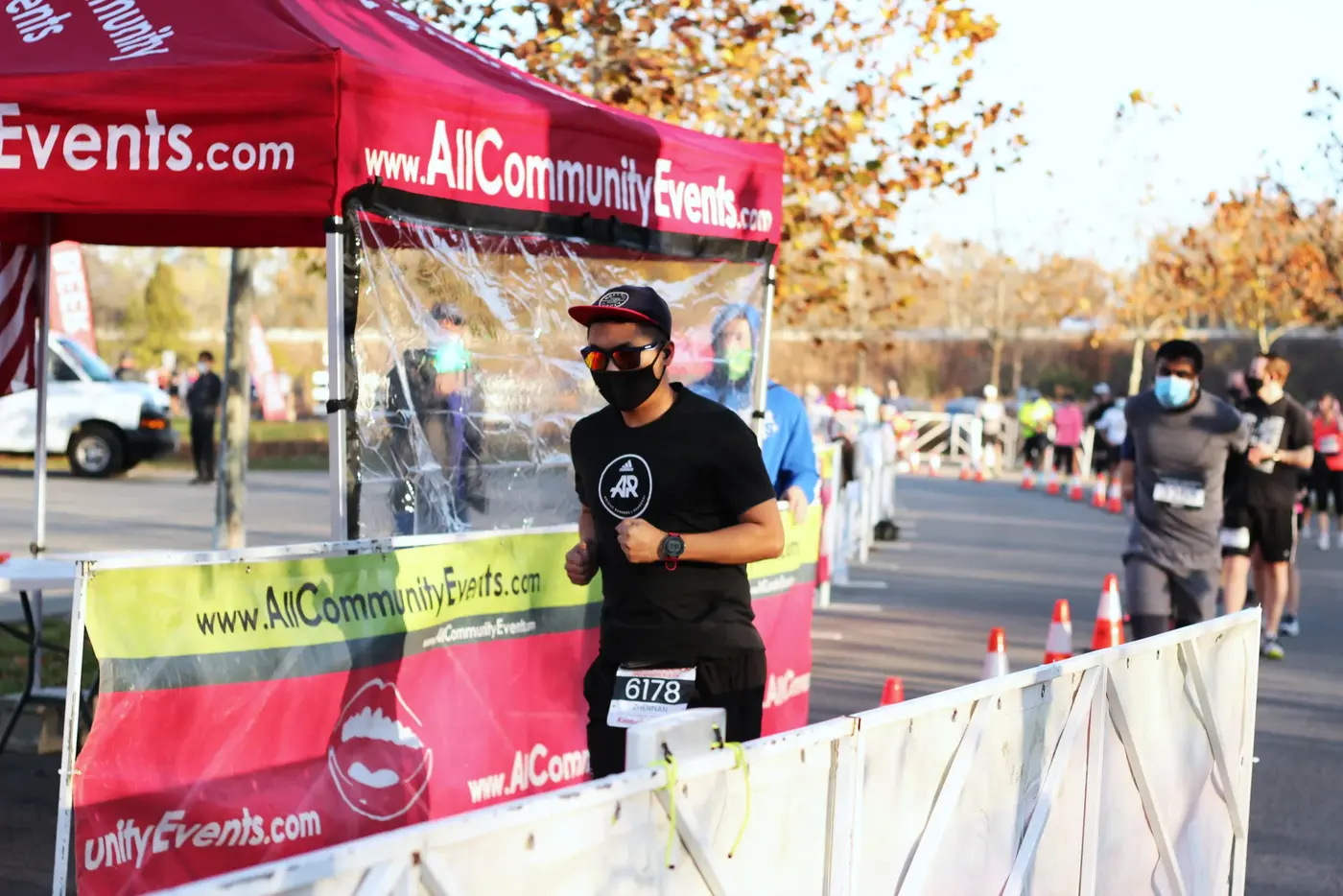
After 20 miles, the course suddenly came alive. Red berries grew on both sides of an aid station, like little red flowers handed out to every runner. I stopped for water and asked a volunteer to take a few black-and-red photos for me.
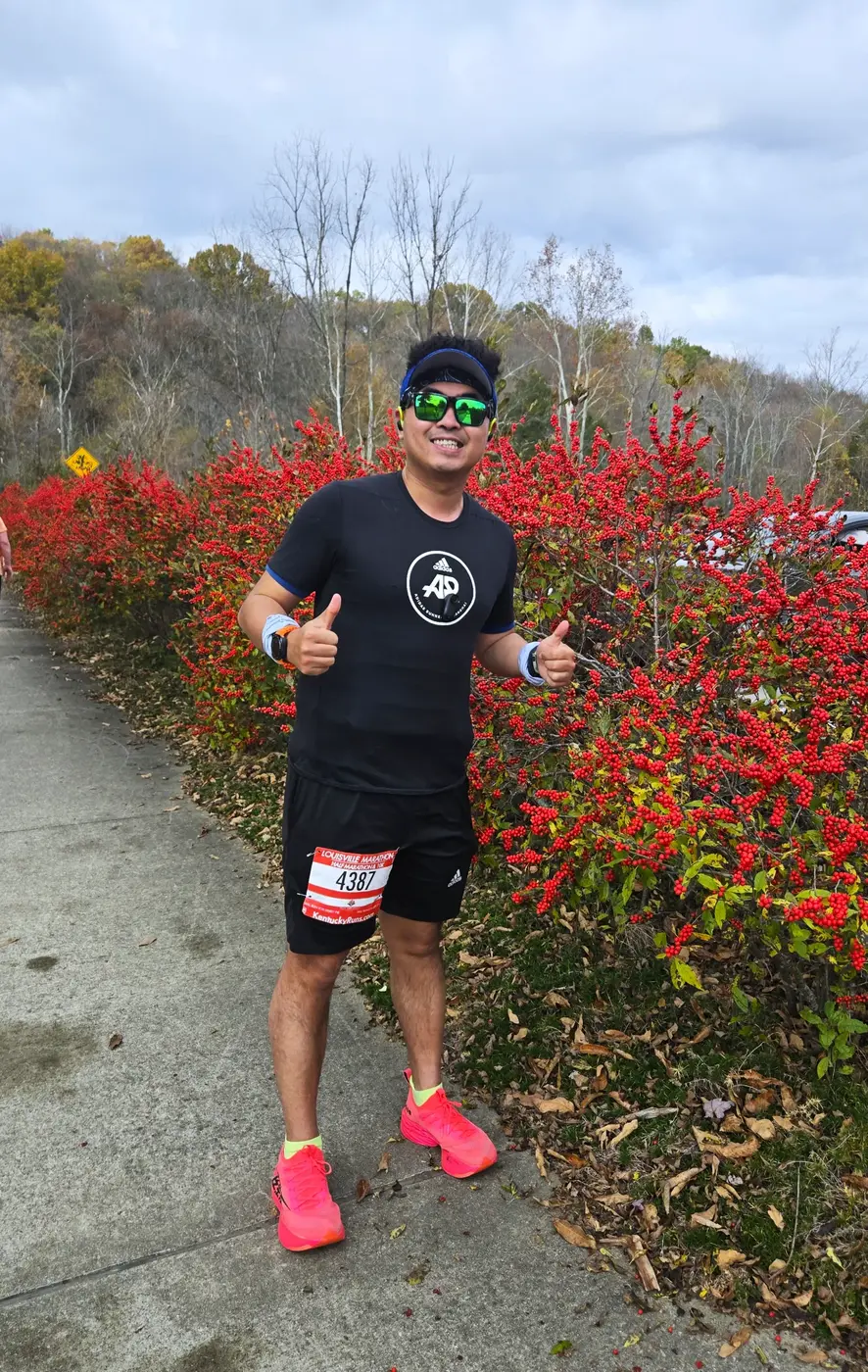
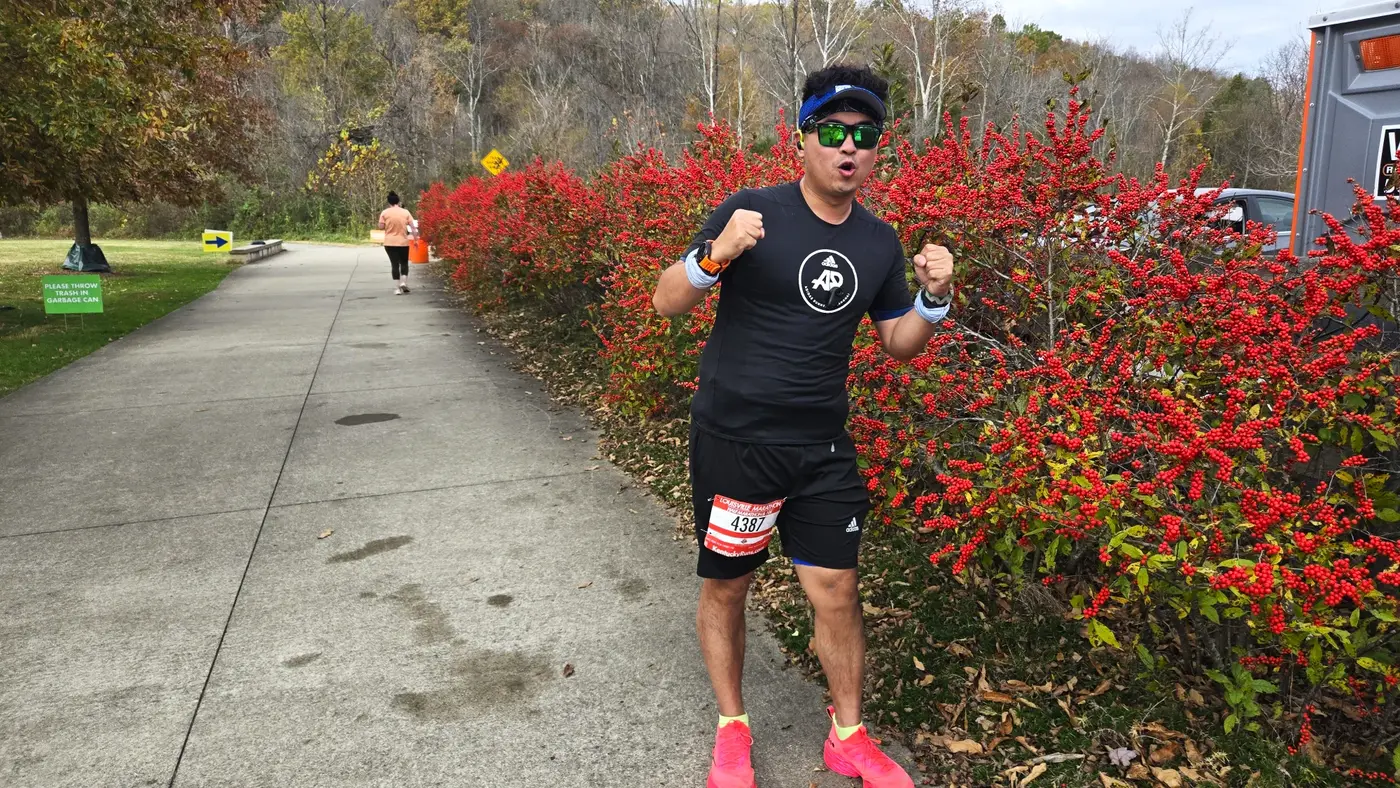
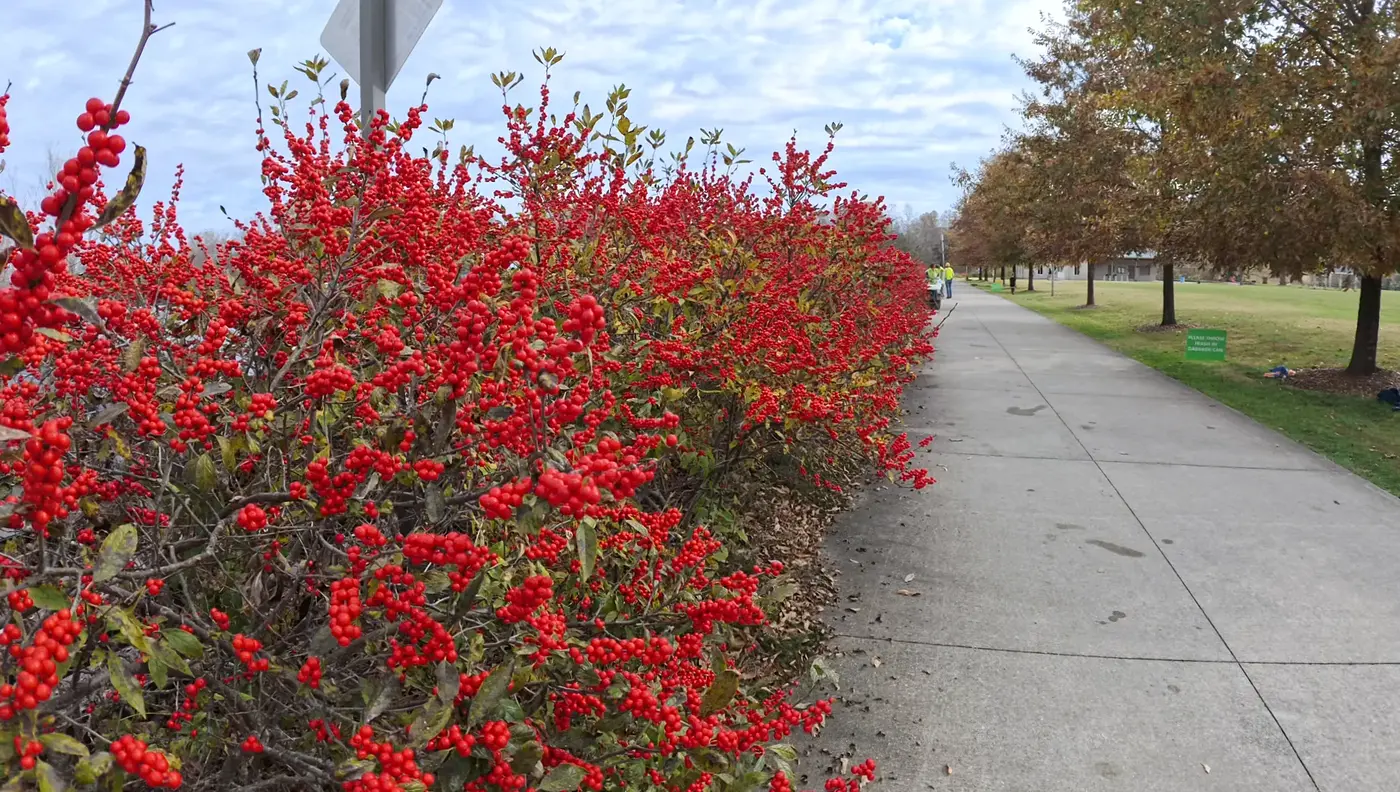
The red background matched my black Adidas Runner shirt perfectly. That shirt has history: I won it at an AR running event in Shanghai in 2019, and I wore it for my first Louisville Marathon too. Five years later, the quality was still excellent.
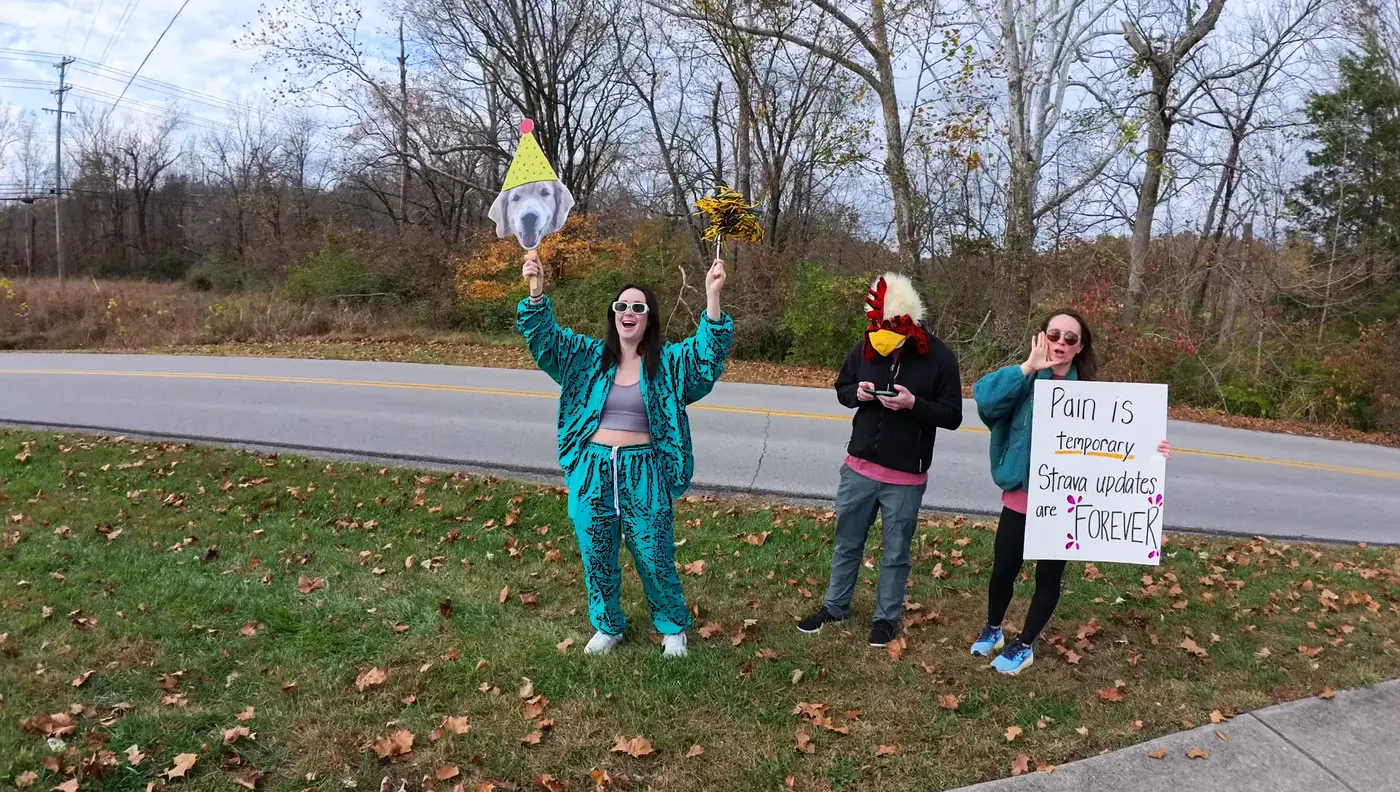
A few spectators stood along the road with signs and cheers. Someone yelled, "Pain is temporary, Strava is forever." The sun was getting hot, but I was feeling, as we say, physically and mentally healthy, and my steps stayed tidy.
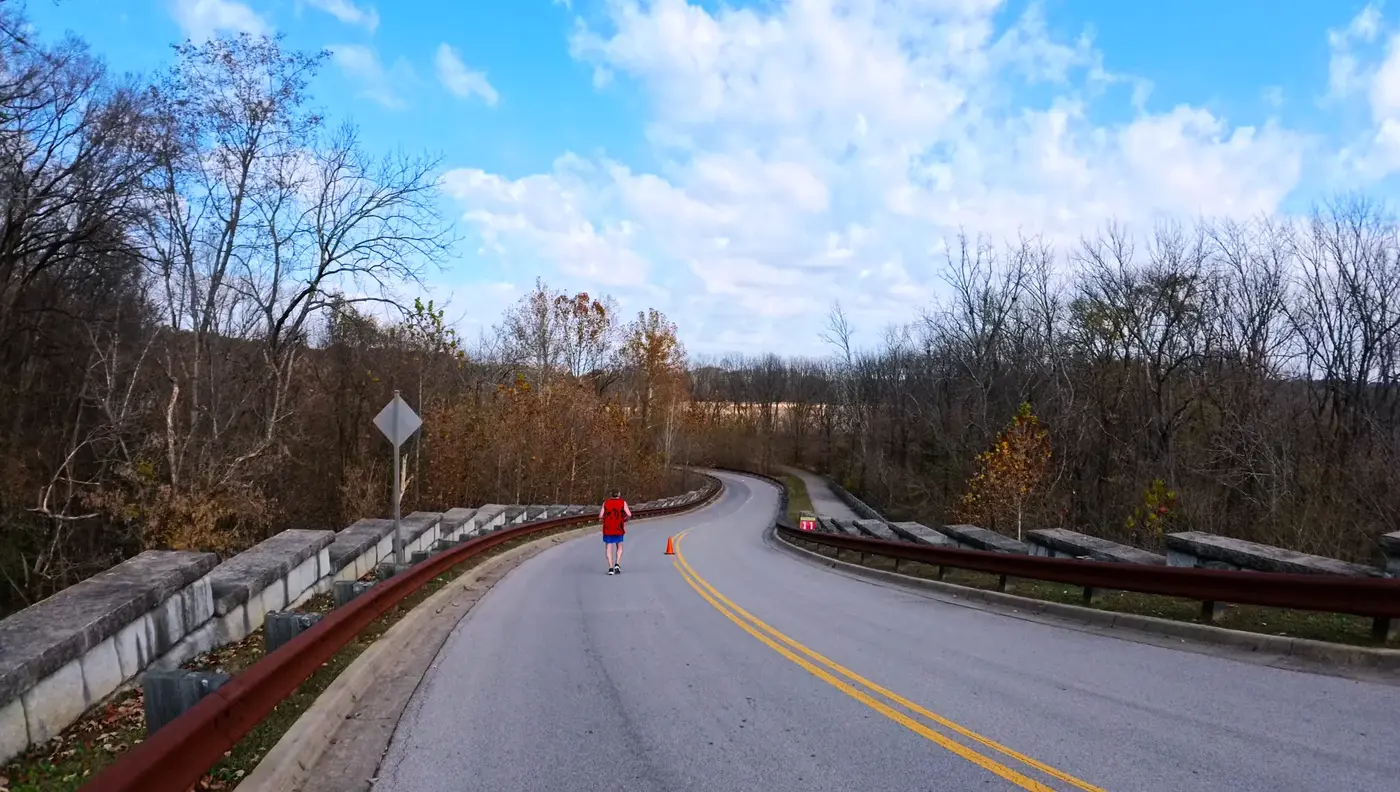
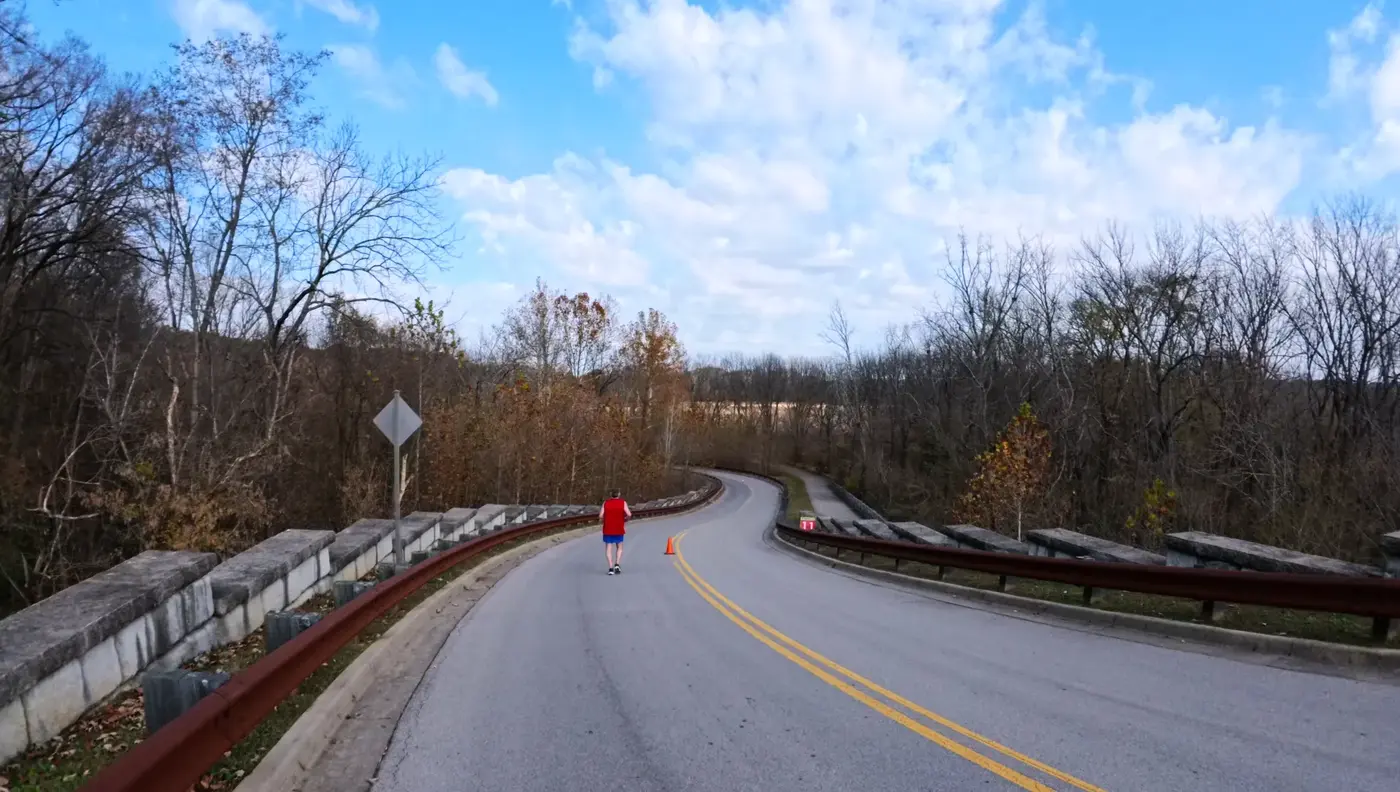
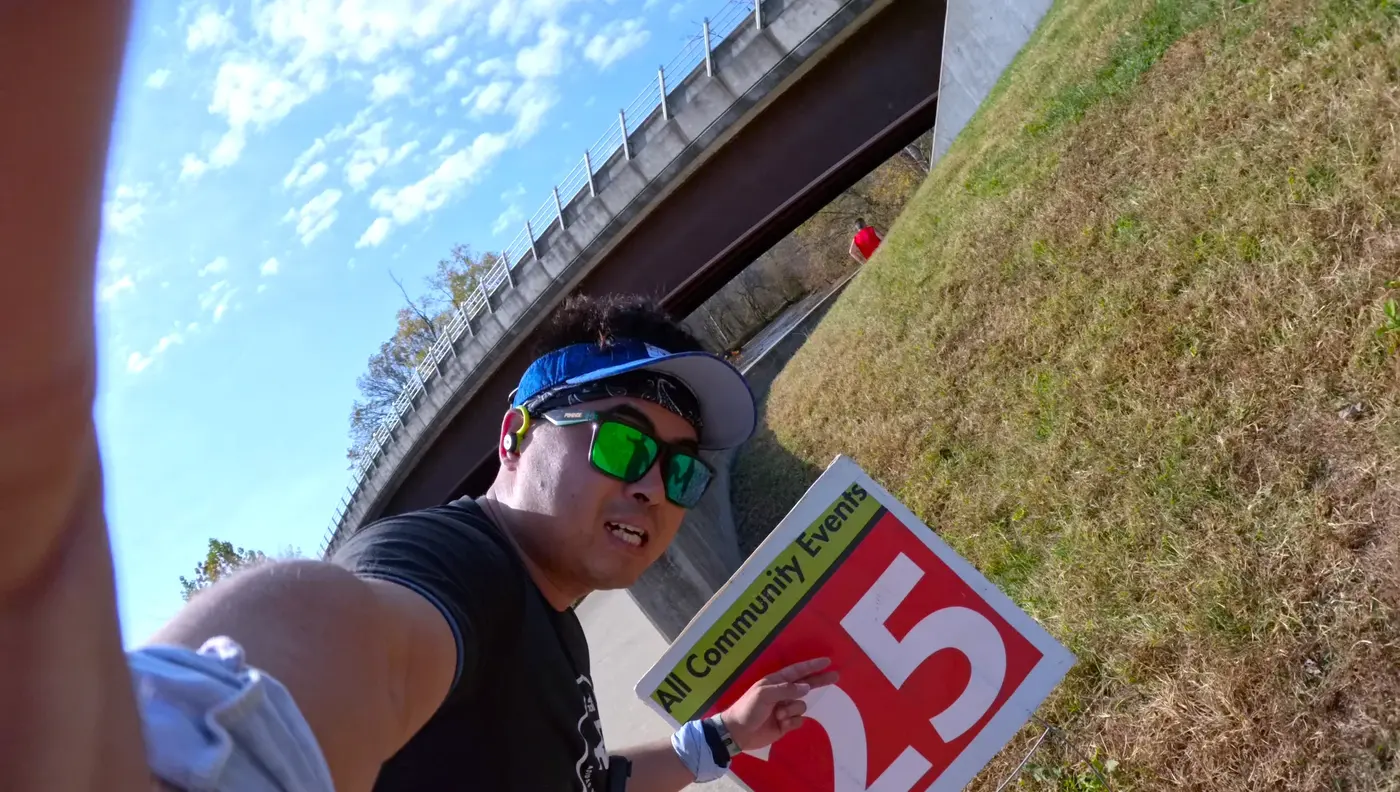
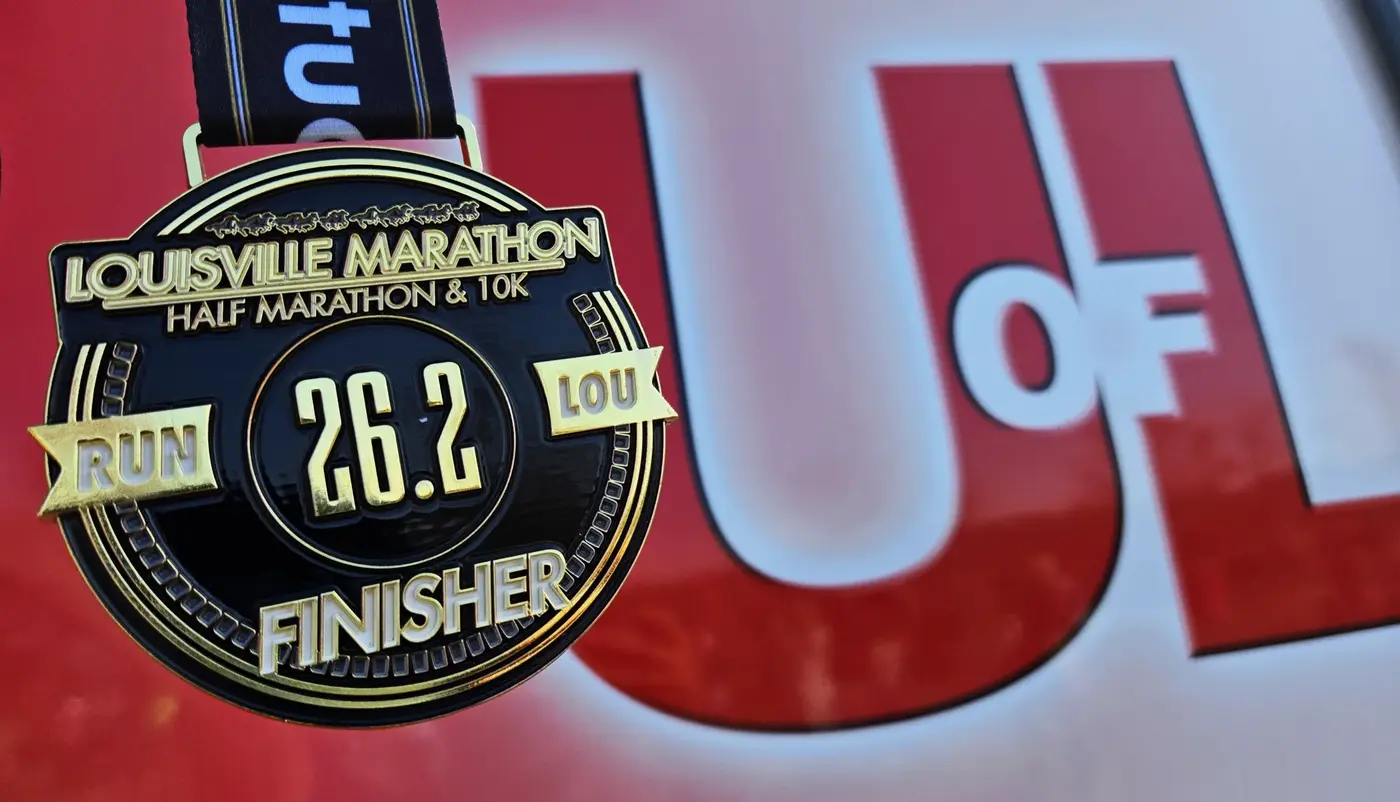
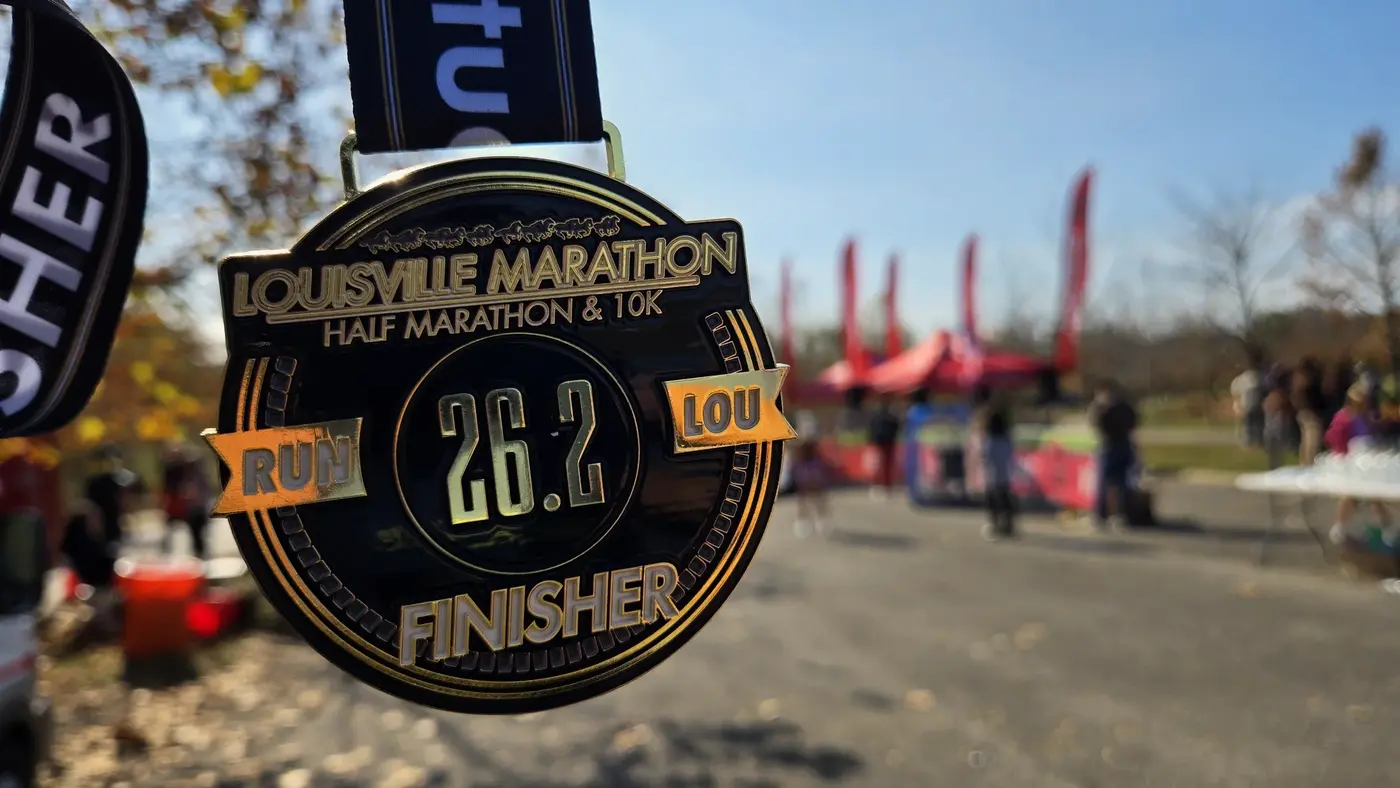
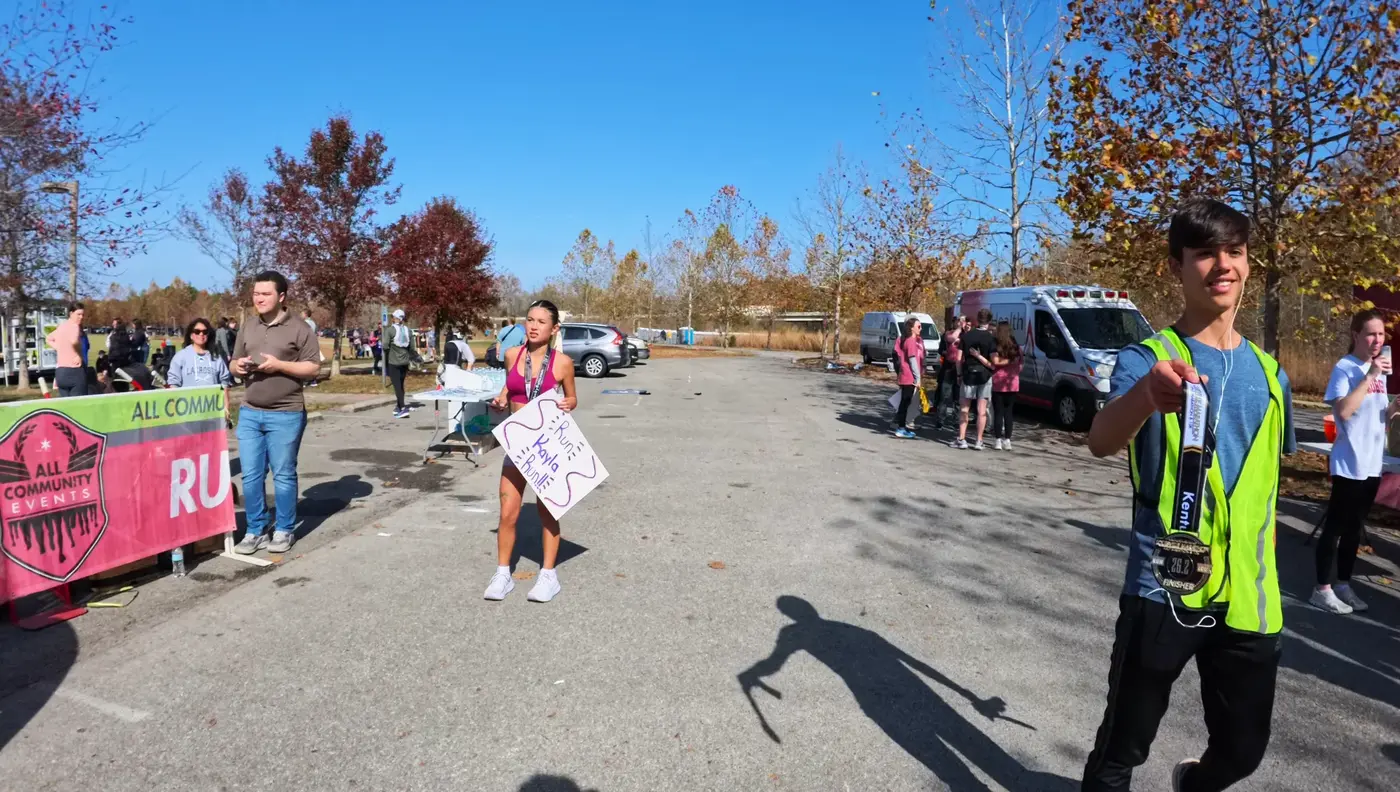
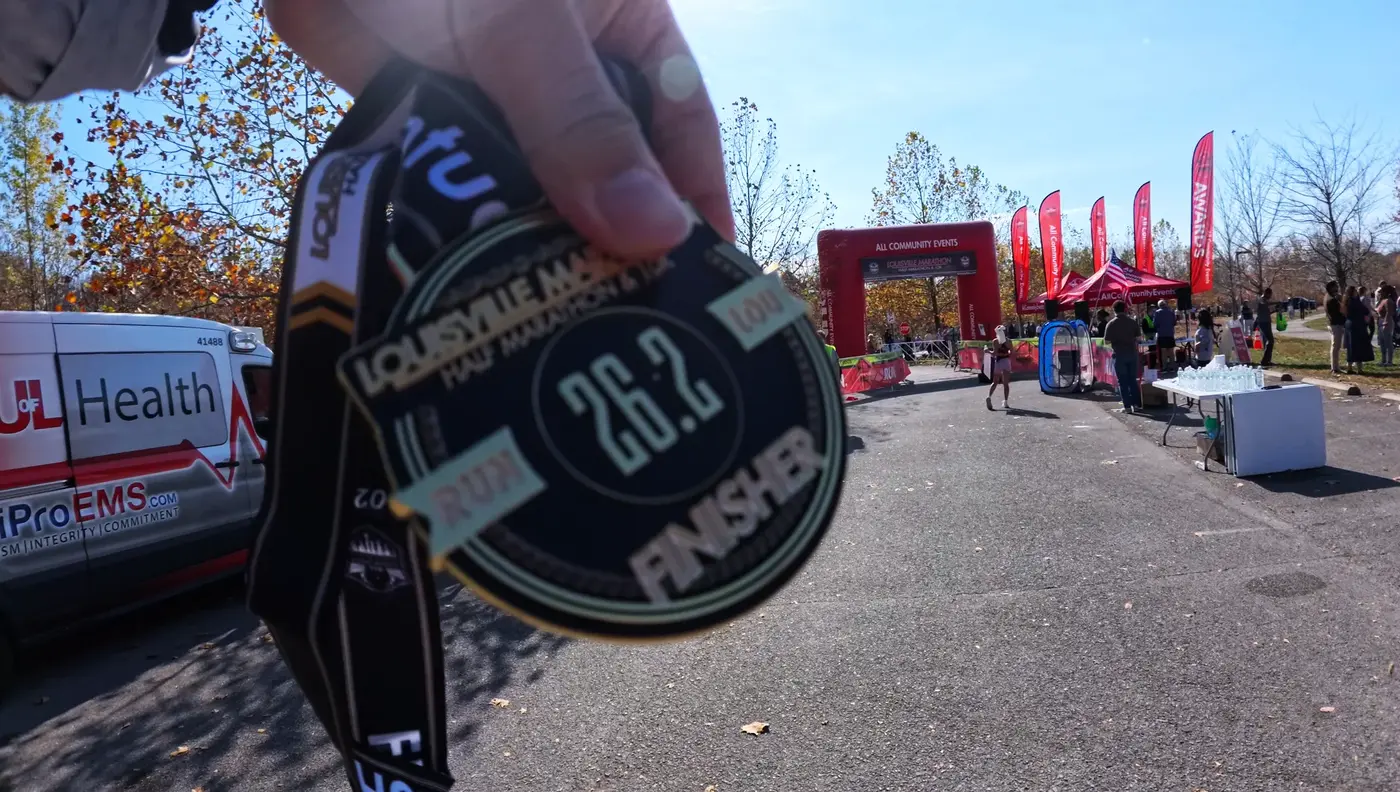
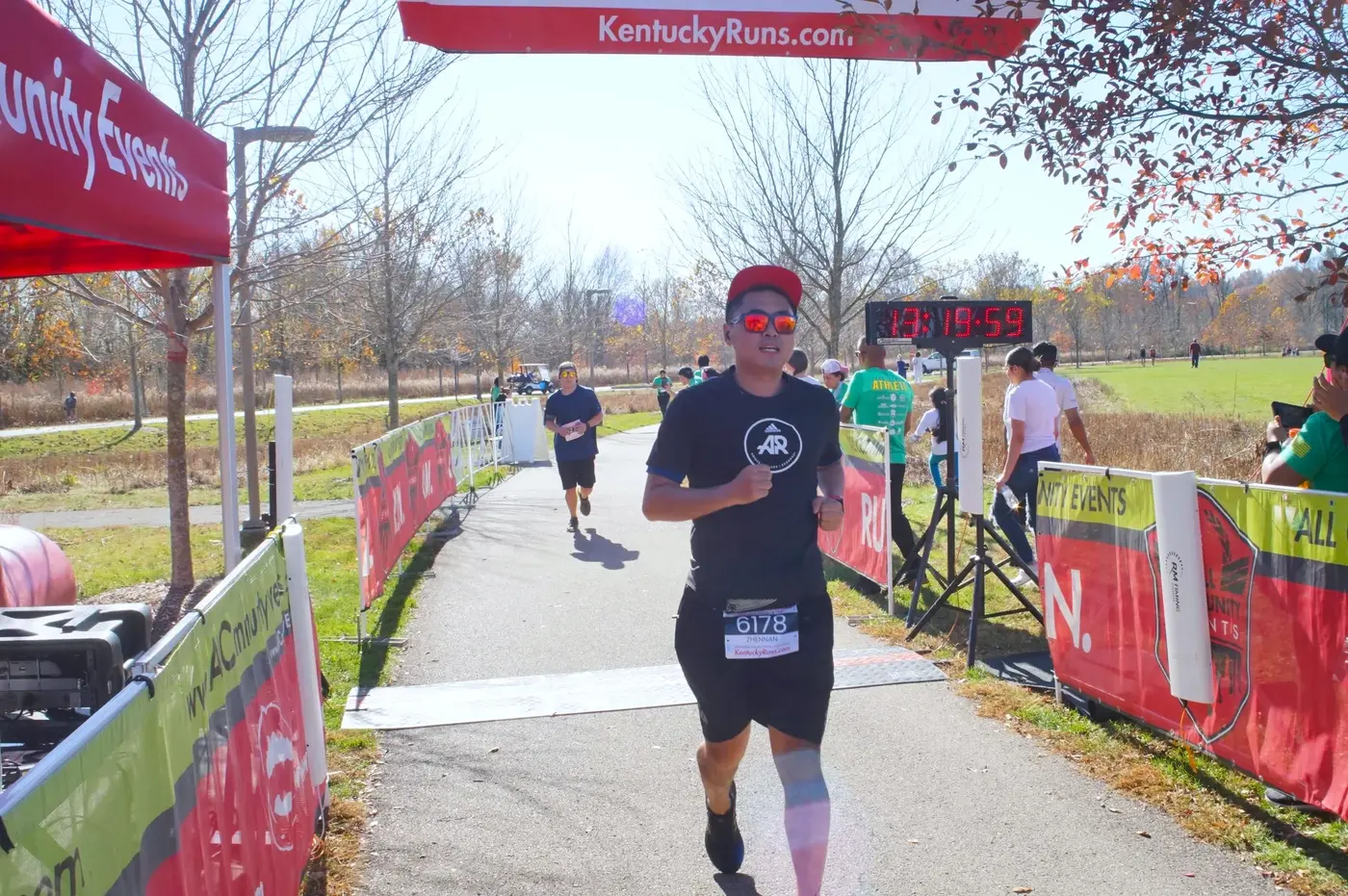
Farther ahead, the mile 26 sign finally came into view. The finish arch was not grand and the crowd was not huge, but after crossing it I still gave myself a little applause. The medal hung heavy around my neck, black background, gold lettering, 26.2 and Louisville Marathon shining on it. This was the medal for the final battle of my PhD.
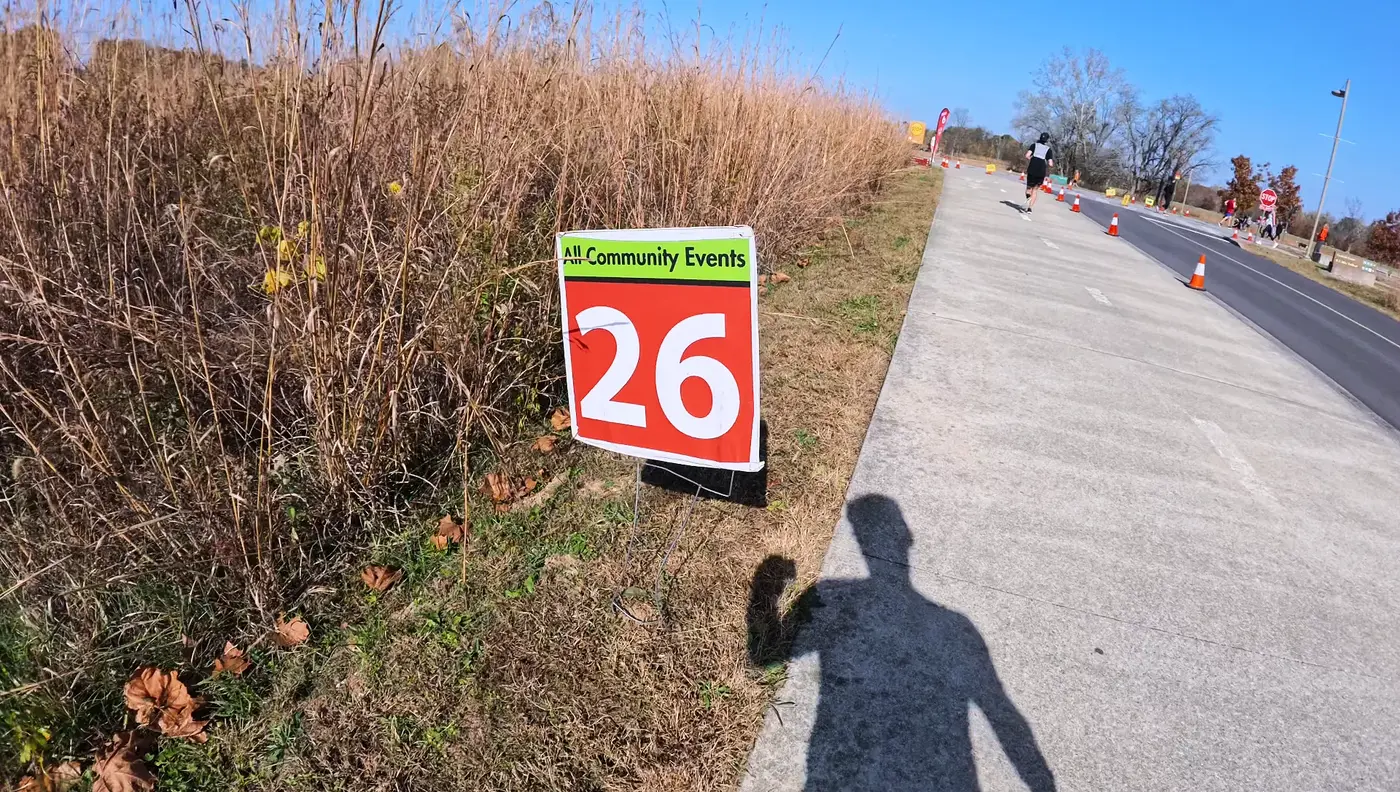
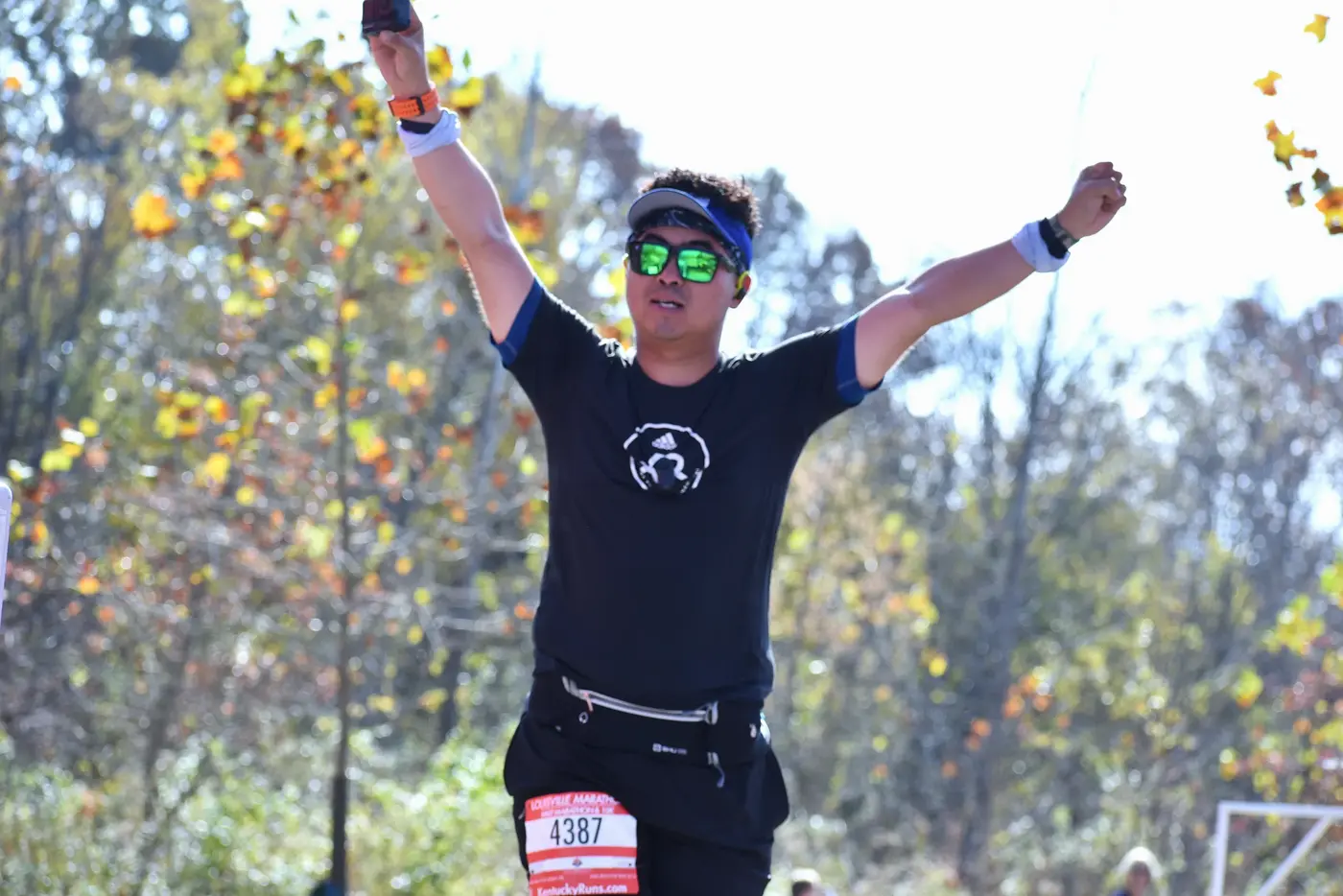
Five years started here and ended here. My first marathon in the United States was Louisville, and the last marathon of my PhD career was Louisville too. A full circle, with a beginning and an ending.
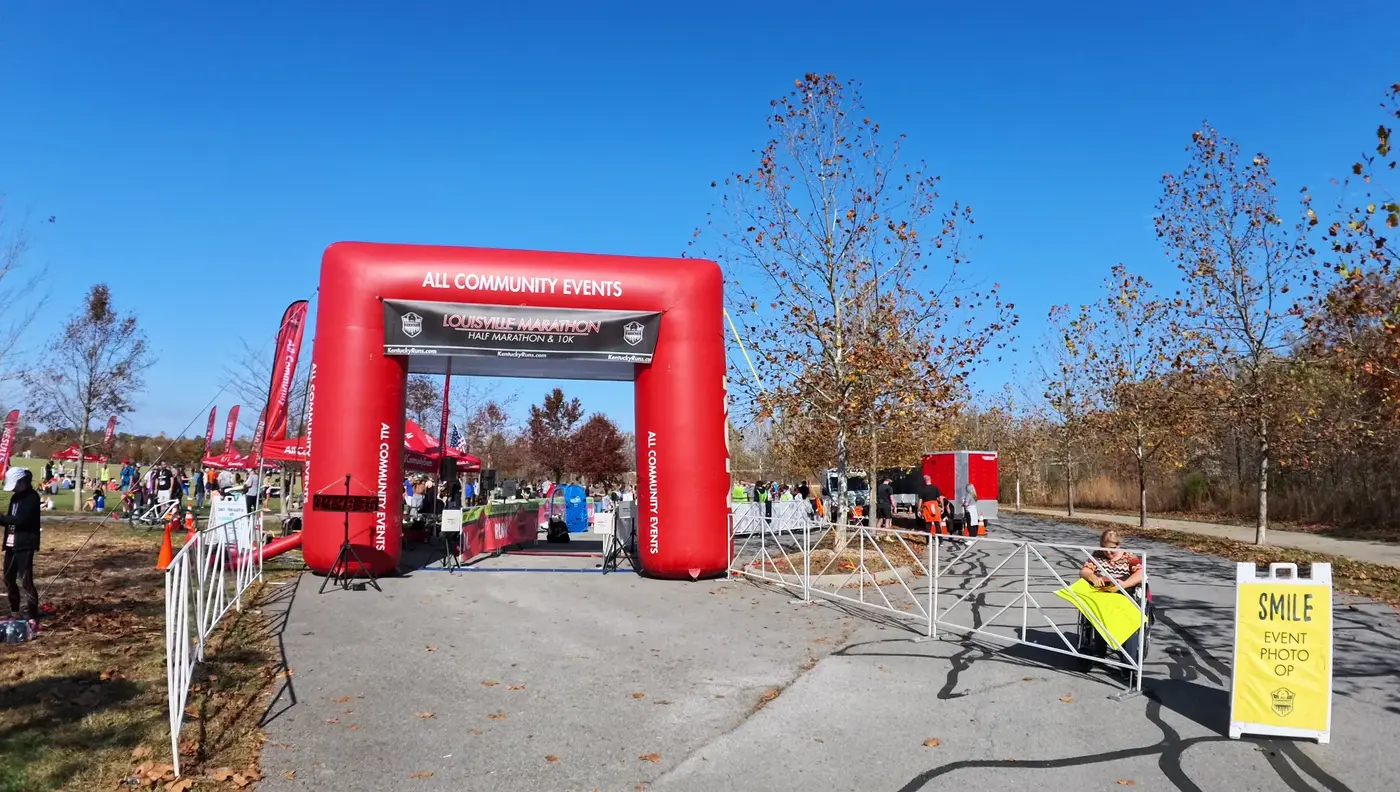
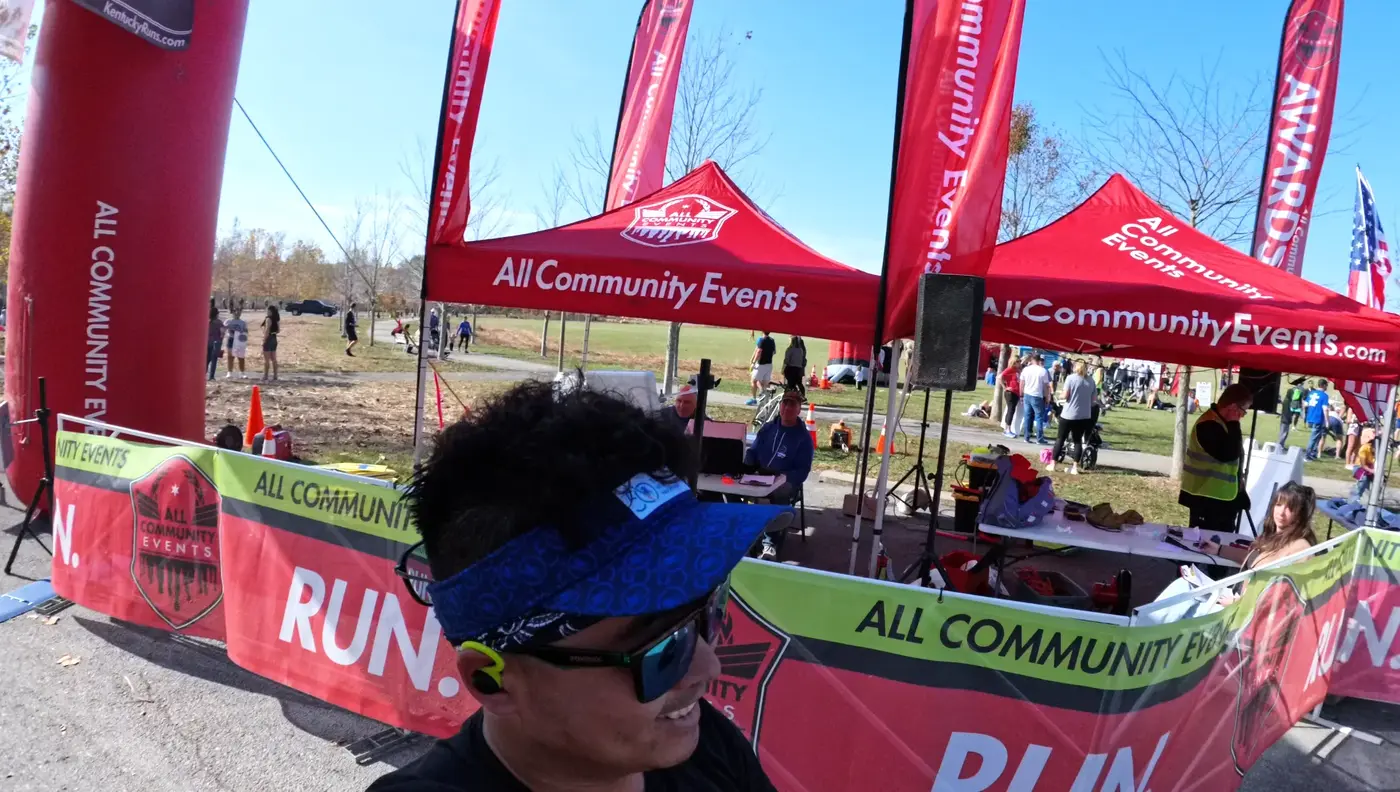
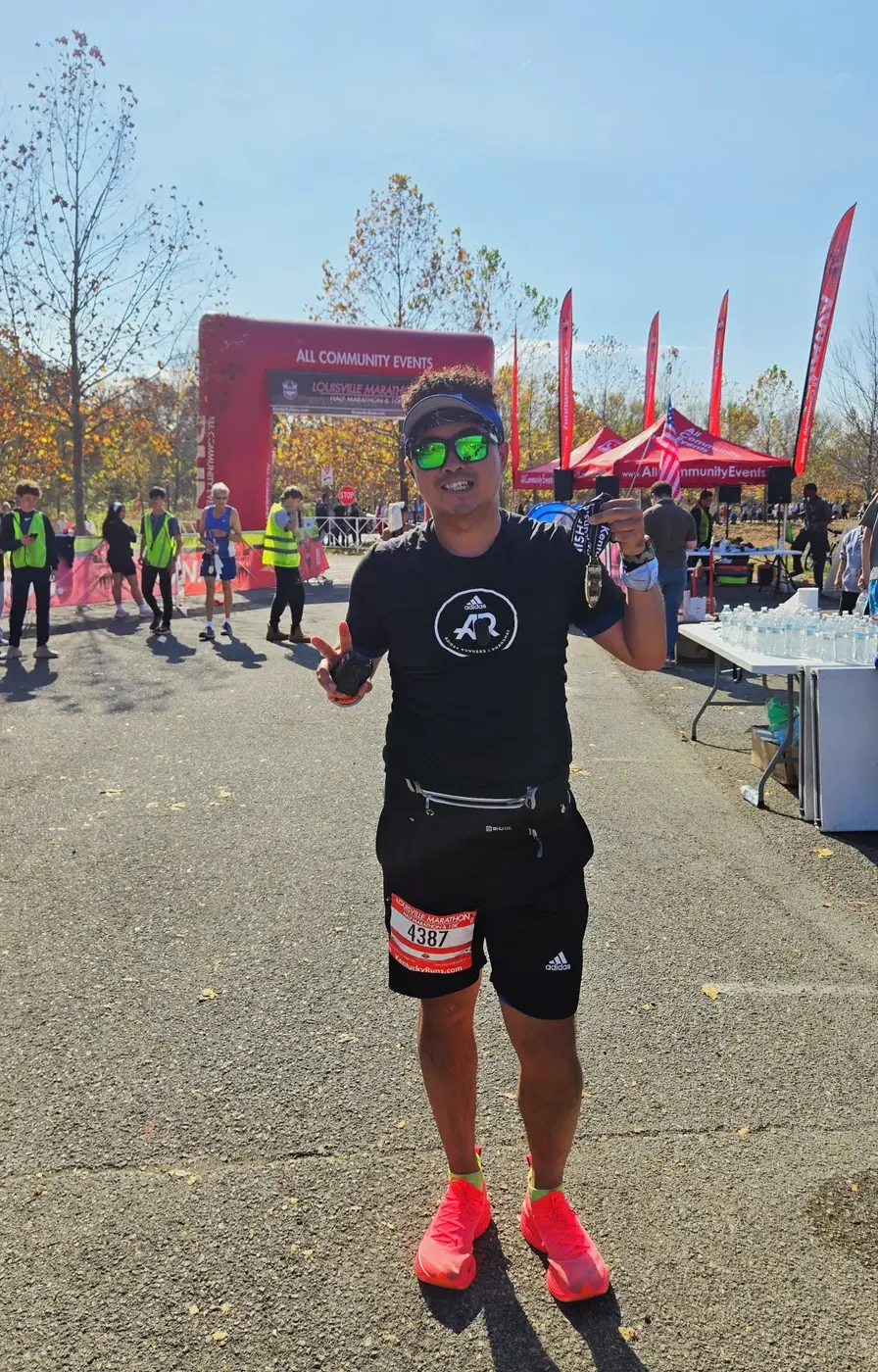
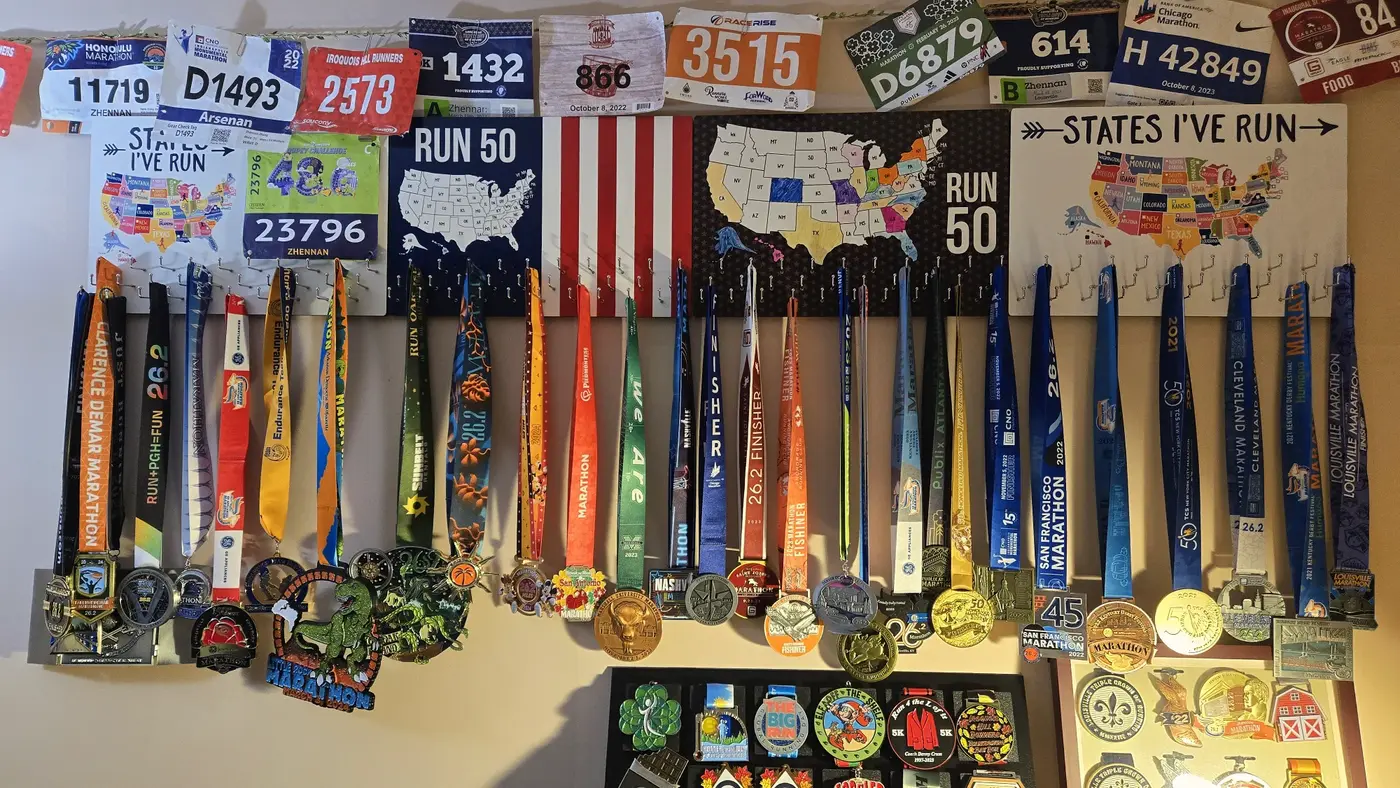
The five years of my PhD were honestly wild: I ran 30 marathons in 22 U.S. states; published 12 papers; wrote a grant for my advisor that brought in $918,734; and somehow developed morally, intellectually, physically, artistically, and, yes, physically again.
I did right by my advisor. In research, I did not drop the ball; in life, I also lived up to my own professional ethics.
I am grateful to my advisor too. He did, after all, help me become Dr. ZZ. He did not exactly lose out either: he got tenure and a new job.
The pressure belongs in the past; the gratitude should stay in the heart. At the end of these five years, I did not lose, and neither did he. That is good enough.
Chapter 4 | Doctor ZZ's Final Chapter · Family as Witness
In early December, my parents came to the United States together with Wang's dad and mom.
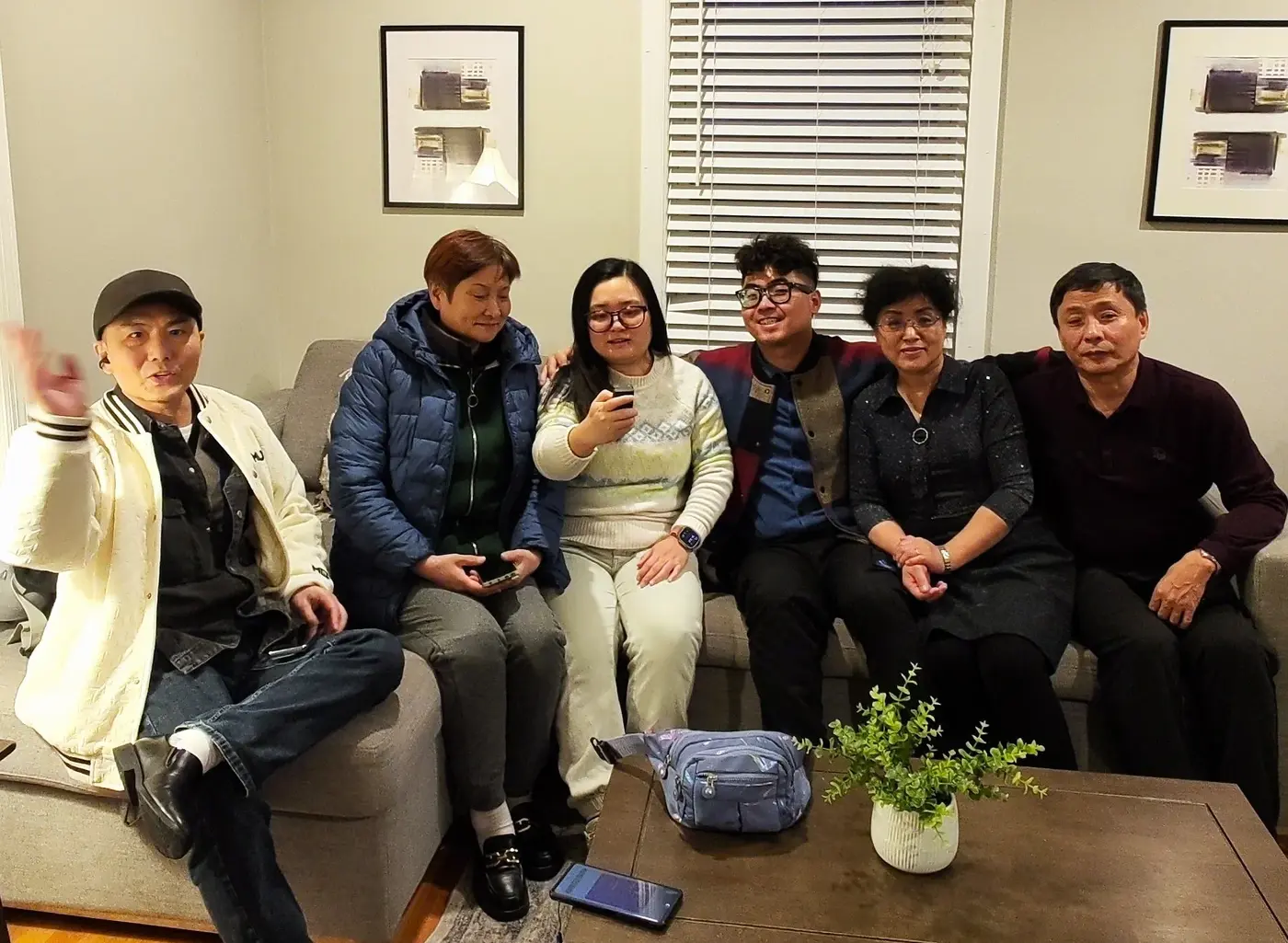
This was the big plan Siqi and I had been working on for a long time, and it felt like the final addition to five years of PhD life.
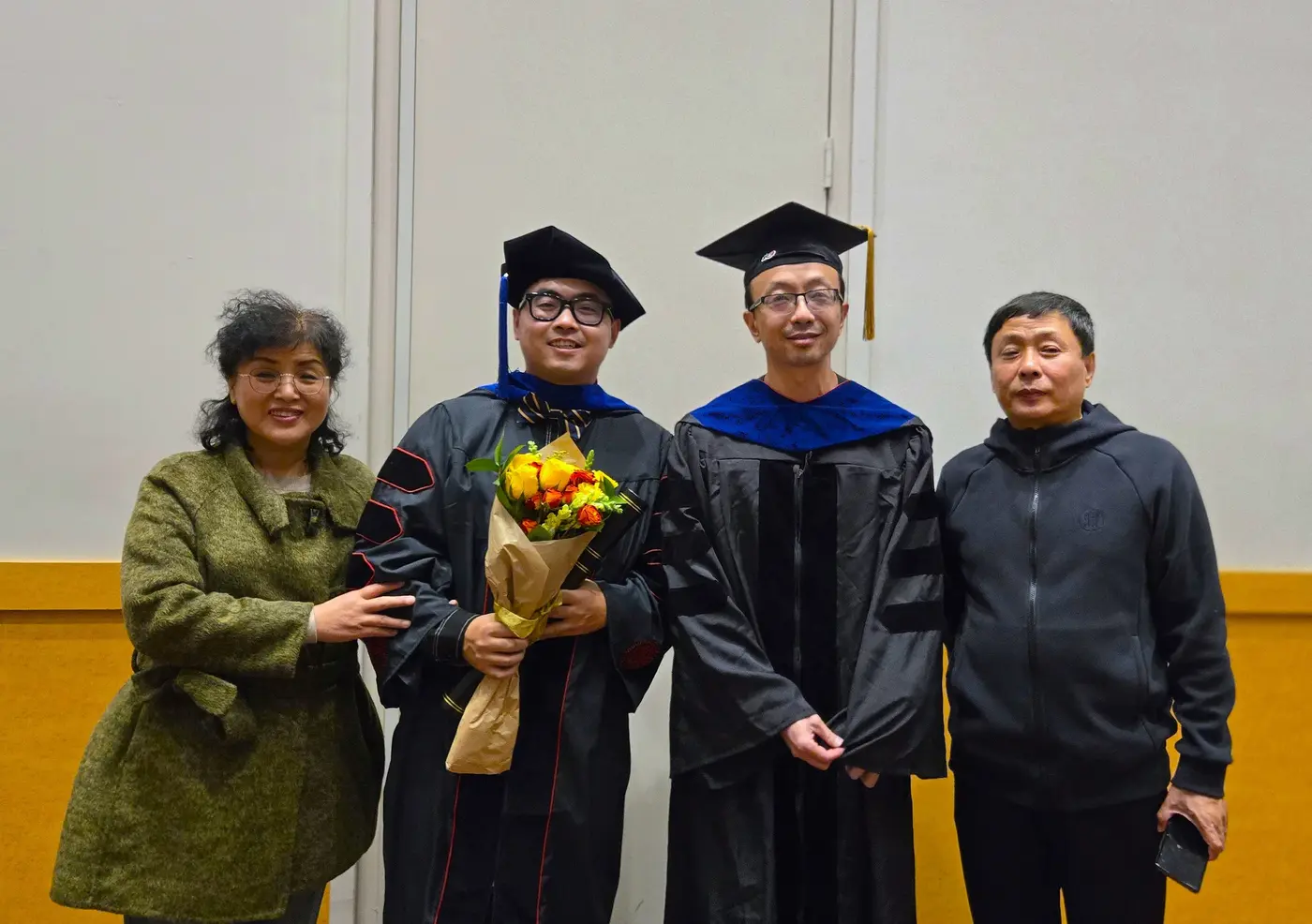
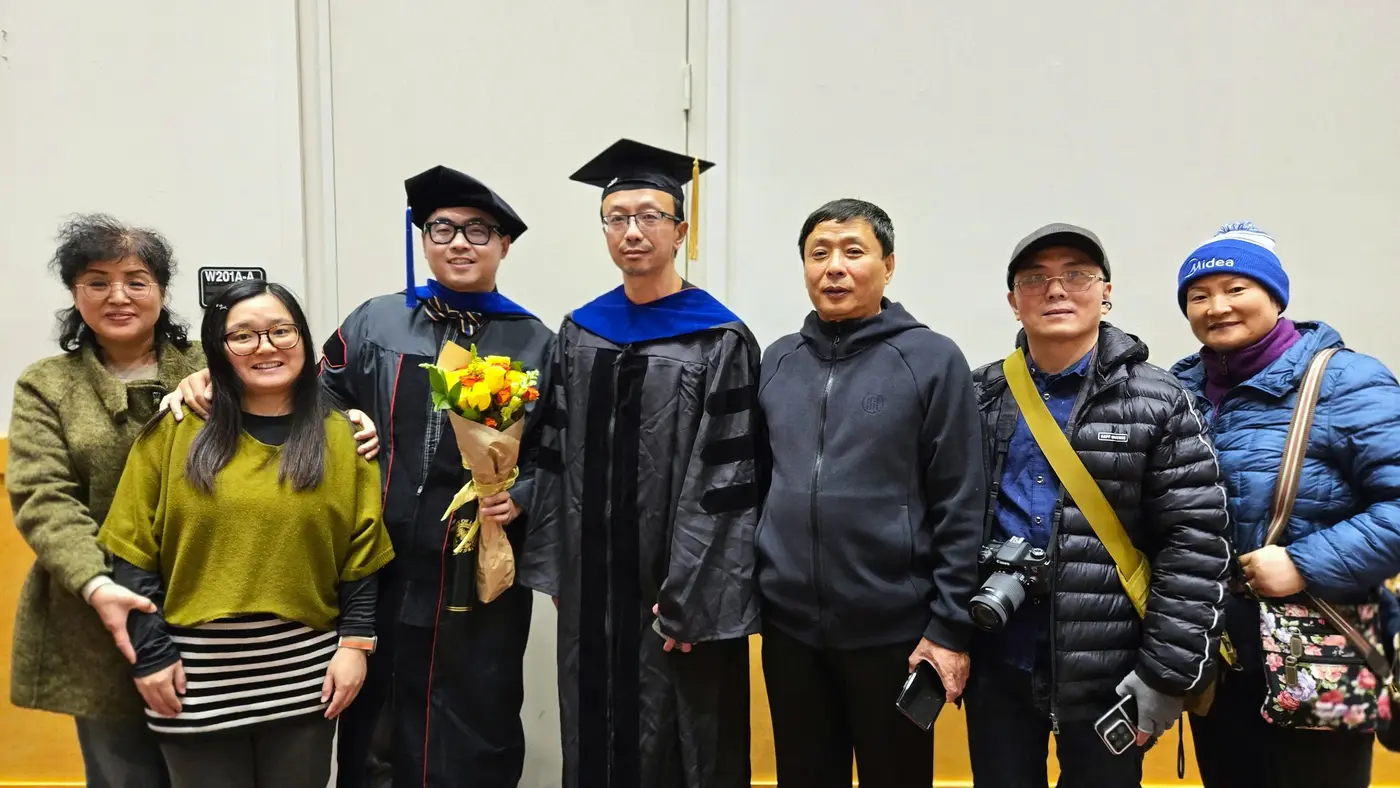
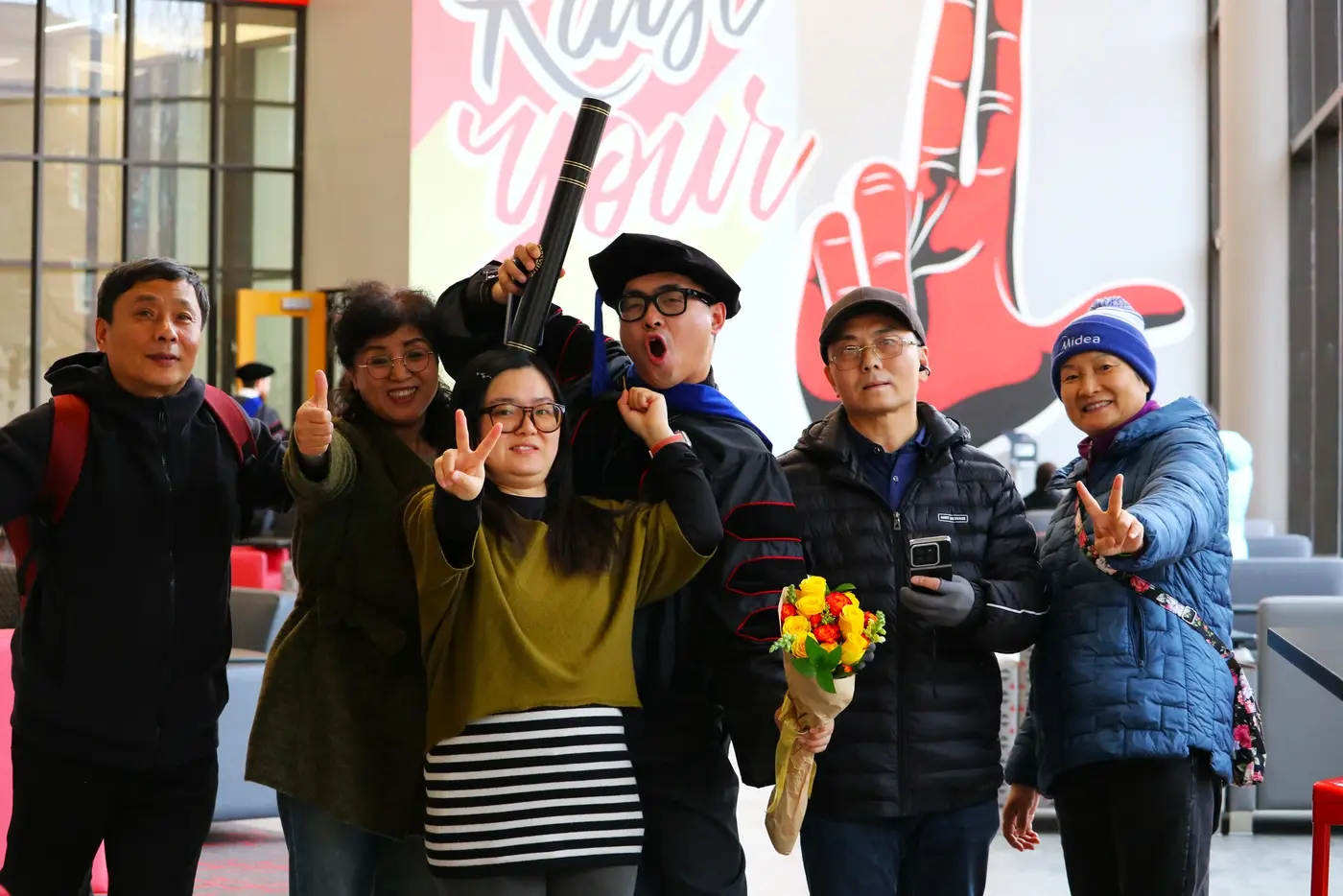
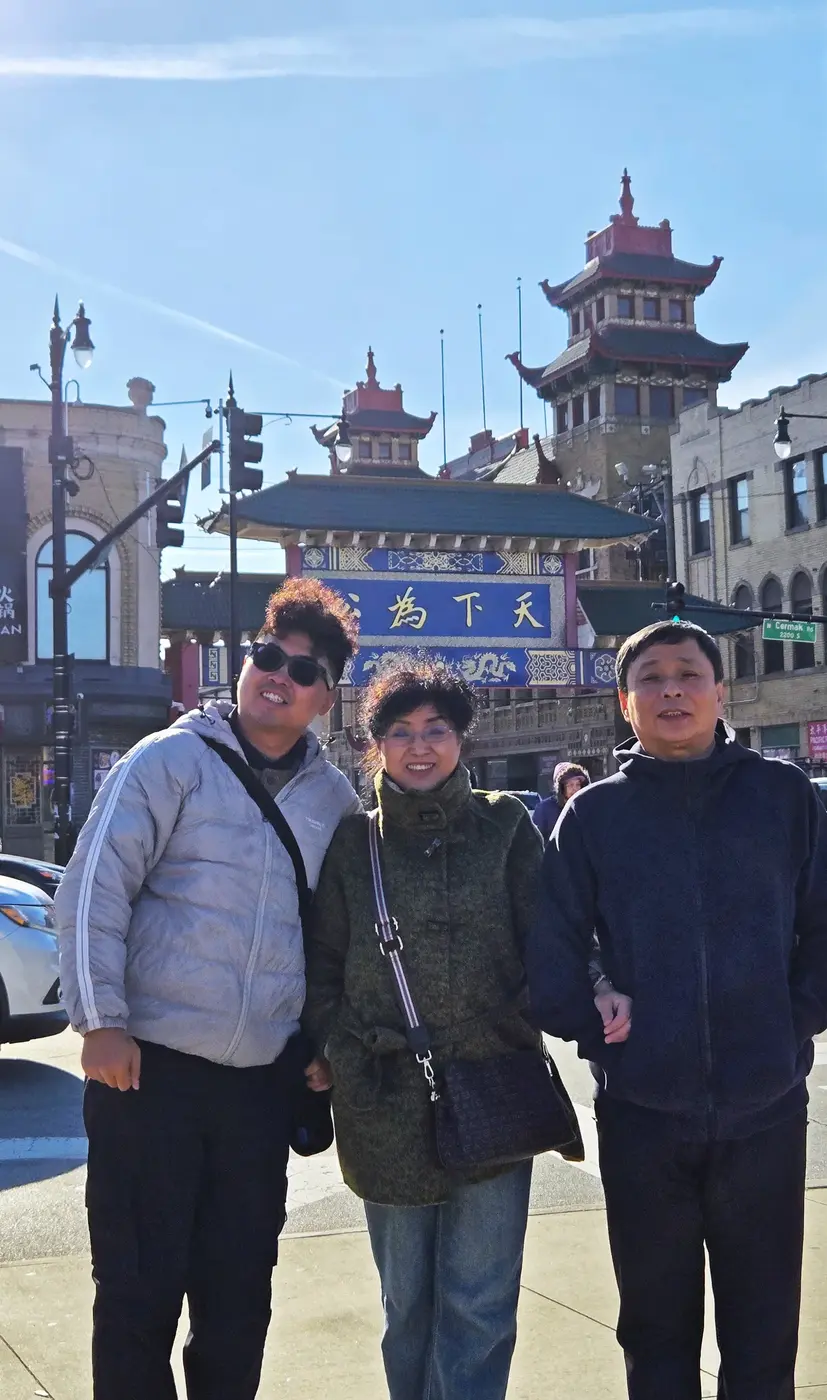
My parents landed in Chicago. We had not seen each other for five years. The moment I saw them, it somehow felt as if nothing had changed. That was enough. No need to turn it into a drama.
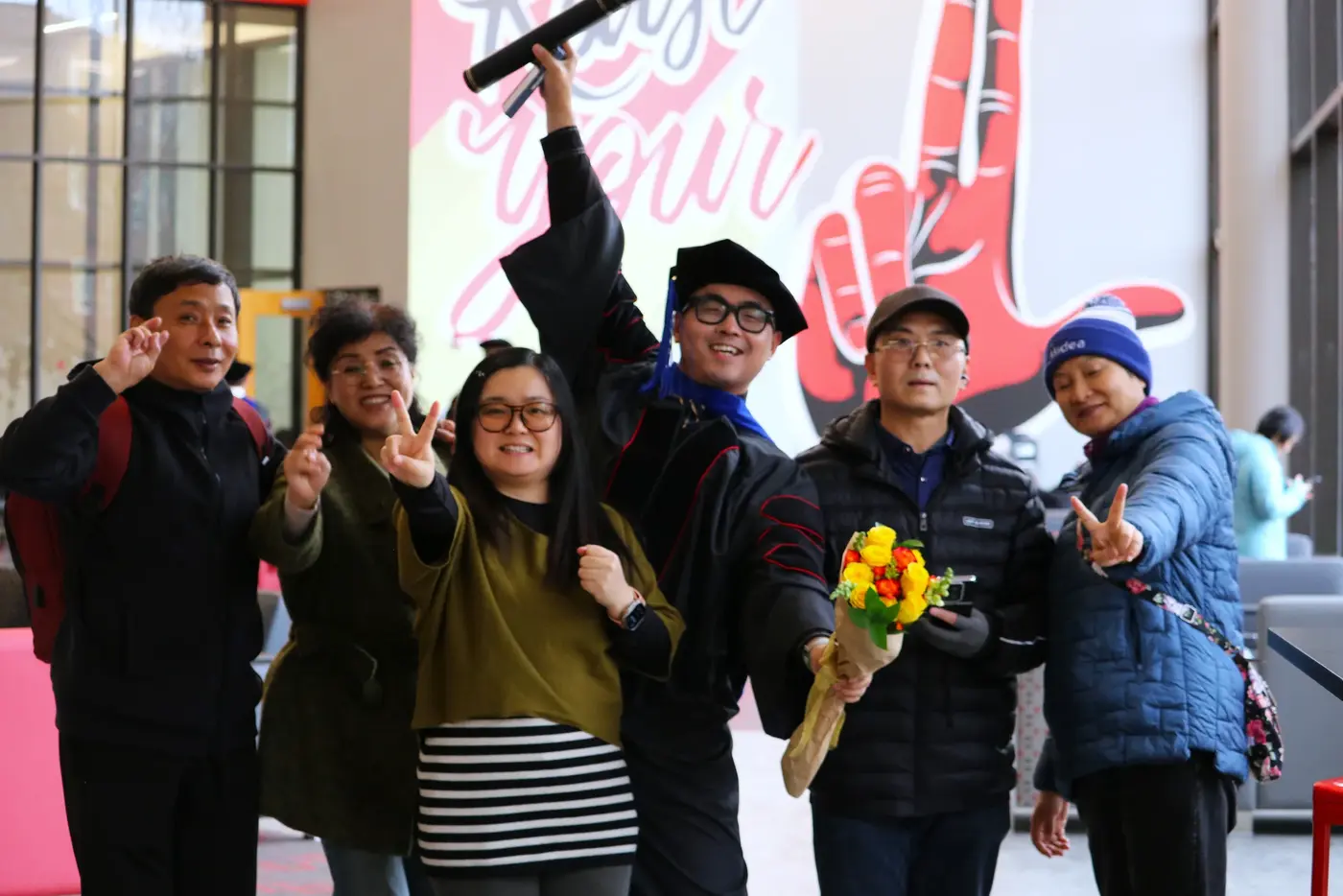
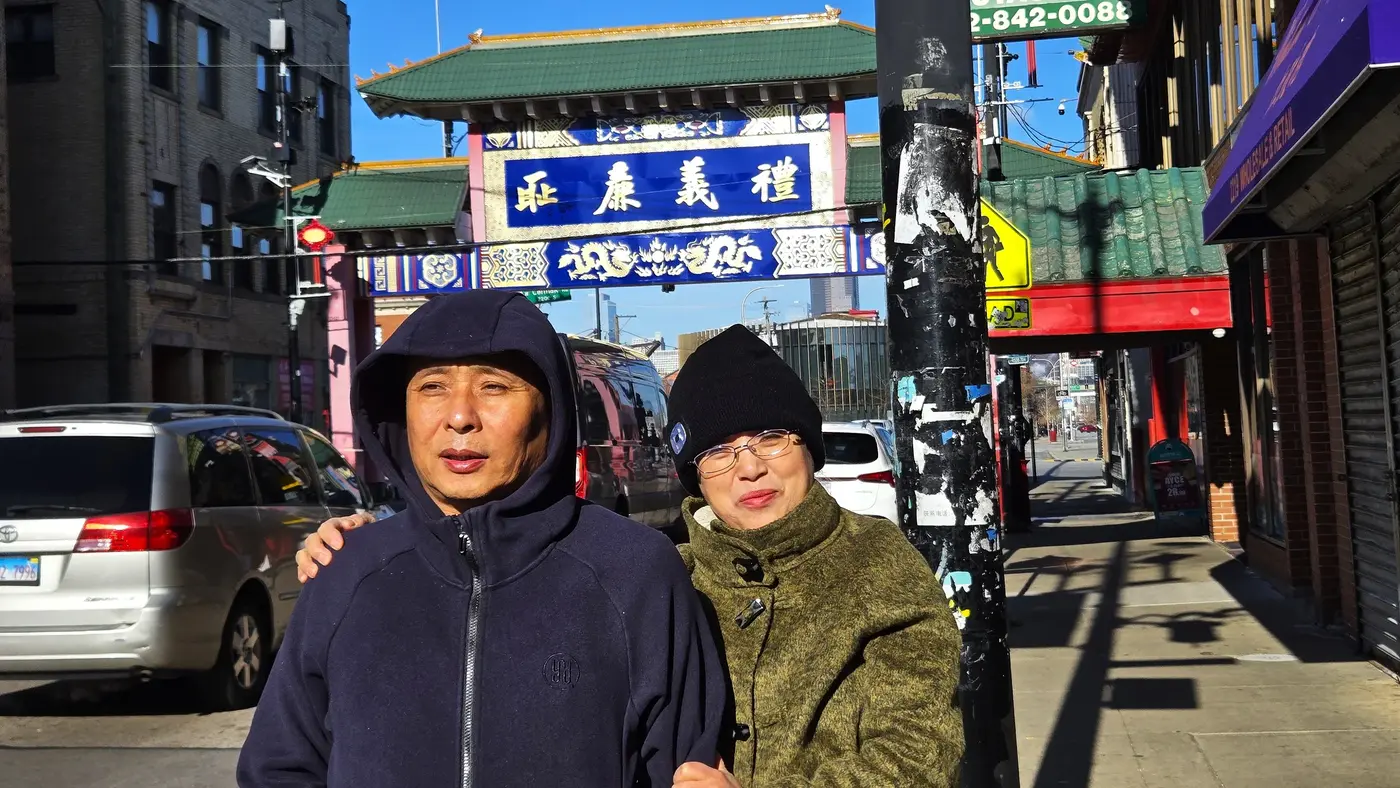
Wang's dad and mom helped take care of them all the way from China to the United States, which was truly wonderful. We went to an Airbnb to rest for a few days and had Chinese food in Chinatown. The noise and warmth of it all seemed to erase five years of distance at once.
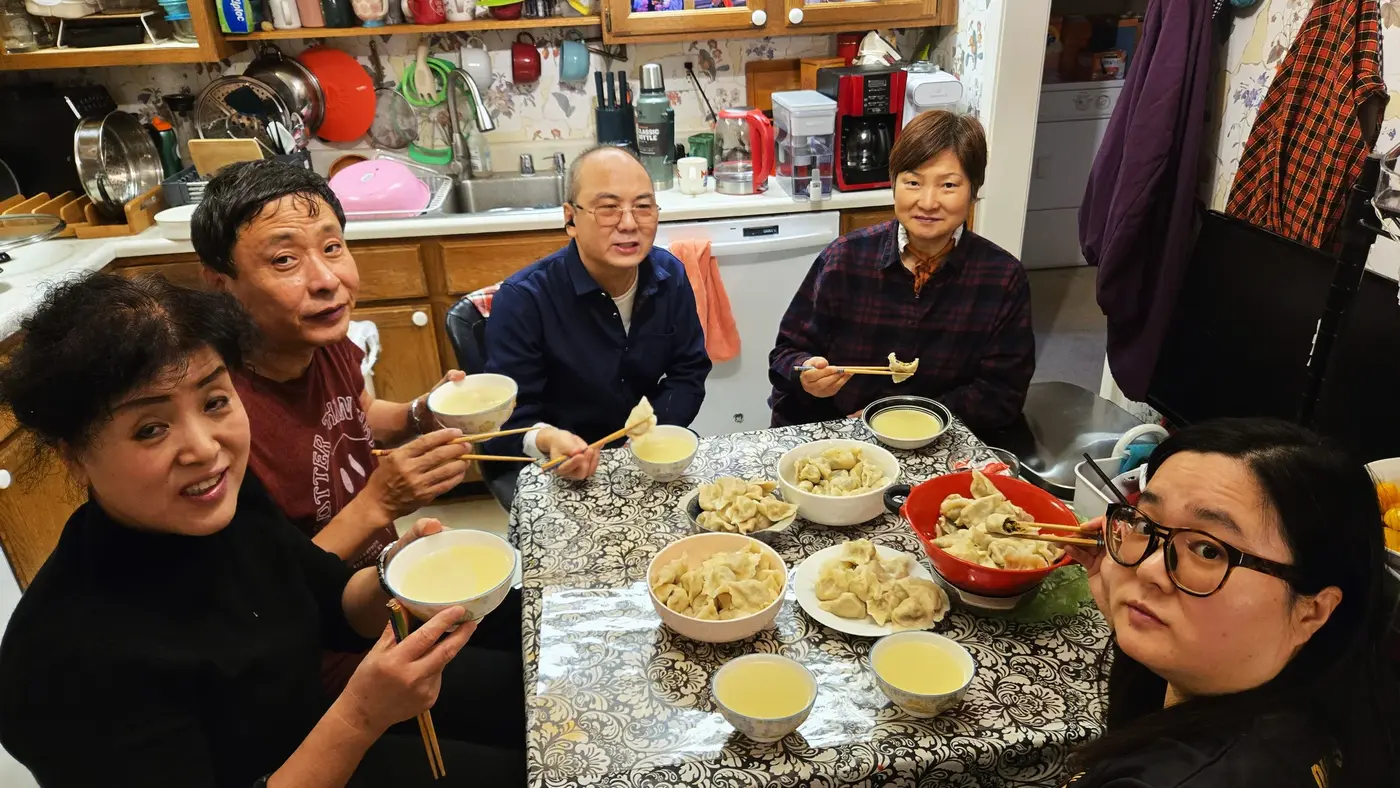
Then the whole family drove five hours back to Louisville. The car was packed, but that only made it livelier. Once we got home, life suddenly tasted like home again: my mom started cooking immediately, changing the menu every day, which was more useful than any research output.
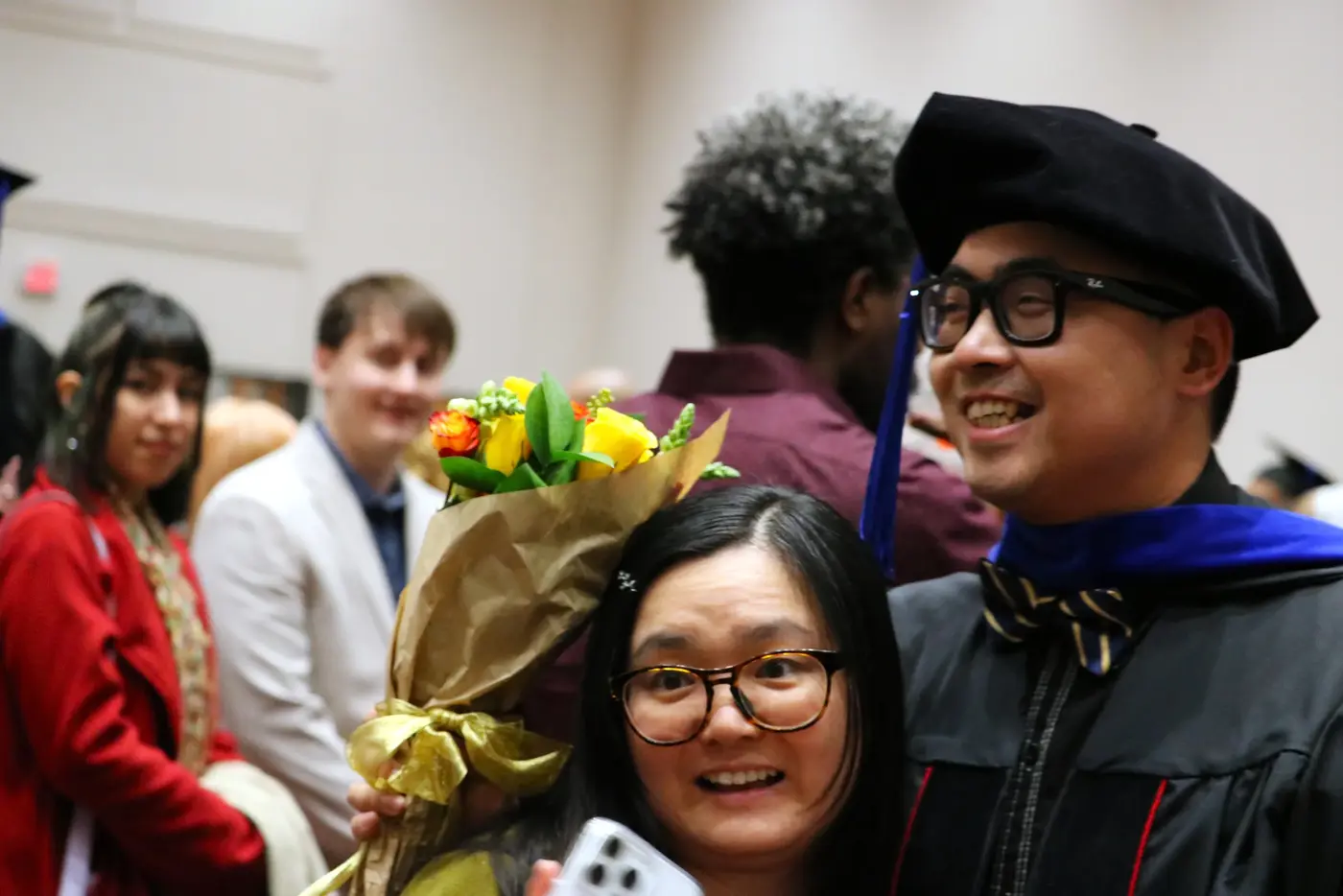
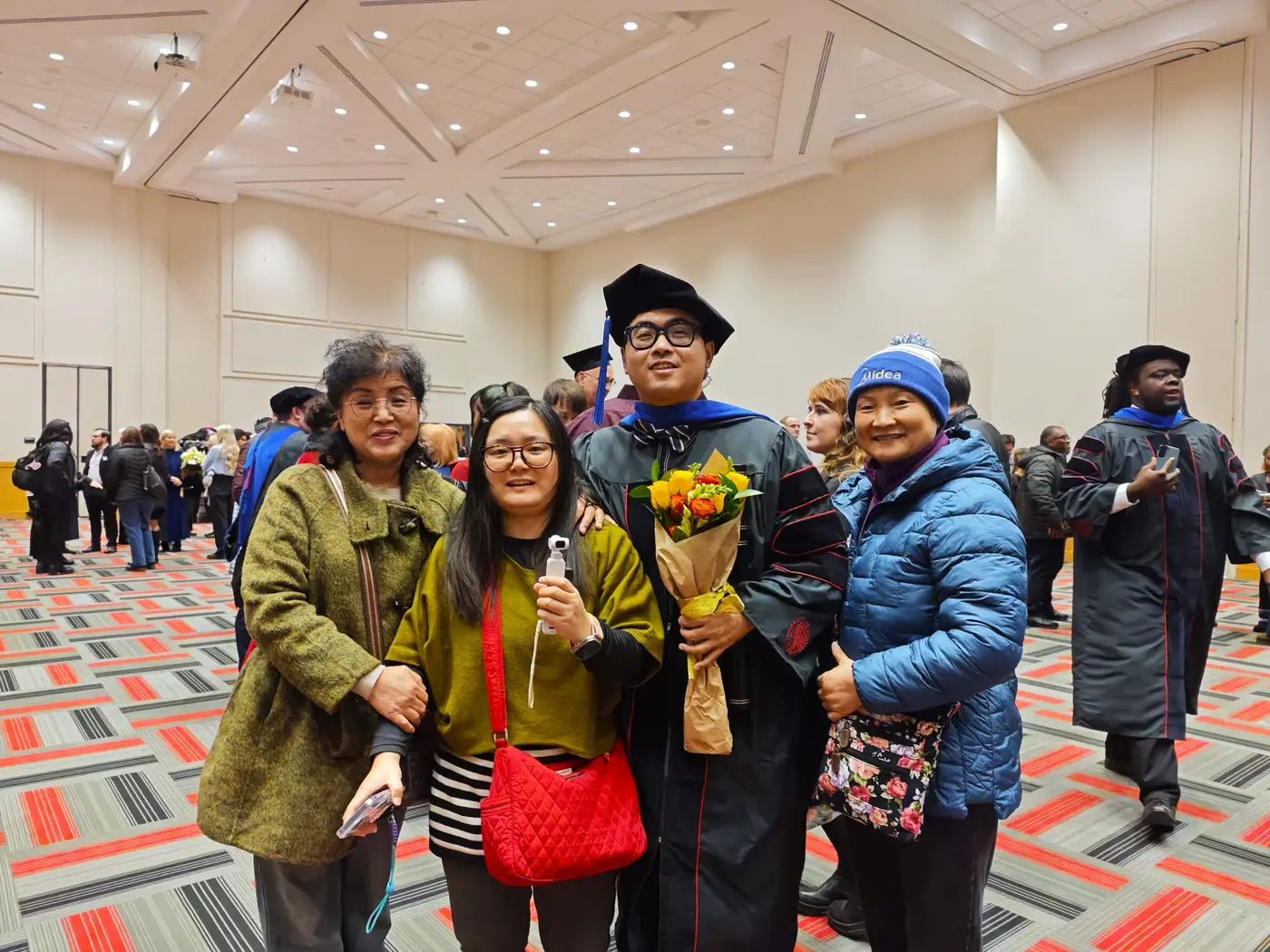
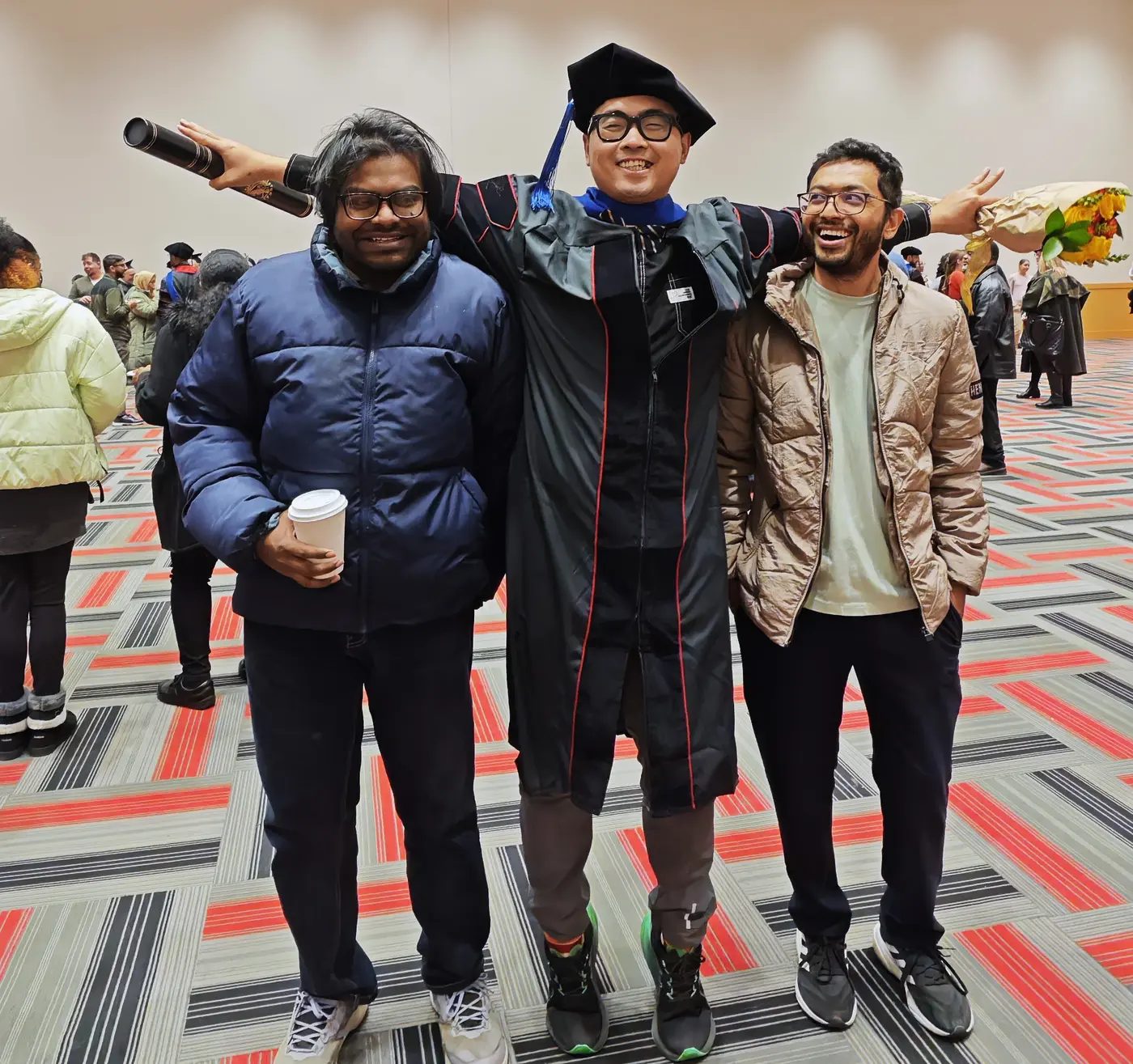
In a few days, it was time for the graduation ceremony.
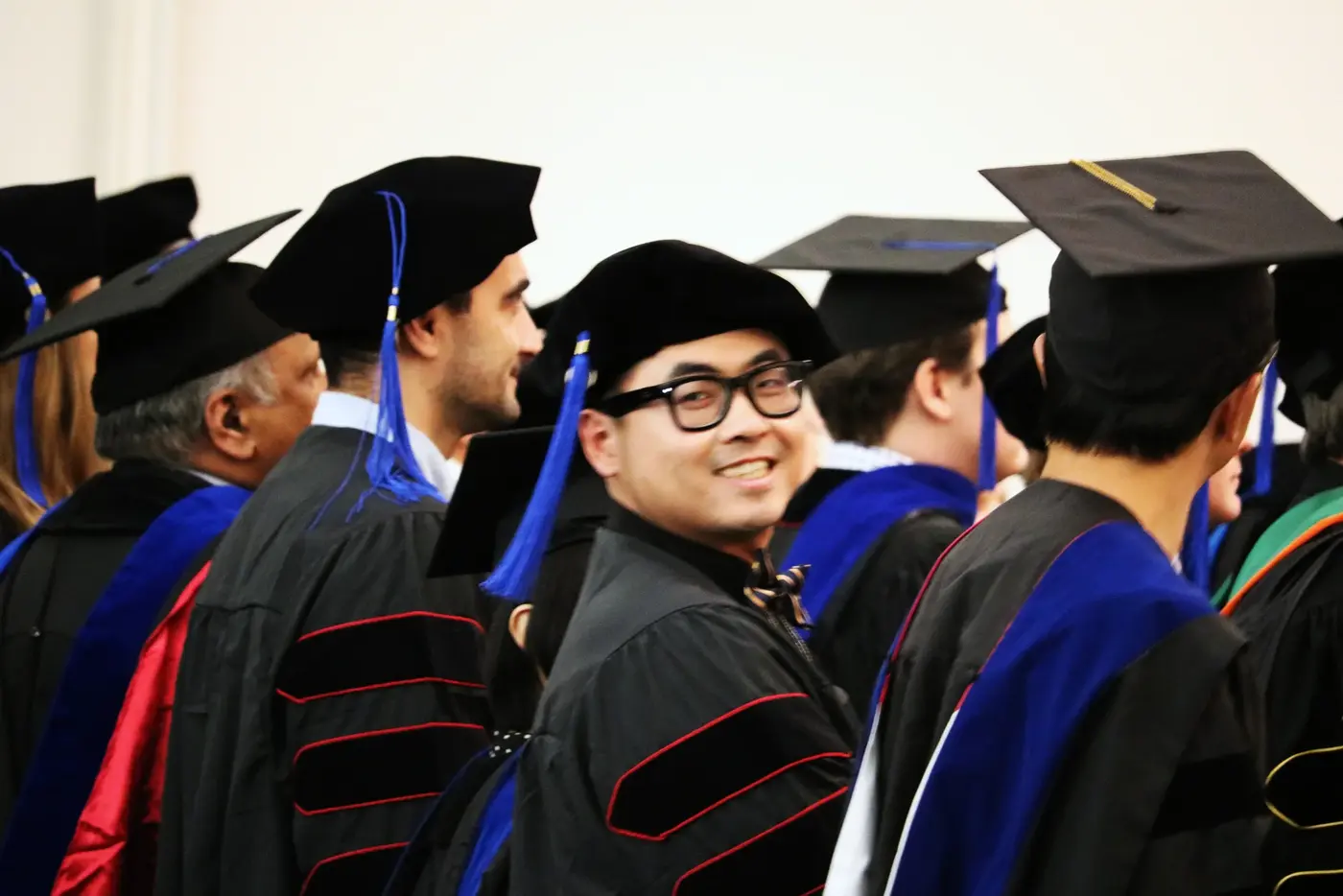
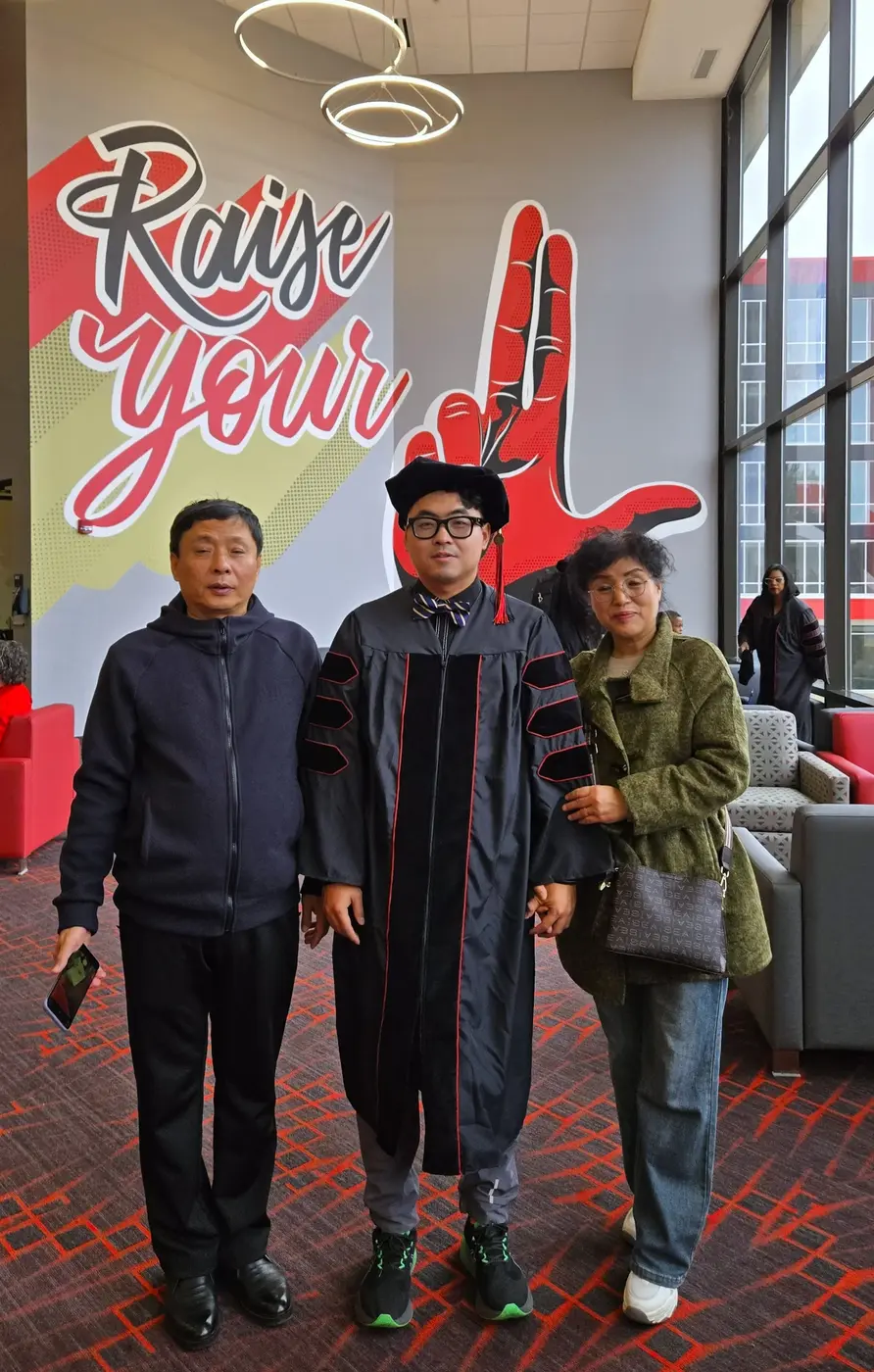
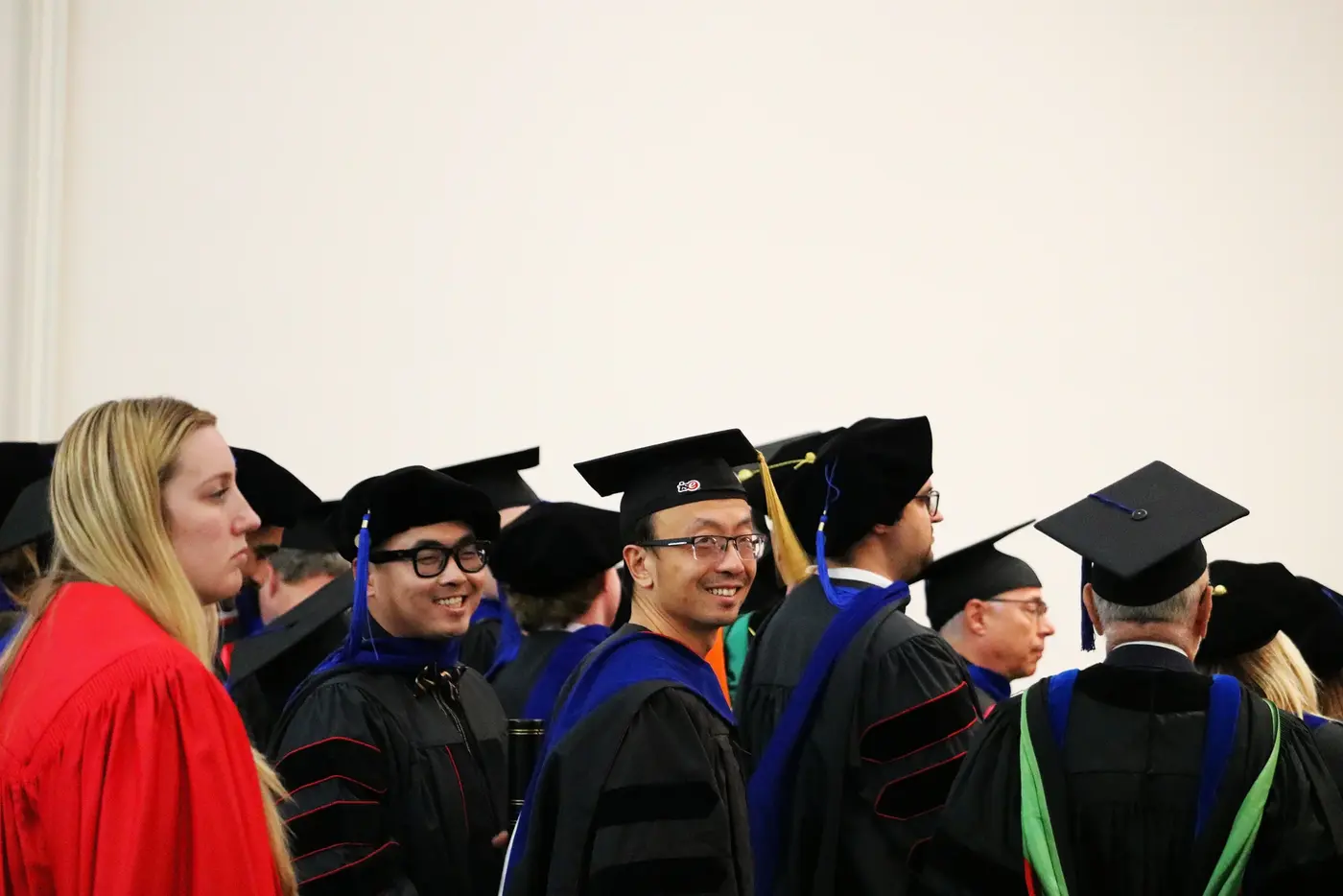
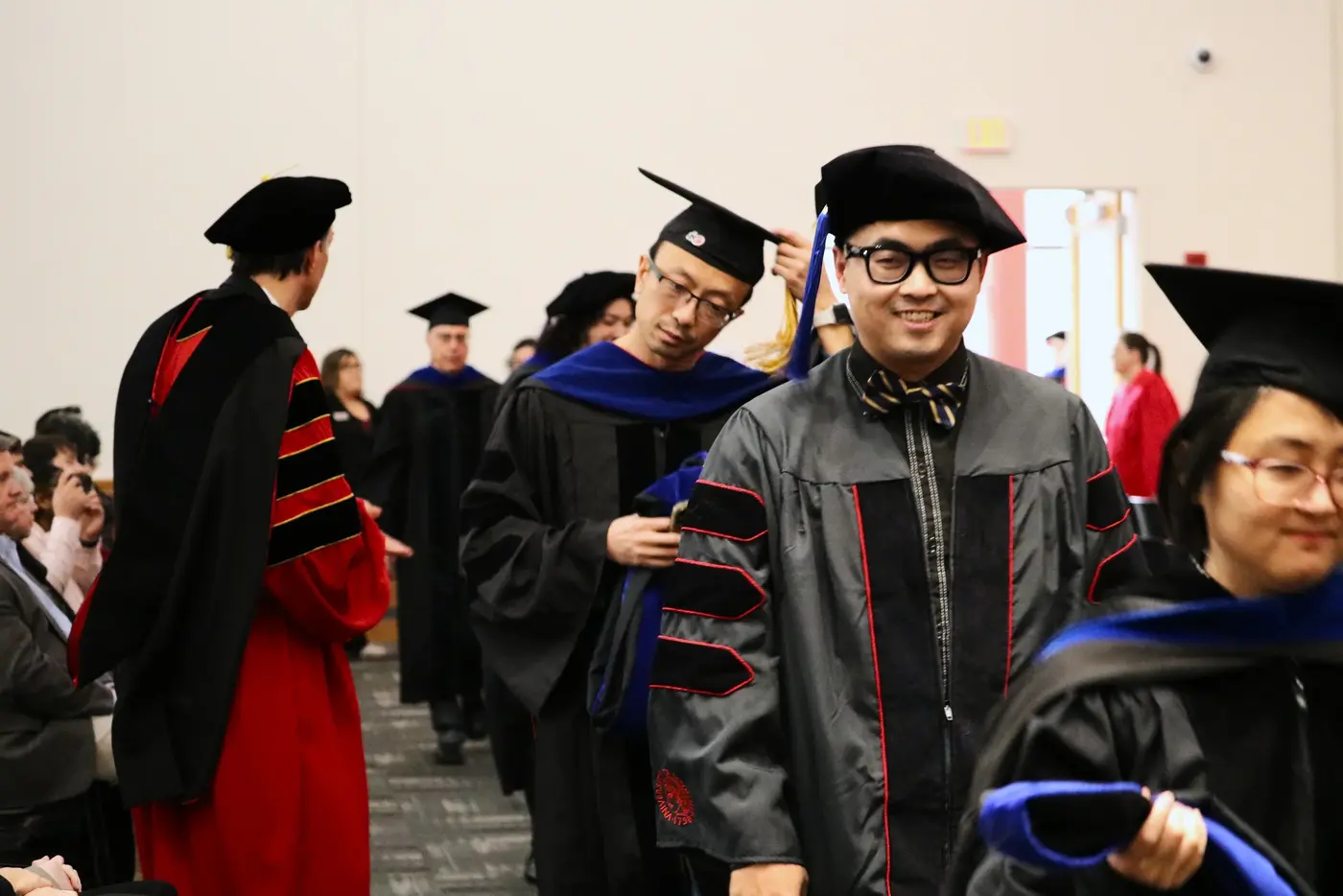
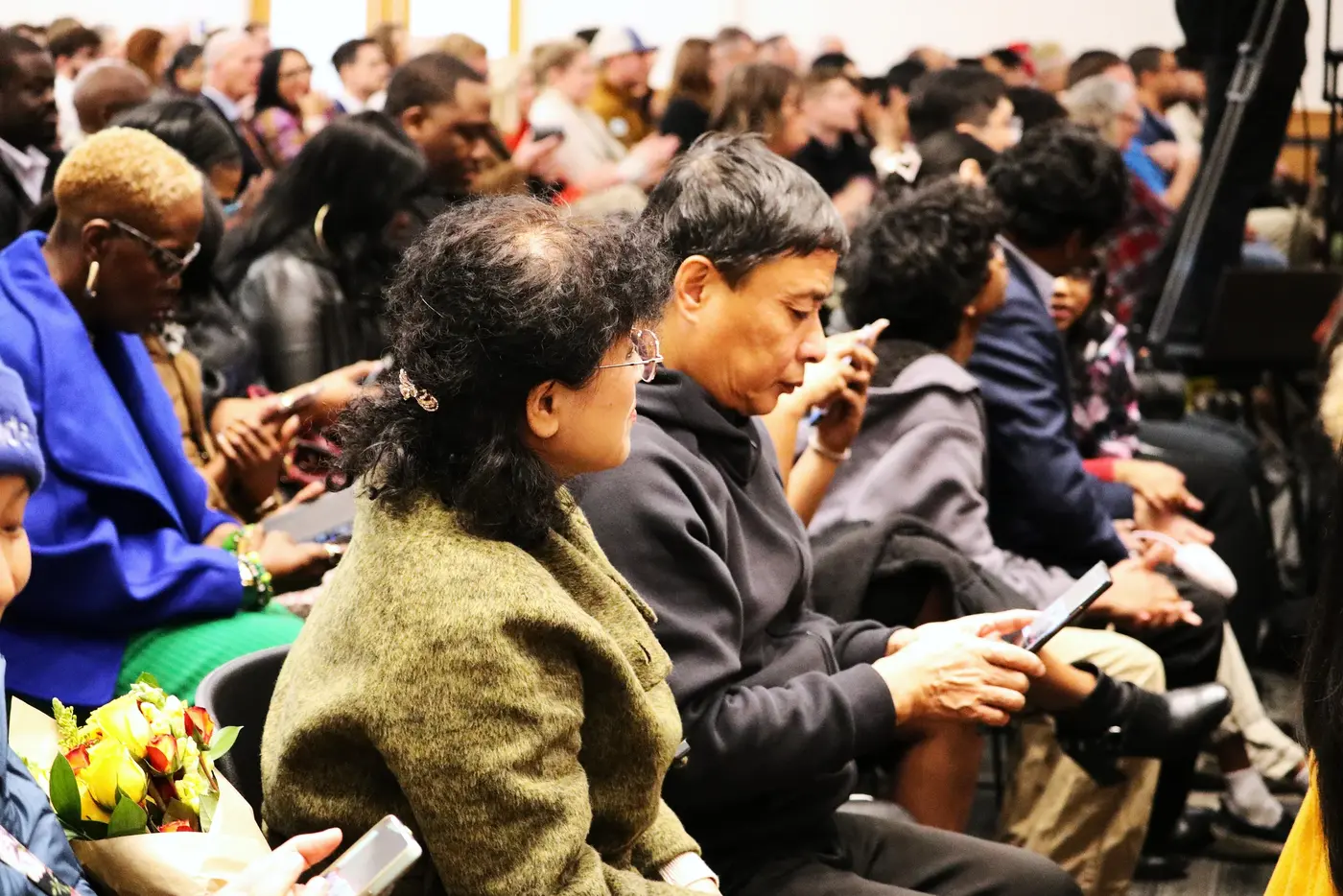
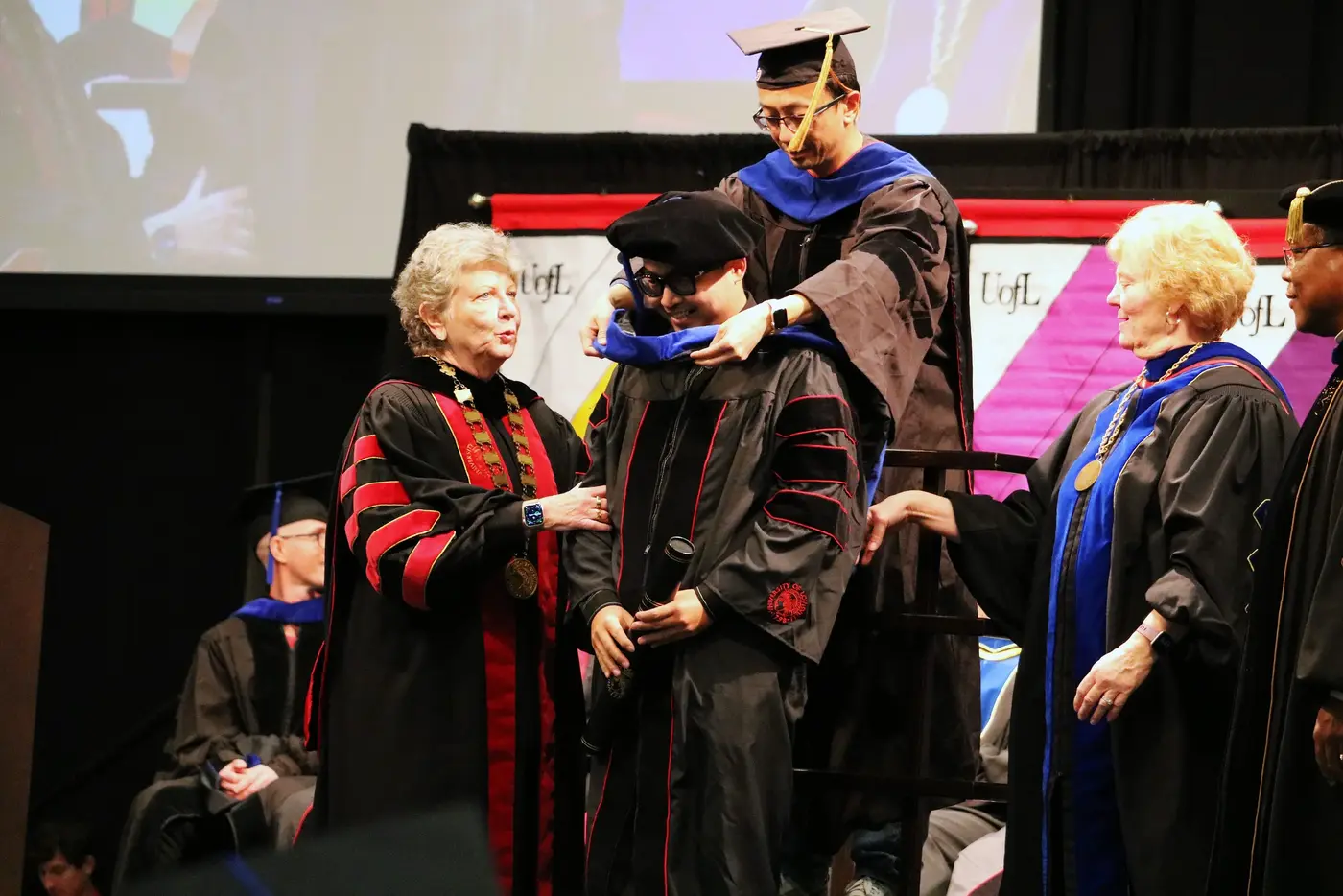
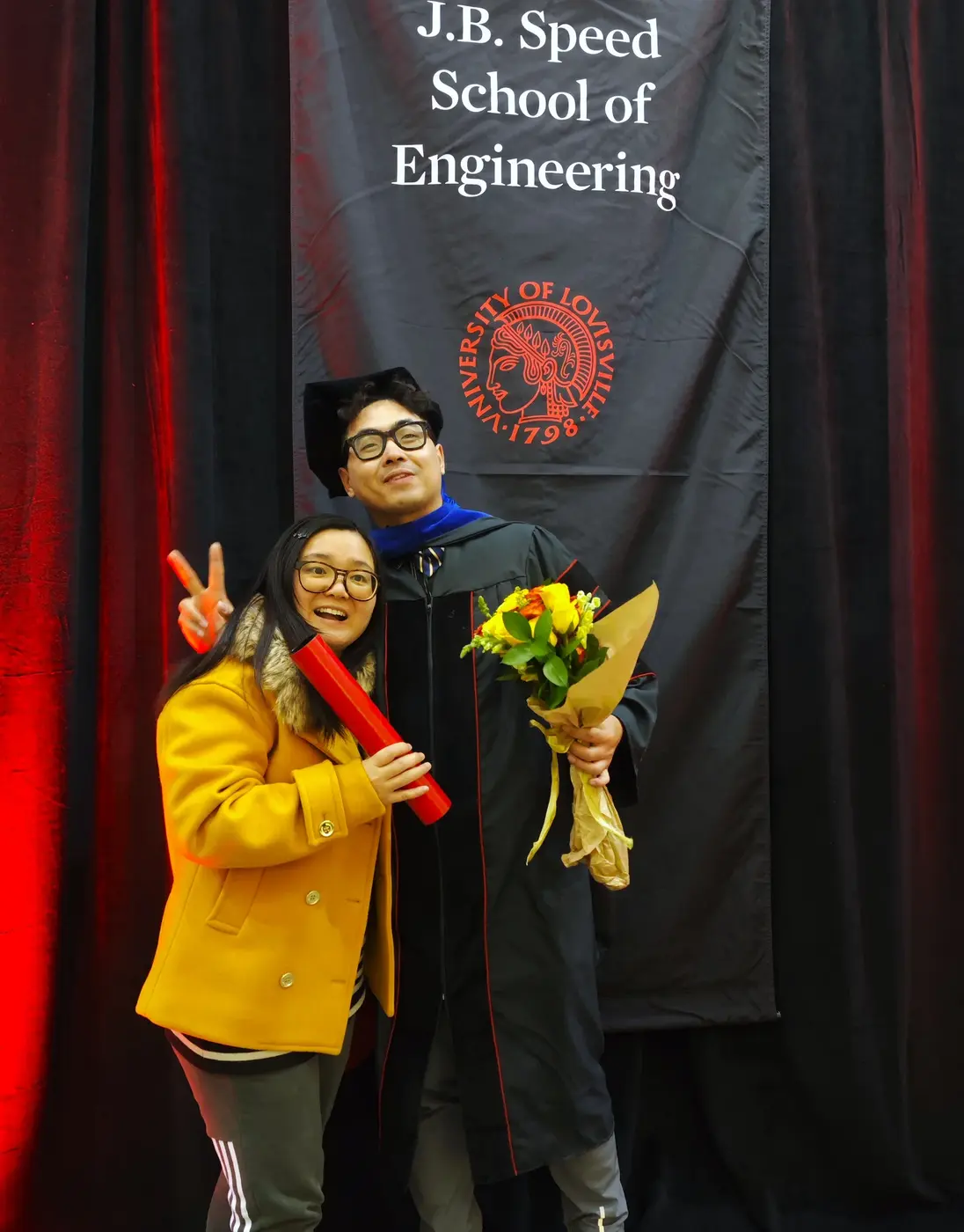
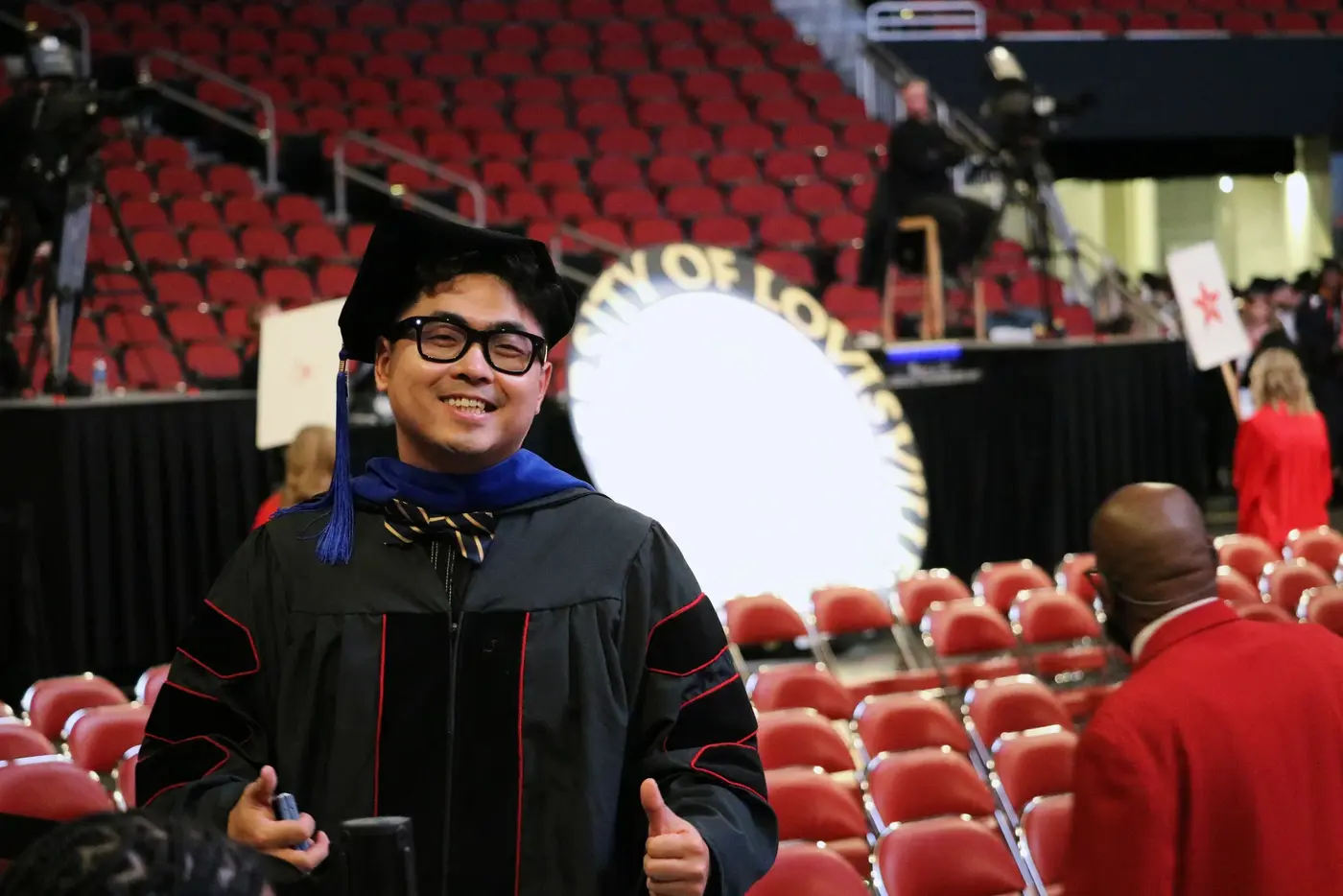
First came the doctoral hooding ceremony. In the auditorium, the atmosphere and music were both formal. My advisor happened to be absent, so Professor Yang hooded me, and I shook hands with the president and dean. My parents were in the spectators, as were Dr. Wang and his wife, plus professional-level photography from Wang's dad and blessings from Wang's mom.
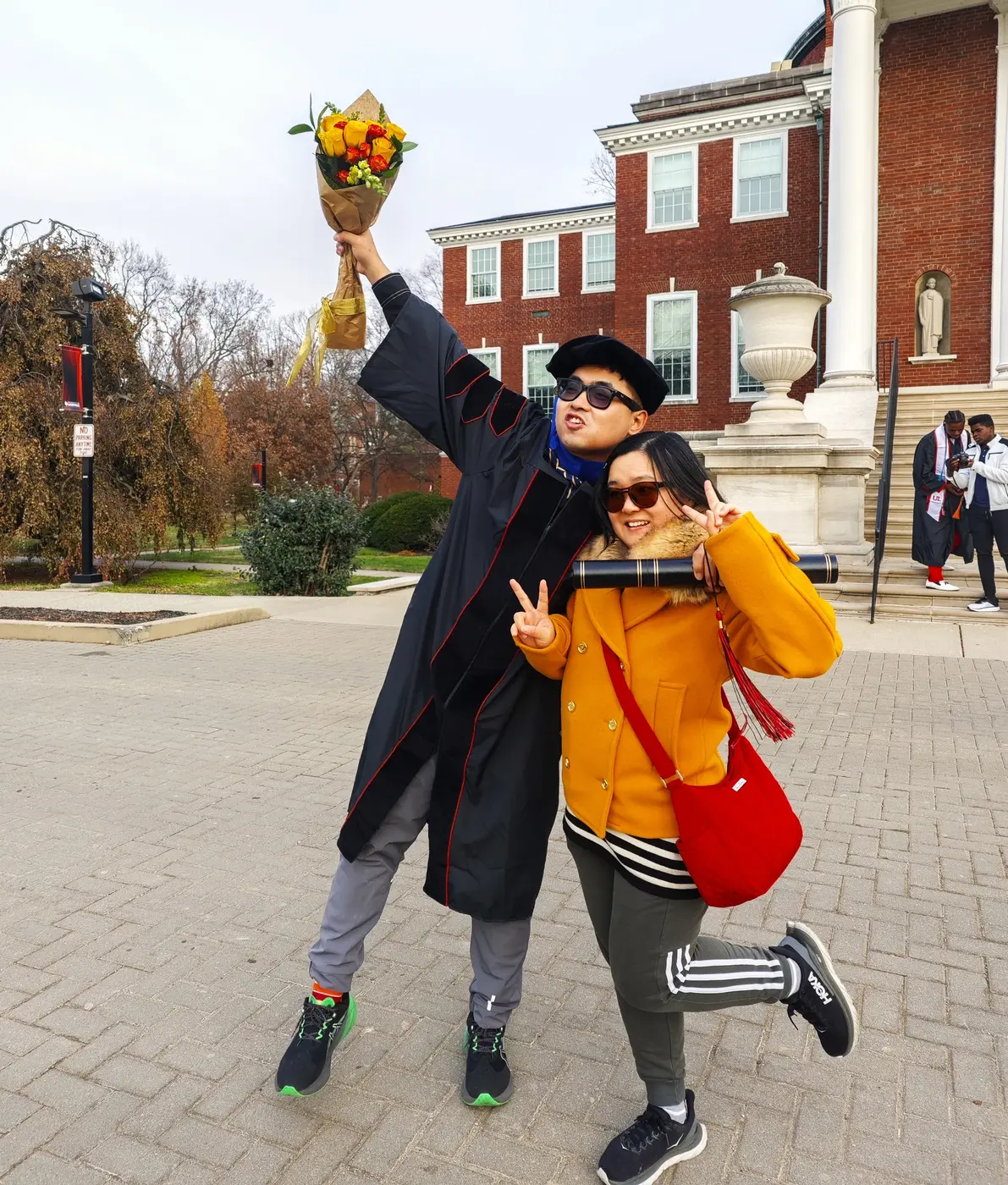
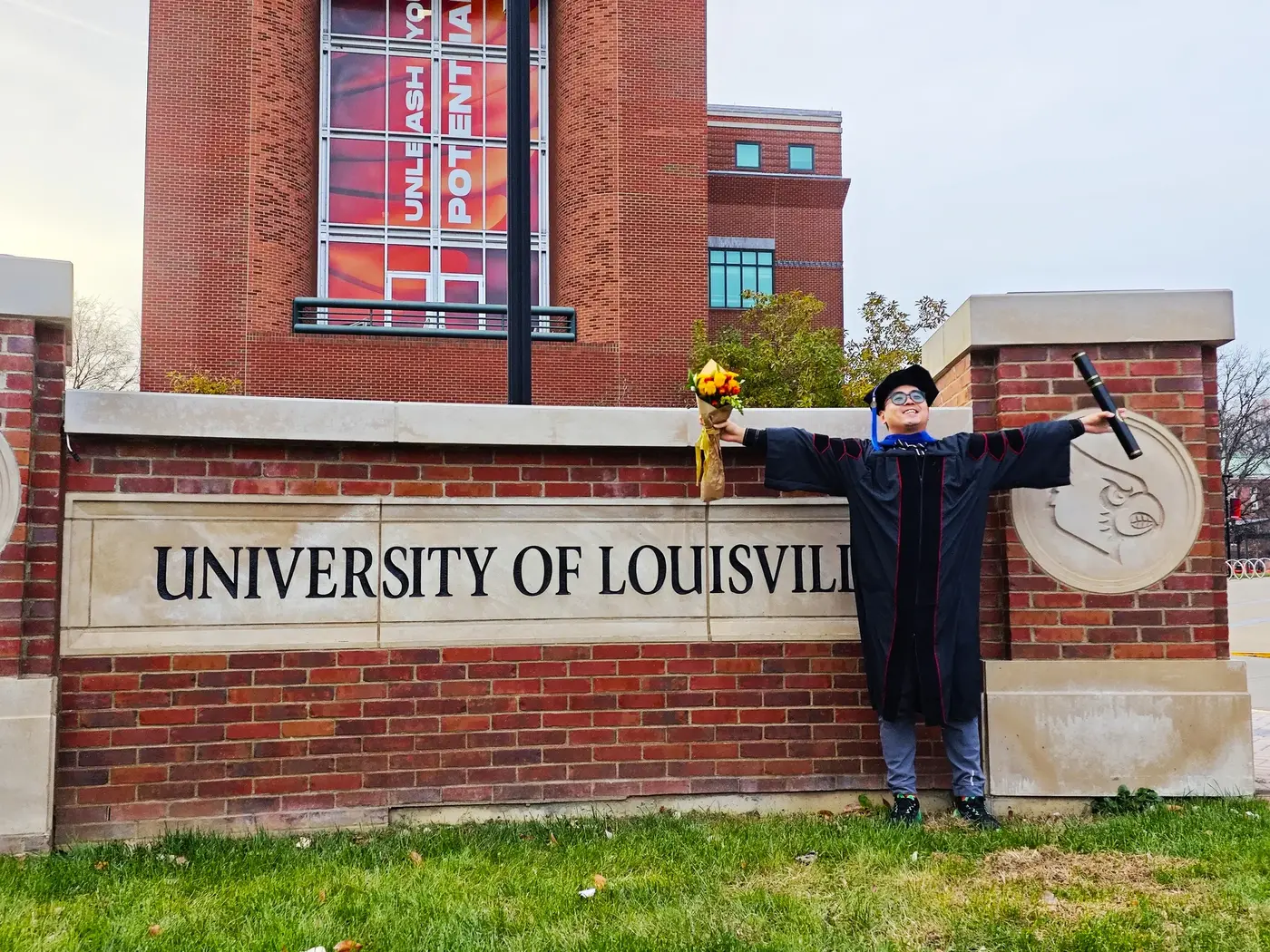
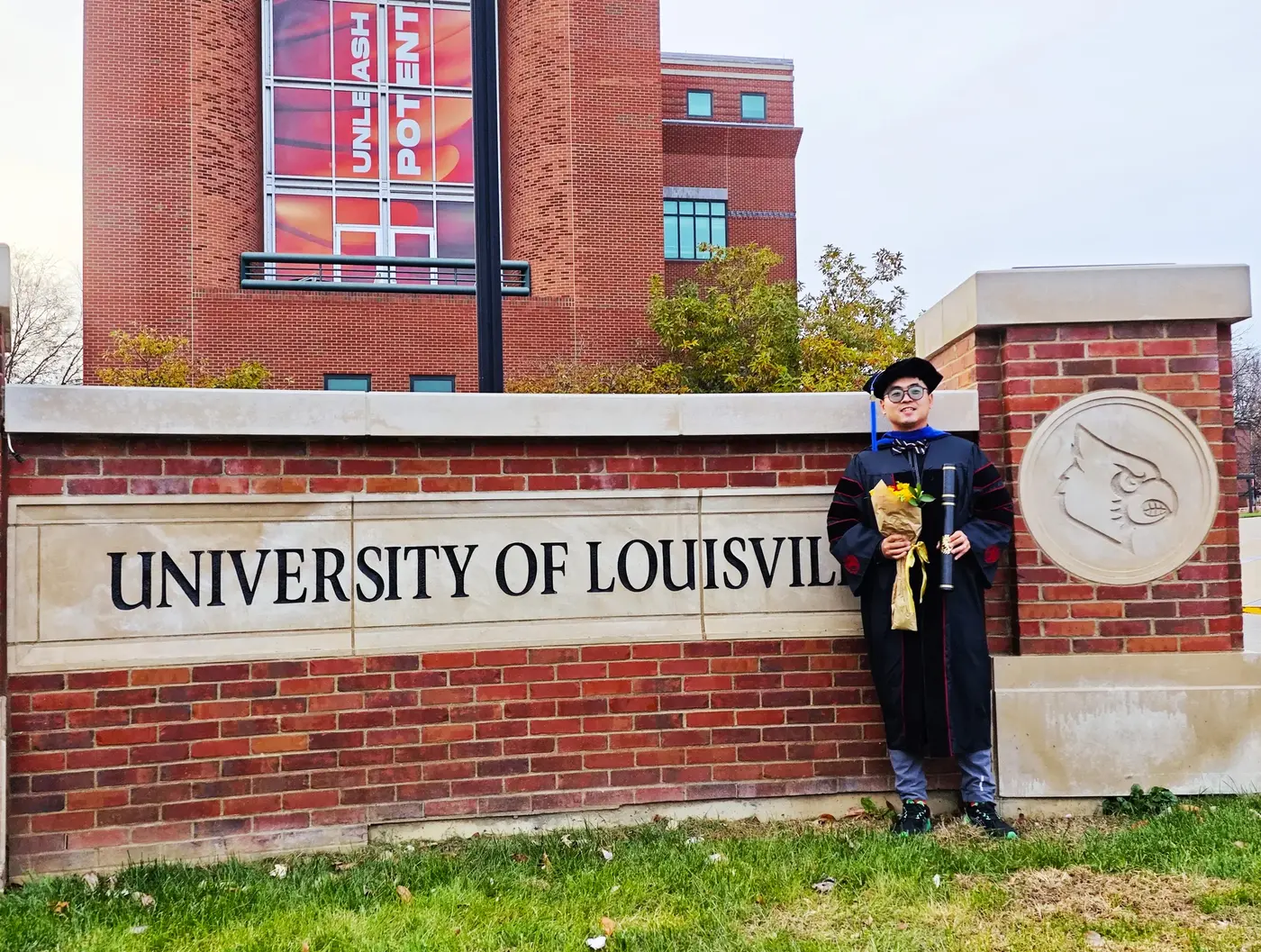
I took my family around campus, my base for the past five years. From the late-night lab to the fountain gate, every corner felt familiar.
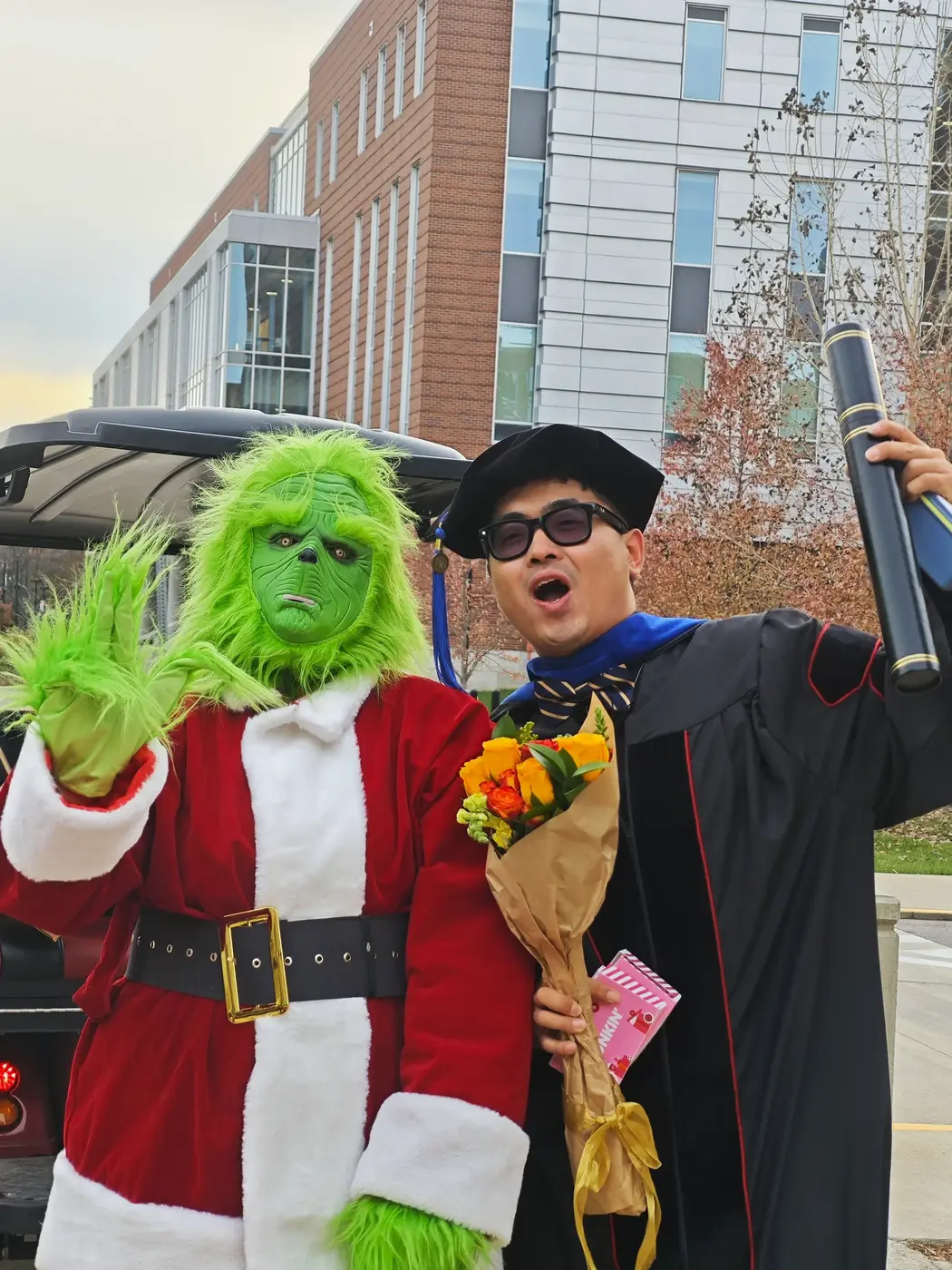
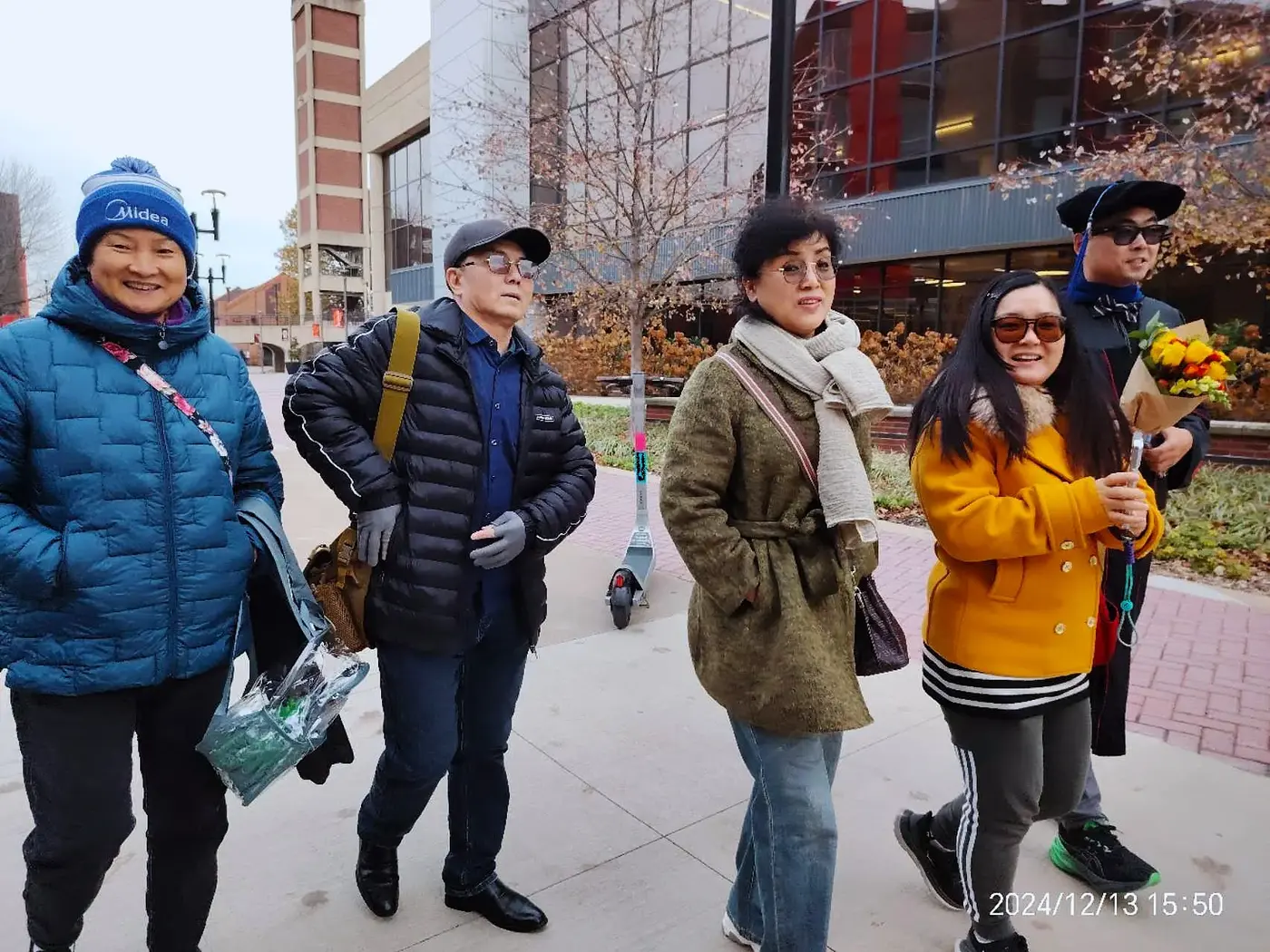
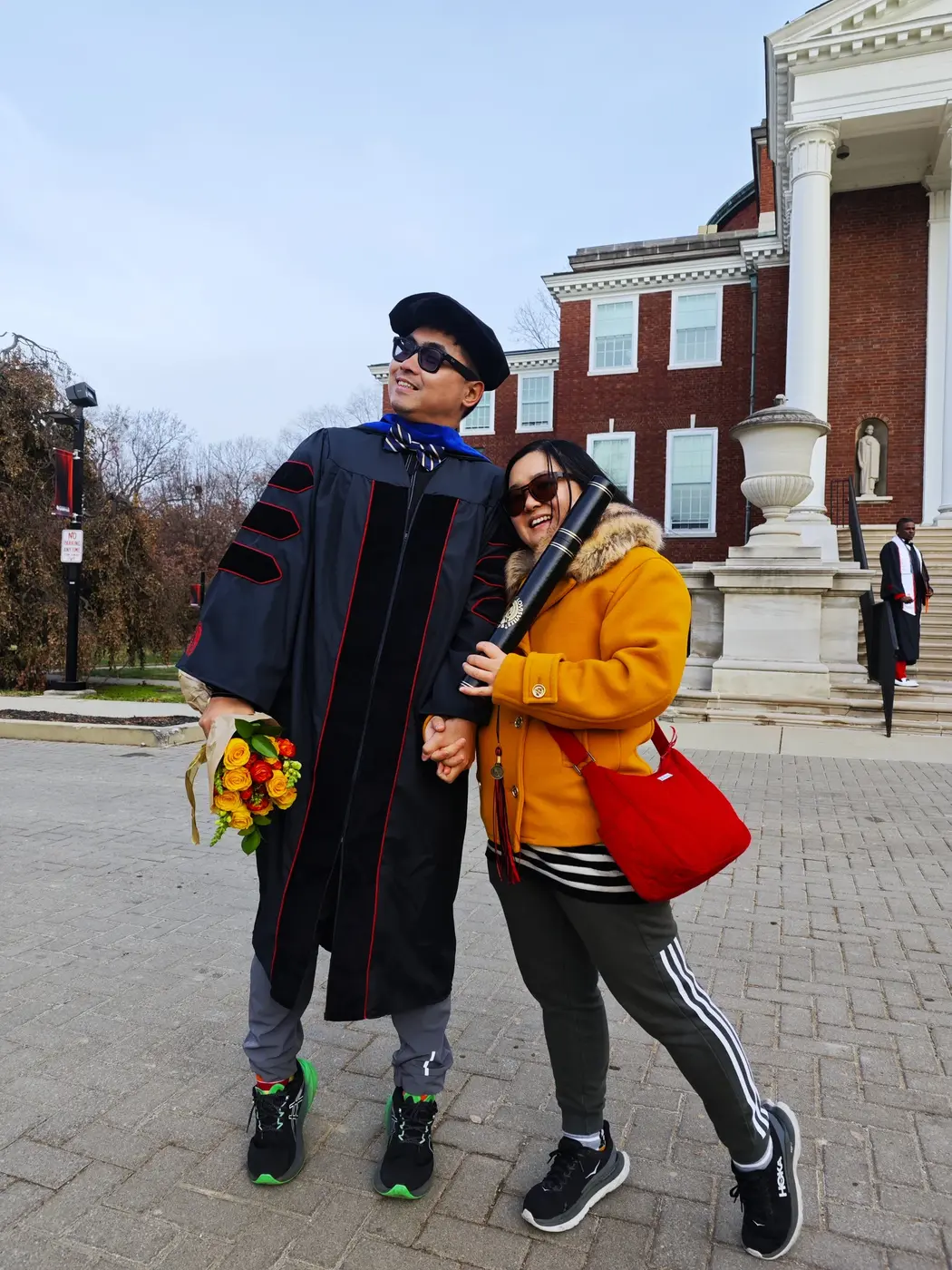
In the evening, there was the university-wide ceremony at the KFC Yum! Center downtown. The scene was very American: grand, but also relaxed. Graduates walked across the stage, some singing, some dancing, all with a little playful pride. My dad even slipped close to the stage to take a photo of me.
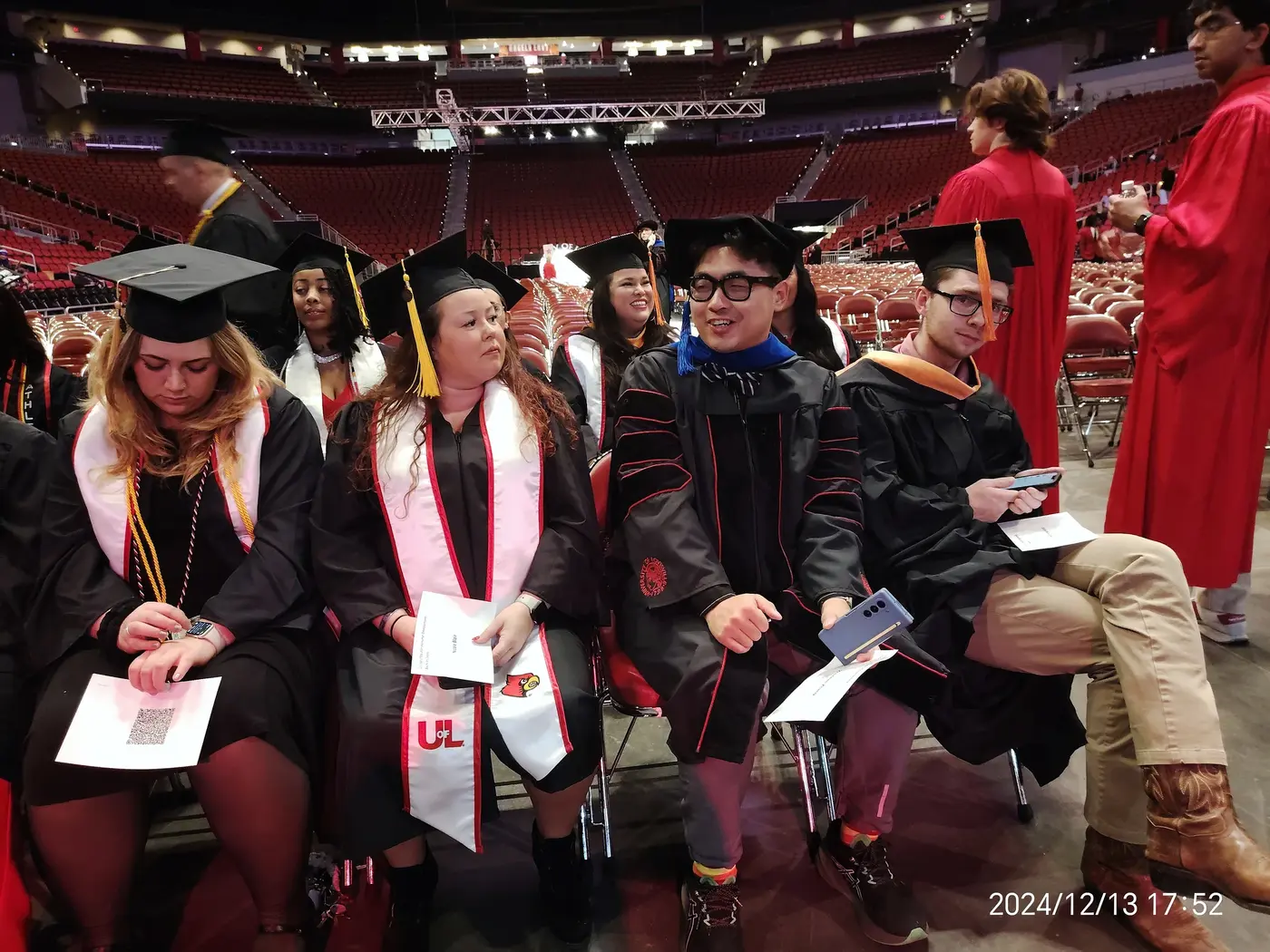
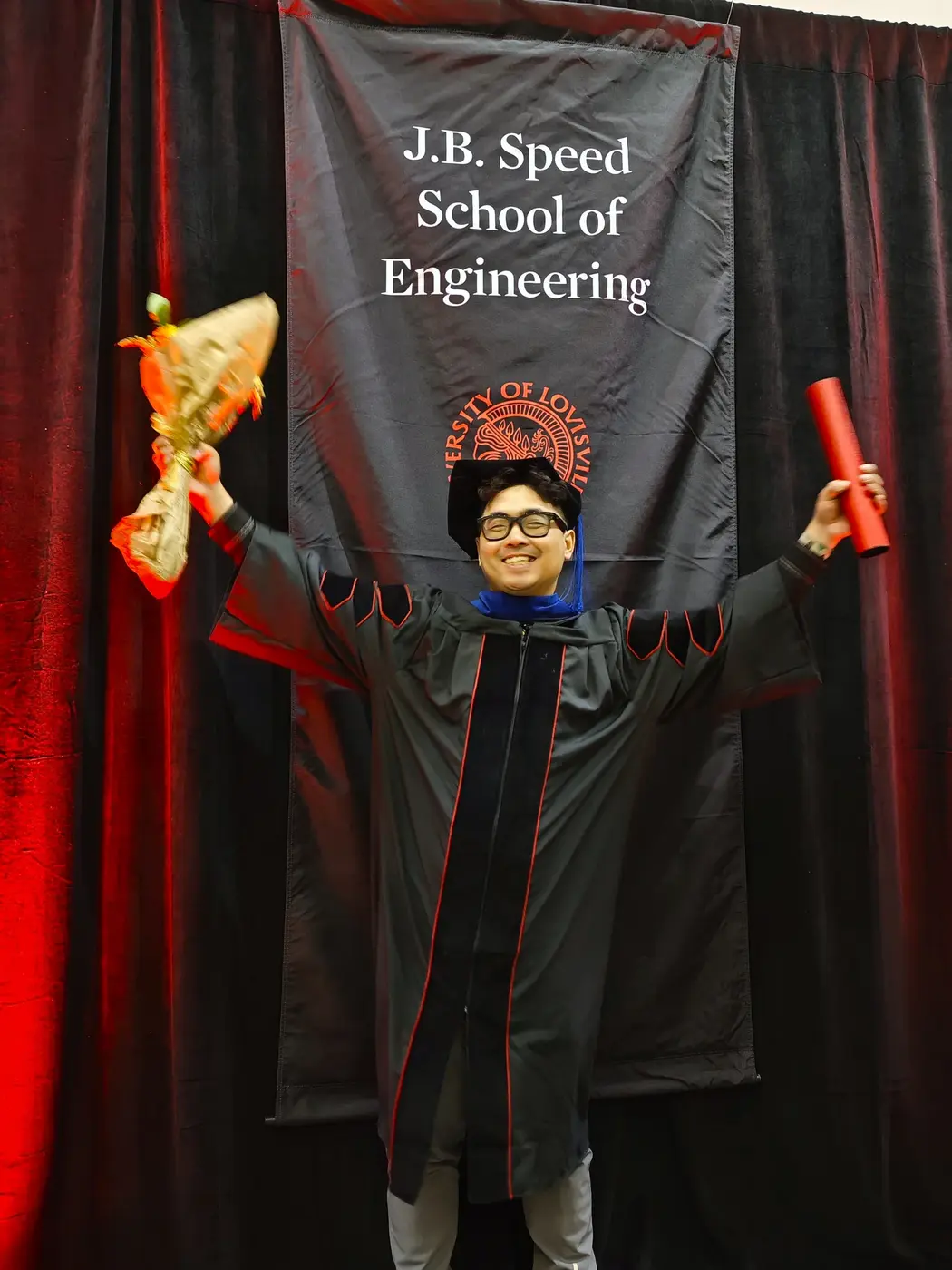
I was proud of the whole day. I think my parents were too.
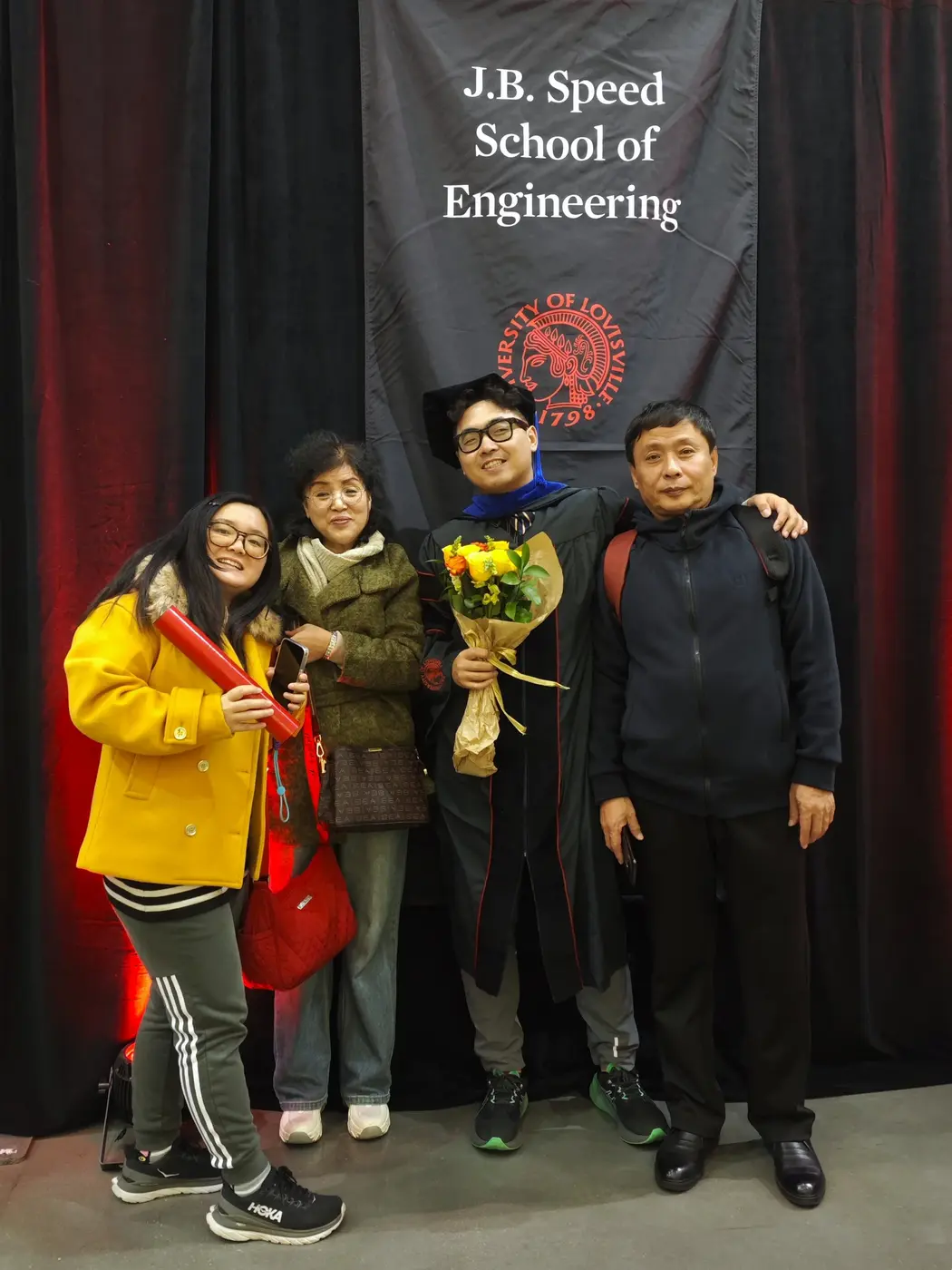
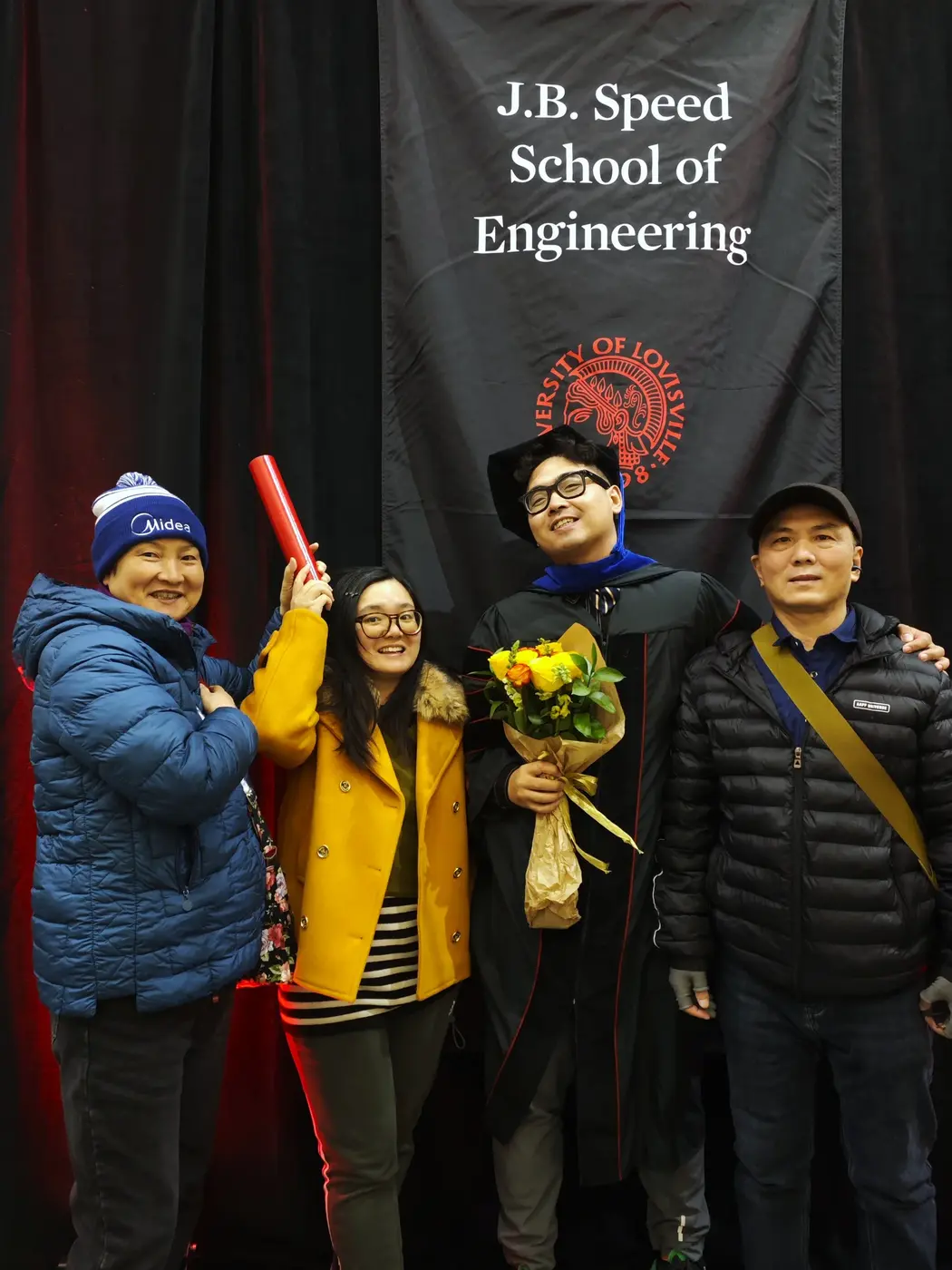
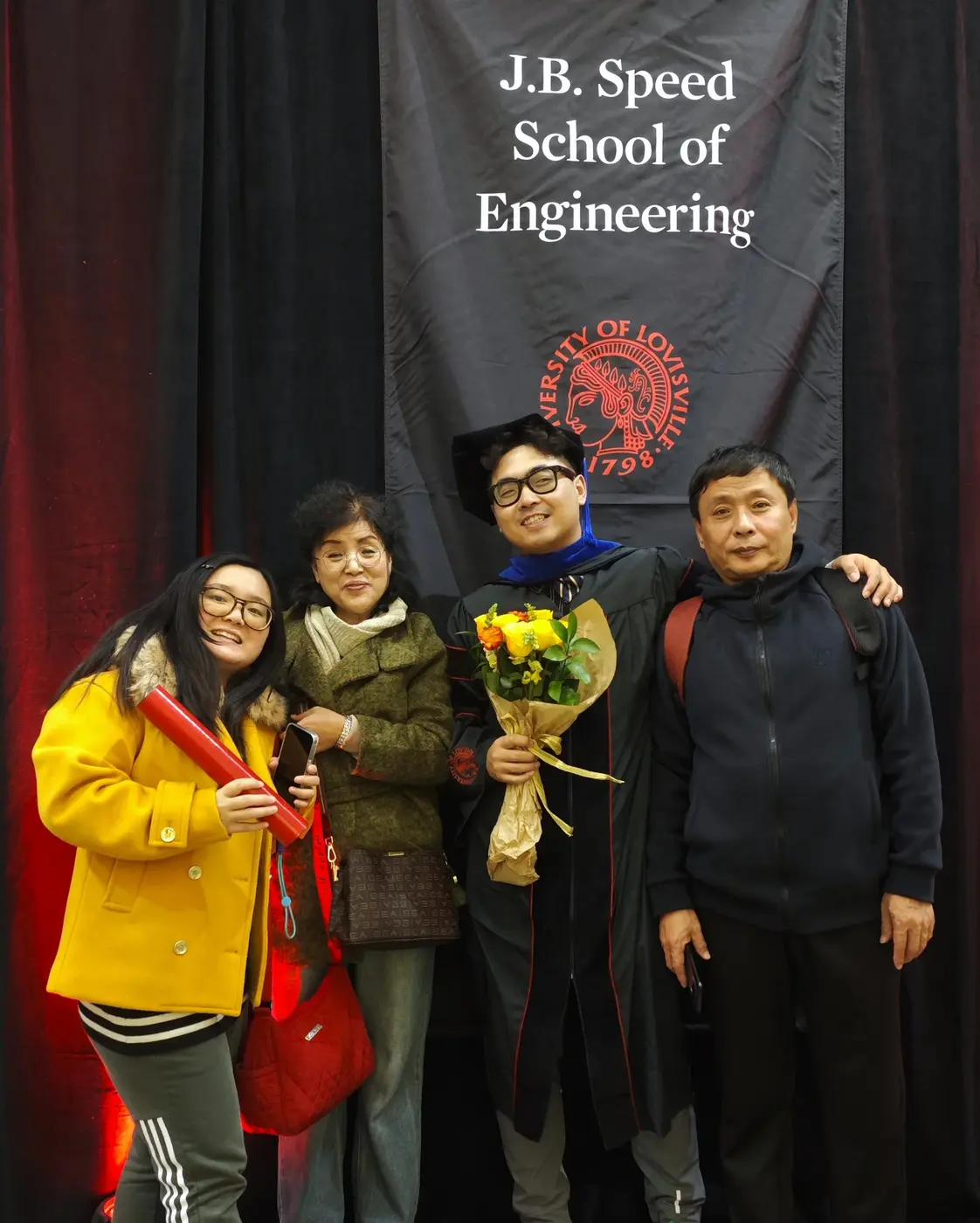
This doctoral cap felt both steady and fun to wear.
Chapter 5 | Christmas Month · Family Time in America
In December, America enters Christmas mode. I entered family-guide mode. After working for a week, I quickly asked for time off and took my parents and Wang's parents out to explore.
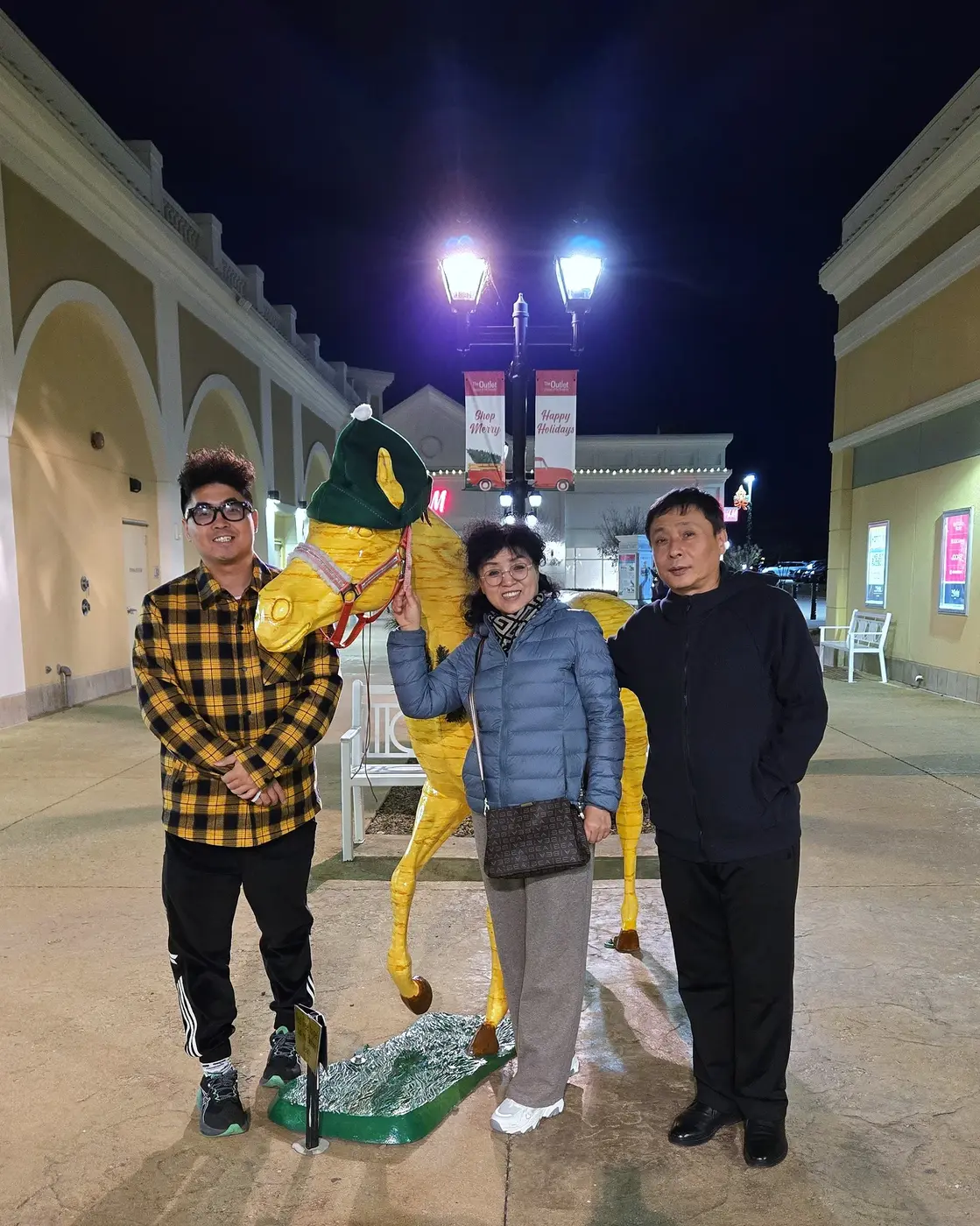
We went to an outlet, my parents' first U.S. shopping trip, looking at brands and trying on clothes.
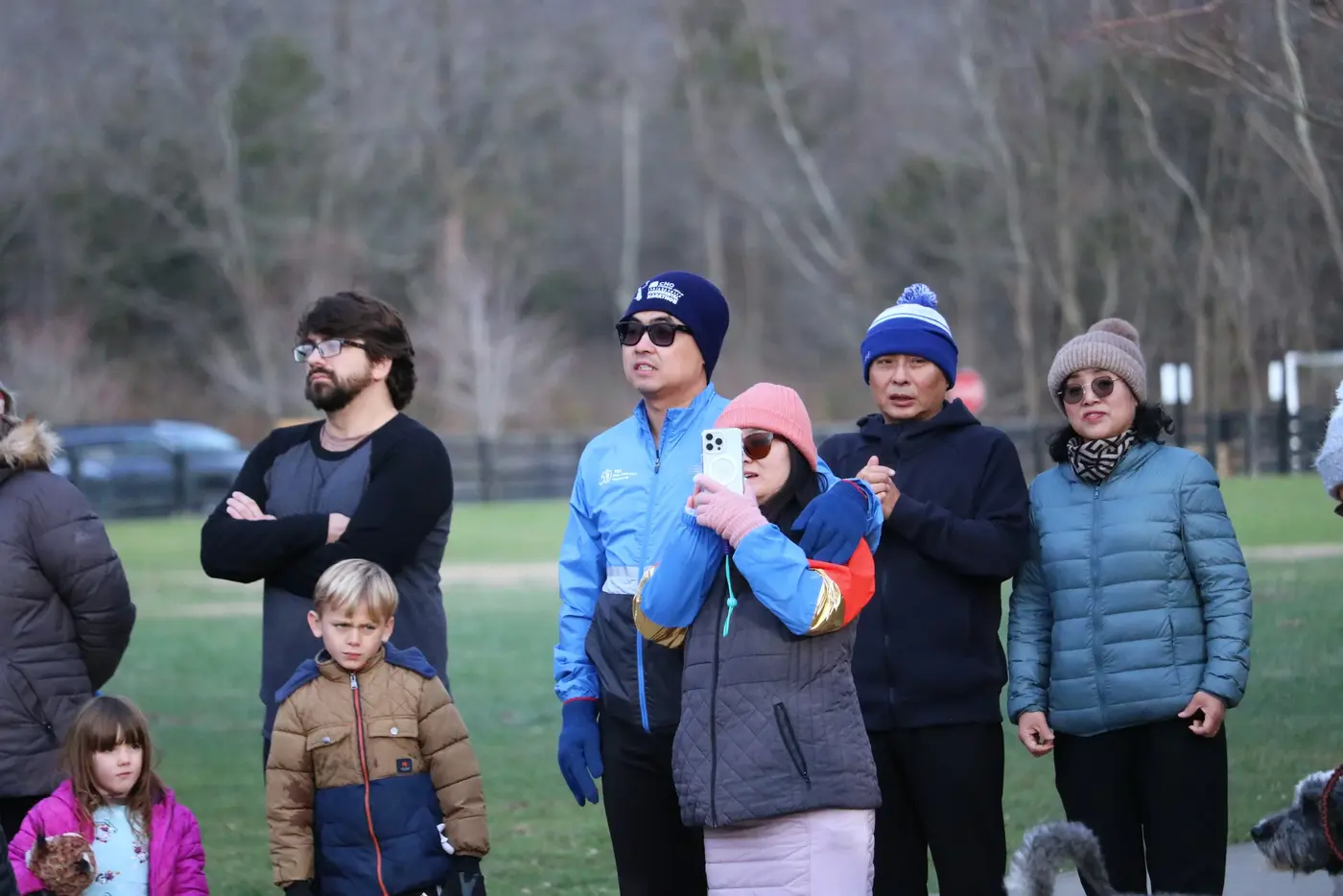
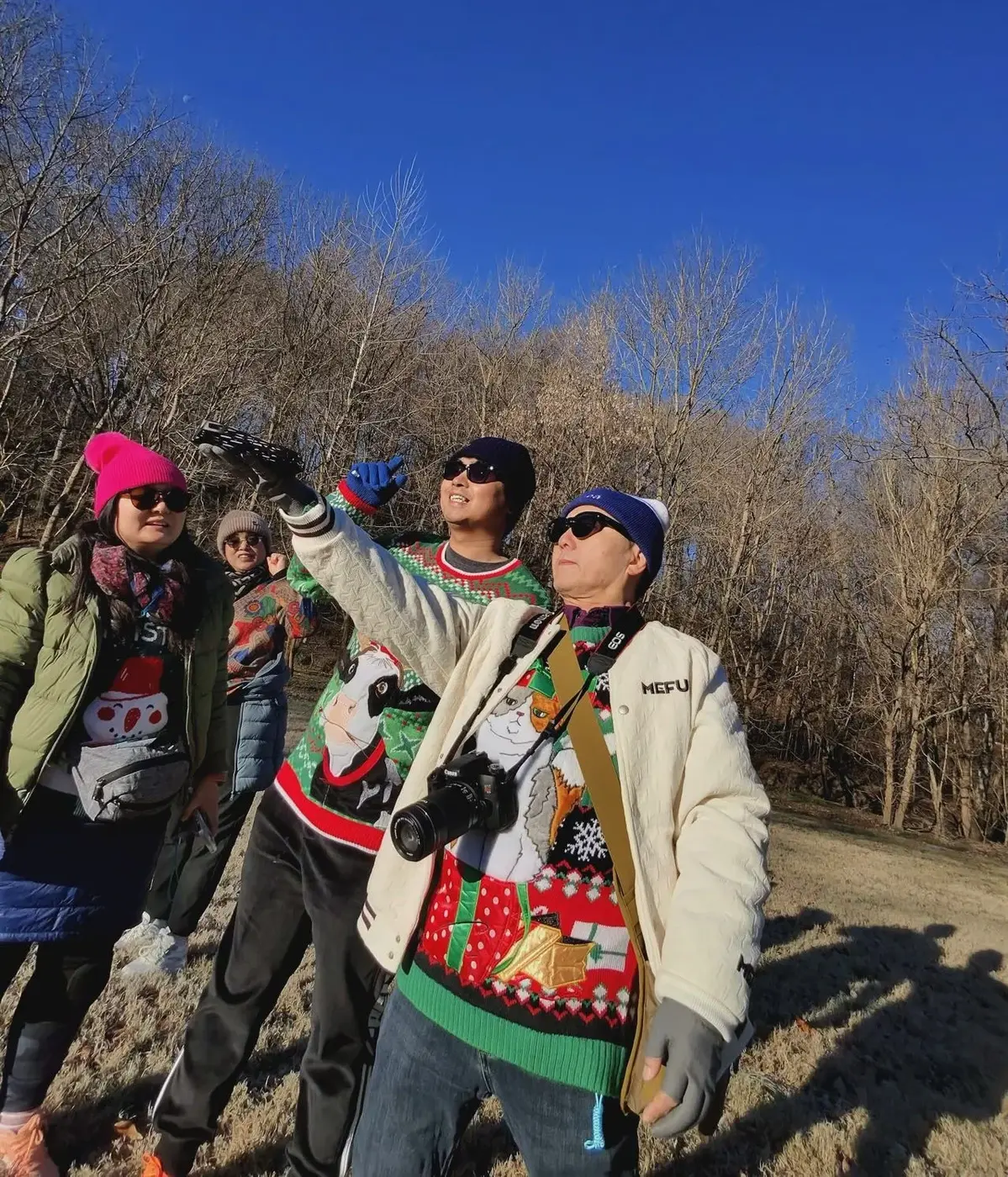
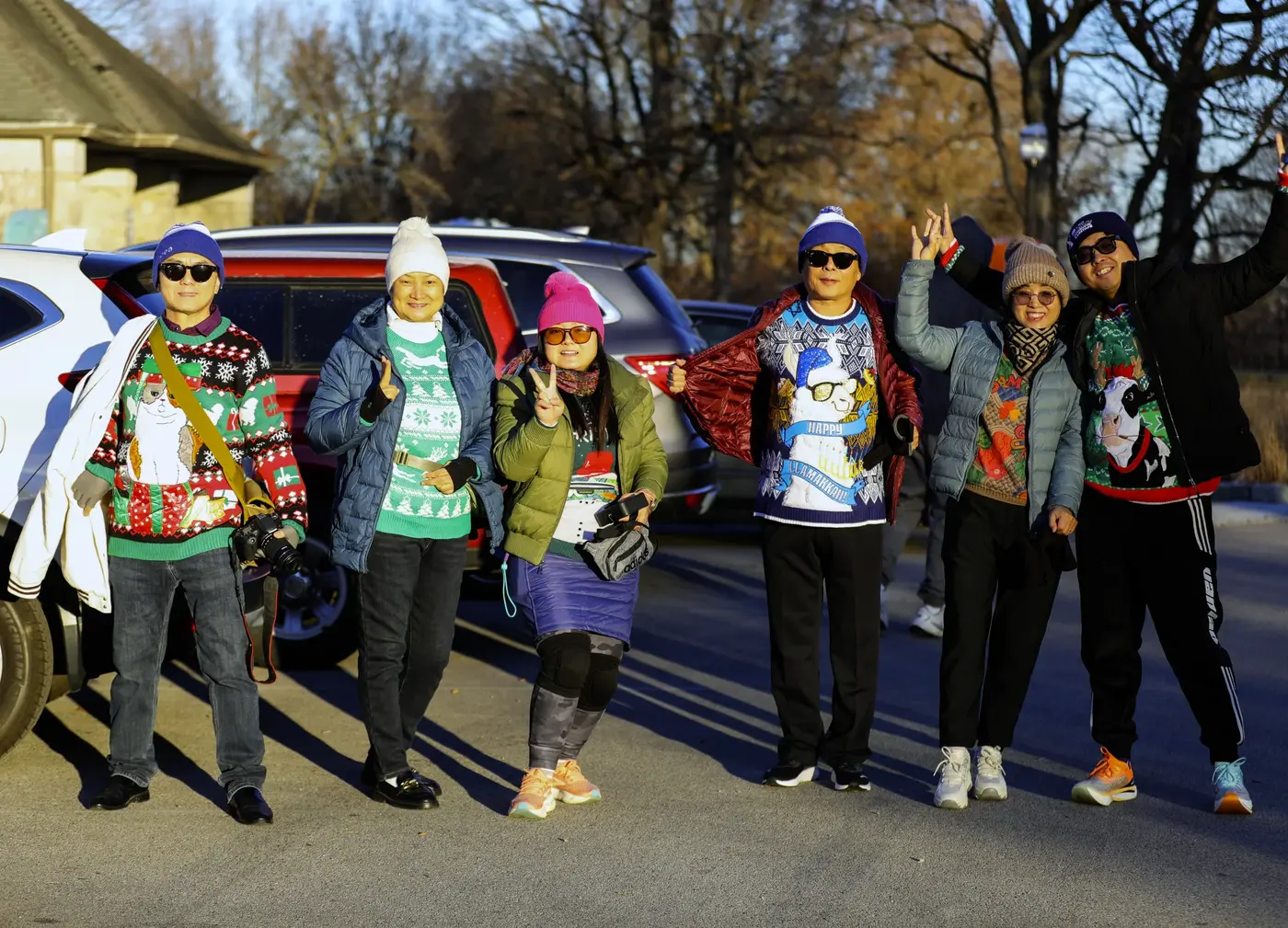
Then we joined the Ugly Sweater Run. We arrived late and missed the main group, but walking through a winter park in ridiculous sweaters was still fun. The Louisville wind was a bit too strong, though, and Mrs. Wang caught a cold.
We also attended Jackie and Scott's wedding. It was held in the same park where I ran the Louisville Marathon, with only a dozen or so people. Simple, direct, and very warm.
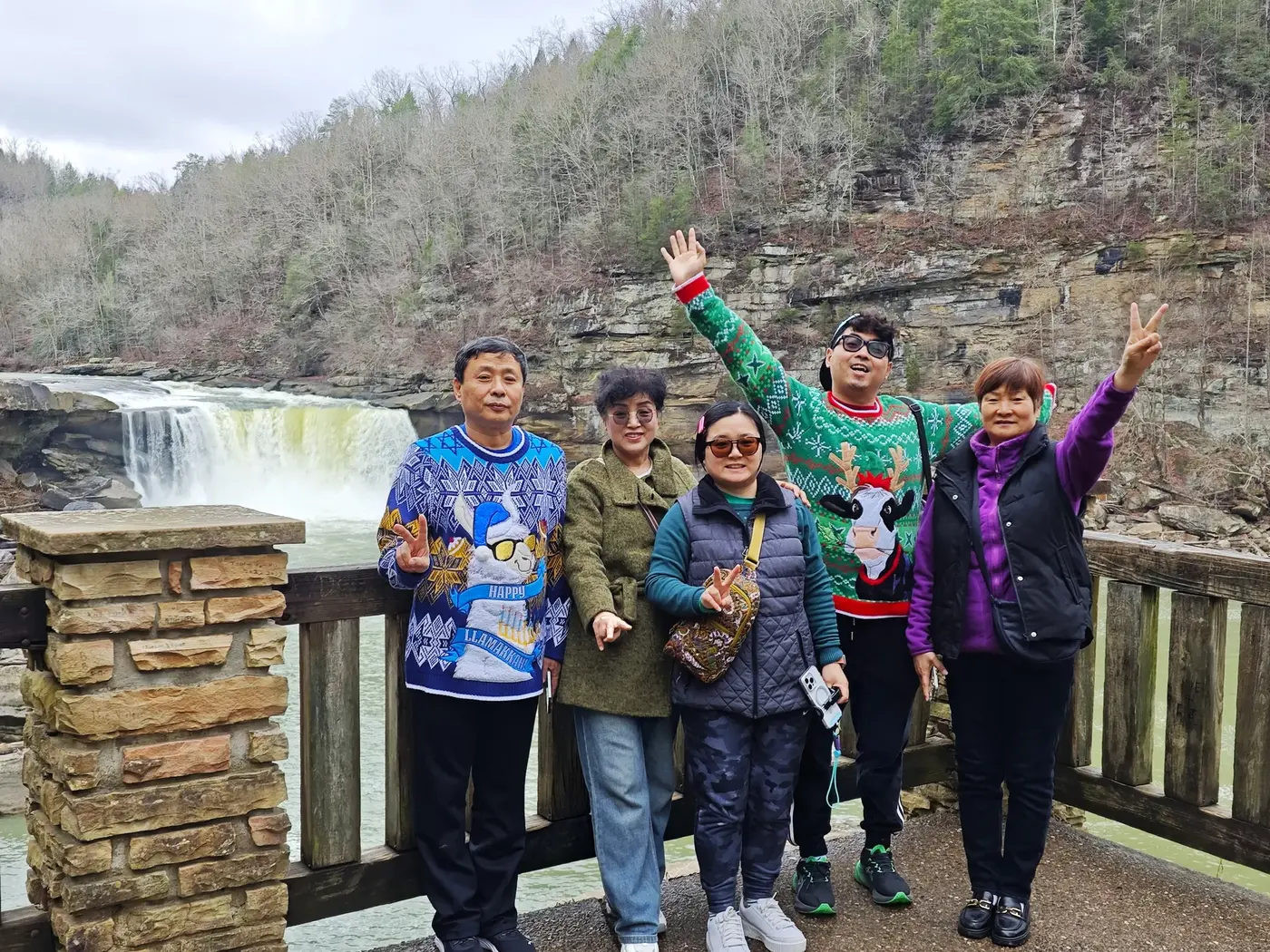
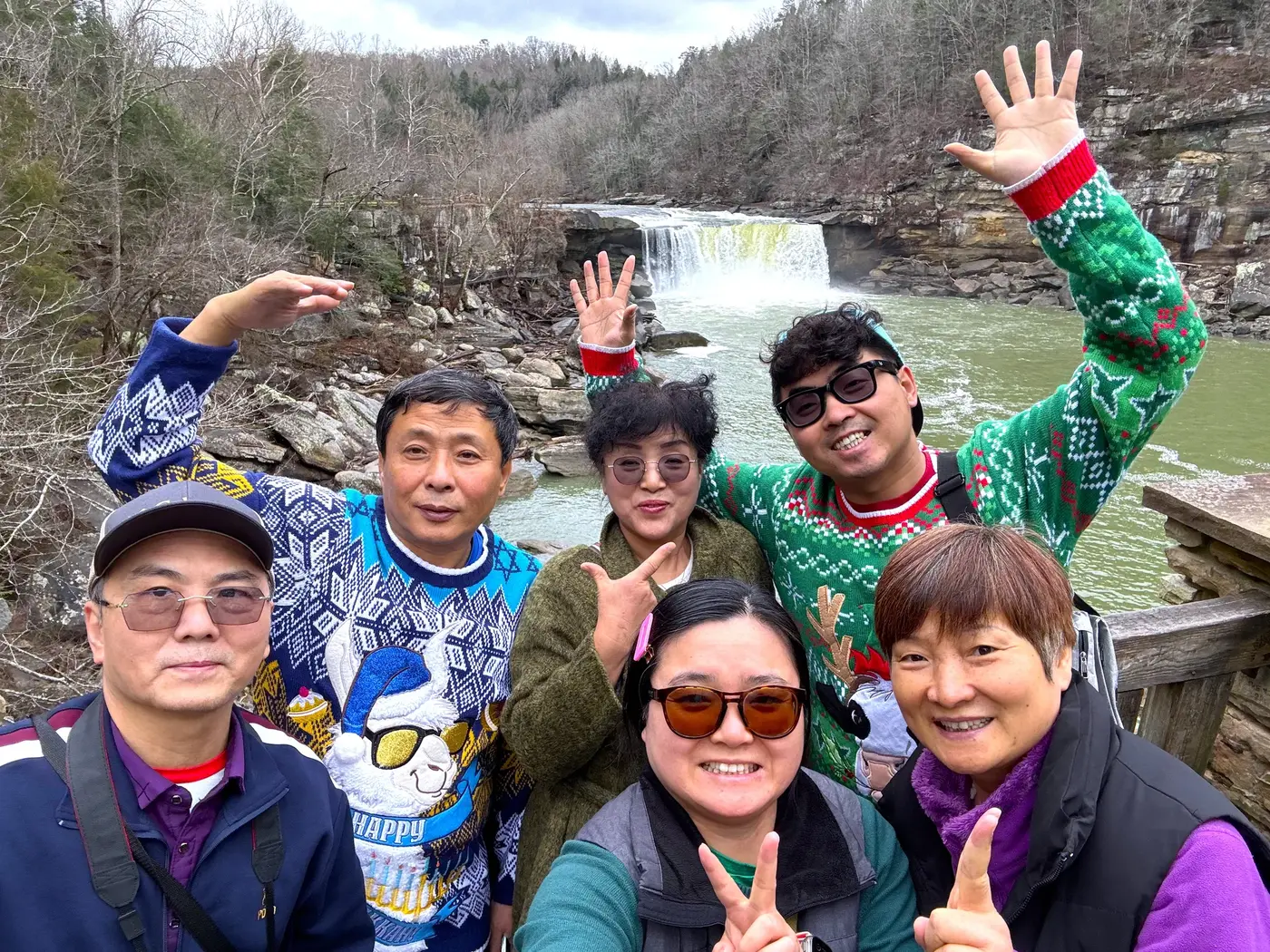
Then came a small road trip to Cumberland Falls, Kentucky's largest waterfall, known as the Niagara of the South. It rained a little that day, mist filled the air, and the waterfall roared.
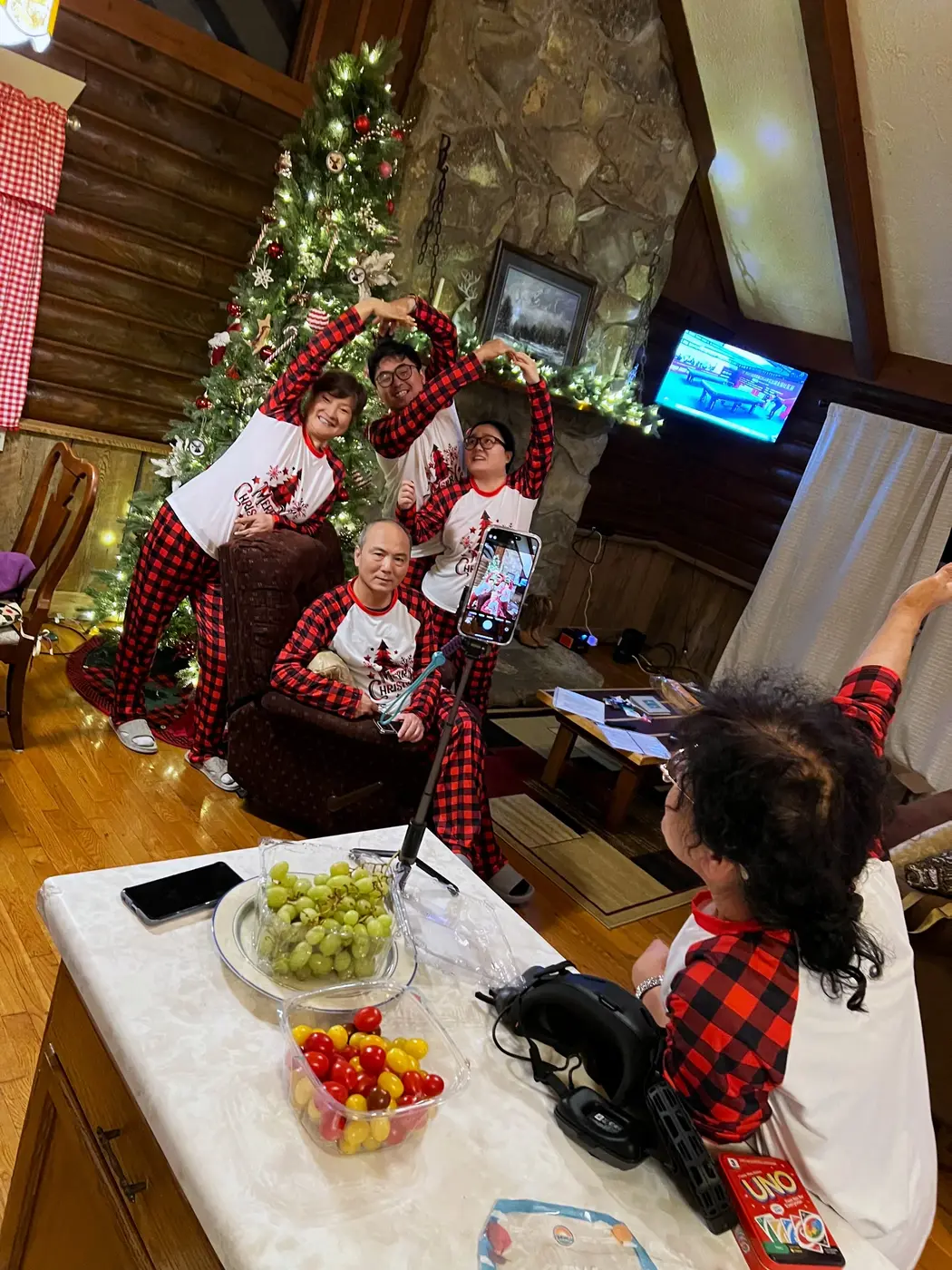
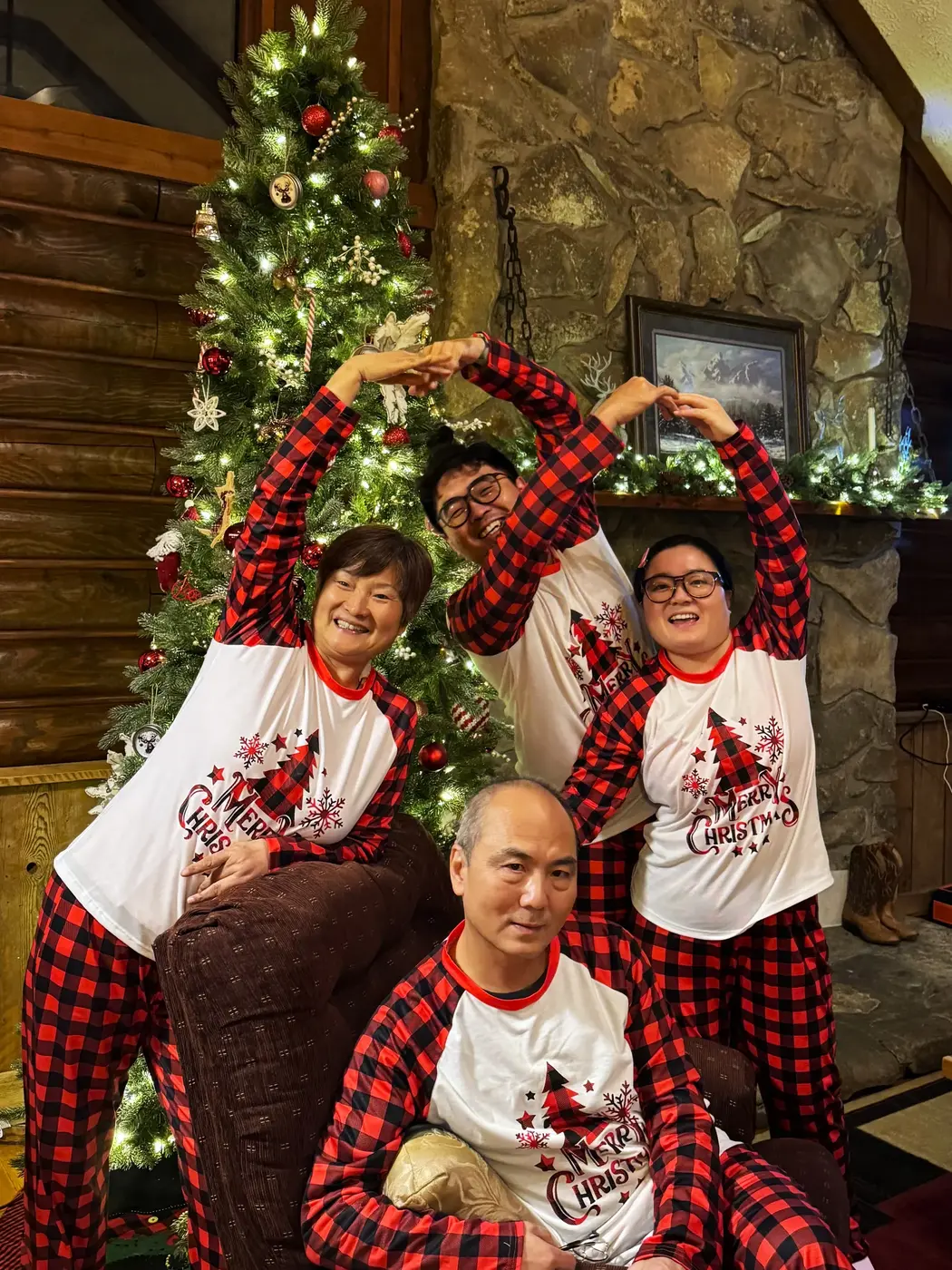
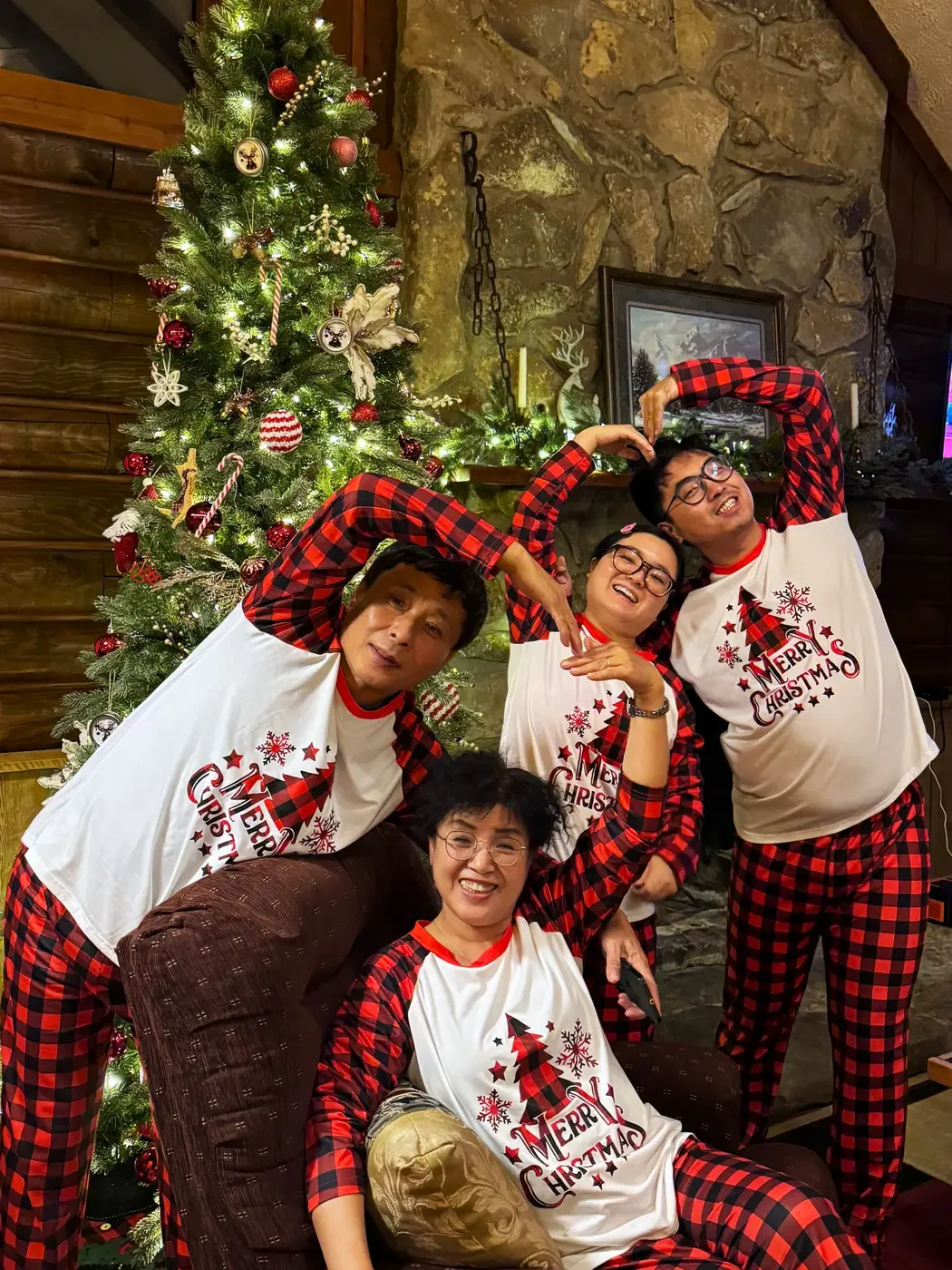
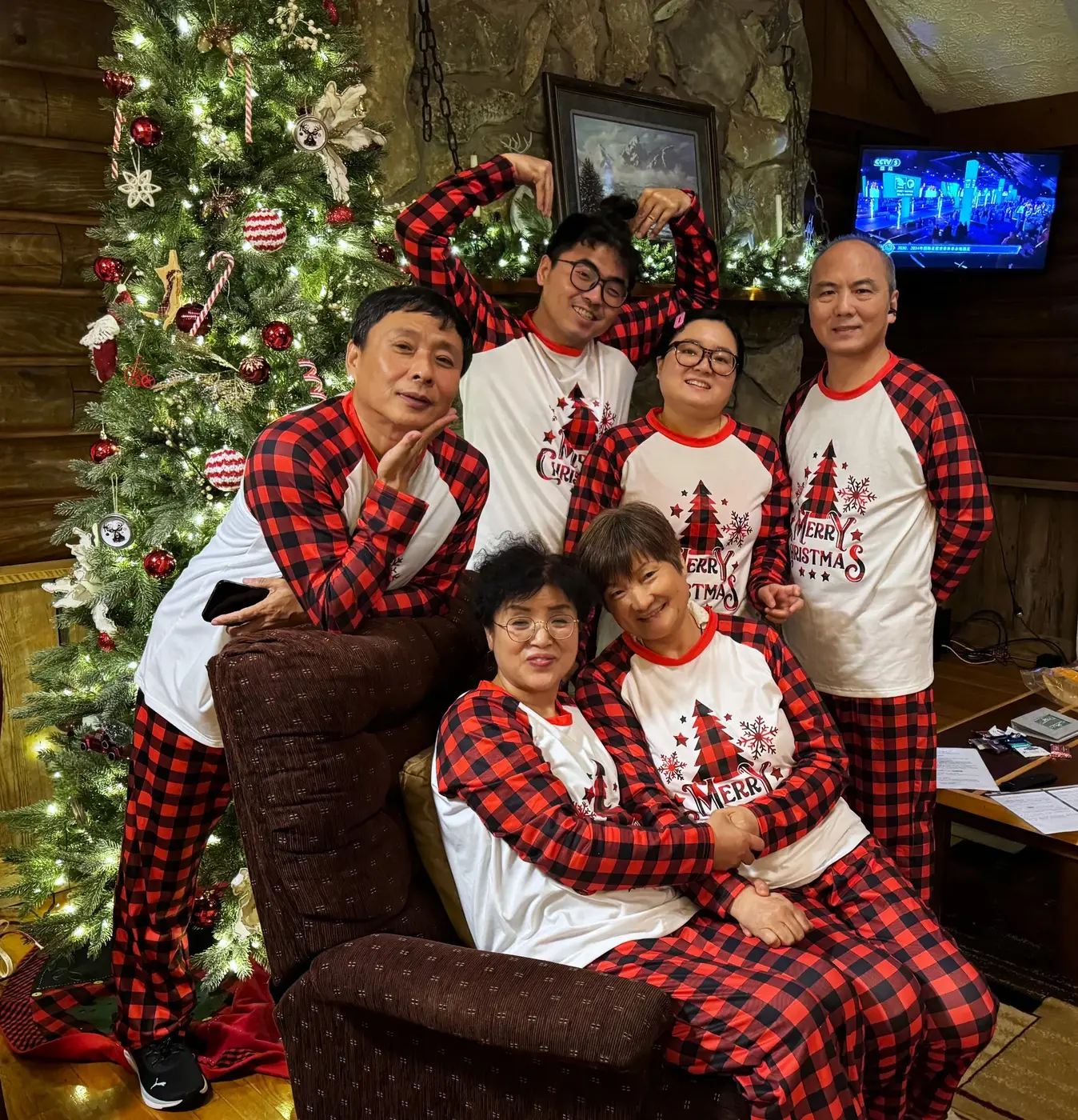
That night we stayed in a mountain cabin with a sparkling Christmas tree. Siqi had prepared matching pajamas in advance, so the whole family took photos in plaid. Instant American family movie energy.
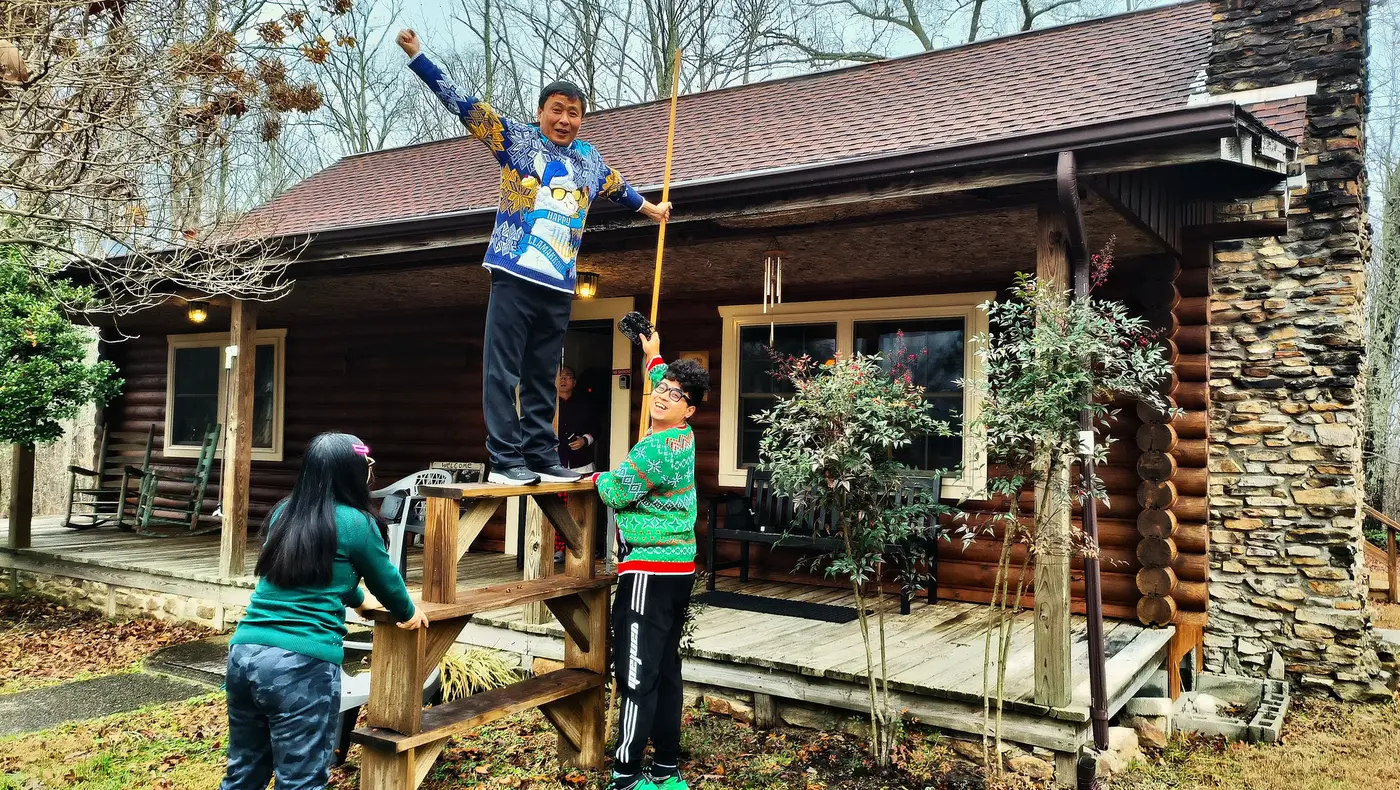
Of course, joy always comes with side quests. I flew the drone on a whim and accidentally landed it on the roof. Luckily, my dad and Siqi helped, and the three of us successfully fished it down. The teamwork of a doctoral family was fully on display.
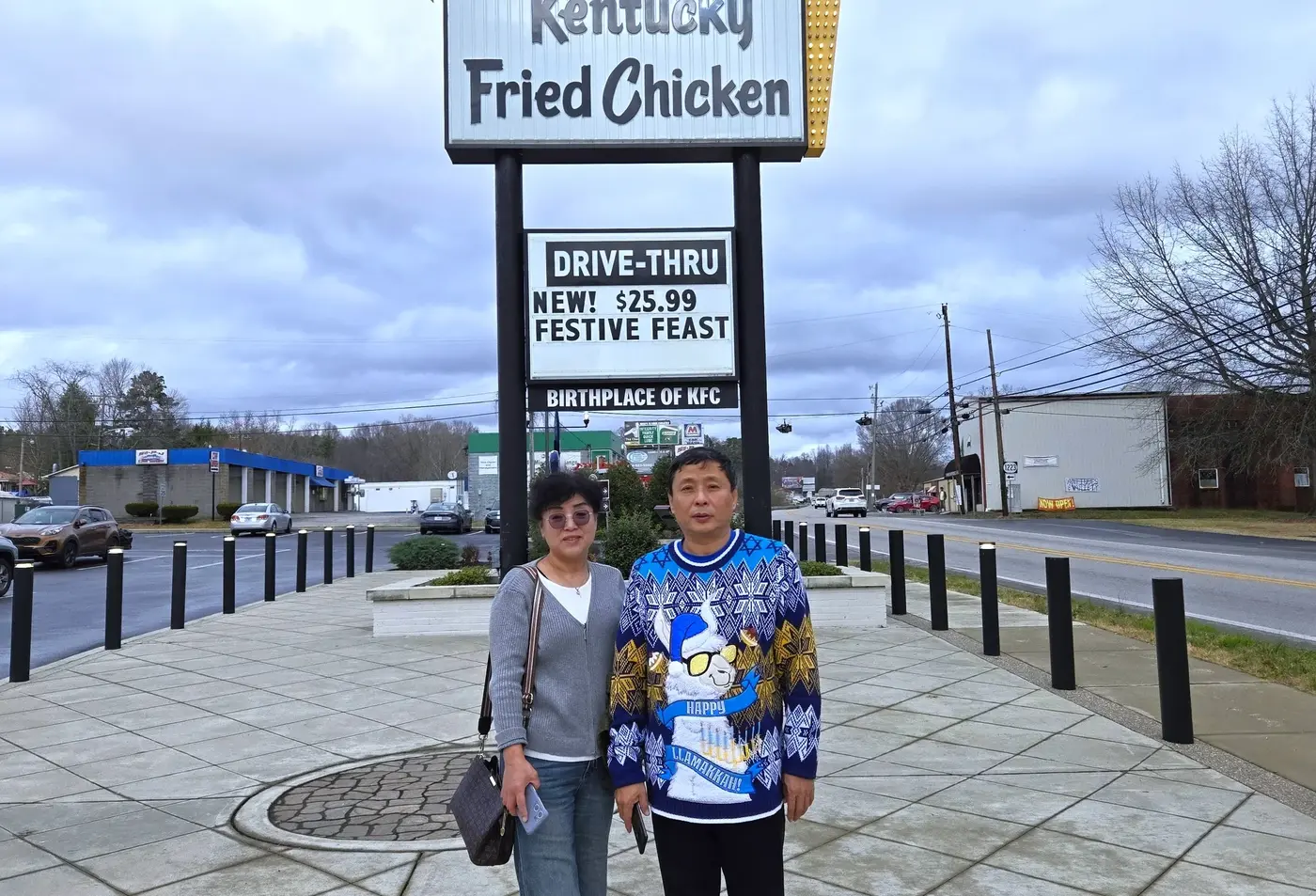
We also visited the first KFC store, which was part restaurant and part museum.
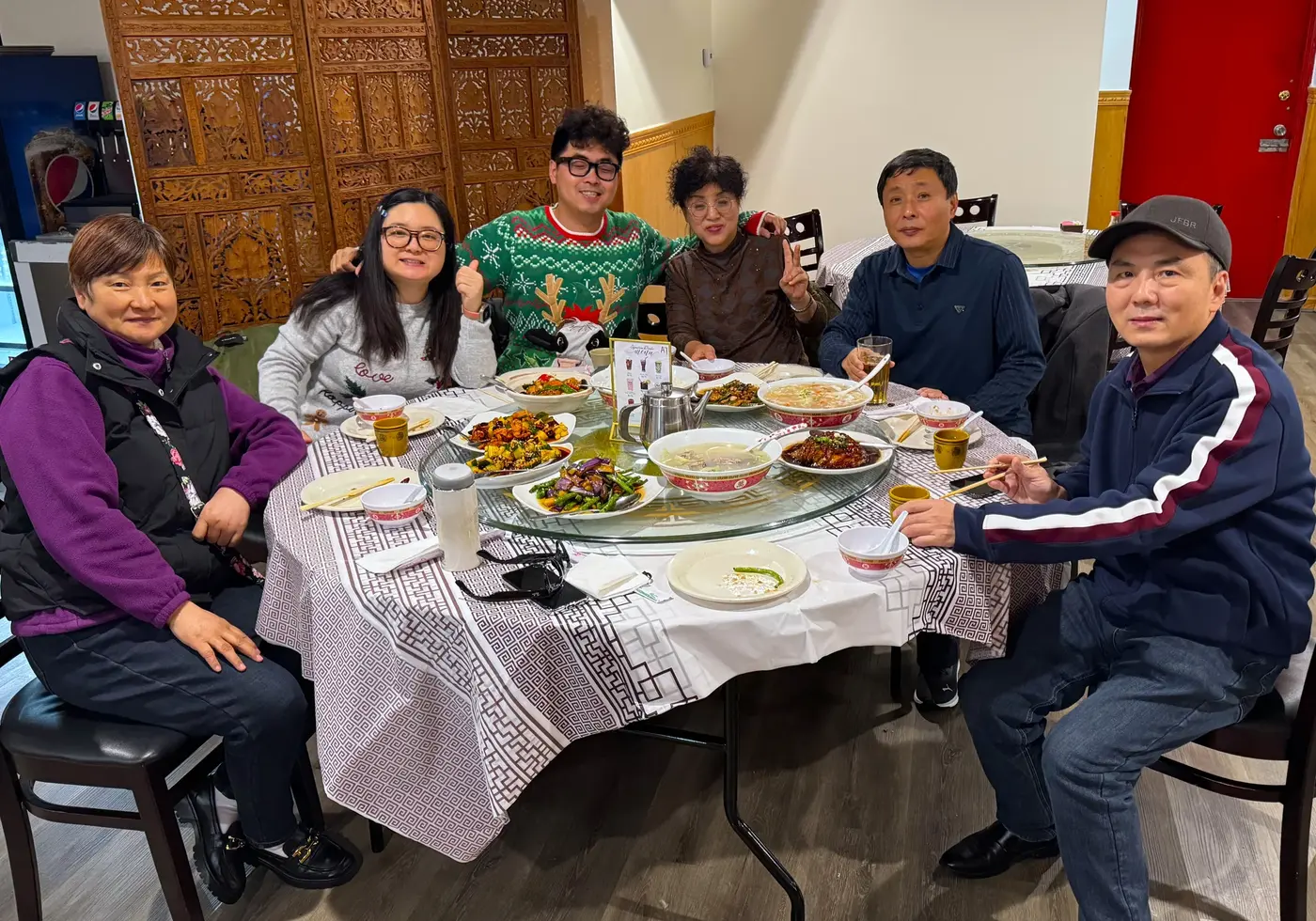
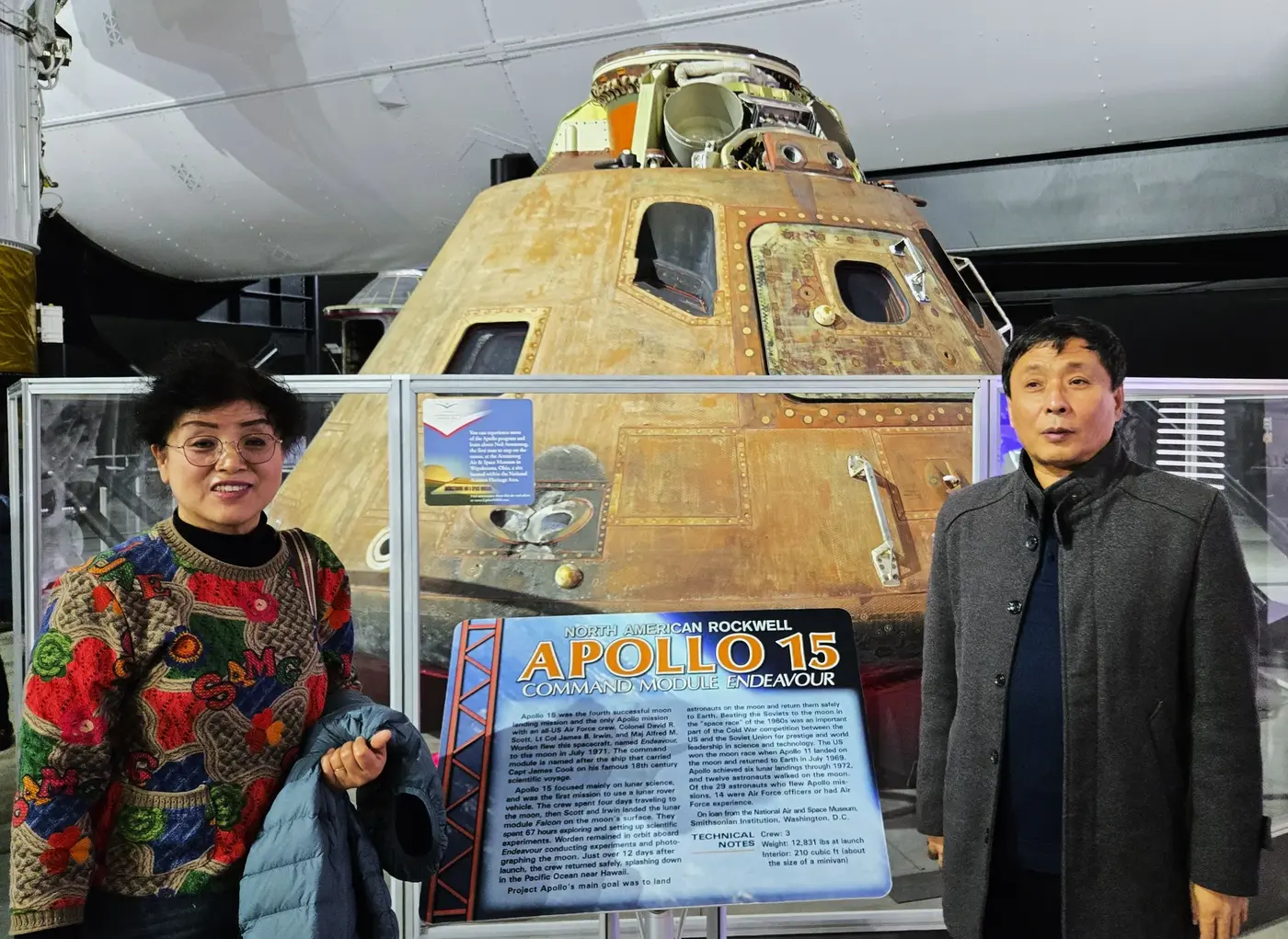
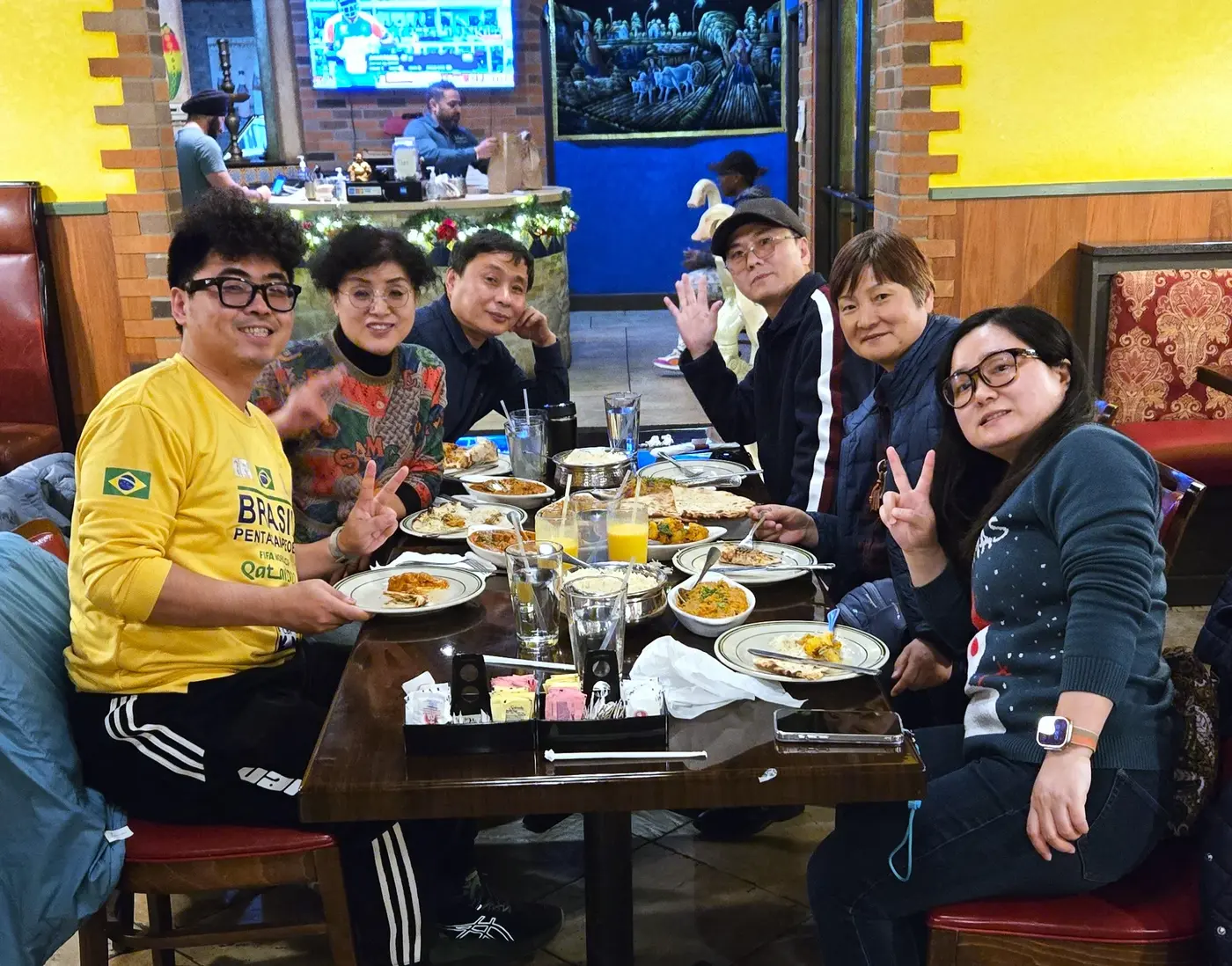
Later, on the way to send my parents to the Chicago airport, I took them to the National Museum of the U.S. Air Force in Dayton to see aircraft and Apollo exhibits. That evening we tried Indian food, which my parents found acceptable.
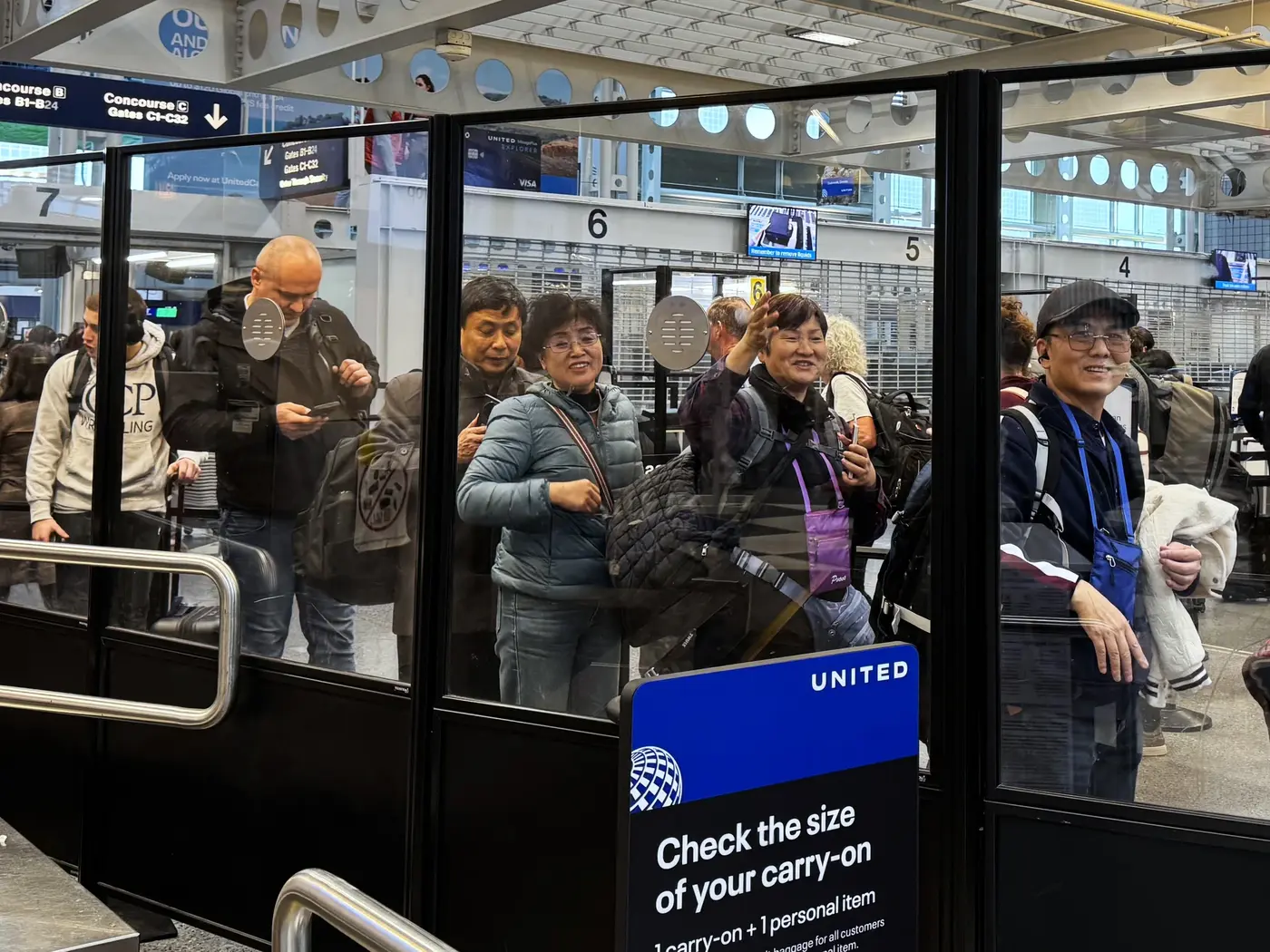
A month passed quickly, and we said goodbye at the Chicago airport. I waved through the security glass. Next time, I will see them back home.
Postscript · Little Red Flower
Five years of a PhD is like an ultra-marathon.
There are the fresh ten miles, the eighteen miles where we hit the wall, the twenty miles where we endured, and the black gold medal when we crossed the finish line.
I am very proud of this journey. Maybe this is the meaning of studying for a doctorate. It gave me strong resilience and self-confidence, and made me healthier physically and mentally. In the end, I successfully became Dr. ZZ.
This December graduation was especially meaningful: my parents came to the United States for the first time, and Wang's dad and mom came too. During Christmas month, we saw waterfalls, stayed in cabins, visited the Air Force museum, and ran in ugly sweaters. The closing chapter of a PhD was not only one person's story. It belonged to the whole family.
The medal was a little red flower. The doctoral cap was a little red flower. The family reunion was a little red flower too.
These little red flowers rewarded me for running through the coldest winter, and they gave me strength for the days when I hit the wall.
The wind and snow in Colorado, the showers in the Himalayas.
The end of the world is full of cattle and sheep, the end point of the black and gold medal.
Give me a little red flower.
- End -
Words, photos, and layout by Arsenan