
Run first. Then the city can explain itself.
FIELD NOTE 01
Why Cleveland still happened
The 2021 Cleveland Marathon was supposed to be in May, but COVID pushed it into October. I was still deciding whether to go when I saw that the Wuhan Marathon was scheduled for the same day. The idea of running a marathon at the same time as old friends back in Wuhan suddenly made the trip feel necessary.
Then the plot twisted. Wuhan was canceled the day before race day. Cleveland still happened. It lost a little of the long-distance ritual I had imagined, but the run itself turned out to be deeply satisfying.
FIELD NOTE 02
A start line in the dark
The start was near Tower City Center. I walked out before dawn, still in the dark, and the red tower above the start area looked unexpectedly dramatic.
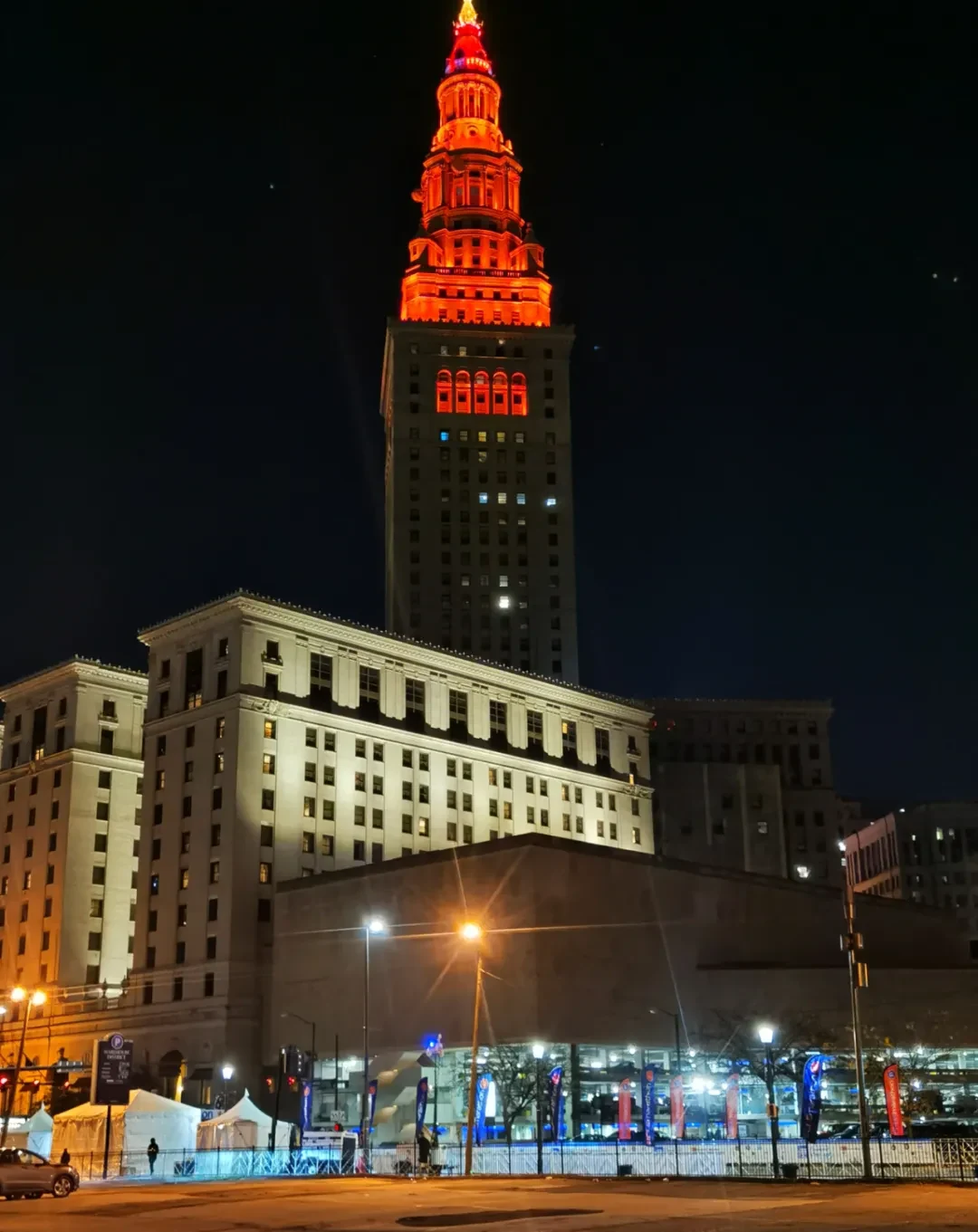
Cleveland at daybreak was cold enough to make everyone shiver. Starting in darkness was not new to me. Singapore and Bangkok had done that too, but those races run from midnight into humid morning air. Cleveland was different: the sun simply rose late, and the cold was several levels sharper.
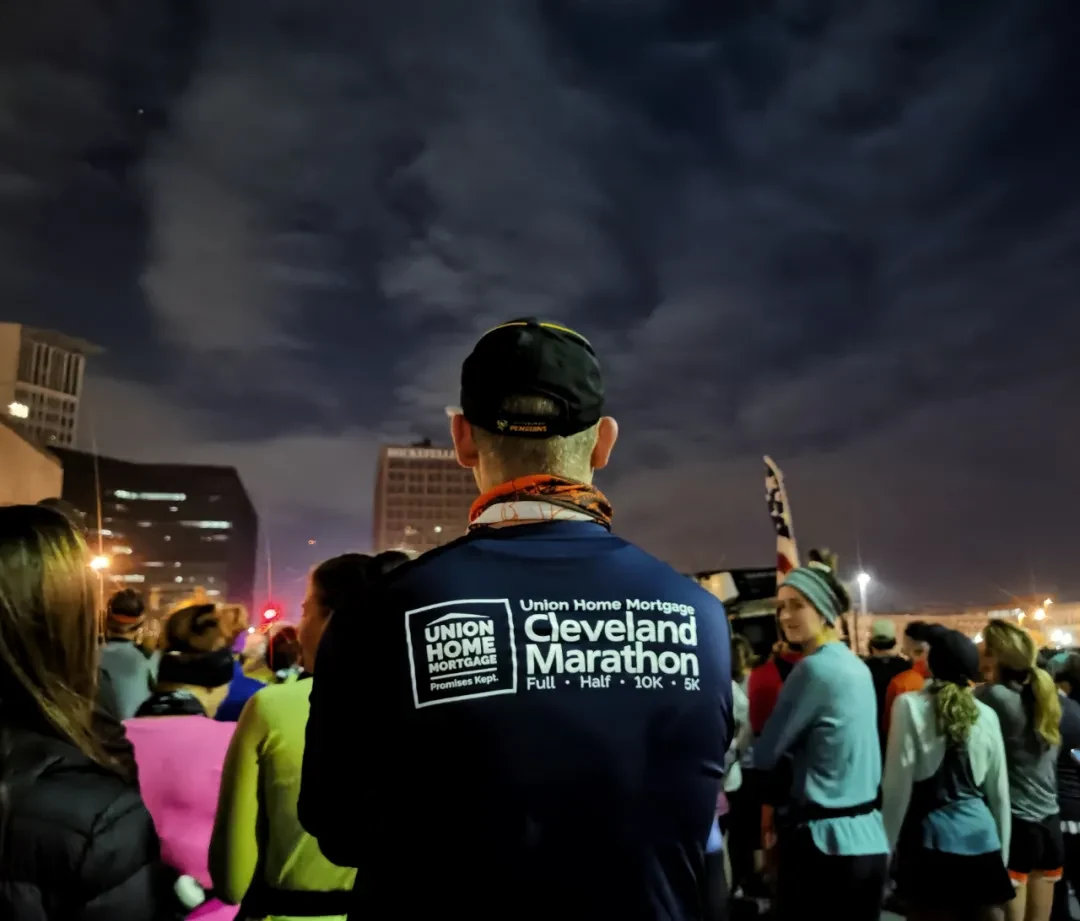
I wore a thin long-sleeve shirt and thought I would peel it off once I warmed up. Then the race started, and I realized I was not taking it off at all.
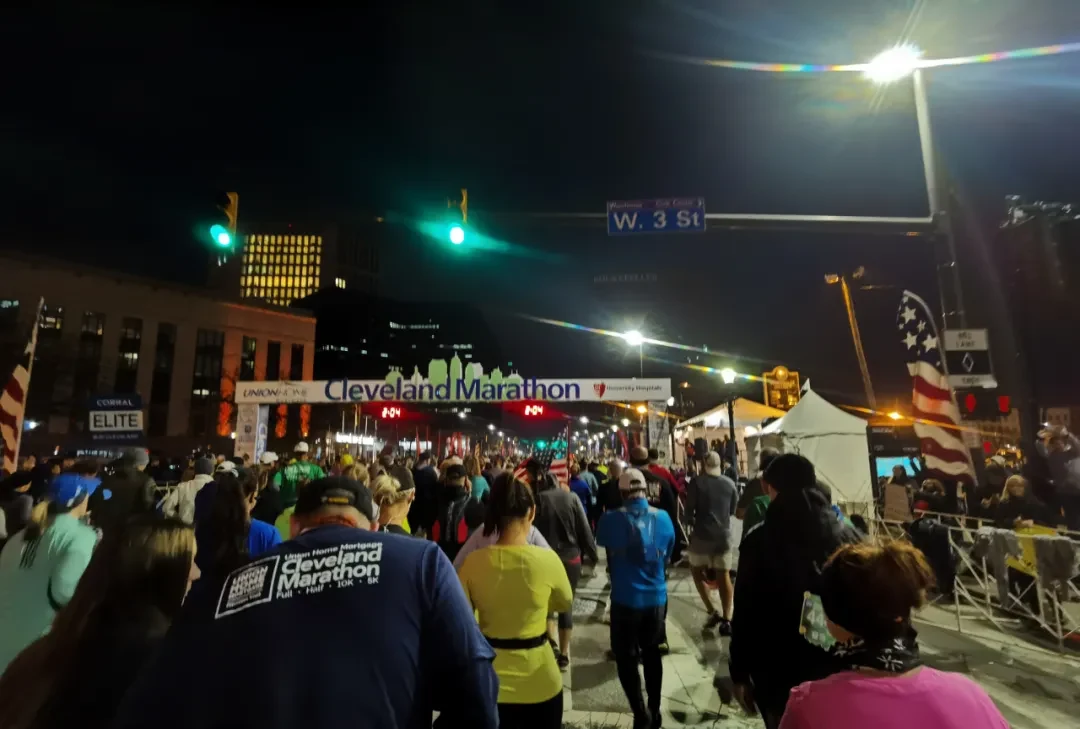
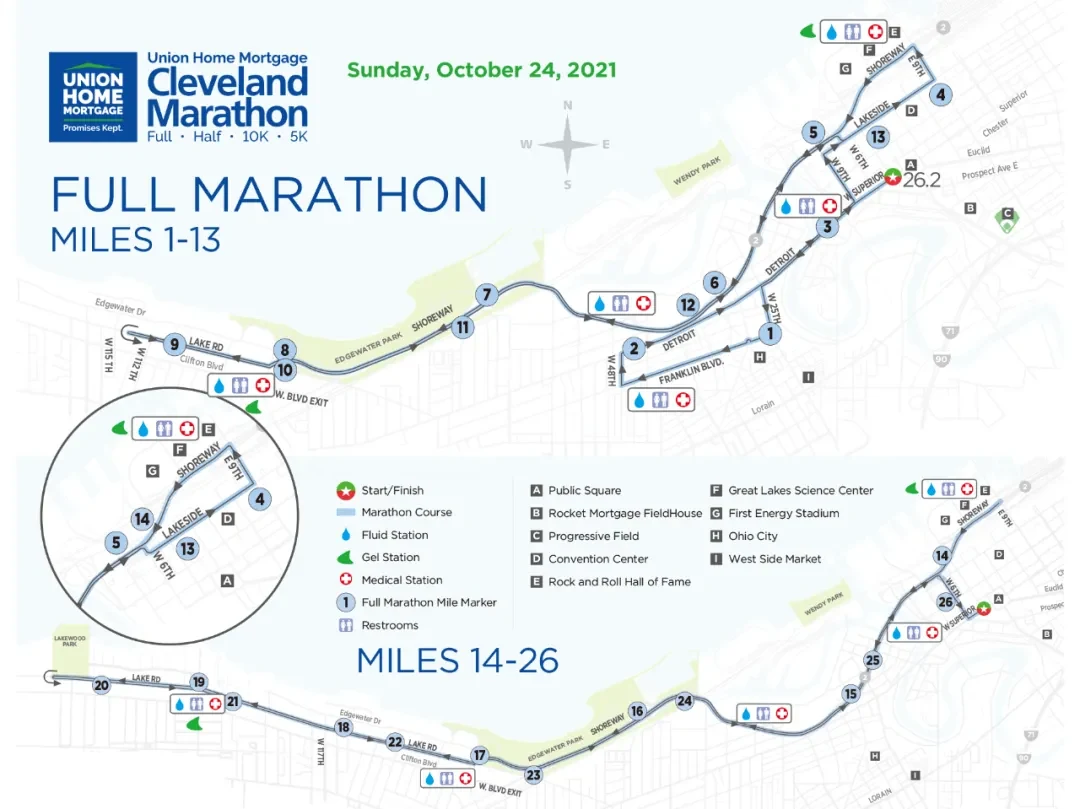
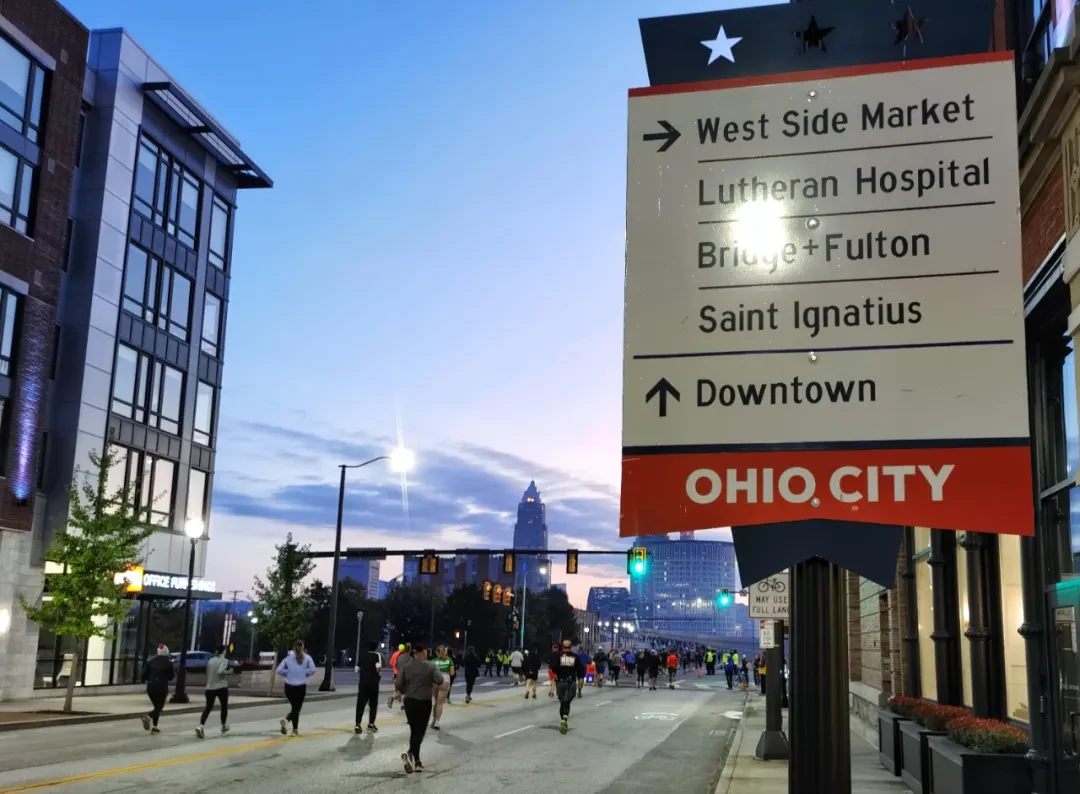
After the gun, everyone began moving with real urgency, partly because standing still was miserable. We headed southwest along Detroit Road, legs finally doing what they were supposed to do.
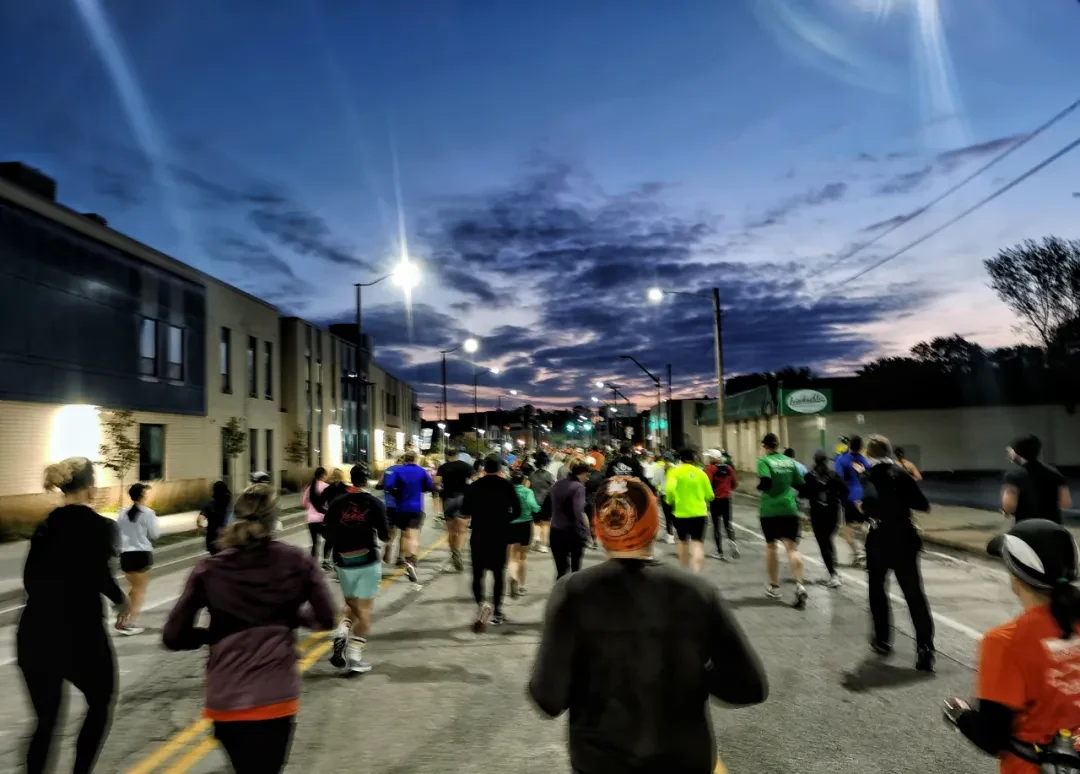
Only later did I learn Cleveland has not just Detroit Road but also a Detroit Shoreway. Cleveland and Detroit, two Great Lakes Rust Belt cities, seem to have found a strange kind of warmth in each other's industrial afterlife. But that morning, none of that mattered much. I was there to run.
FIELD NOTE 03
The hard-looking miles back downtown
After 25th Street, 48th Street, and a loop through Franklin Boulevard, we returned to Detroit Road, this time pointed back toward downtown.
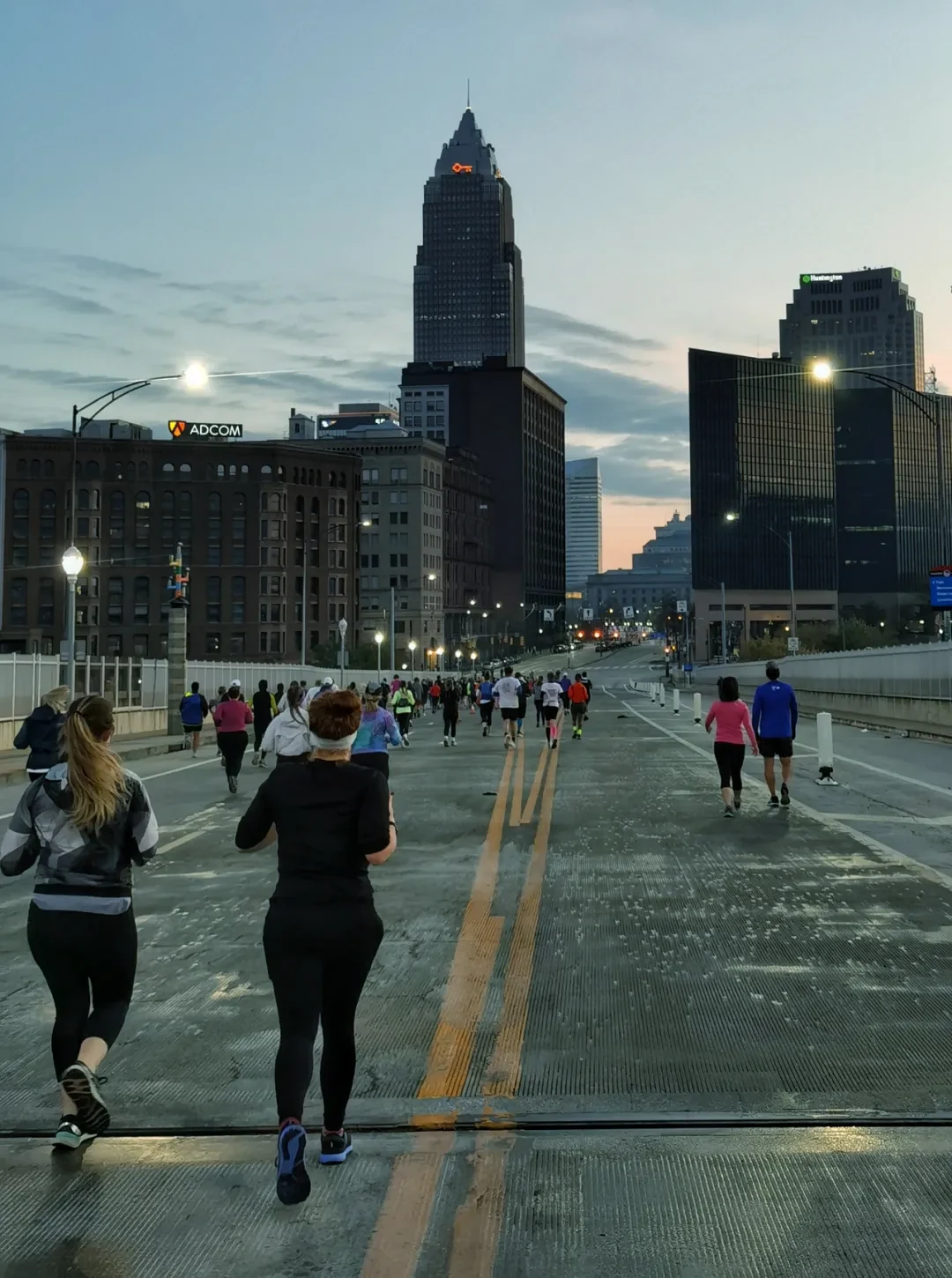
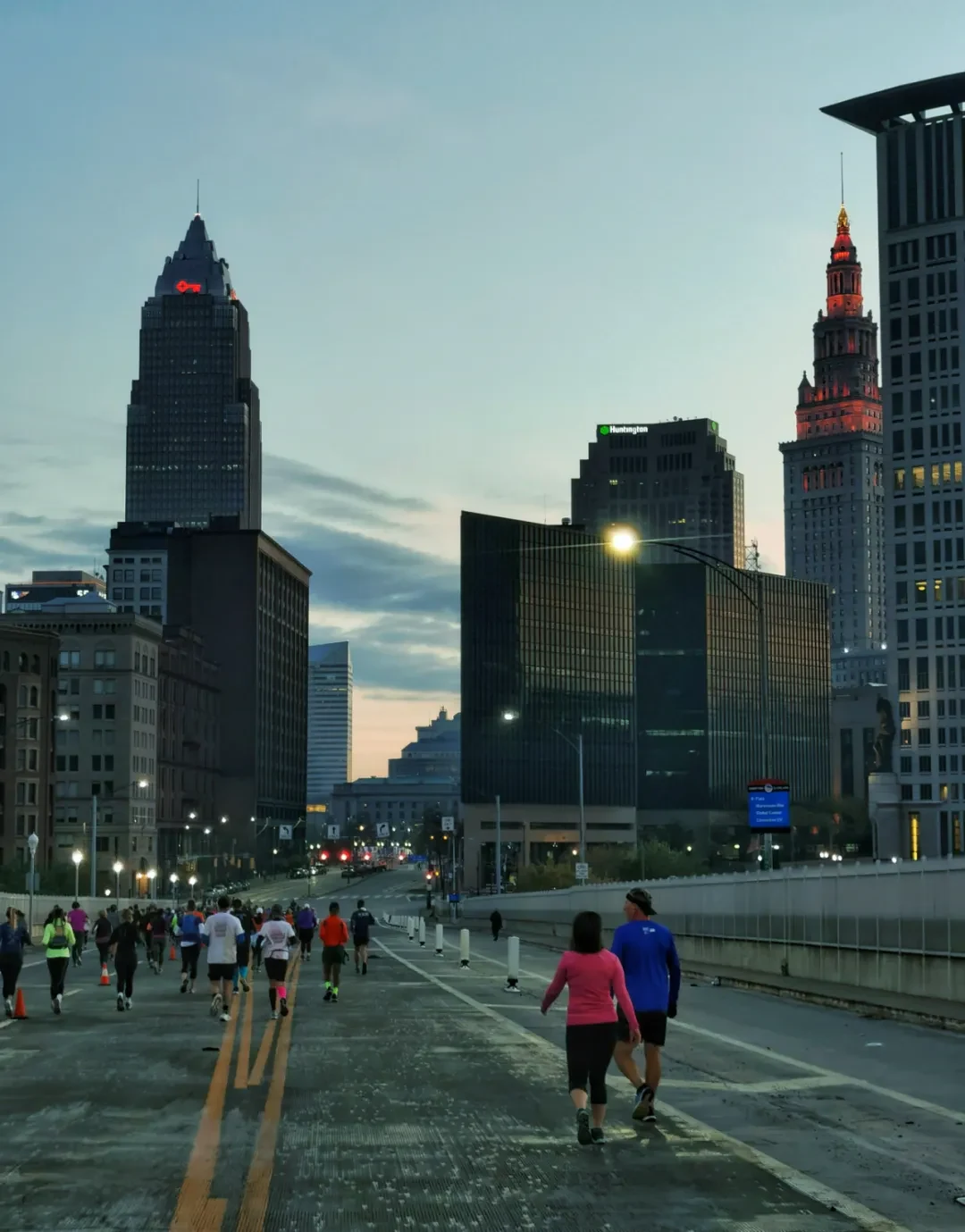
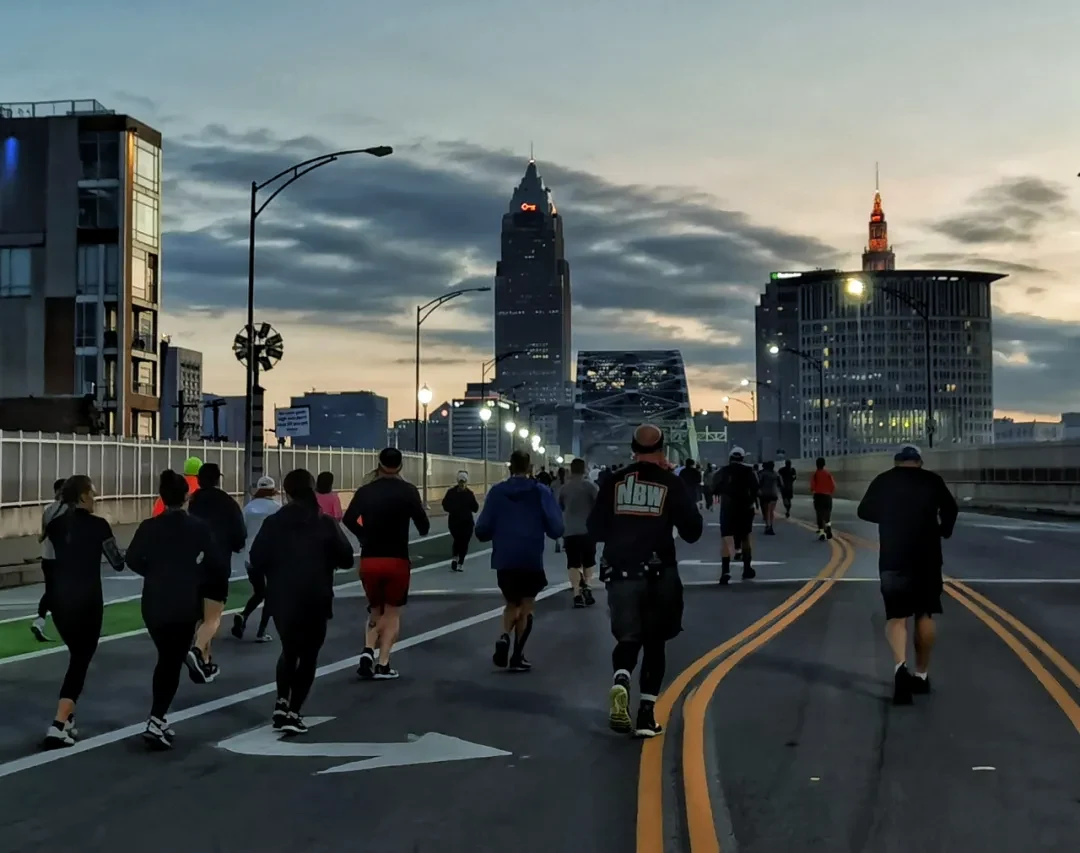
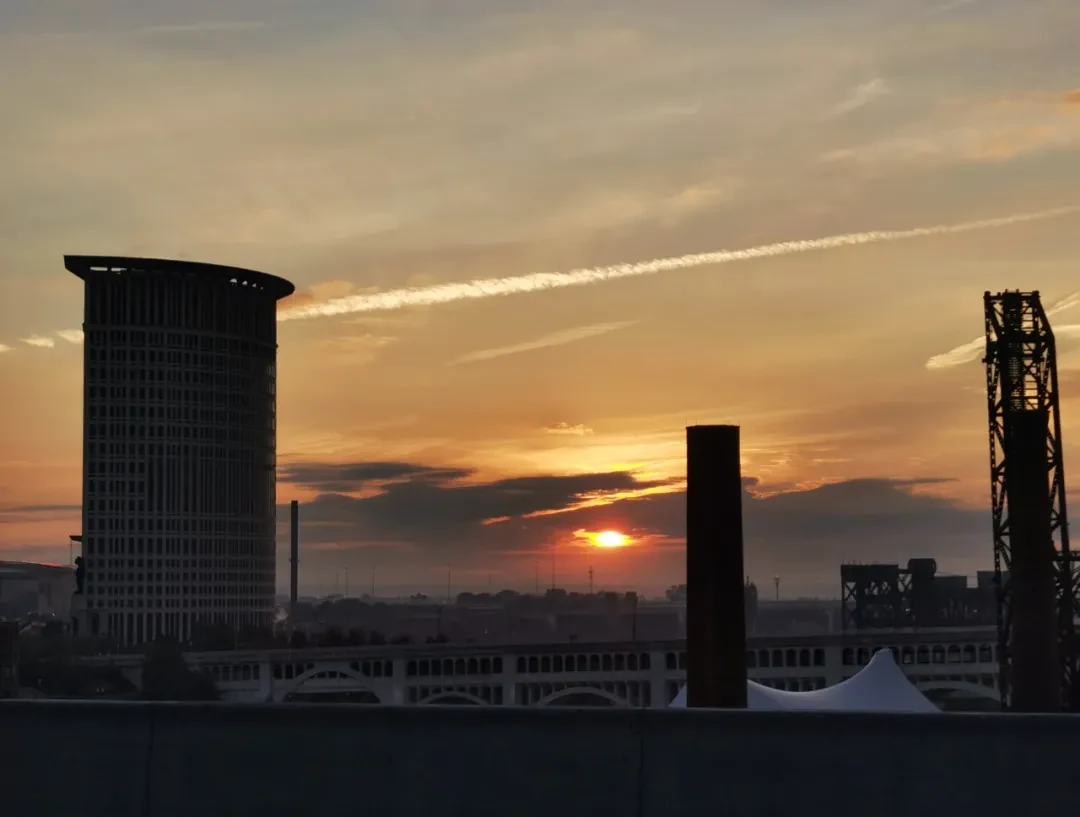
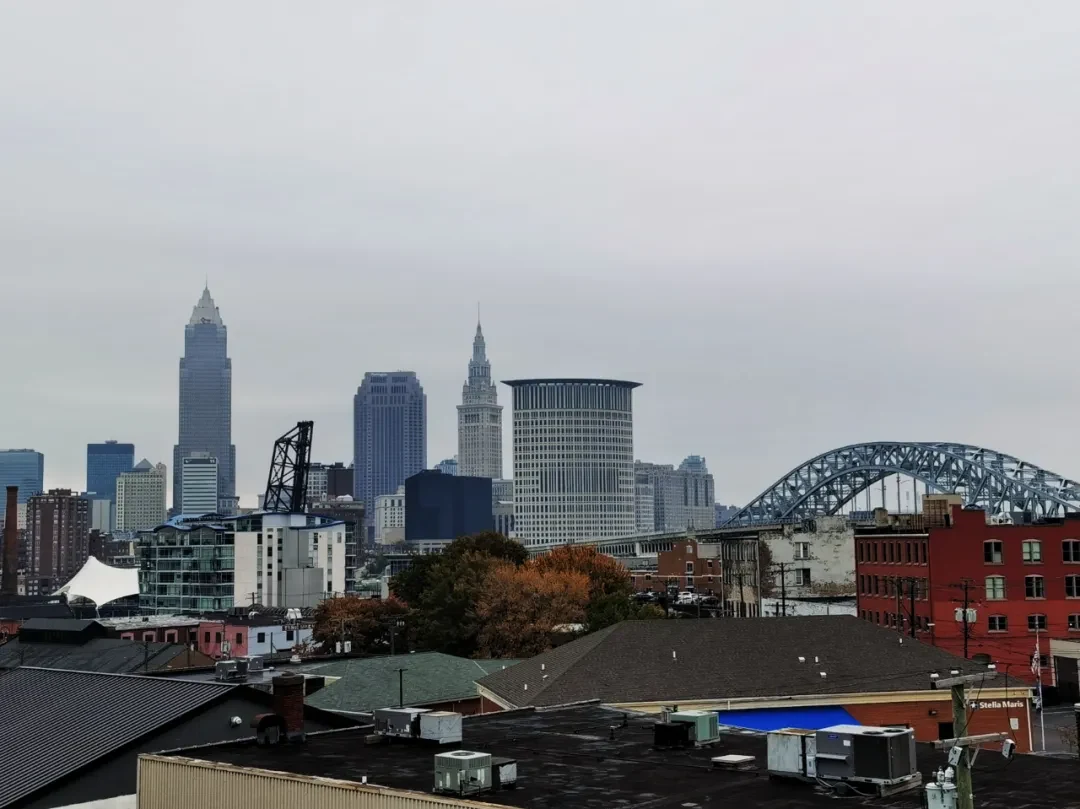
The sky was still not fully bright. In the distance, the towers stood firm against the morning clouds. That stretch had a tough, industrial beauty to it. Of the whole weekend, it is one of the parts I remember most clearly.
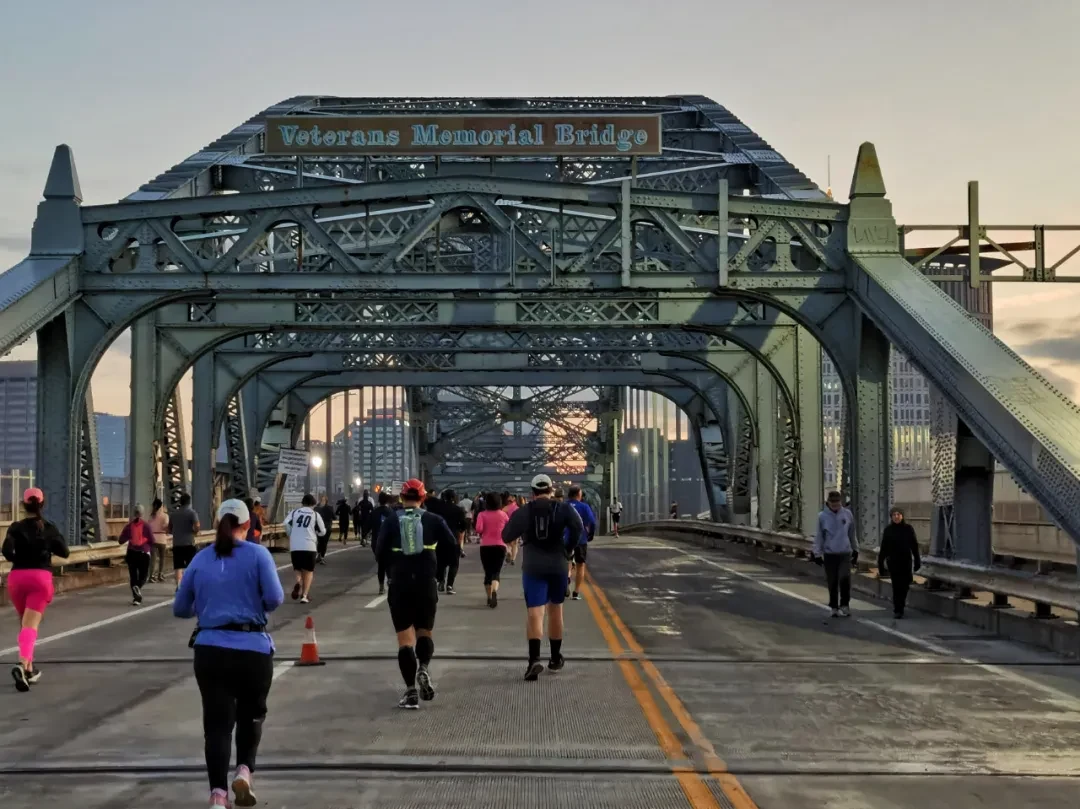
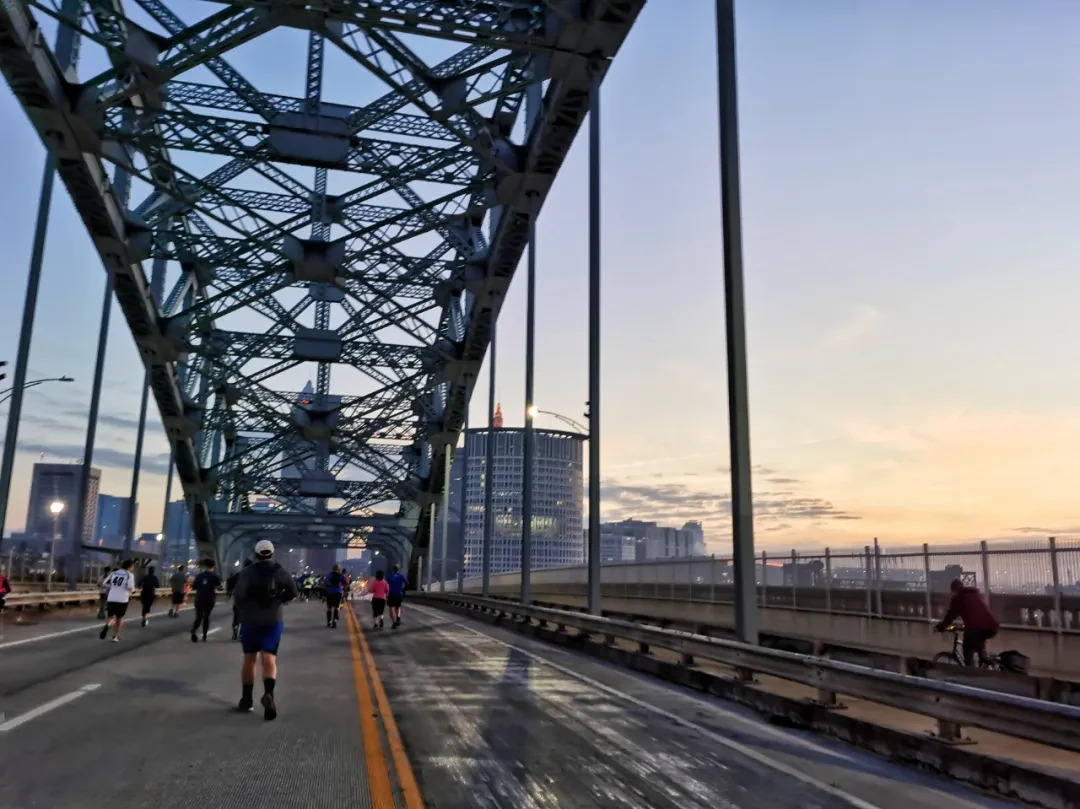
We crossed the Veterans Memorial Bridge and a hard concrete stretch downtown, then turned toward the long elevated road by Lake Erie.
FIELD NOTE 04
Lake Erie, sunrise, and the quarter turn
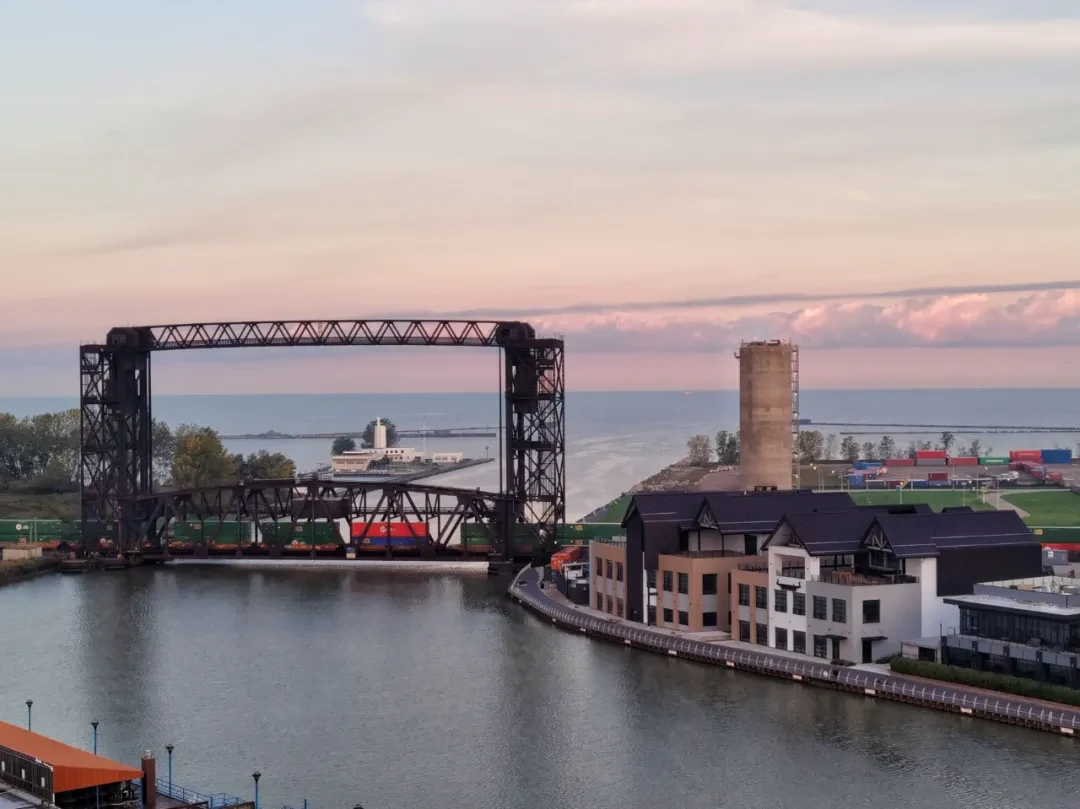
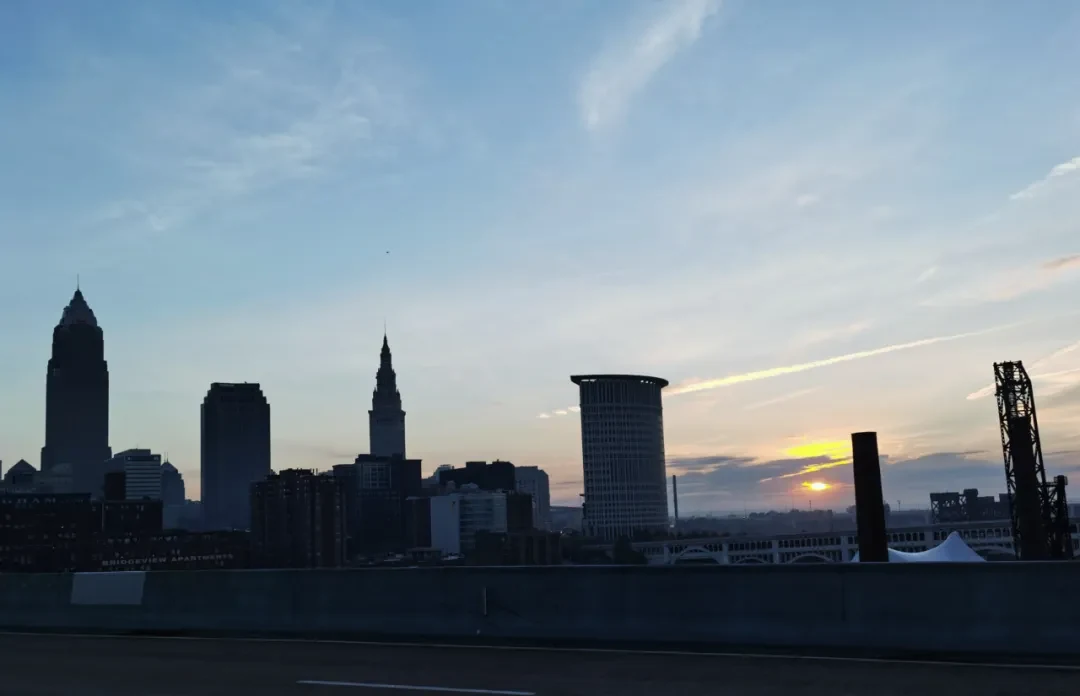
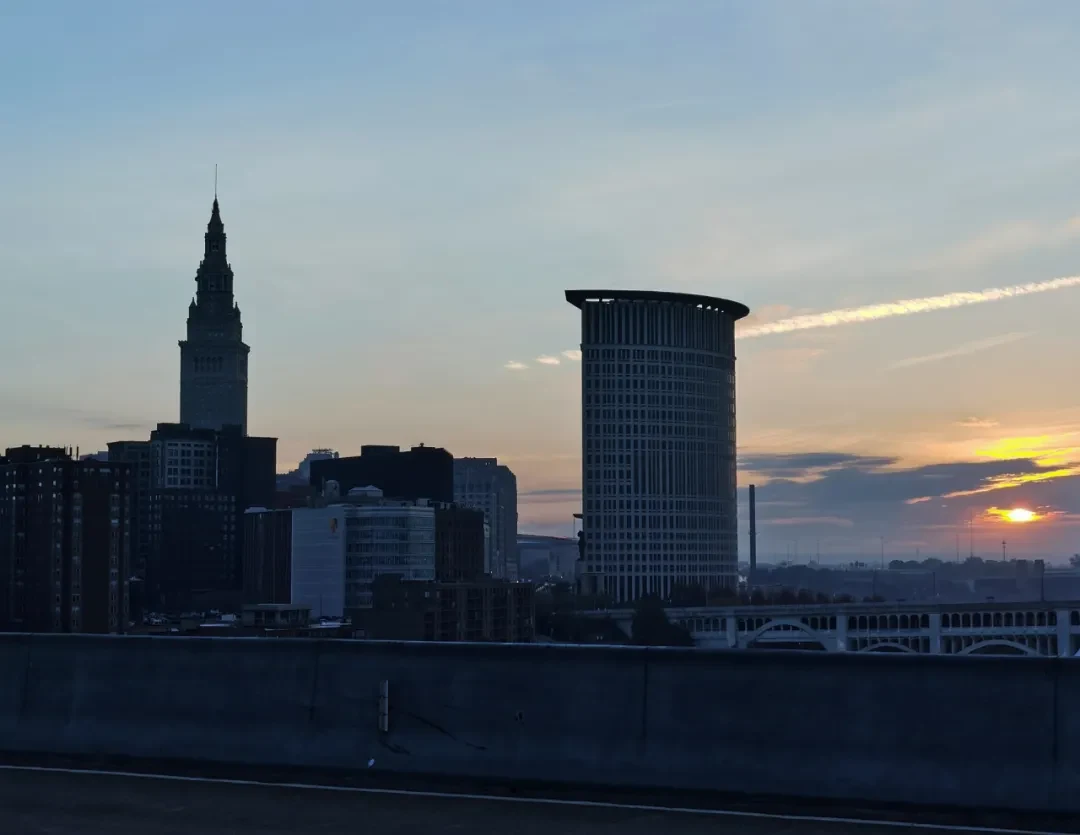
On the right, a train moved along Lake Erie, with blue water and pink clouds layered together. On the left, the sun was just coming up, and the city skyline sharpened in the morning light.
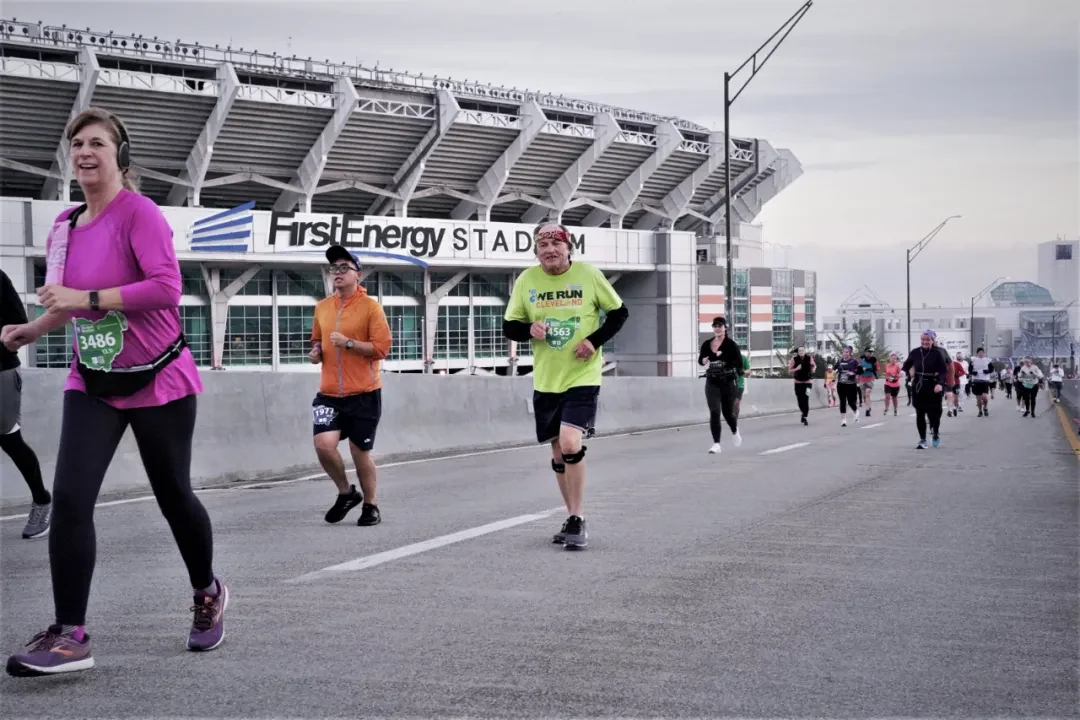
After the elevated section, we reached the waterfront park. By then daylight had arrived, I felt good, and the race was giving out enough gels to keep me calm.
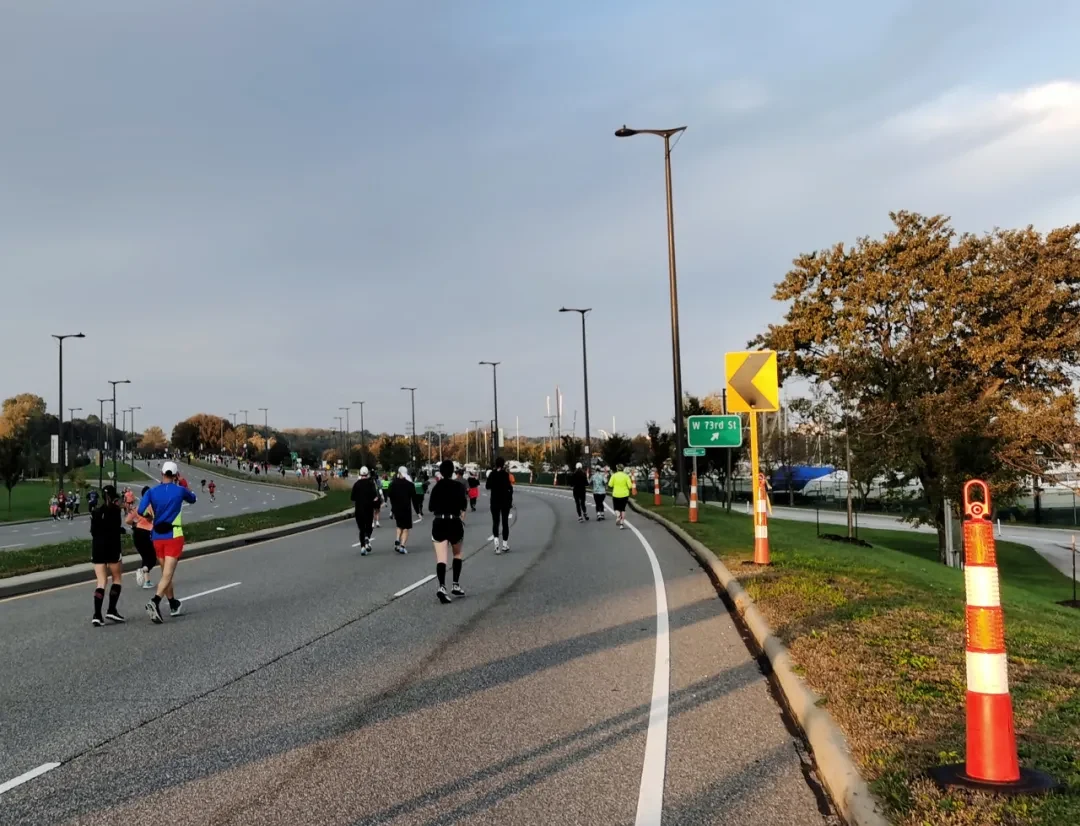
Past the park, the course moved through a lakeside neighborhood. Adults and kids came out to cheer, and there were unofficial aid tables too. The road was narrow, which made the neighborhood feel close and warm.
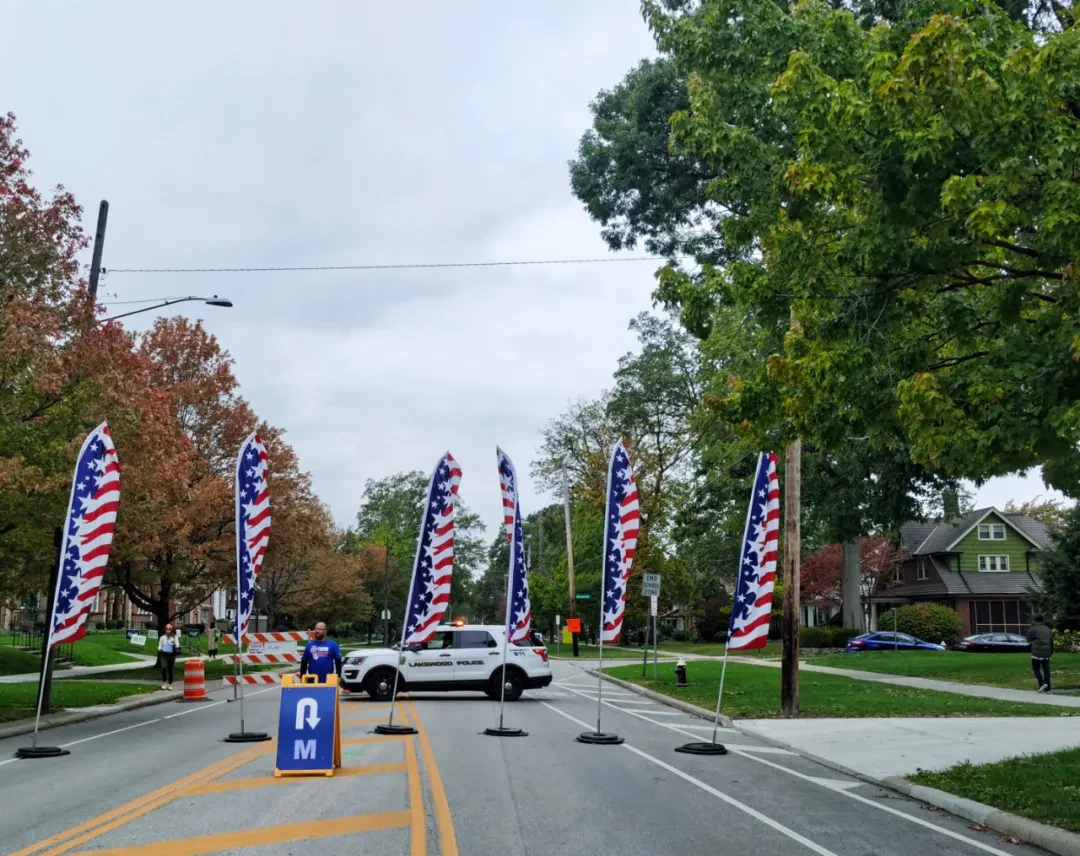
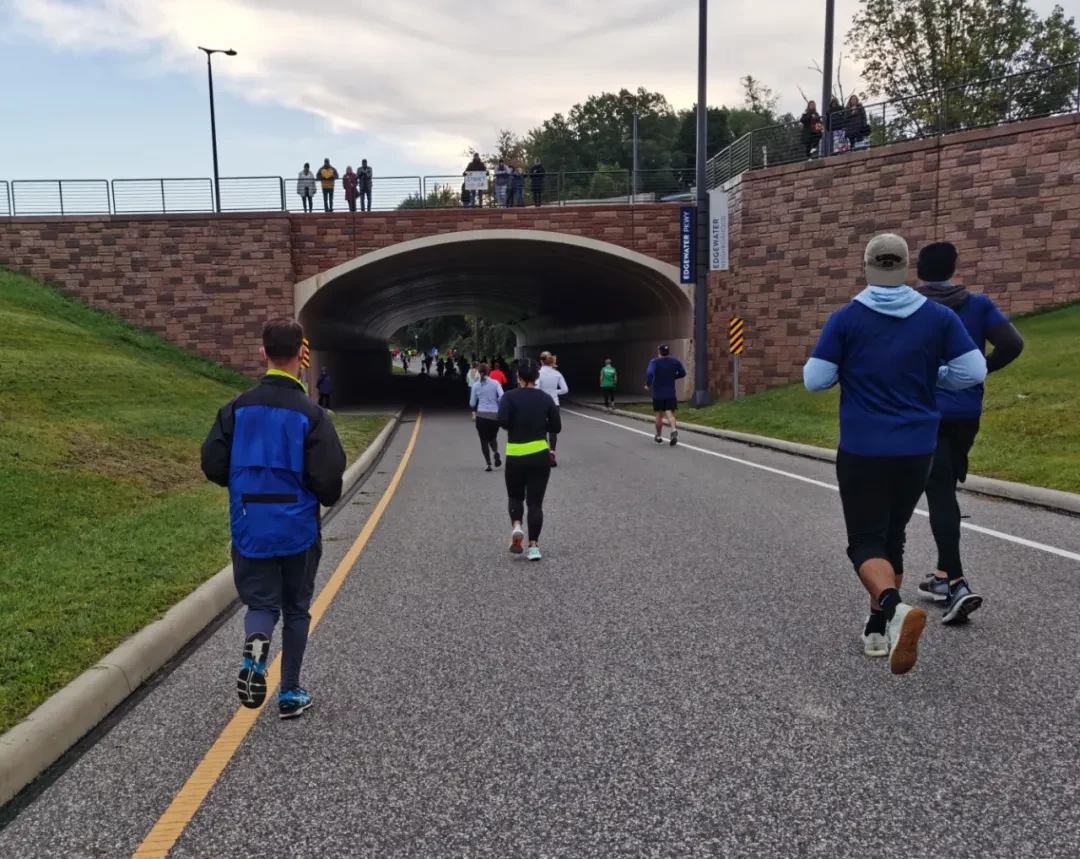
At the end of that neighborhood, the course turned back. Roughly a quarter of the marathon was done.
FIELD NOTE 05
The view only a marathon gives you
The way back was similar to the way out, so the novelty faded a little. But once I returned to the blue bridge by the lake and saw downtown from a different angle, the city changed completely.
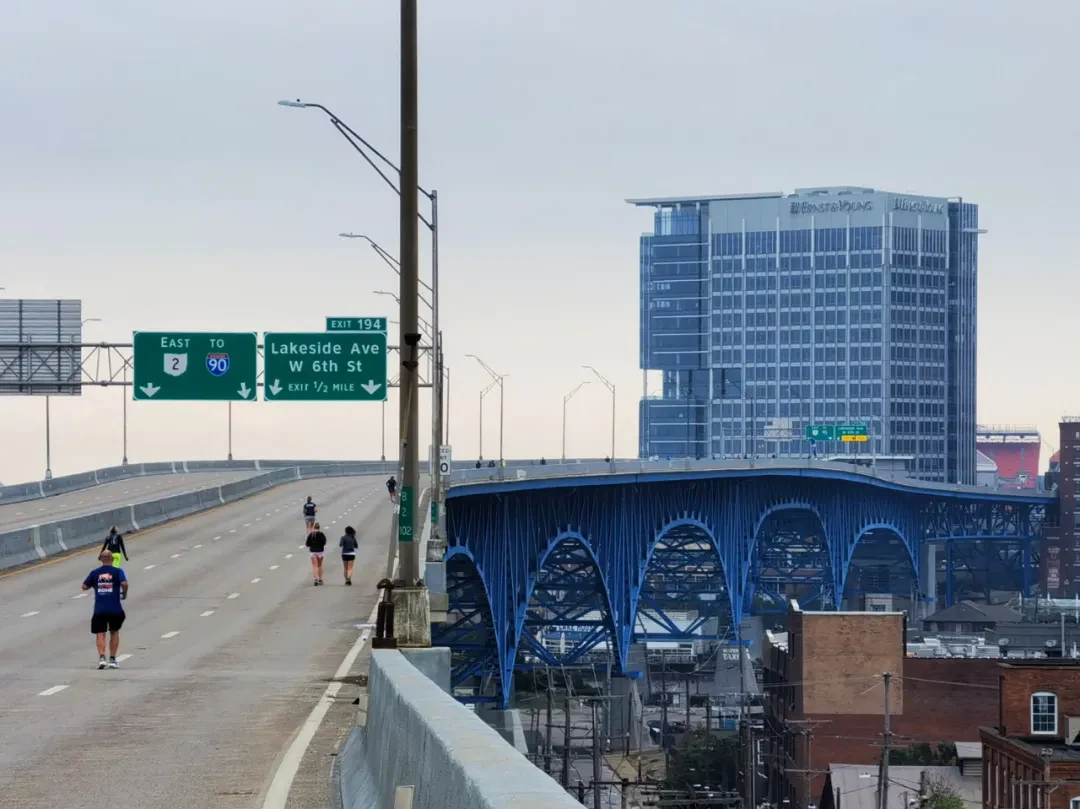
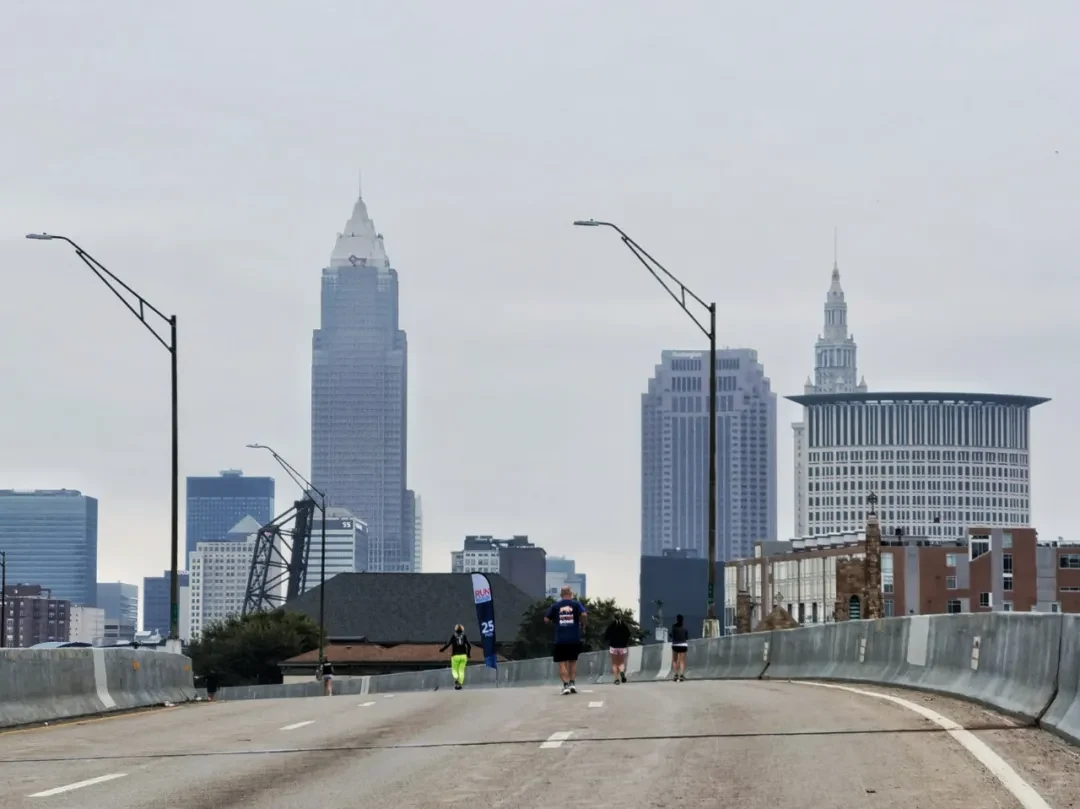
The hard lines of the city and its industrial character were all there at once. In front of the buildings, the Cuyahoga River moved slowly, looking as if it had already washed away some of its old industrial scars.
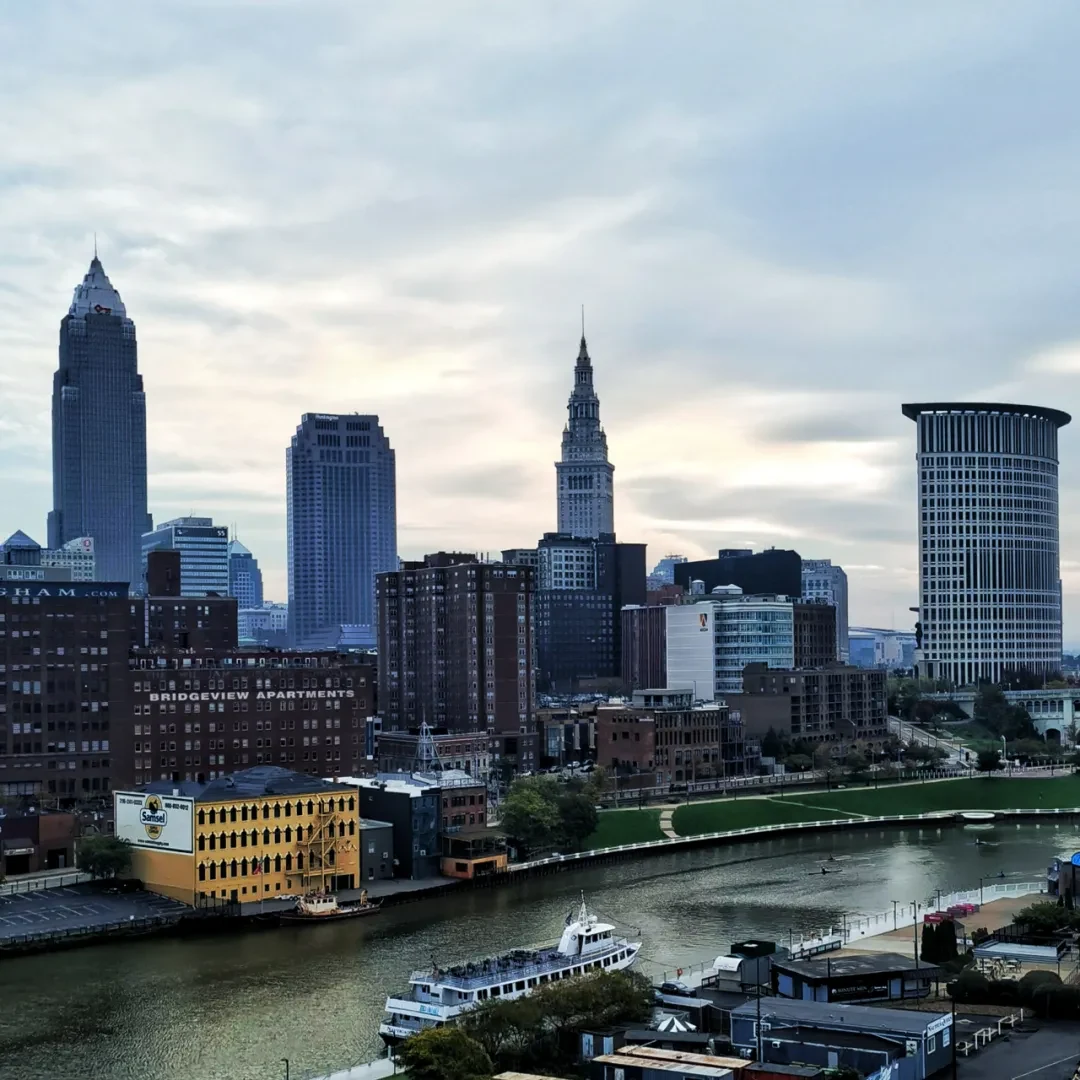
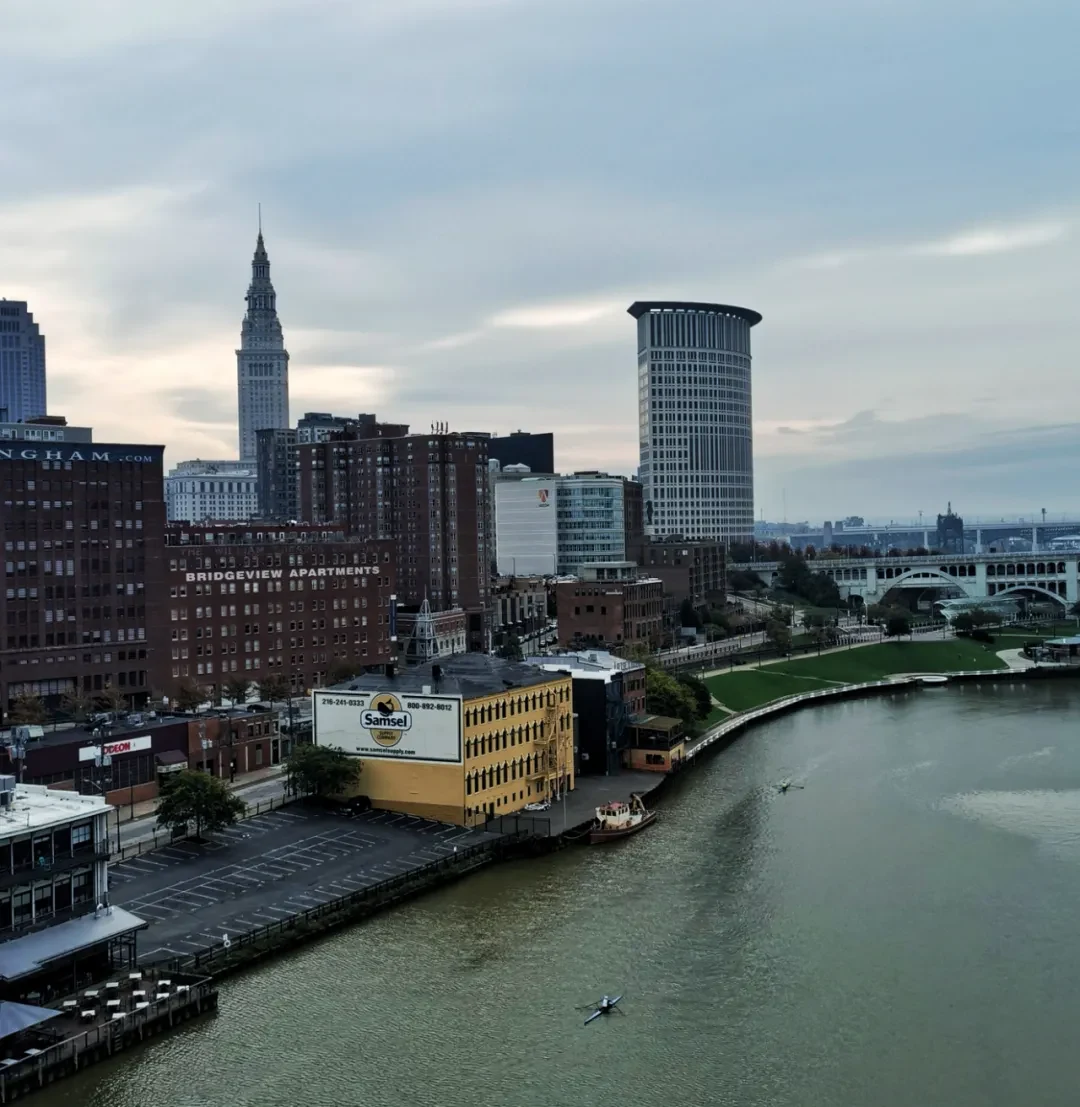
If not for the marathon, I probably never would have seen Cleveland from that angle. We crossed back toward the city, turned again, and the second half began.
FIELD NOTE 06
Gels, a banana, and getting through it
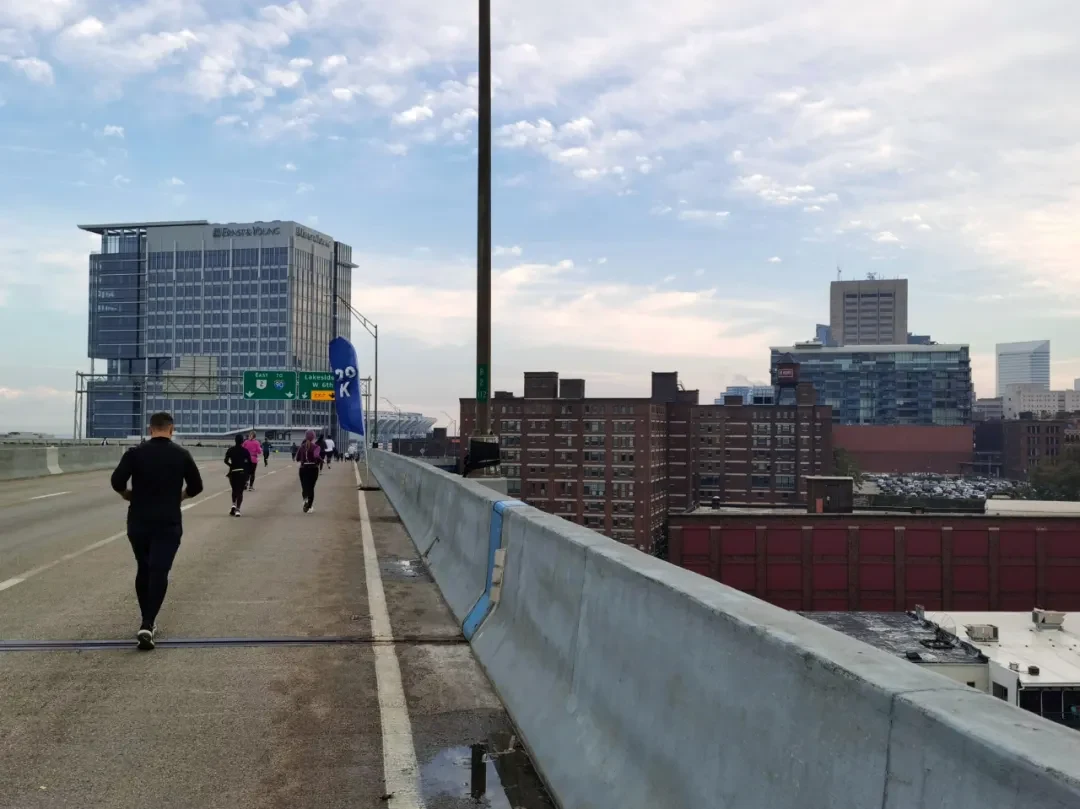
There were noticeably fewer runners in the second half, and the scenery repeated enough that I stopped thinking about photos and settled into the work of running.
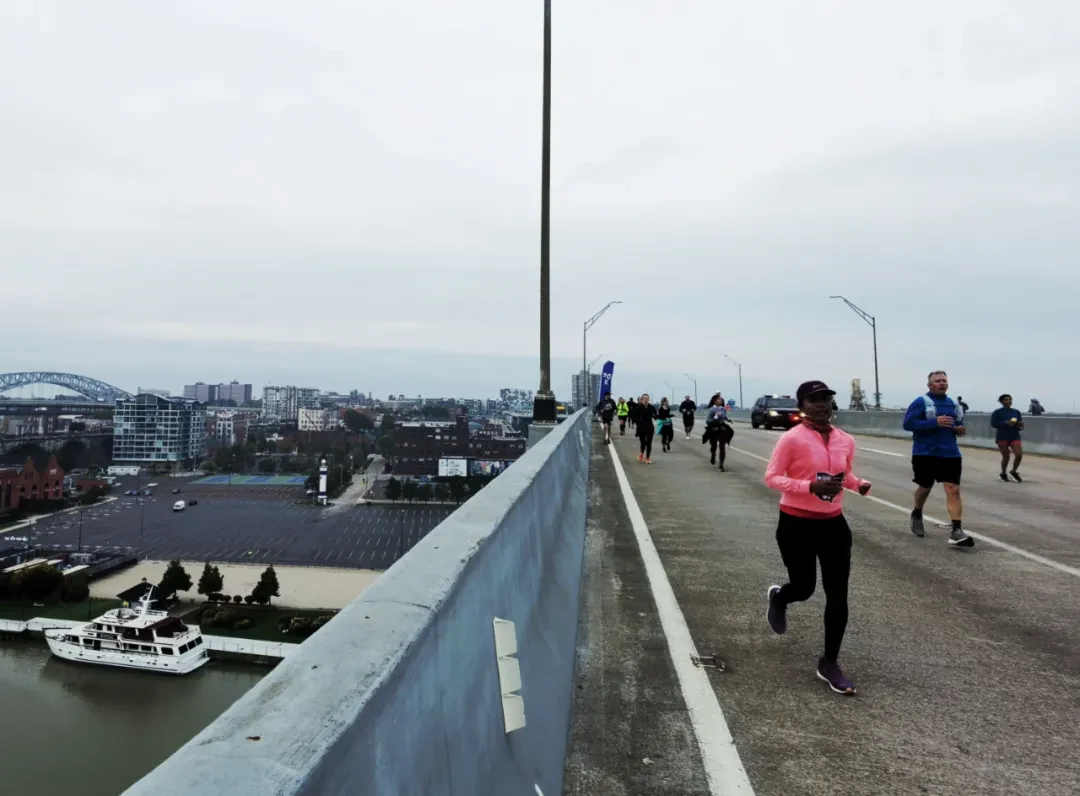
Downtown, I grabbed a pile of gels. My thinking was simple: gels in hand, panic out of mind. It worked. I took one at nearly every aid station, and at least delayed the wall.
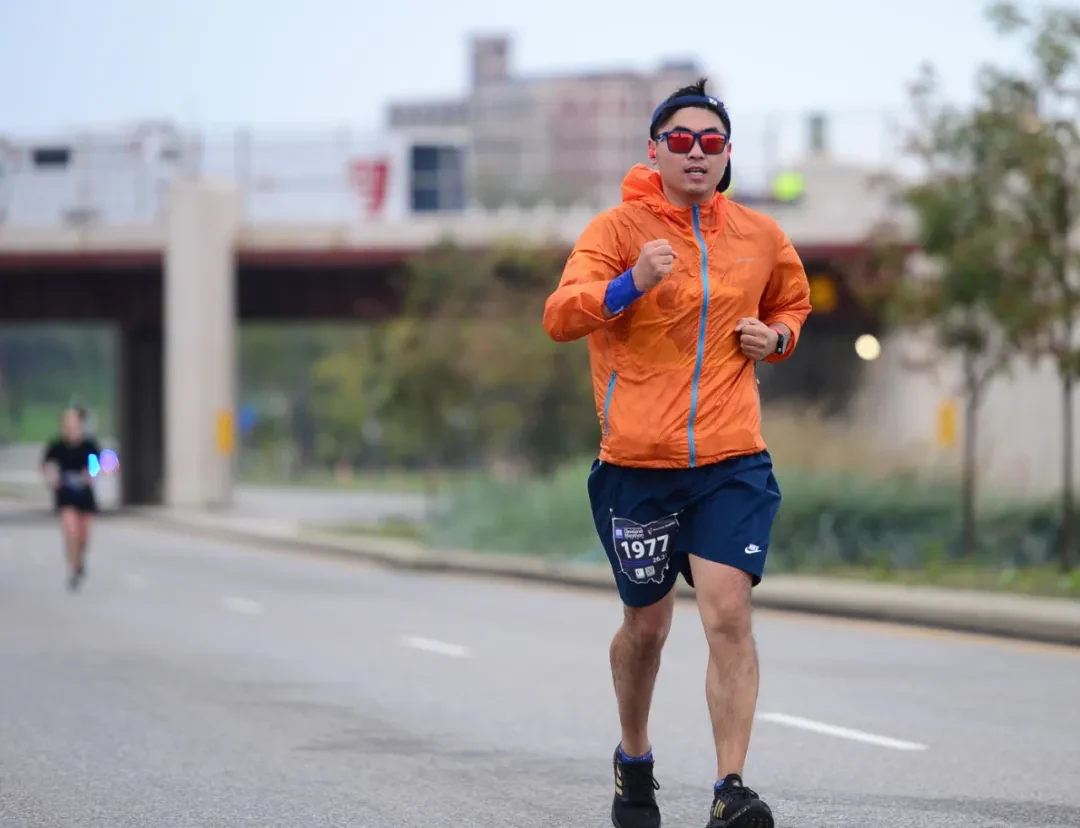
Later, back in the neighborhood, I grabbed a banana and finally got through the roughest patch. After that, the race hurt less. I could actually enjoy the final miles.
FIELD NOTE 07
Finish, medal, Public Square
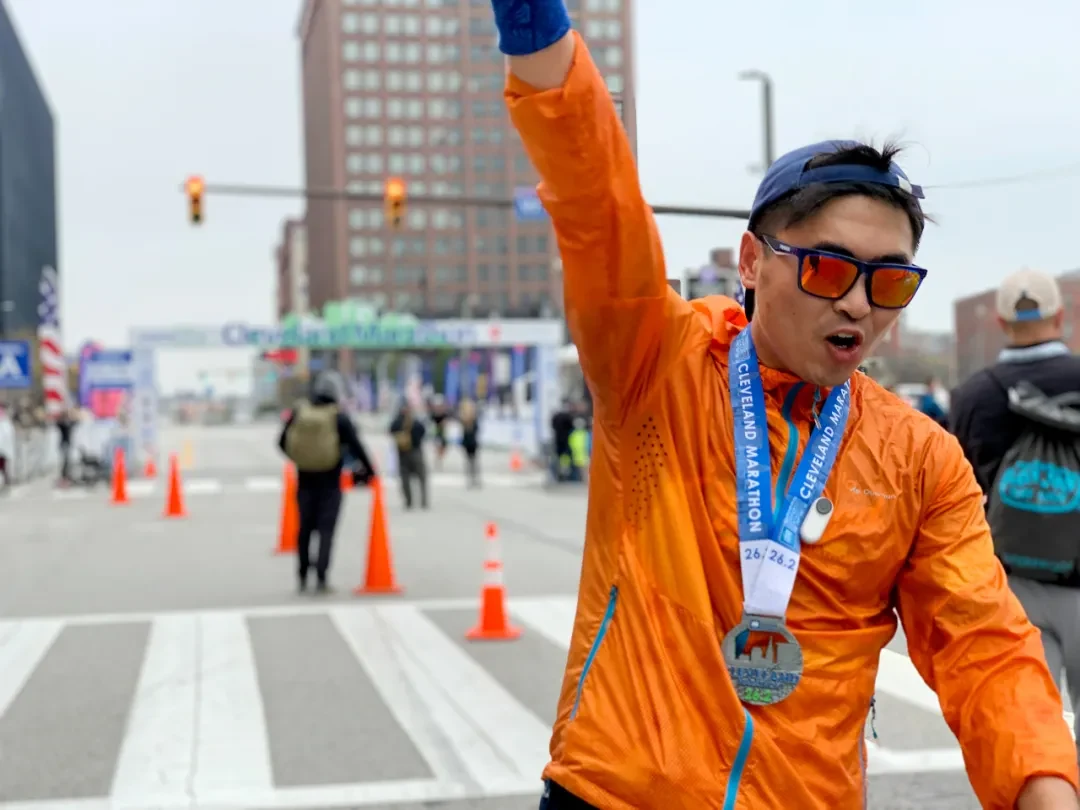
I finished Cleveland in under five hours, which was my best recent result at the time. Since moving to the U.S., I had become embarrassingly rusty, so this one felt good.
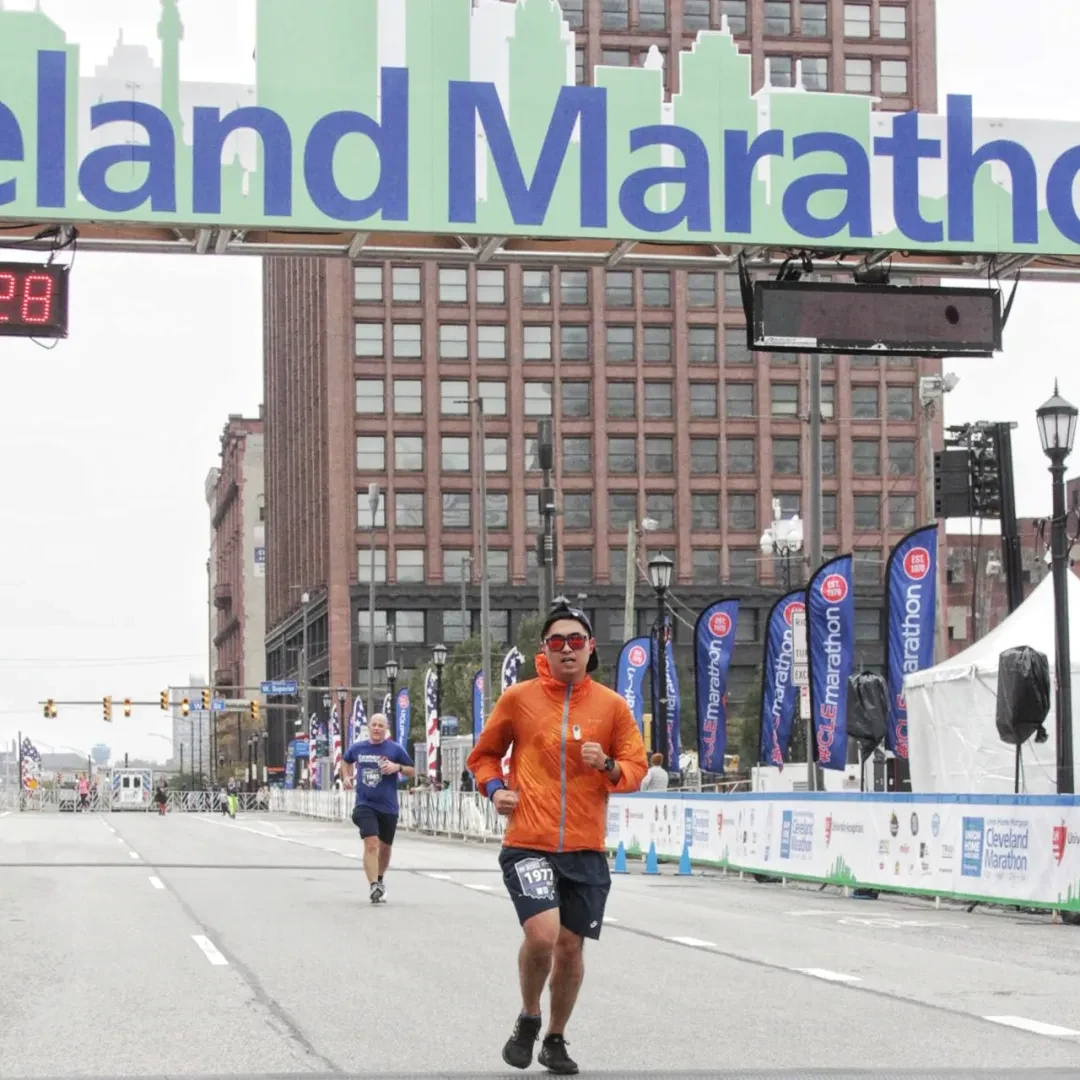
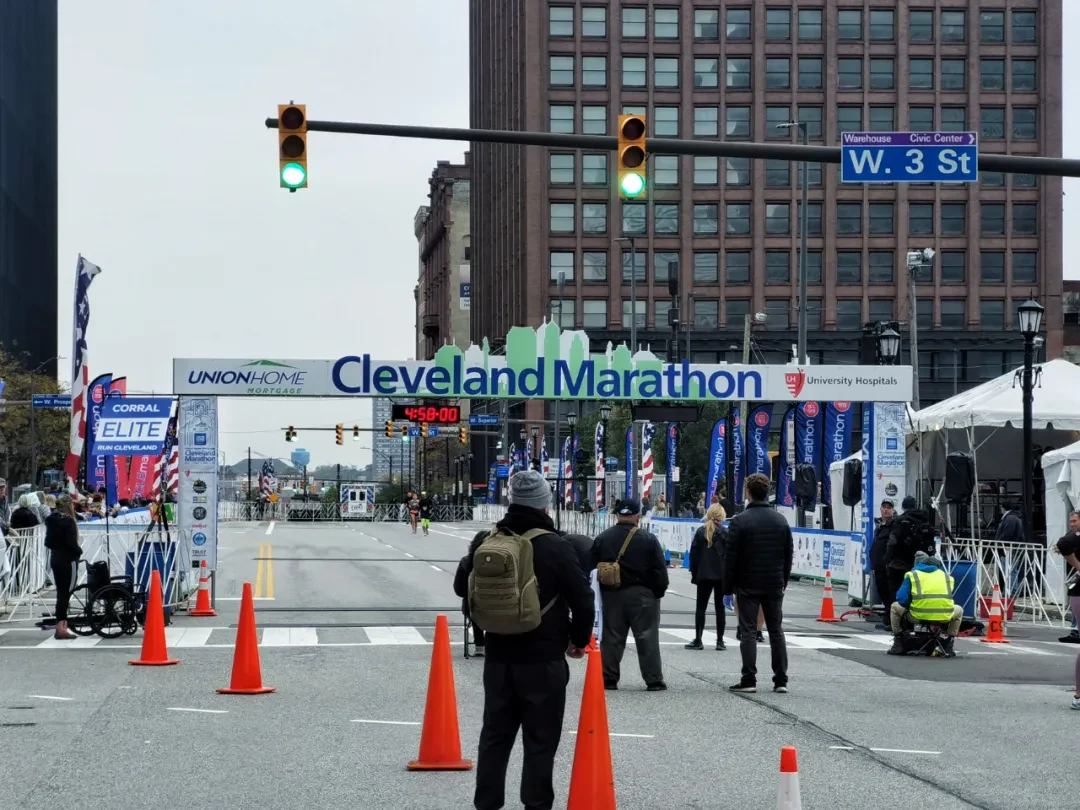
47 had been waiting at the finish for quite a while and caught the moment after I crossed the line.
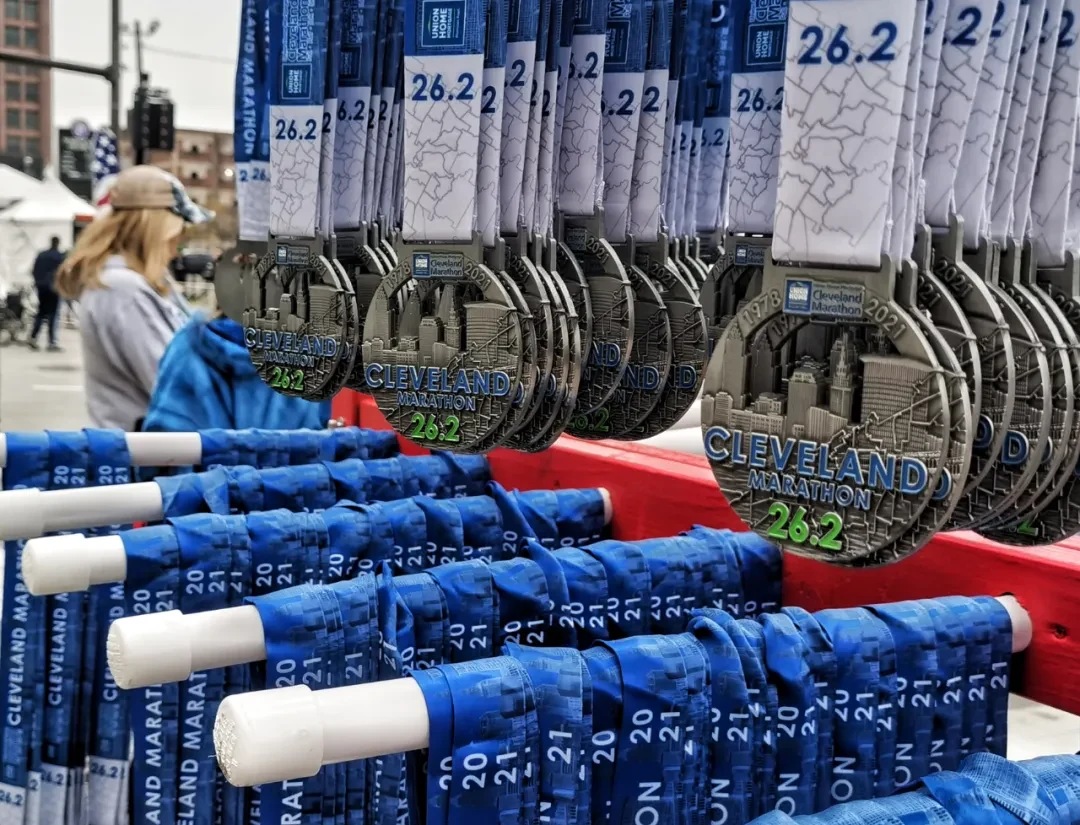
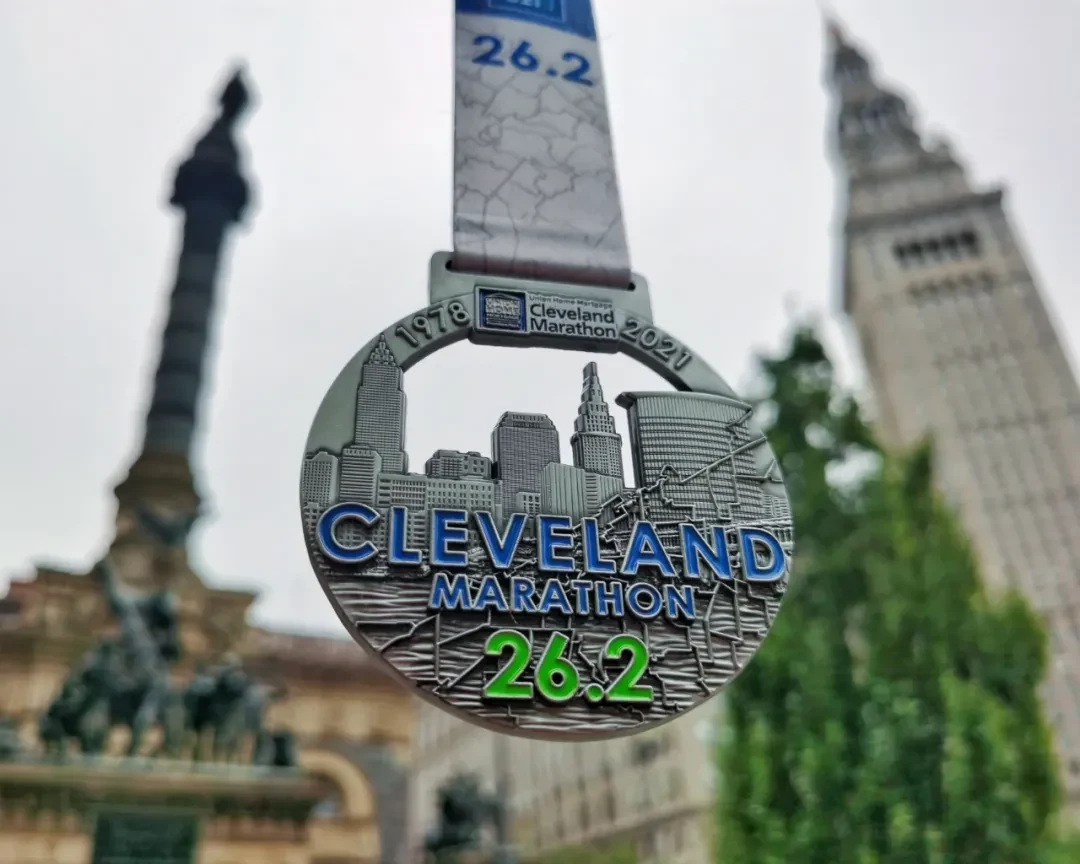
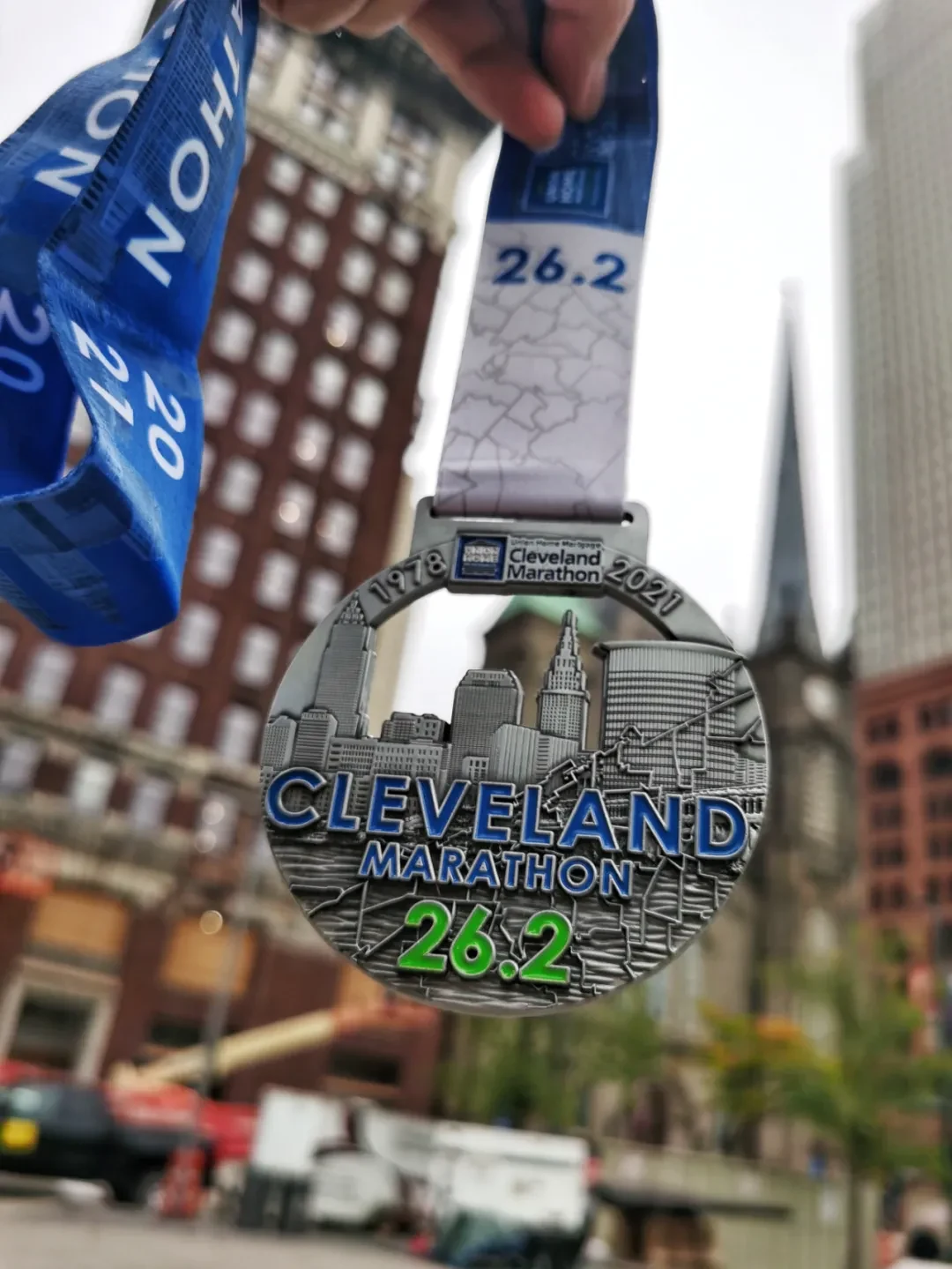
The Cleveland medal was genuinely beautiful: openwork design, metallic weight, and a very industrial feel. Very Cleveland.
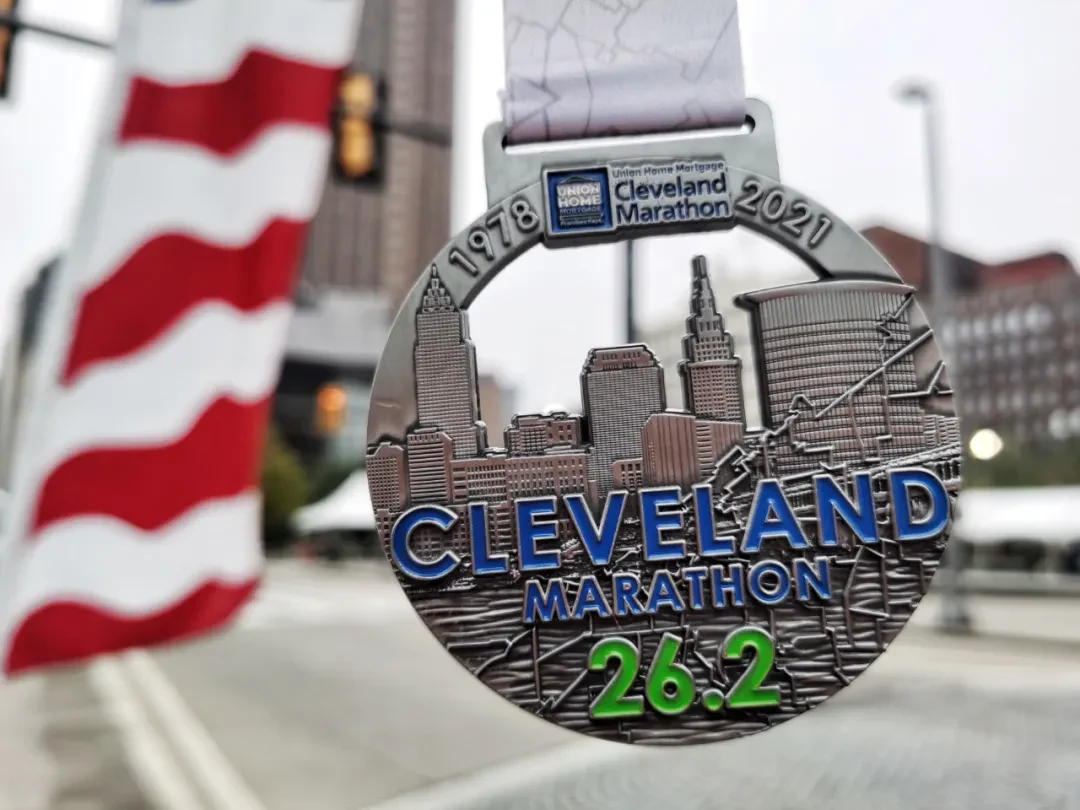
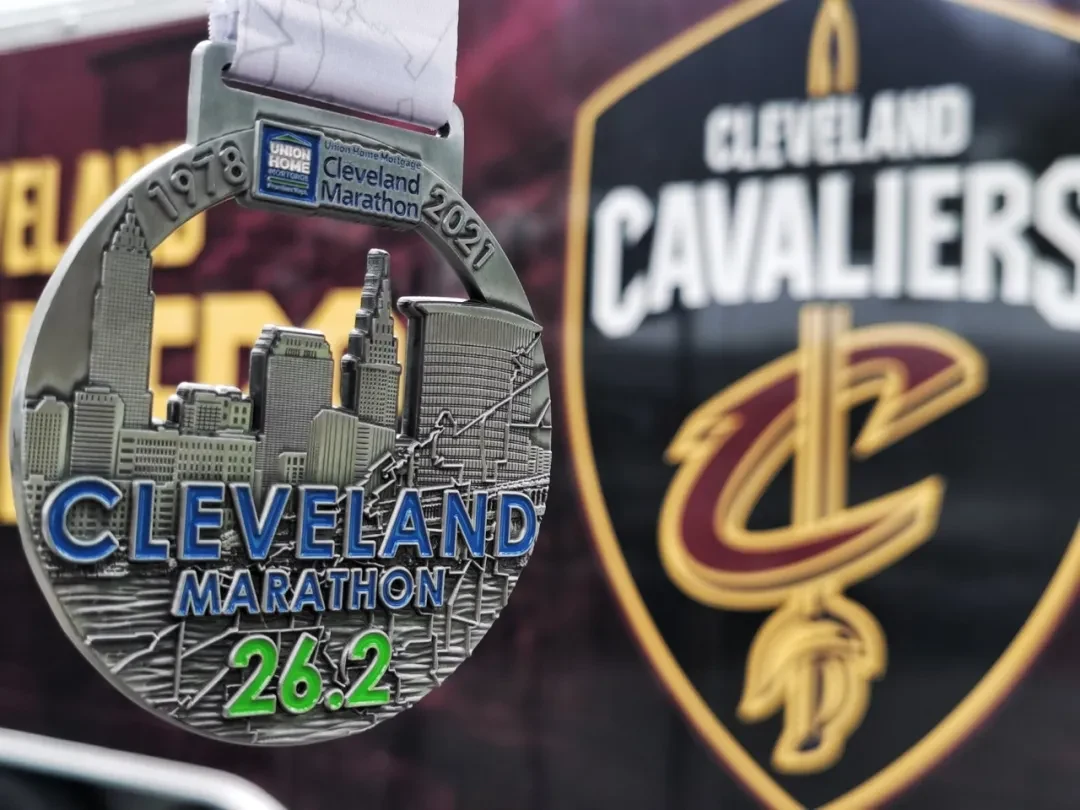
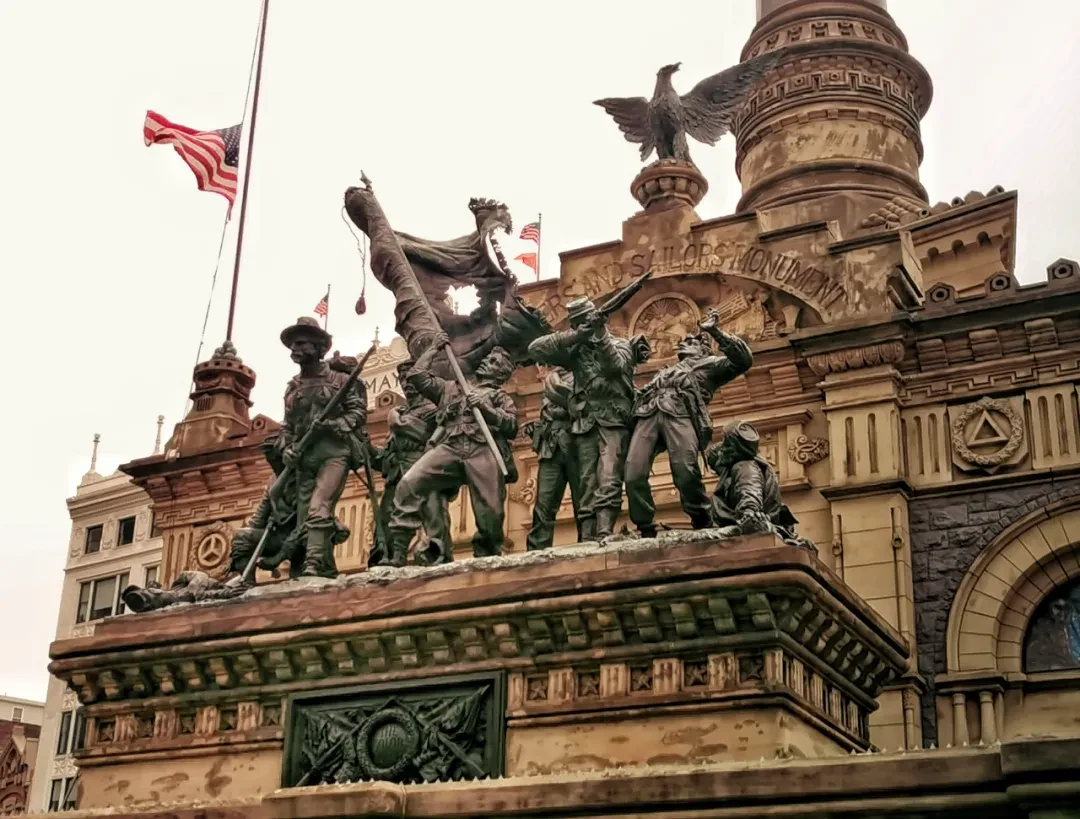
With the medal on, I took a lot of photos around Public Square. In the dark before the start I had not really seen the place. After the race, I finally realized how polished it was.
FIELD NOTE 08
Back through Ohio
After the race I showered at Planet Fitness. That national gym chain is honestly useful, and compared with Chicago, the Cleveland location felt much better.
Refreshed, we started the drive back to Louisville, nearly six hours away. On the way, we crossed an Ohio rainstorm, then stopped in Cincinnati after the weather cleared for a Chinese buffet before getting home.
Looking back, it was a dusty, hurried weekend by car across Ohio. But those 42.195 kilometers gave me a kind of satisfaction that made the whole trip worth it.
FIELD NOTE 09
After the race, the city
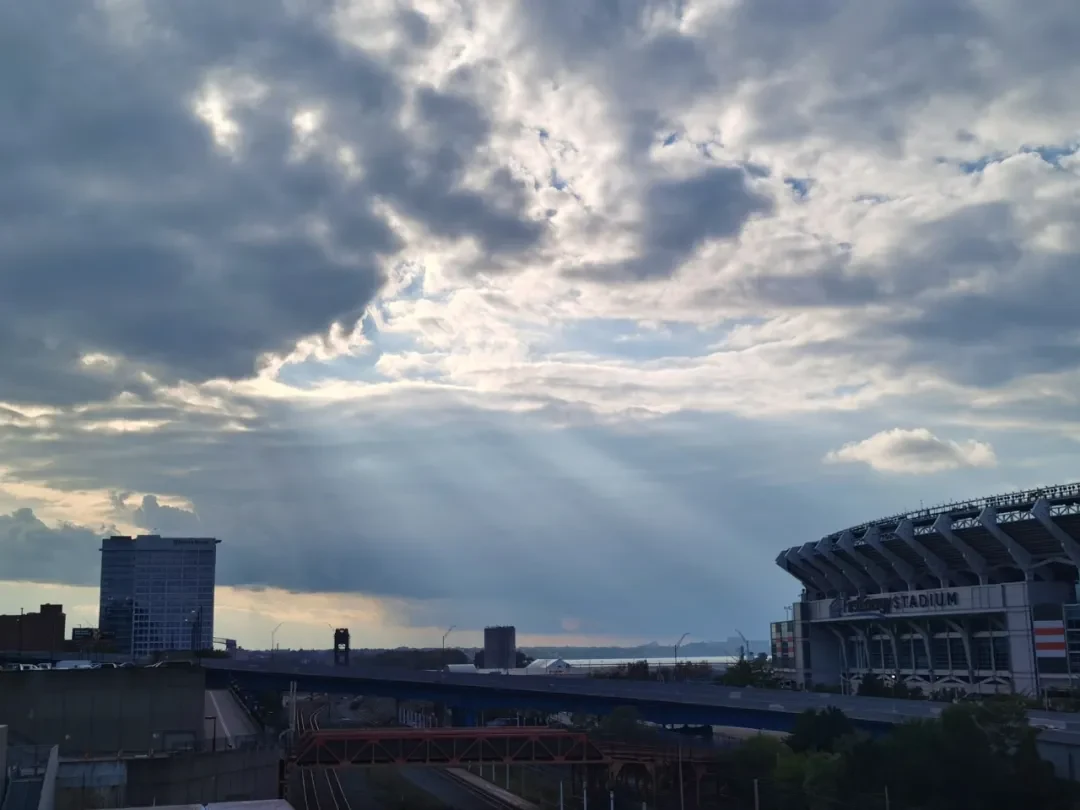
Once the marathon was in the body, Cleveland made more sense: Lake Erie, old industry, rock and roll, basketball, and a city still carrying itself with stubborn pride.
FIELD NOTE 10
Melancholy Cleveland
By "melancholy," I mean Cleveland witnessed and shared in the glory of America's industrial age, and then unfortunately lived through the whole decline that followed deindustrialization. Like bankrupt Detroit, Cleveland still does not feel especially prosperous today.
There are plenty of jokes about Cleveland. American media once called it "the mistake on the lake." In American pop culture, Cleveland can mean a place worse than hell, the kind of place people joke they would rather avoid at all costs.
But in China, like most people, my impression of Cleveland probably still begins with LeBron James and his Cavaliers.
In middle school, I often played basketball with Lao Fei from the class next door. He always wore a red-and-white Cavaliers No. 23 jersey. Besides McGrady, LeBron was the biggest star for us kids, though I personally liked Ginobili more.
Whether it was EA's NBA Live or sports news on CCTV5, Cleveland showed up around me constantly in that era.
But Cleveland's pro sports history is, in its own way, as melancholy as the city's development. From the Browns' last title in 1964 to the Cavaliers' championship in 2016, more than half a century passed.
So you can imagine how proud Clevelanders felt when LeBron shouted, "Cleveland! This is for you!"
FIELD NOTE 11
Birthplace of rock and roll
But melancholy is not pity.
Even now, with LeBron gone, Cleveland in the post-LeBron era has no use for anyone's pity, because this is the birthplace of rock and roll.
However rock-and-roll this city is, its people are just as stubborn.
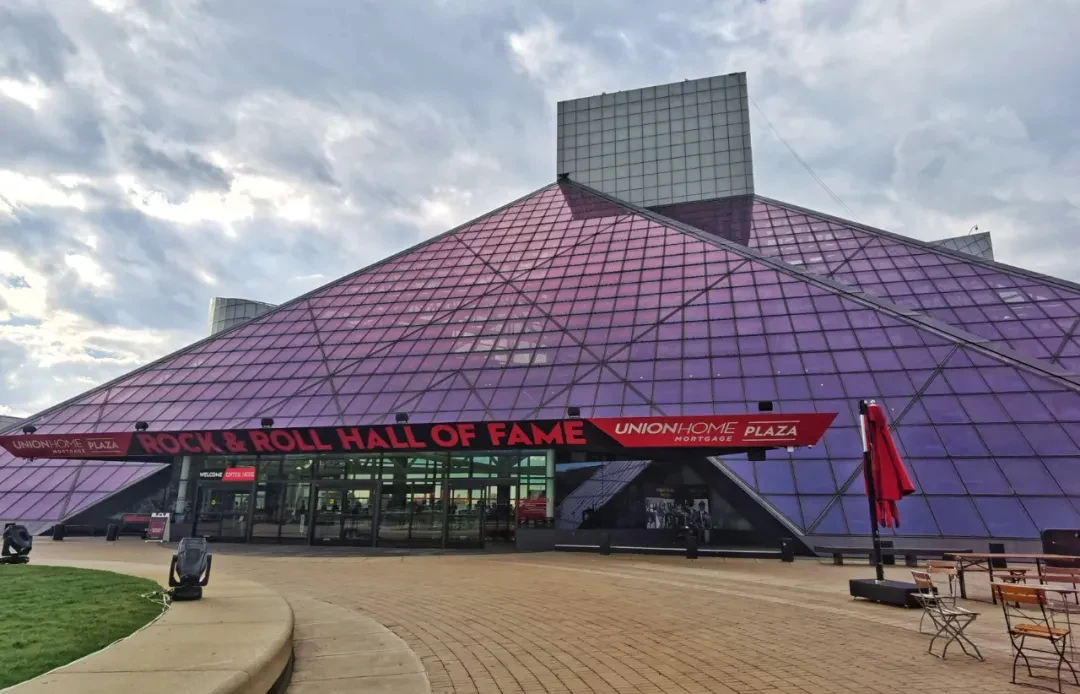
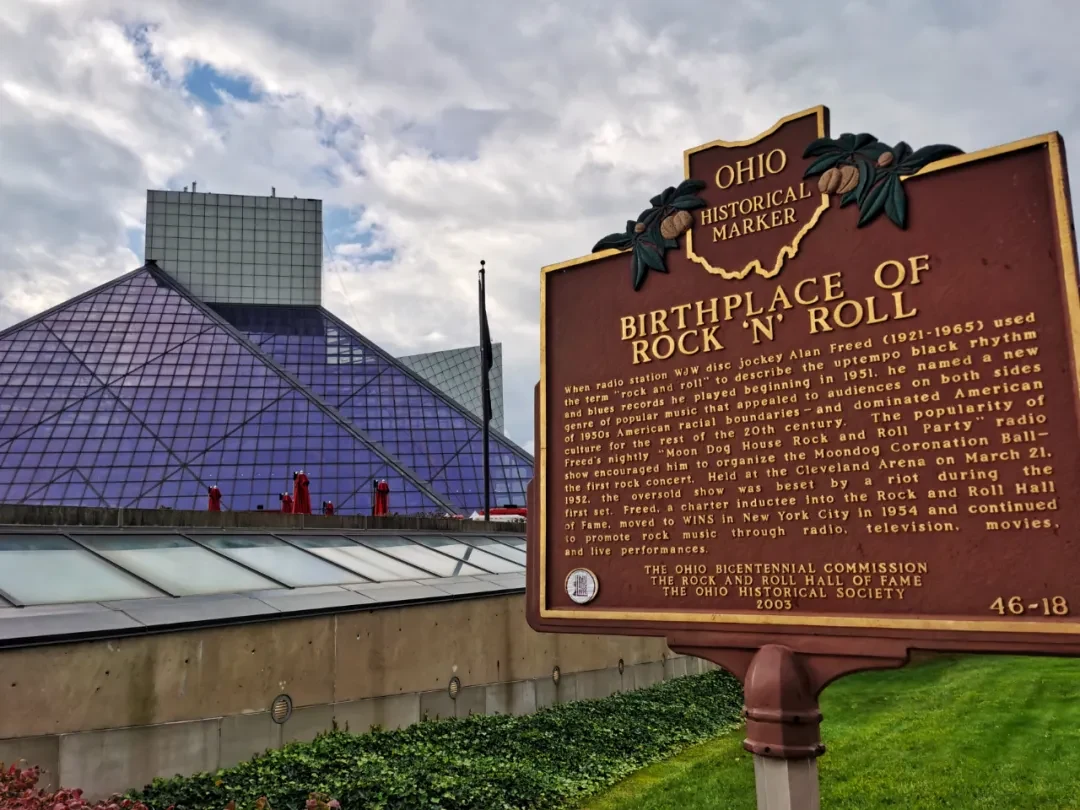
In 1951, Cleveland radio host Alan Freed helped popularize the term "rock 'n' roll" from the rhythm-and-blues song "We're Gonna Rock, We're Gonna Roll." Cleveland has been called the capital of the rock world because of it.
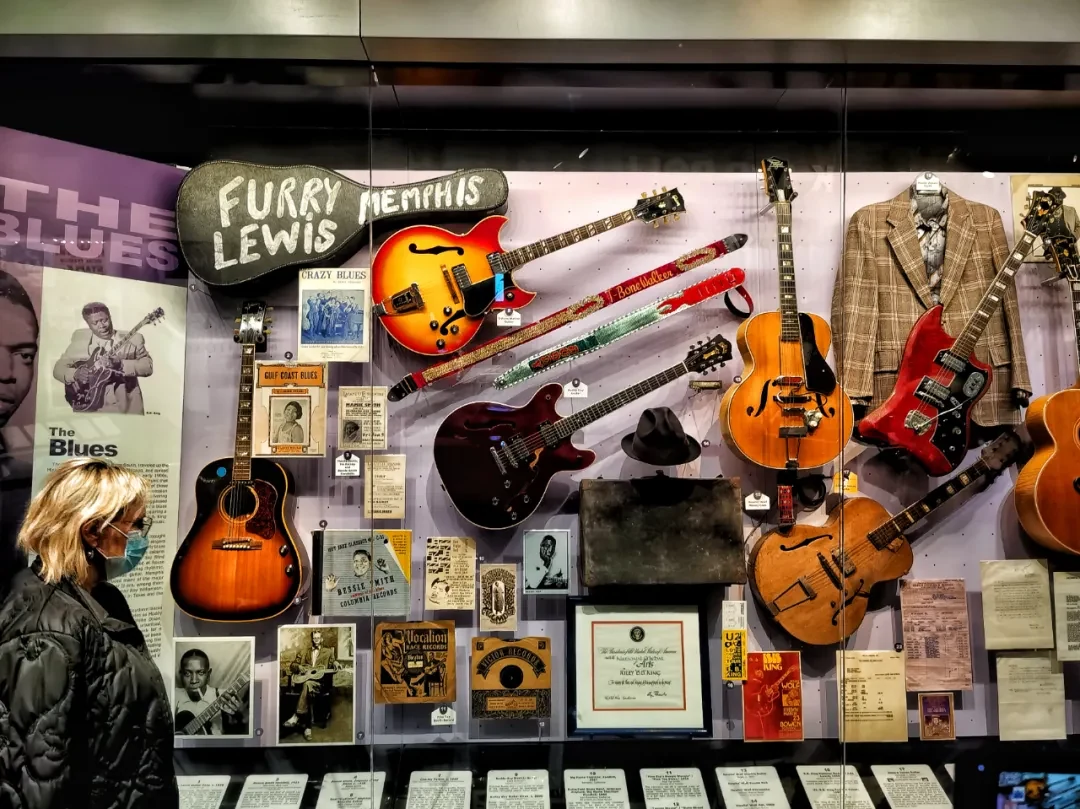
I have always been drawn to the rock world. Compared with polished arrangements and delicate vocals, those undergrounders singing with ragged voices are just insanely charismatic.
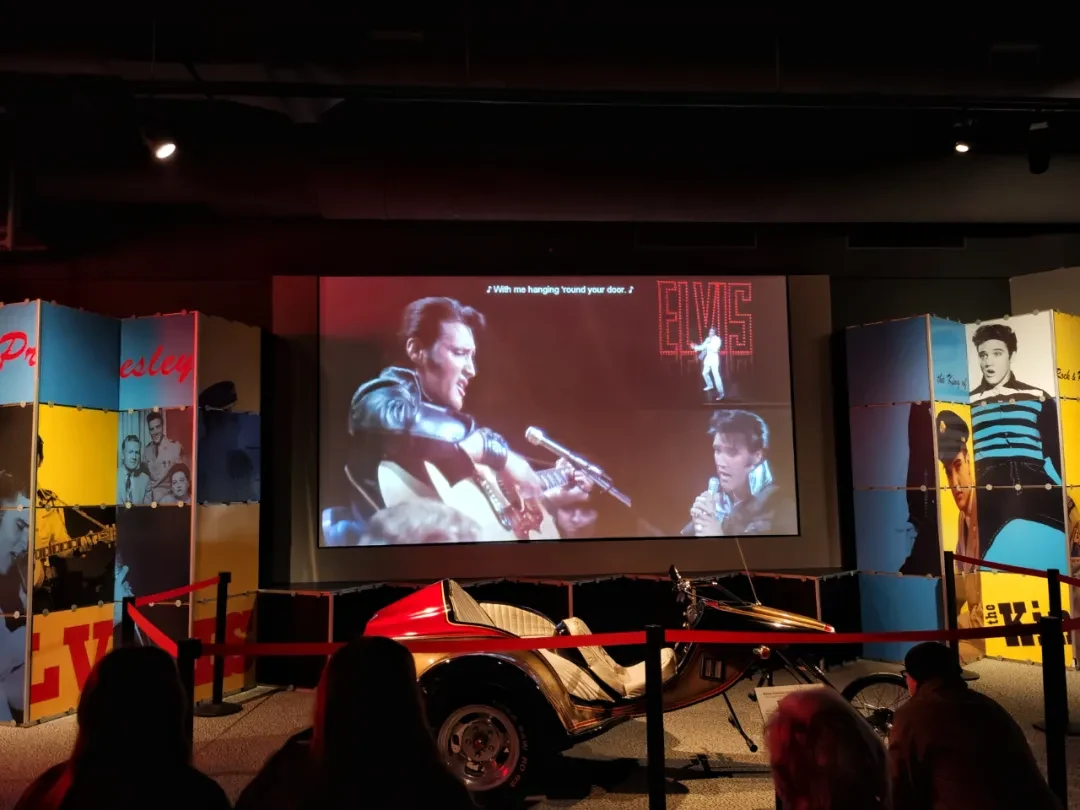
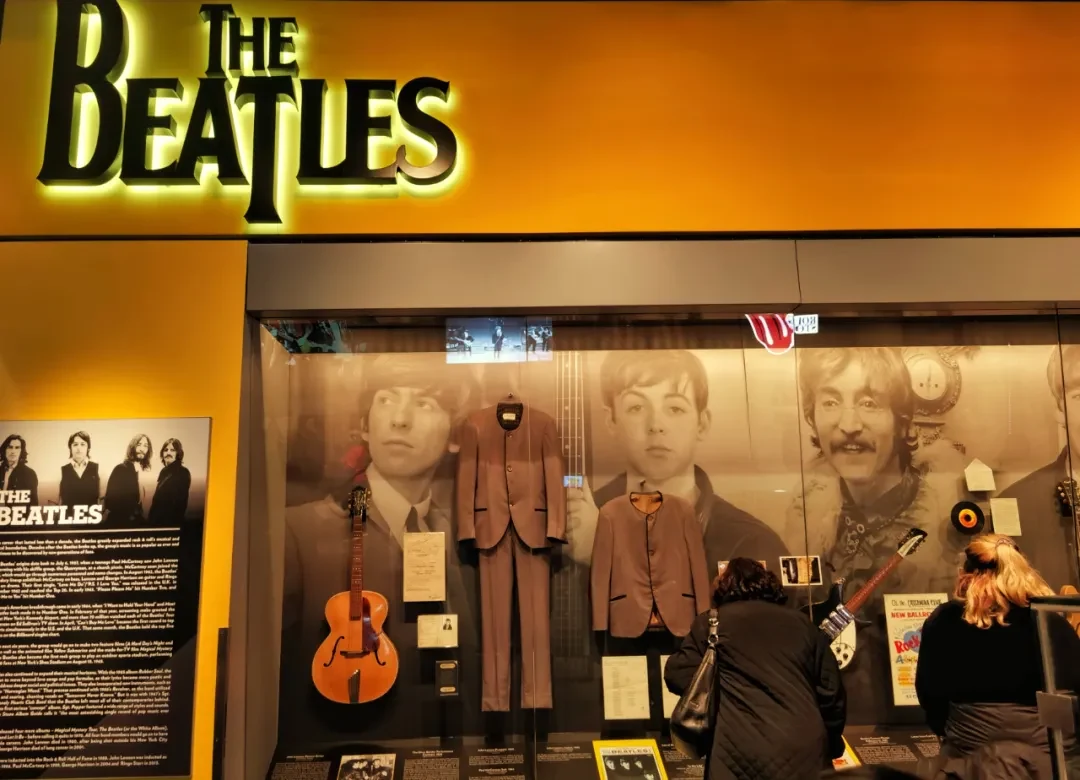
No need to build some persona. Just be real enough. Rock music starts from rebellion but eventually returns to life. To me, music is not some museum object. It should give people strength.
Of course, for those artists, I have respect.
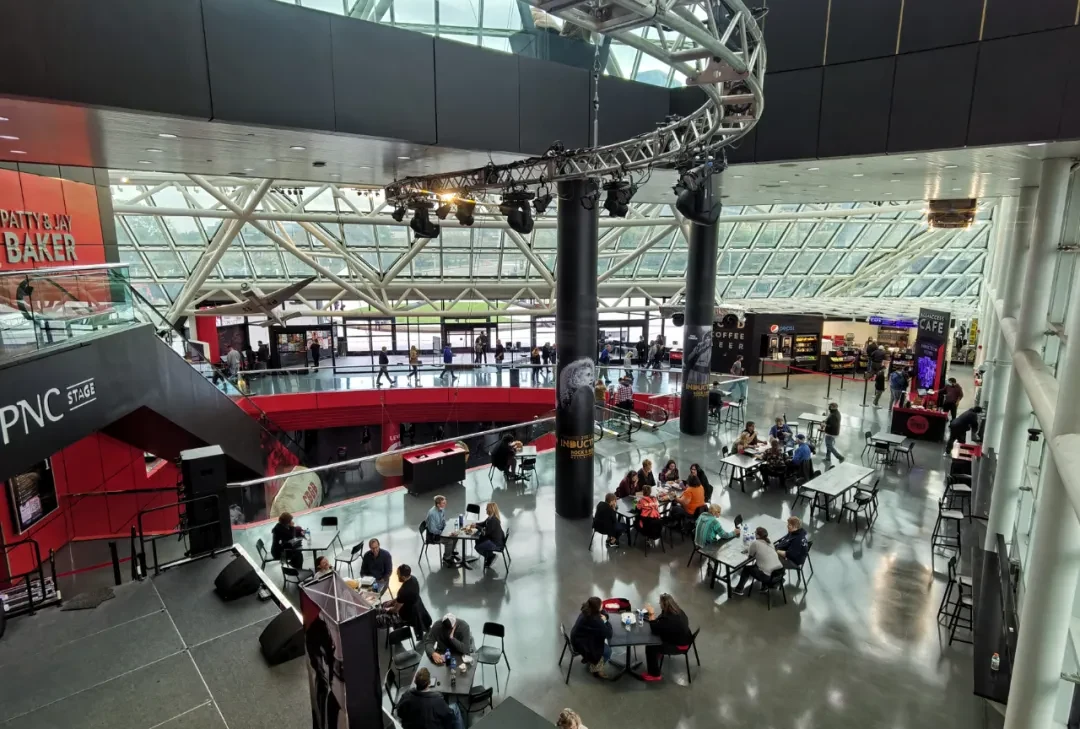
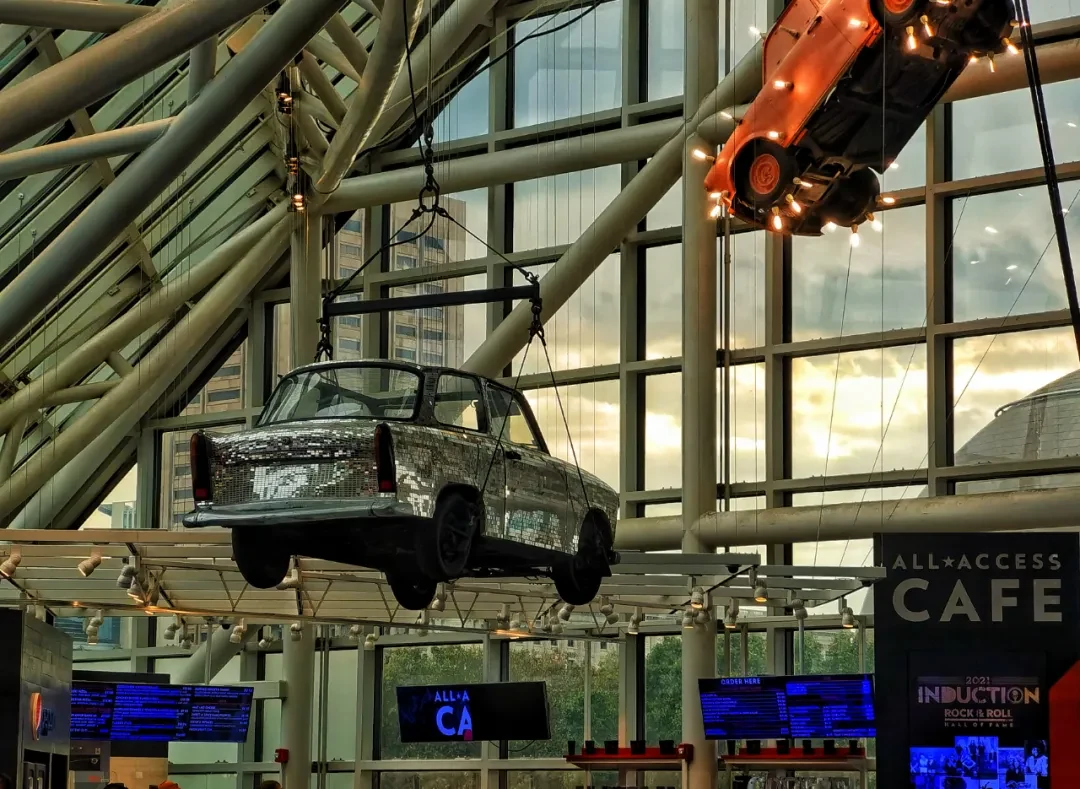
Now, finally, about my Cleveland trip. I am not a hardcore music nerd, but the Rock & Roll Hall of Fame in Cleveland was a must.
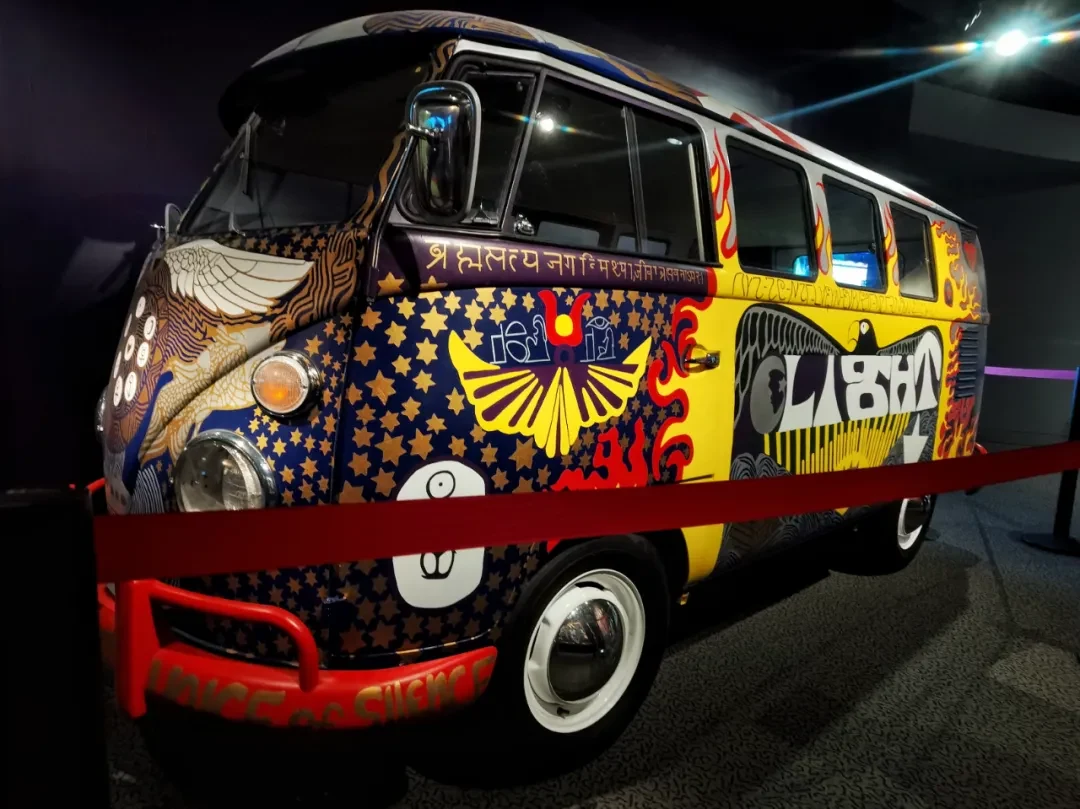
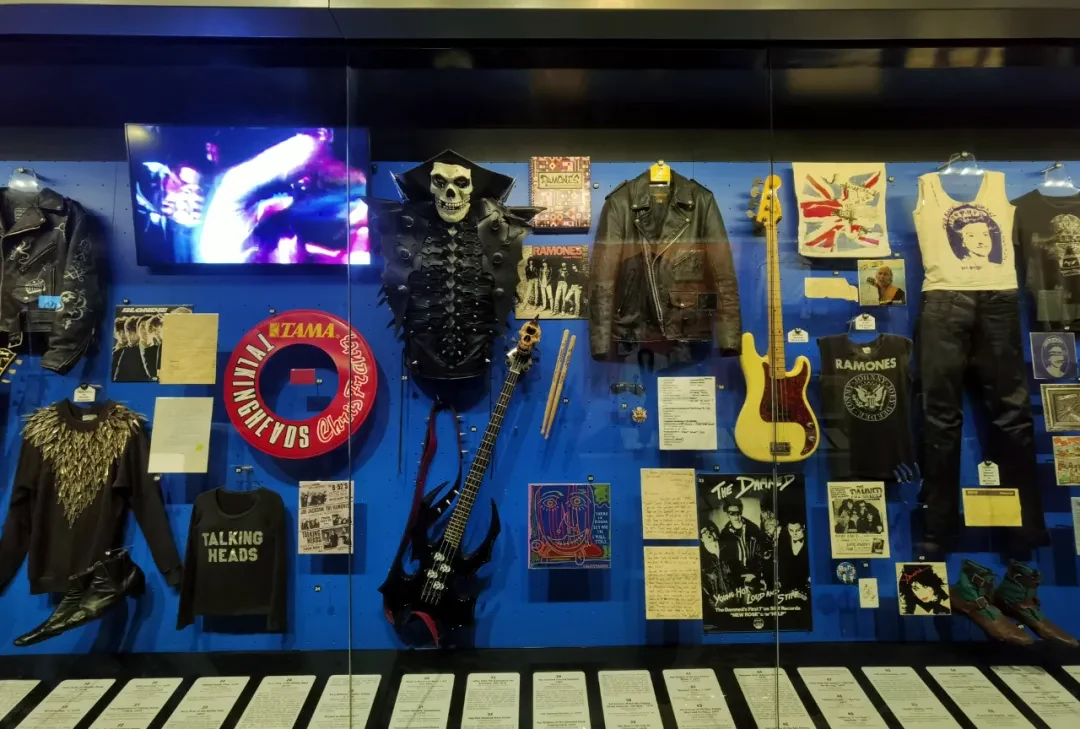
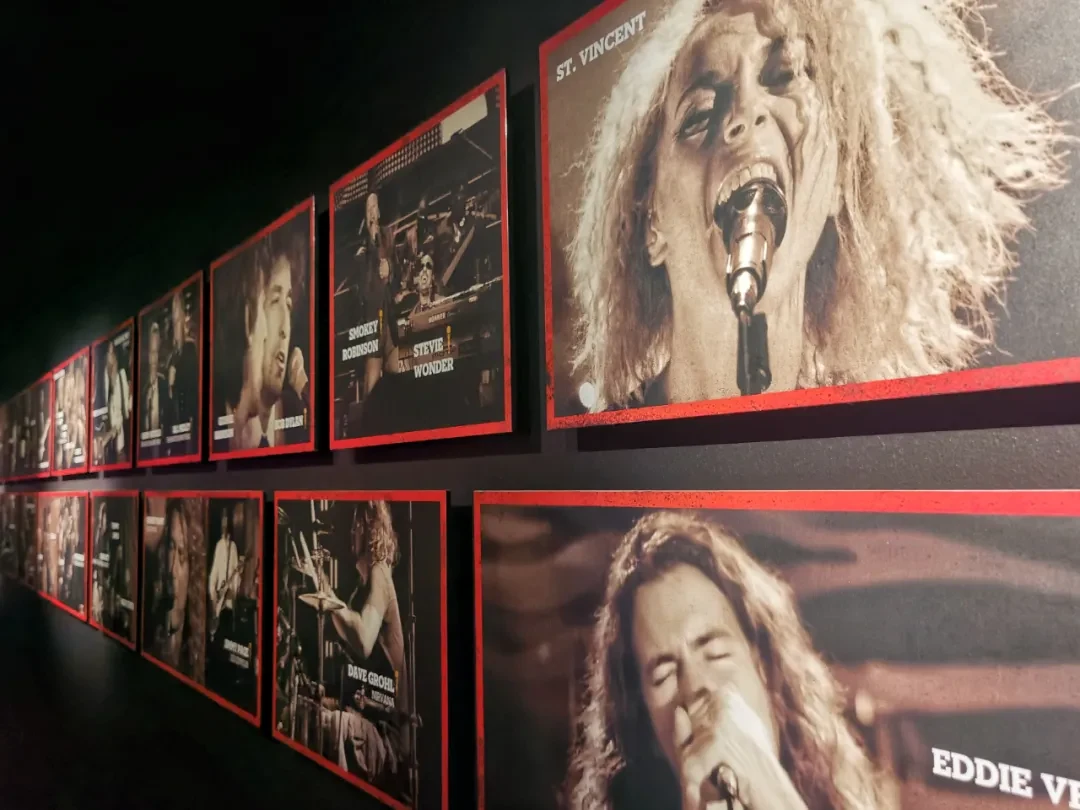
I did not know most of the people inside, but it still felt cool. The classic performance reel in the small theater was especially good. St. Vincent's performance had so much tension it made my blood heat up.
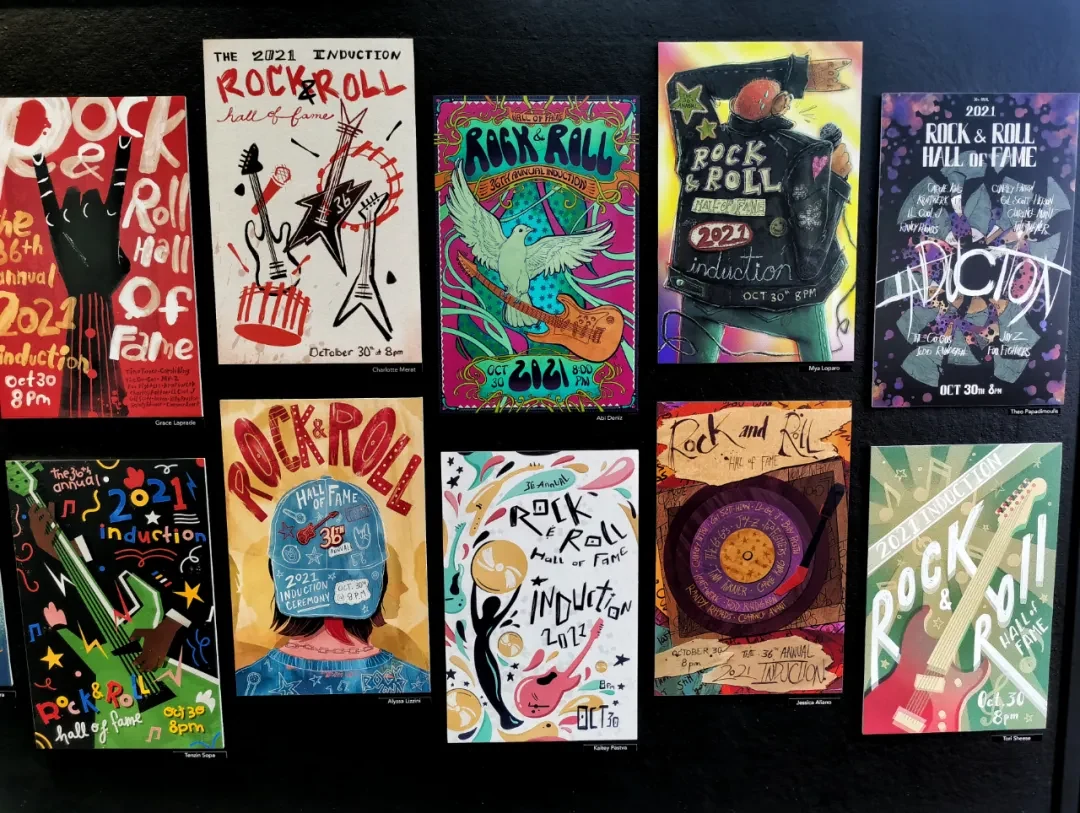
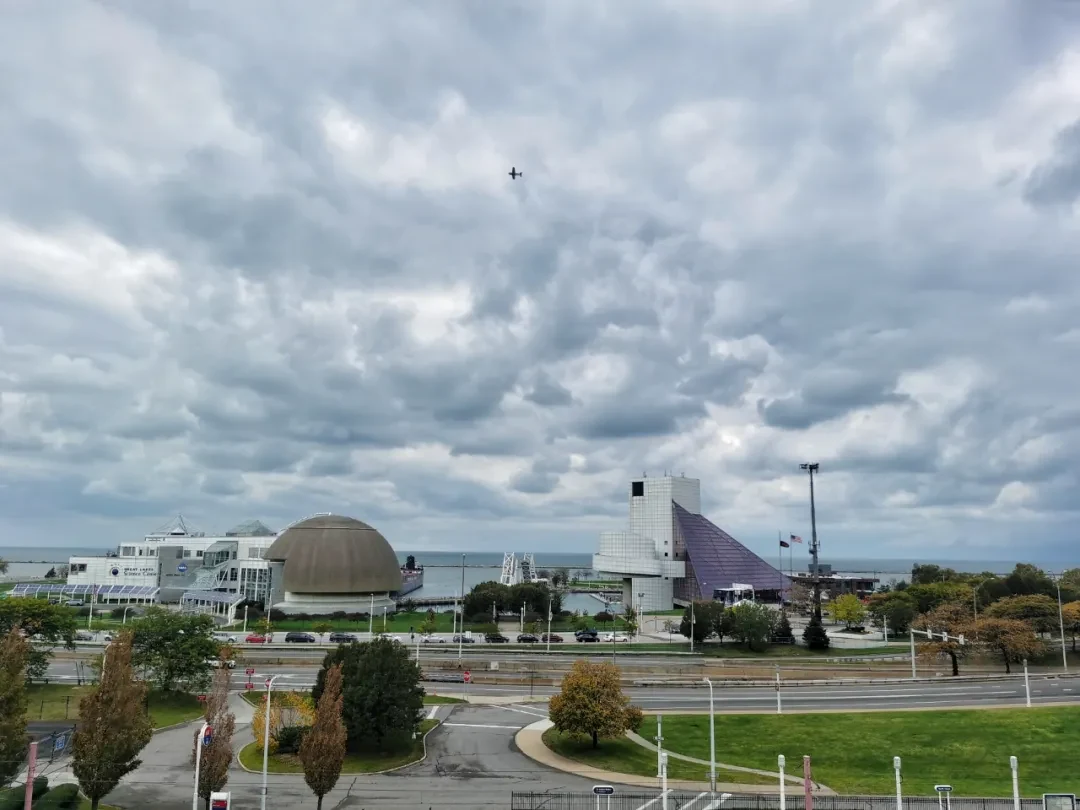
Behind the museum is Lake Erie. From there you can see the Cleveland skyline, the big cruise ship, and the Cleveland sign that is perfect for photos.
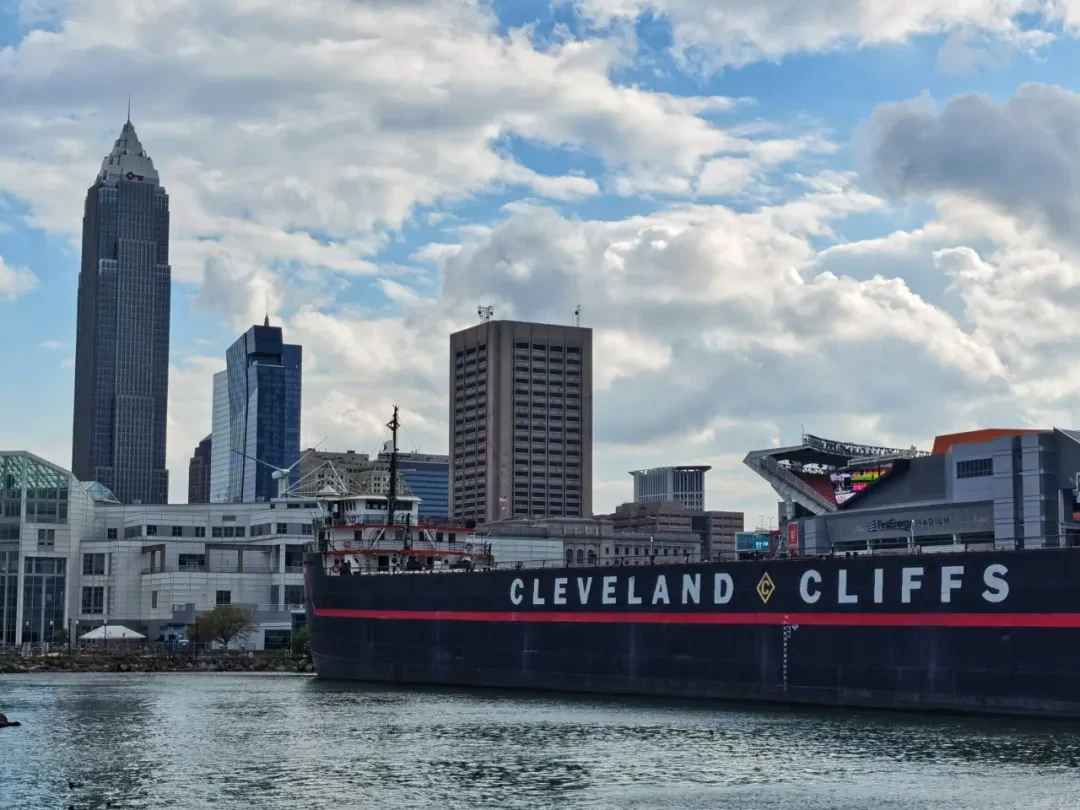
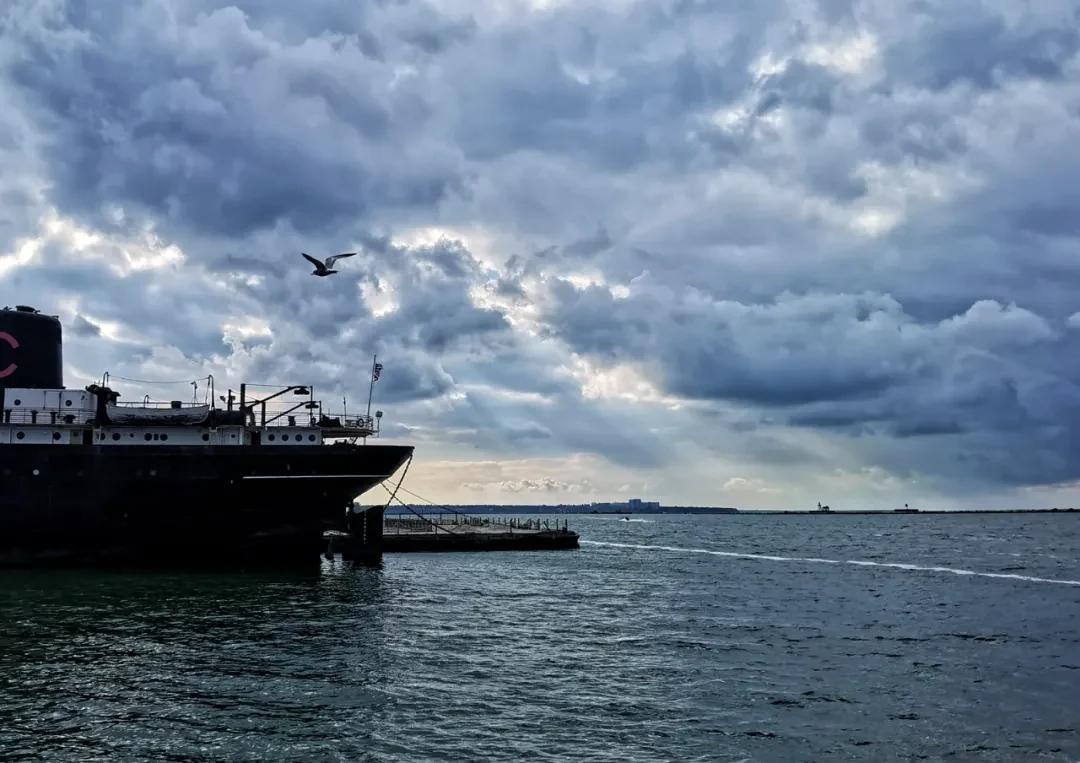
This time I had no desire to taste the water of Lake Erie, because it really looked dirty. I had heard that, back in the day, the Cuyahoga River running through downtown Cleveland caught fire dozens of times because of pollution.
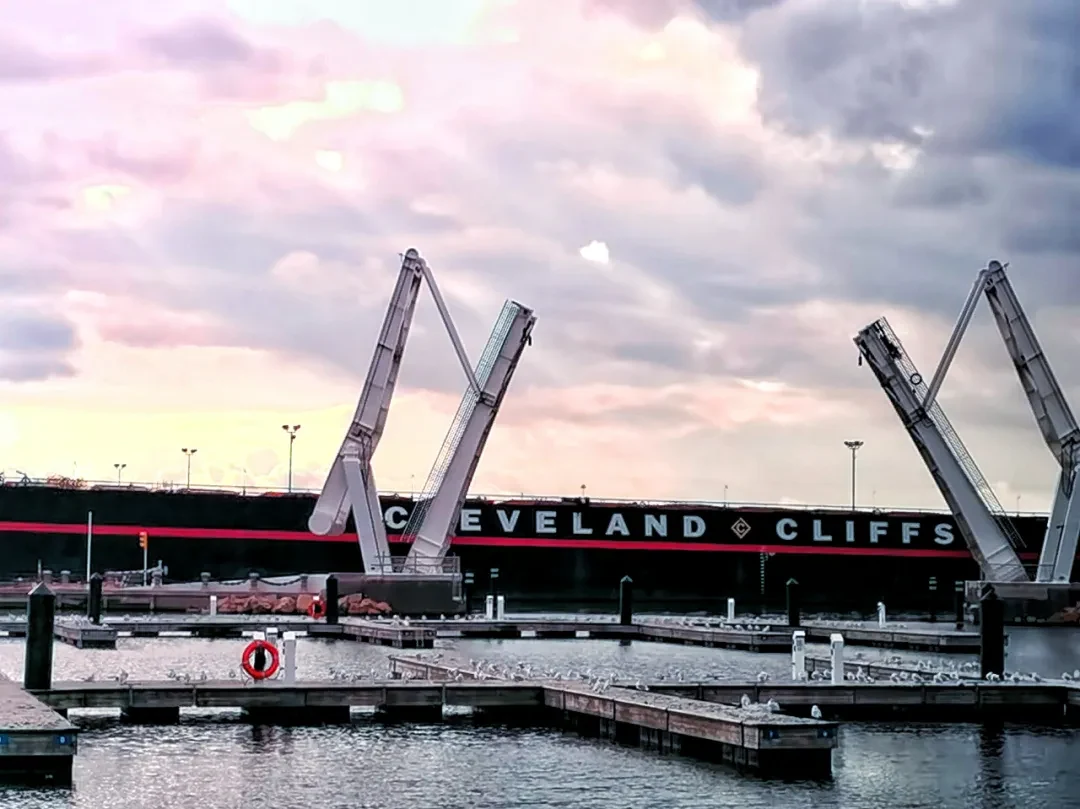
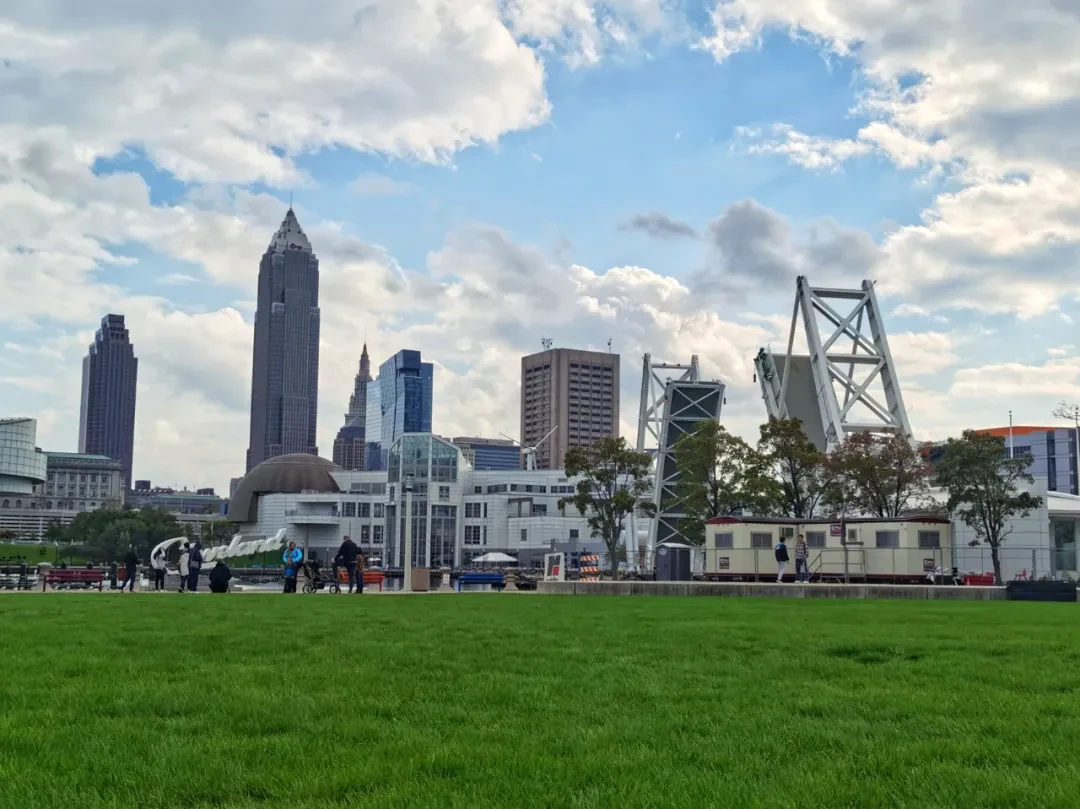
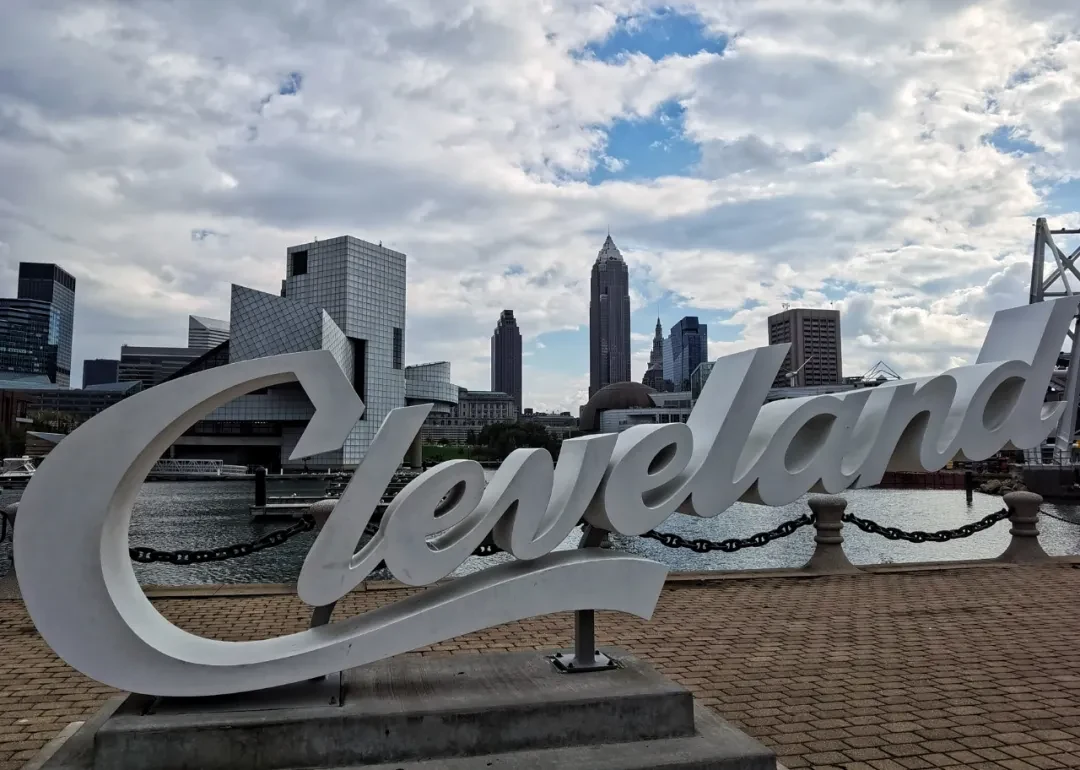
On the way back to the Comfort Inn, feeling Cleveland's autumn colors and quiet neighborhoods, I found the city actually quite beautiful. It is a city that has gone through big rises and hard falls, but as long as rock and roll does not die, this old industrial city in the Rust Belt will have its day to shine again.
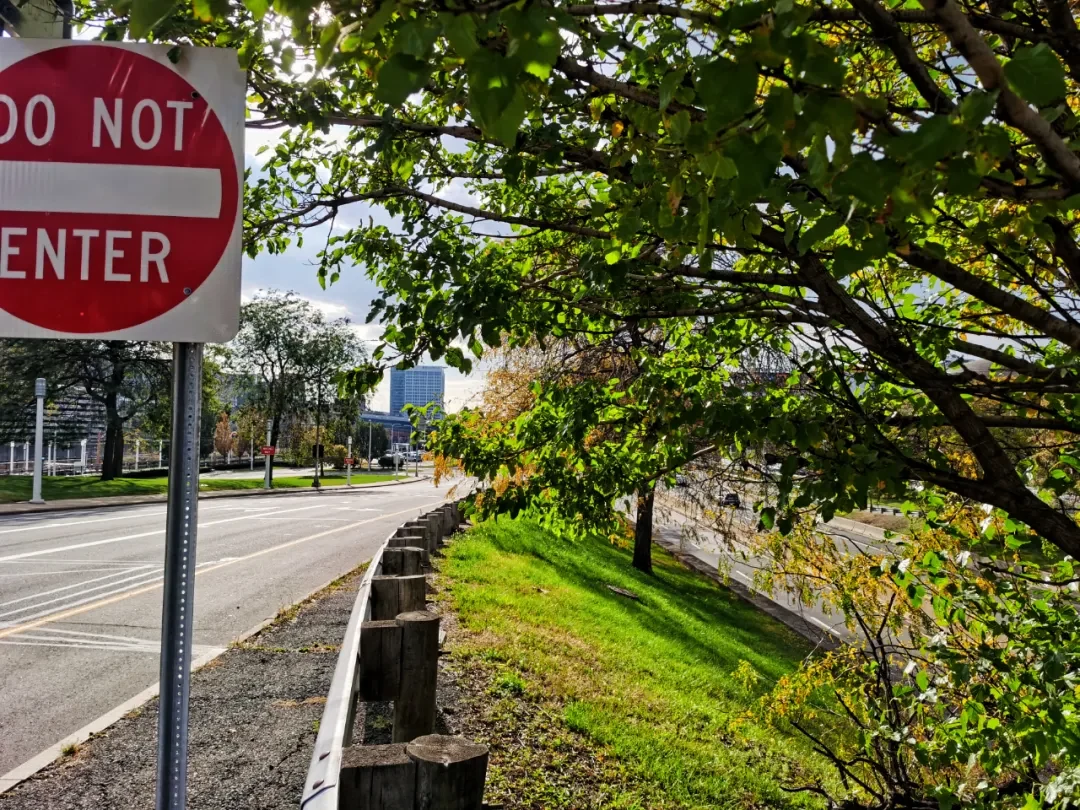
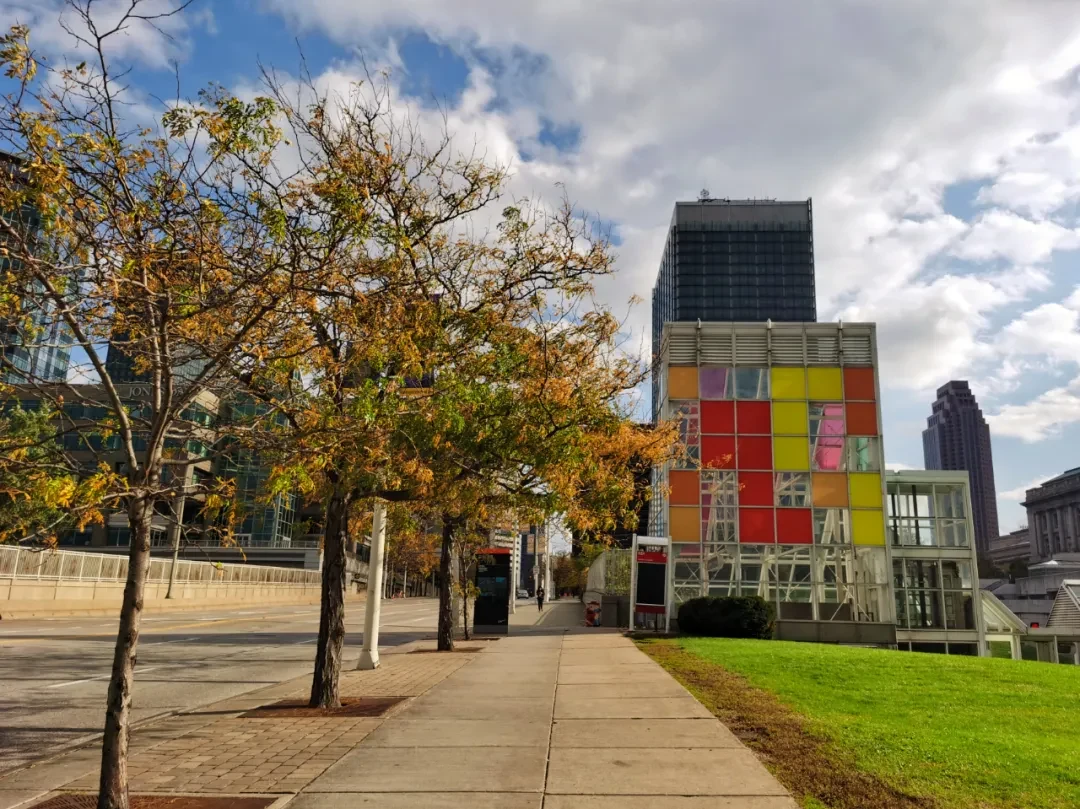
It made me think of my hometown, Northeast China: another old industrial region, another place that rose brilliantly and then fell quickly. If Cleveland can use rock and roll as its spiritual core, what does the Northeast have? Errenzhuan, maybe? At least we can still entertain ourselves.
FIELD NOTE 12
At the Cavaliers' home court
Before coming to Cleveland, I noticed there happened to be a Cavaliers-Hawks game that day. More than watching the Cavaliers, I actually wanted to see Trae Young from the Hawks.
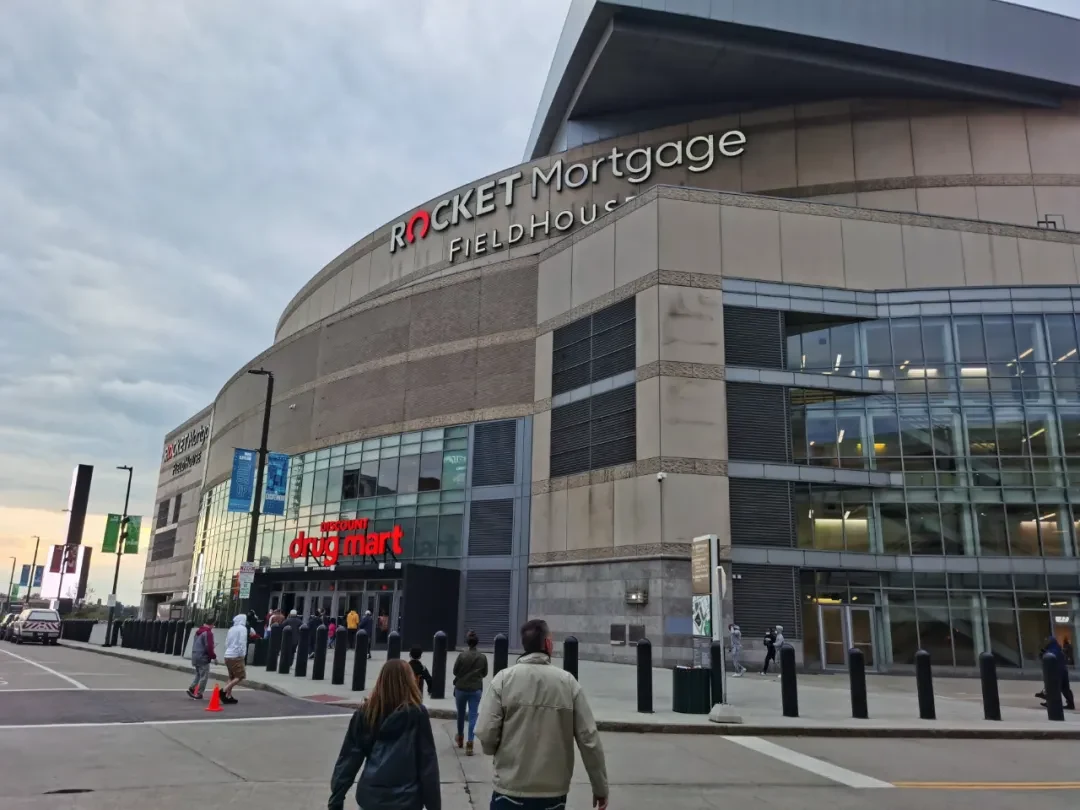
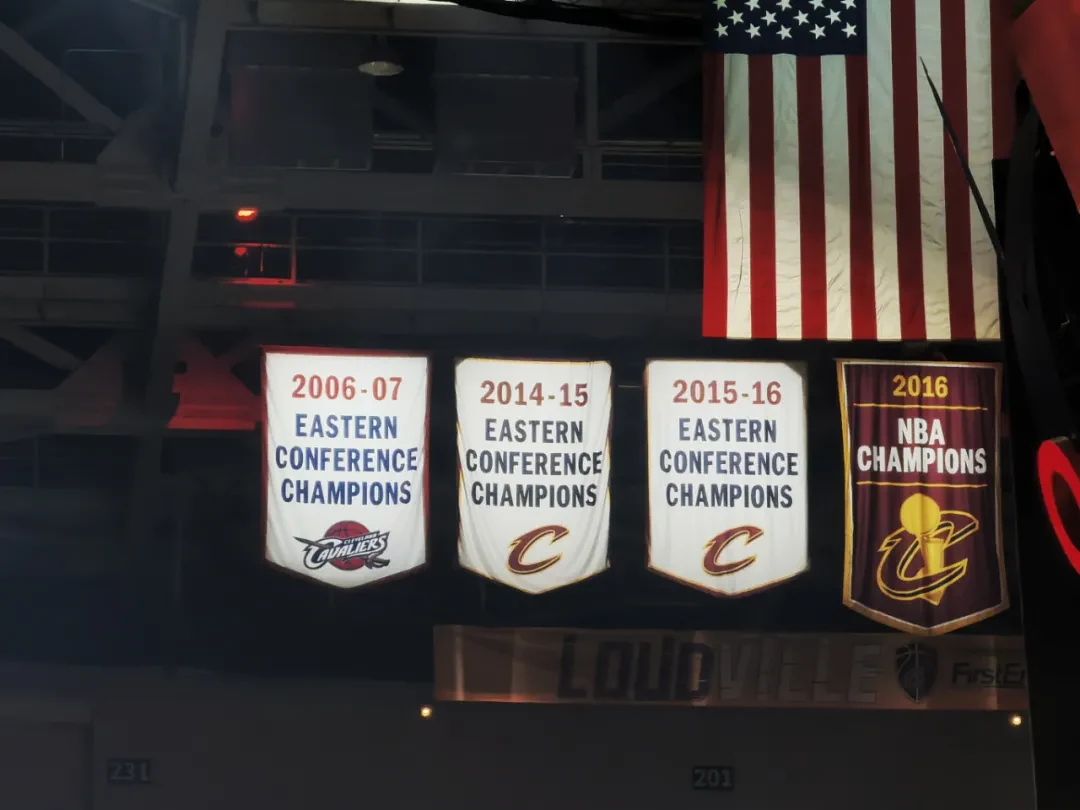
This time I bought a lower-bowl ticket, so I finally did not have to watch from the mountaintop. Thinking back to Indiana, what impressed me most was the huge screen below, big and clear, probably better than watching TV at home. But the ticket was only $20, so I could not ask for too much.
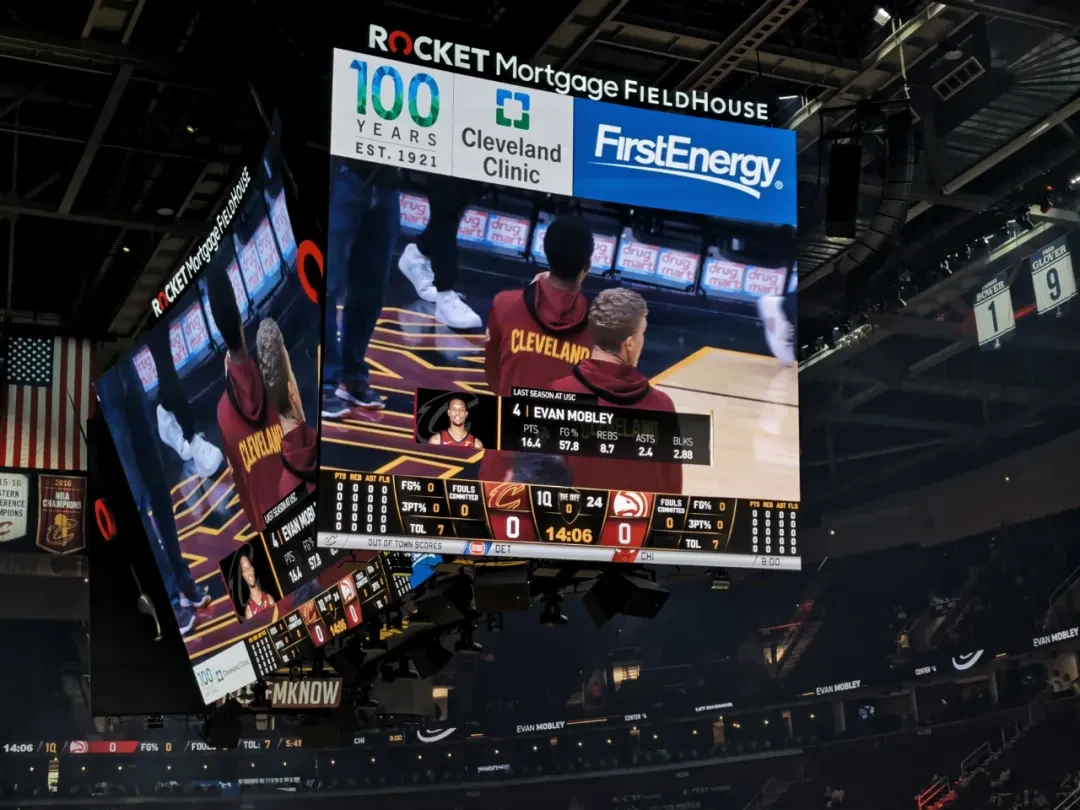
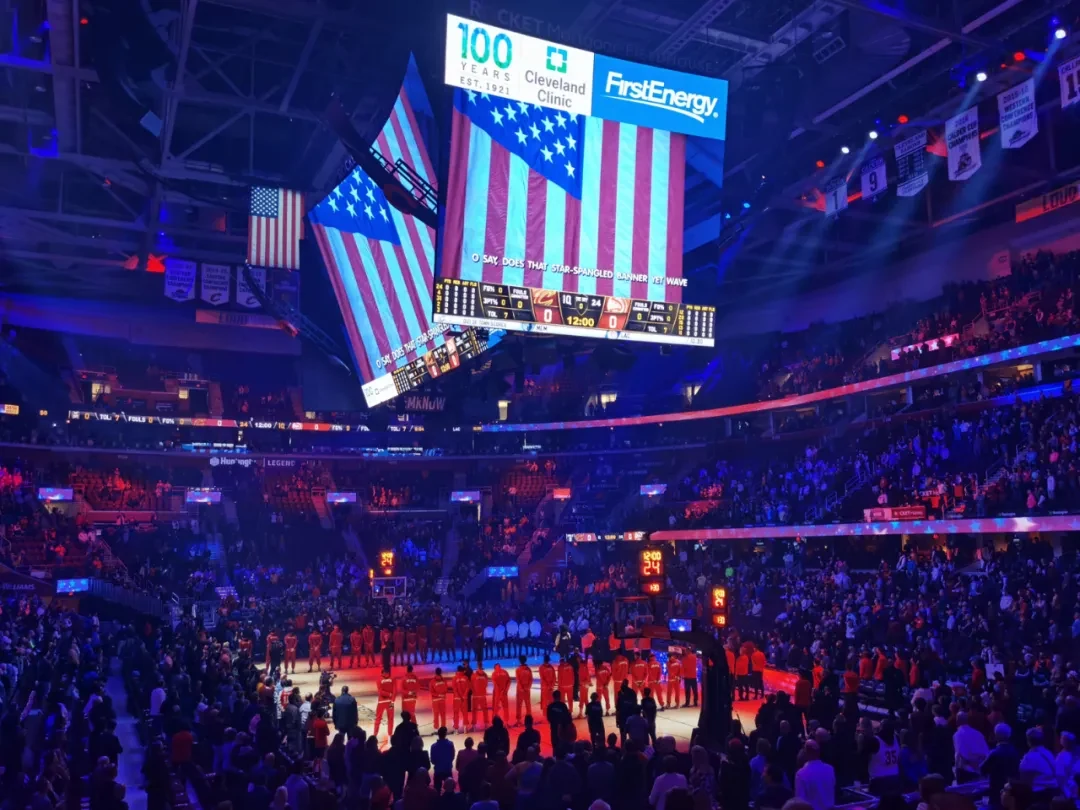
This felt like a real NBA experience: player introductions, the national anthem, all the between-quarter games and crowd interactions. The atmosphere at Rocket Mortgage FieldHouse was excellent, and American fan culture is honestly impressive.
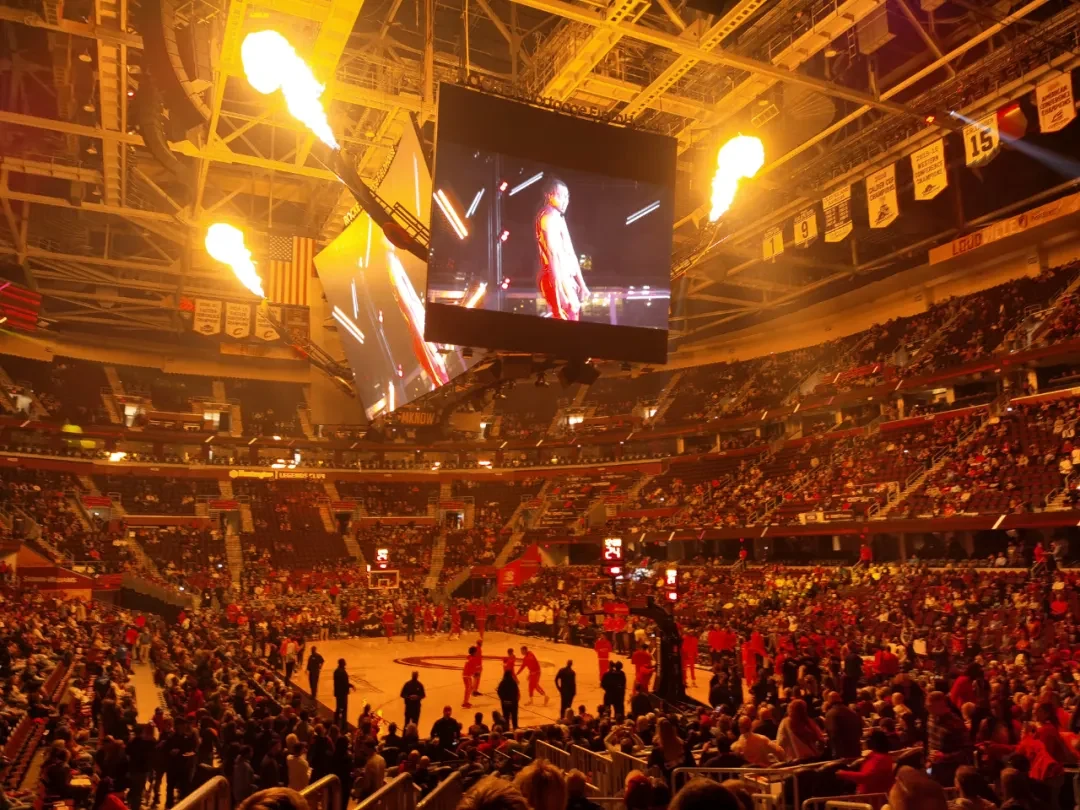
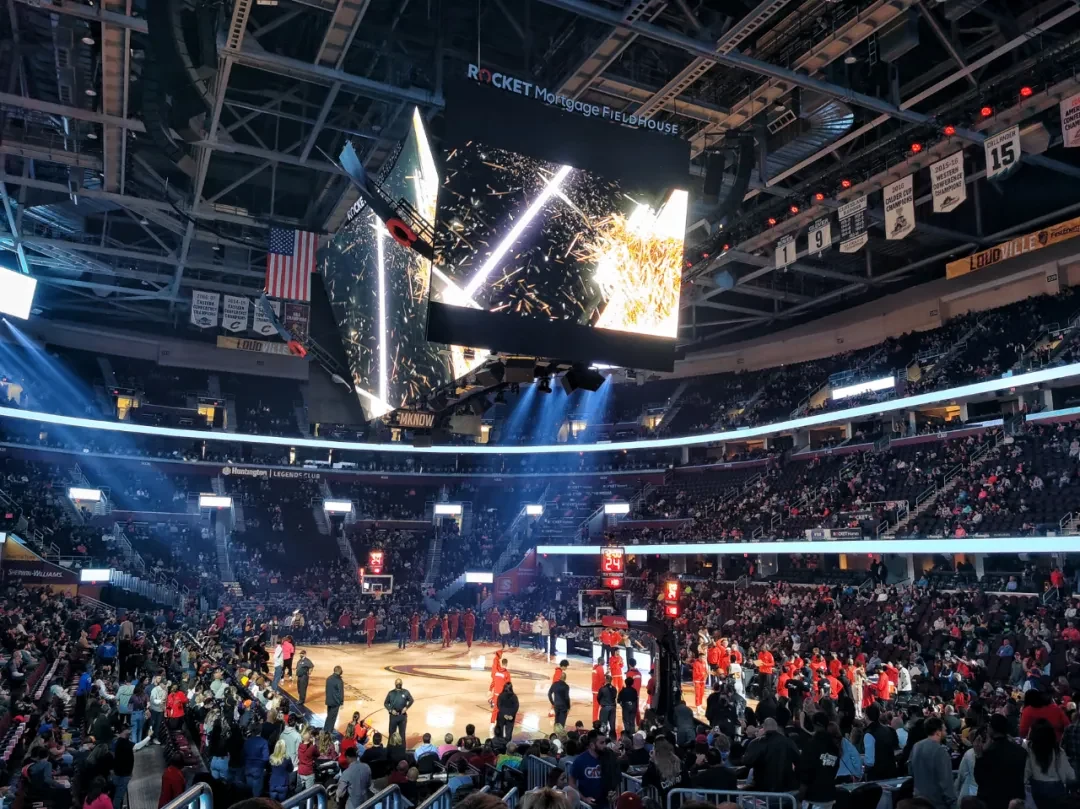
Compared with the atmosphere, the game itself and the final result did not seem that important. I think the Cavaliers ended up getting their first win of the season. Rubio was the MVP of the night, and the Spaniard hit a few threes too.
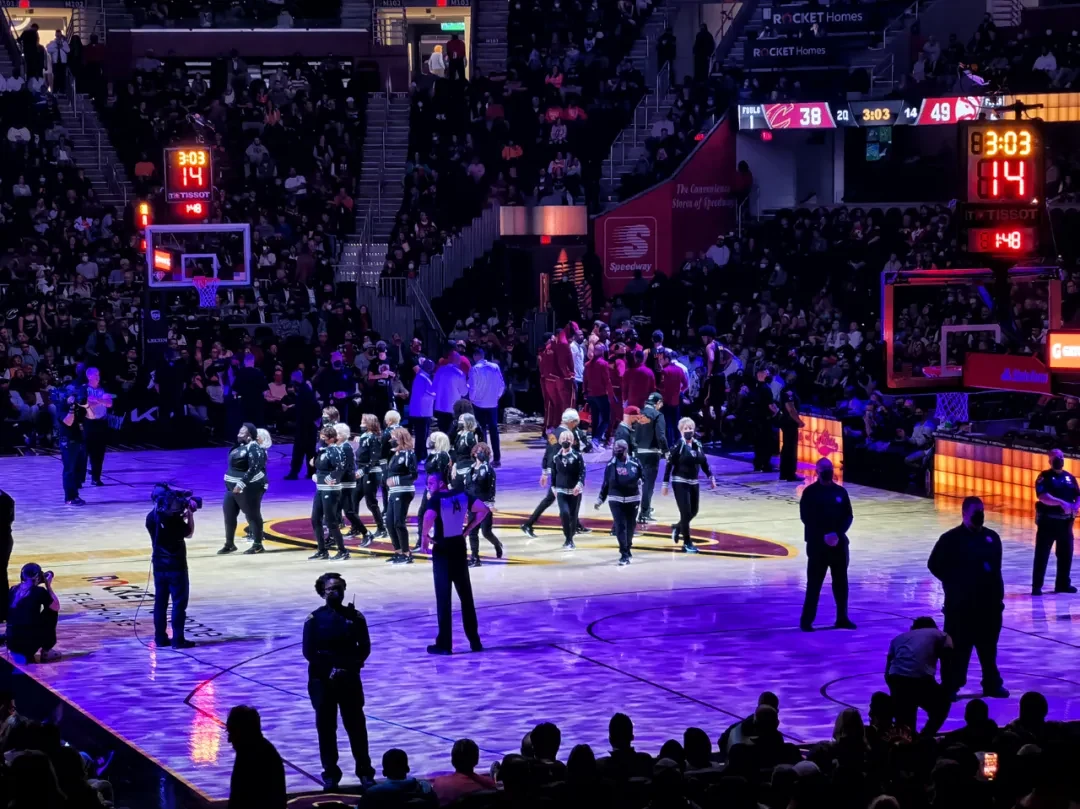
Some moments in the game were still moving, especially veteran Kevin Love, once part of the Big Three. When he came off the bench in the second quarter, the whole arena thundered with applause. It made me think of the Transformers movie The Last Knight. For our generation, Love is probably the last knight on this young team, the afterglow of an era.
FIELD NOTE 13
Postscript
After the game, I walked back to the hotel among the fans.
In the distance, Cleveland's Tower City Center was clearly visible. When it was built, it was once the second-tallest skyscraper in the world.
Now it stands above the city, as if still telling stories of Cleveland's own industrial glory.
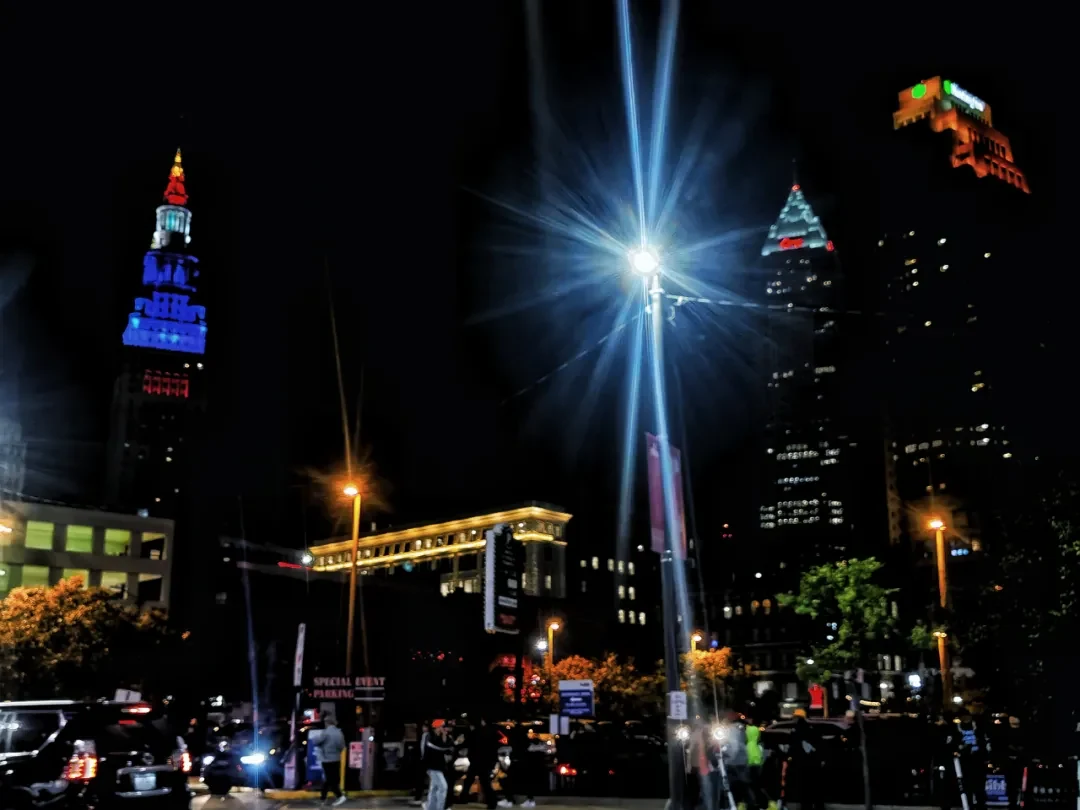
But the younger generation of Clevelanders does not seem to have much time for melancholy. They love rock and roll and the NBA, and they are busy working hard for life.
We moved forward with the crowd, with the joy of a win hanging in the air around us.
I think Cleveland today has, at least, a little less sorrow and a little more of that free-and-easy American-dream feeling.
- End -
Words · Arsenan
Photos · Arsenan
Design · Arsenan