Keene, New Hampshire — From Niagara Falls into New England foliage, this was a small-town marathon through Keene, quiet roads, autumn forests, and a campus finish.
Foreword | Fall Break Was Not a Break · Sneaking Out to See the Falls
On the school calendar, late September is called fall break. In our lab, fall break mostly exists as a line in an email. With my dissertation defense getting close and a full month since my last marathon, I started wondering: do I need an excuse to get out and breathe?
As usual, I opened RaceRaves, stared at the map, and found a highly rated marathon in New Hampshire: the Clarence DeMar Marathon. Only one small problem: from Kentucky, it is a full 17-hour drive.
So Siqi and I figured that if we had to go that far, we might as well break the drive into pieces: first Niagara Falls, then north through Vermont's fall colors, and finally the small town of Keene, New Hampshire.
And just like that, our fall-break-without-a-break trip was decided.
The 22nd State · New Hampshire | The State of White Mountains and Maple Leaves
New Hampshire is located in the northeastern United States and is one of the six New England states. New England includes Maine, Vermont, New Hampshire, Massachusetts, Connecticut, and Rhode Island. This area is one of the earliest colonies in the United States, has a rich history, and has particularly distinctive four seasons.
New Hampshire itself is a small state, but it has outstanding features:
Mountains, forests, and lakes: Northern New Hampshire is home to the White Mountains. Its highest peak, Mount Washington, is windy year-round and famous for wild, fast-changing weather. The central part of the state has many lakes, including Lake Winnipesaukee, a summer vacation classic.
Fall foliage: New England is famous for it, and New Hampshire is one of the best places to see it. From late September into early October, whole mountains turn red, yellow, and orange.
Small-town atmosphere: There is no big-city rush here. The largest city is Manchester, the capital is Concord, and our destination, Keene, is a quiet university town with a cultural feel.
In American running circles, the New England tradition is also very special. This is the birthplace of the Boston Marathon, and the oldest marathon culture in the United States emerged from here.
Chapter 1 | Niagara Falls · Shock in the Mist
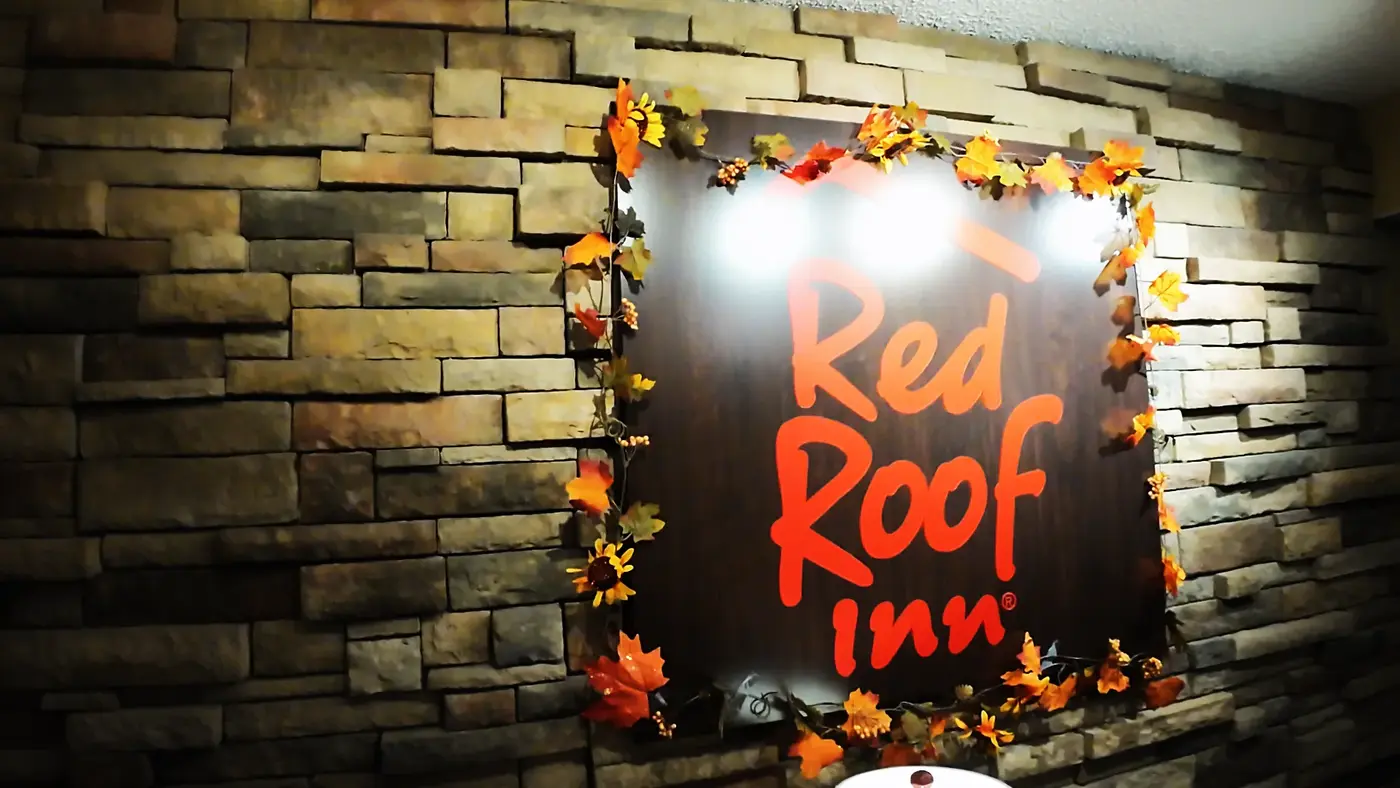
We left Louisville on Thursday night and stayed at a Red Roof Inn along the way. Halloween was getting close, so the hotel already had pumpkins outside and a bit of seasonal energy. Early the next morning, we kept driving and finally reached Niagara Falls, New York.

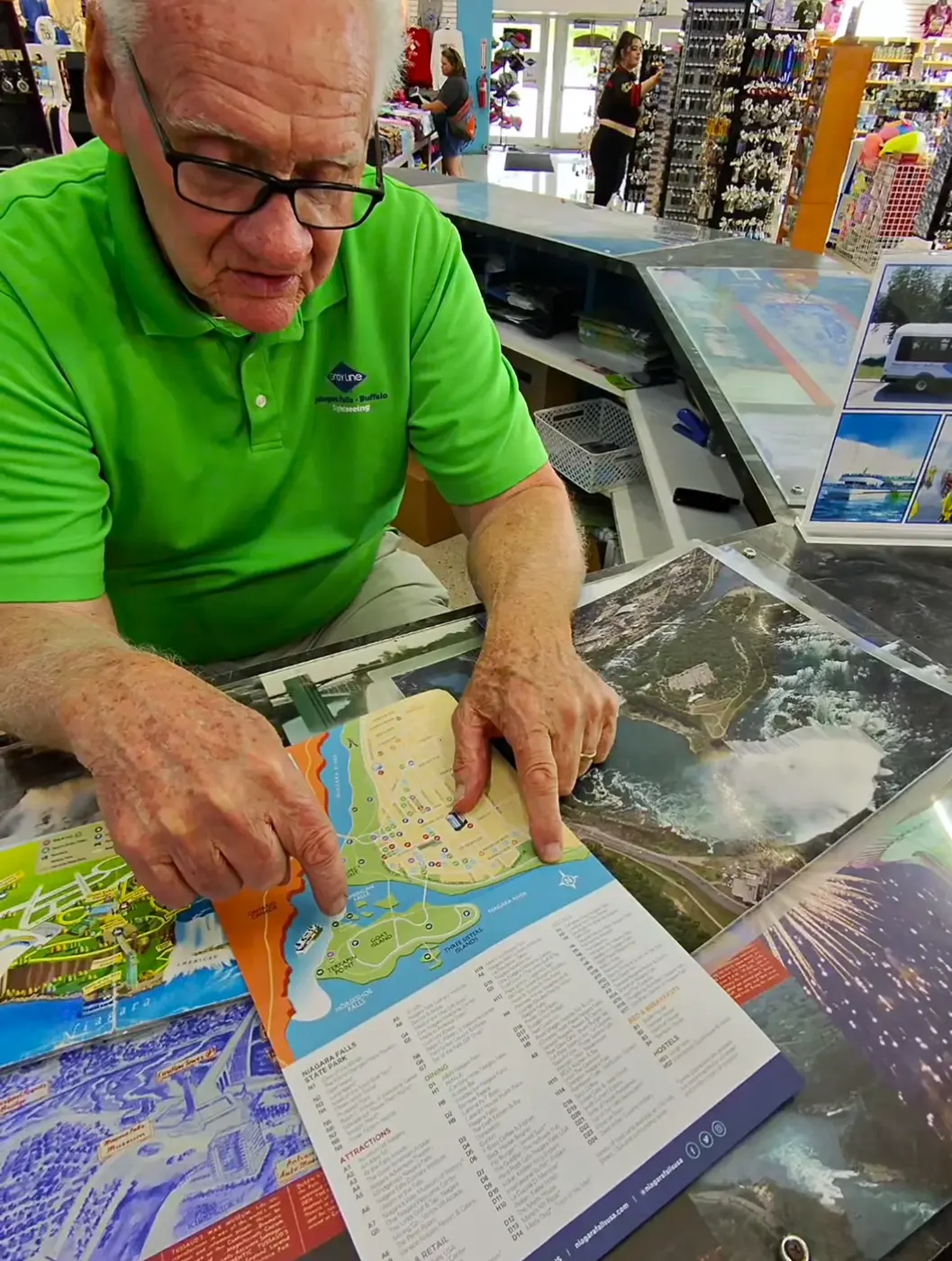
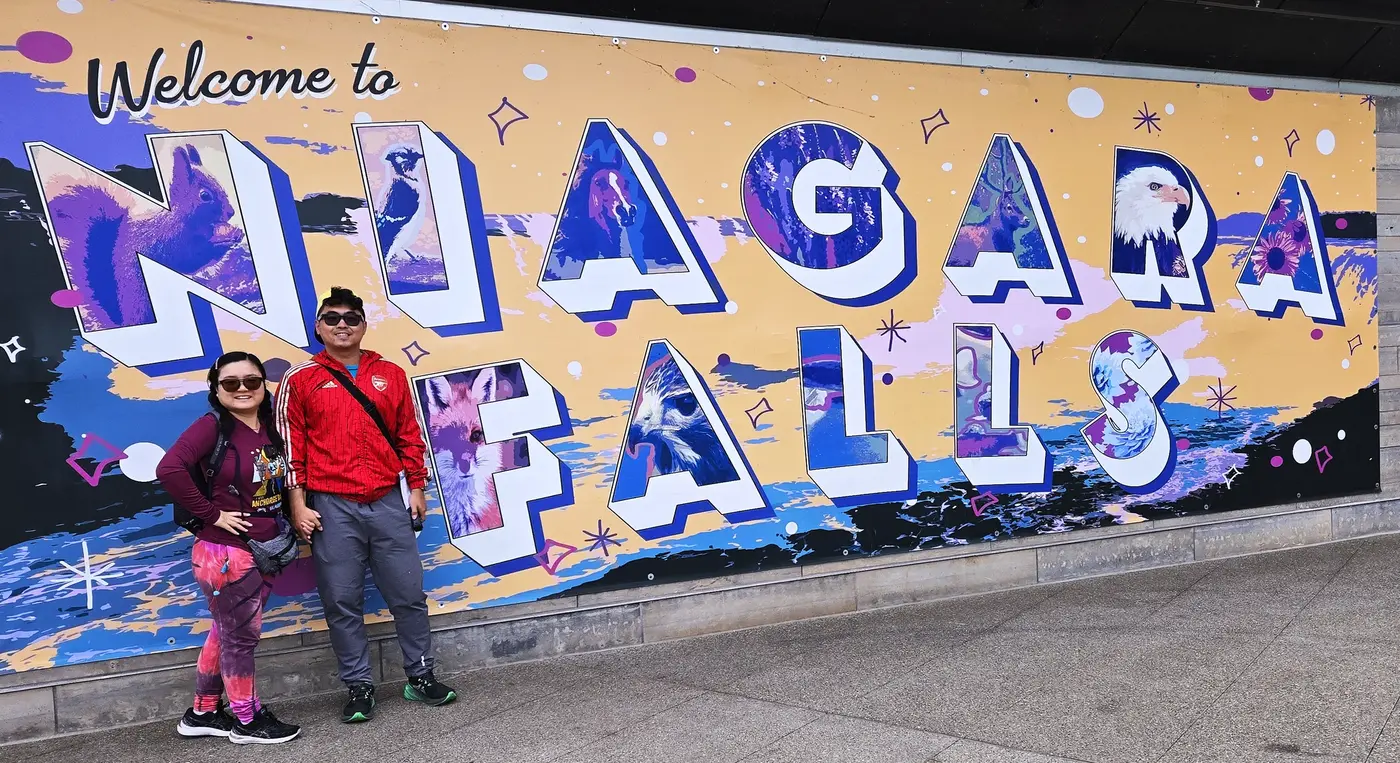
Next to the parking lot were the visitor center and shops. An enthusiastic older gentleman held a map and explained where to walk and where the best views were. Unfortunately, we arrived a little too late for the boat ride, so we walked straight into Niagara Falls State Park.
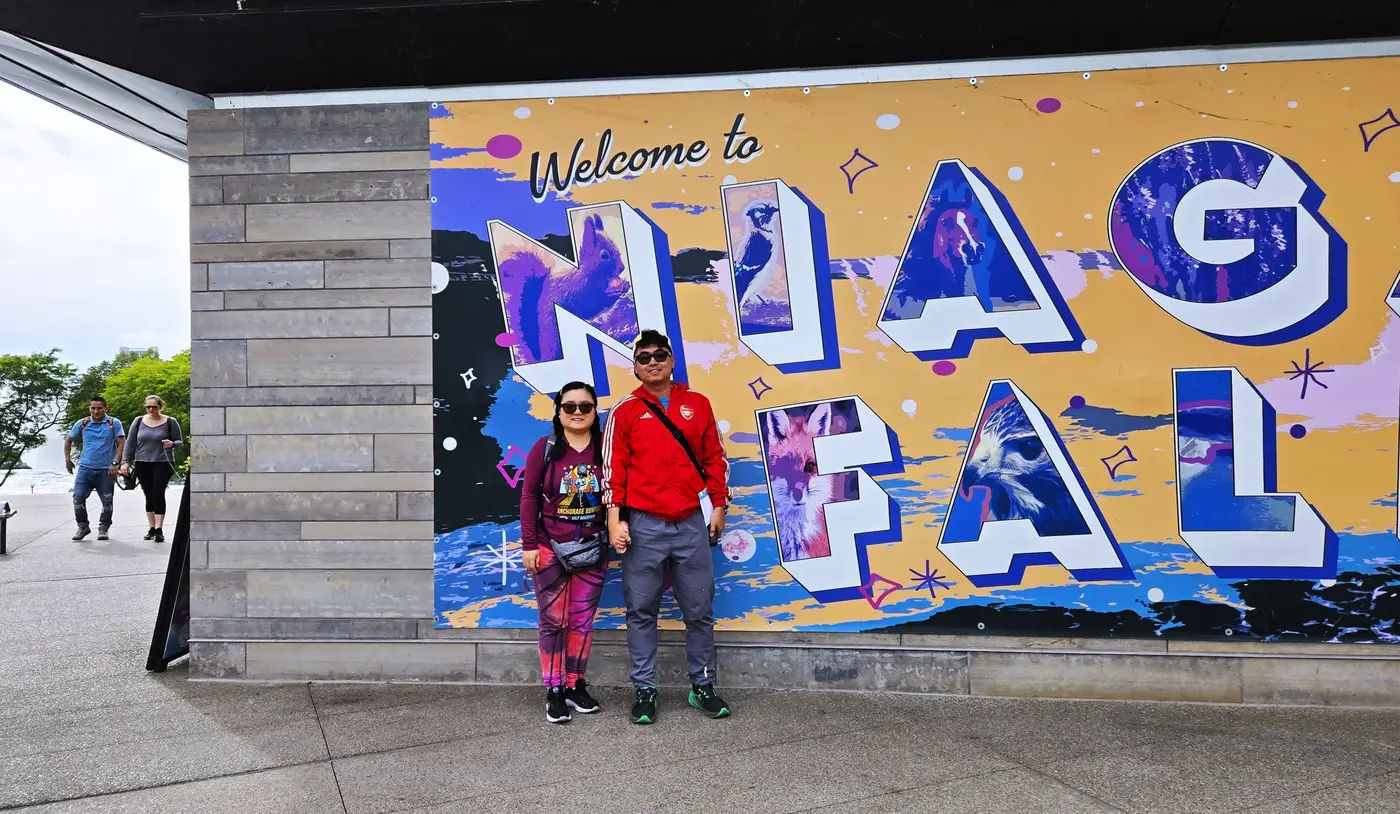
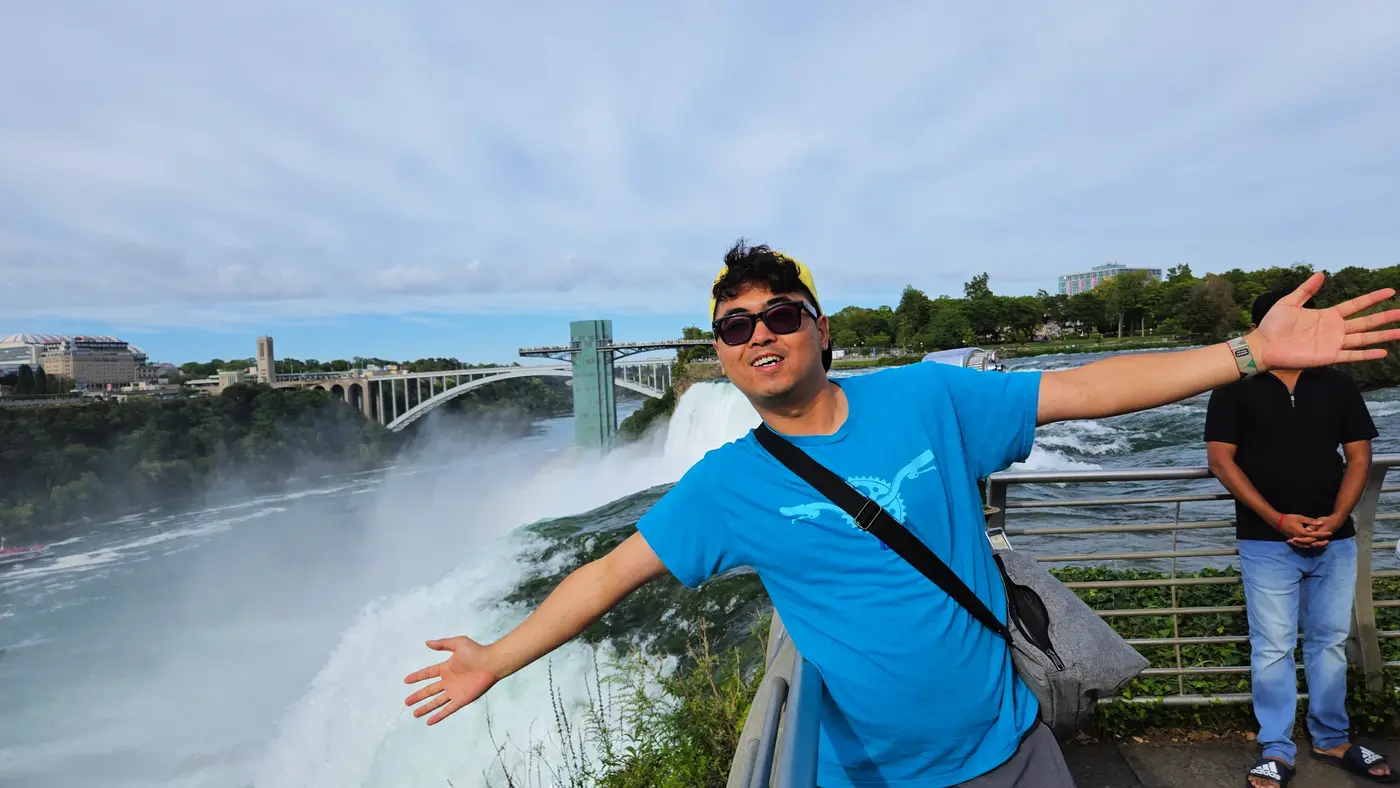
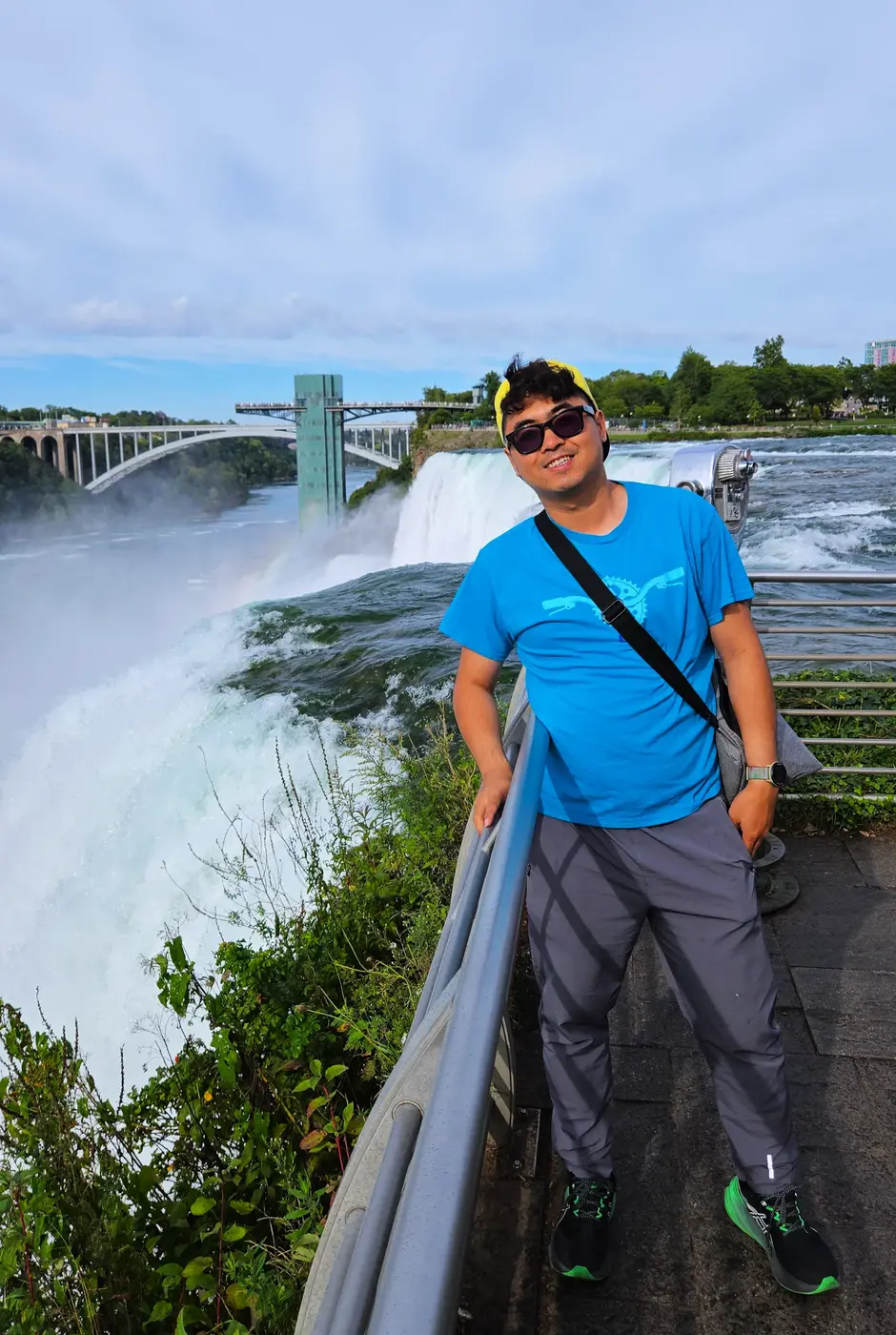
This is the oldest state park in the United States. It was designed by Frederick Law Olmsted, the designer of Central Park. Trails and observation decks have been built in the park to facilitate visitors to get close to the waterfall.
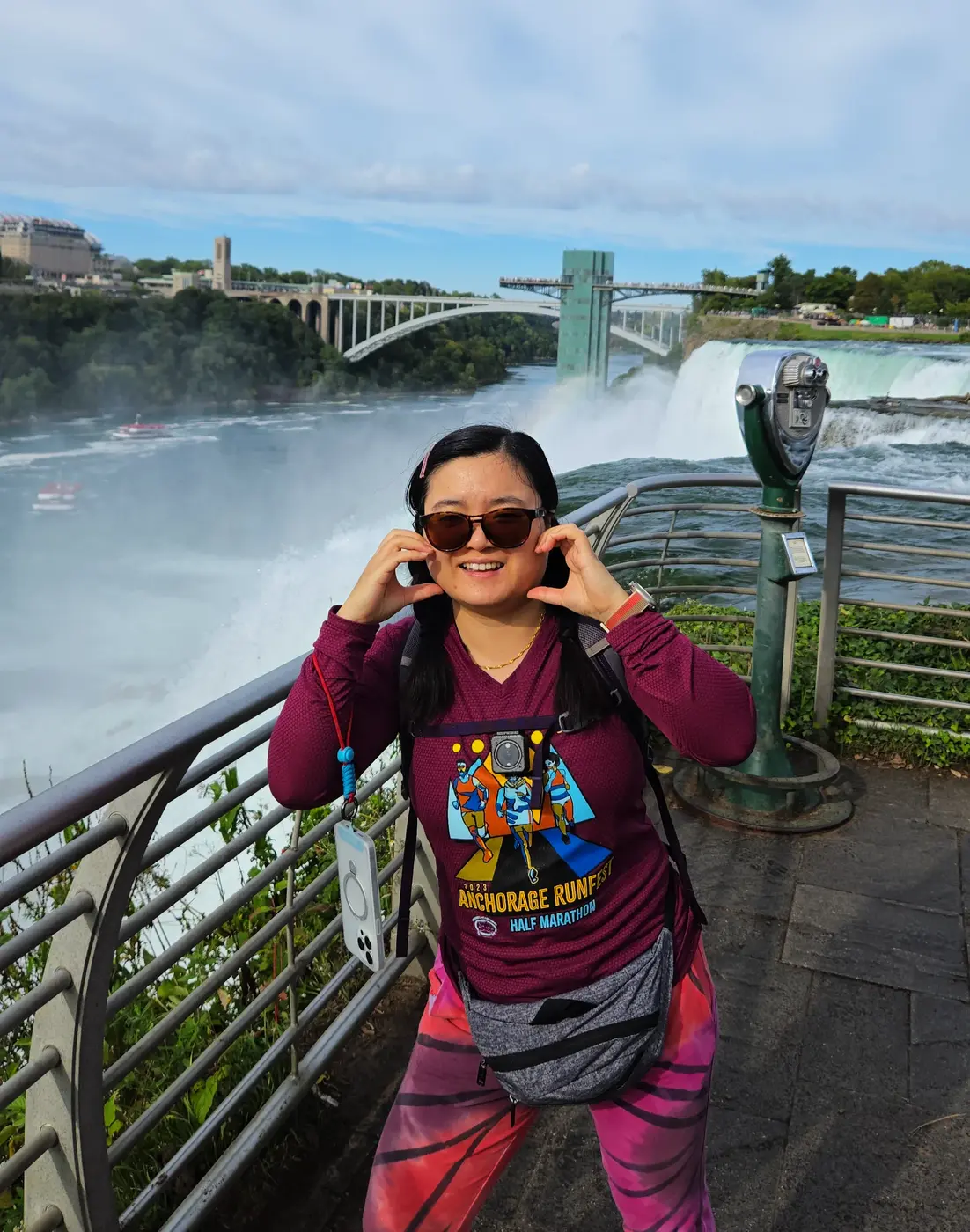
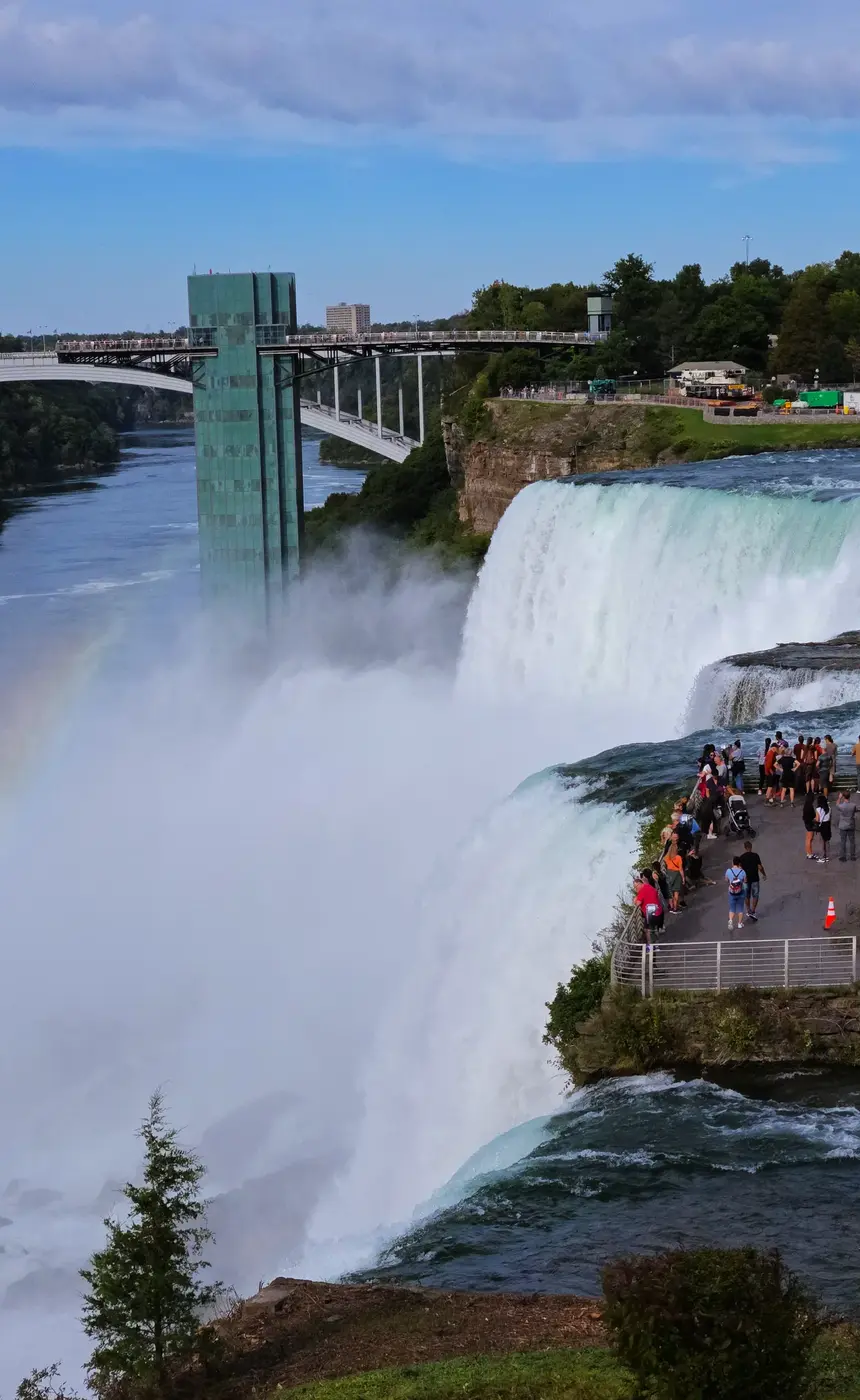
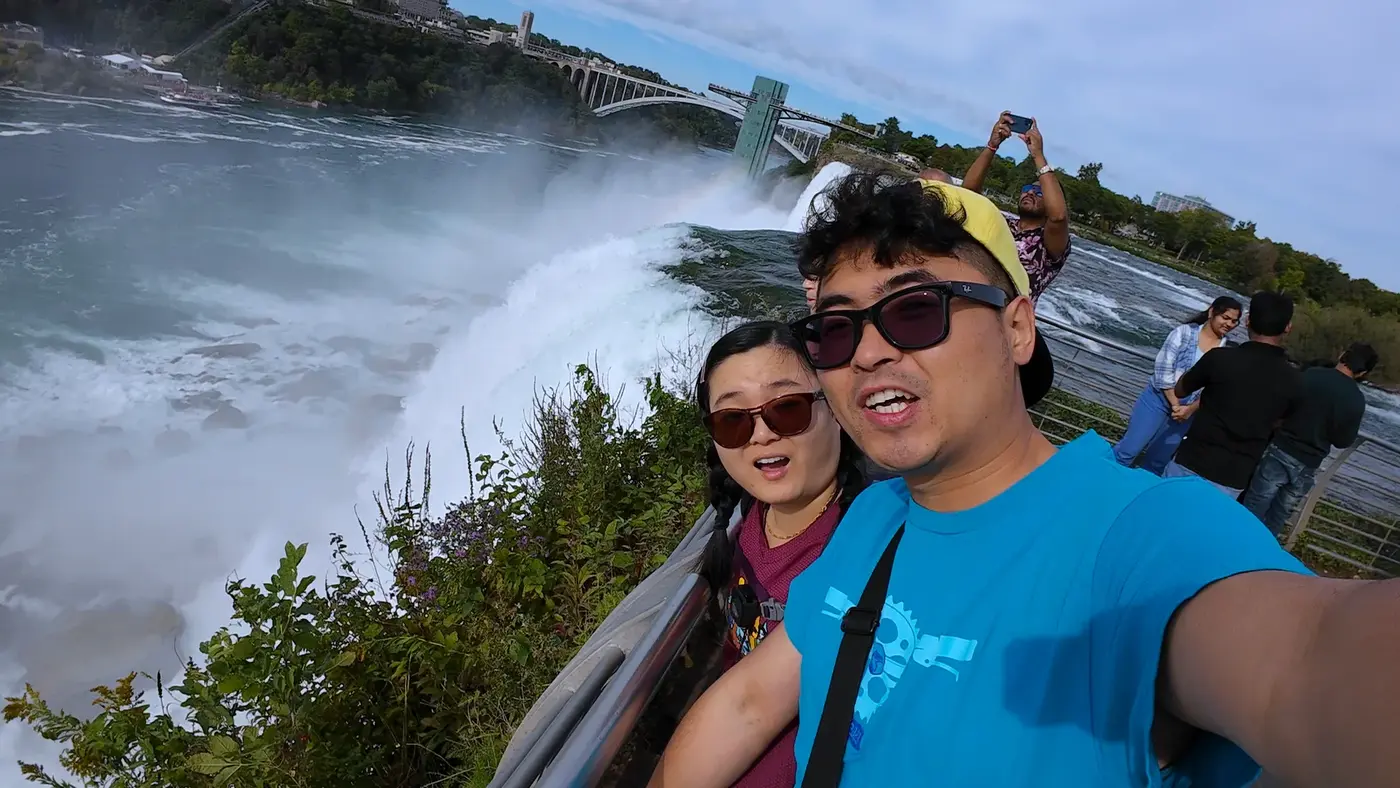
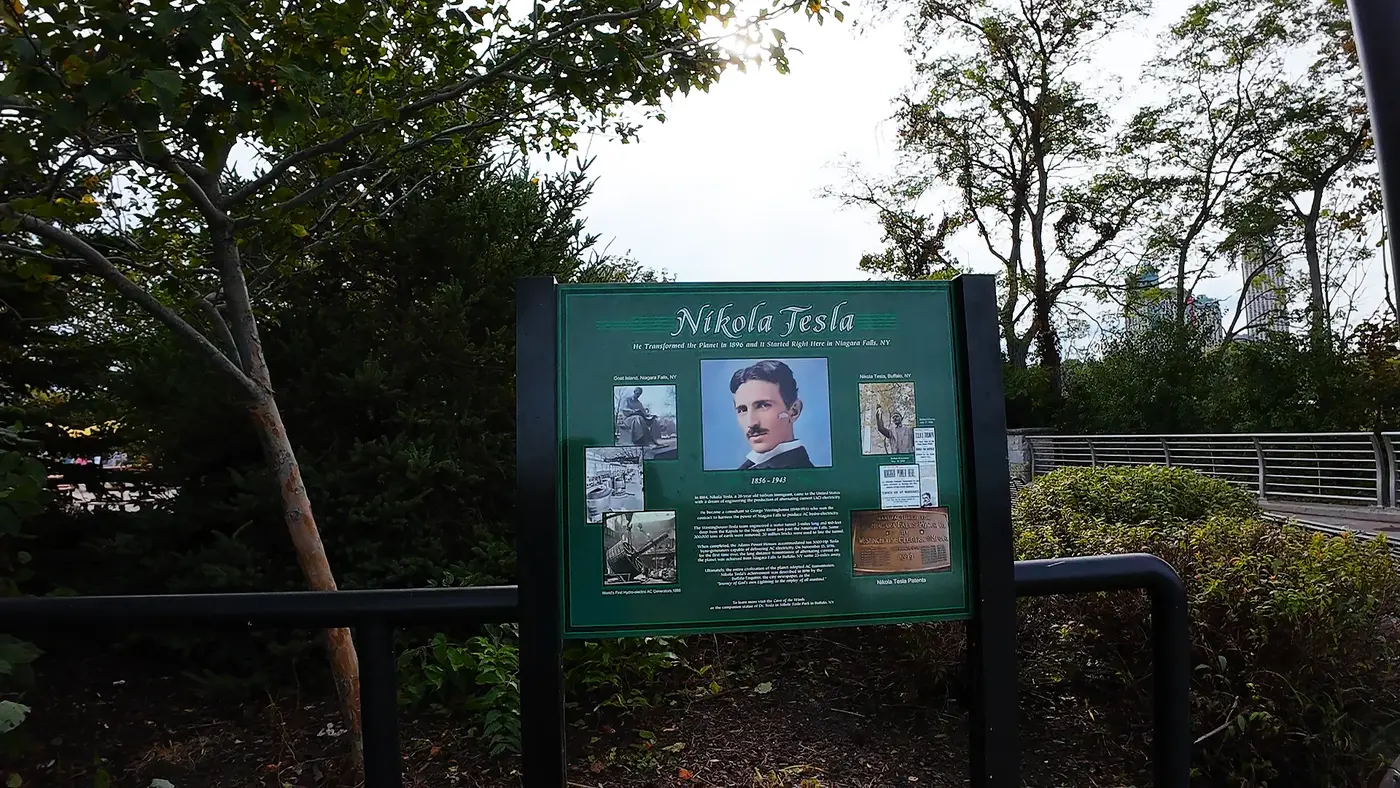
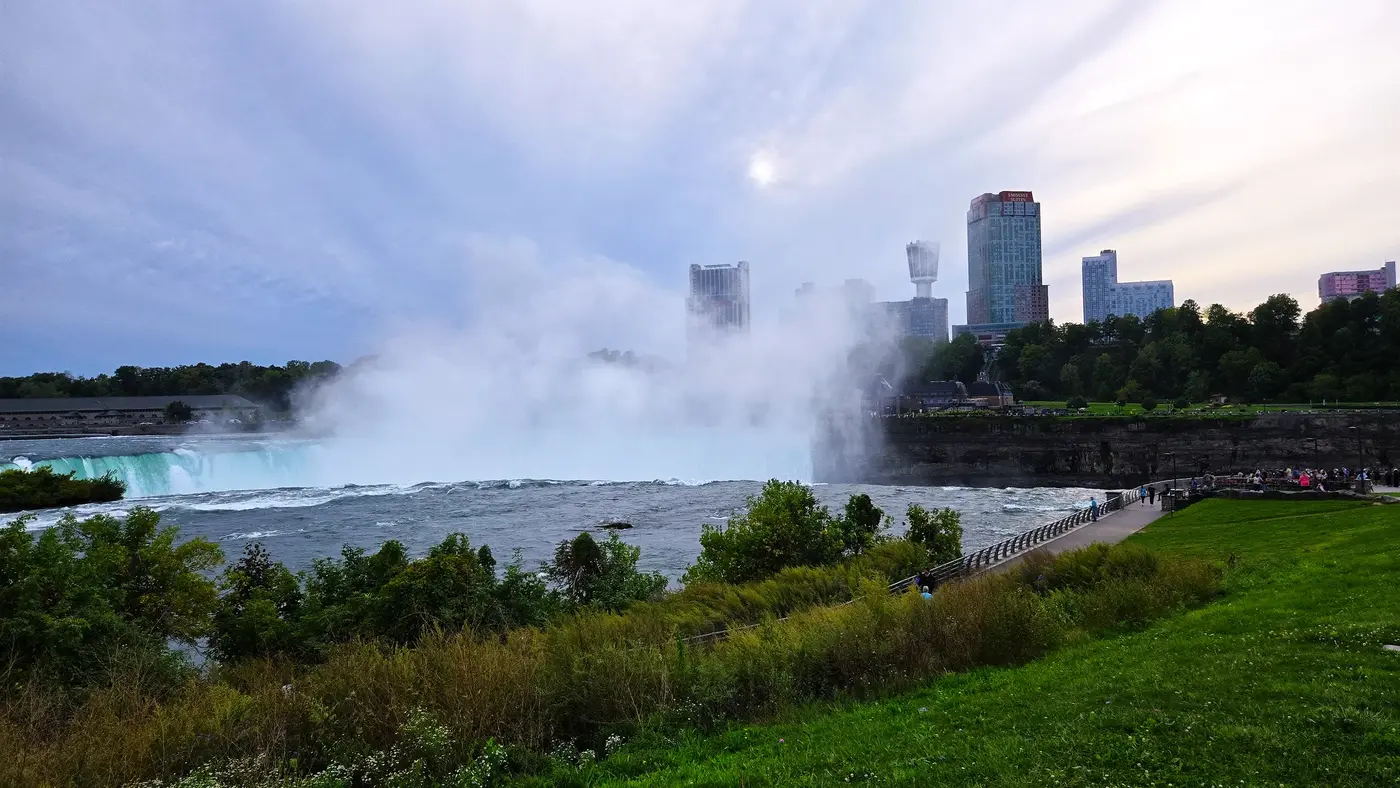
We first went to the observation deck in front of the Tesla statue. From this angle, you can see the entire American Falls. The reason why there is a statue of Tesla is because he and Edison started the "War of Electricity" here. In the end, Tesla's alternating current solution won, and the first hydroelectric power station was built at Niagara Falls, which became a symbol of the electrical age.
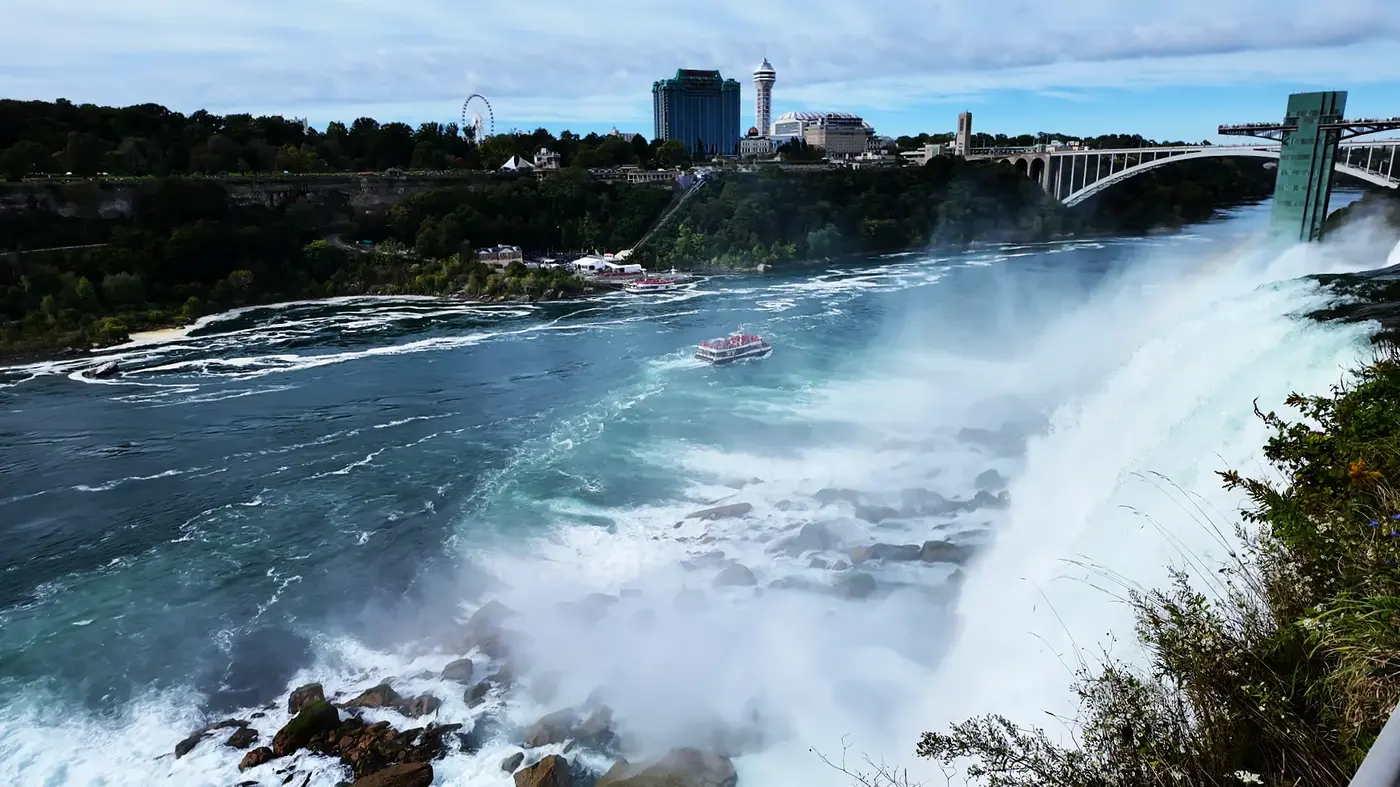
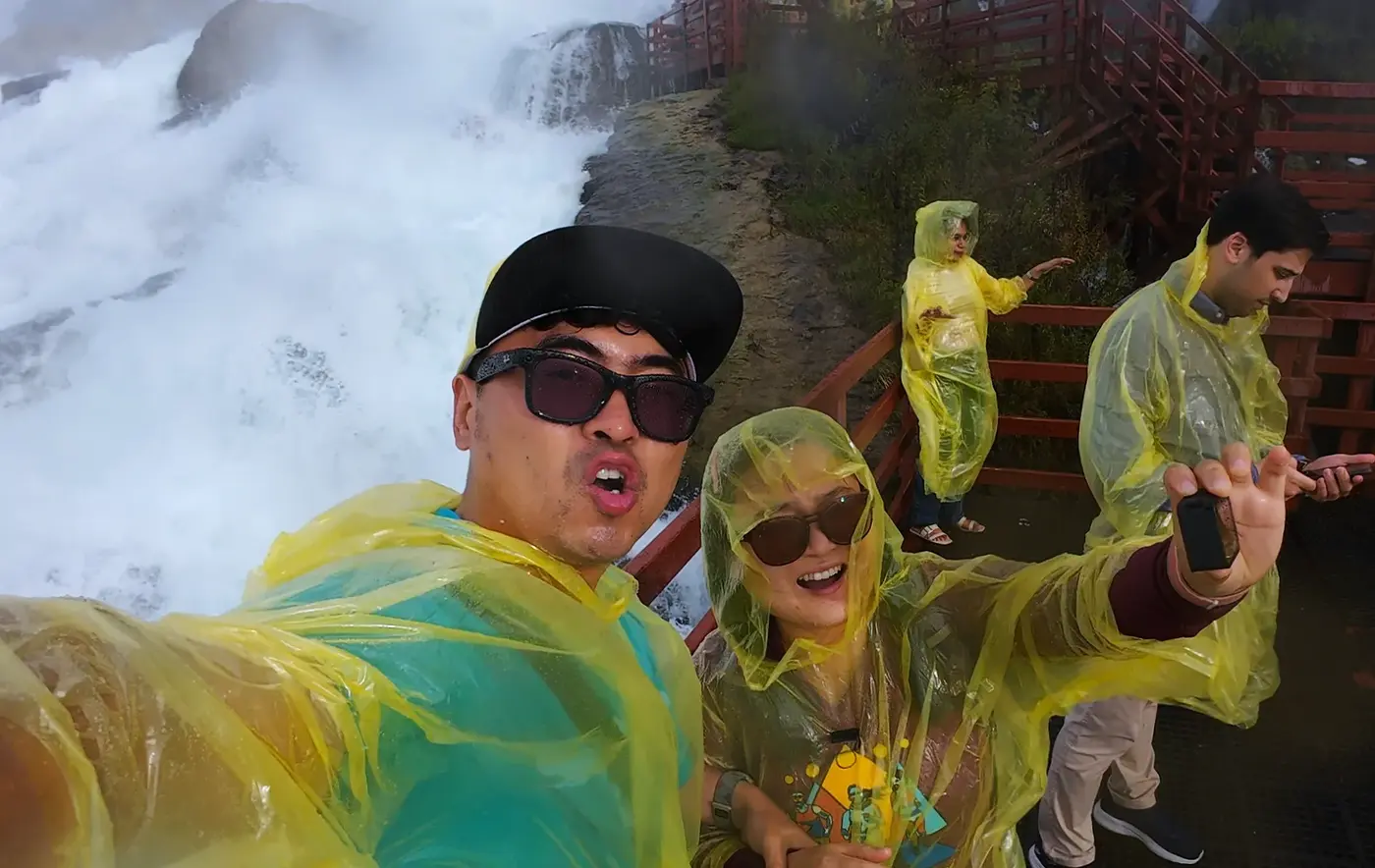
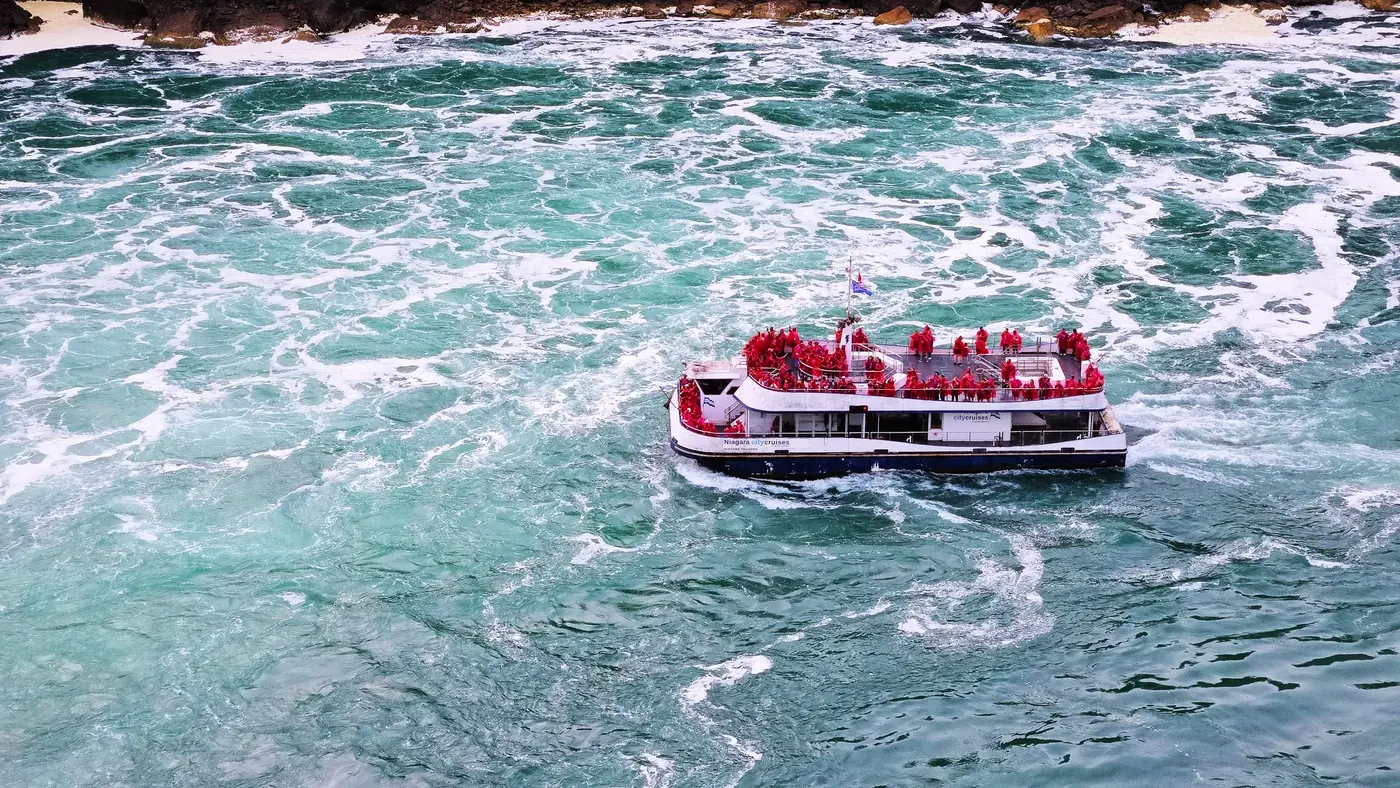
Then we did Cave of the Winds. Before going in, everyone watches a short exhibit video about Niagara's geology, how the falls formed, and the history of hydropower there.
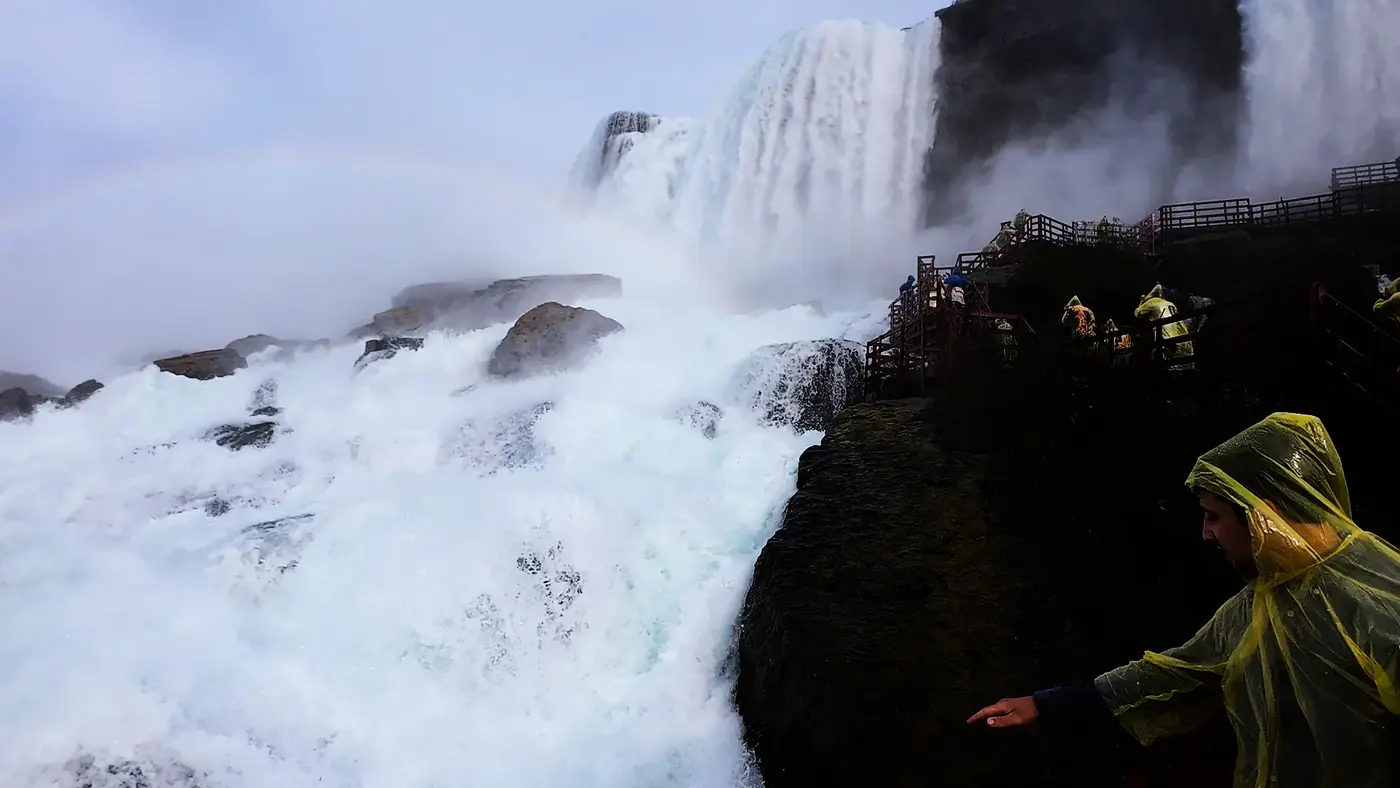
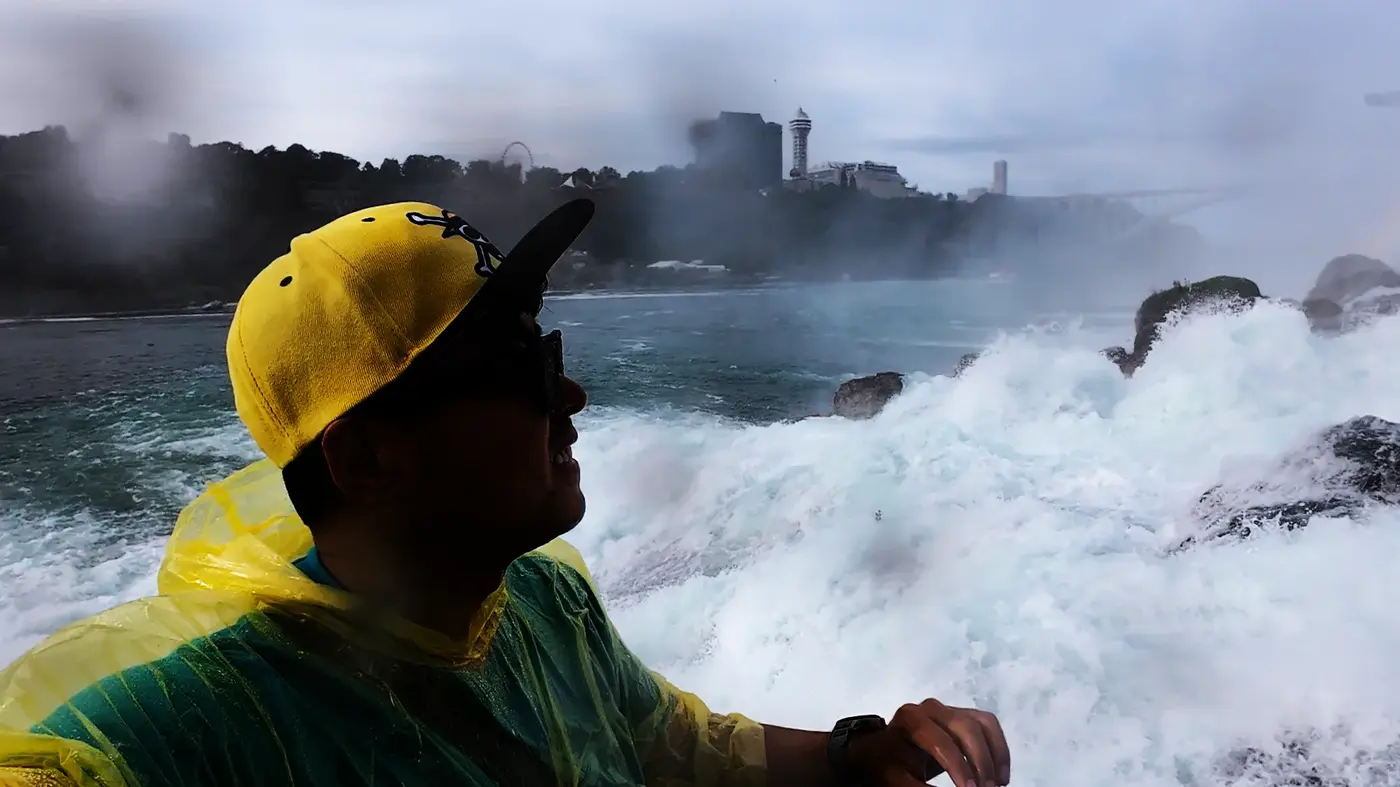
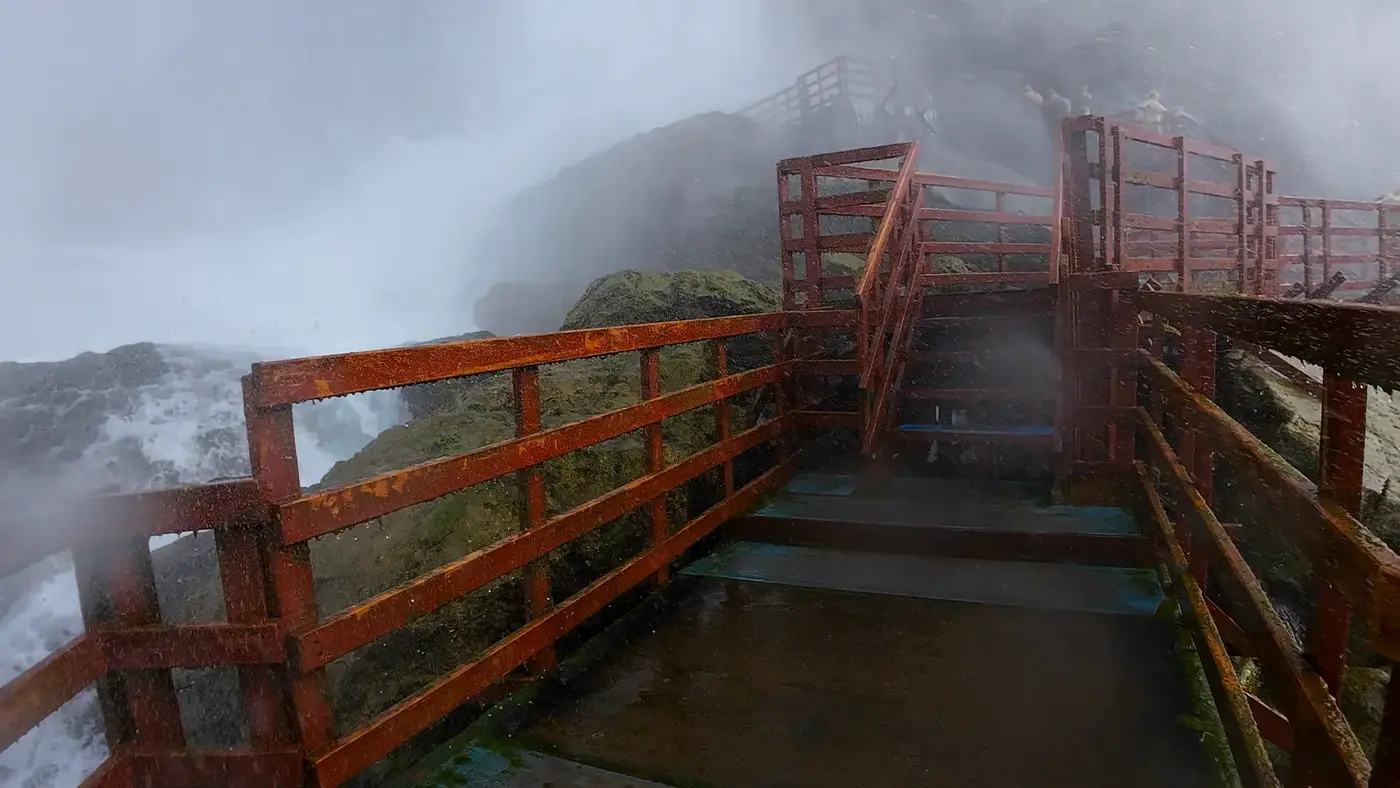
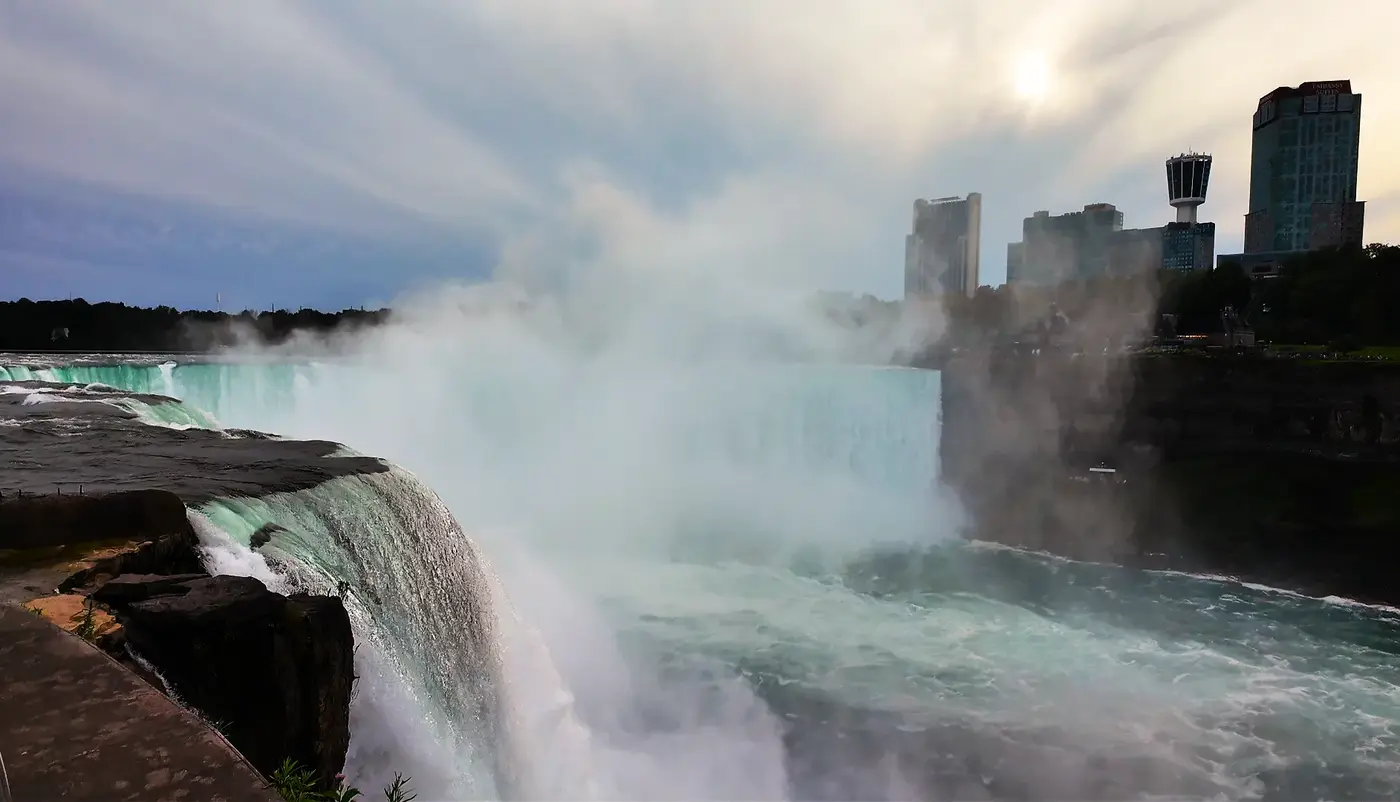
Then you grab a yellow poncho and take the elevator down to the wooden boardwalk at the base of the falls. The moment I stepped out, it felt like walking into a storm. Water hit my face, I could barely open my eyes, and my shoes were soaked almost instantly. The roar filled my ears, and the waterfall was right there in front of me. It was overwhelming.
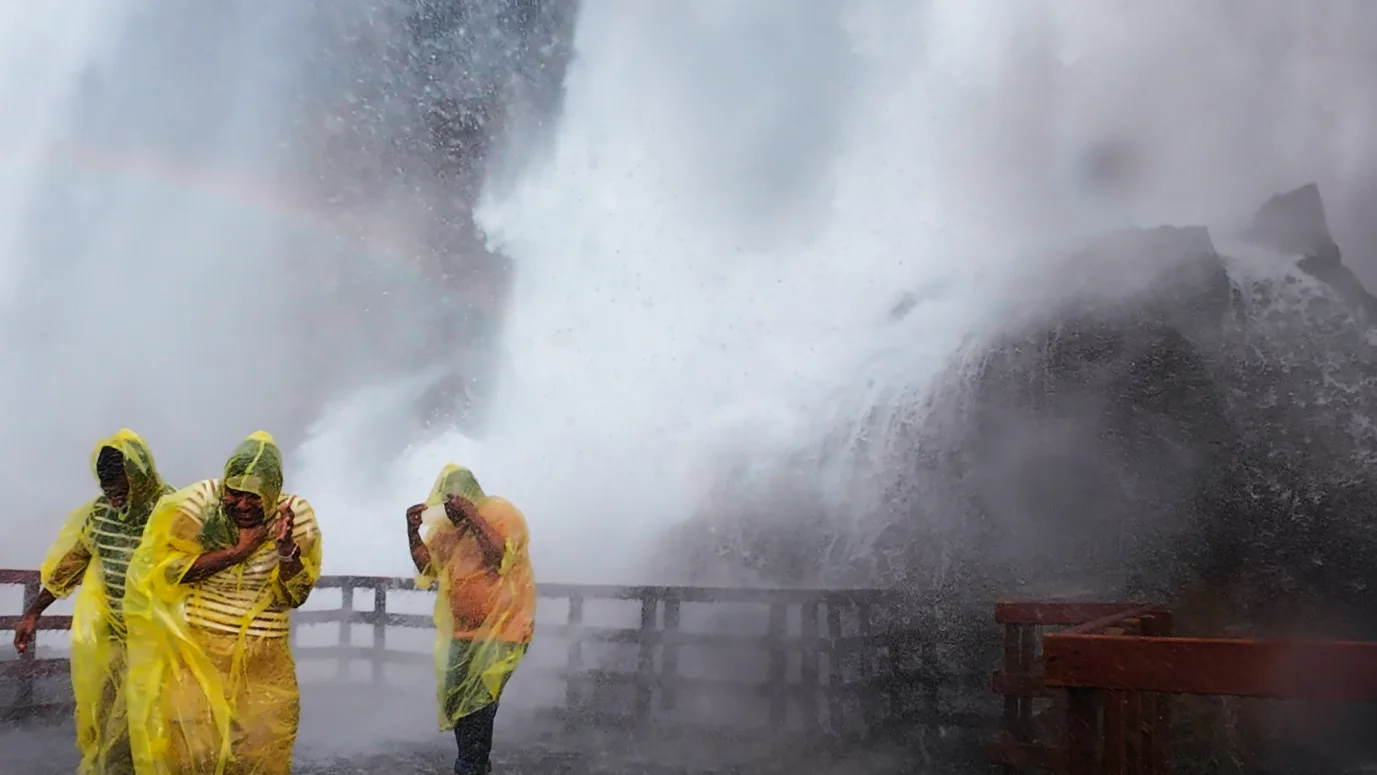
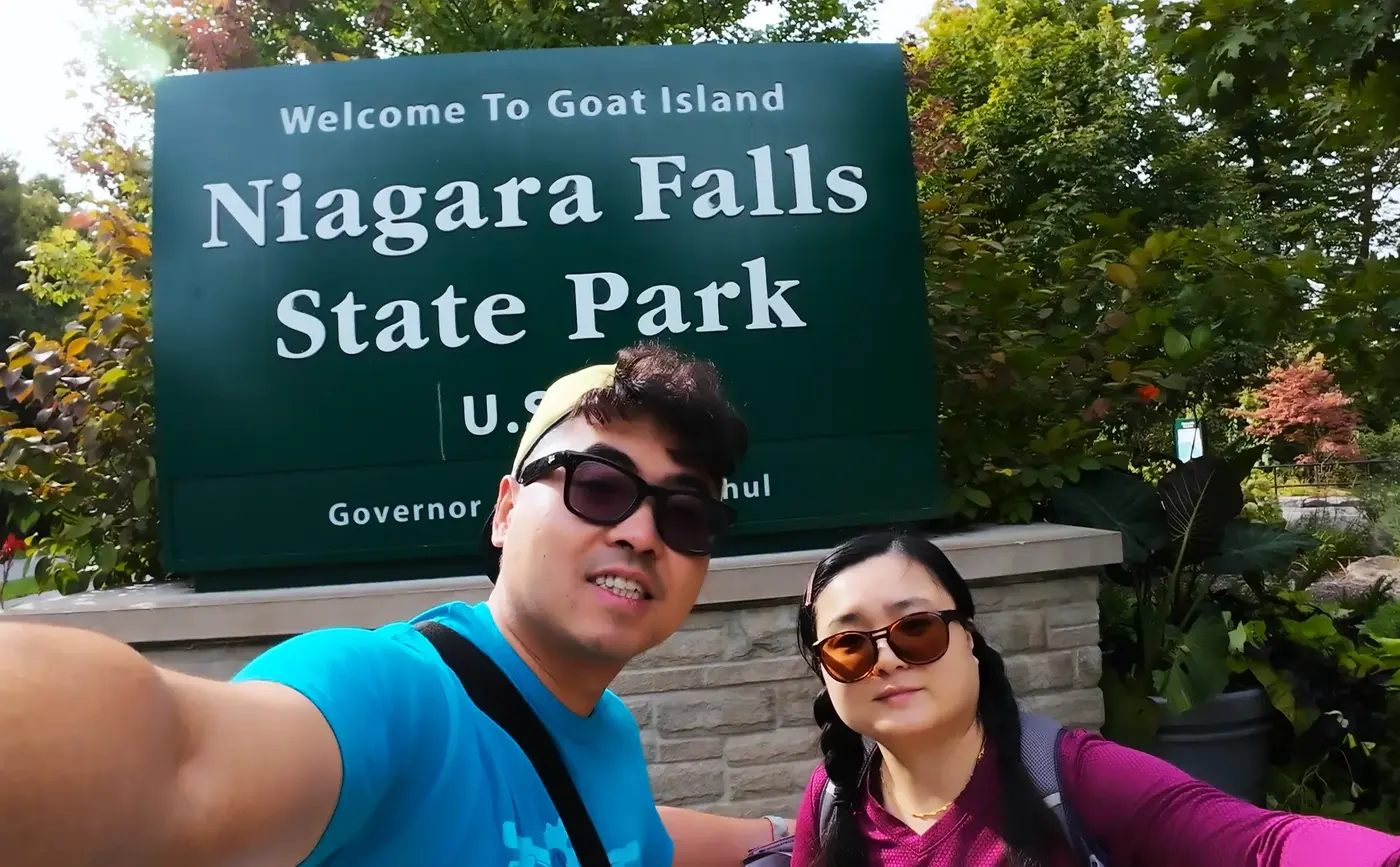
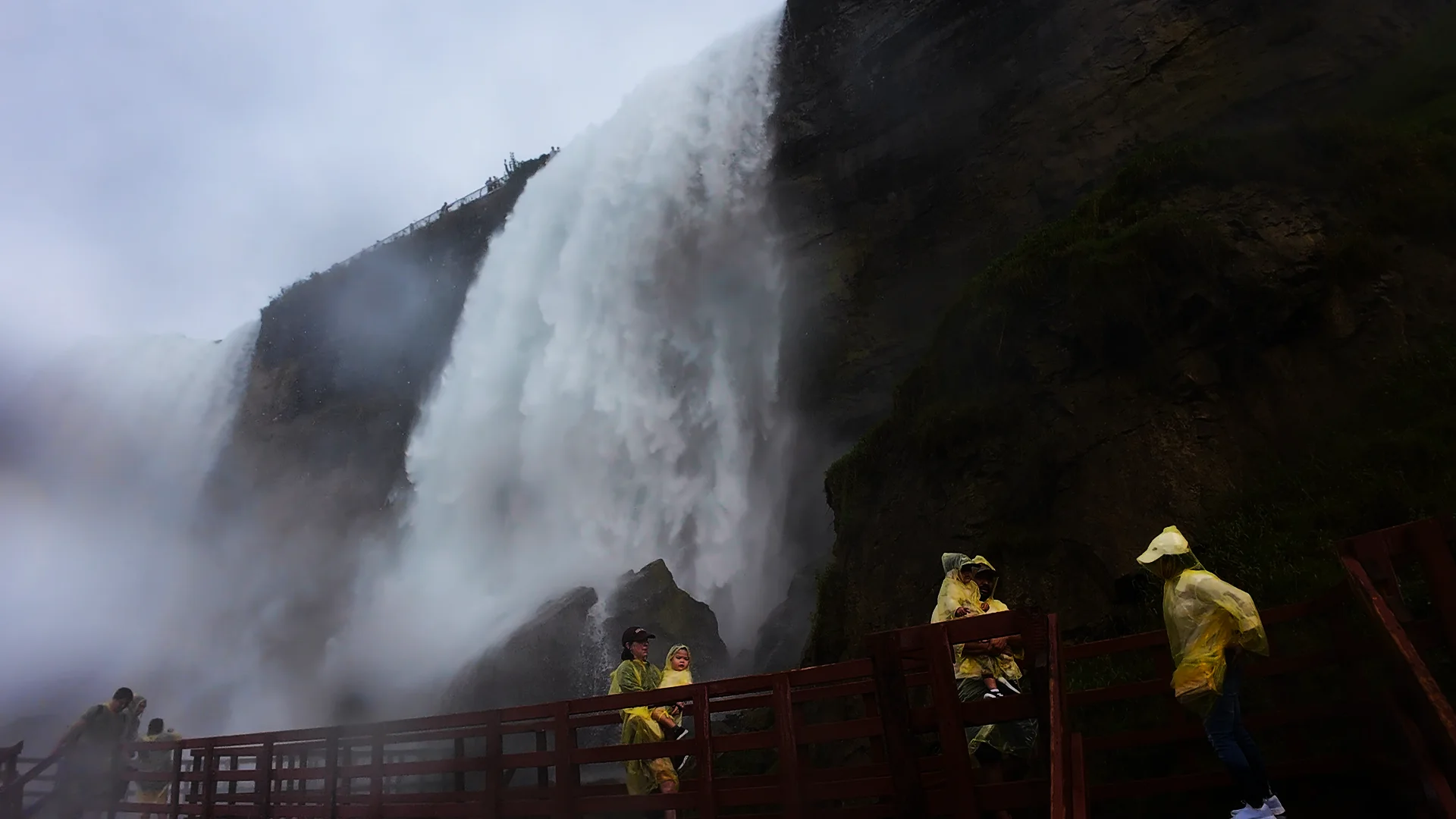
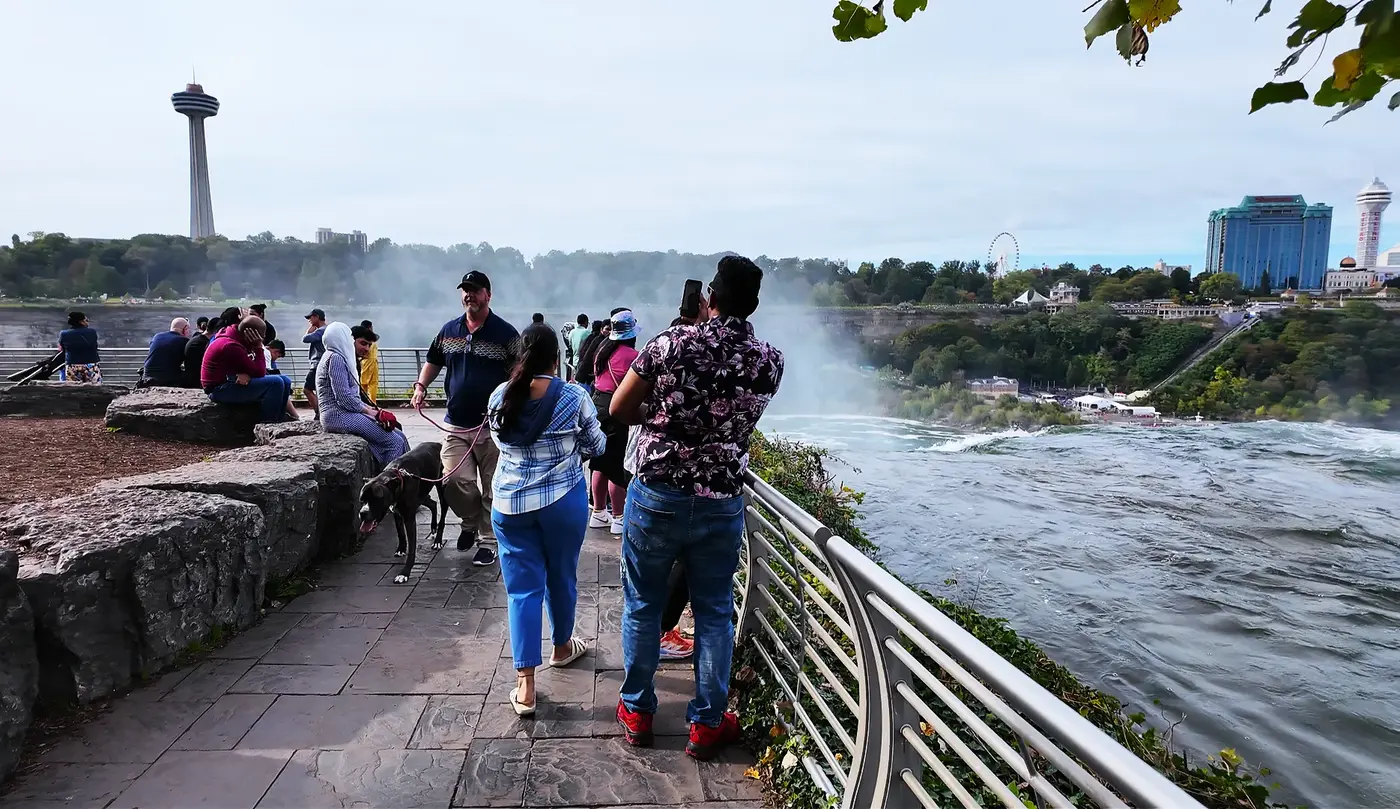
Farther along, we could also see Horseshoe Falls. Compared with the American Falls, it is wider and even more dramatic, sitting across from Canada. People say the Canadian side has the better angle.
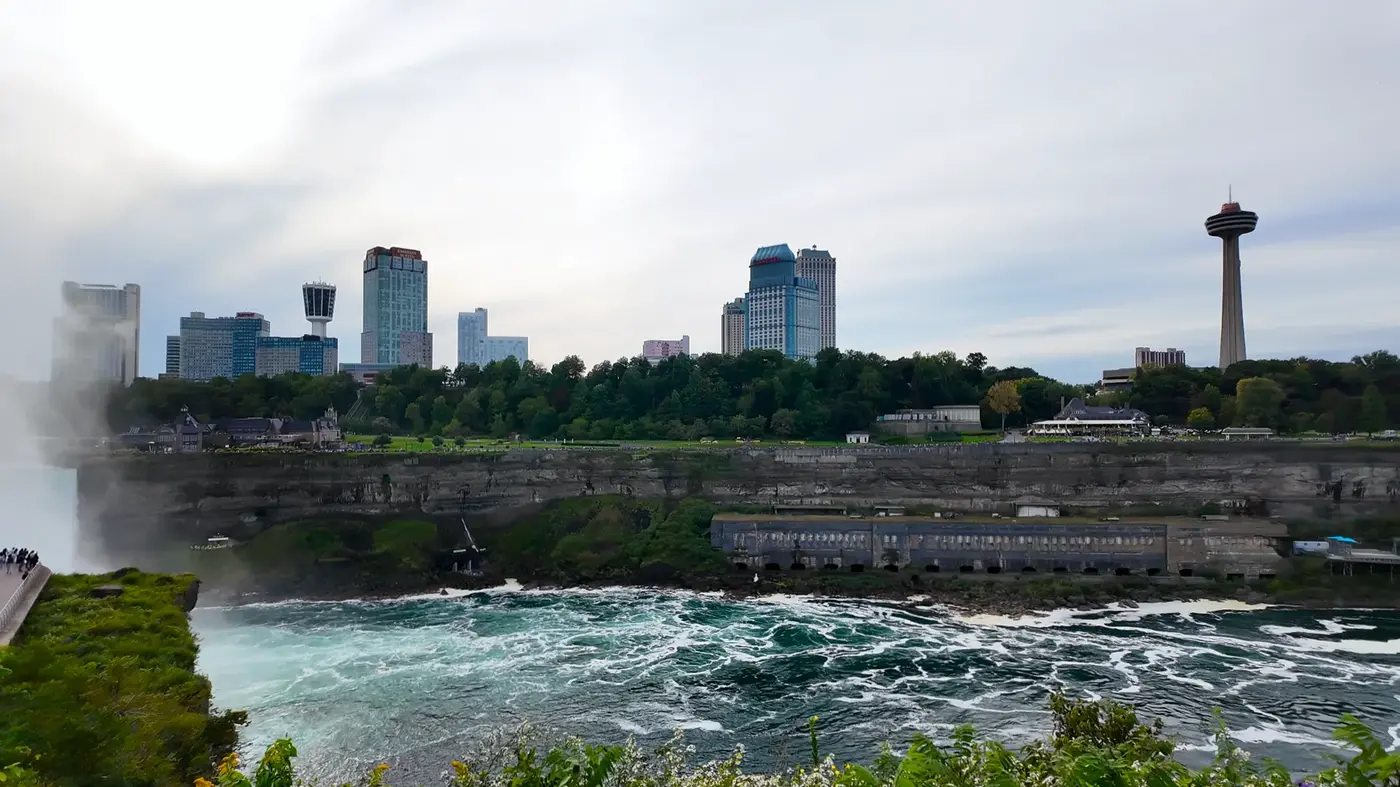
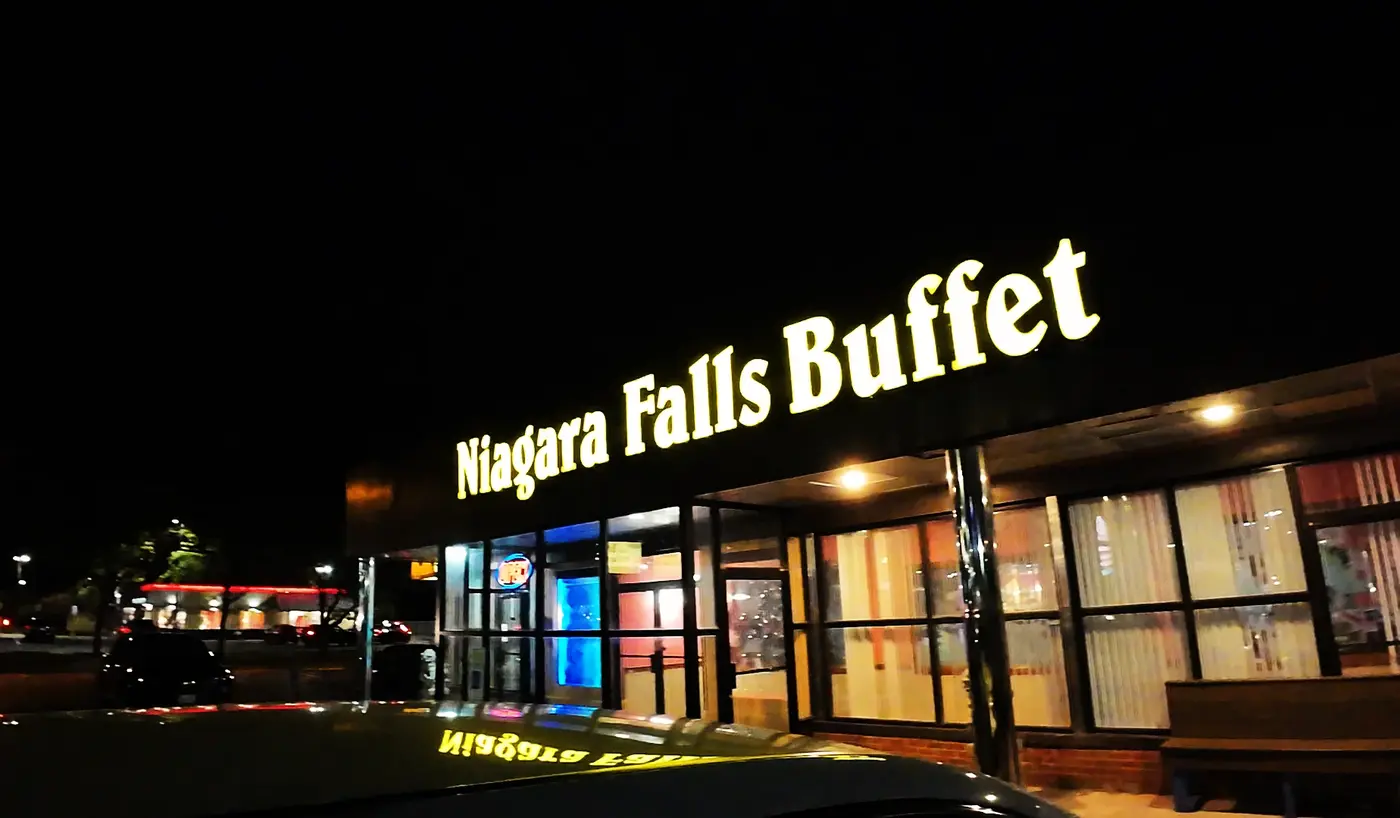
That evening, we found a nearby Chinese restaurant and warmed ourselves back up with food.
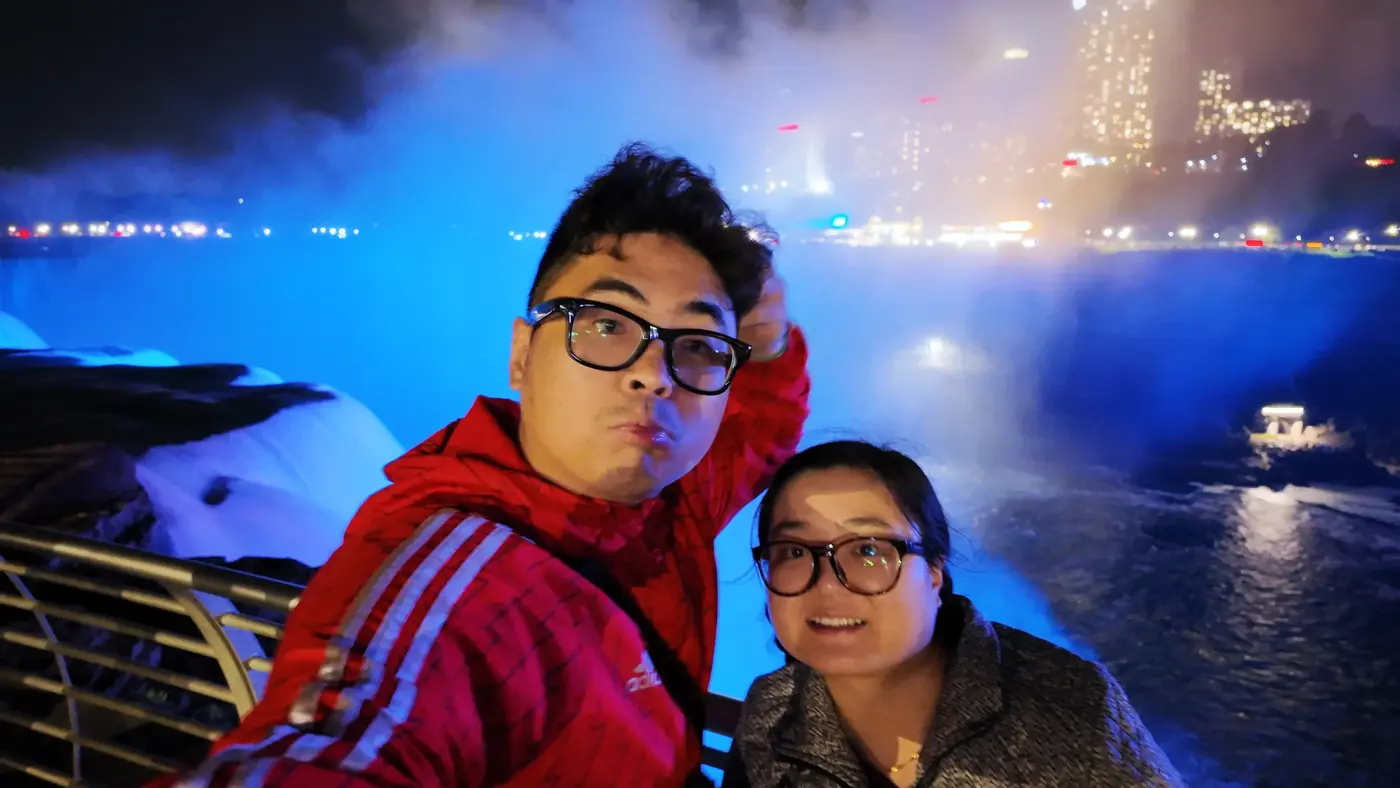
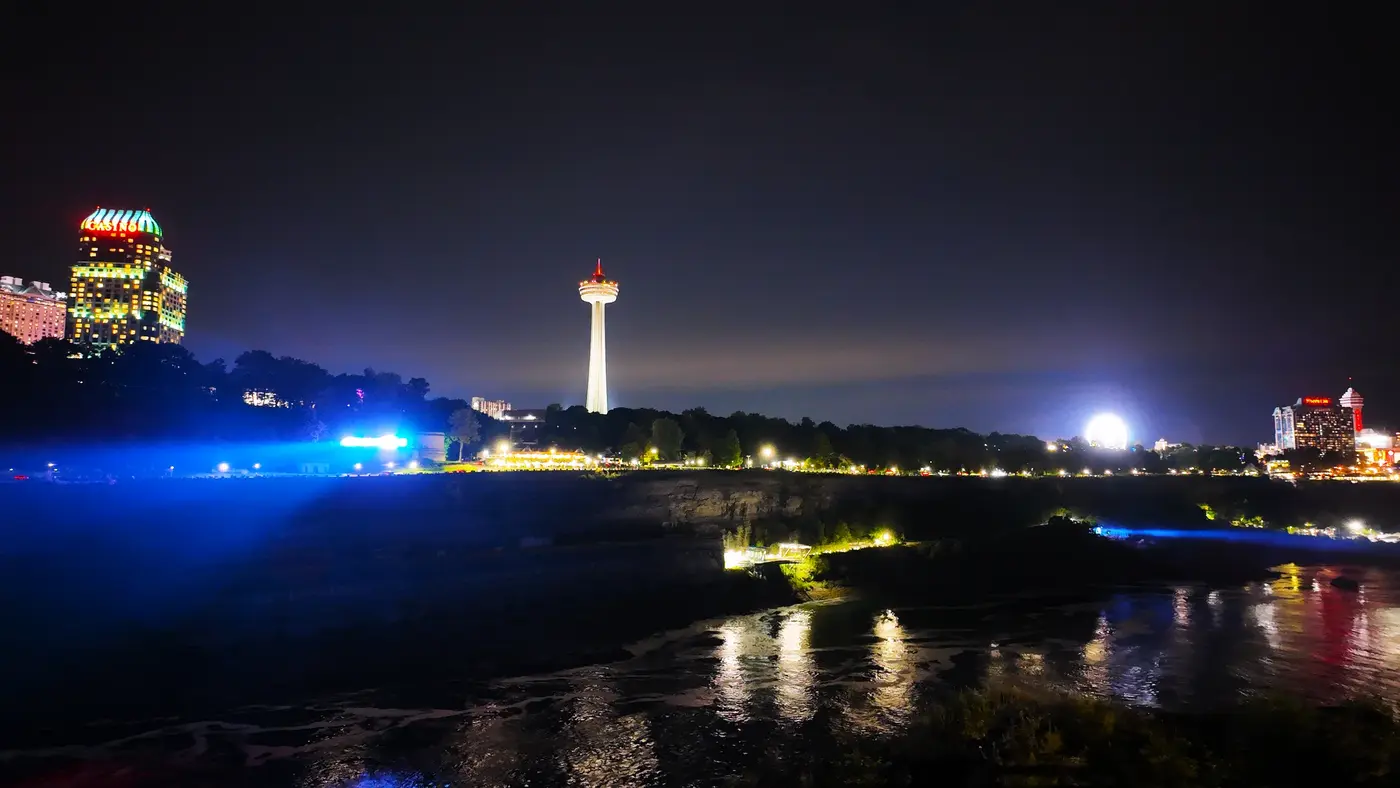
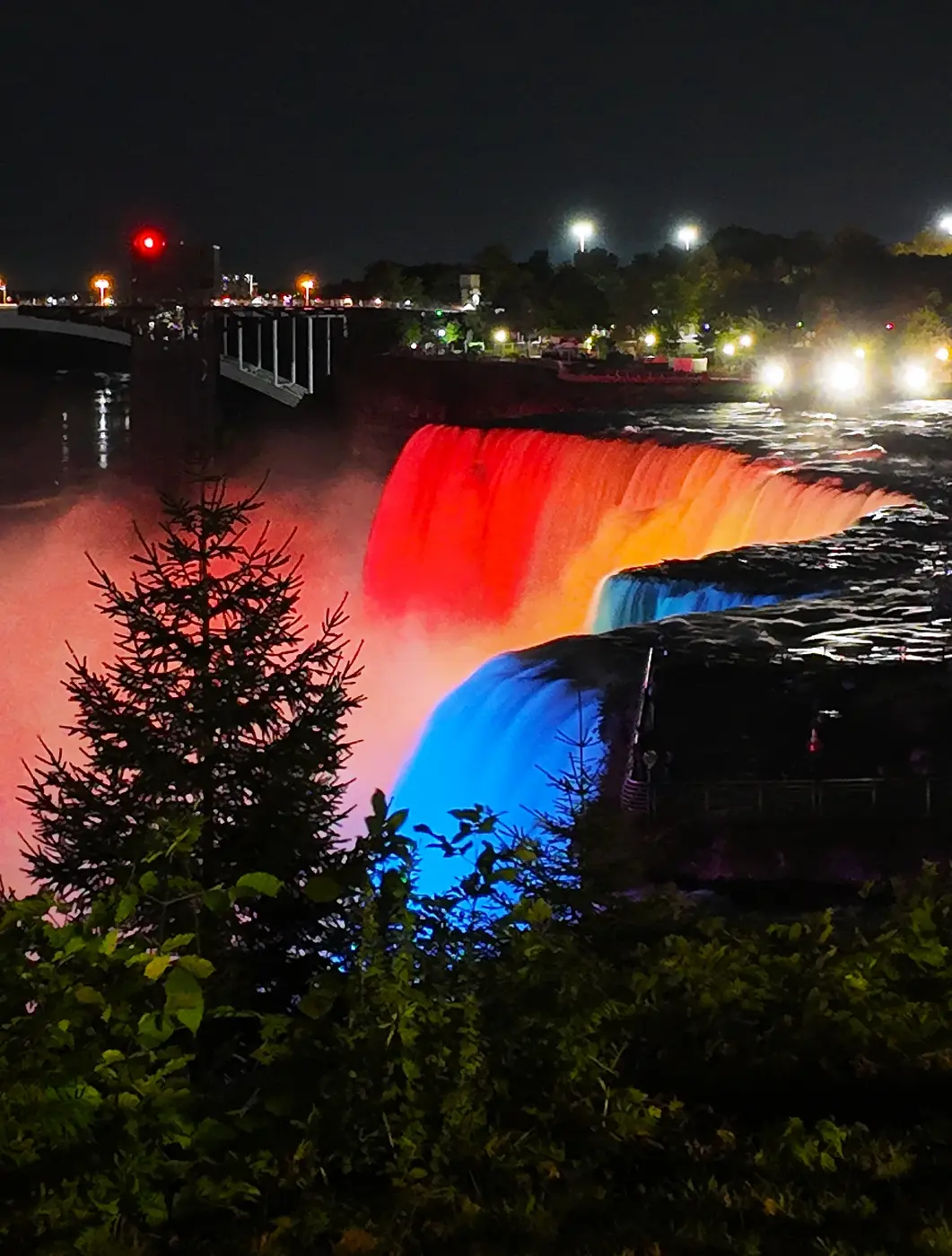
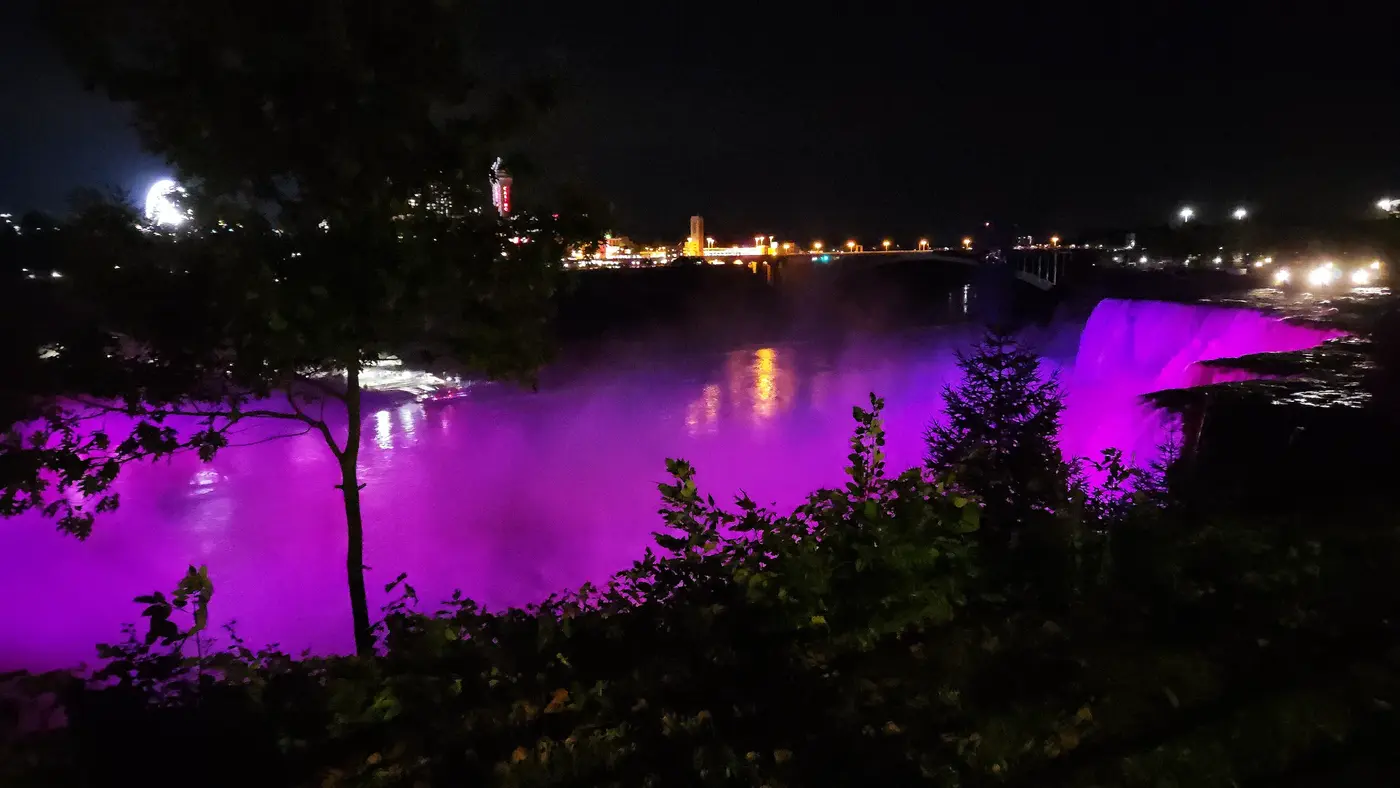
After dinner, we went back to the park for the night view. Under colored lights, the falls looked almost unreal. Mist reflected blue, purple, and red as the colors kept changing. Standing there, I felt the daytime shock soften into a nighttime dream.
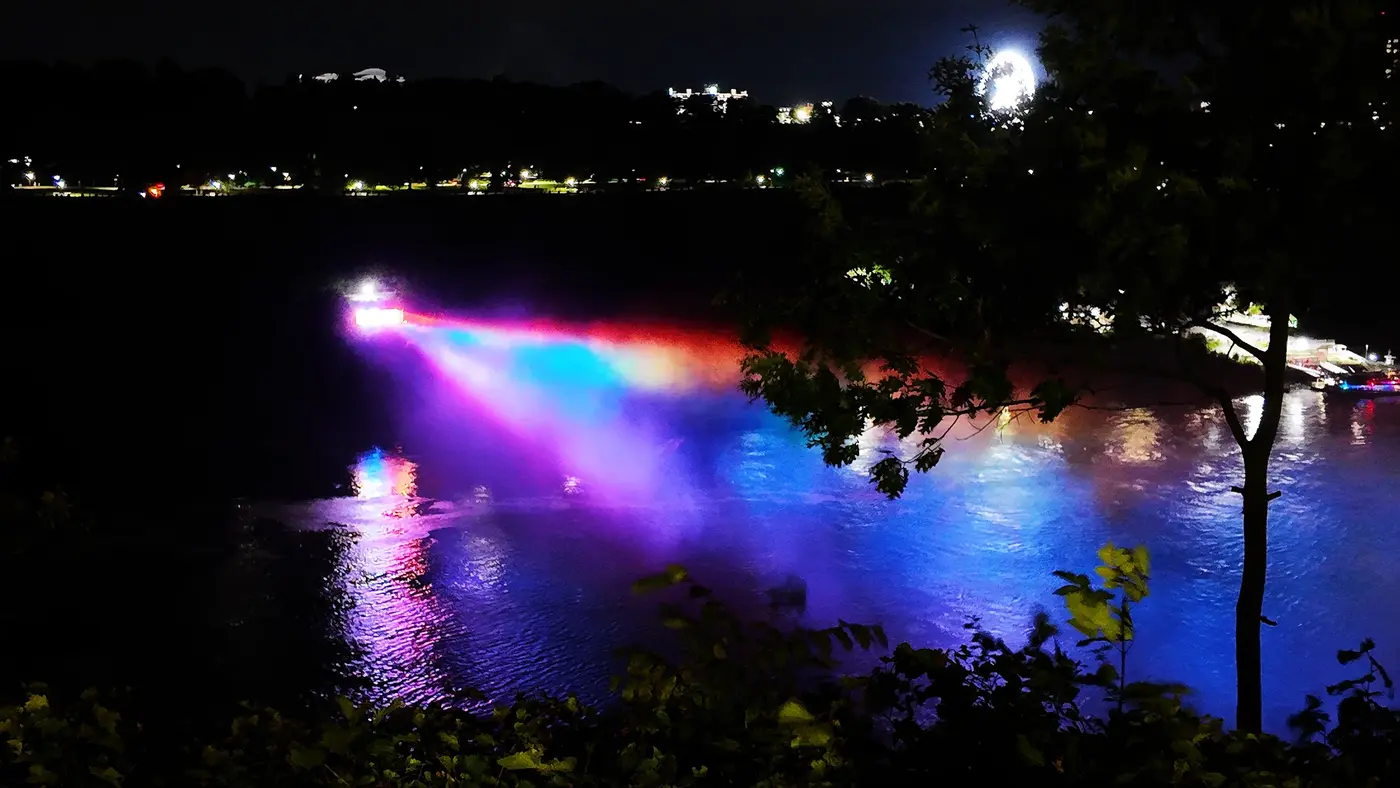
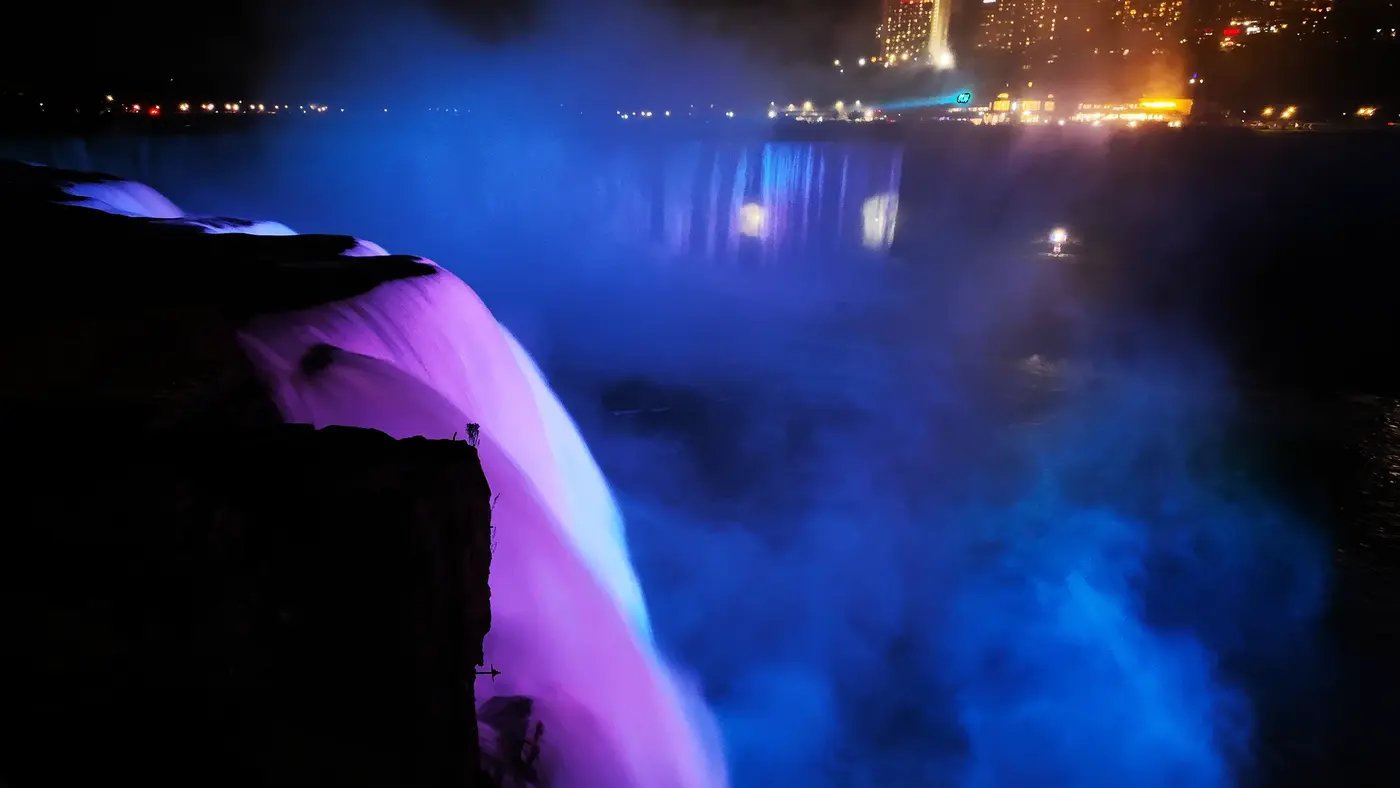
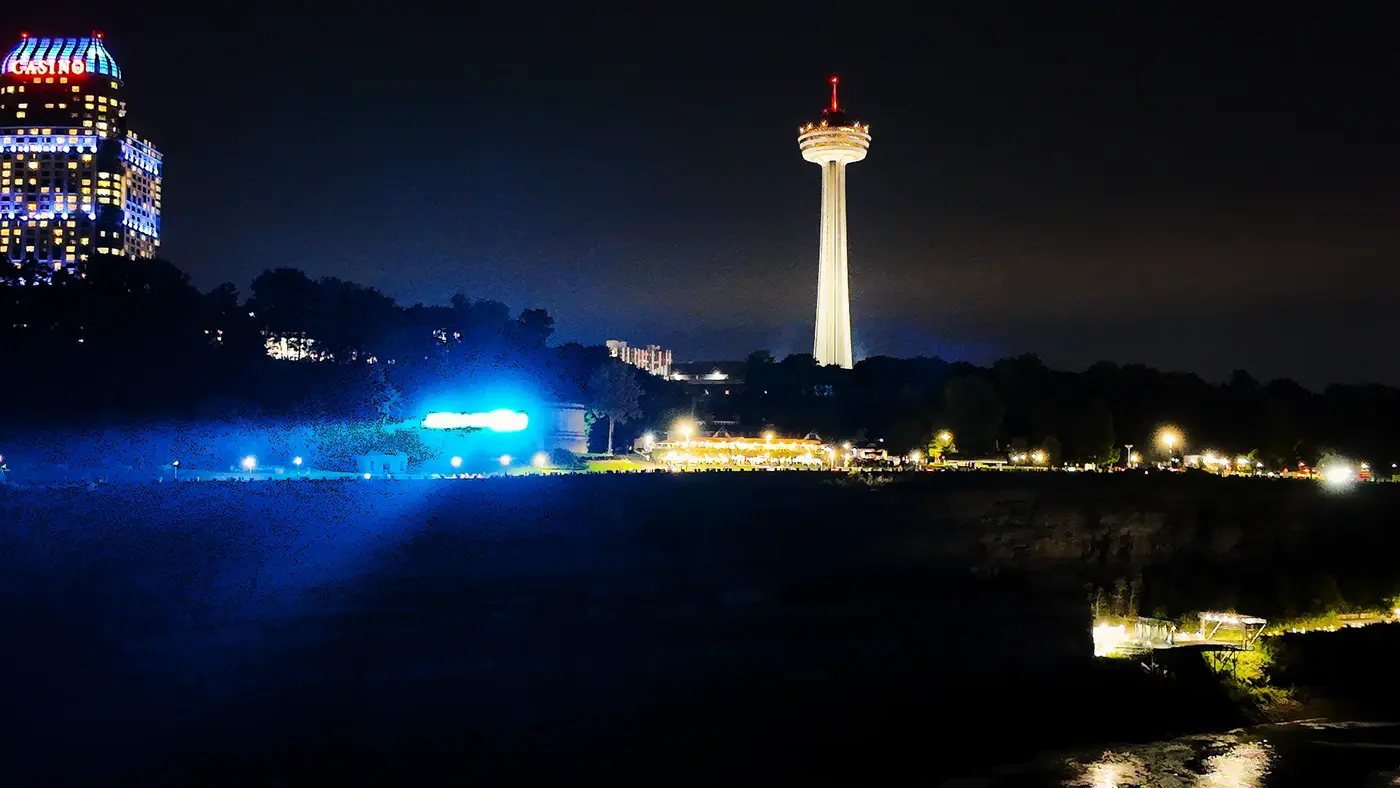
After seeing the night view, we continued driving and stayed at an Airbnb in Syracuse for the night to prepare for our journey north the next day.
Chapter 2 | Through Vermont Fall Colors · Pre-Race Party
After leaving Niagara, we stayed one night in Syracuse. The next morning it was sunny and the clouds were beautiful.
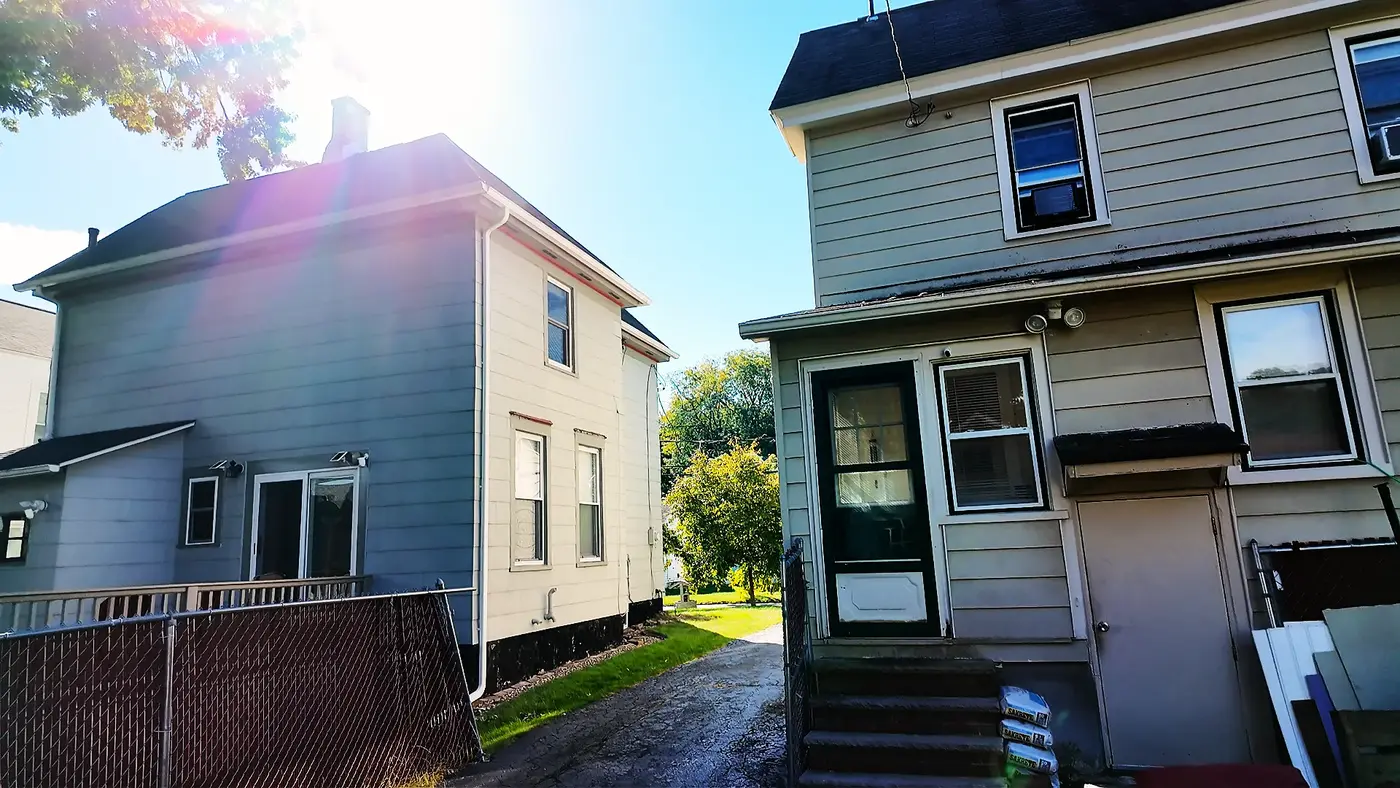
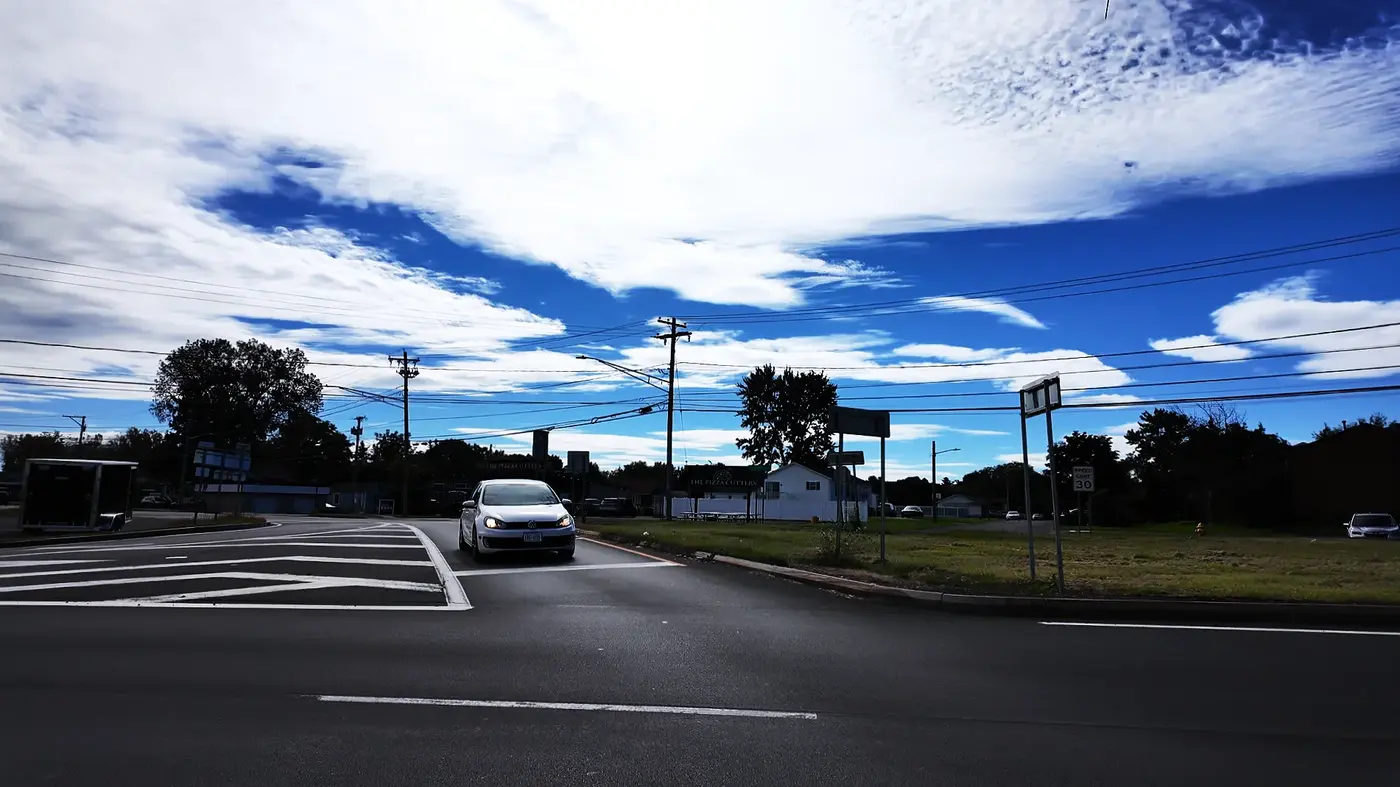
I do not have many impressions of Syracuse. I mainly know Syracuse University, that Carmelo Anthony played there, and that my middle-school classmate Xiao Gao once studied there, so the name felt familiar.
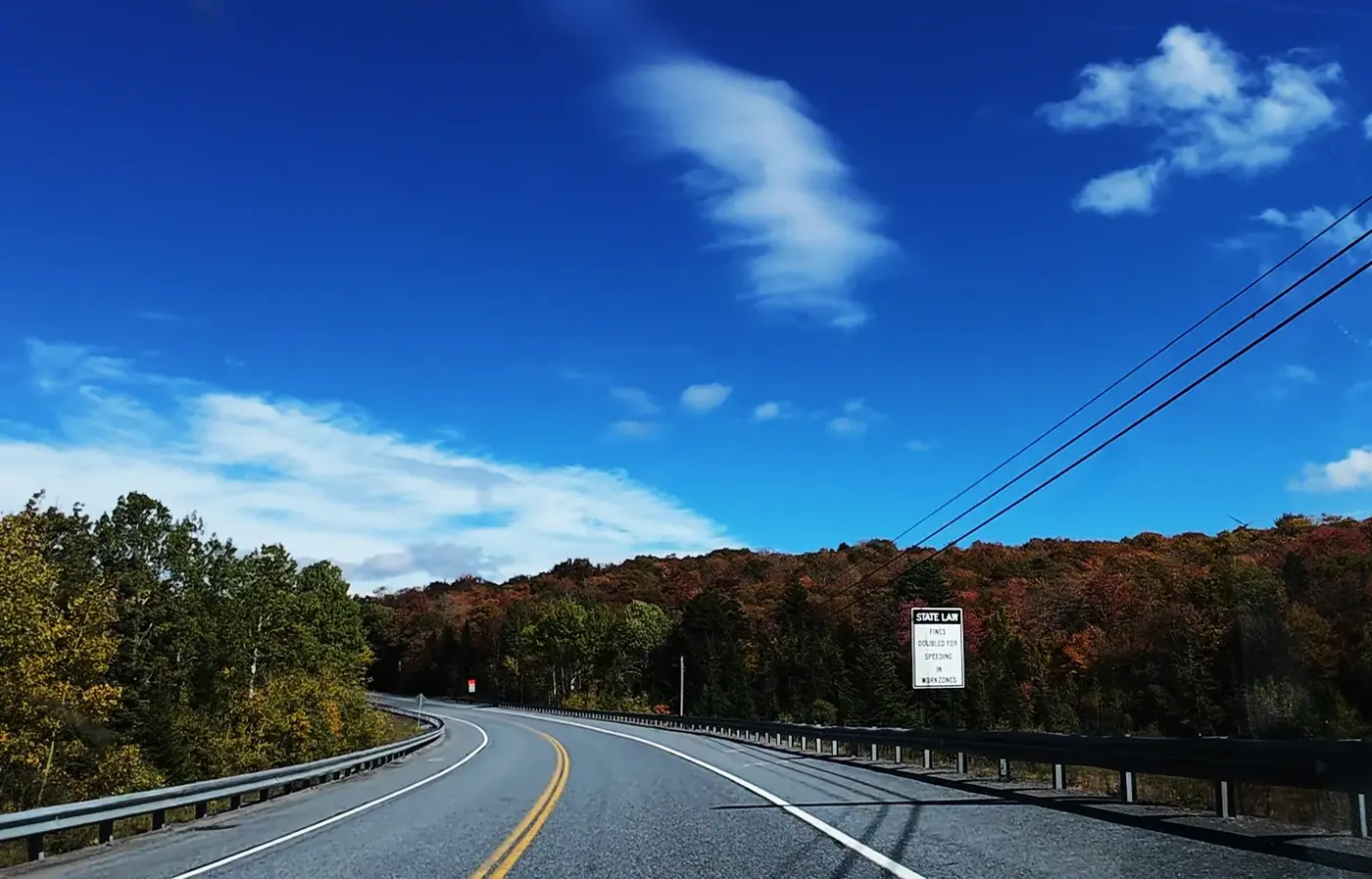
After leaving Syracuse, we slowly drove into Vermont. Late September is foliage season in New England, and the hills were starting to turn red and yellow in layers. We found a place to pull over and take photos.
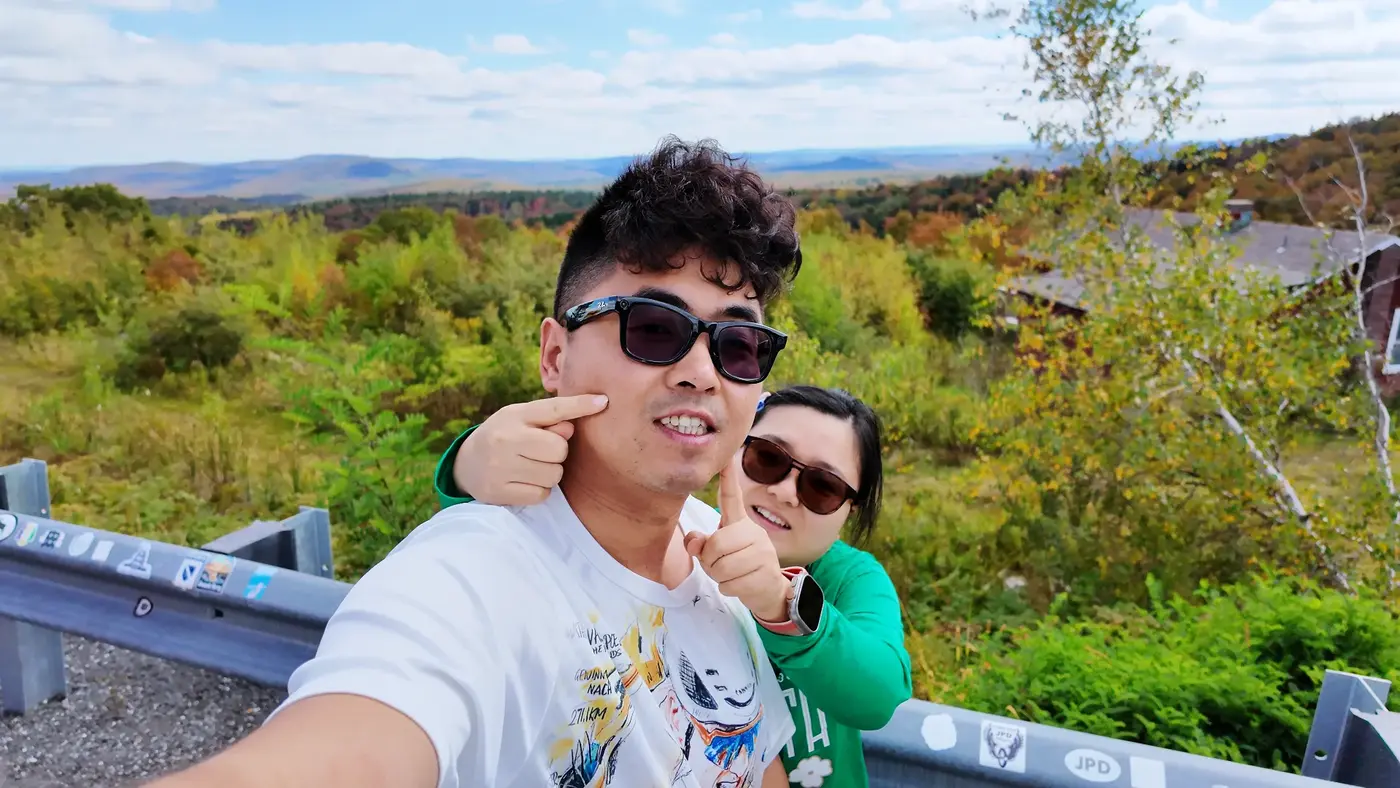
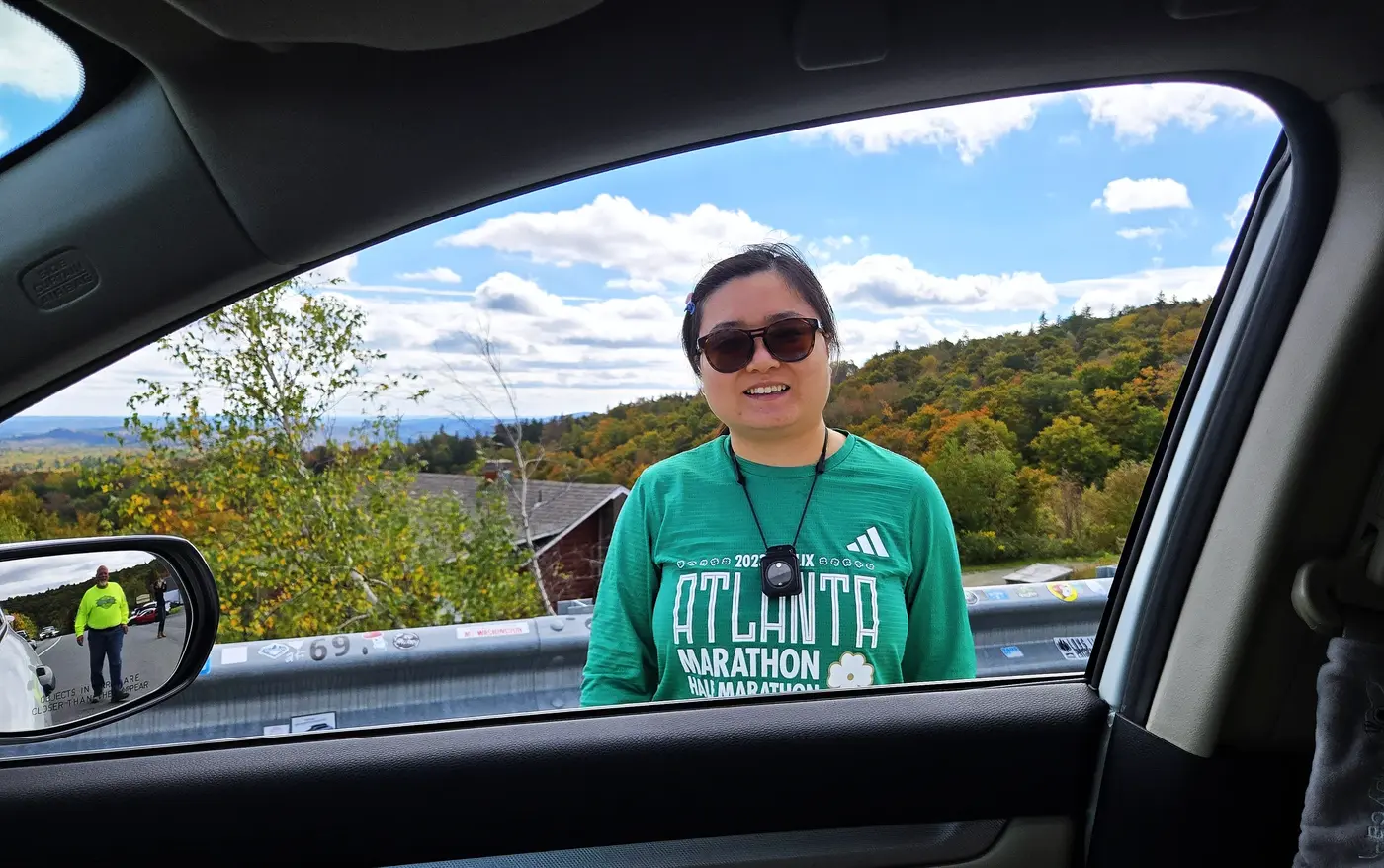
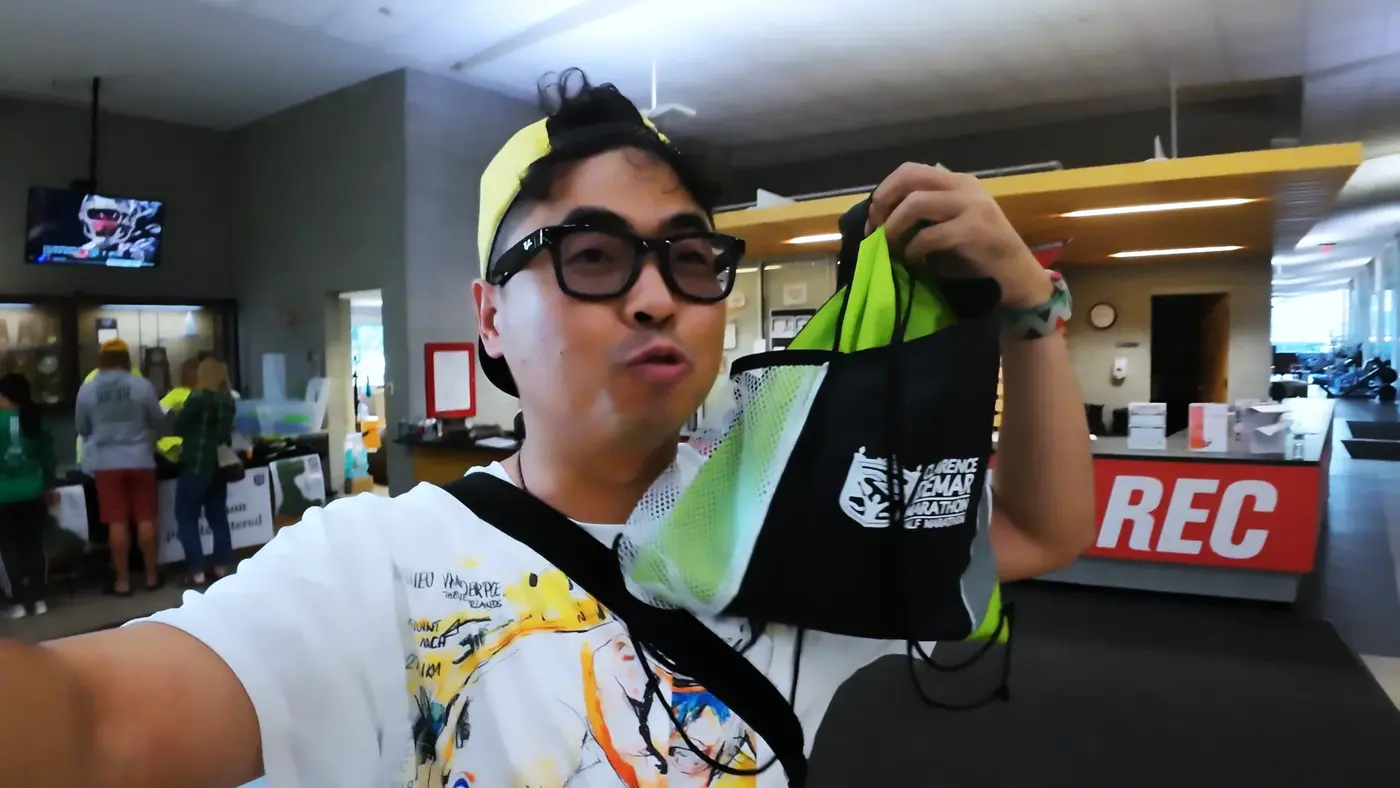
After crossing Vermont, we finally reached our destination: the far-off state of New Hampshire. That afternoon, we went to Keene State College, a small local campus, to pick up my race packet.
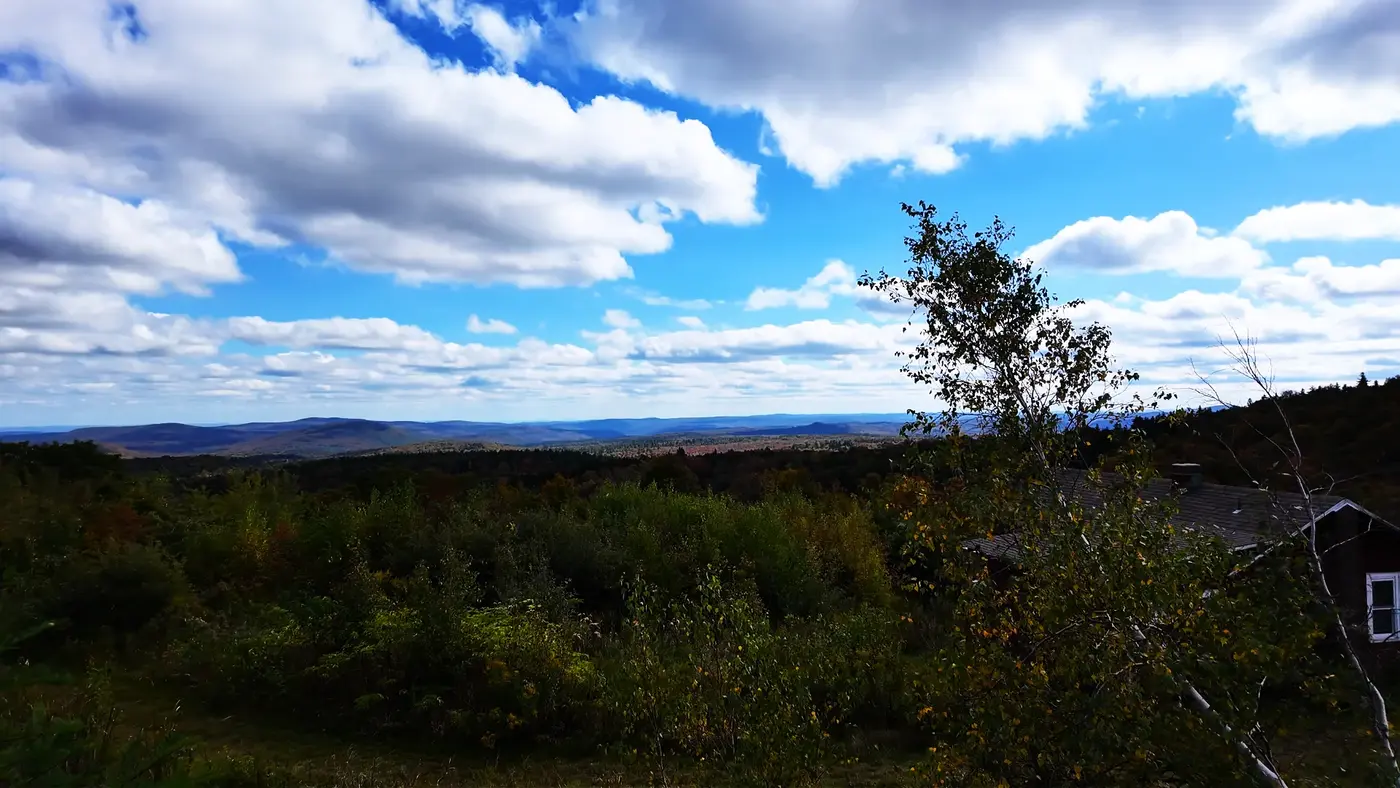
There were not many people in the hall, everyone lined up quietly, and the atmosphere was quite relaxed.
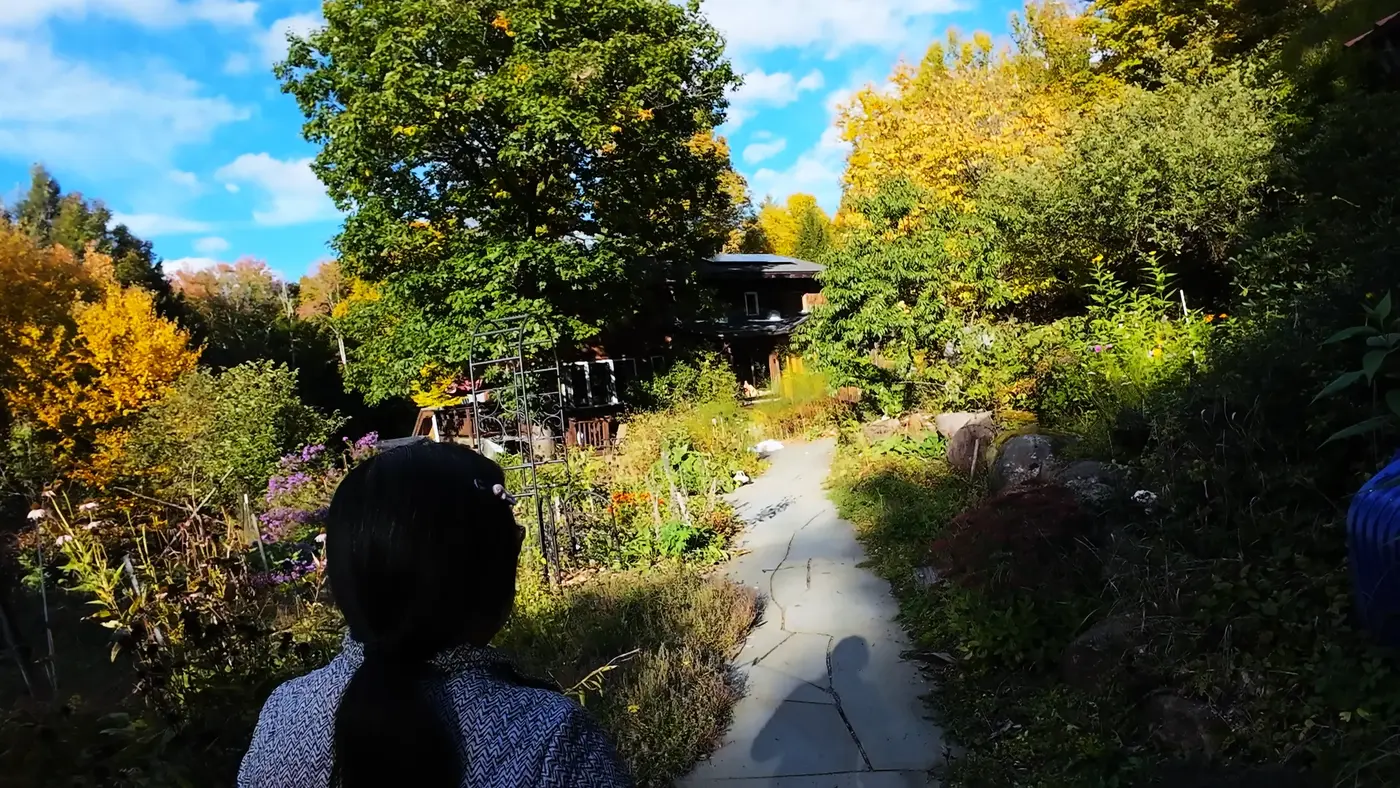
After packet pickup, we drove into the mountains to our Airbnb cabin. The host was an older woman living on her own. She kept the house neat and tidy, and autumn woods filled the view outside the window.
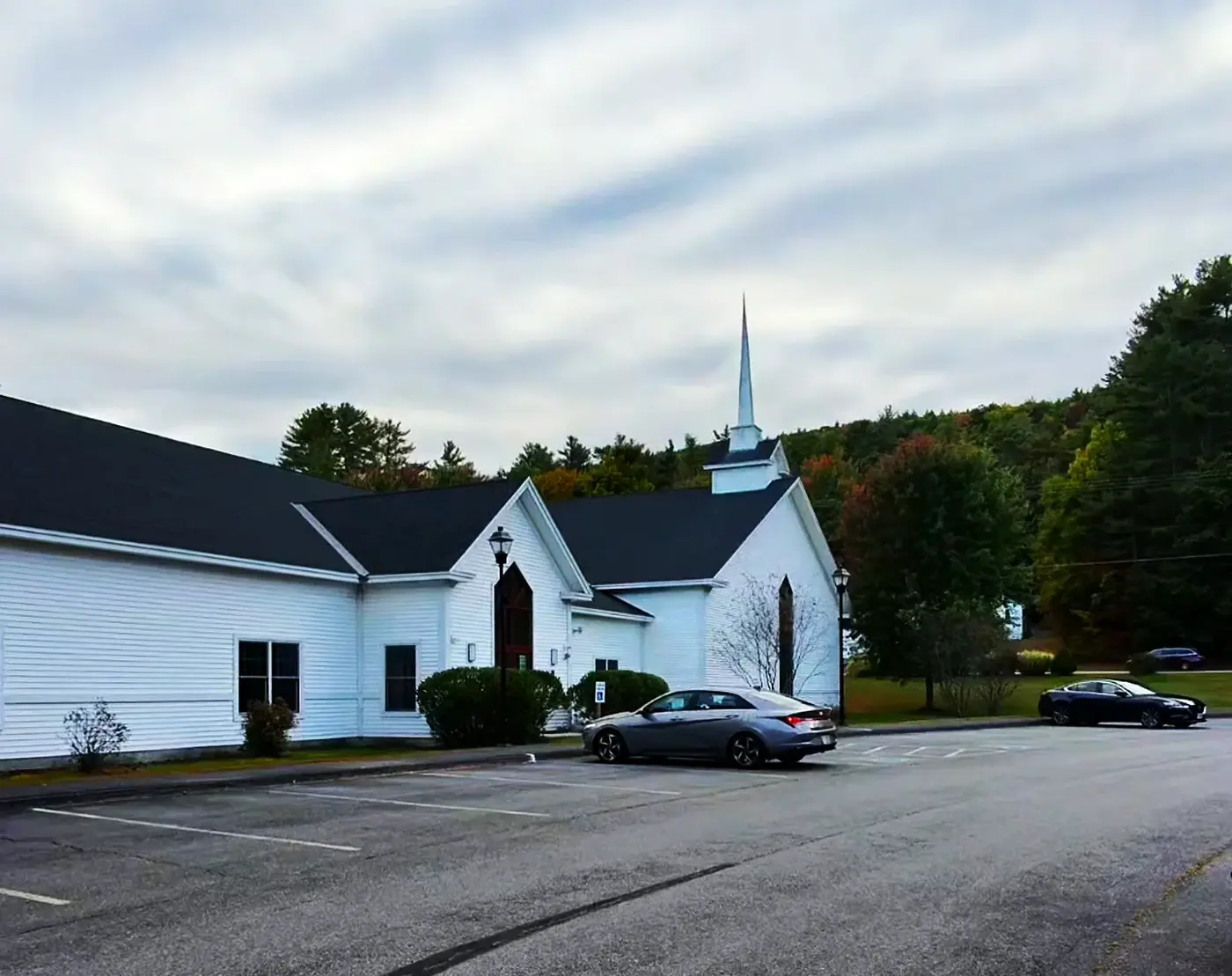
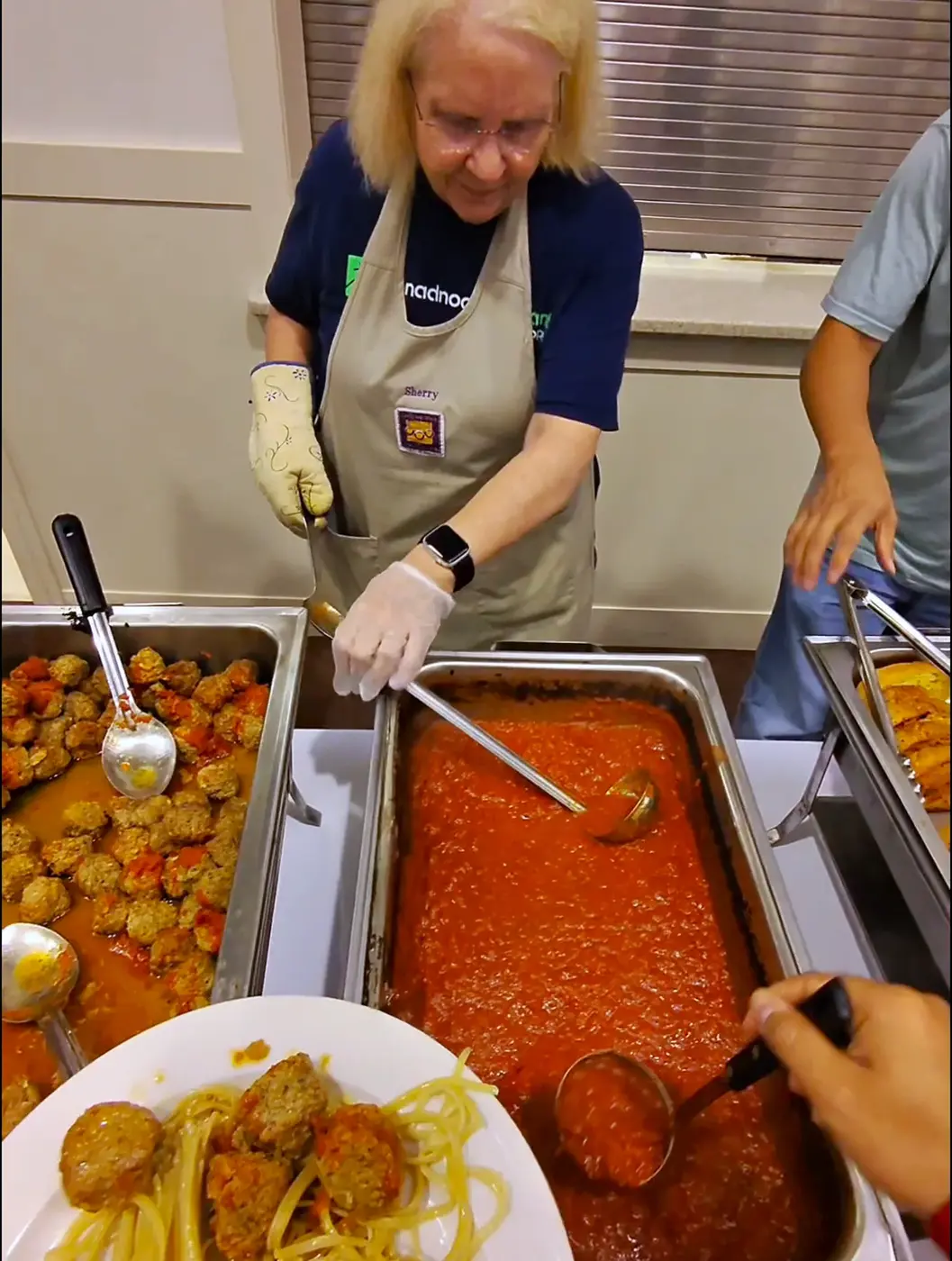
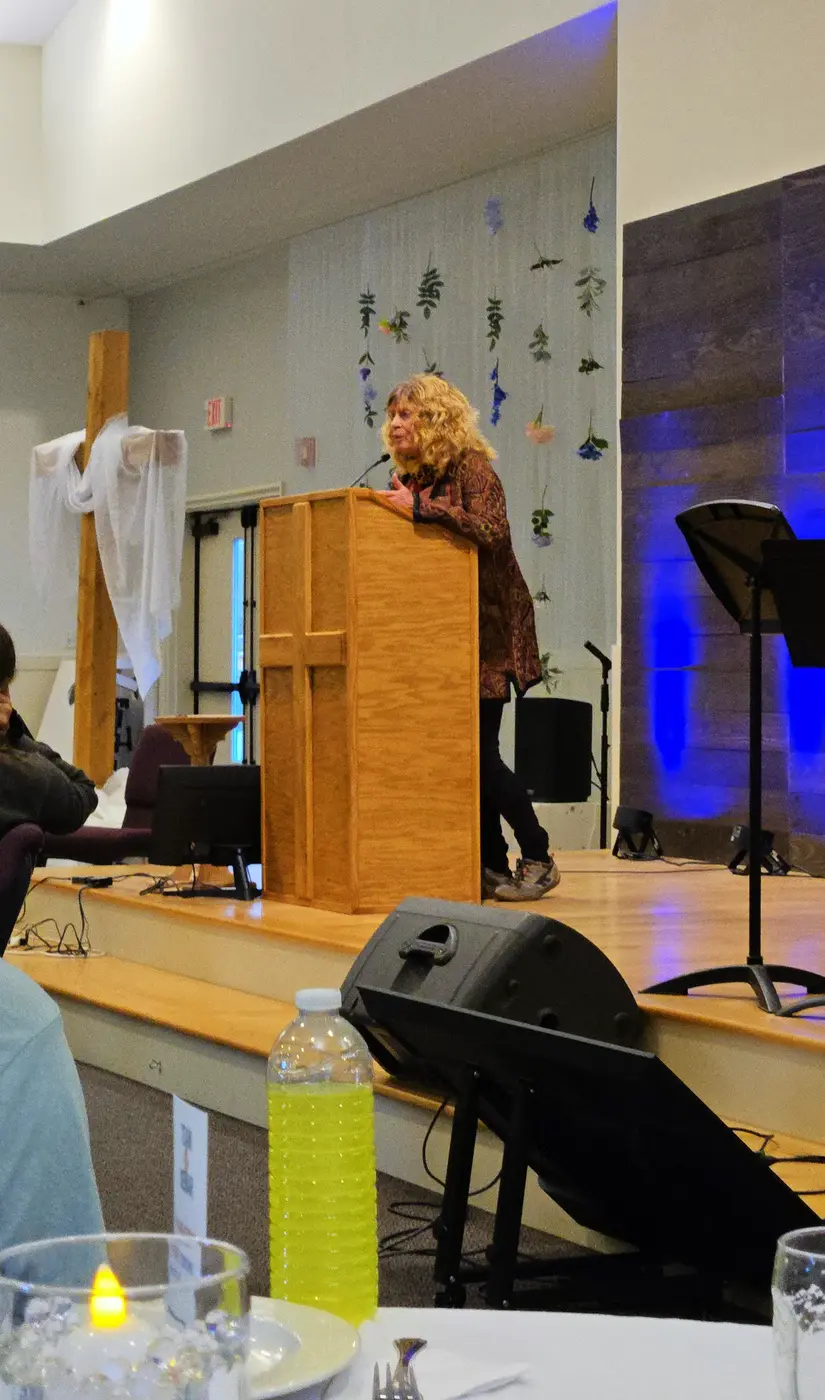
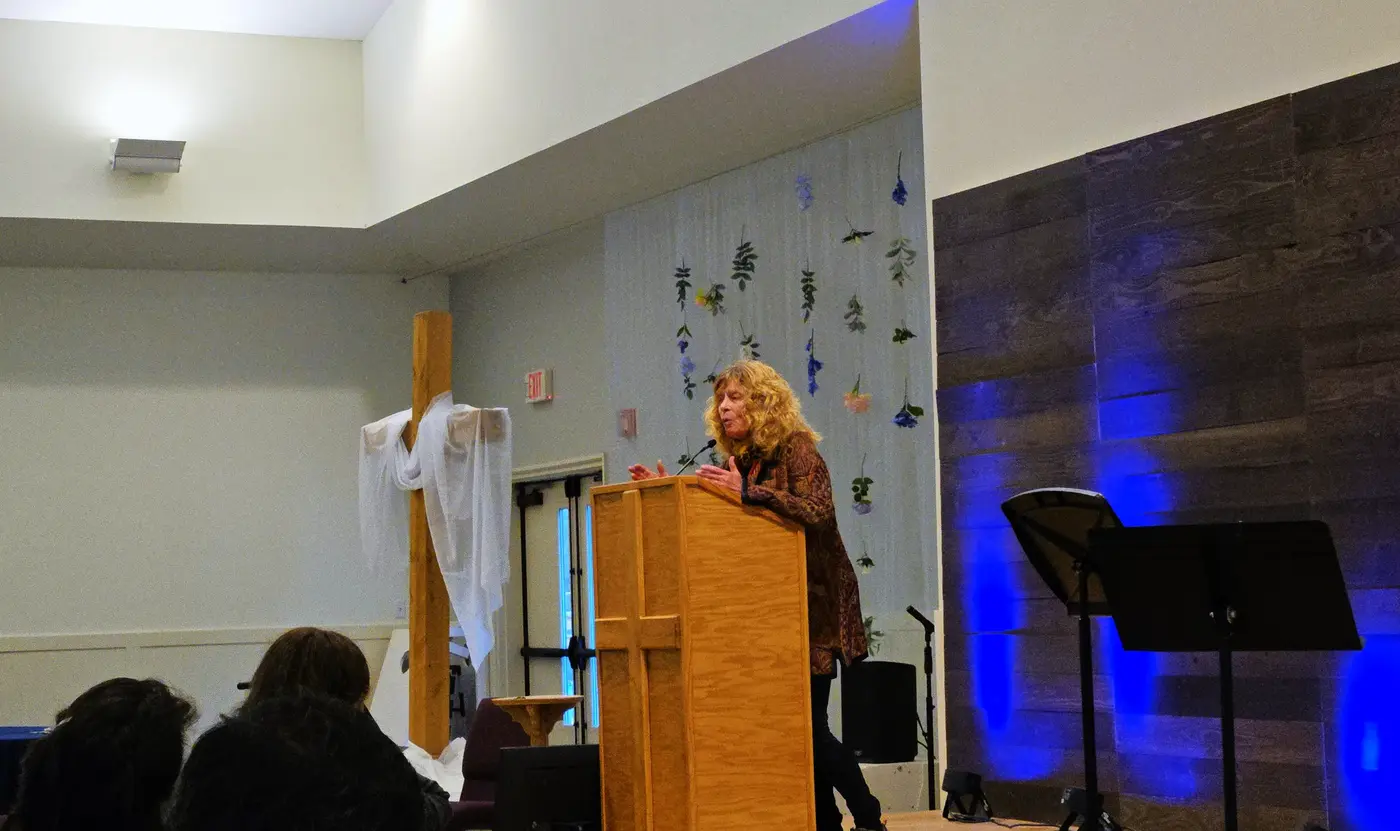
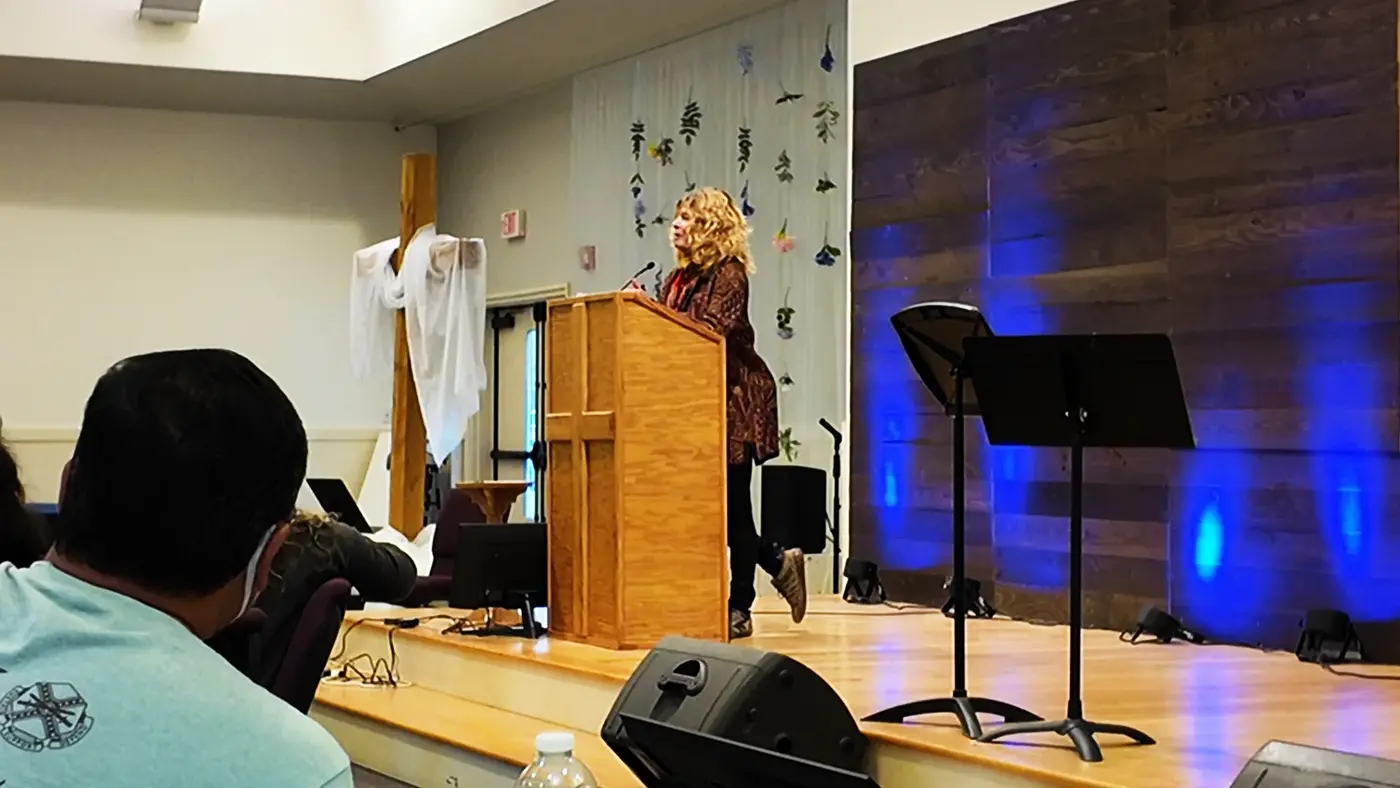
That evening we went to the pre-race dinner. The buffet was homey: spaghetti and meatballs. Even better, the guest speaker was a legend, Kathrine Switzer, the first woman to officially register for and finish the Boston Marathon.
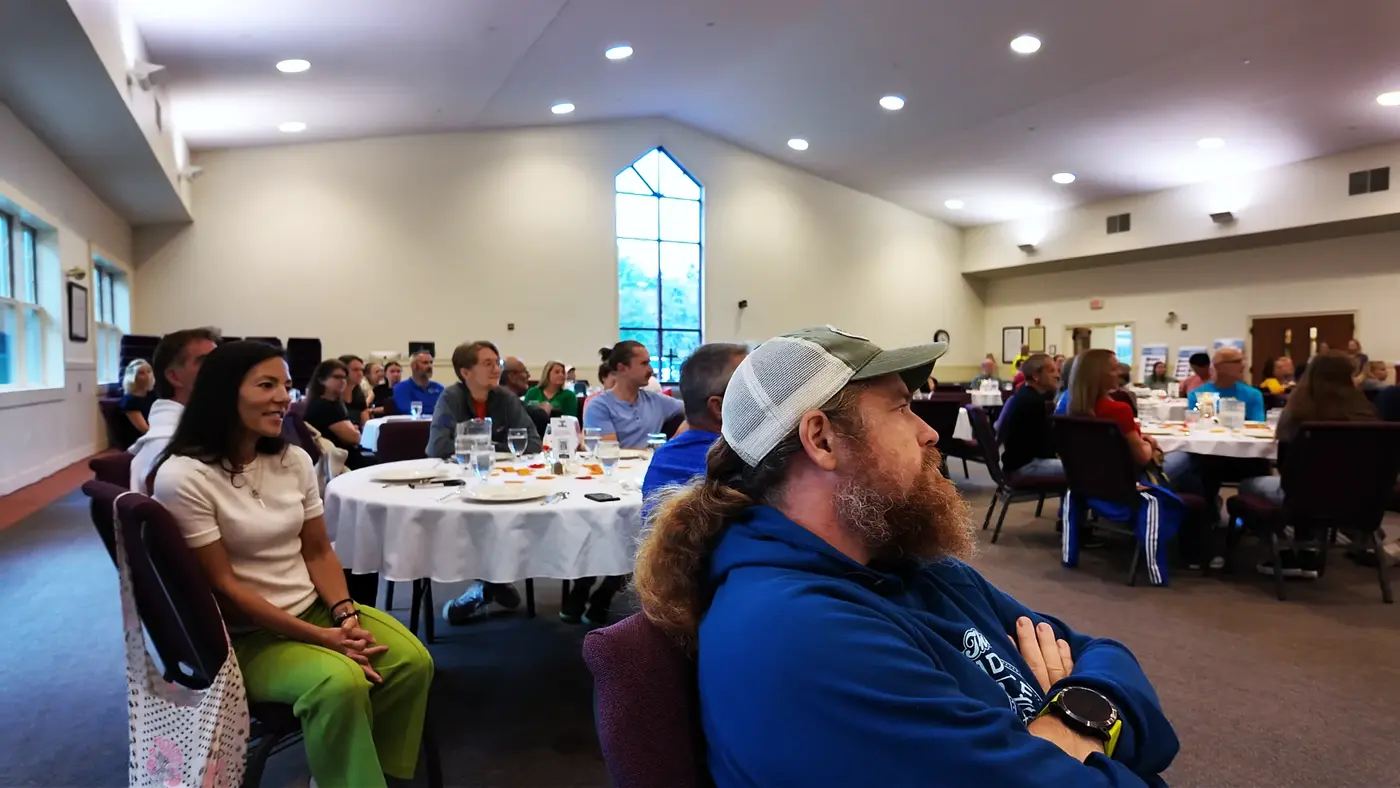
She talked about how she kept going through doubt and resistance back then, and encouraged us to treat the marathon as a life journey.
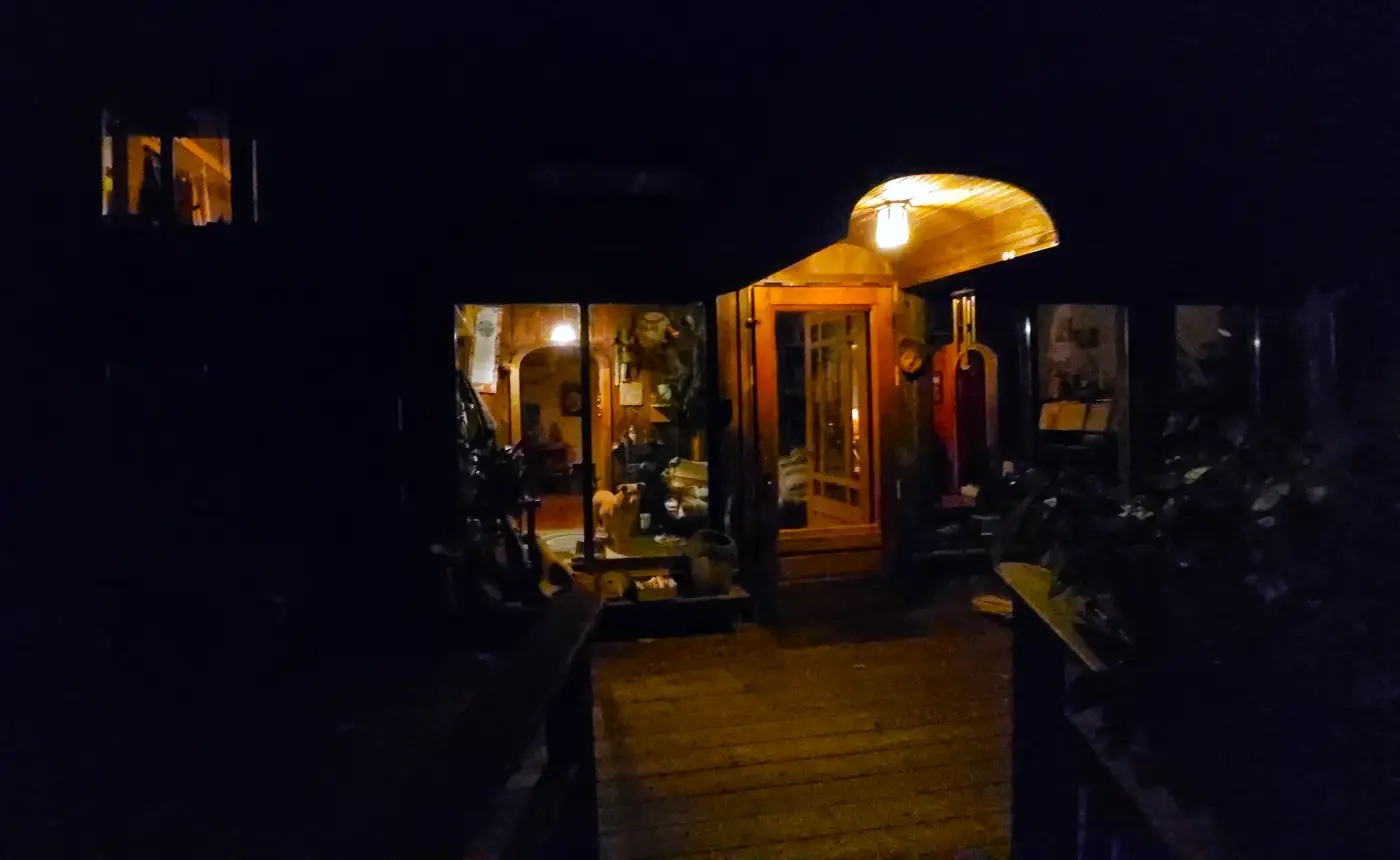
In the evening, when we returned to the cabin, it was completely dark. Only the lights of the wooden house were shining in the forest, and it was warm inside.
The host told us about her trip to China twenty years ago. I suddenly did not know how to describe today's China accurately. In that moment, I realized I had been away for a long time.
Chapter 3 | A Starting Line in the Woods
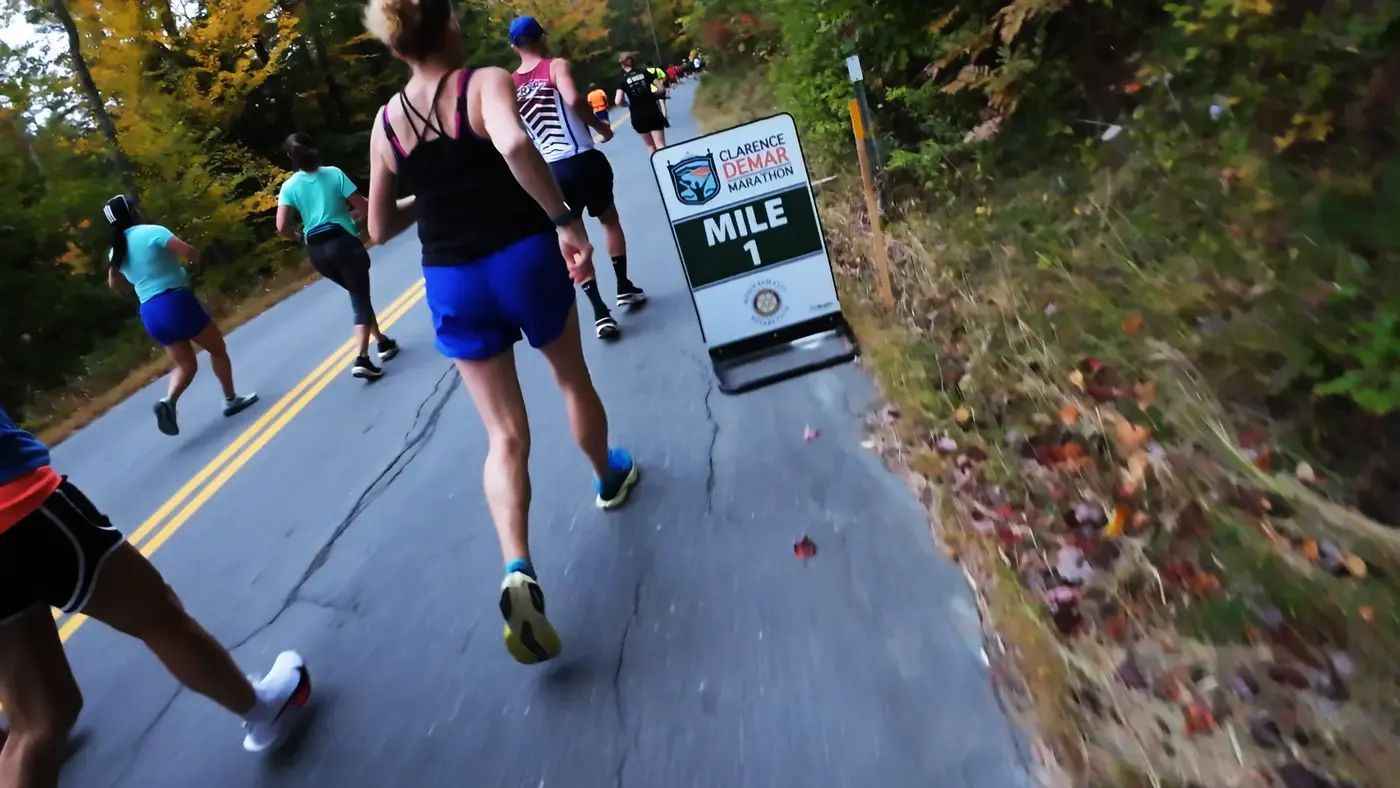
The Clarence DeMar Marathon is the most representative marathon in New Hampshire. It starts from the community school in the small town of Gilsum and ends at Appian Way at Keene State College, where Clarence DeMar led his students to train.
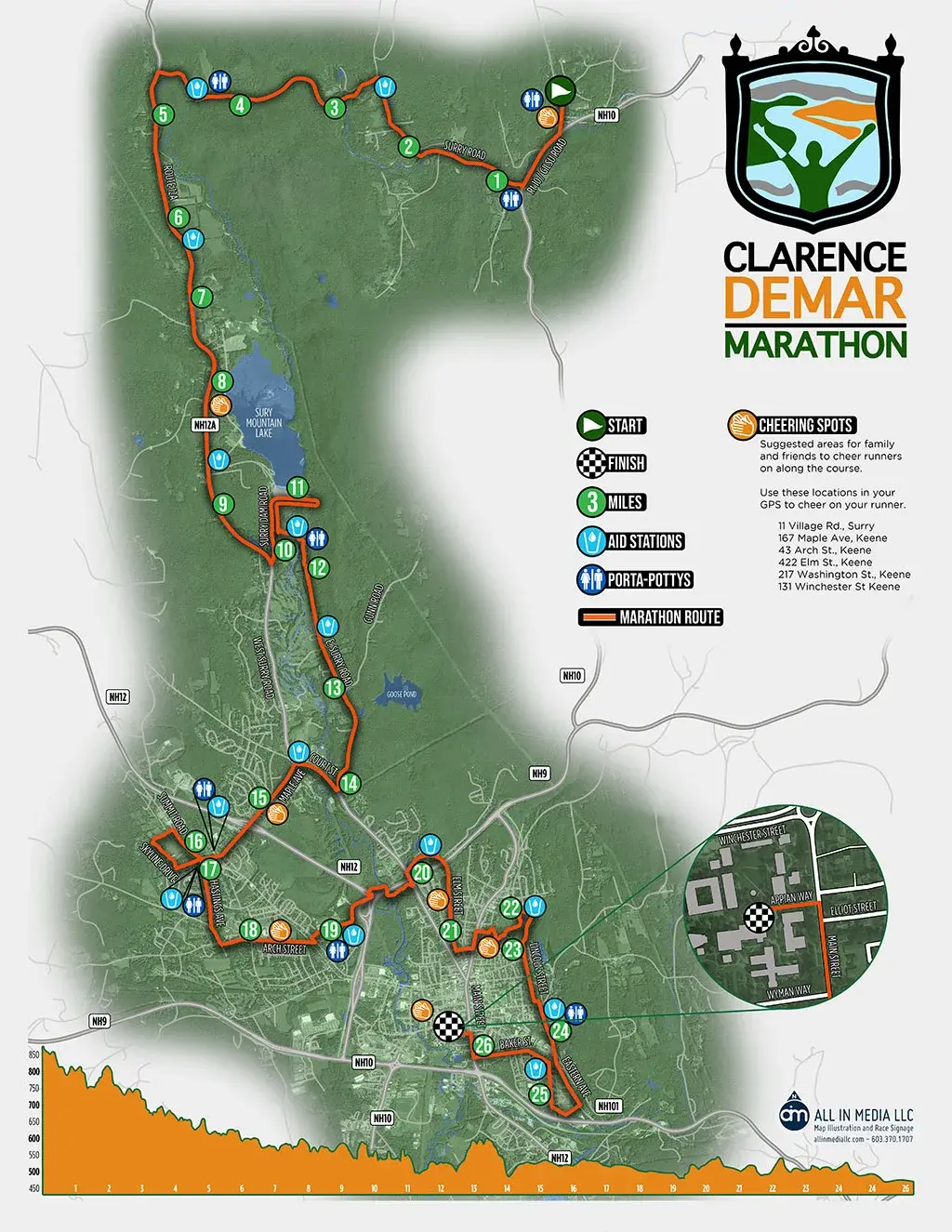
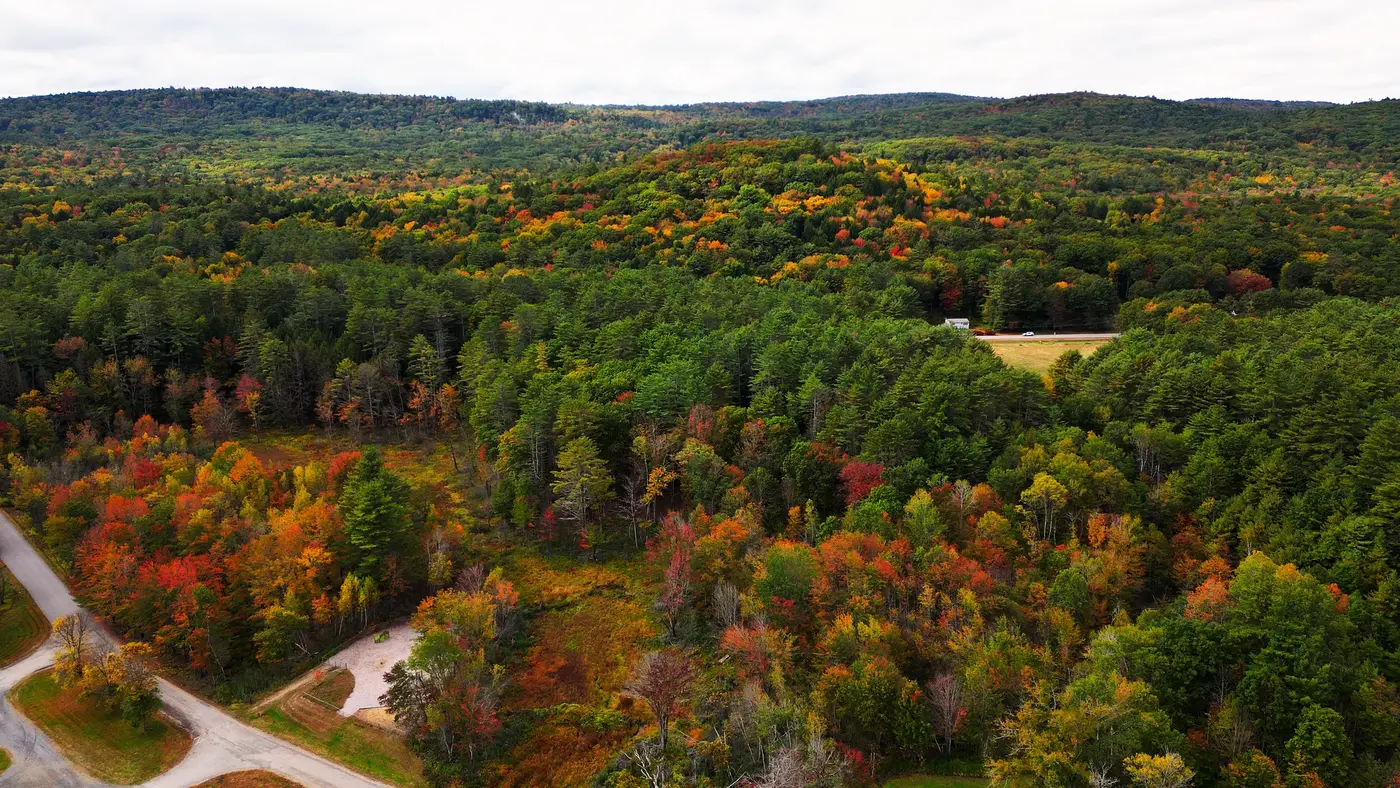
Founded in 1978, the marathon is held every year in late September, just in time for the fall colors in New England. The route passes through mountains and forests, country roads, lakes and small towns.
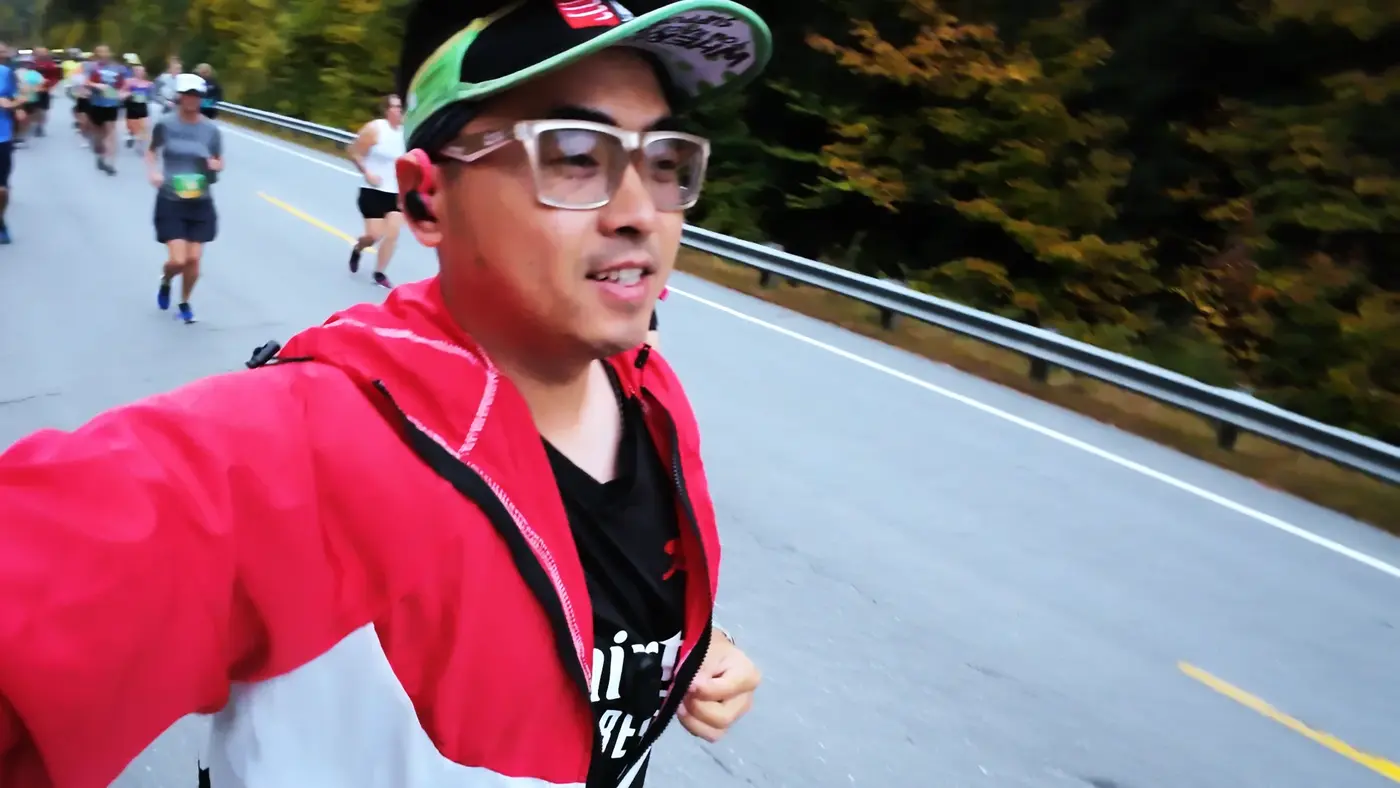
Although it is downhill overall (the altitude drops from 800 feet to 500 feet), there are many ups and downs in the middle, such as a long slope at mile 15, and short and steep slopes near the cemetery at miles 22 and 24, so the overall difficulty is not low.
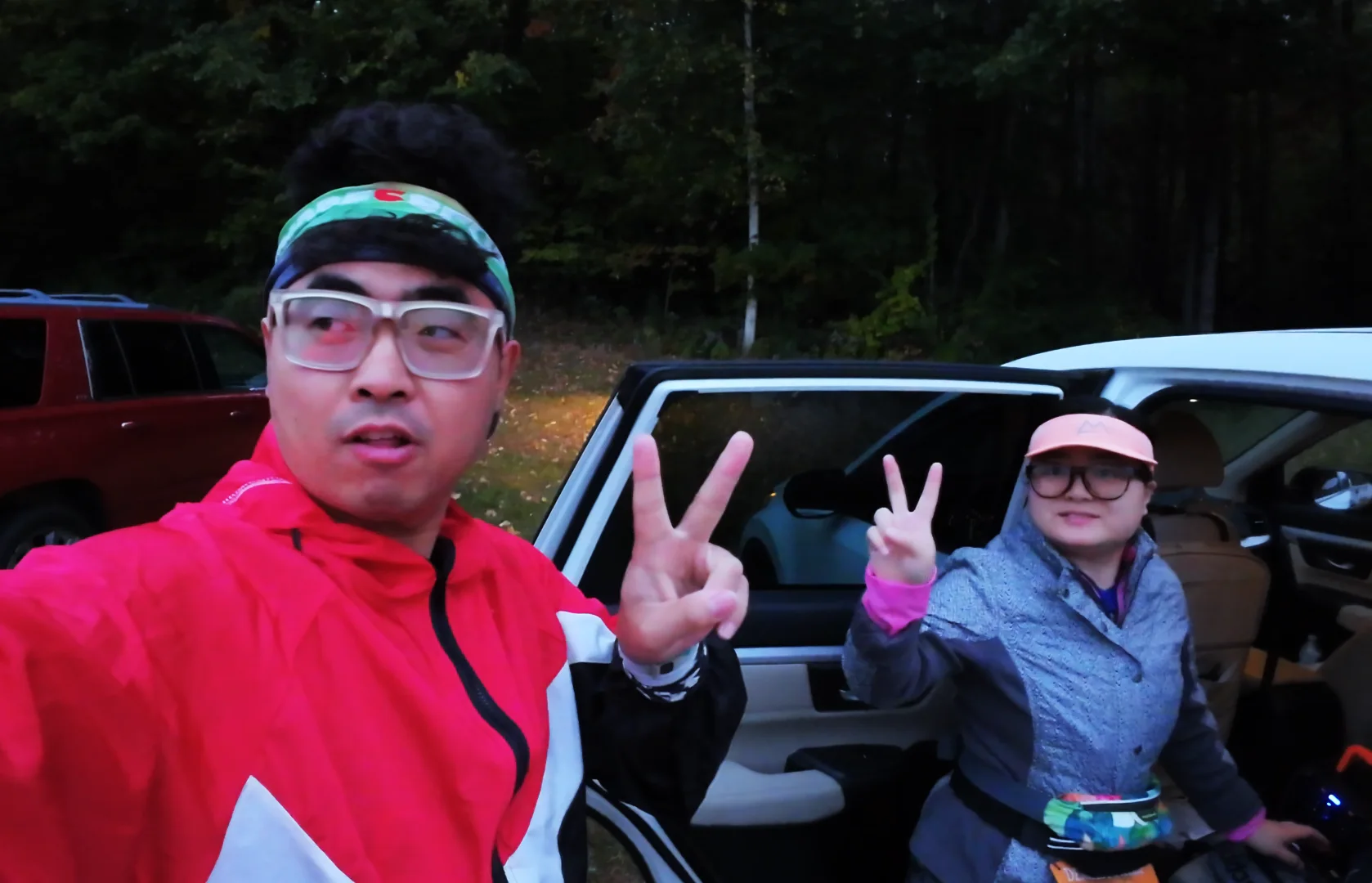
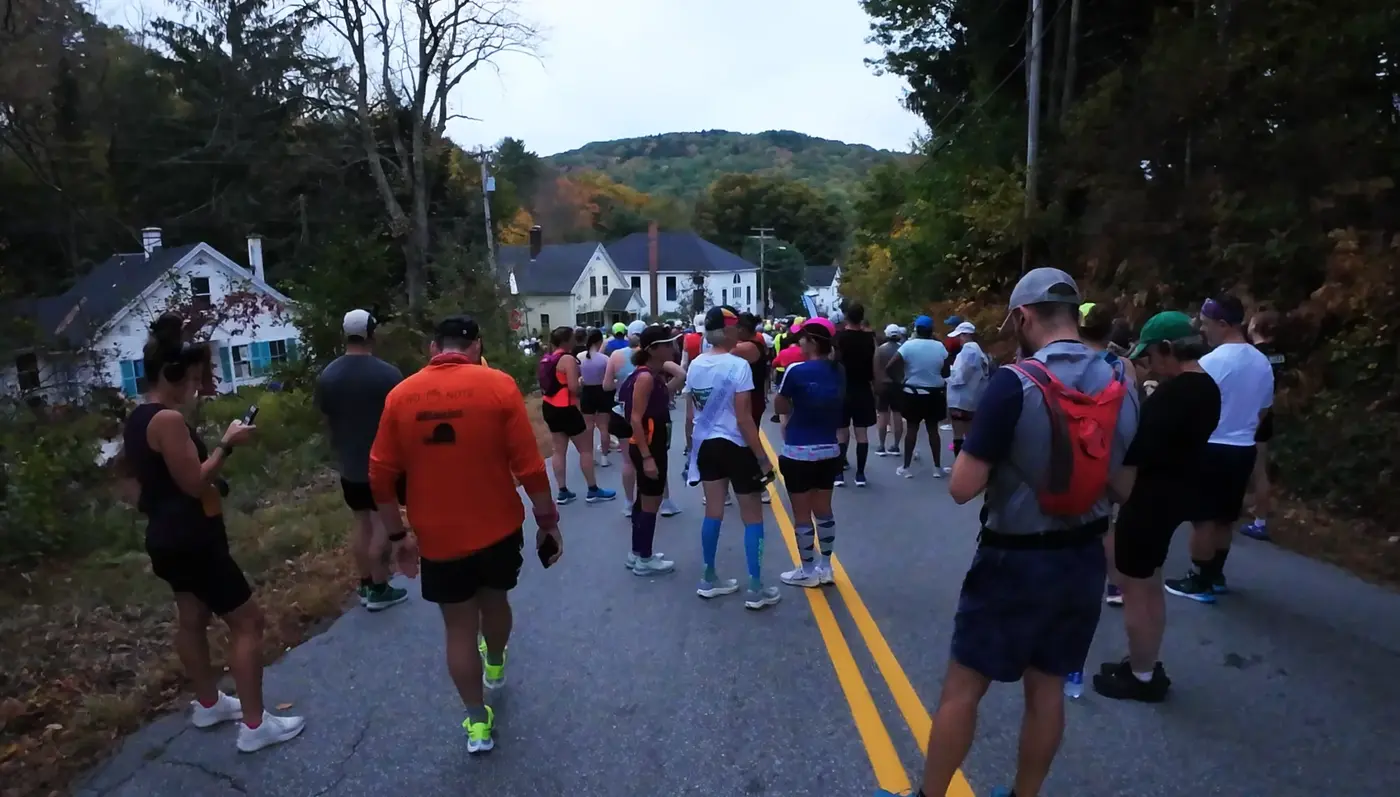
On the morning of the race, Siqi and I left a few words in my landlady’s notebook before setting off. Siqi first sent me to the starting point of the full marathon in Gilsum, and then went to Surry Mountain Beach, the starting point of the half marathon.
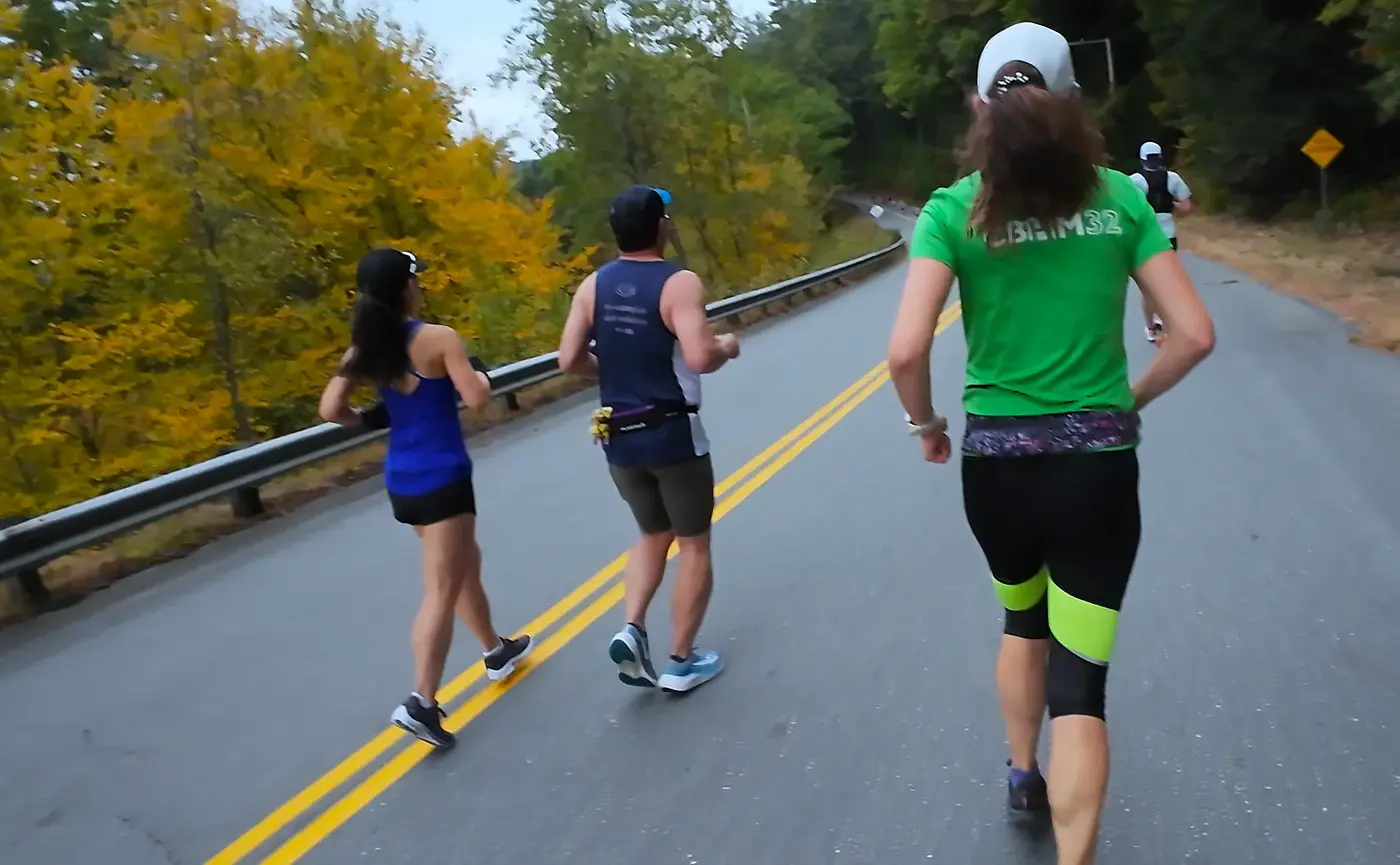
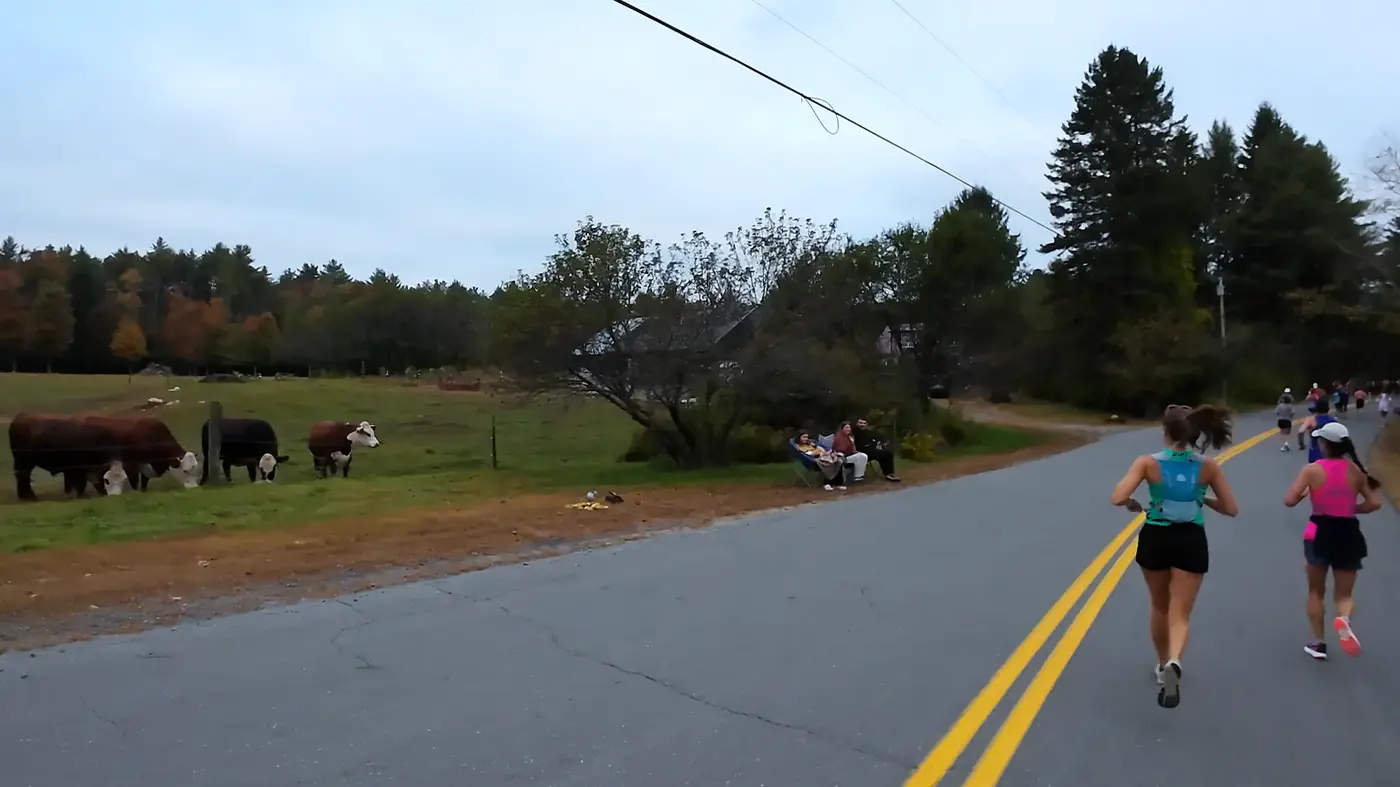
The start was small, just an intersection in town, but everyone gathered close together and the mood was warm. I noticed a white-haired grandmother wearing a white ribbon: she was on the final leg of her 50-state marathon journey.
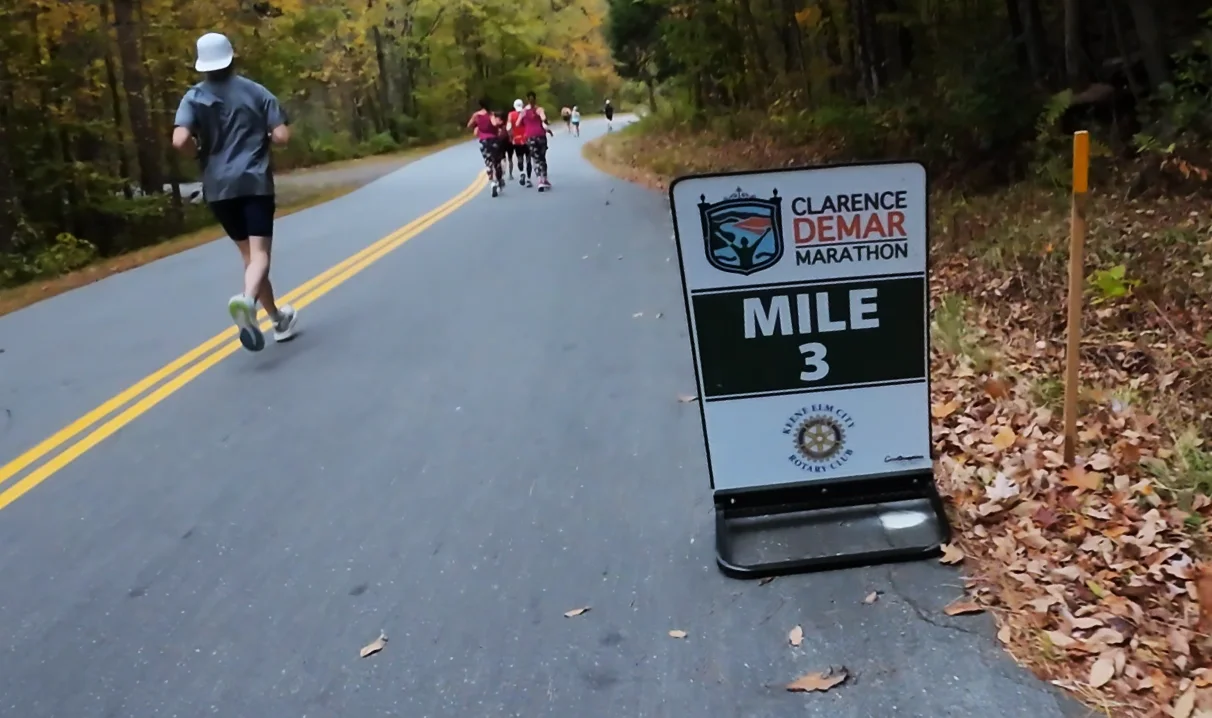
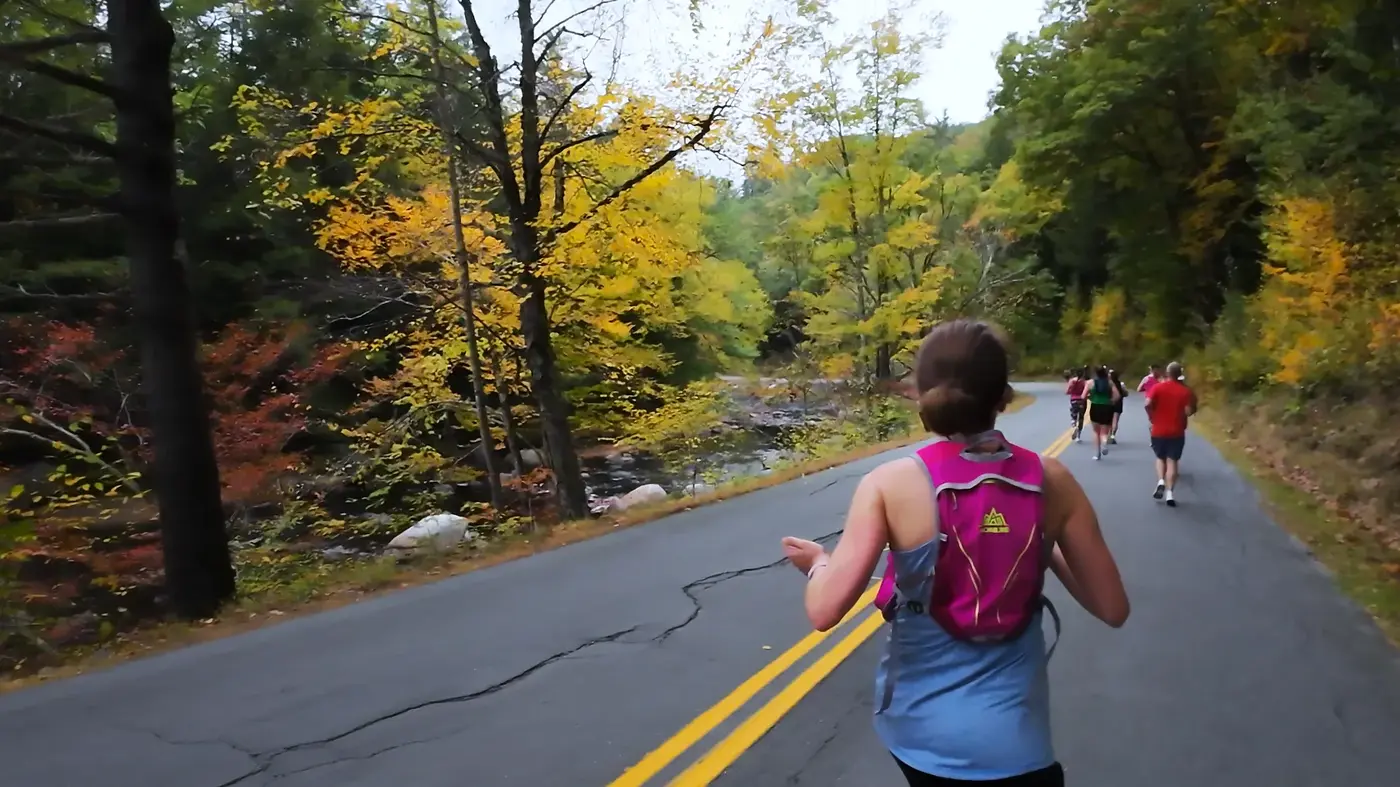
After the start, the air was still cool, but I warmed up quickly. I took off my throwaway layer and left it near a mile marker. It was from Pinduoduo and very cheap, so emotionally I survived.
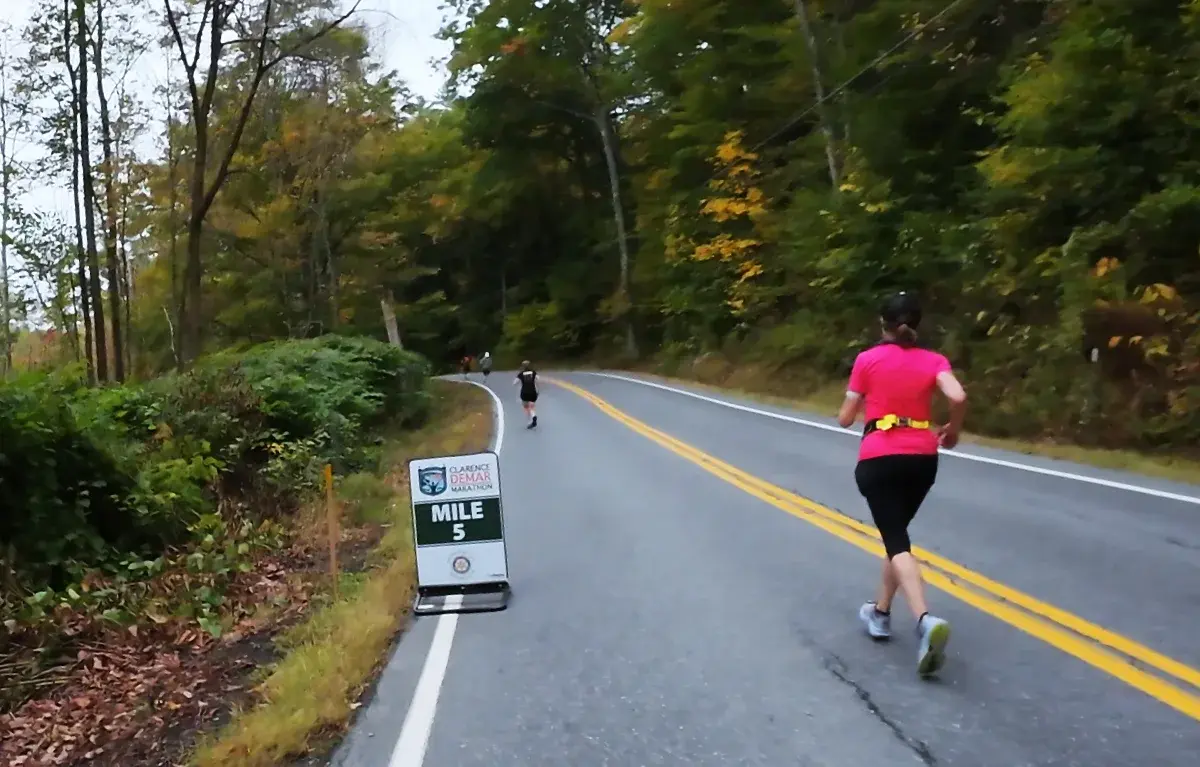
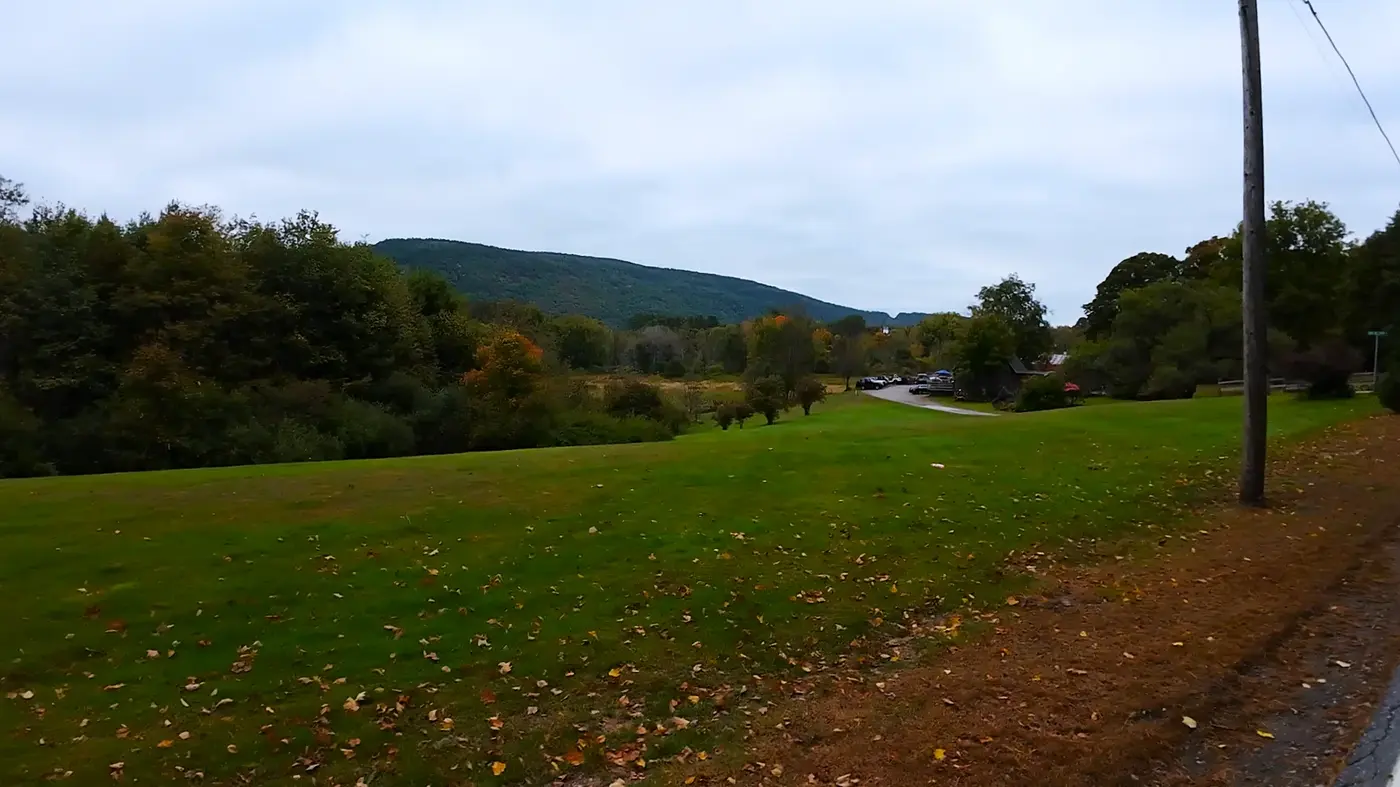
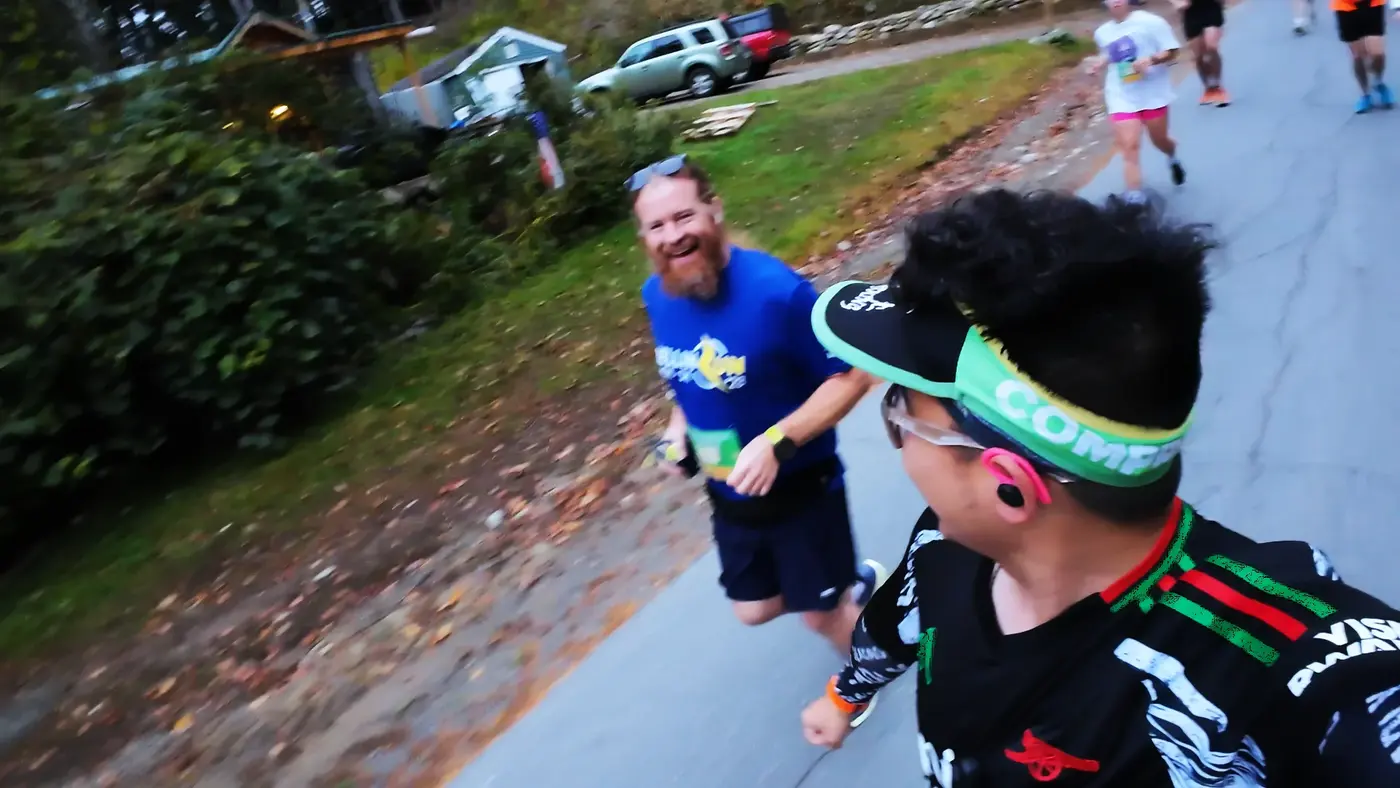
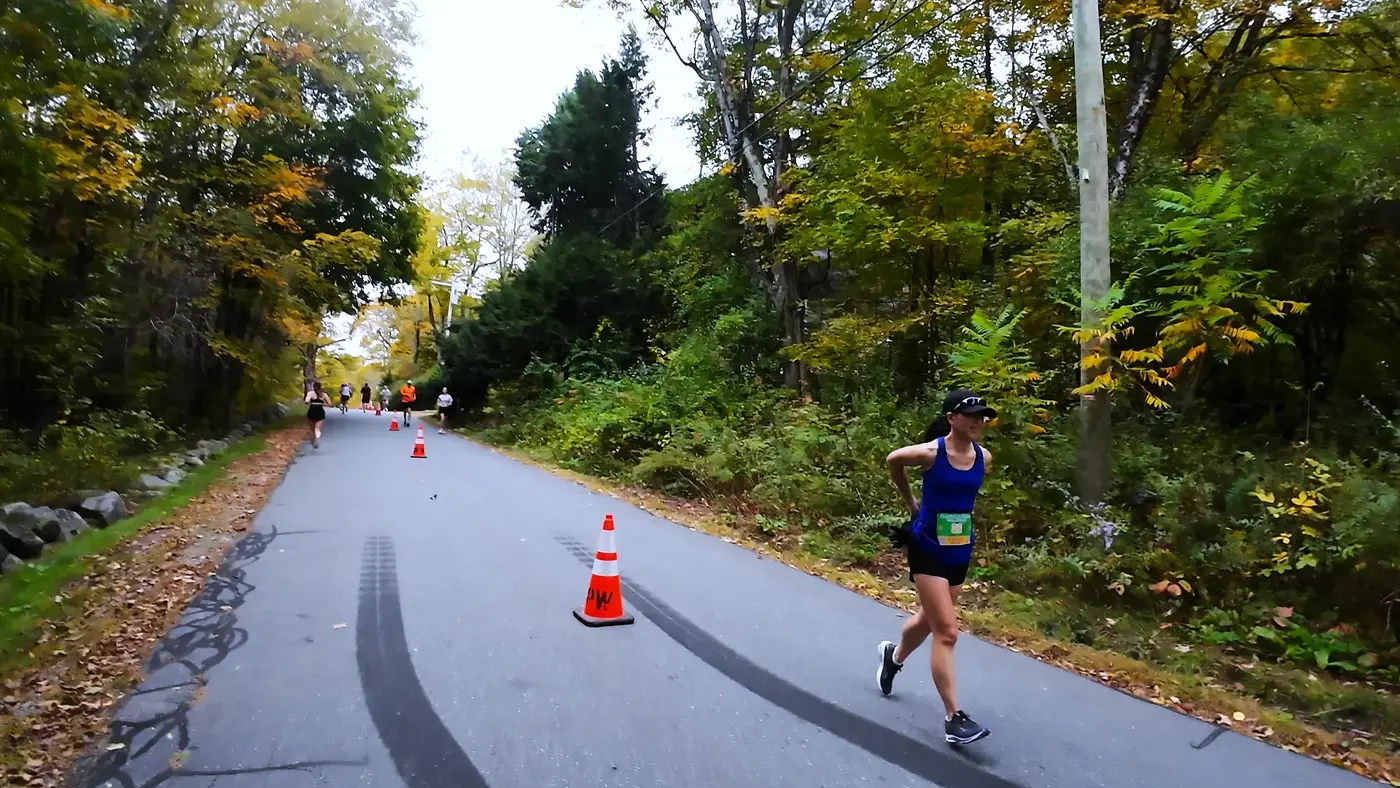
Woods lined both sides of the course, and the air was wonderfully fresh. By mile 3, the trees grew denser and fallen leaves rustled underfoot. A few people I had met at the party the night before were on the course too, and we greeted each other as we ran.
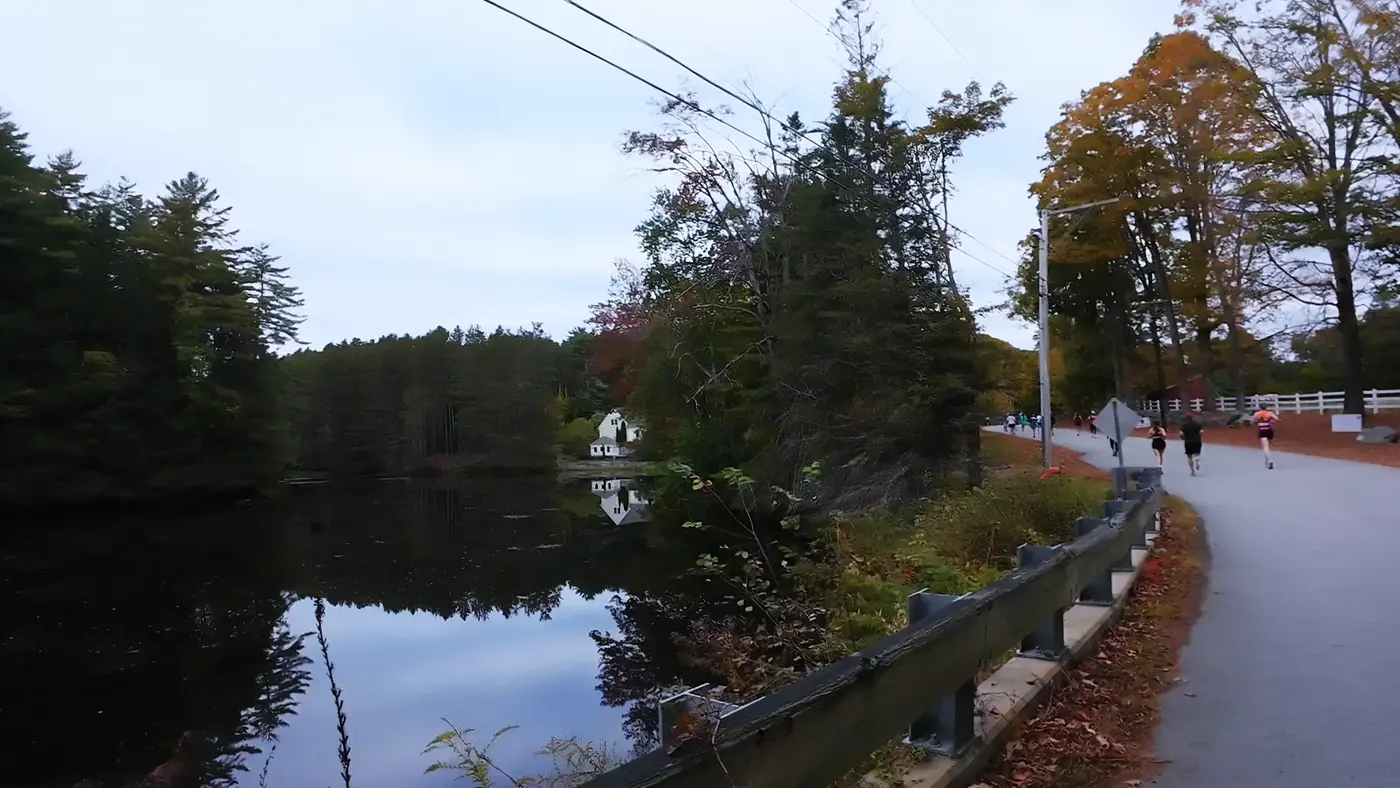
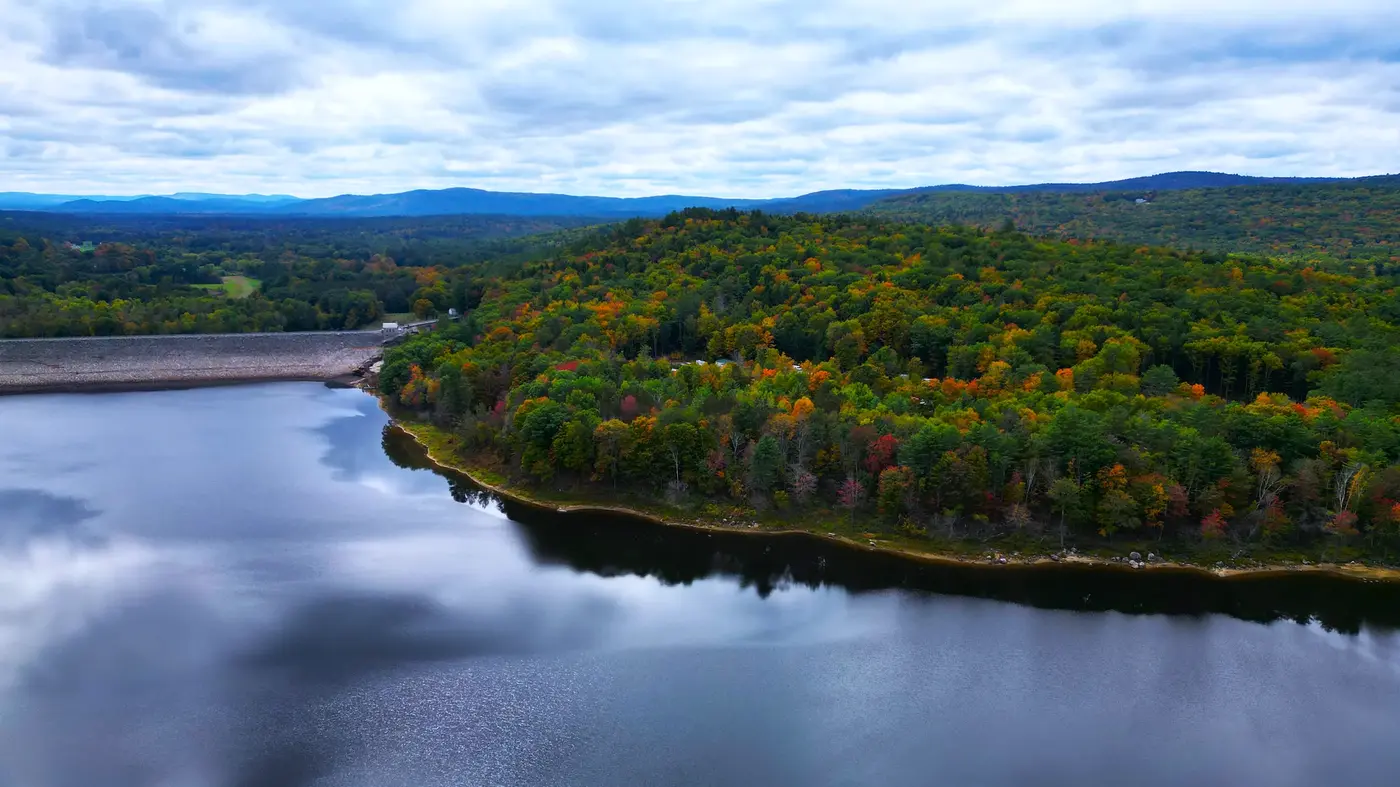
At mile 8, we reached Surry Mountain Lake. The view opened up, distant mountains were already turning red and yellow, and the scenery was beautiful. This stretch was relatively gentle, probably the most relaxed part of the whole race.
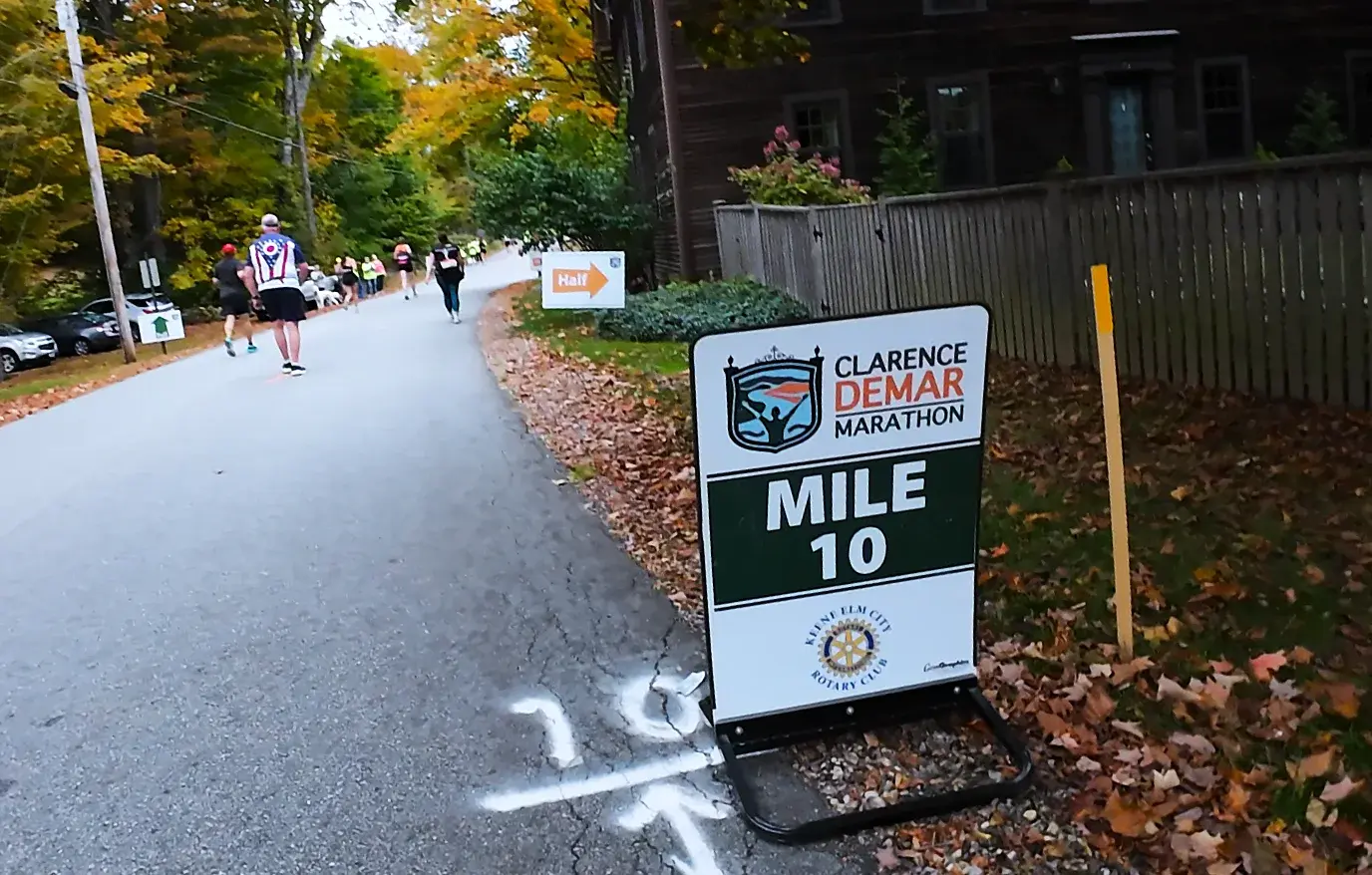
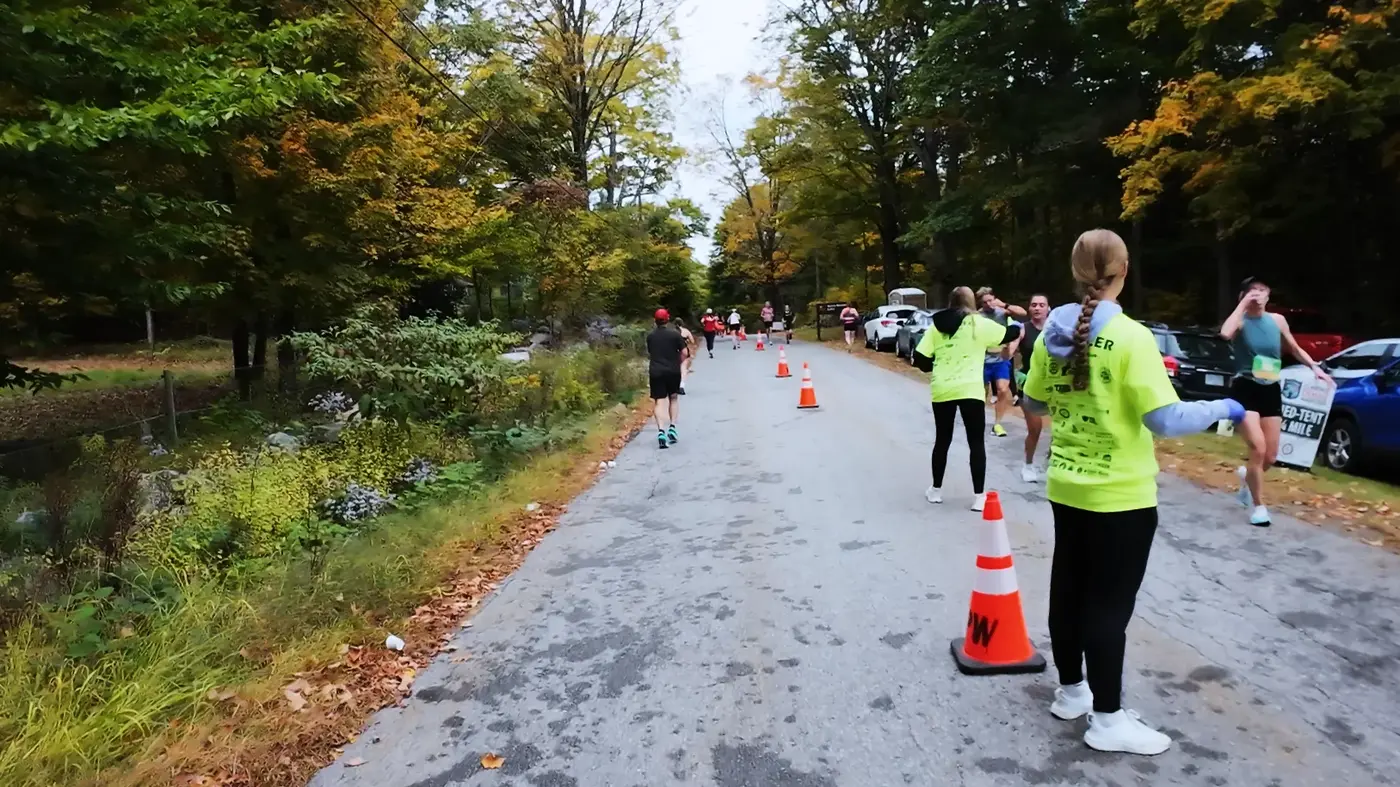
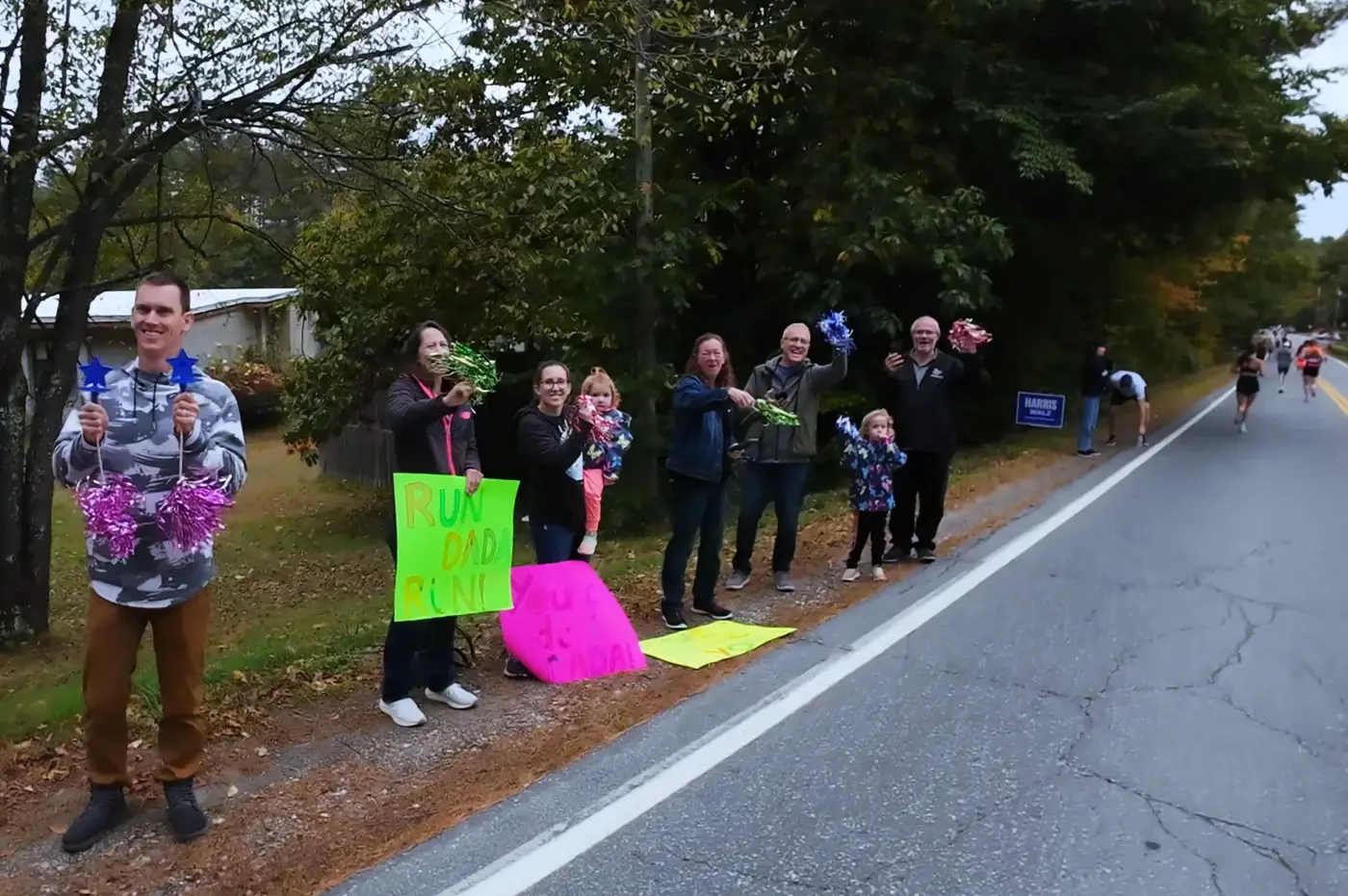
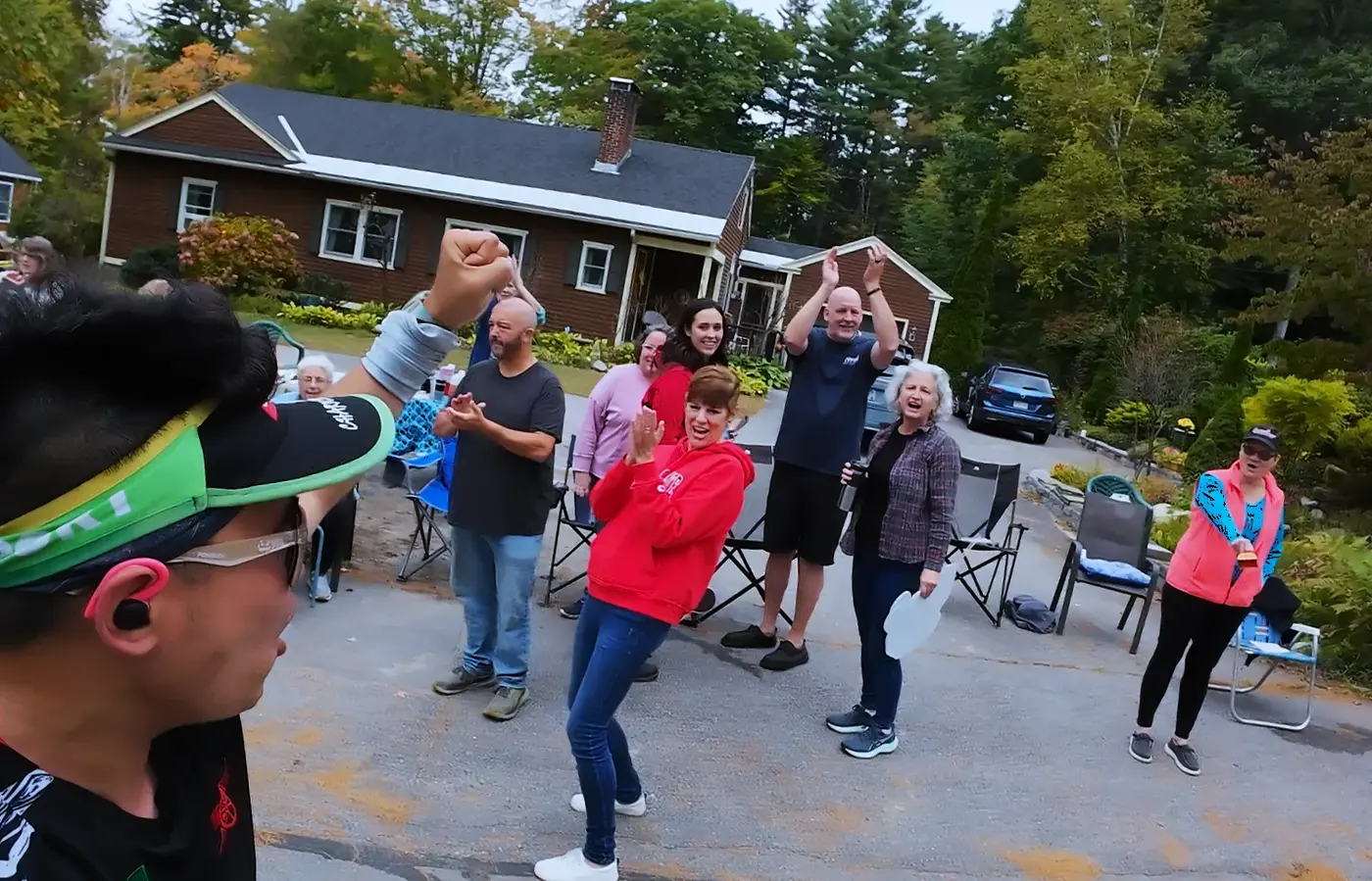
By mile 10, we were still in the countryside on a narrow road, with woods and grassland on both sides. There were more spectators here, local residents standing roadside to cheer, and the aid stations came right on time with water and drinks.
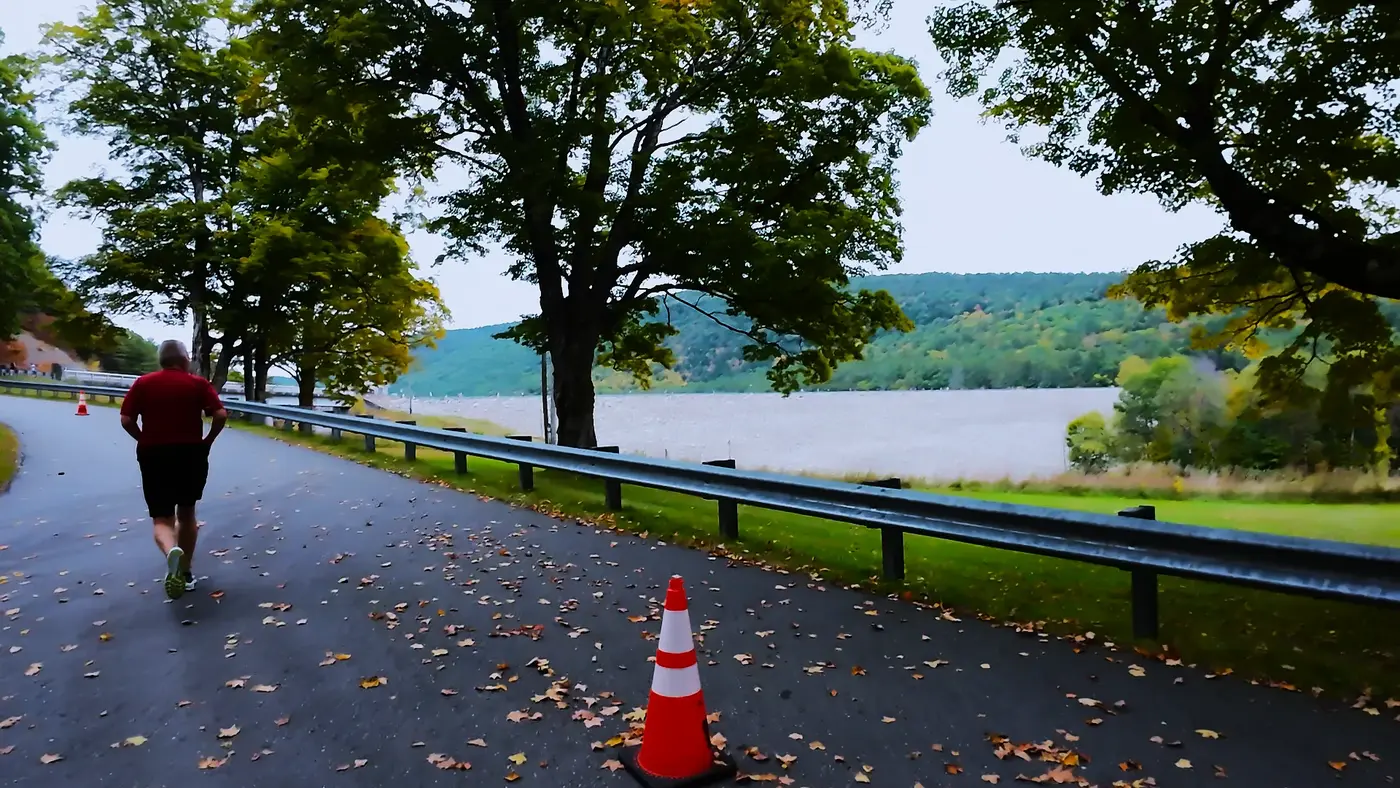
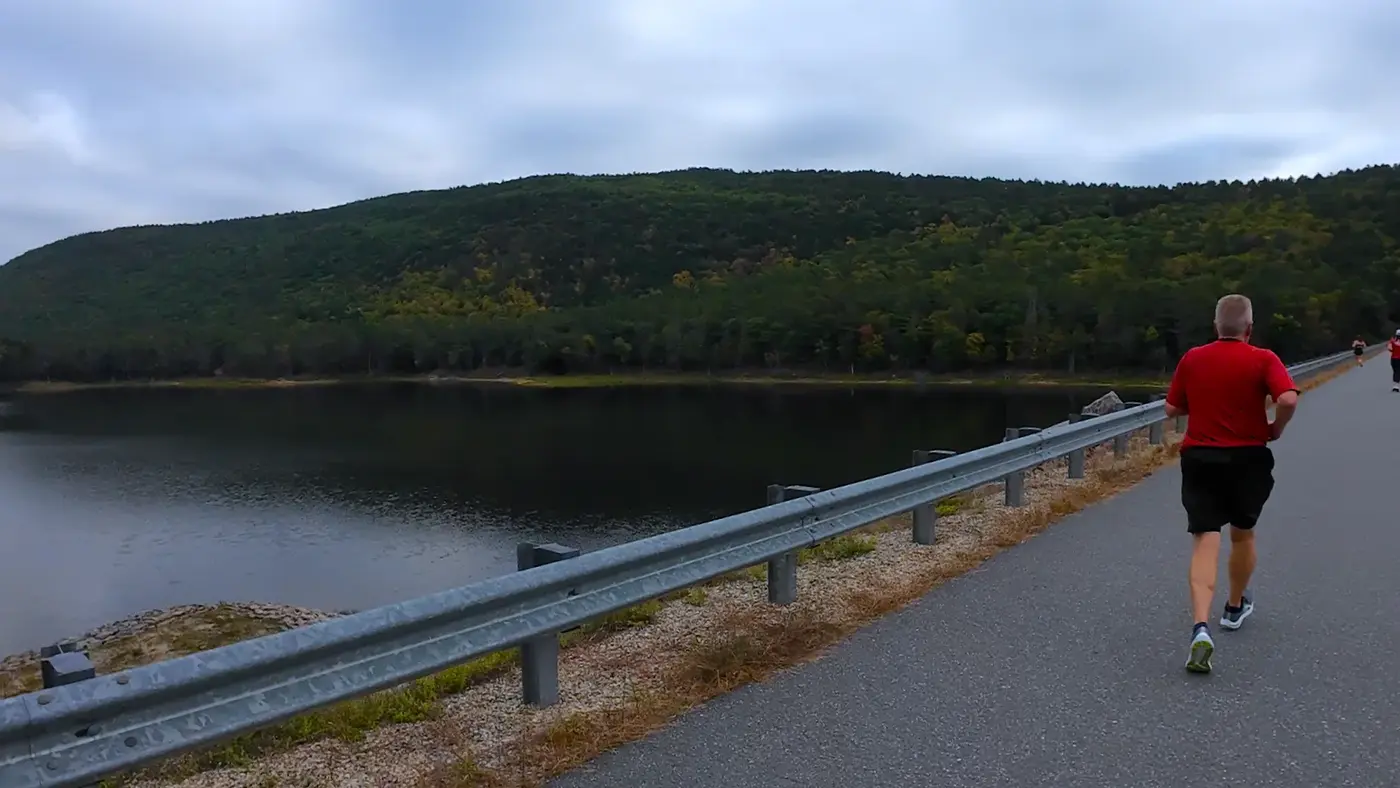
At mile 11, the course reached Surry Mountain Dam. The dam held the lake back, and the smooth road made it feel almost like running across the water. Lake on the left, woods on the right, Mount Monadnock visible in the distance. The wind made it chilly, but the view opened wide. It was one of the most distinctive sections of the race.
Chapter 4 | Running Through the Fall Colors
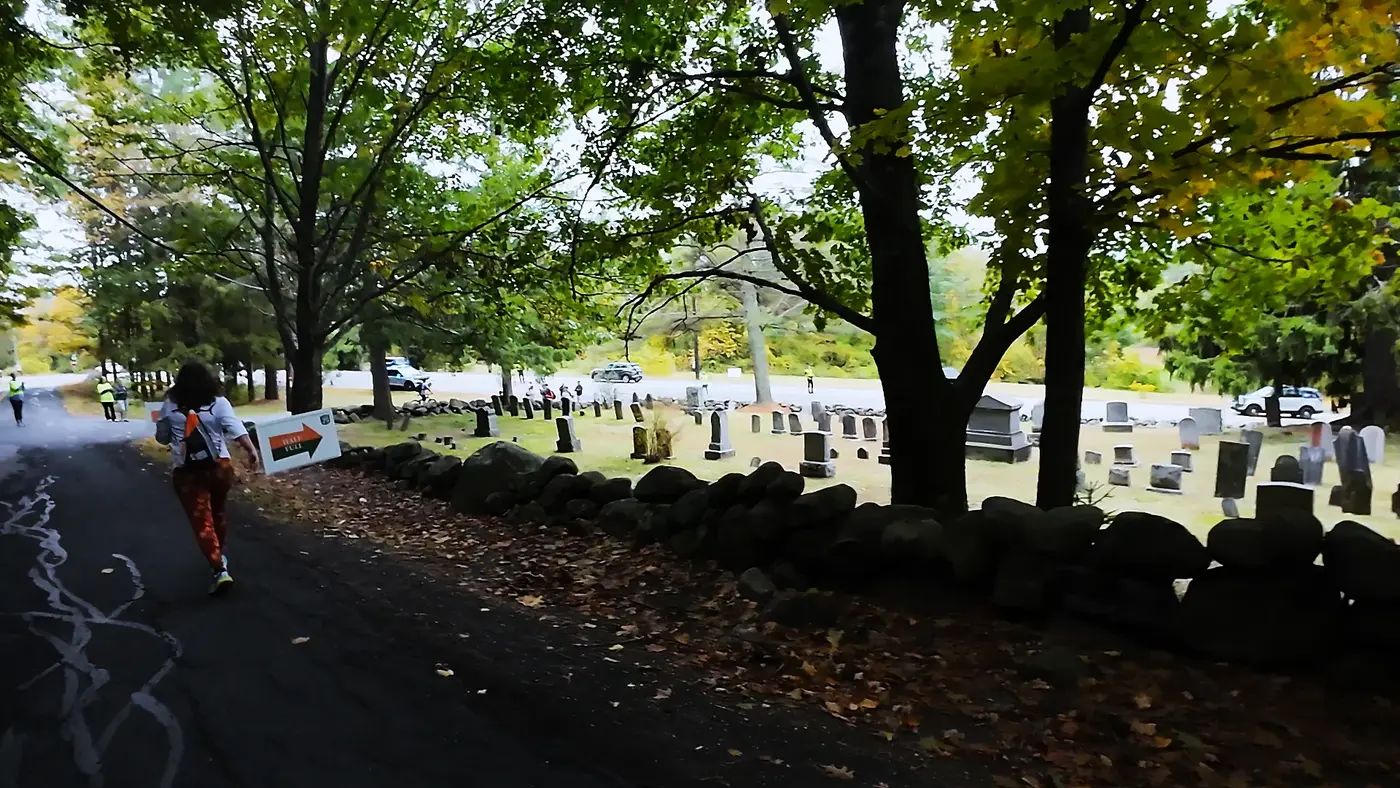
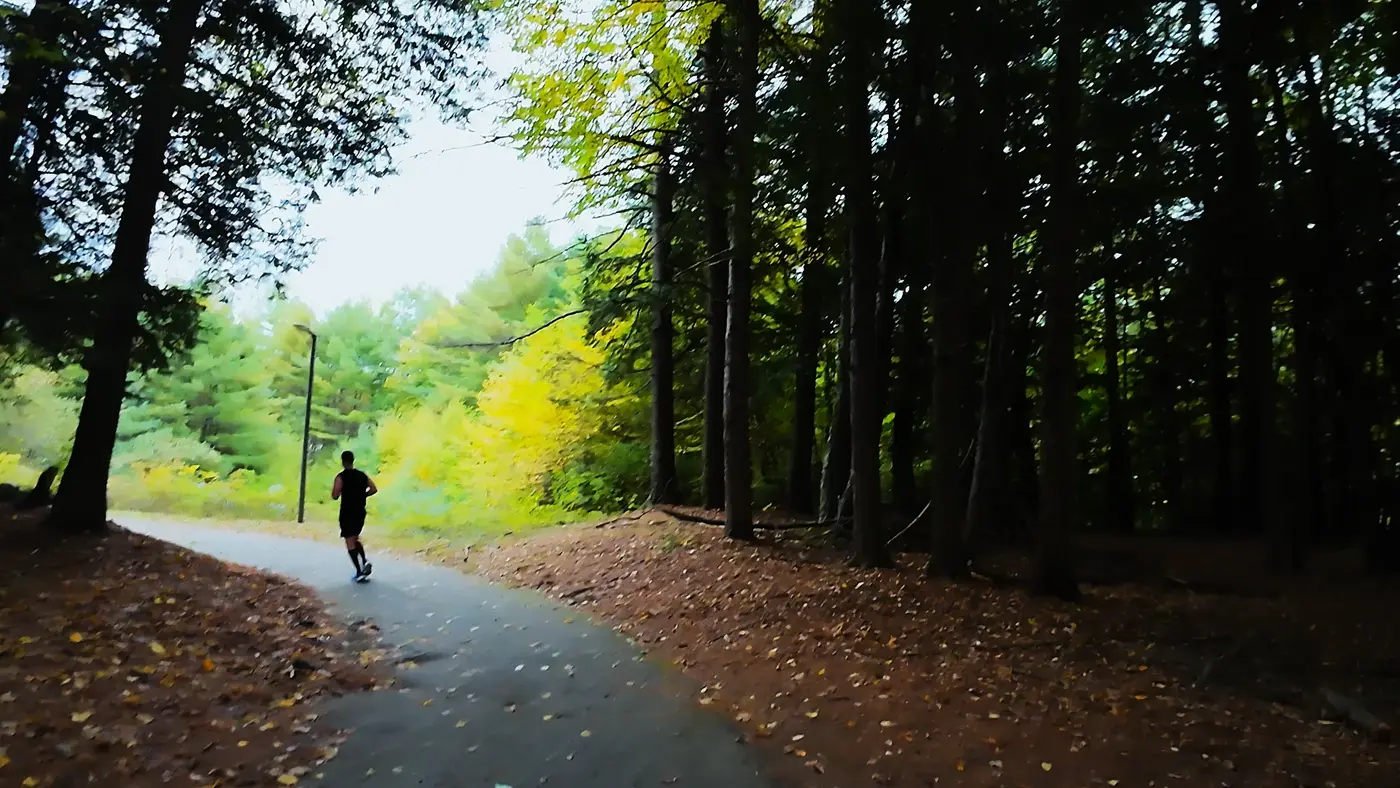
My feet kept moving through New Hampshire's fall colors. Every so often, spectators appeared with signs and cowbells to cheer us on. Around some turns, cemeteries and stone markers appeared, and the mood grew quiet.
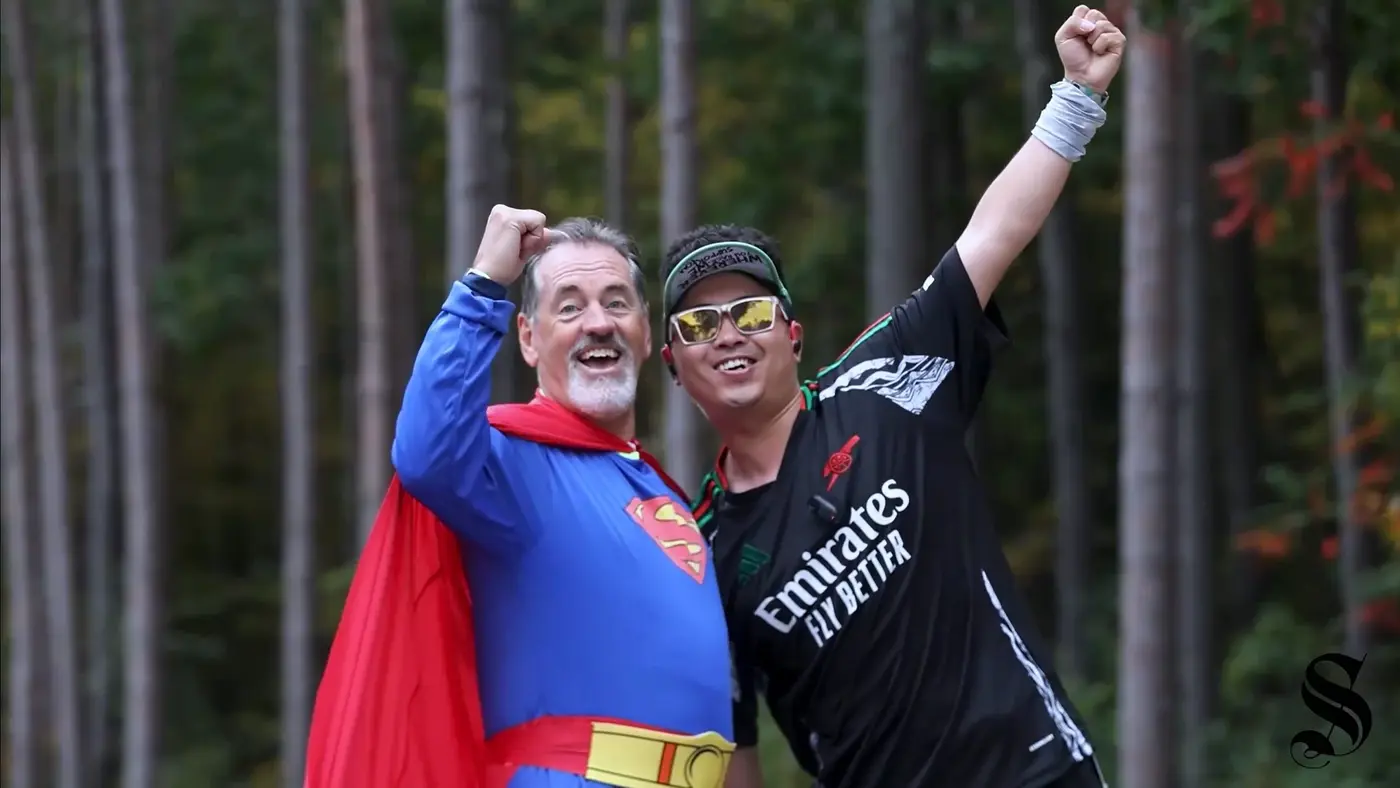
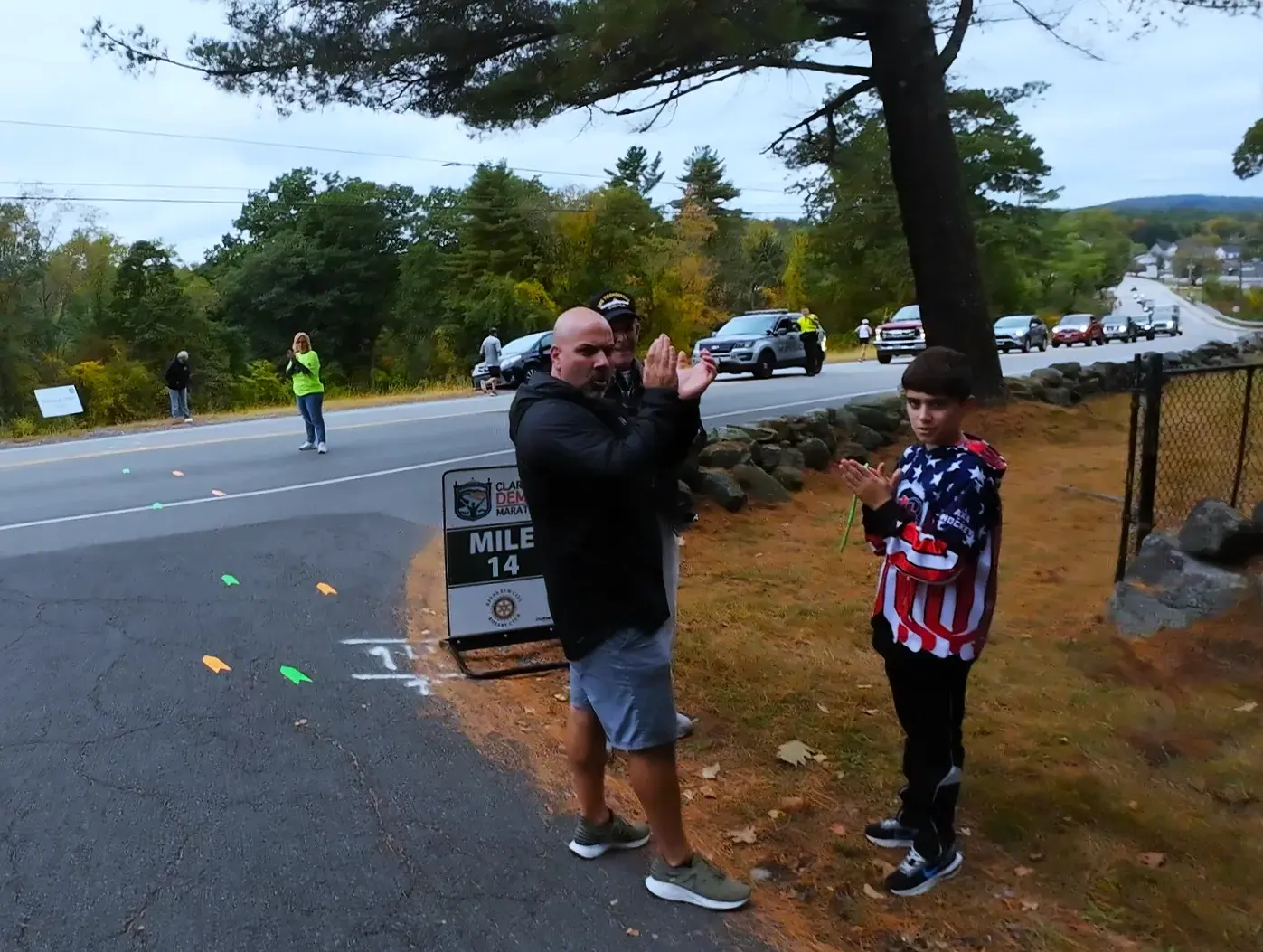
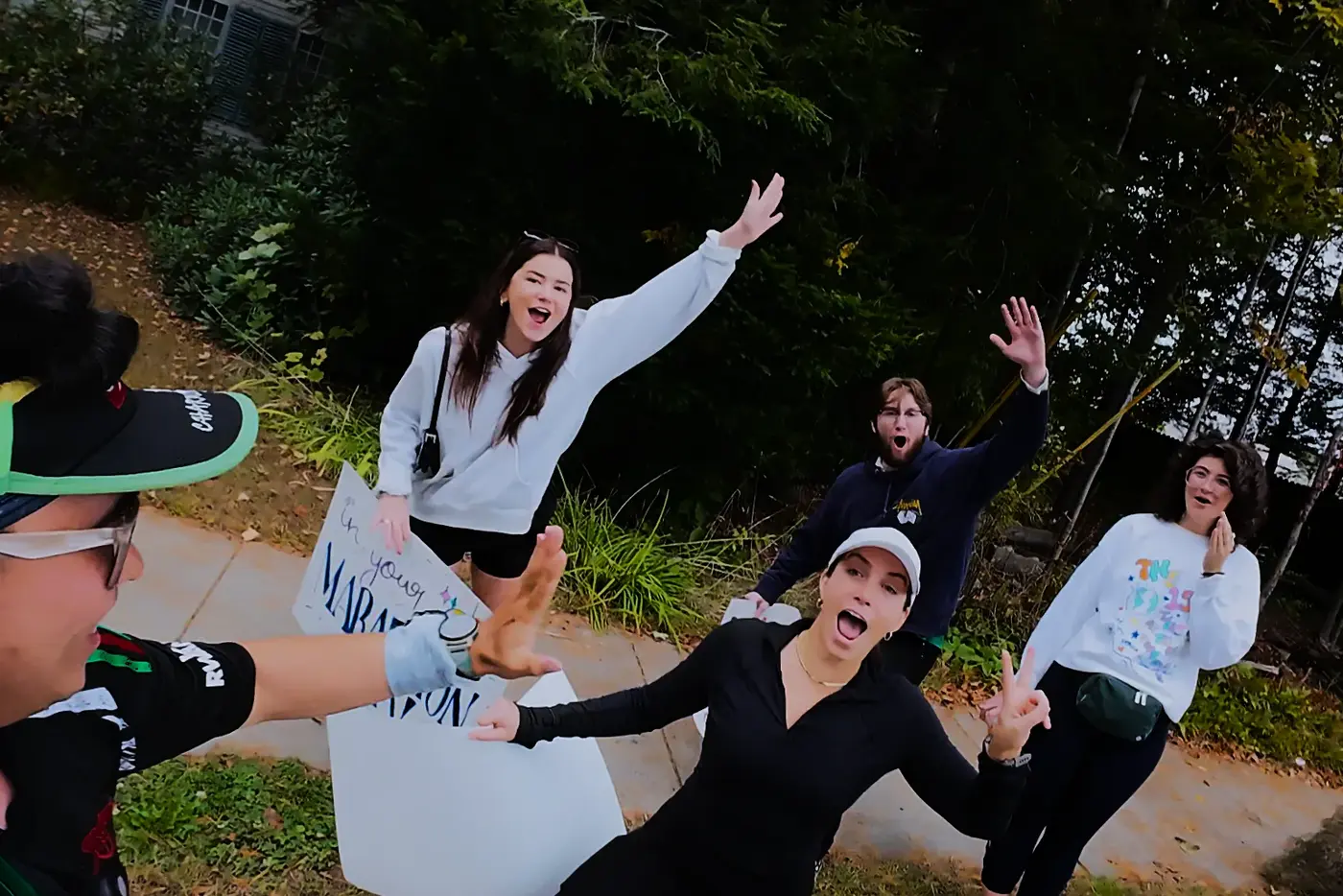
Just before mile 14, a Superman suddenly appeared beside the course, red cape flying and fist raised. He was impossible to ignore, so of course I went over for a photo. It felt like receiving an instant power-up from some mysterious dark matter, and my body suddenly felt lighter.
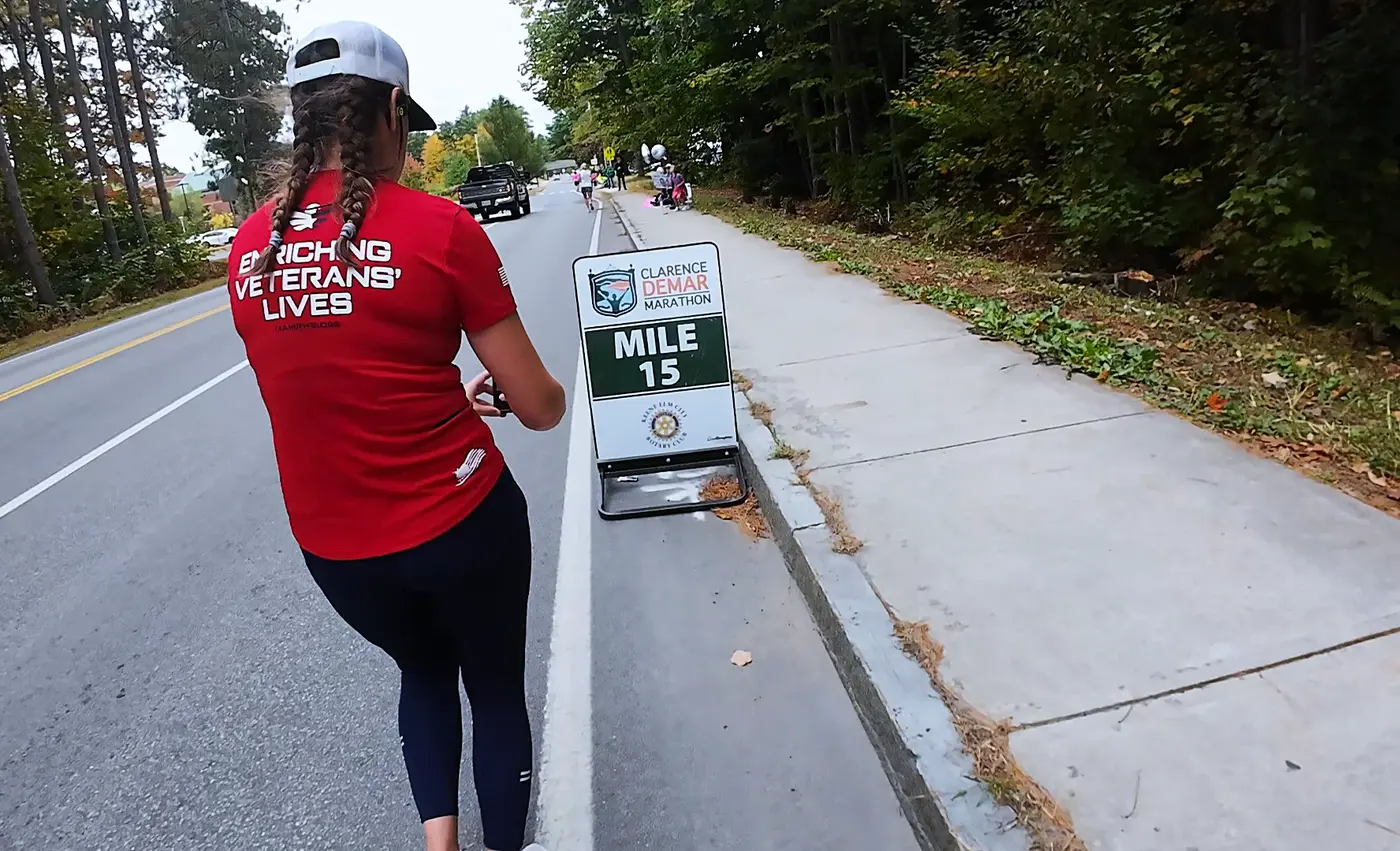
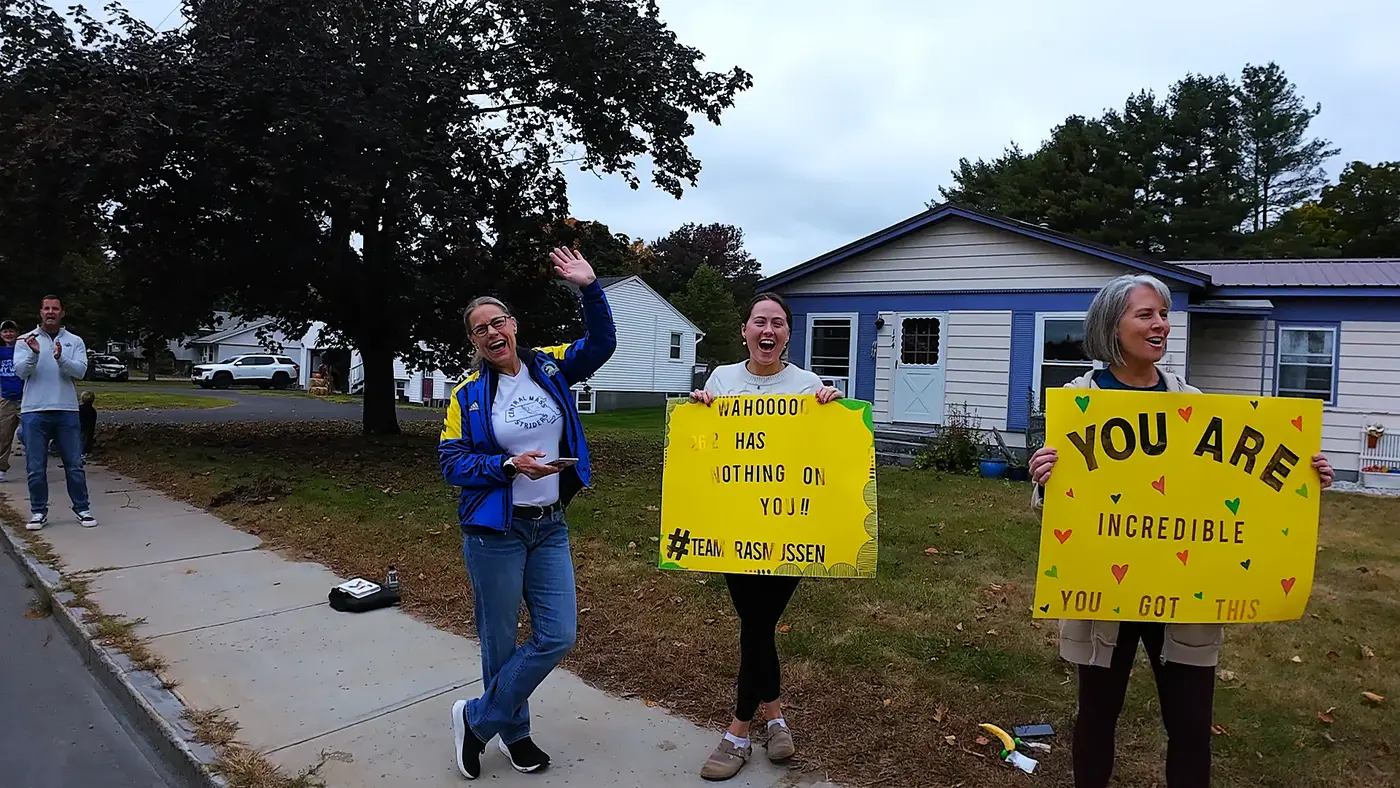
Farther on, I saw a woman wearing Boston Marathon gear. In the American running world, that logo is practically a medal. I quietly thought: one day, I will earn one with my own legs.
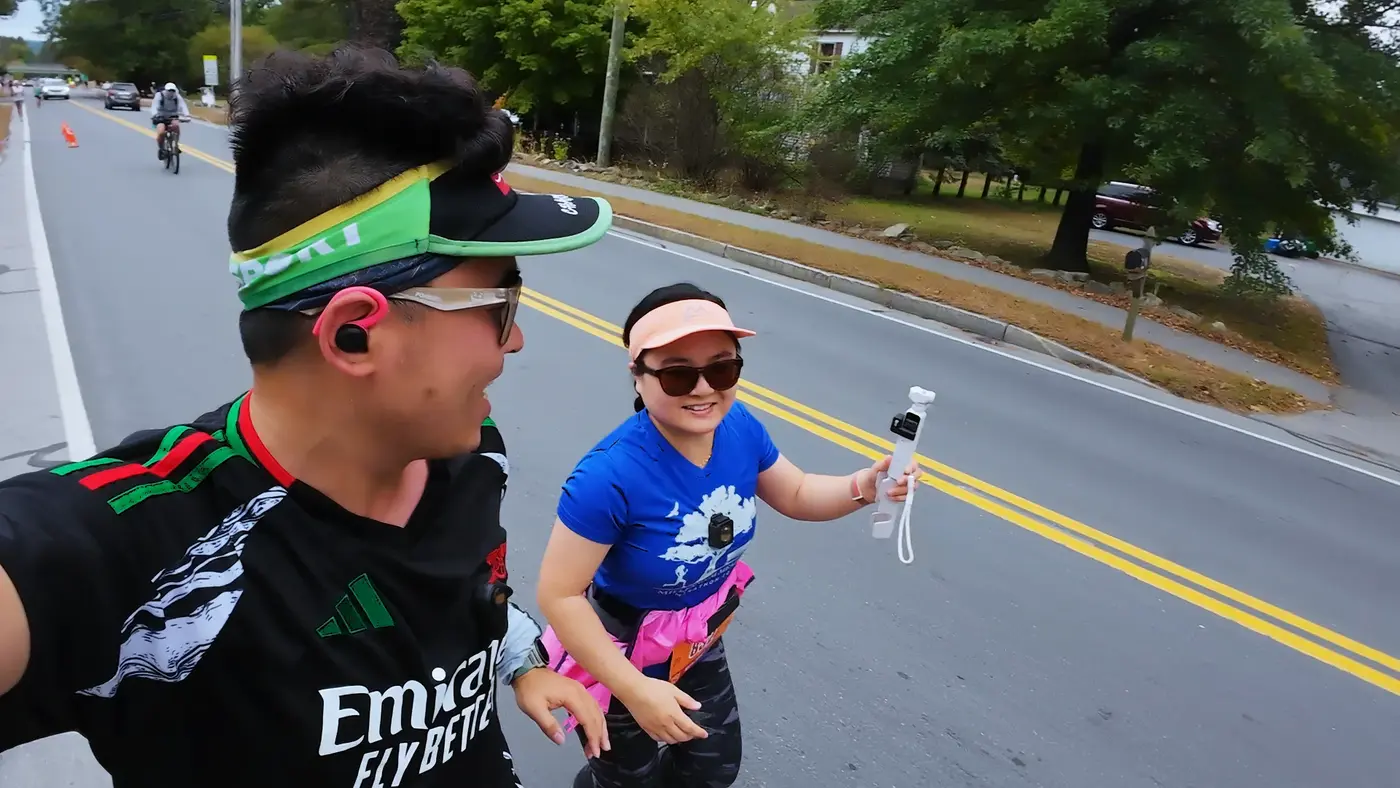
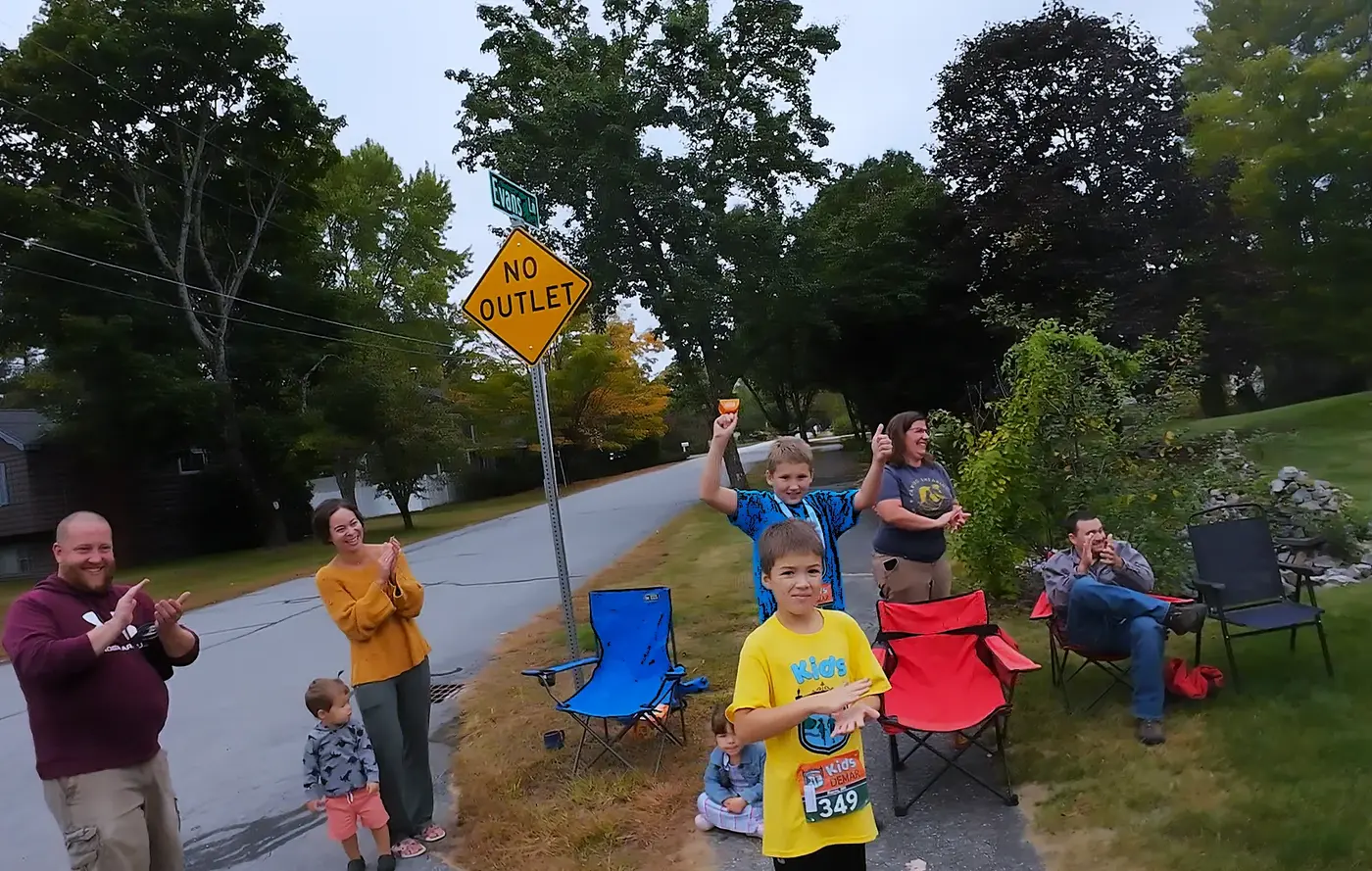
At mile 17, I finally saw Siqi. She looked good and still had plenty in the tank. There were more spectators now, kids holding colored paper and residents shouting "good job" from their doorways. The atmosphere was lively.
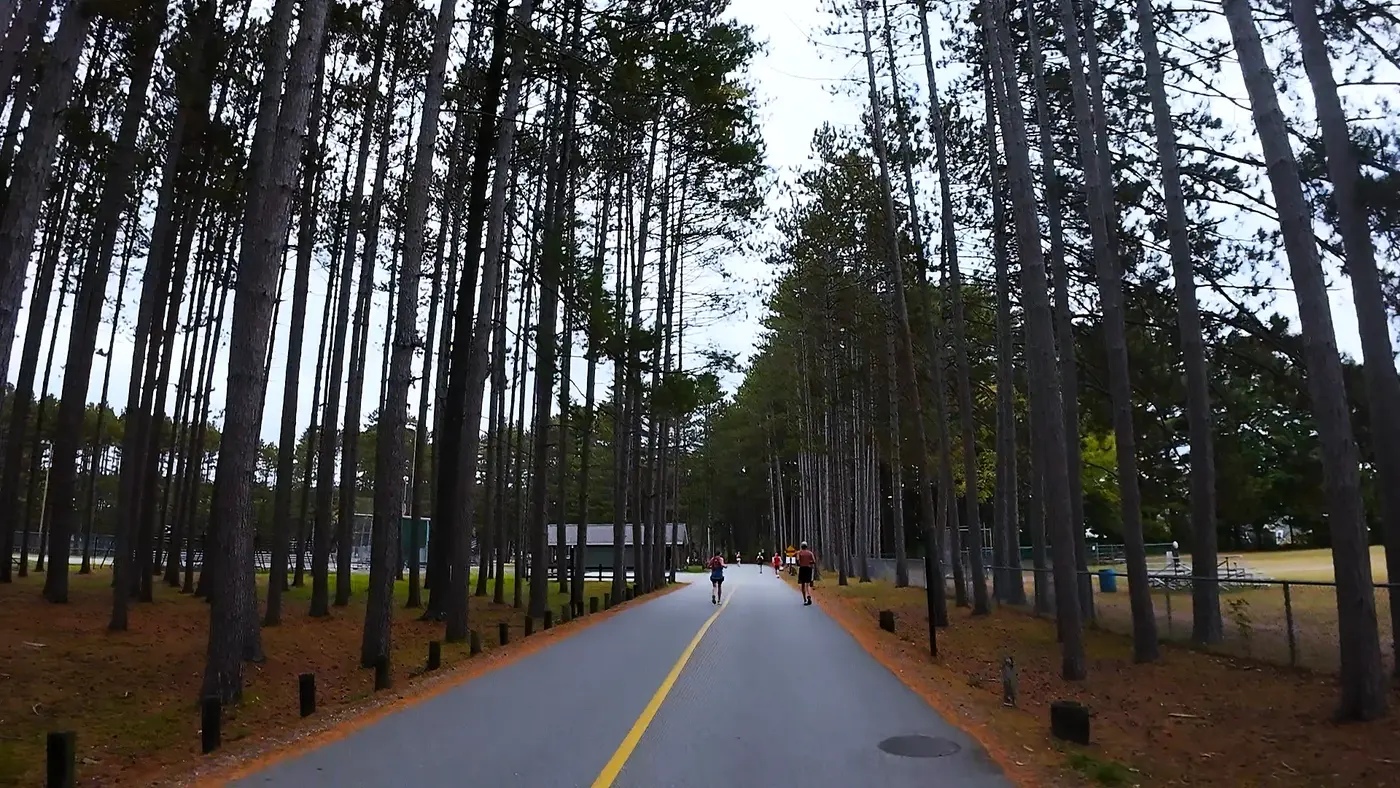
Next came a forest path lined with tall trees on both sides, like entering a natural tunnel. I held on a little longer, reached mile 20, and my body started to feel heavy, though my overall state was still decent.
Chapter 5 | Stillness and Motion in the Cemetery
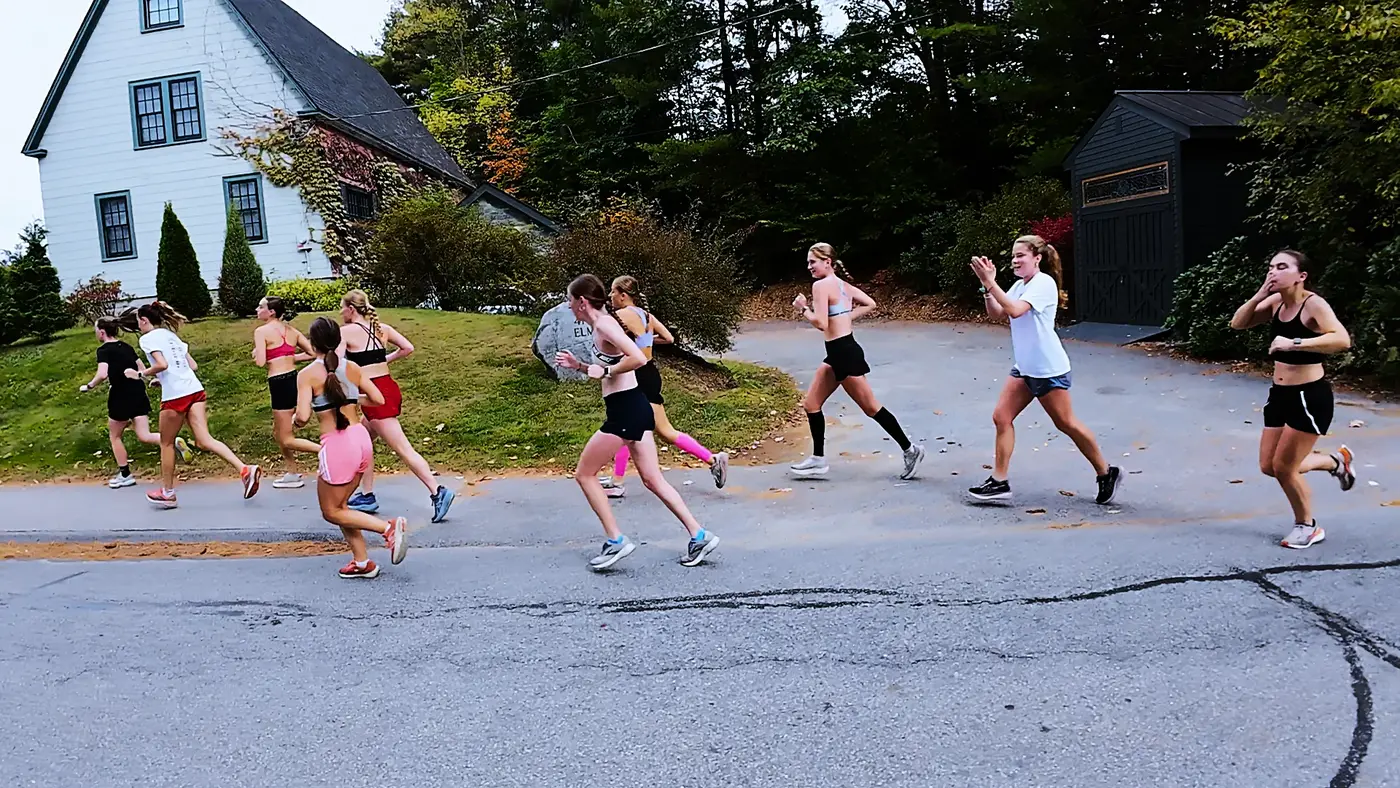
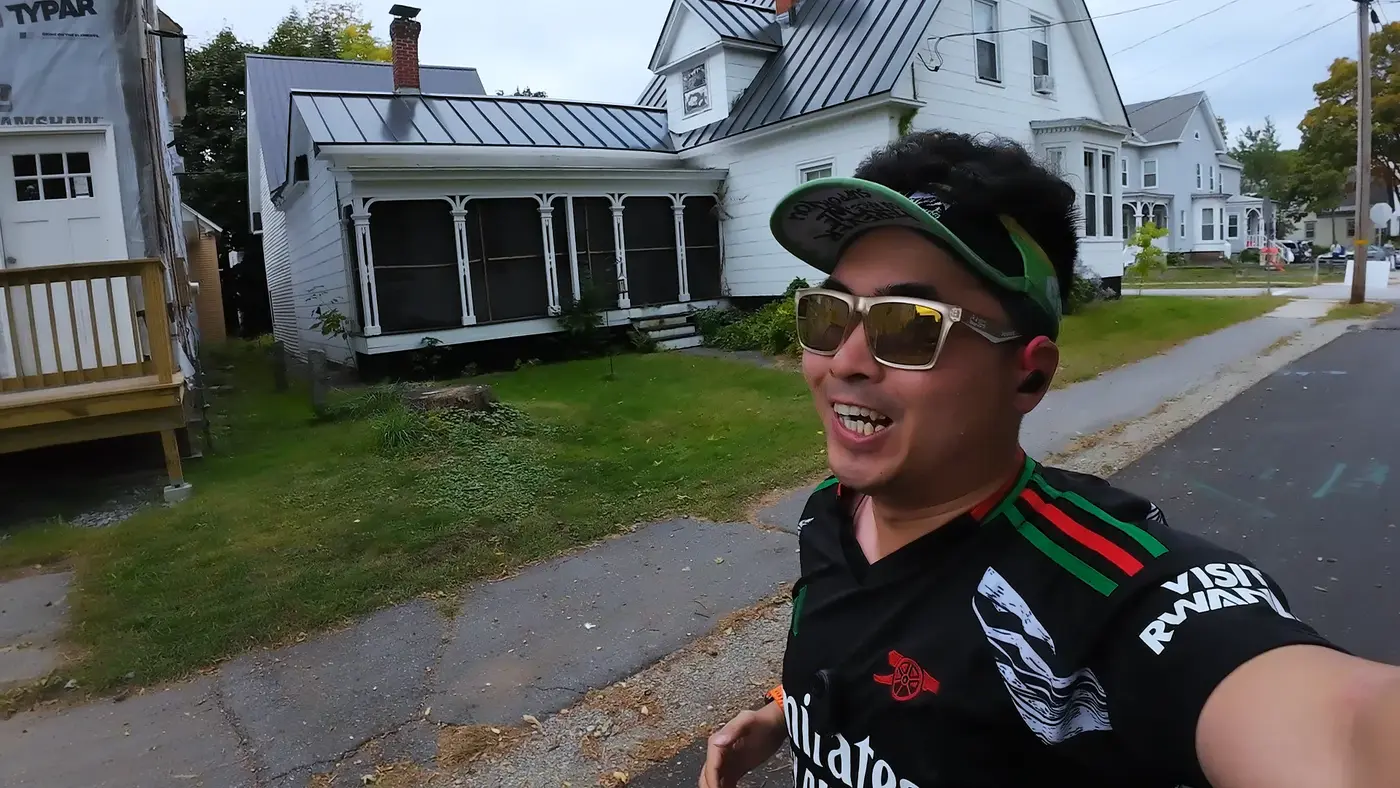
The course kept winding forward, and the local support stayed strong. Sometimes we passed groups of young girls out training; they ran through intersections together and smiled and clapped for us as we went by. After a residential stretch of small white houses, I entered the most unusual part of the race: a large cemetery.
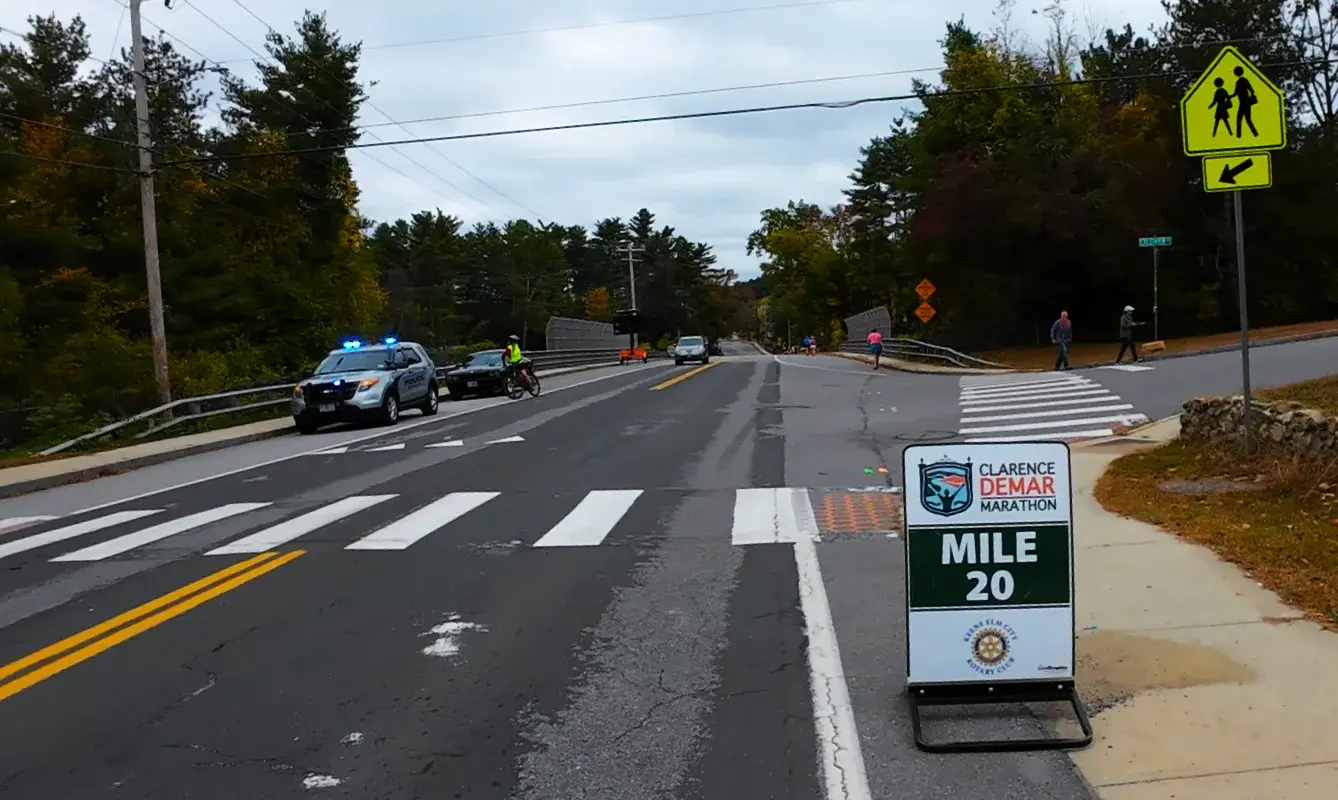
This area is actually Woodland Cemetery and Greenlawn Cemetery, the oldest and largest cemetery in Keene, where many local figures and veterans are buried. Mile 22 stands among the tombstones. Rows of stone markers line the grass, both grand and quiet. The course intentionally runs through the cemetery, complete with aid stations and volunteers.
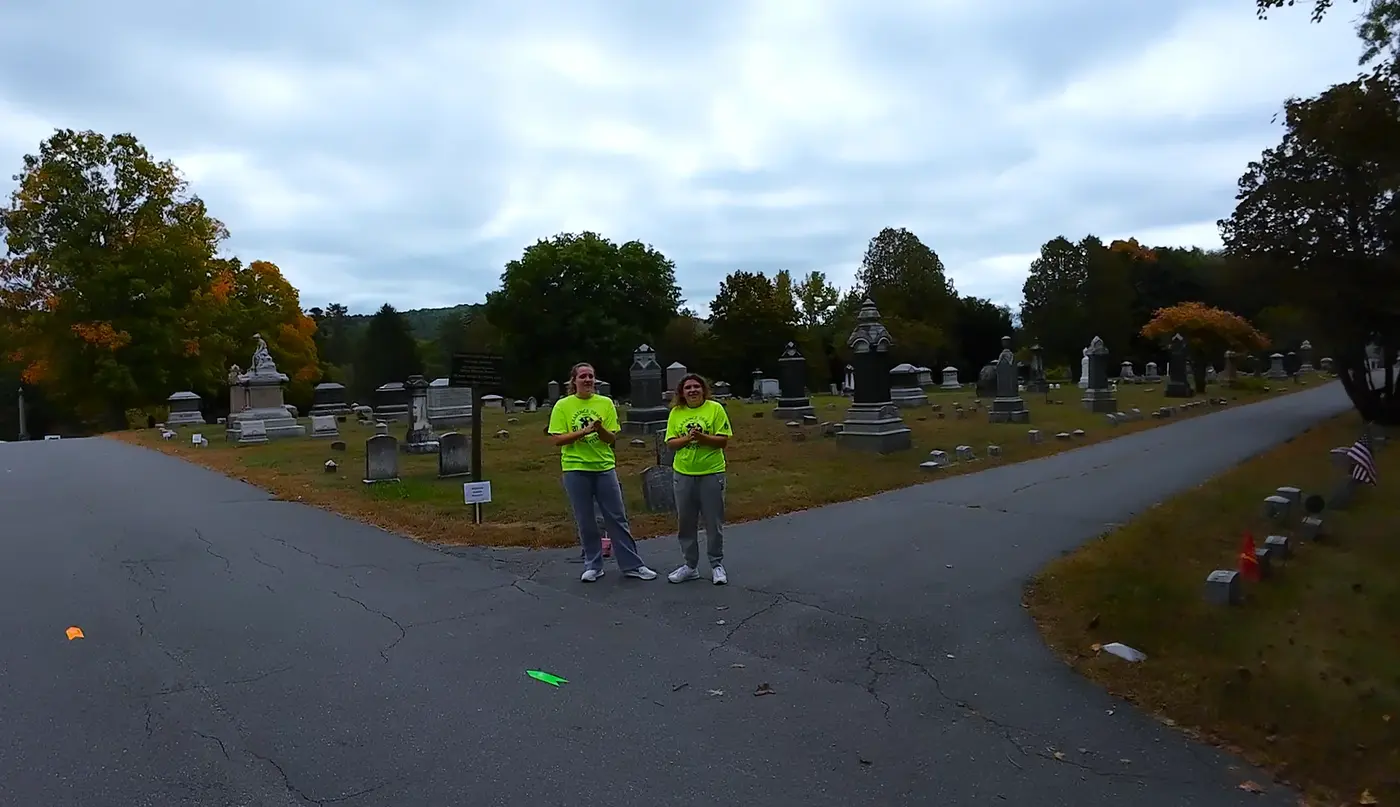
The atmosphere was quiet, but not scary. Instead, it had a sense of solemnity and power.
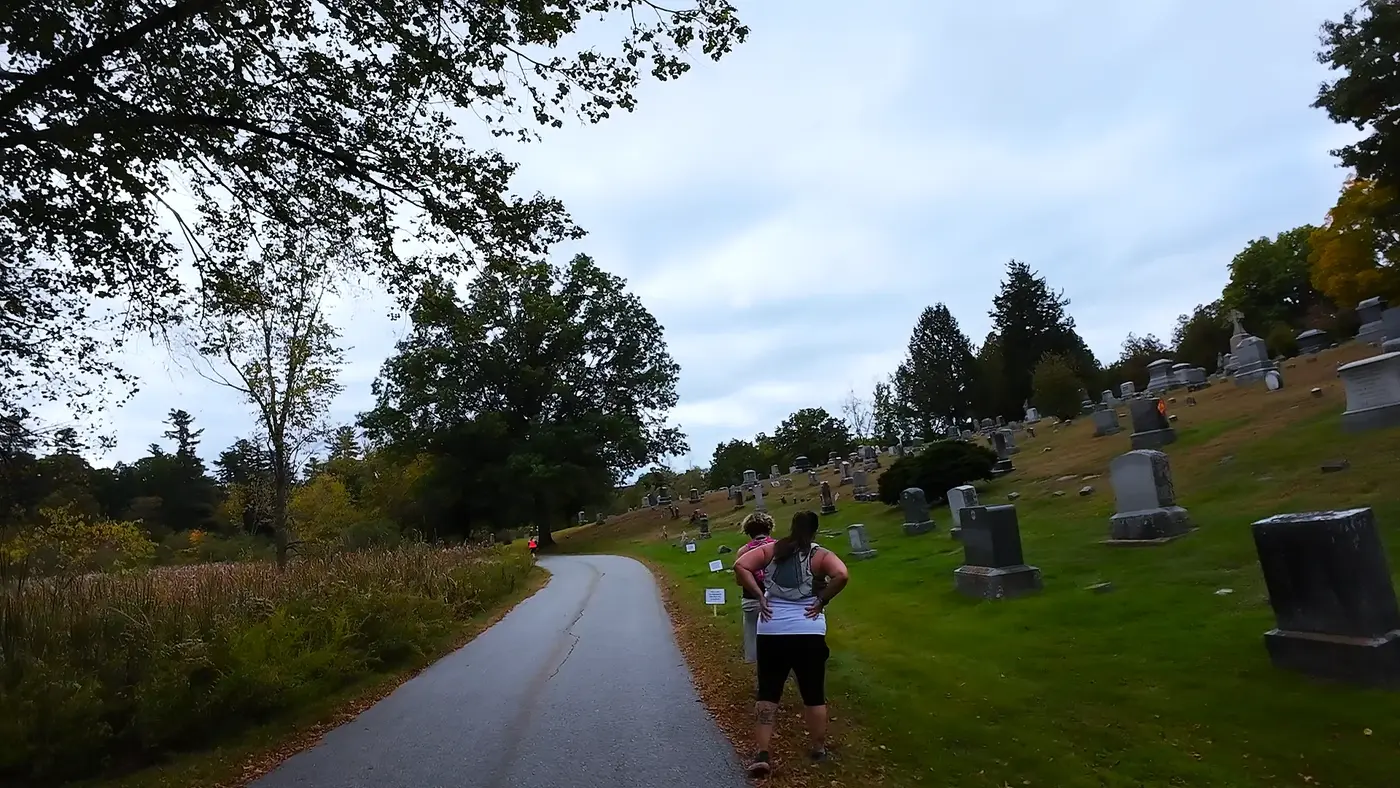
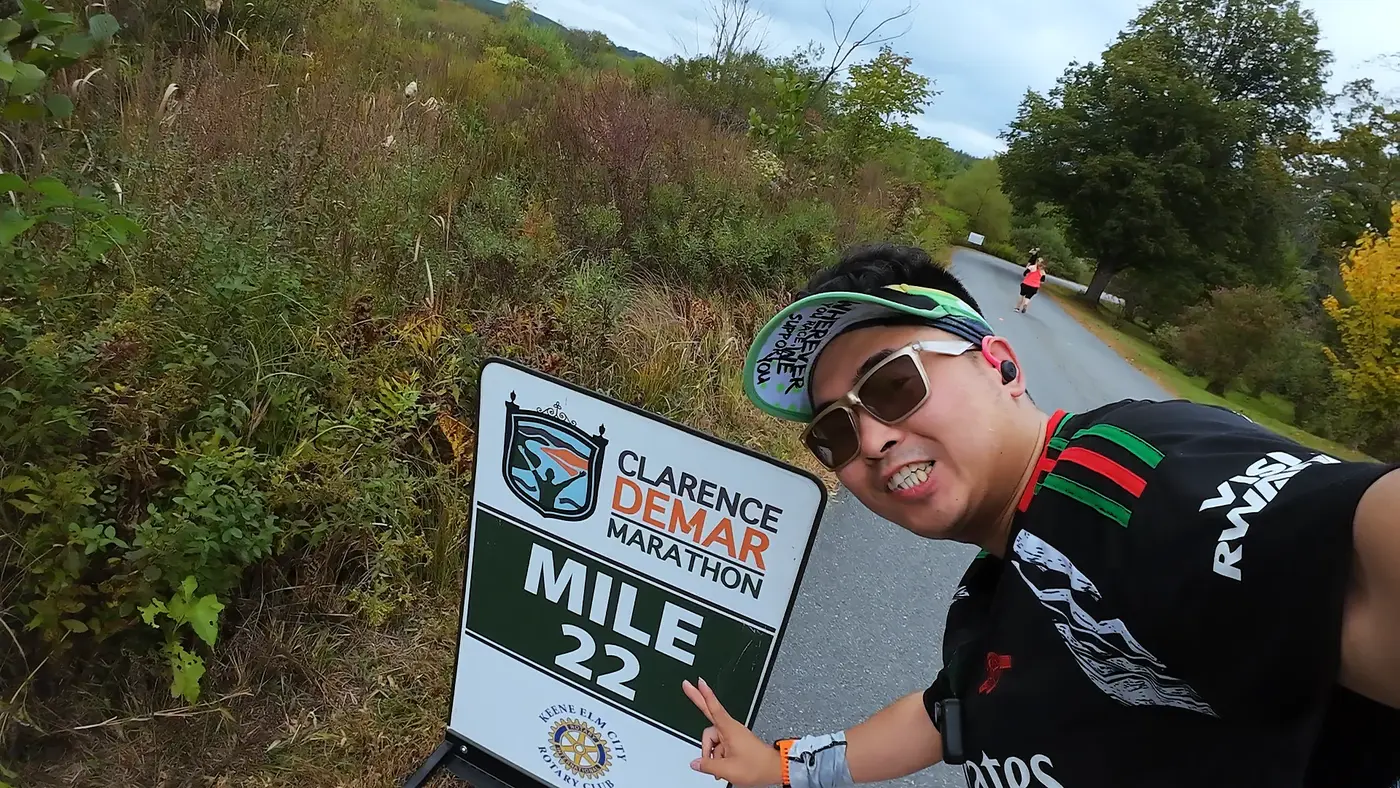
Running here, I felt a kind of peace, almost as if the place were reminding everyone: to live is to keep moving.
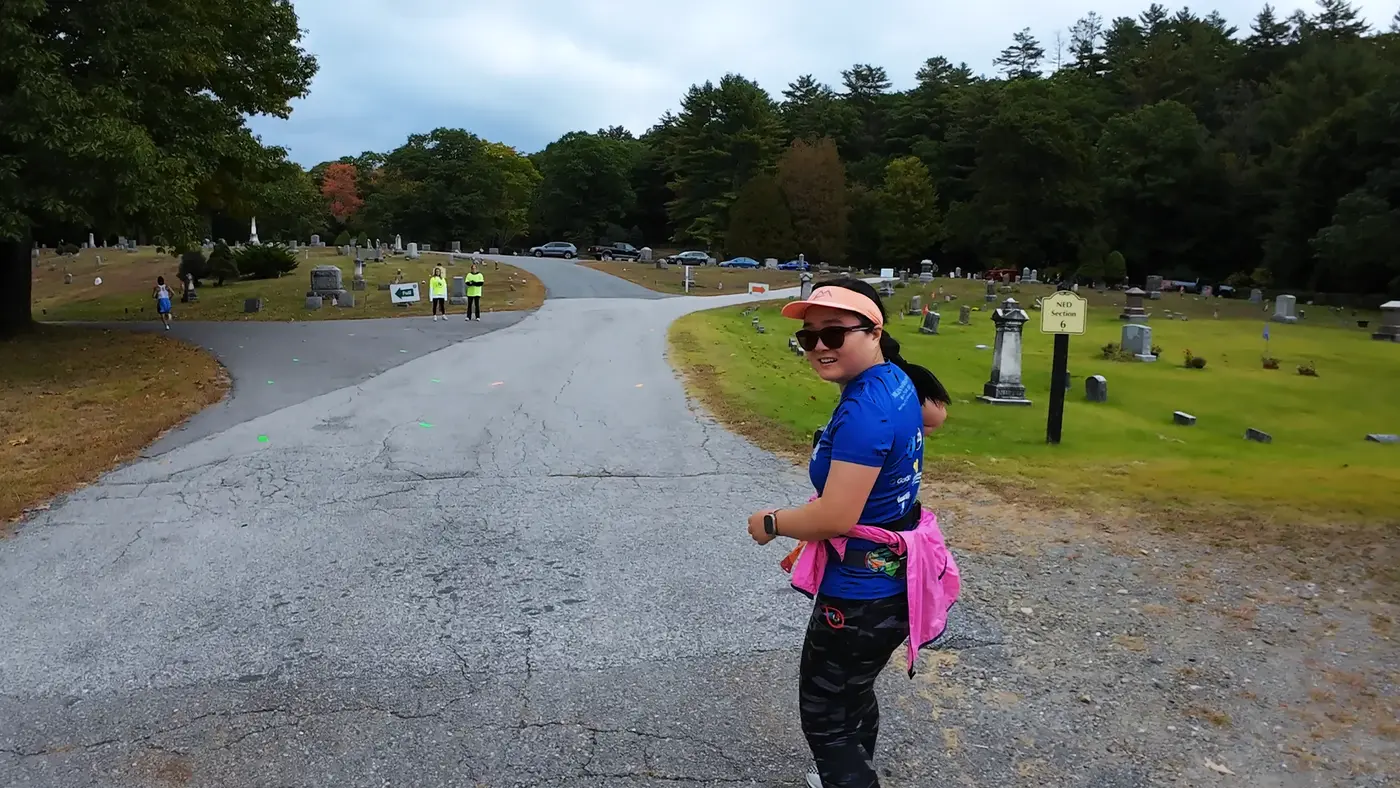
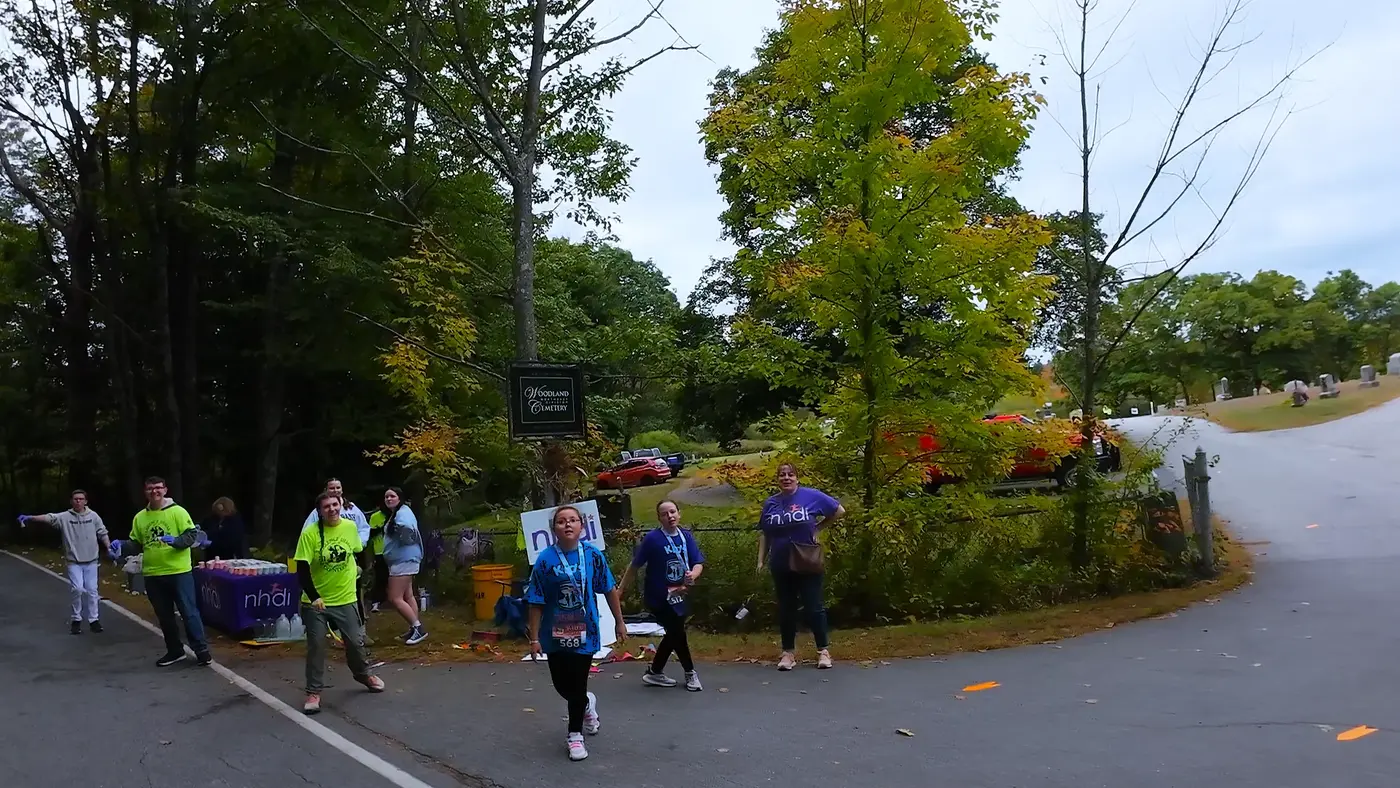
I could not help thinking how different Chinese and American cultures are in this way. In China, running through a cemetery might be considered unlucky. In the United States, cemeteries are often part of the community, places where people walk, run, and even picnic. It is a way to remember and stay connected to life. Running among the tombstones made me feel close to history.
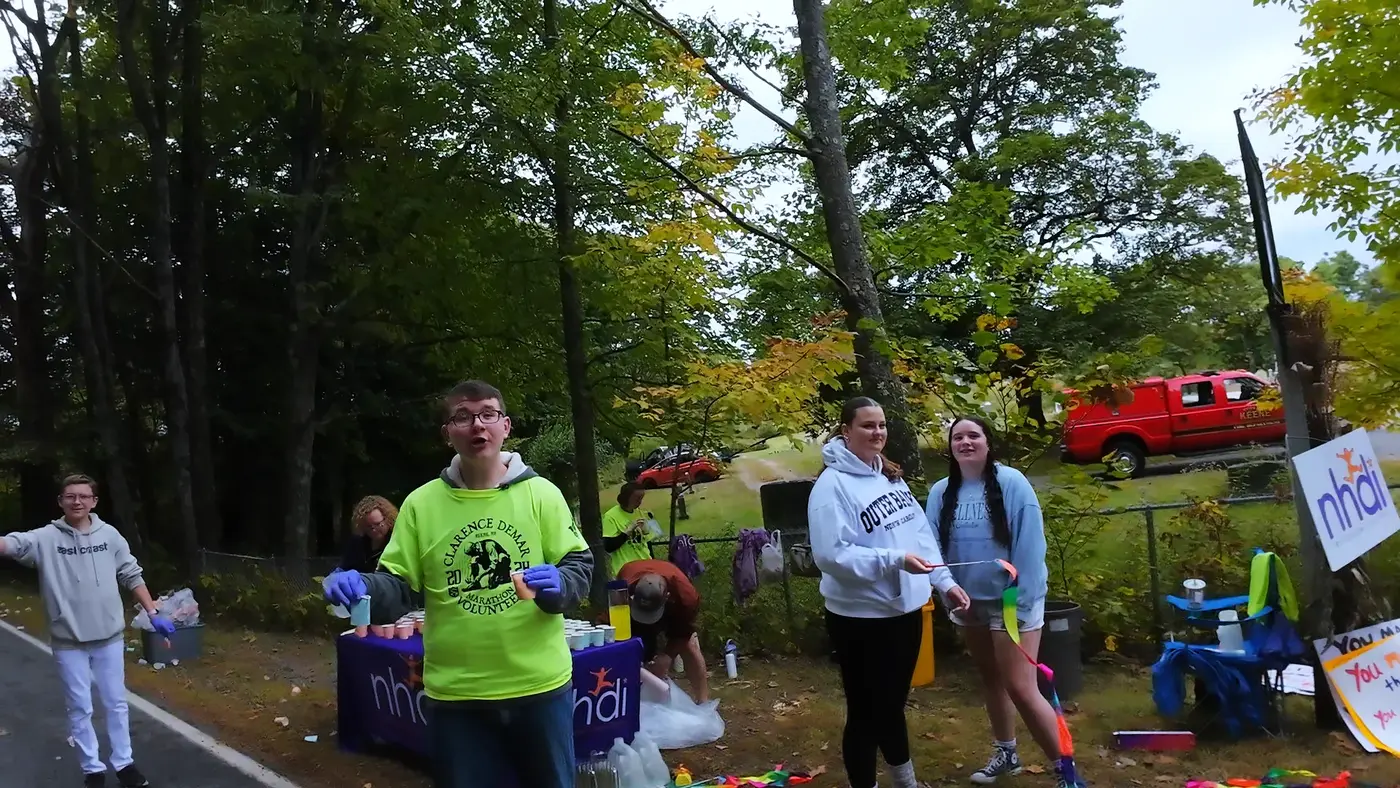
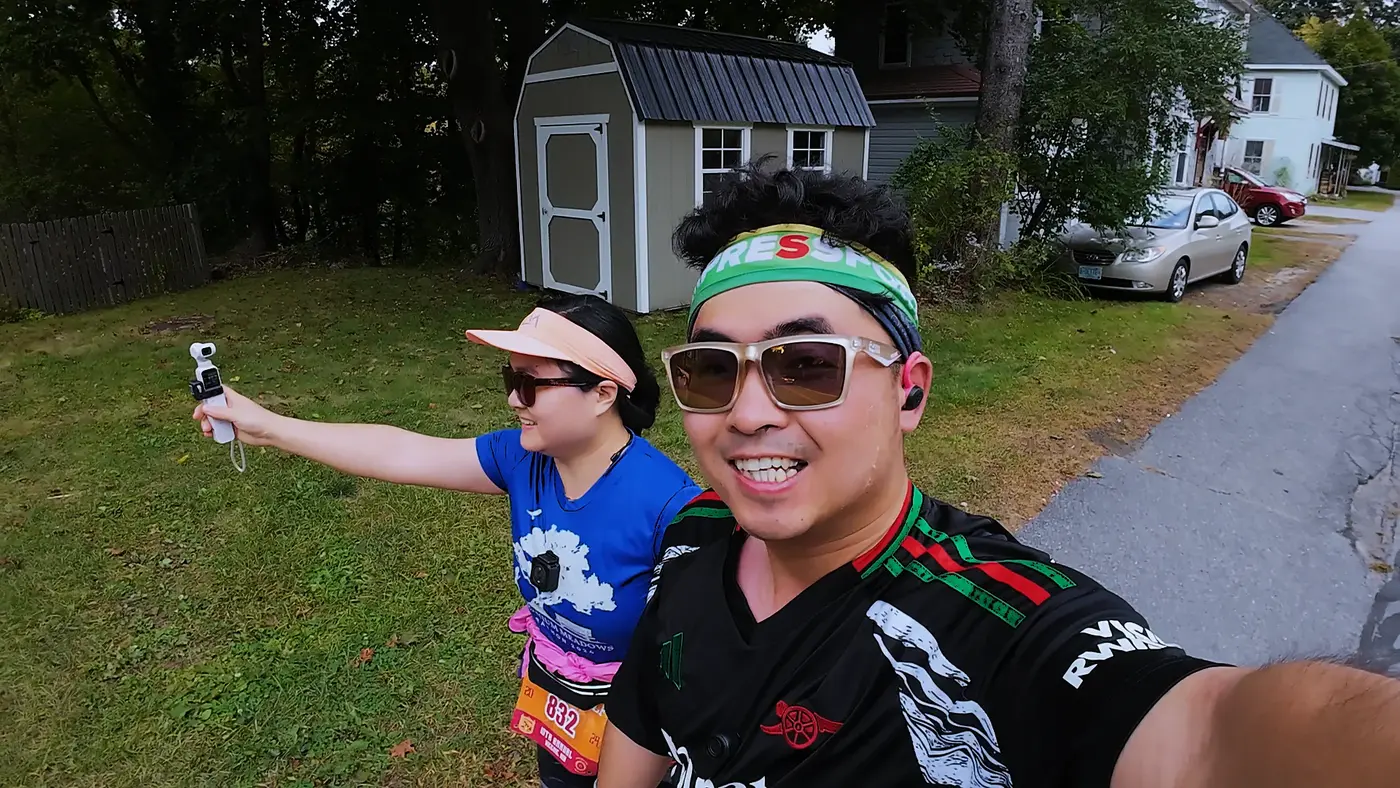
Here I met Siqi for the second time, we said hello and moved on. Finally running out of the cemetery, there was a cheering team with children dancing outside, which was in sharp contrast to the quiet atmosphere inside.
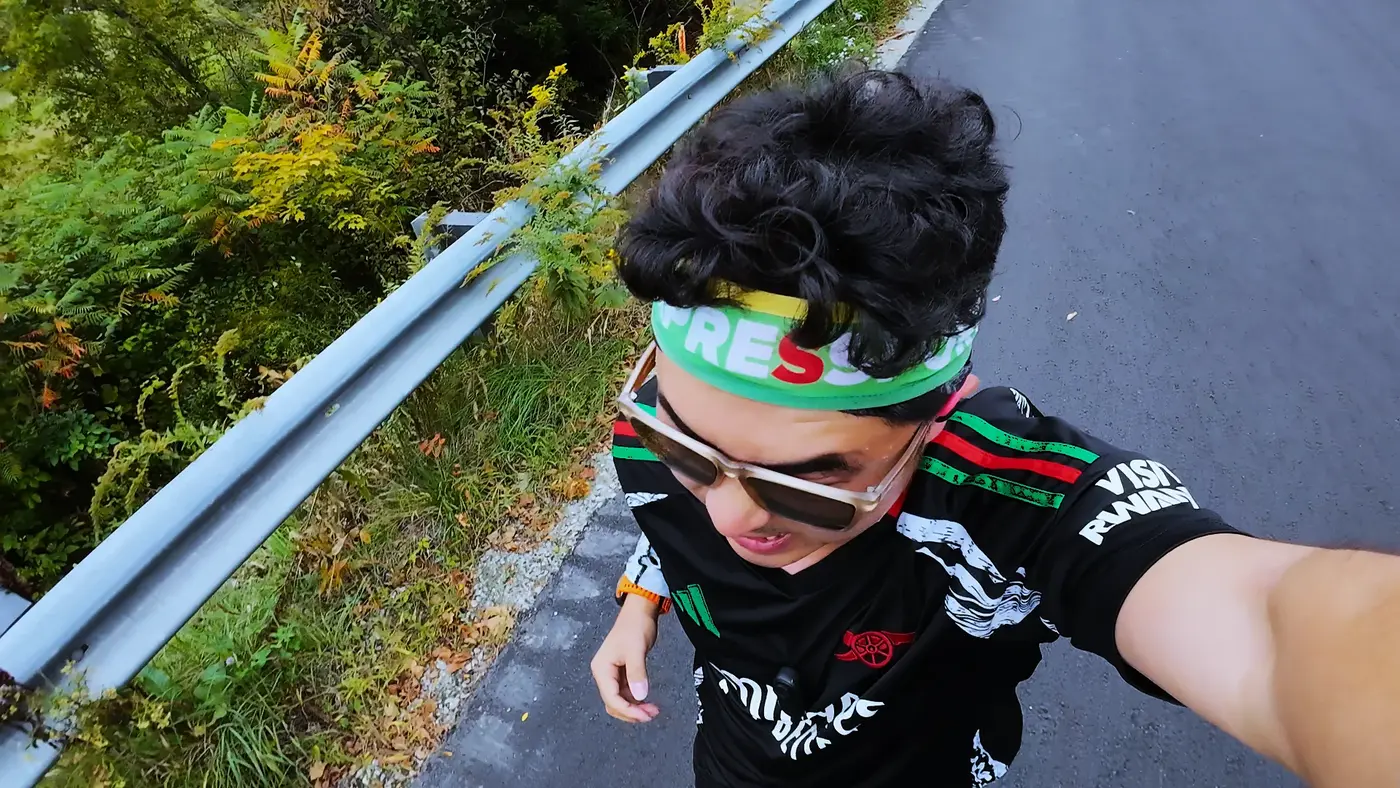
Before mile 25, I met Siqi for the third time. The full and half marathon courses split and rejoined in several places, so seeing each other three times in one race was a rare little gift. Only the last mile remained, and the finish-line atmosphere was already in the air.
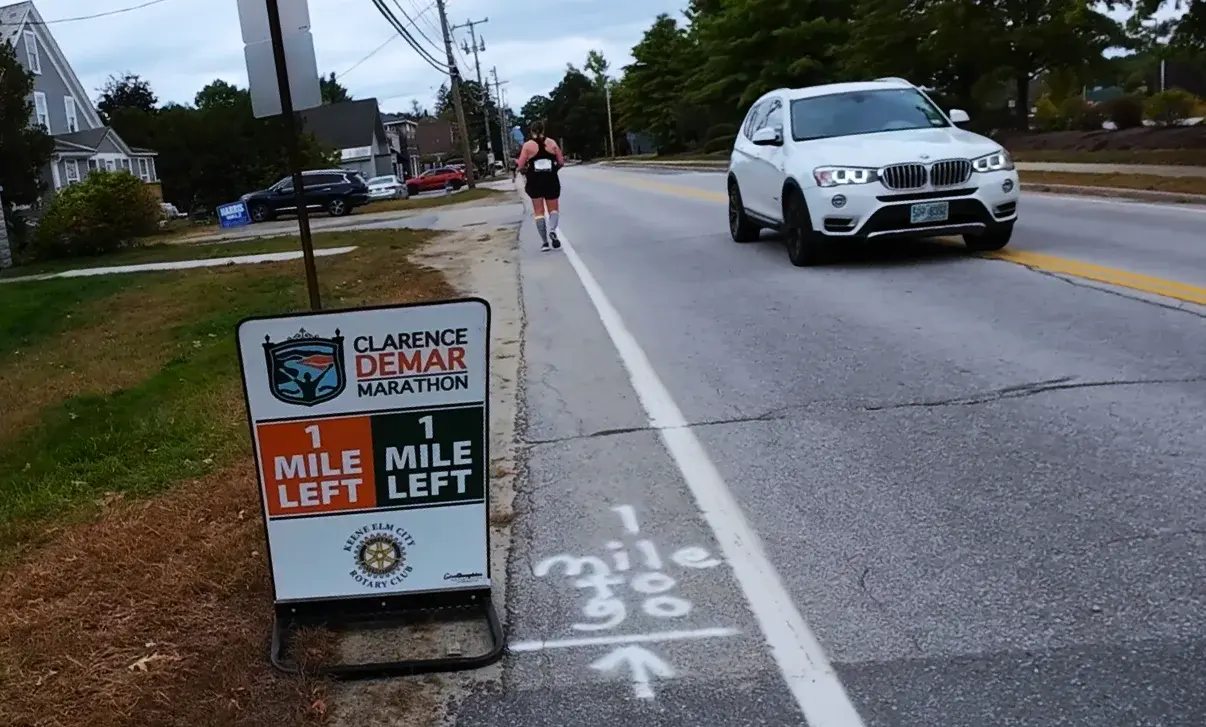
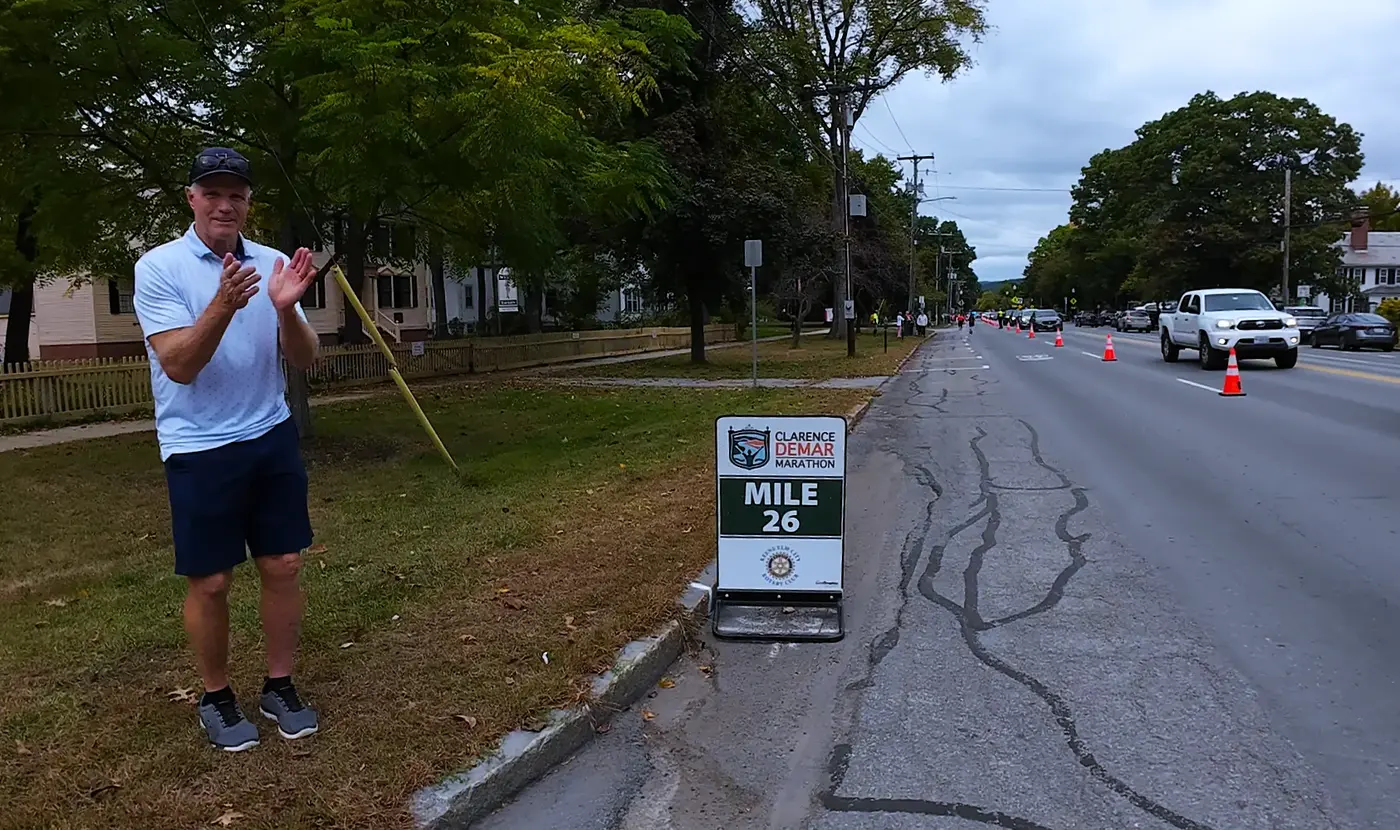
Chapter 6 | The Last Mile · Into Campus
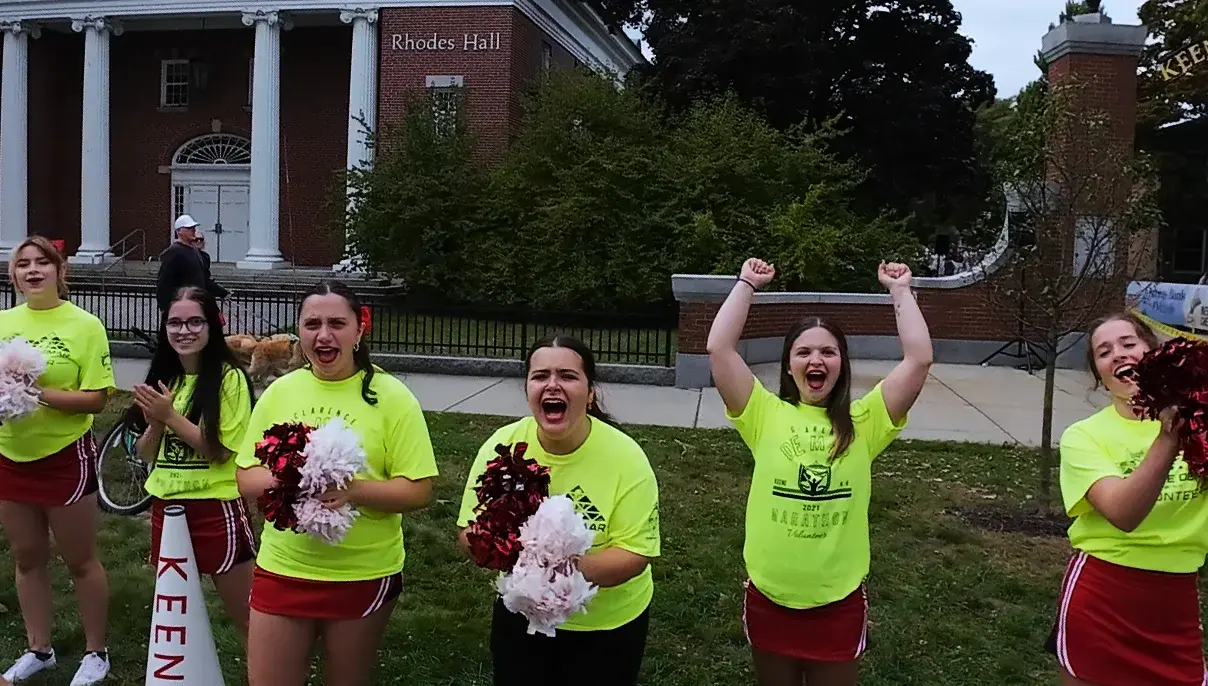
The last mile led into Keene State College. A cheer squad was shouting at the school gate, and the whole entrance felt lively.
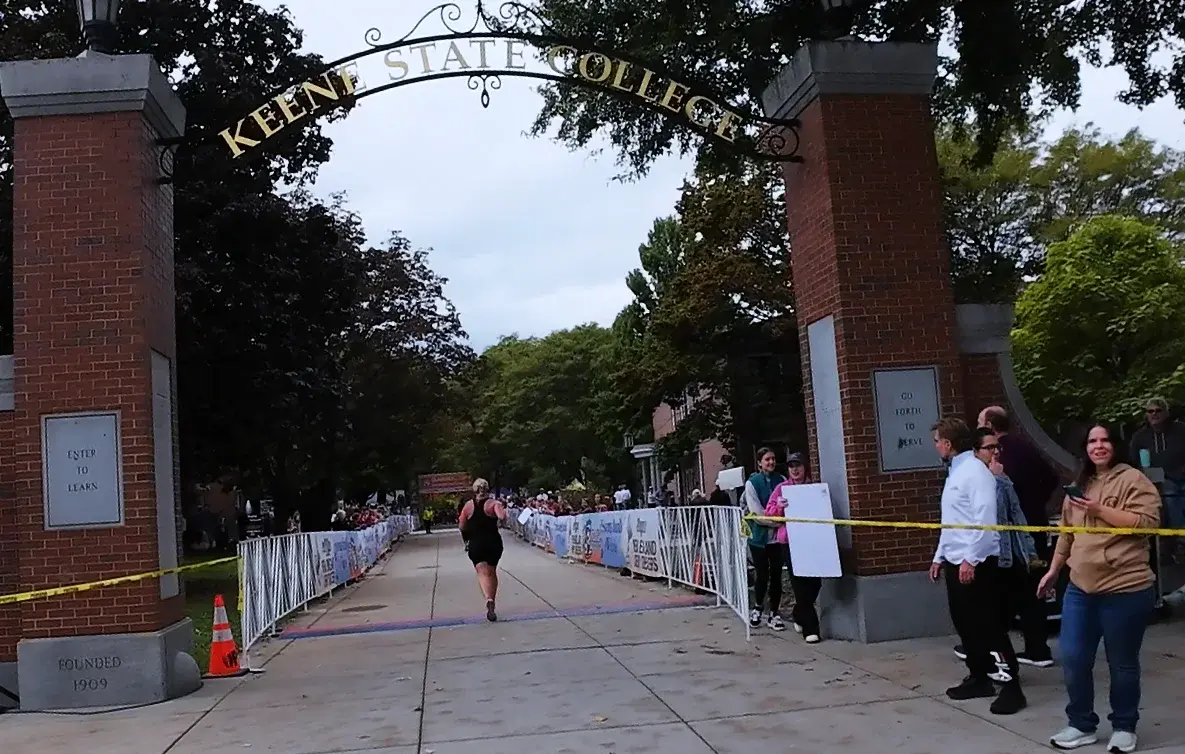
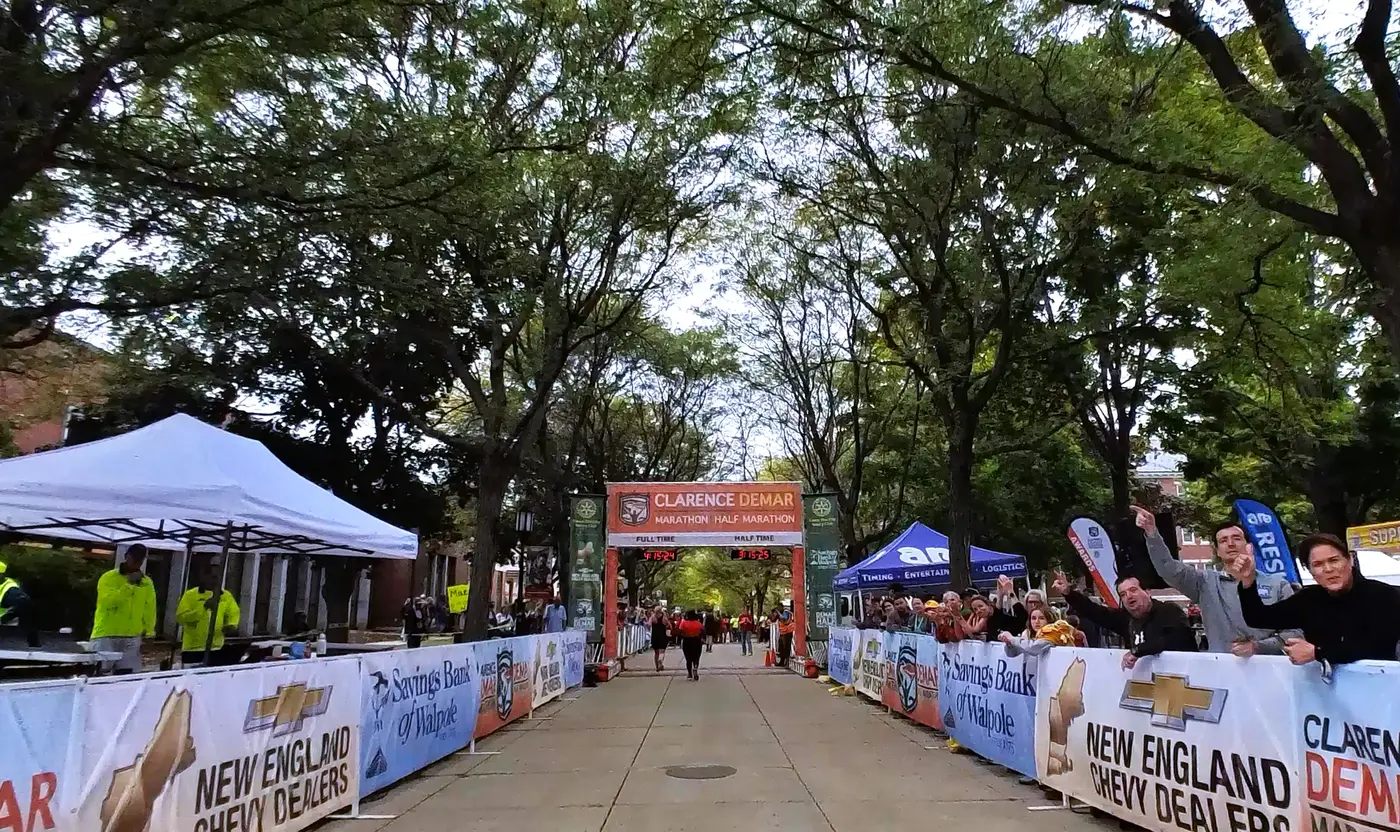
Because the marathon is not huge, I was alone in the stretch before the finish. Spectators lined both sides behind the barriers, so for a moment it felt like I had the whole crowd to myself.
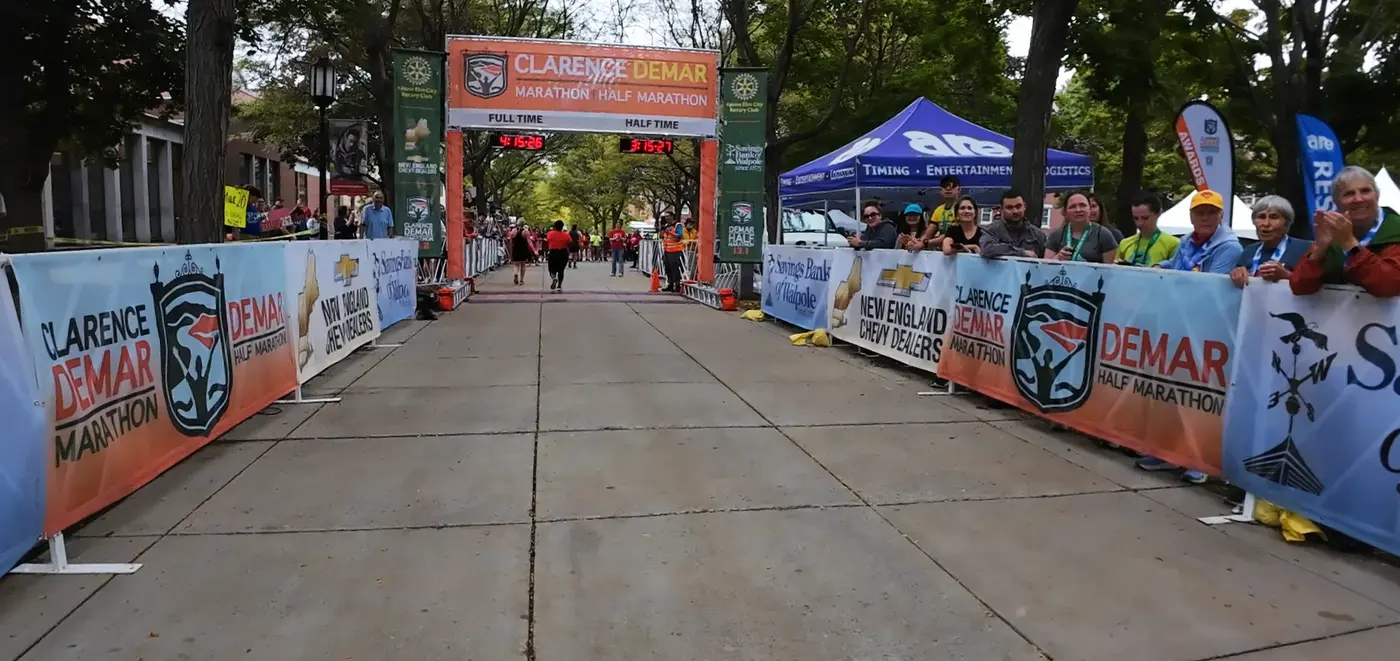
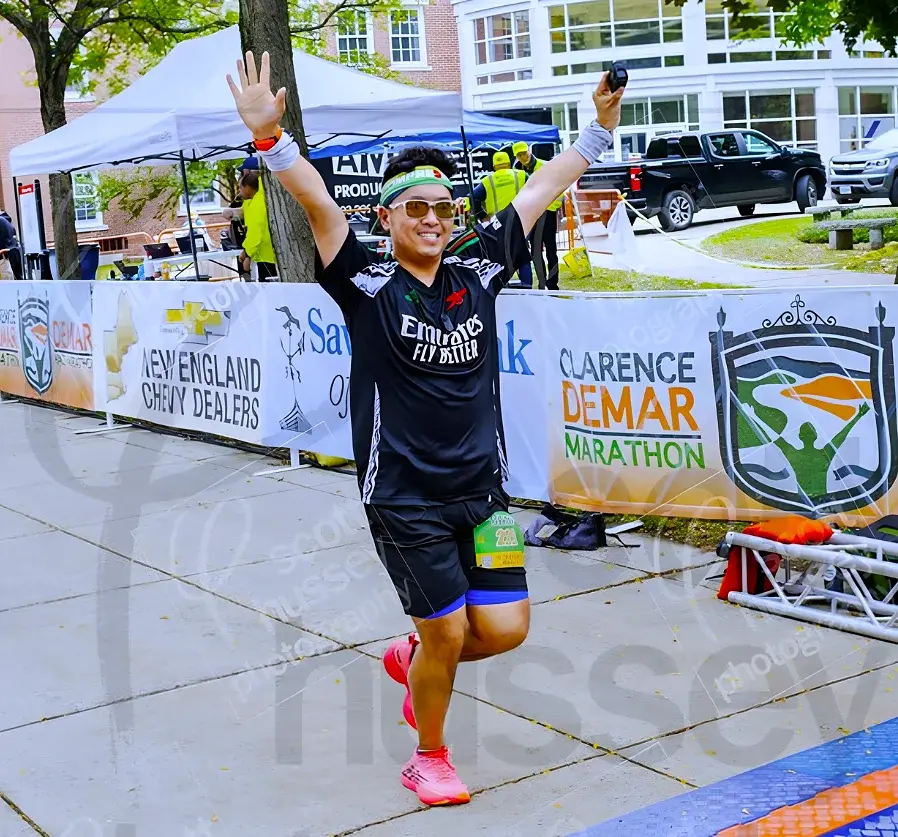
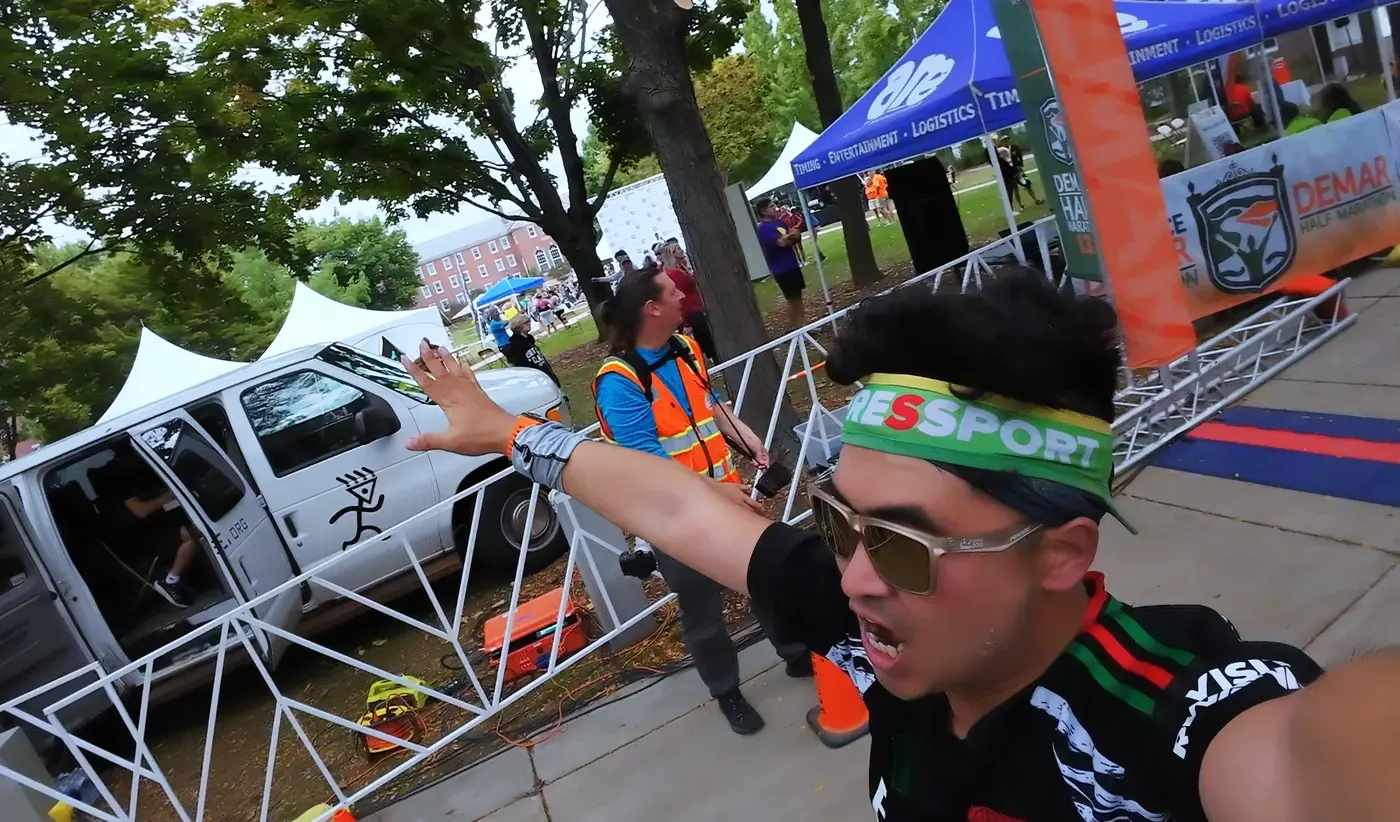
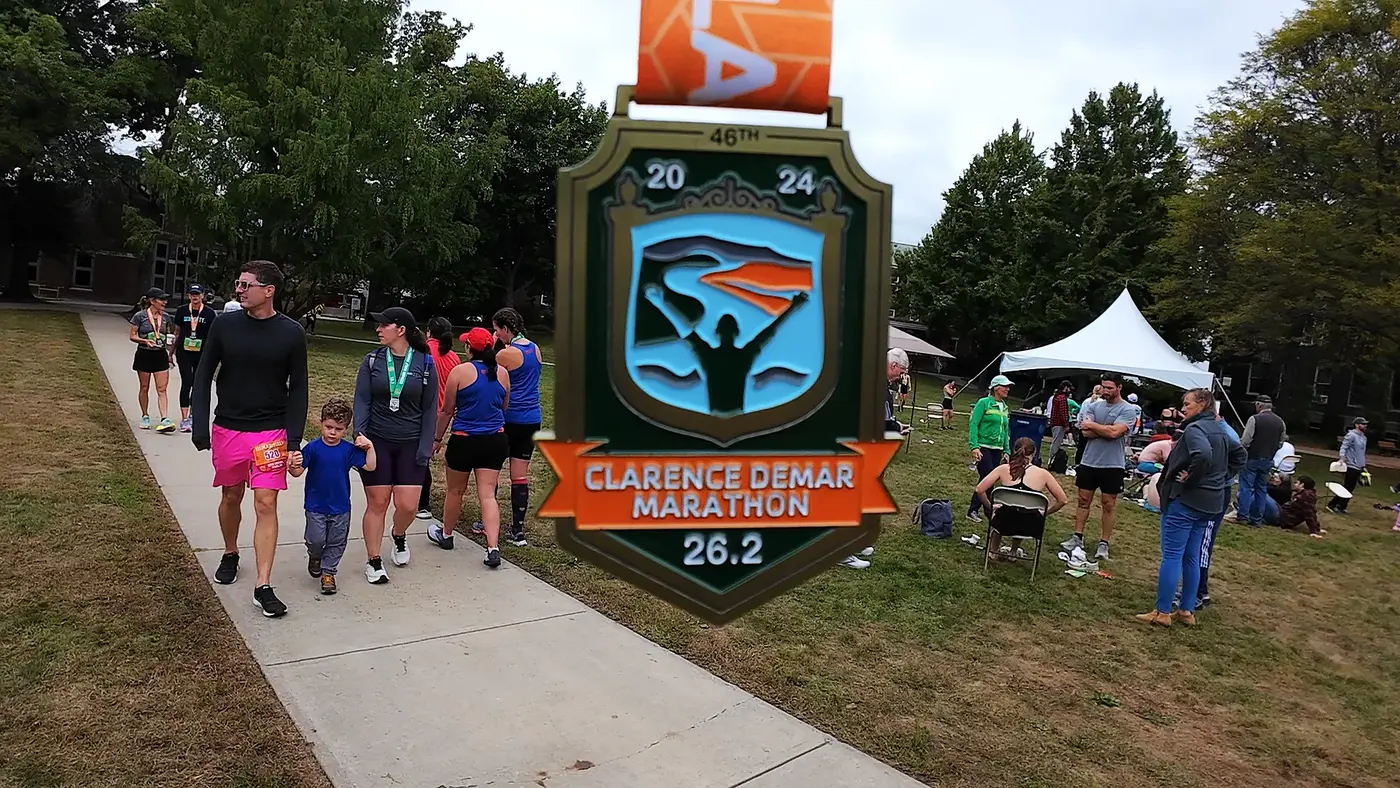
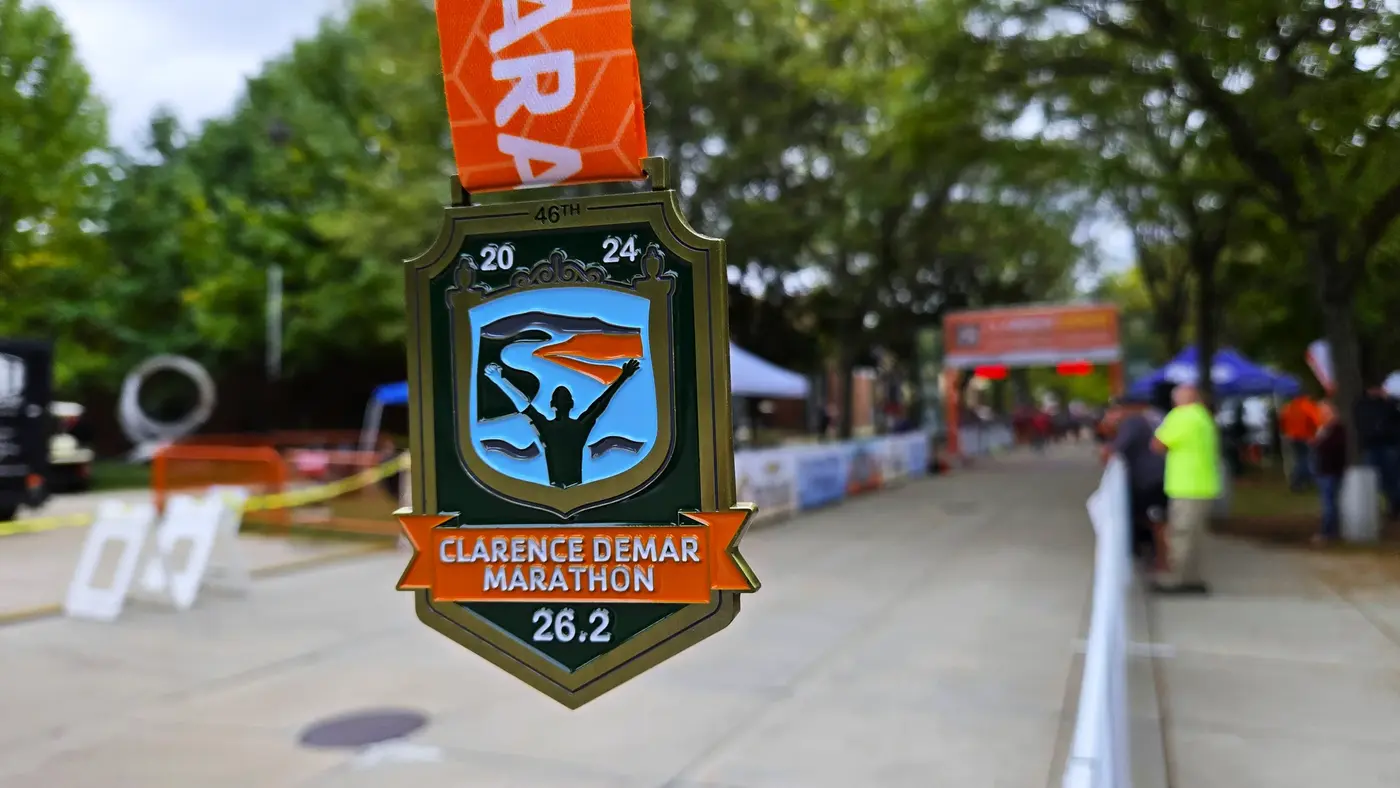
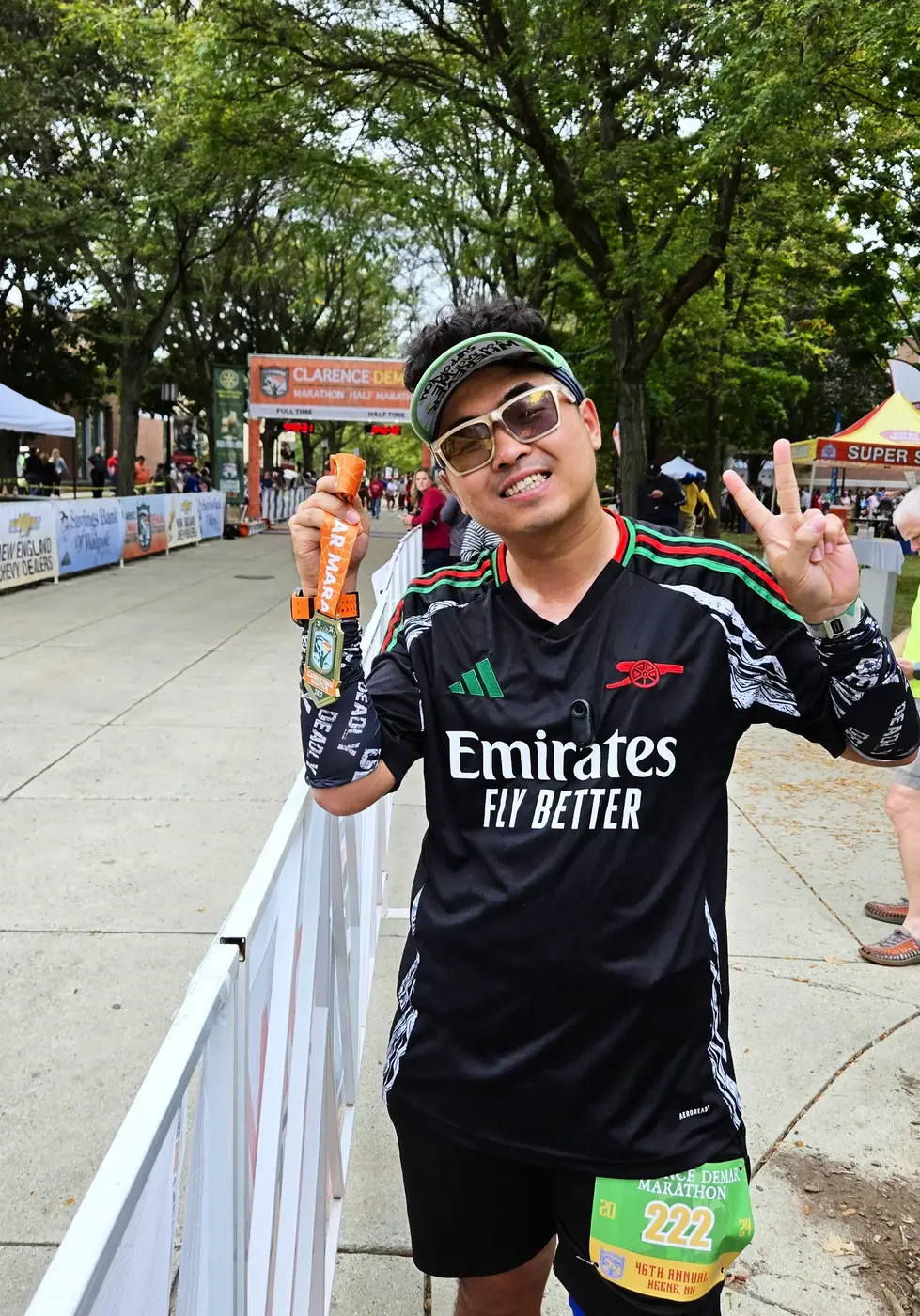
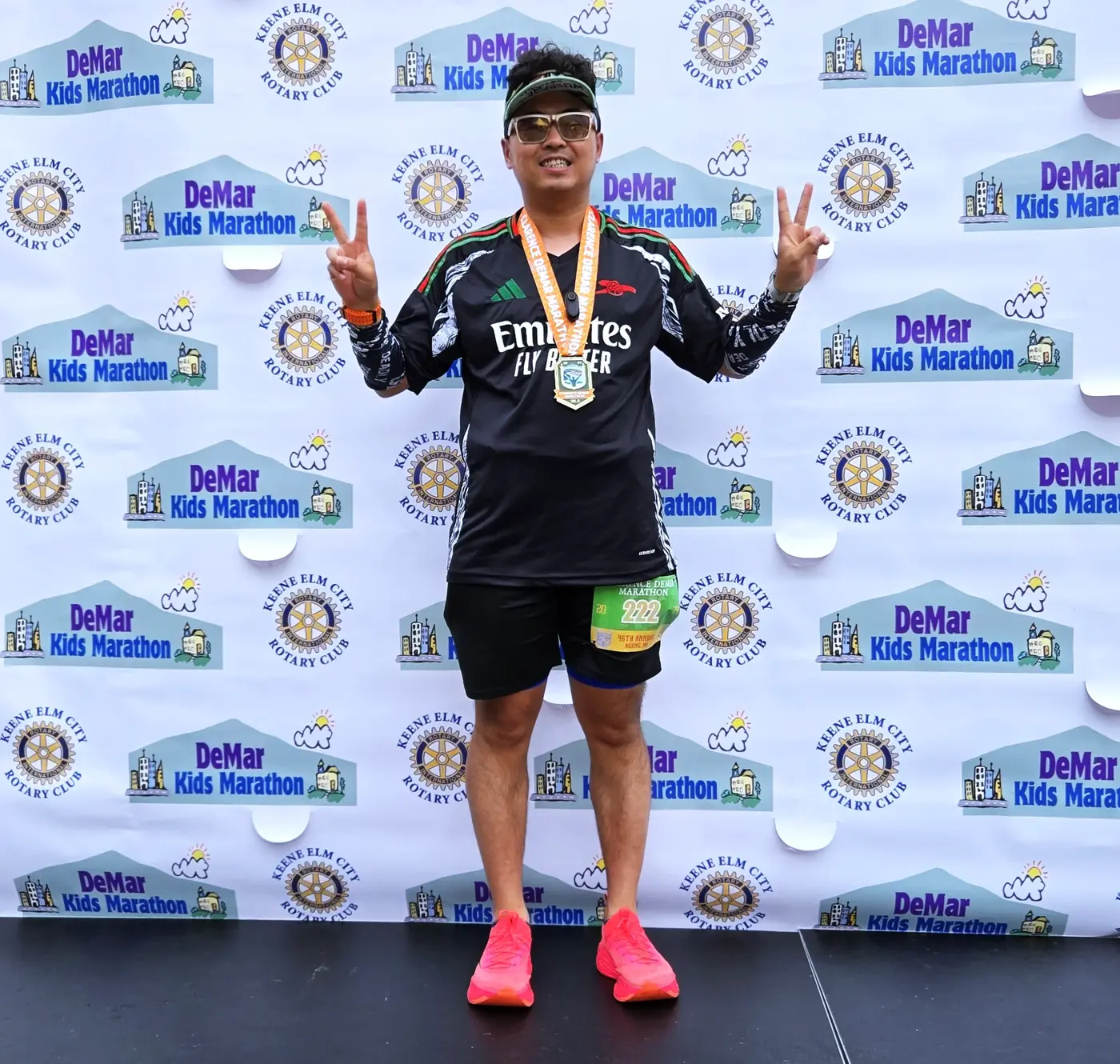
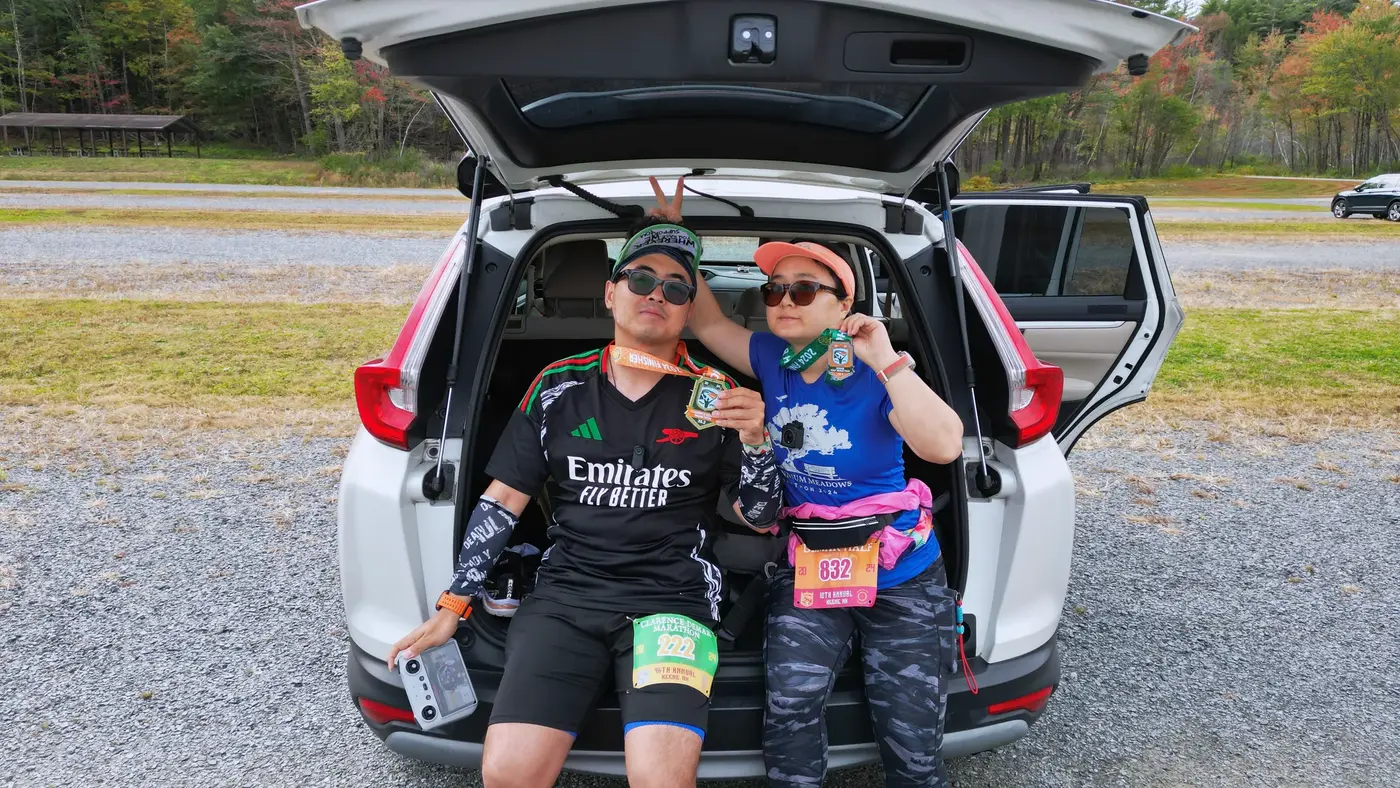
I raised my hands and crossed the finish line. A smiling volunteer placed the medal around my neck. The medal's shape reminded me a bit of a Strava badge, with a runner raising both arms at the finish against New Hampshire mountains and lakes. Simple, but powerful.
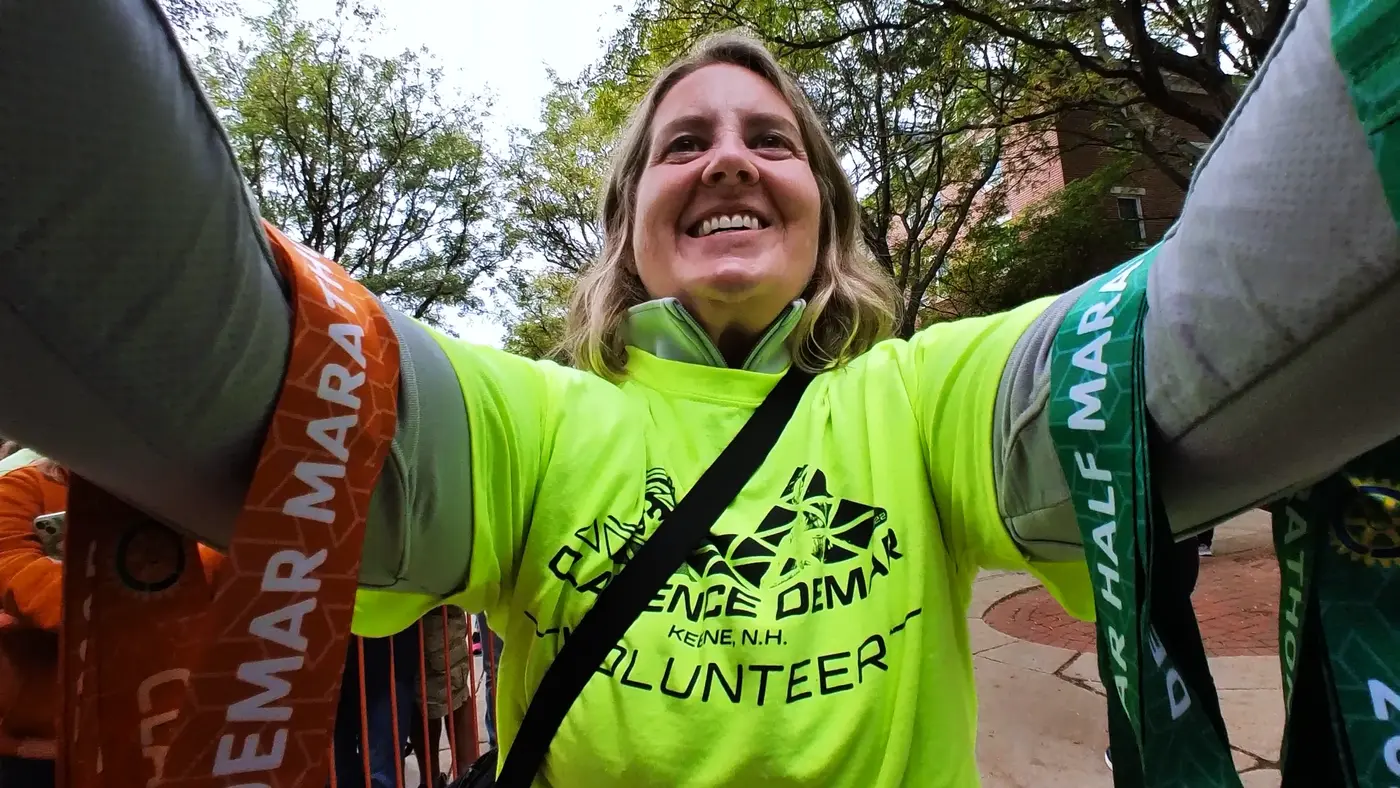
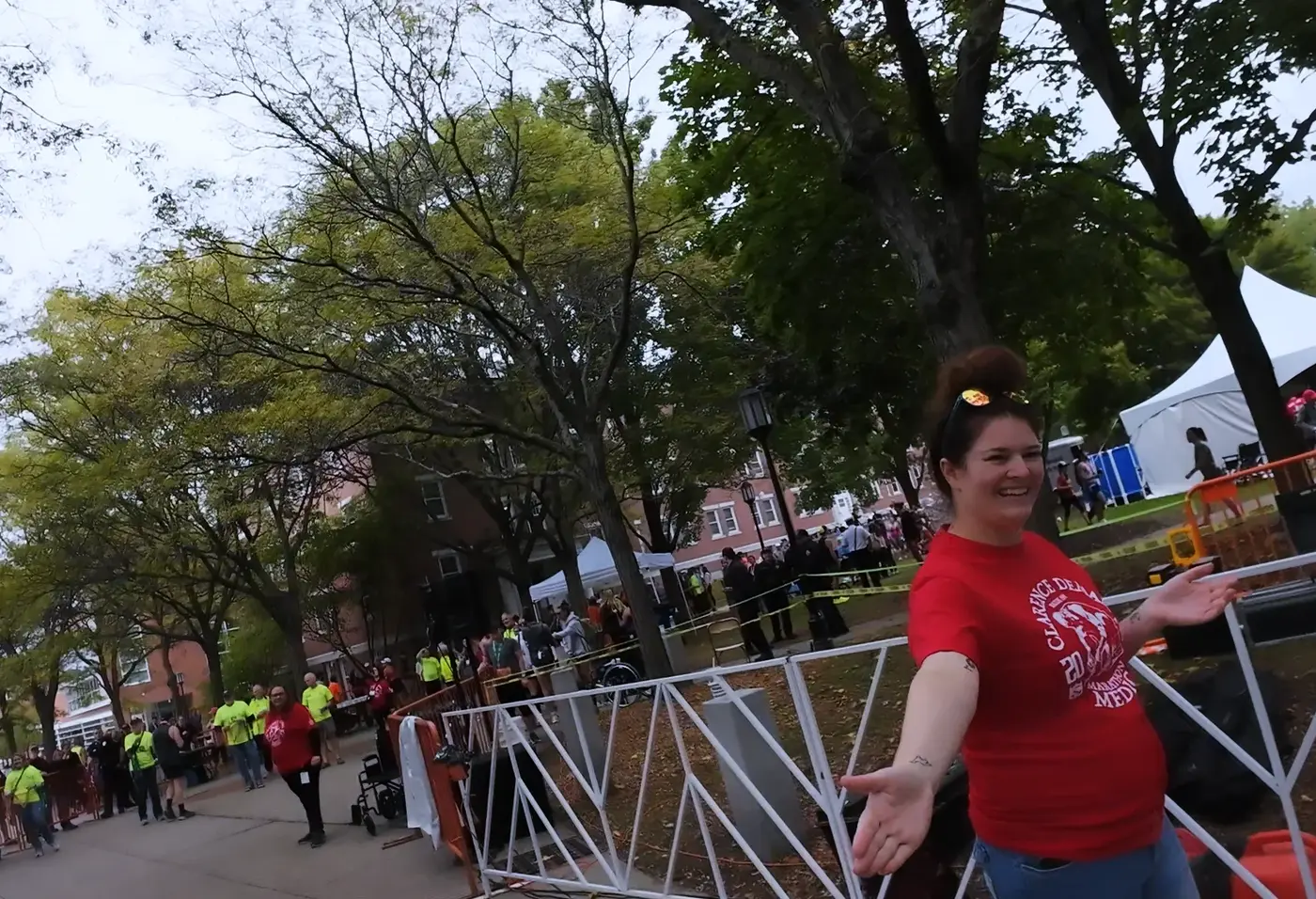
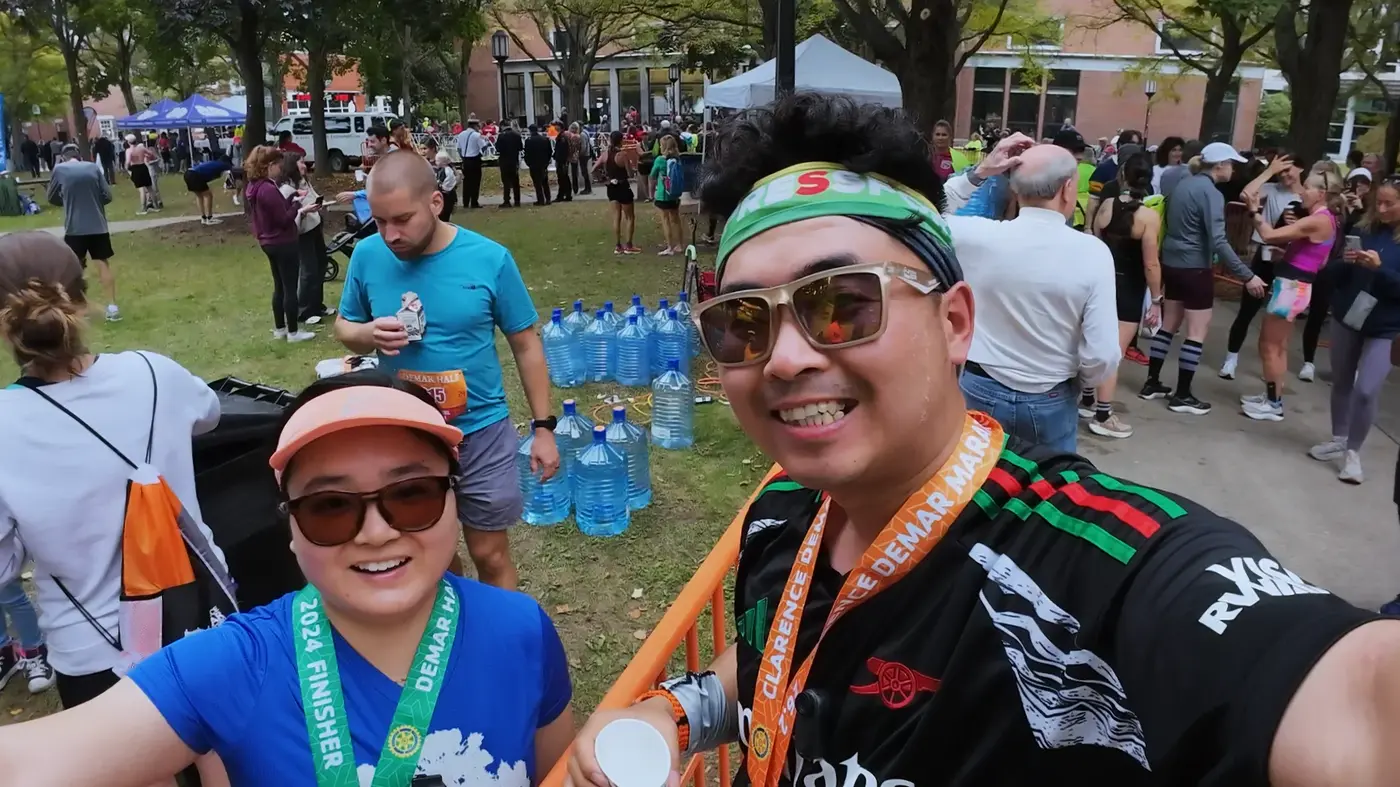
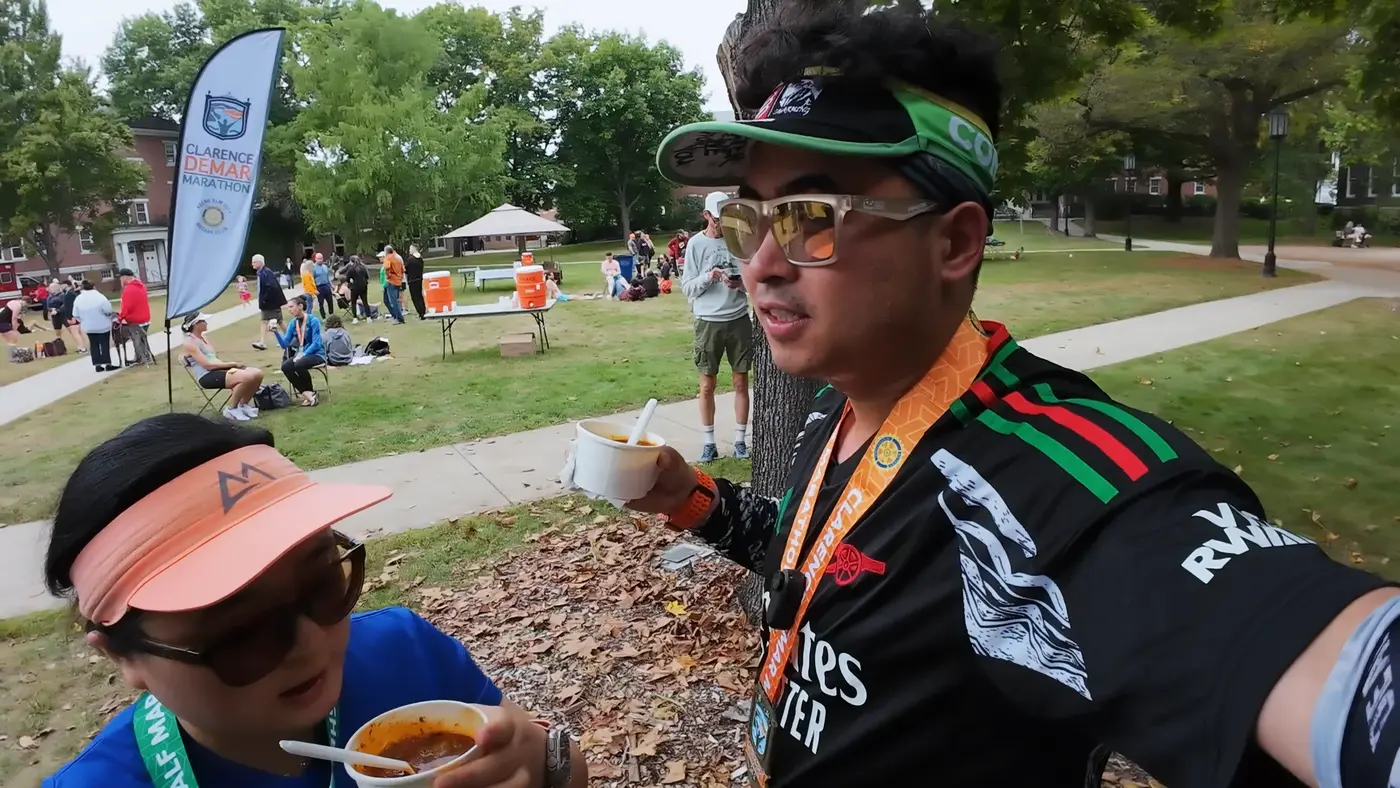
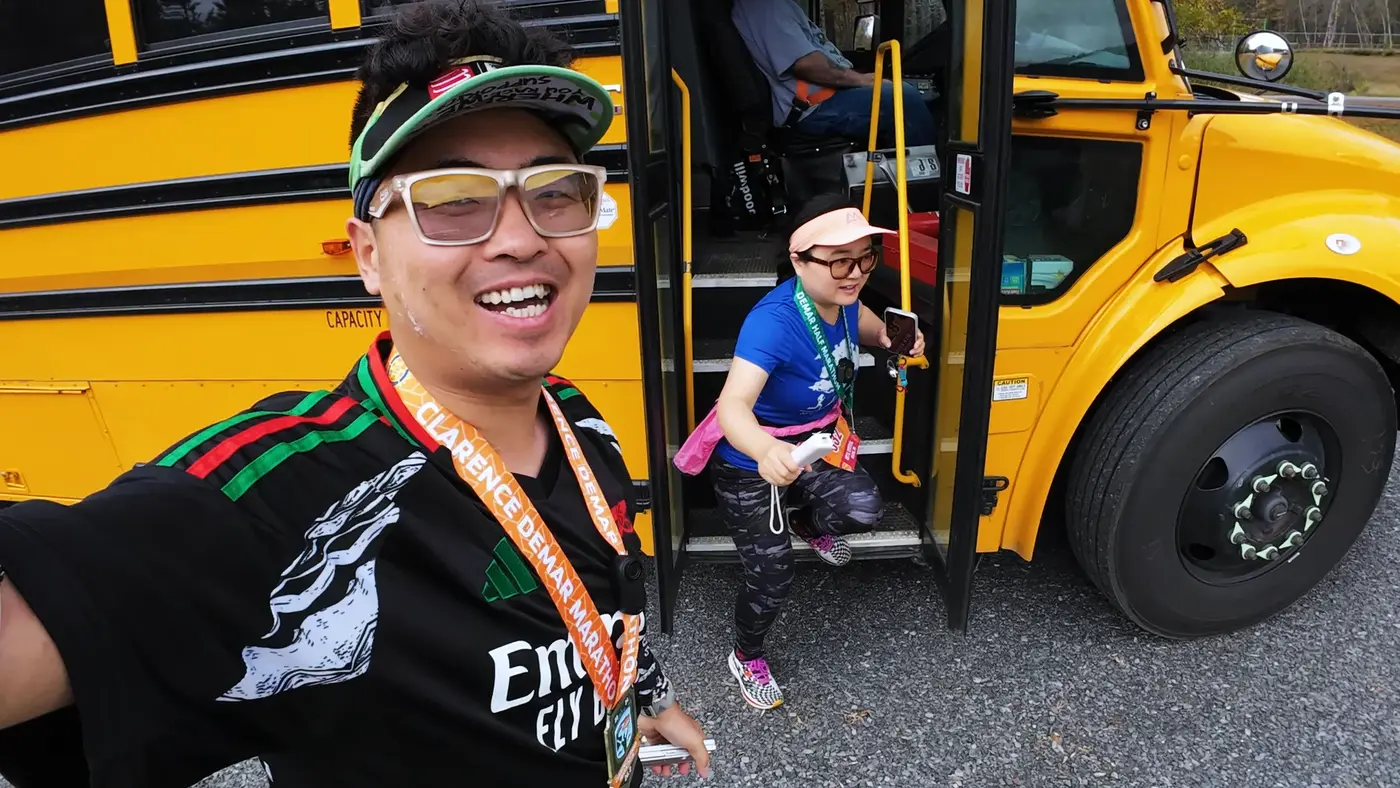
Siqi and I met at the finish after she finished successfully too. We stood on the grass drinking the hot soup provided by the race, and our bodies warmed up immediately. Then we took the shuttle to retrieve the car from her half-marathon start.
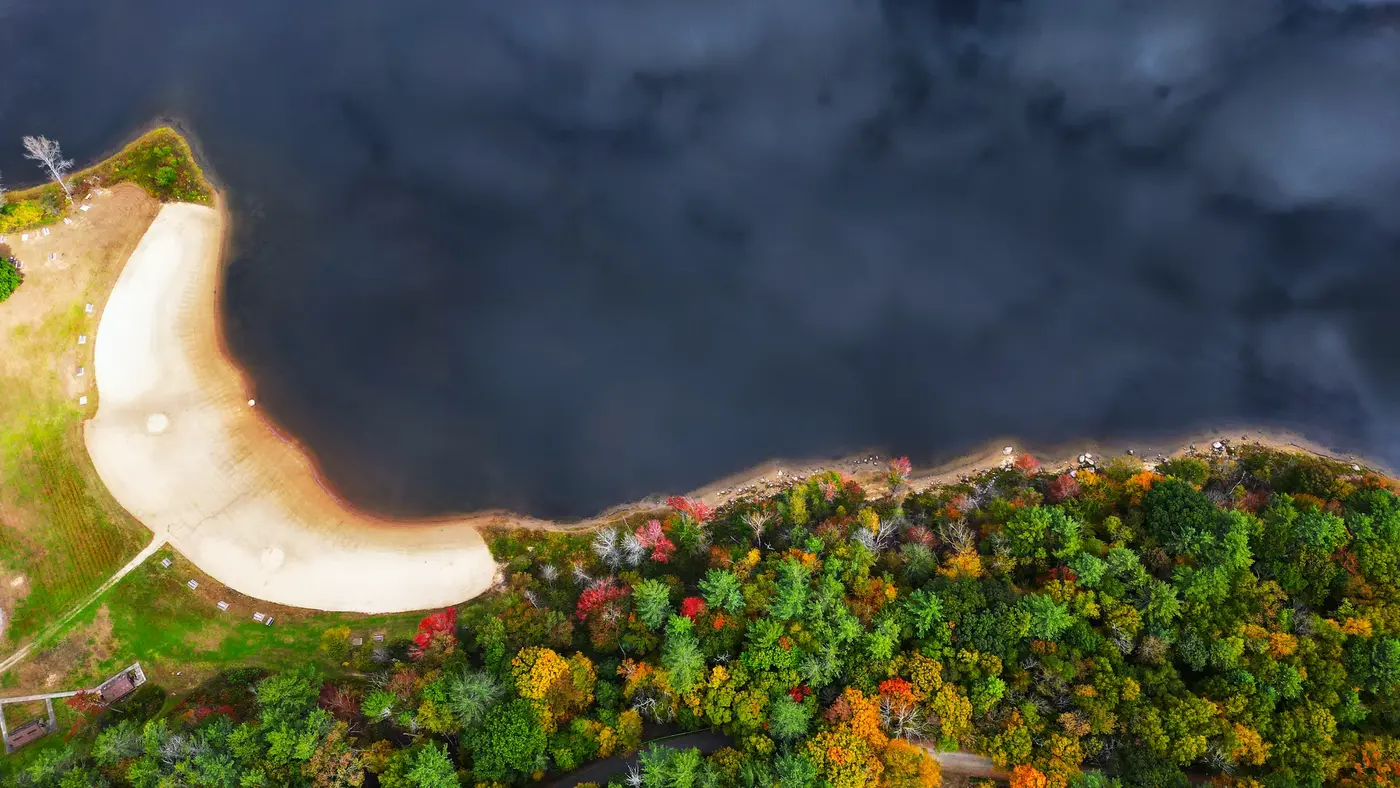
The half marathon starts at Surry Mountain Lake. This is a man-made lake on the Ashulote River, dammed by the U.S. Army Corps of Engineers in the 1940s primarily for flood control.
The lake is large, with a beach and picnic area on one side. It is a summer vacation spot for locals. Behind it is an entire mountain forest reserve called Surry Mountain, with dense forests and undulating mountains. It is also a place where town residents like to hike and run.
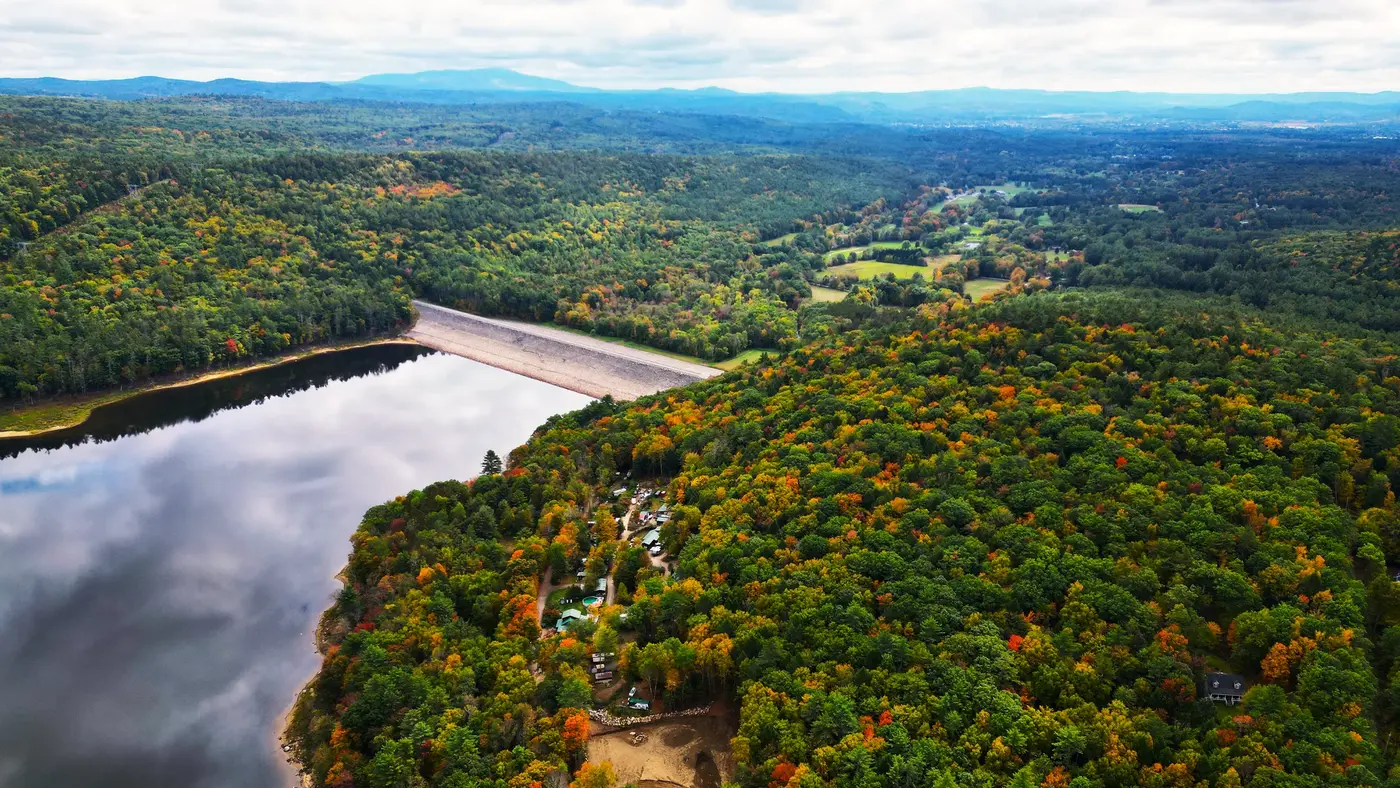
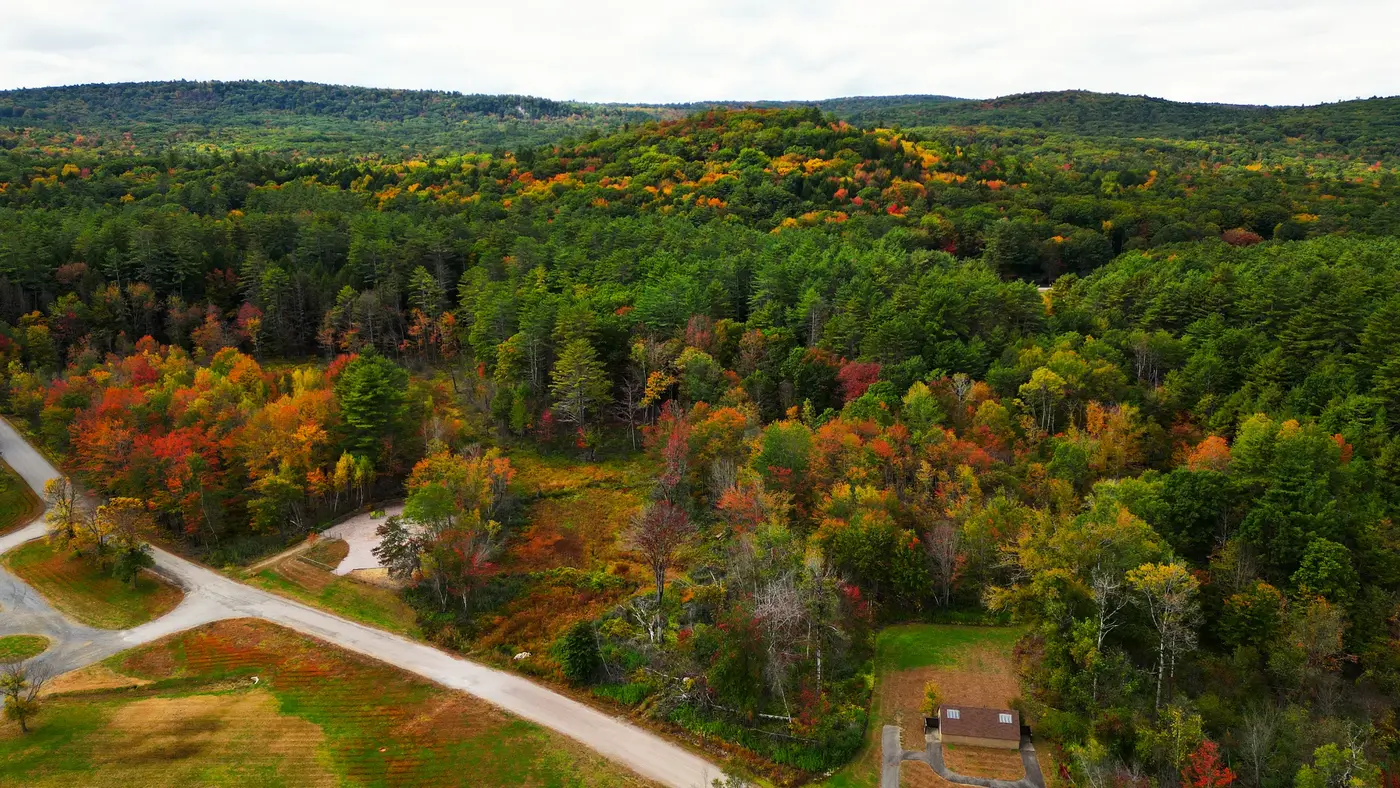
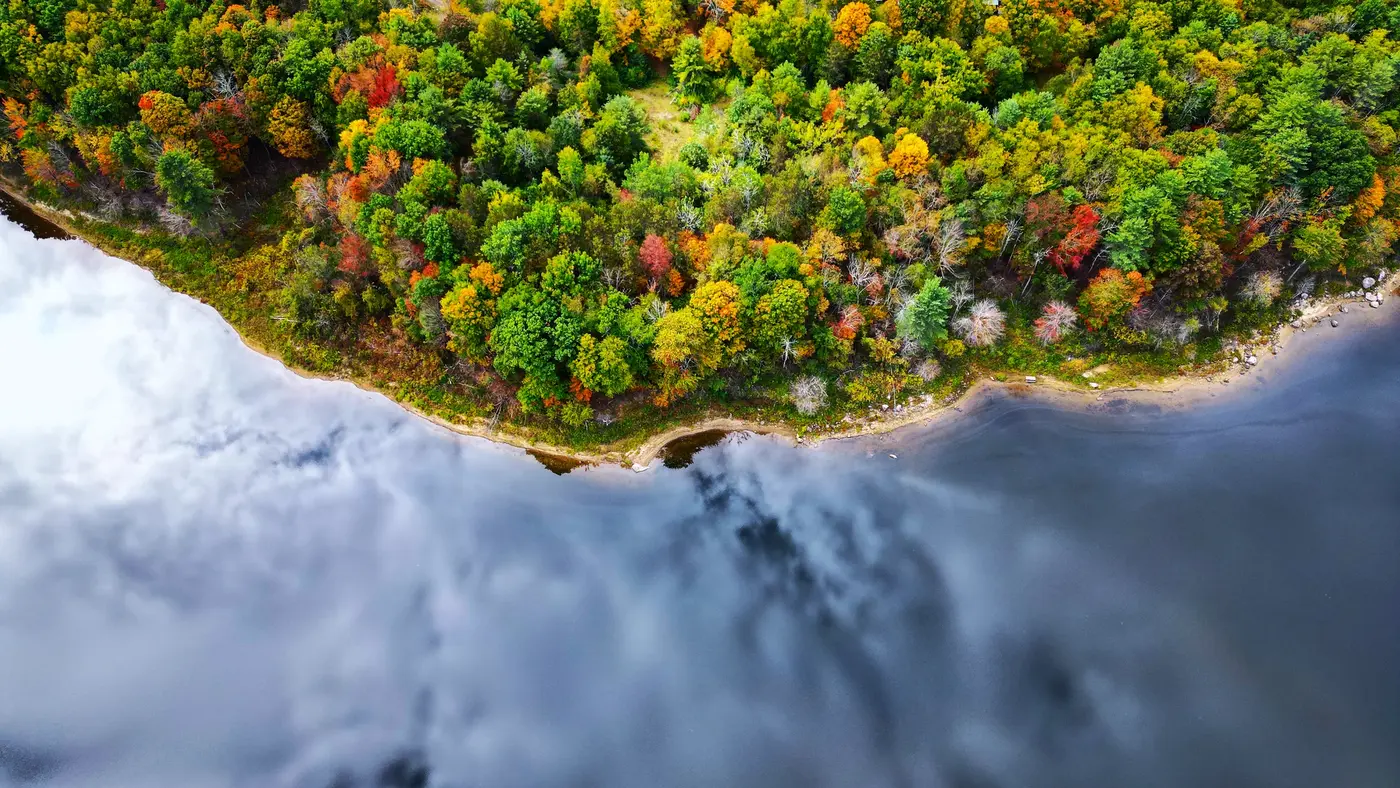
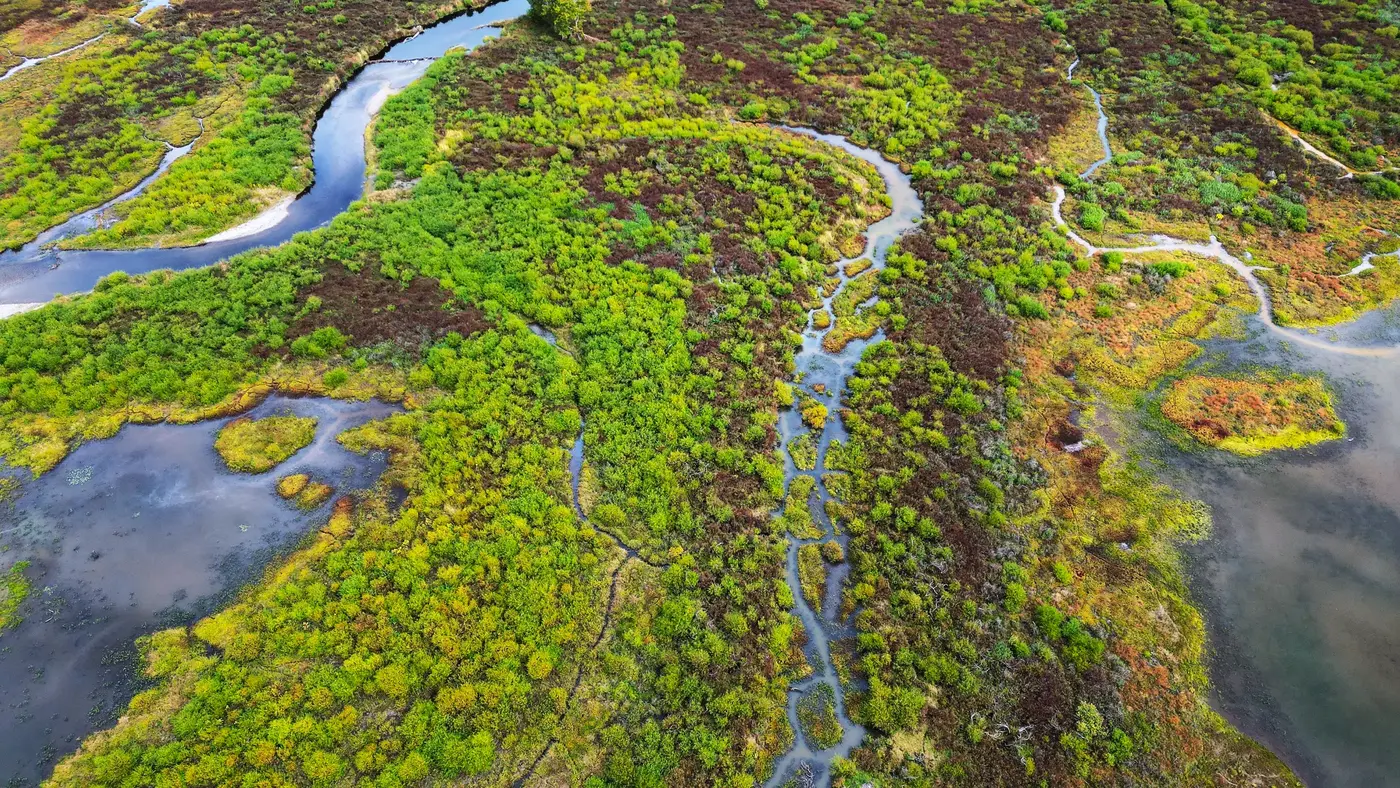
We flew the drone. Through the lens, the lake was still as a mirror, reflecting every cloud in the sky, while the woods along the shore were dyed red and yellow.
It takes effort to get to New Hampshire, but seeing that scene made the whole trip feel worth it.
Postscript · The End of the Autumn Journey
We left New Hampshire that afternoon. I put on the blue long-sleeve shirt from the Clarence DeMar Marathon, still feeling a little unwilling to let the trip end. Along the way, I kept replaying the morning: quiet forest paths, the dam with clouds reflected in the lake, the solemn peace of the cemetery, and the roadside cheers.

The return route was different. We went around New York and came to New Haven, where Yale University is located.
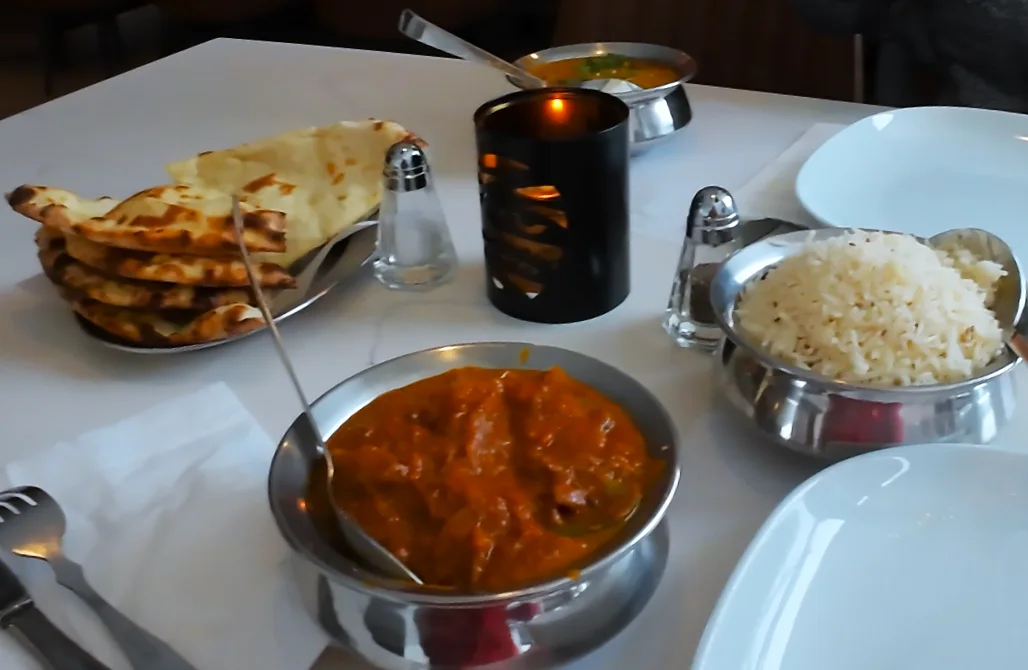
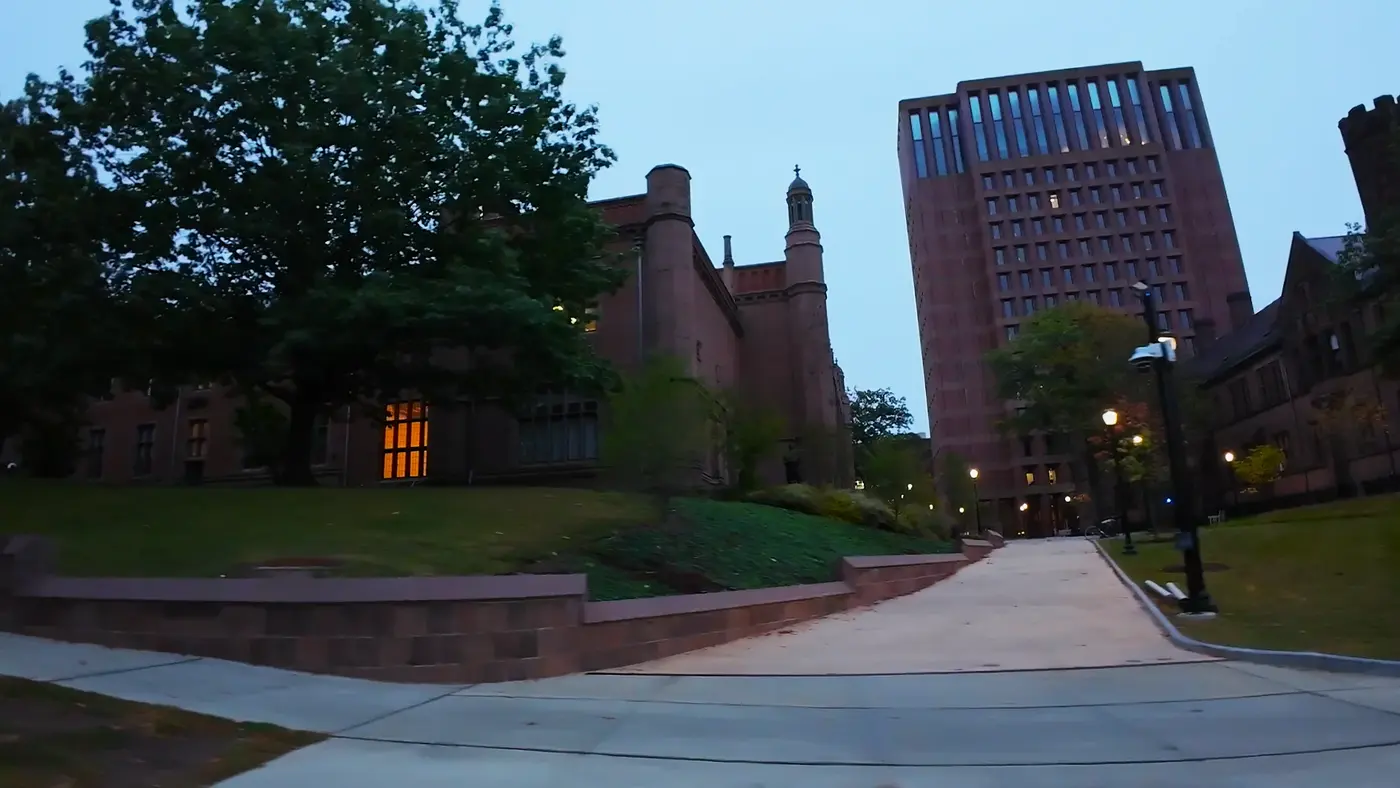
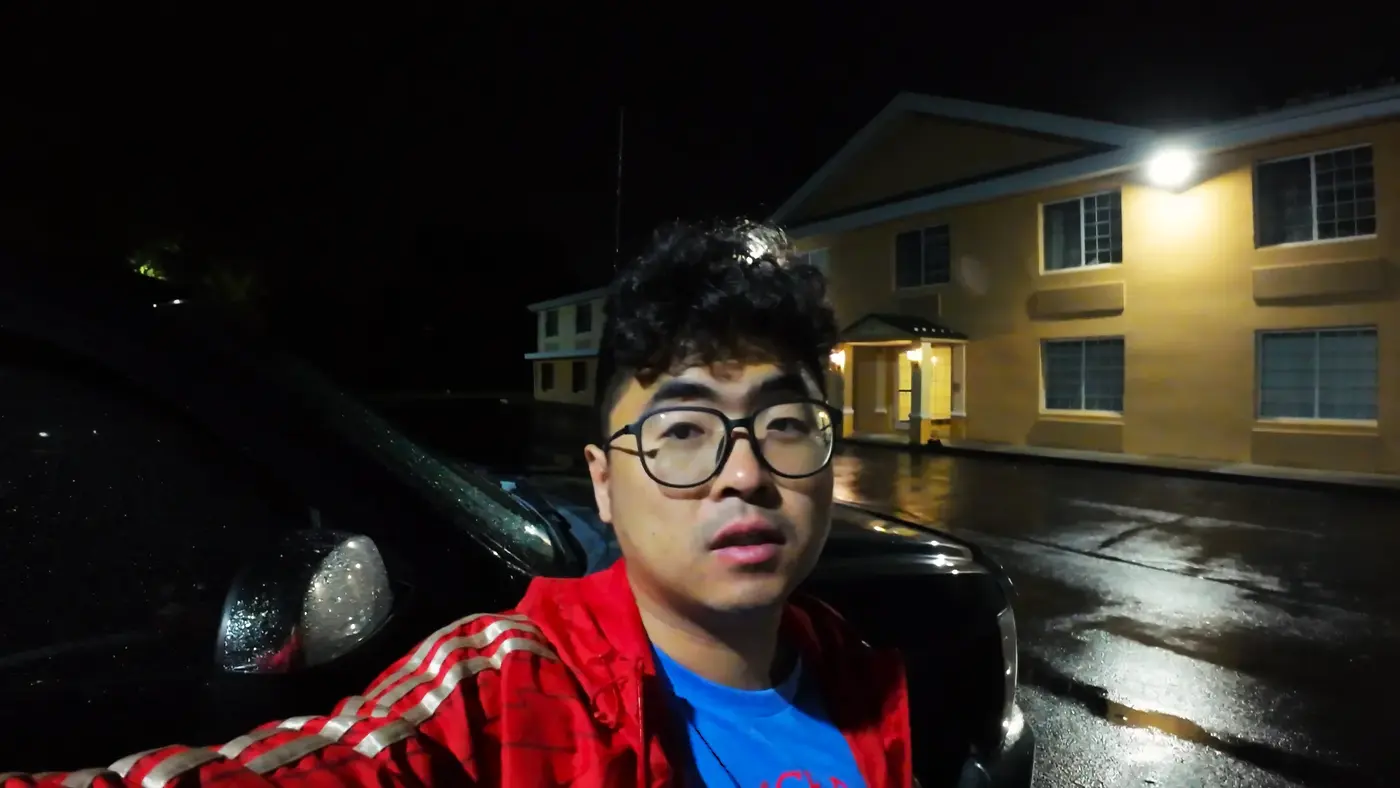
We stopped in town for a bit, found an Indian restaurant, and ordered lamb masala, naan, and rice to refuel. After dinner, I drove around the Yale campus. Lights outside the window fell across red-brick buildings and tall towers, giving the place a quiet beauty.
Founded in 1701, Yale is one of the oldest Ivy League universities in the United States. The campus is full of elegant Gothic buildings, and its alumni list includes U.S. presidents such as George W. Bush and Bill Clinton, secretaries of state such as Hillary Clinton and John Kerry, and Cha Liangyong, better known as Jin Yong.
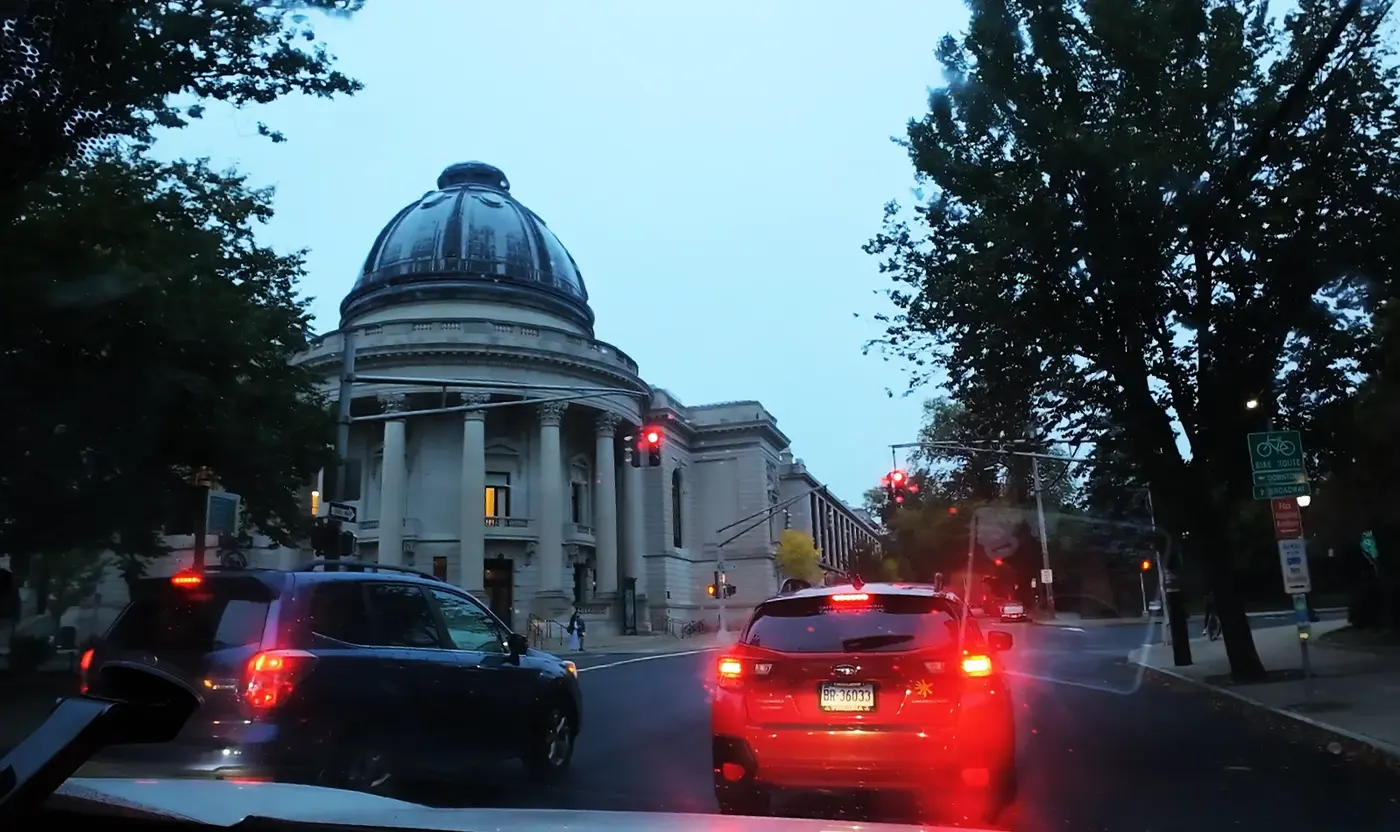
Driving through campus, I could feel its calm, weighty aura, with even a hint of martial-arts-novel atmosphere. The light rain outside did nothing to diminish it.
That night, we checked into a small hotel. The next morning, we continued driving back to Kentucky. Even though it was technically fall break, my advisor still arranged a last-minute meeting, leaving me nowhere to hide. Attendance control had been strict lately.
Even so, I have no regrets about the New Hampshire trip. In my 22nd state, I ran through New England fall colors and met people and scenes I will remember.
After the race, I found a running video by Penny Roll, the grandmother who completed her 50-state challenge that day. The photo of me with Superman came from her video. I should really film more in the future. Through one small coincidence, I became a tiny part of someone else's legendary record.