
After five years, breaking 4 hours again.
2023-PB
Preface
I have listened to the song 'Take Me Home, Country Roads' since I was a child. The first line of the lyrics, 'almost heaven West Virginia,' made me fall in love with it. Back in middle school during English class, I would sneakily listen to it on my player. Country Roads was my initiation to American country music. As for West Virginia itself, back then it felt too distant. Now, it is just a three-hour drive from our home.
This song was written and performed by the famous American singer John Denver in 1971. The melody is light and brisk, sketching the beautiful scenery of West Virginia in the eastern United States. While writing this story, I collected several versions of the song, and it remains as beautiful as ever...
"Almost heaven, West Virginia, Blue Ridge Mountains, Shenandoah River. Life is old there, older than the trees, younger than the mountains, growing like a breeze. Country roads, take me home to the place I belong, West Virginia, mountain mama, take me home country roads..."
West Virginia: Huntington 🏈 Tri-State Confluence
🏈 Huntington, West Virginia
Compared to the song, the state of West Virginia doesn't seem to have a strong presence. On the marathon map, it is even more obscure.
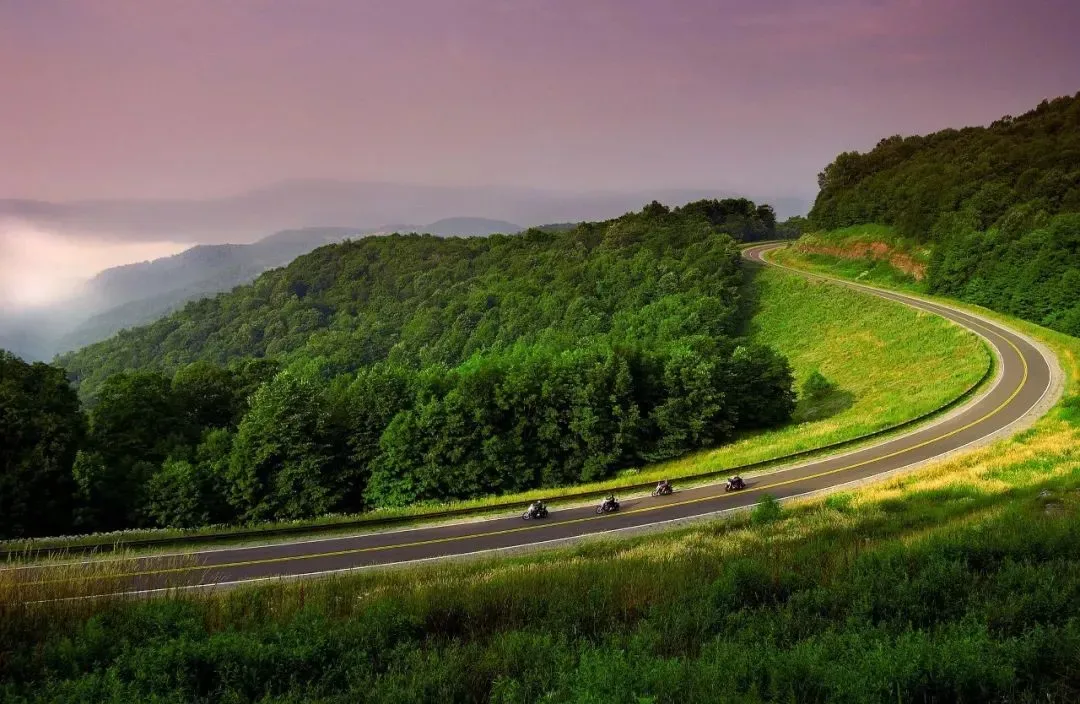
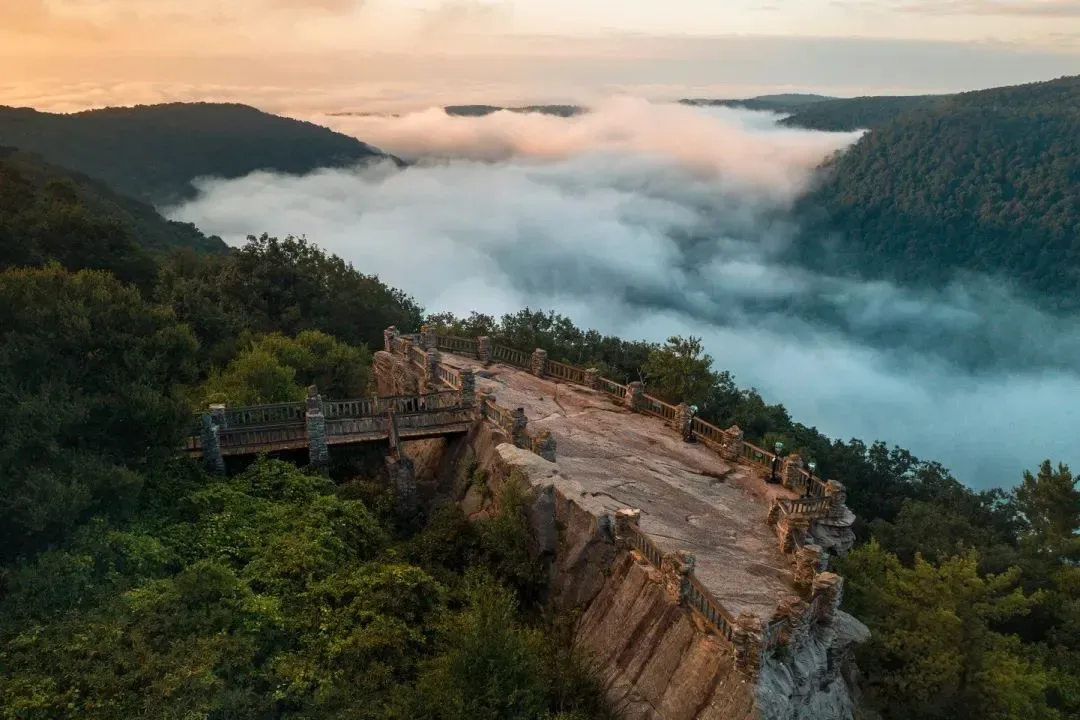
However, West Virginia's landscape can truly be described as spectacular. Although it is close to Kentucky, the terrain is completely different. Because West Virginia is entirely covered by mountains and plateaus with no plains, it is also known as the Mountain State. In the Potomac Highlands, the peaks reach nearly 1,500 meters, hosting many ski resorts, state parks, waterfalls, and winding trails.
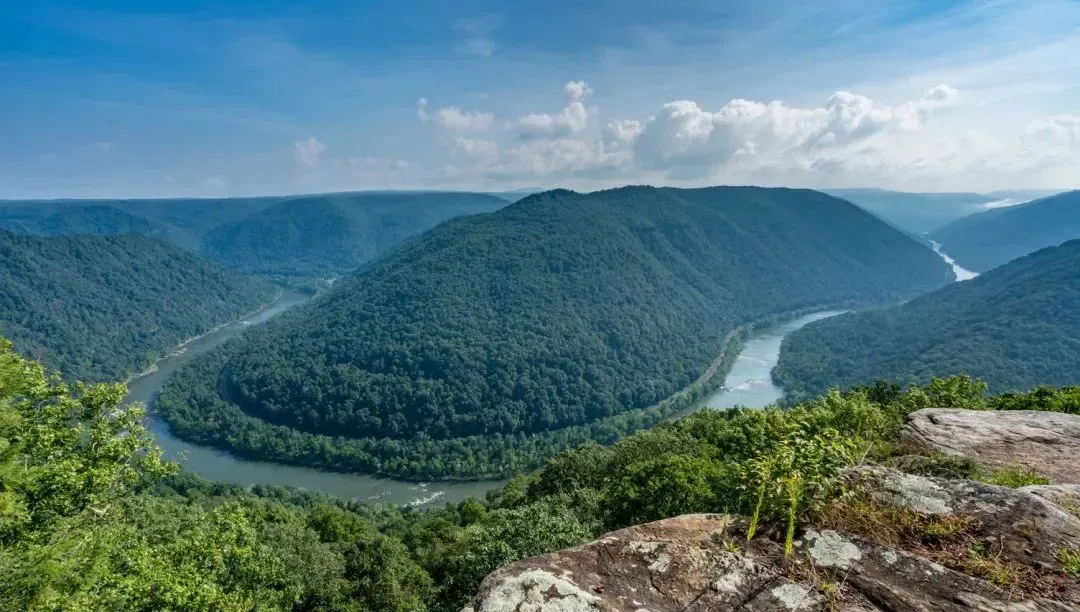
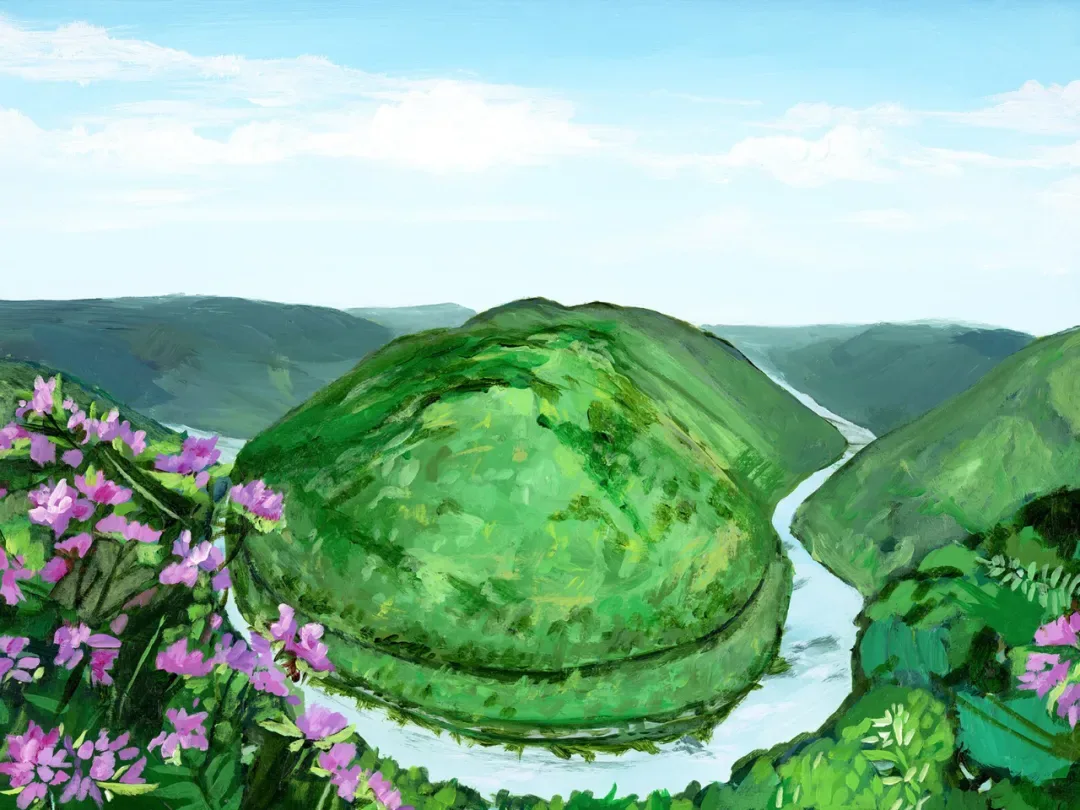
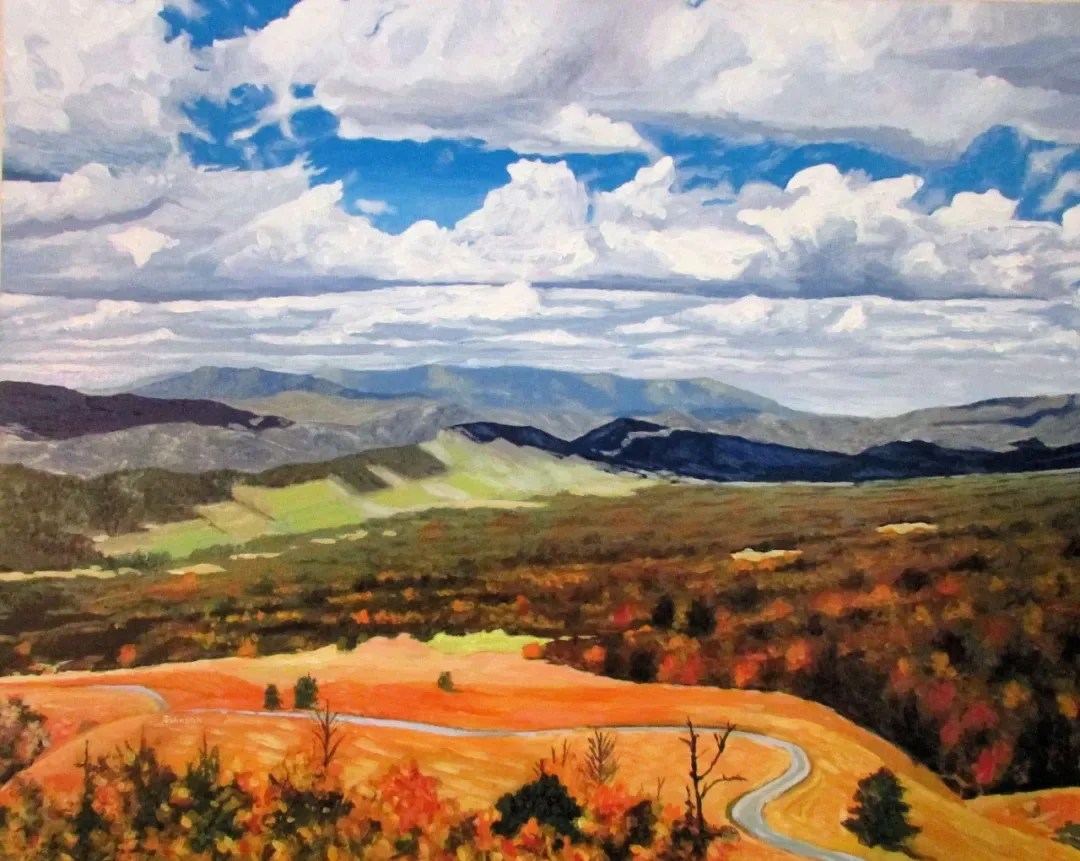
Due to its unique geography, West Virginians developed a sense of independence early on. The Appalachian and Blue Ridge mountains separated this area from the rest of Virginia, so they did not feel a strong connection to that state. In fact, West Virginia is the only state born out of the American Civil War.
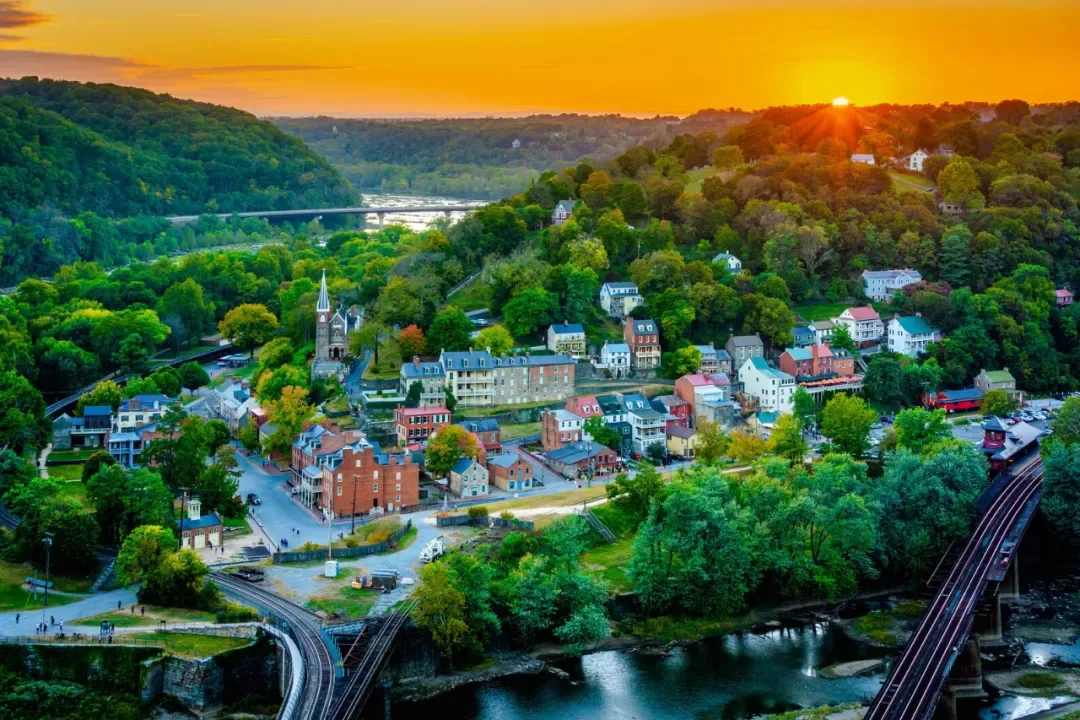
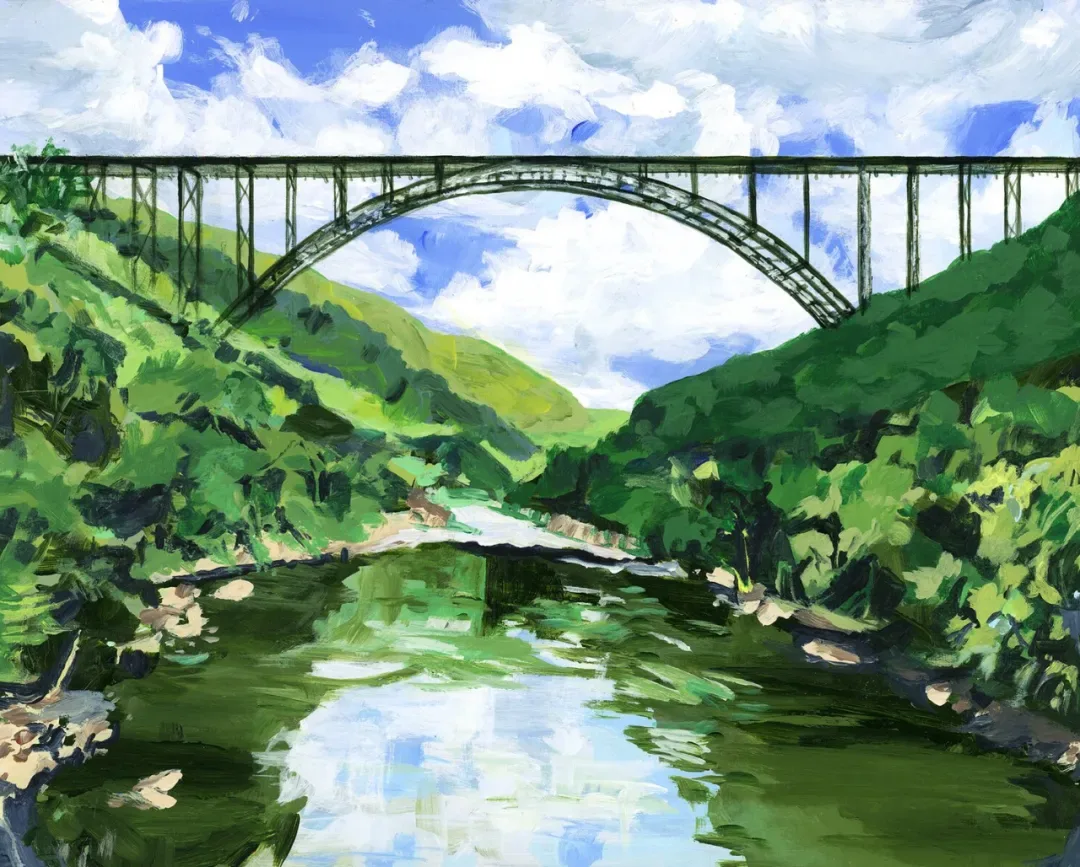
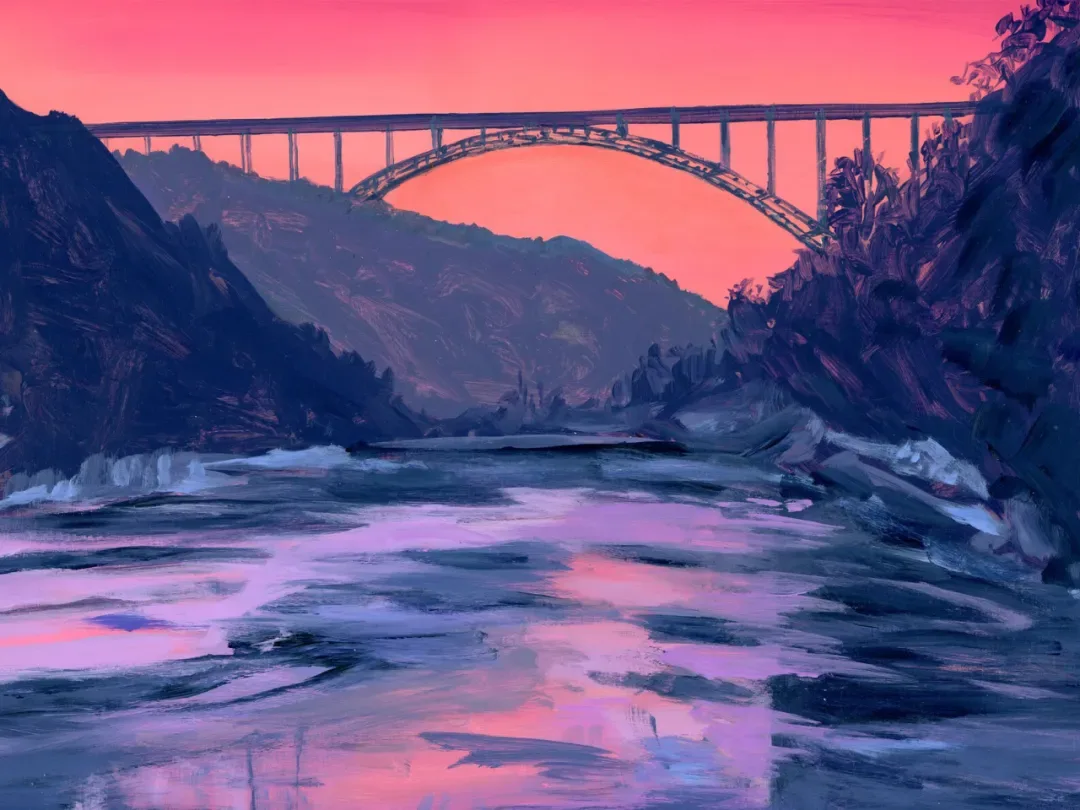
As for Huntington, where we were heading, it isn't very famous either—it is a tiny city. However, its location is quite unique: right at the tri-state junction of Kentucky, Ohio, and West Virginia, and at the confluence of the Ohio River and the Guyandotte River.
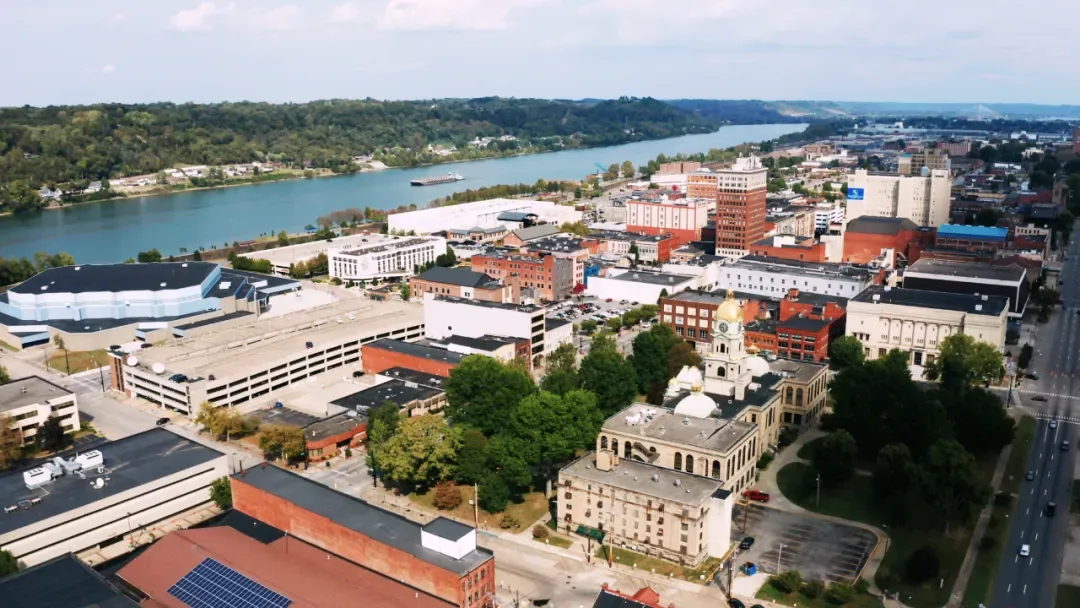
The junction location is great because it means it's very close to us. Along the way, we would pass Lexington, which is a one-hour drive away. Lexington has our favorite Chinese buffet, offering Saturday specials like Di San Xian (sauteed potato, eggplant, and green pepper), boiled fish, pork trotter, and various Sichuan dishes. On this trip, we naturally wouldn't miss it.
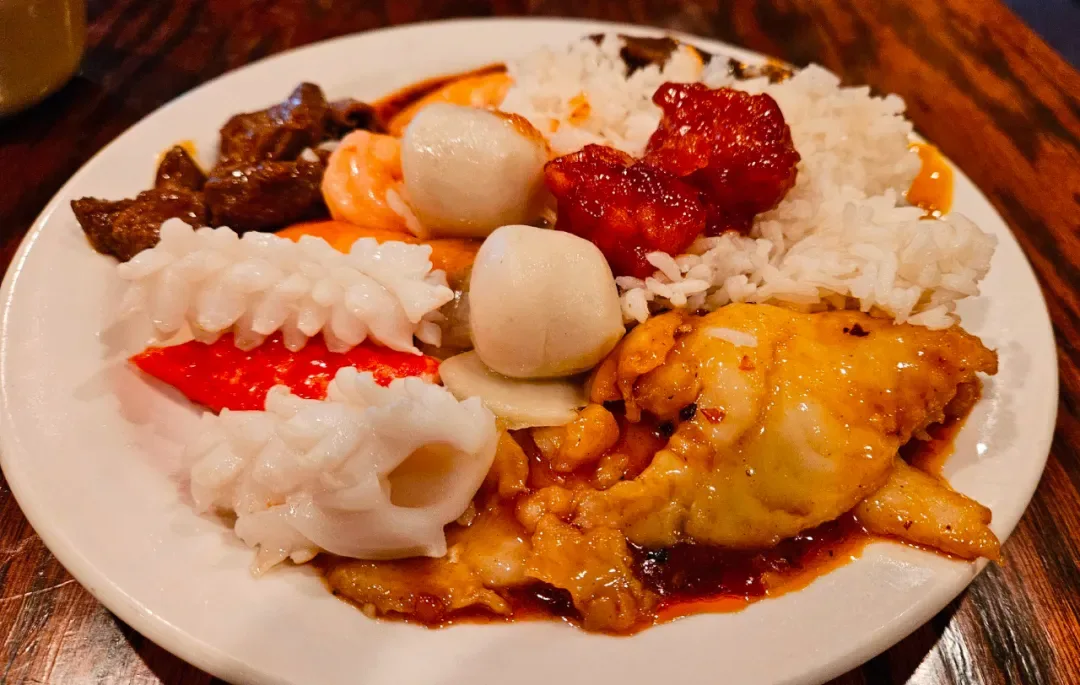
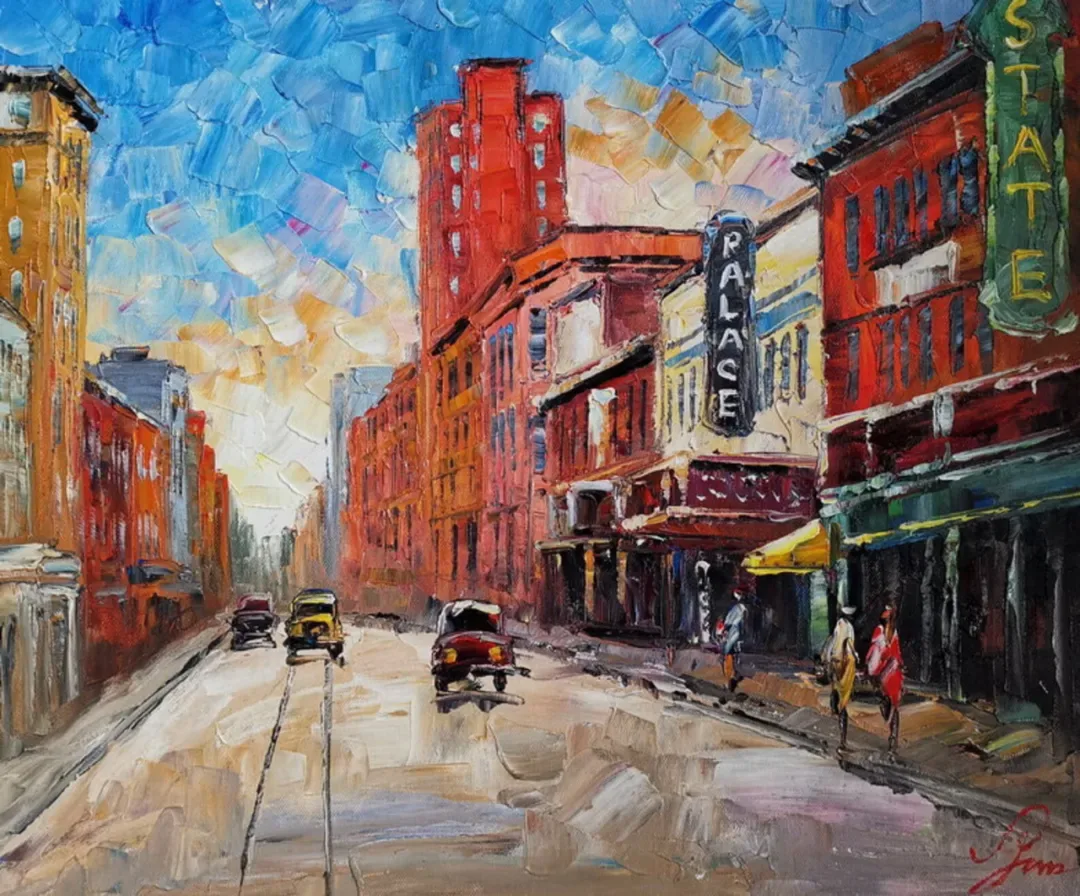
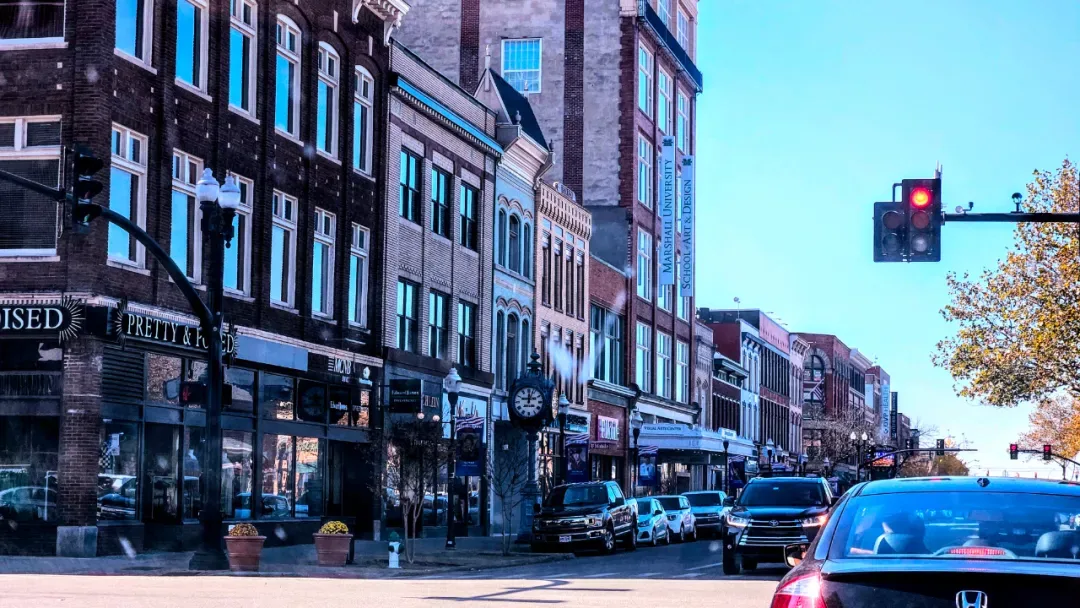
After eating our fill, we drove for another two hours and arrived in Huntington. The city is small, with a reported population of about 50,000. The outskirts as we entered looked a bit rundown.
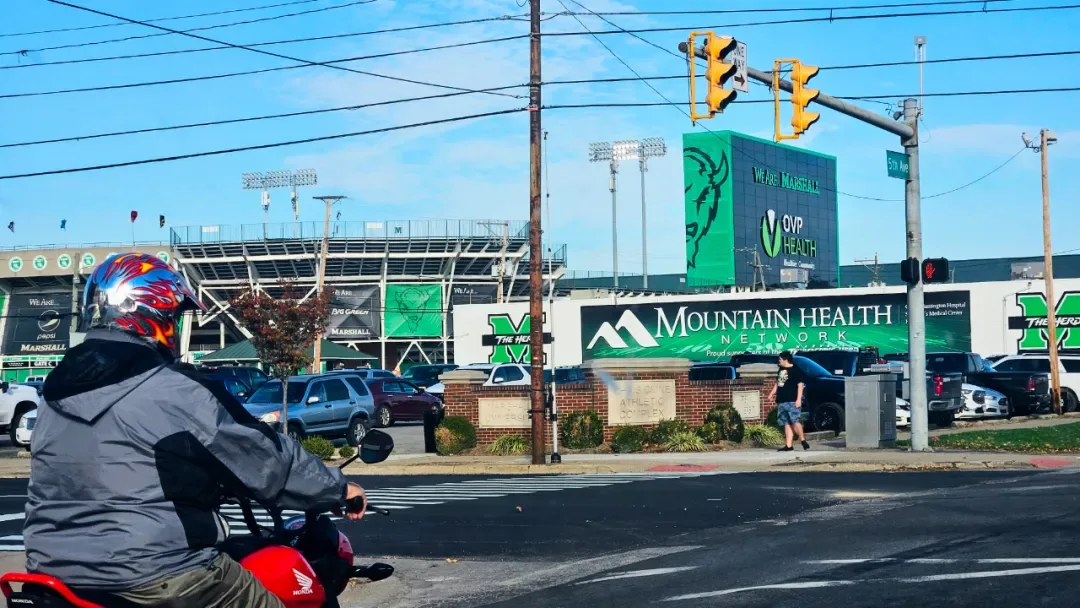
We came to Huntington to run the Marshall University Marathon. This is a race where you get to cross the finish line holding a football. It's very unique, and runners love it.
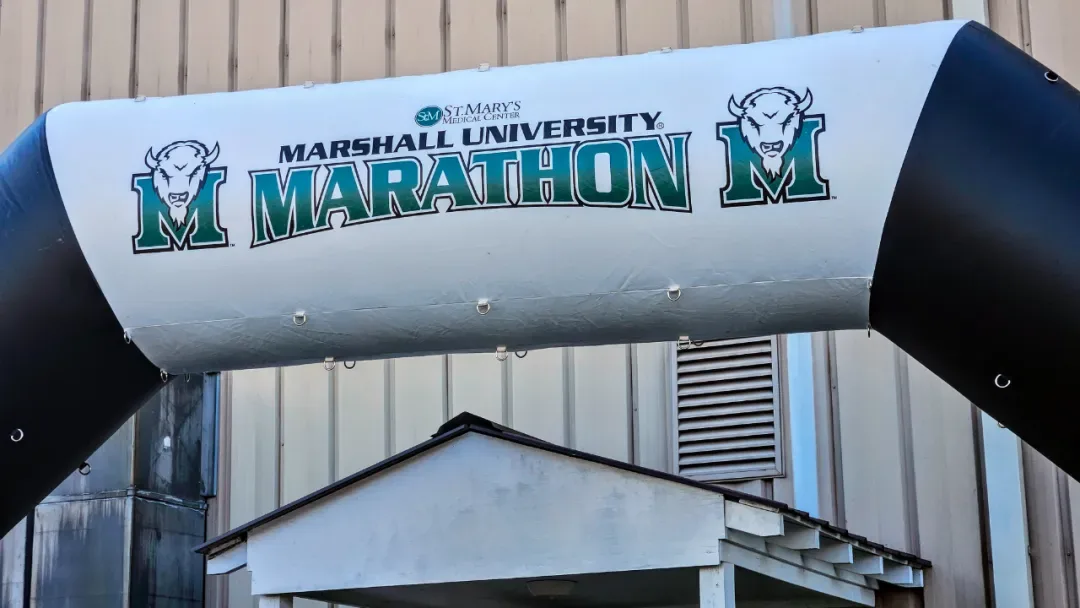
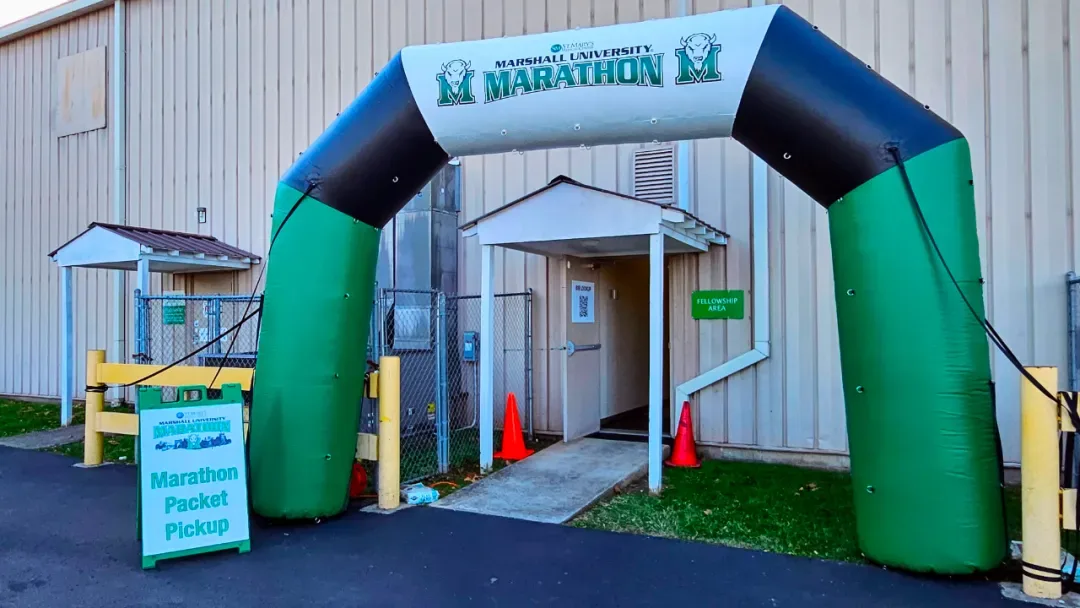
Upon arriving in Huntington, we went straight to the expo to pick up our gear. The expo was held in a church next to the green football stadium. The setup was simple, focusing on efficiency.
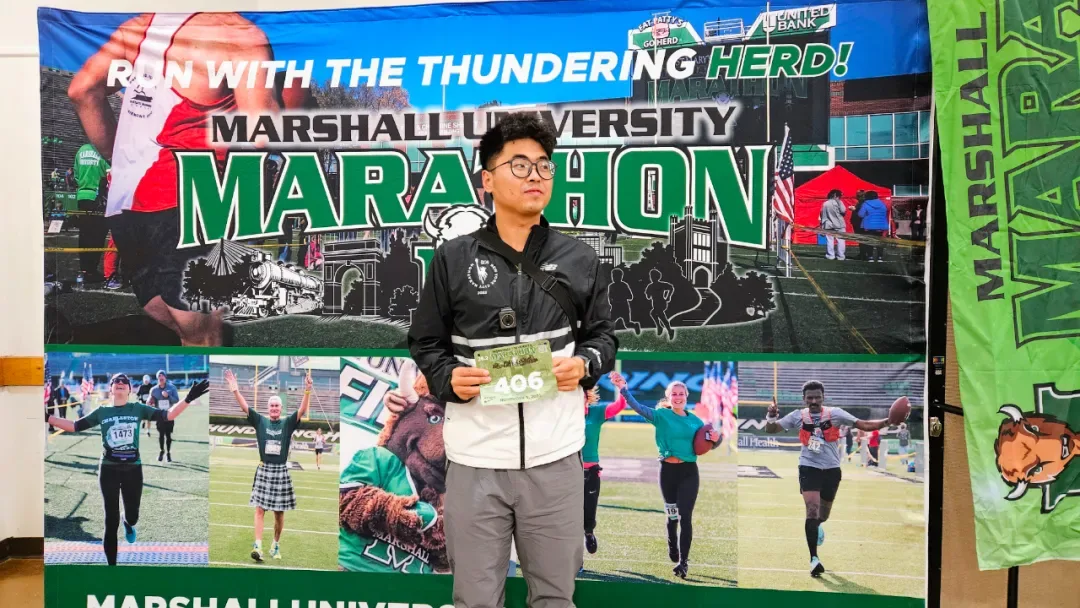
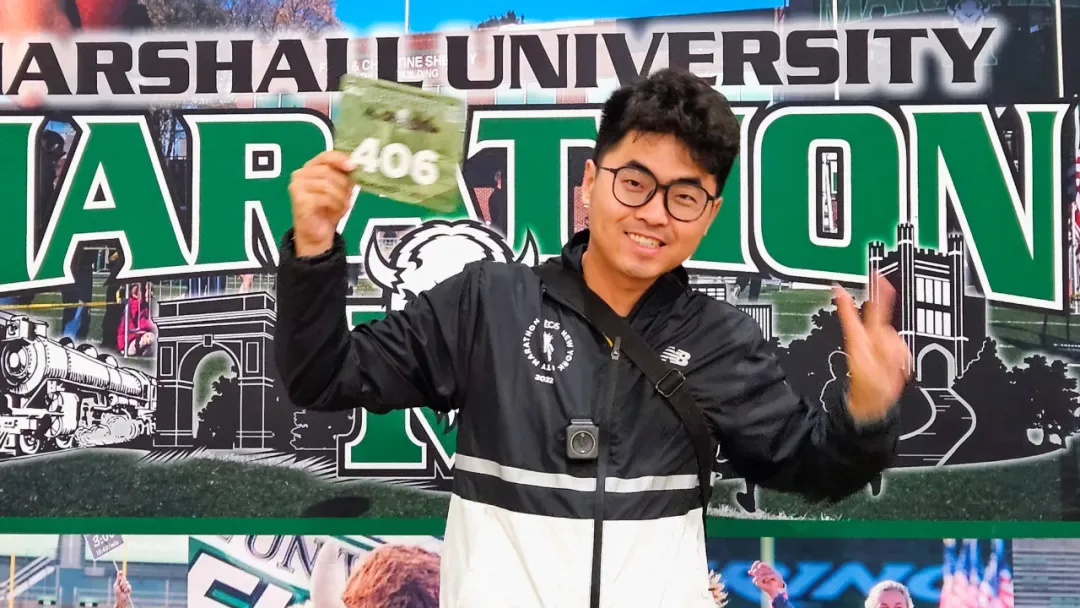
After grabbing our packets, we had some time, so we decided to stroll around Marshall University. It was my first time seeing a marathon named directly after a university, and I was curious to see what made this place special.
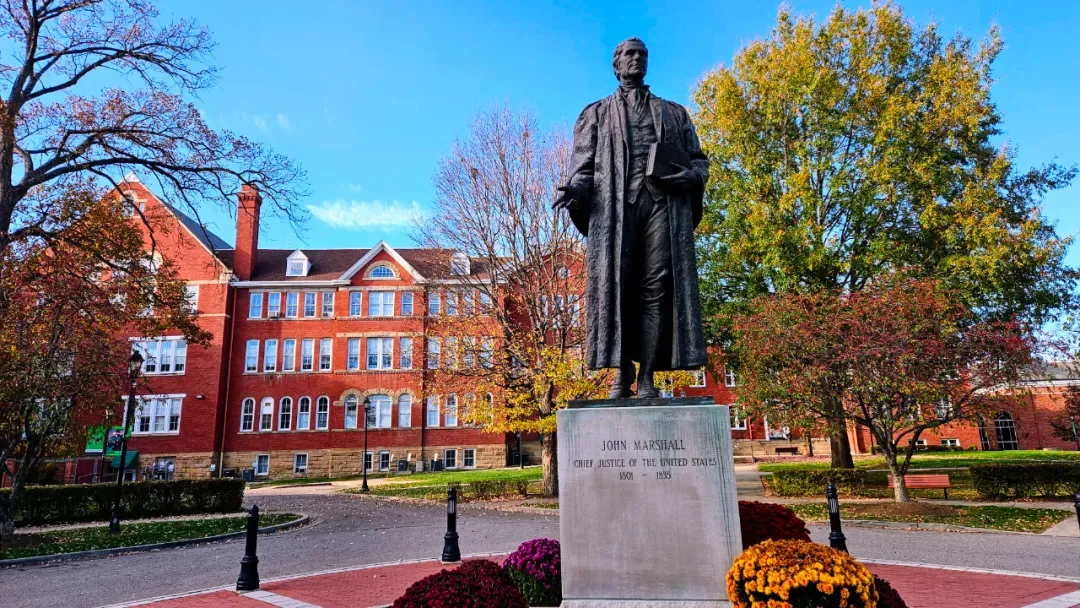
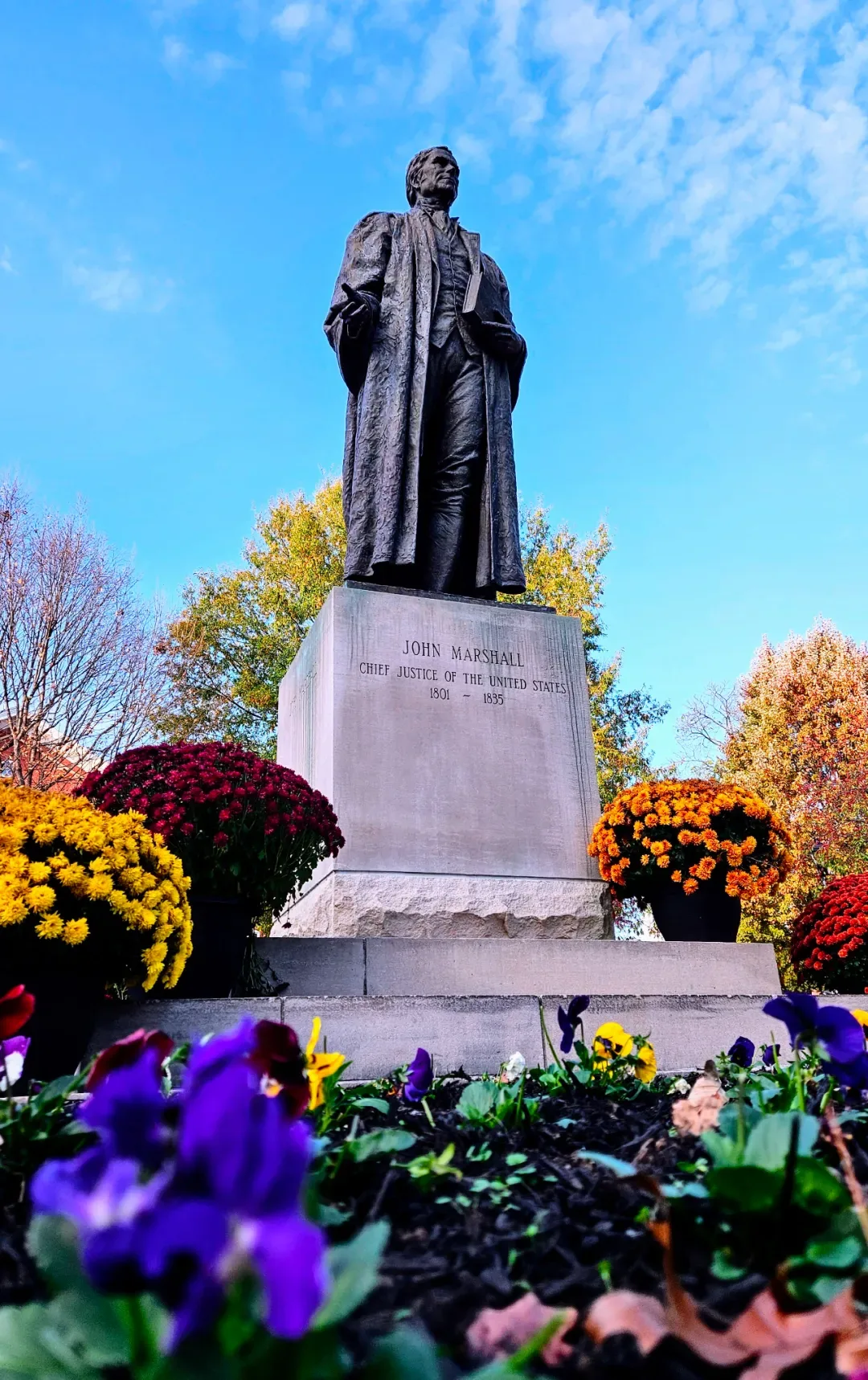
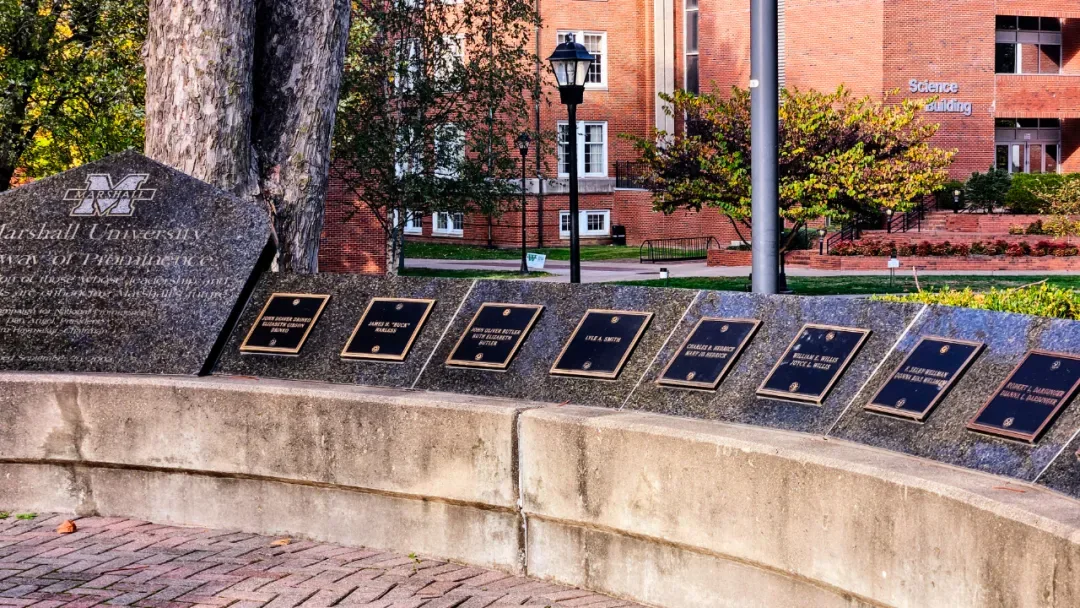
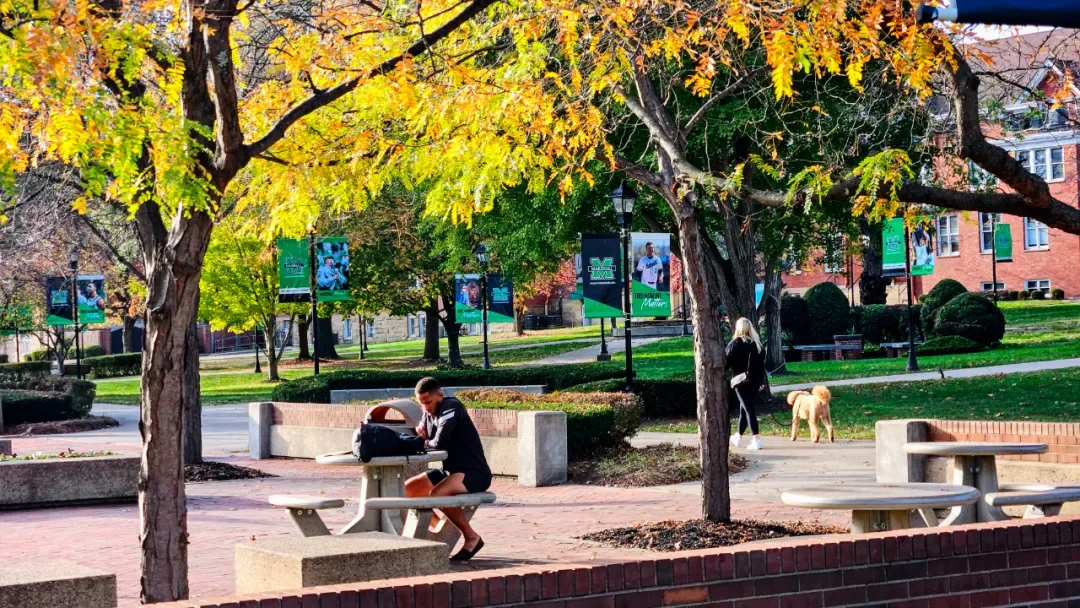
When we first arrived at Marshall University, I habitually searched for the school's ranking. Seeing it wasn't very high, I was a bit puzzled. If it isn't a prestigious university, why does the whole town seem so proud of it? They even named the marathon after it. Later, when we visited Kroger, we saw school-branded souvenirs everywhere.
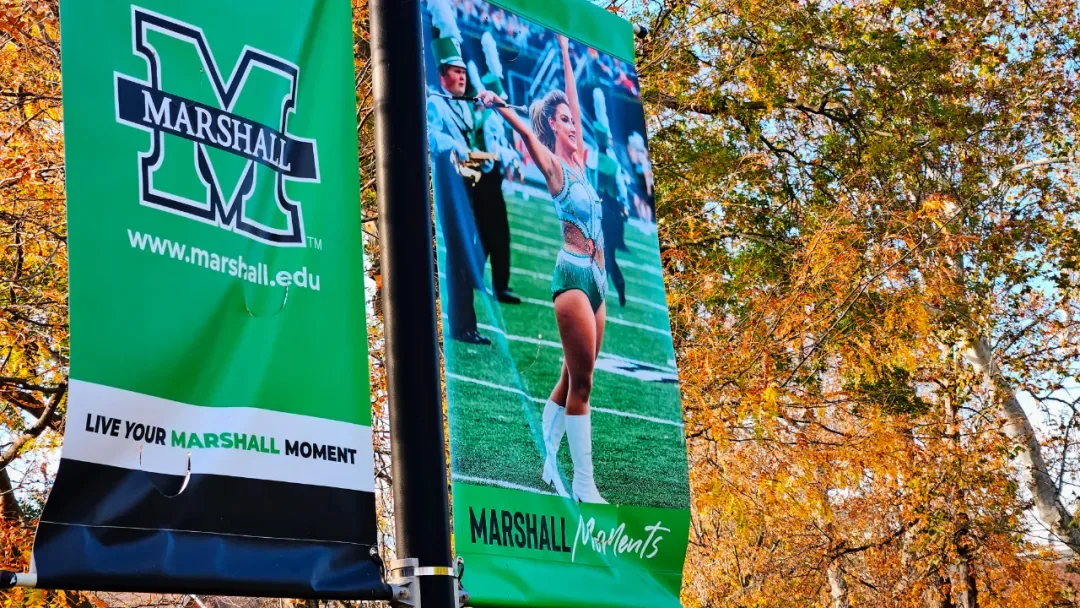
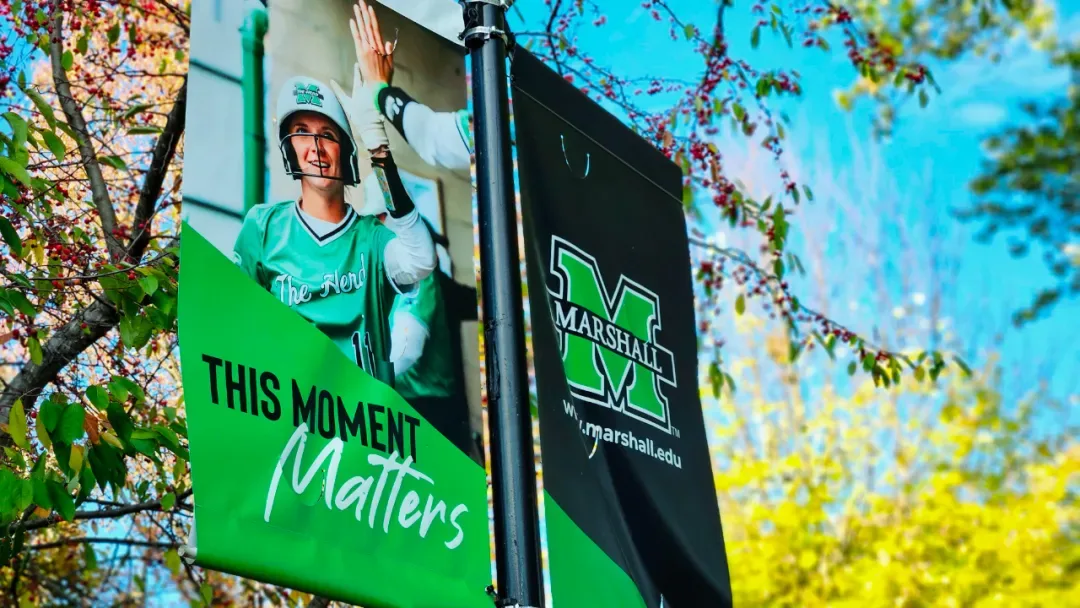
Suddenly, I realized I had fallen into the trap of Chinese-style thinking. Our education overemphasizes academic rankings and test scores, so I was used to analyzing things through that lens.
Marshall University's greatest pride is its football team, the Thundering Herd. This team has won three national championships, including NCAA Division I-AA titles in 1992 and 1996, and finished as runner-up in 1991, 1993, and 1995. Even though the town has only 50,000 residents, a single game can draw over 38,000 fans!
Considering that American society is practically built on sports, the residents' pride is not surprising. I hope China will have a sports culture like this one day, so no one will say I'm wasting my life by running marathons.
When I was a kid, I loved playing soccer and thought I was pretty good. But my homeroom teacher would always pull me aside, warning that running around would deform my legs. Now that I run marathons, my family and friends constantly warn me that my knees will be ruined. It feels like an endless loop.
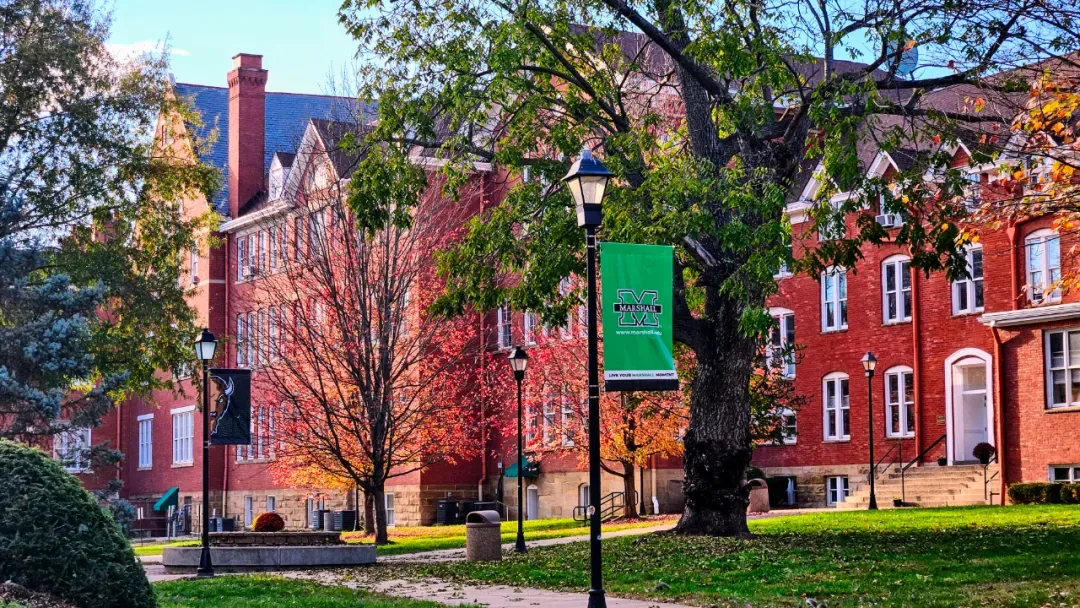
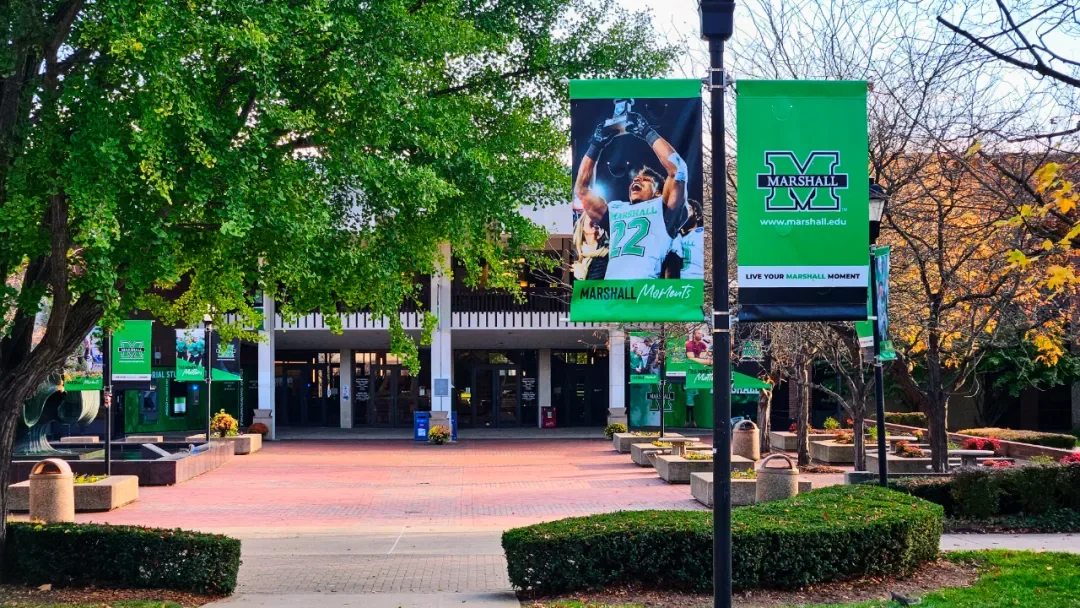
Anyway, back to Marshall University. The campus slogans reflect this pride everywhere. The green signs paired with the golden autumn foliage create a very refreshing atmosphere.
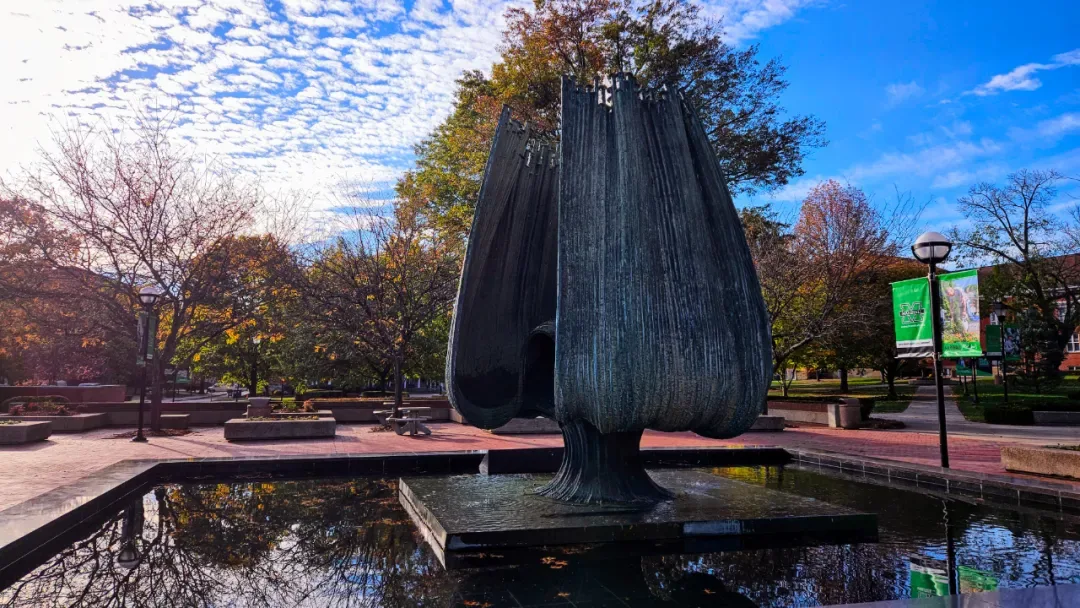
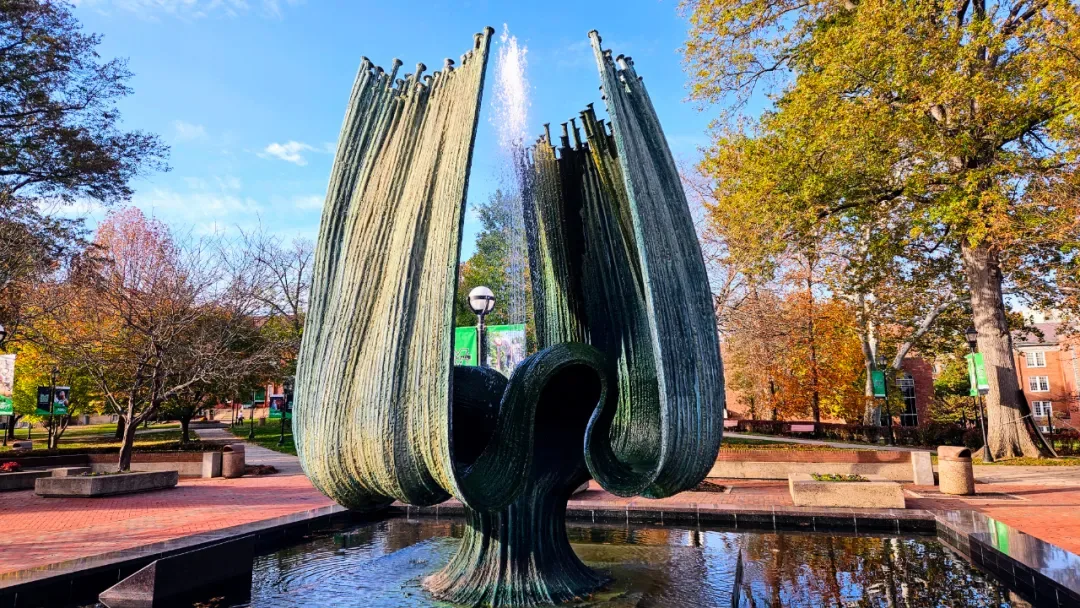
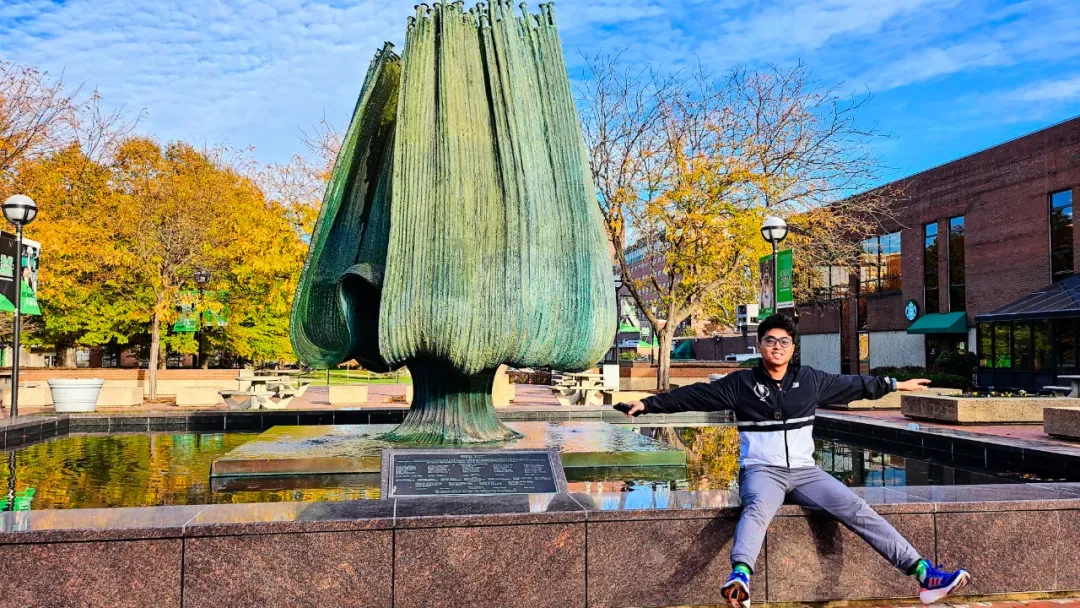
As we walked, we reached a fountain outside the Memorial Student Center. This fountain was built to honor the 75 victims of the 1970 plane crash. On November 14, 1970, the deadliest single-tragedy aviation crash in NCAA sports history occurred, claiming 75 lives. The crash on a rainy hillside in Wayne County, West Virginia, wiped out almost the entire Marshall University football team, along with coaches, crew, and many dedicated fans.
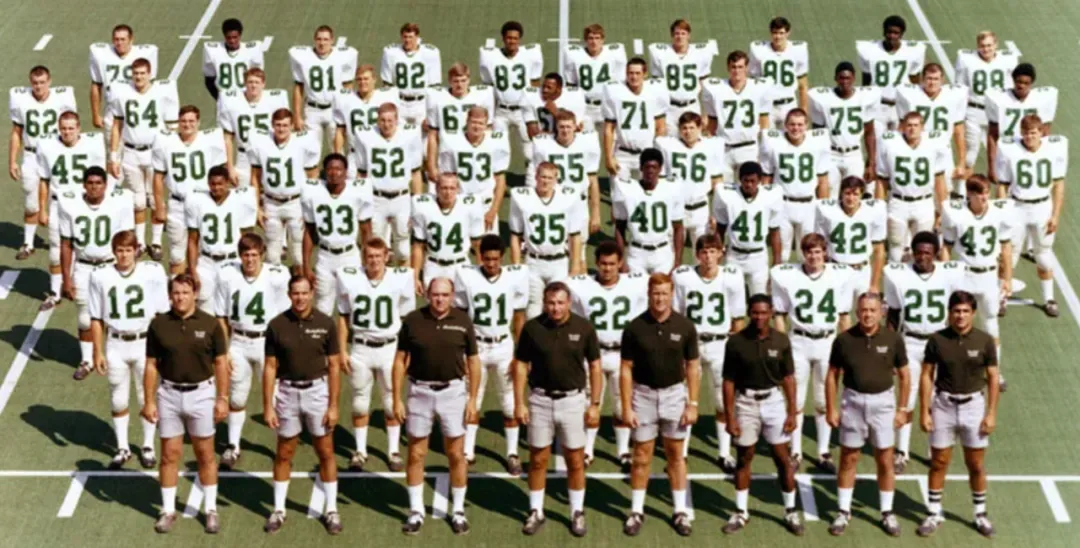
The monument was created by sculptor Harry Bertoia, standing 13 feet tall and weighing 6,500 pounds. He designed the fountain to 'commemorate the living, not the dead—on the waters of life, rising, receding, surging, to express upward growth, immortality, and eternity.'
For Marshall students and alumni, this team is the city's pride and its eternal scar. The Memorial Fountain stands as a symbol of resilience, eternal spirit, and looking forward.
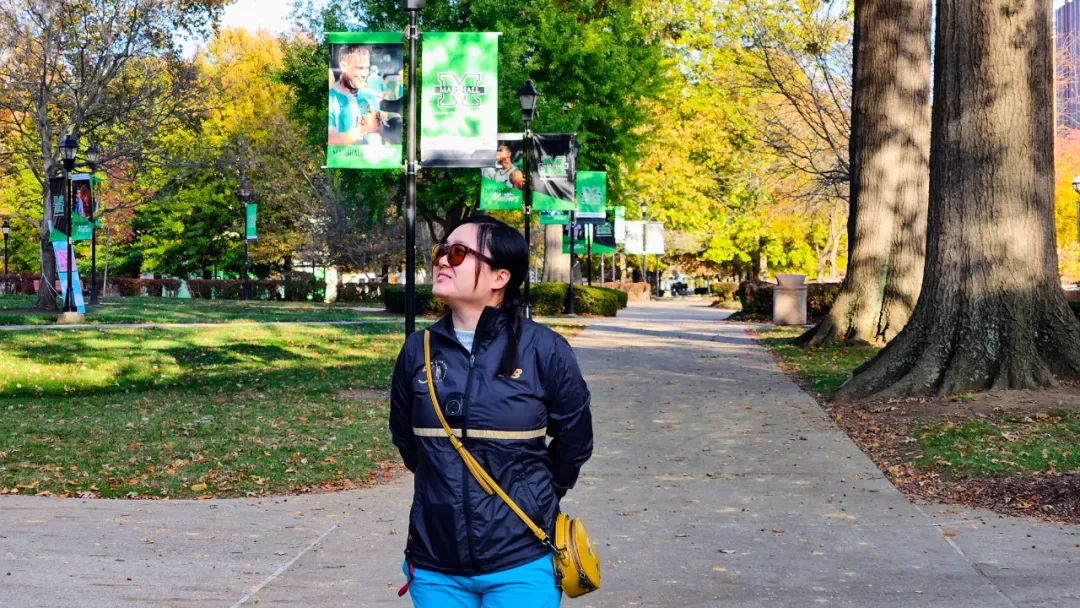
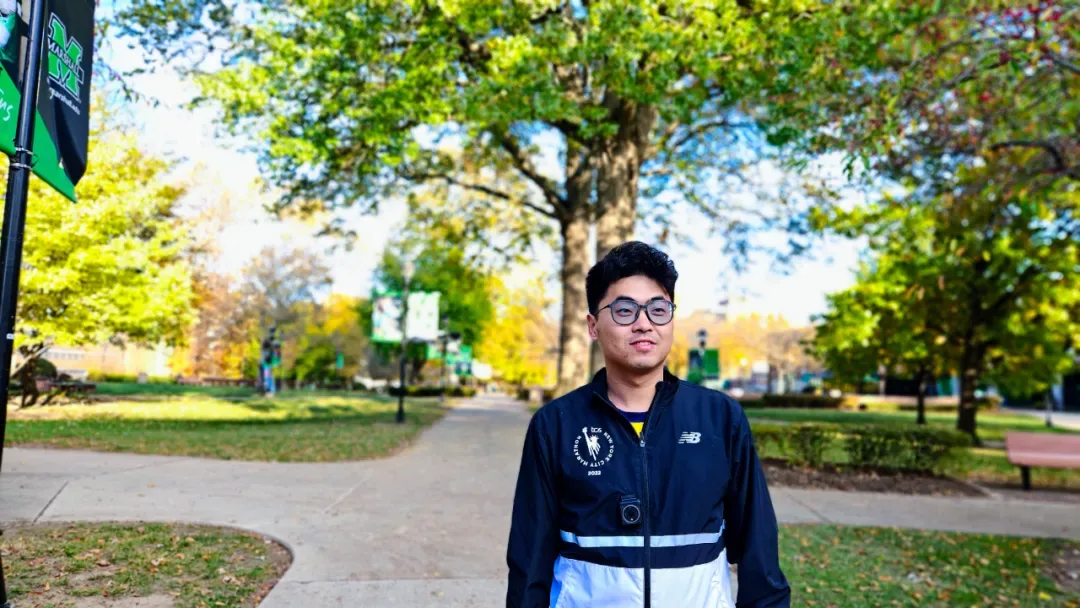
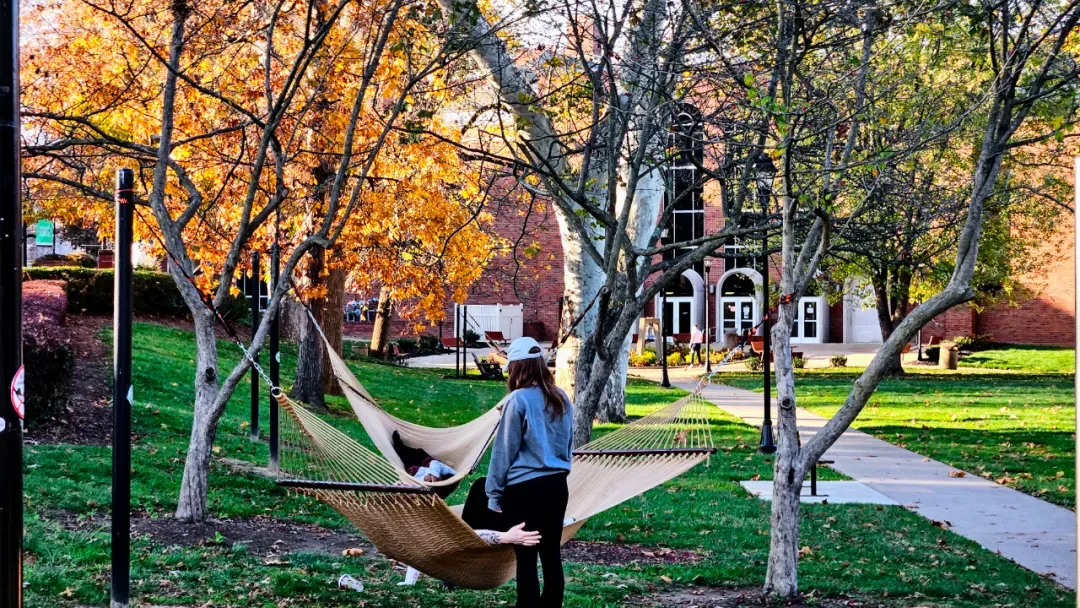
We took a lot of photos around the campus, which was beautiful. Later, we bought some breakfast at the supermarket and headed back to our motel. This was my first time staying in a motel, and it exceeded my expectations—very convenient, clean, and comfortable.
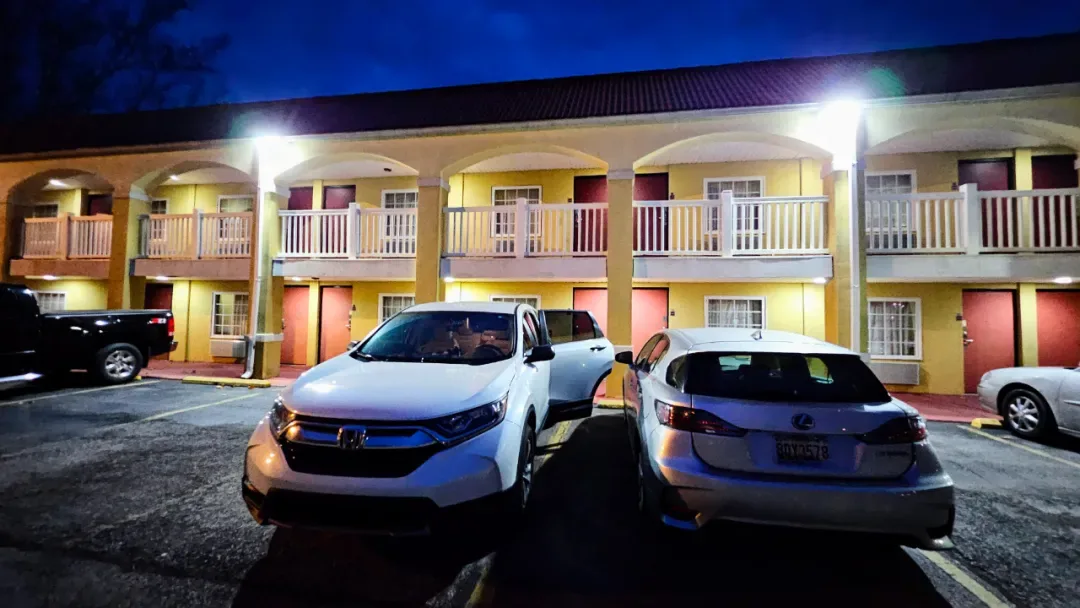
We watched some episodes of 'Divas Hit the Road' and Siqi worked for a bit before we went to bed early. The motel had decent soundproofing. They supposedly offered breakfast the next morning, but we had to leave too early to catch it.
Marshall University Marathon: 19th Anniversary 🏈 Huntington, West Virginia
🏈 Huntington, West Virginia
This is West Virginia's largest marathon, but it must be said that the Marshall University Marathon and Half Marathon is still a relatively small race (with just over 1,800 participants across both distances in 2023). The course is a 13.1-mile loop, which marathon runners complete twice.
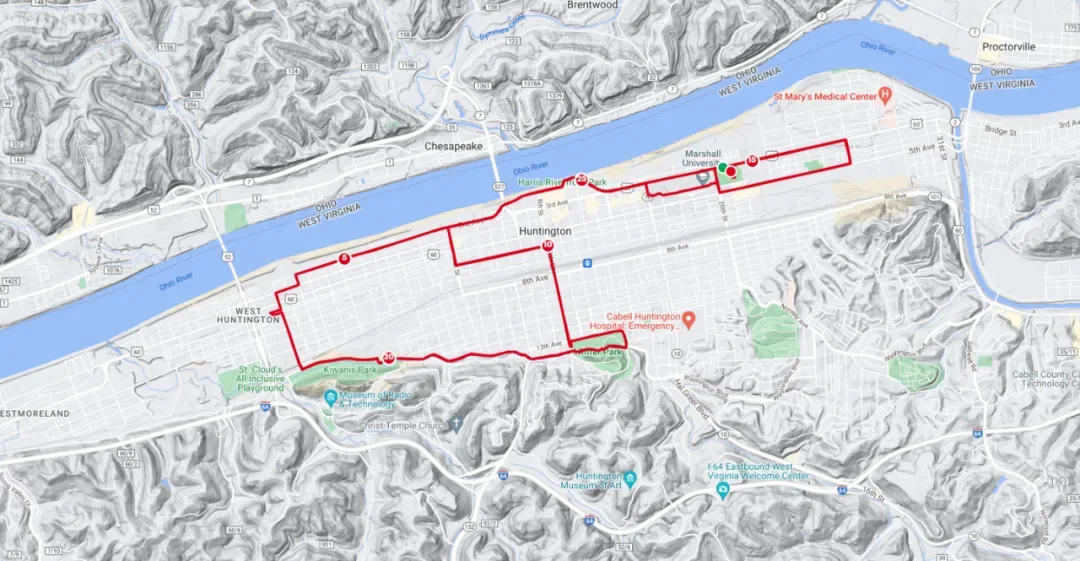
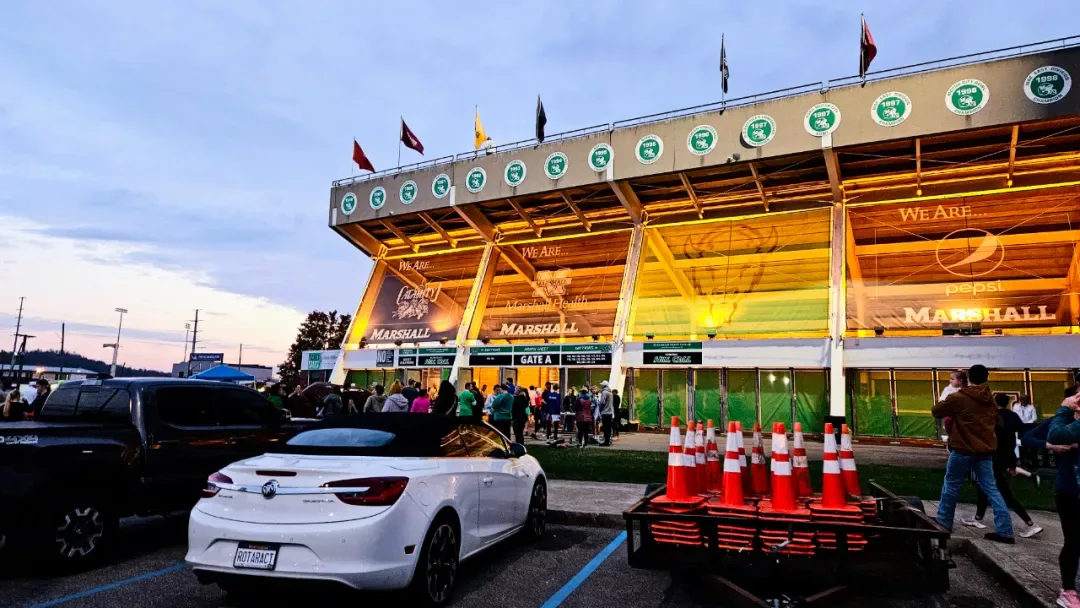
The start and finish lines are at Marshall University's Joan C. Edwards Stadium. The course loops through downtown Huntington, Pullman Square, several parks, and a straight stretch through a light industrial area.
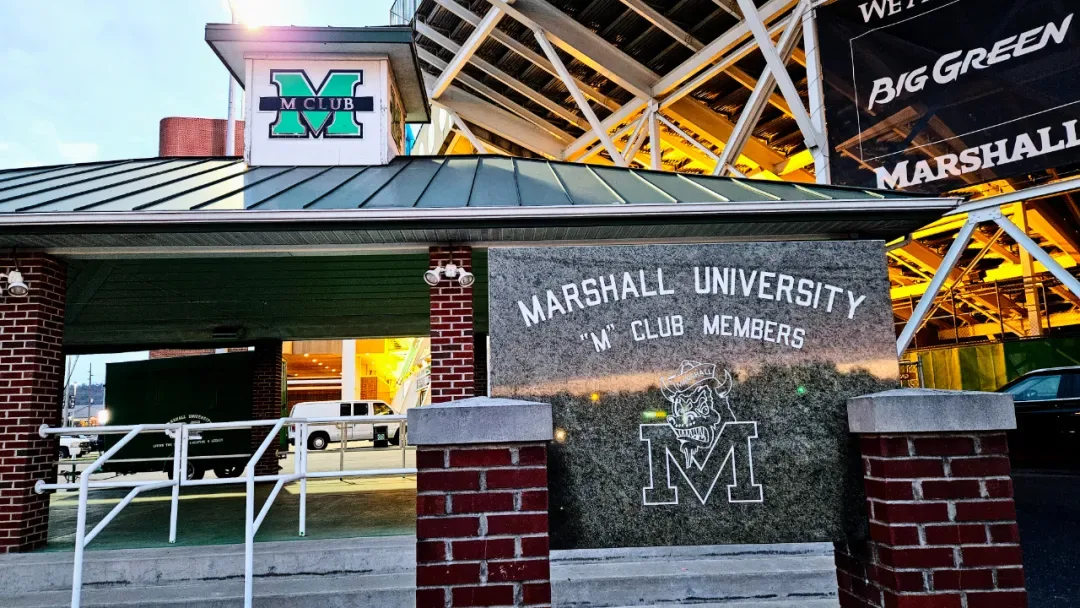
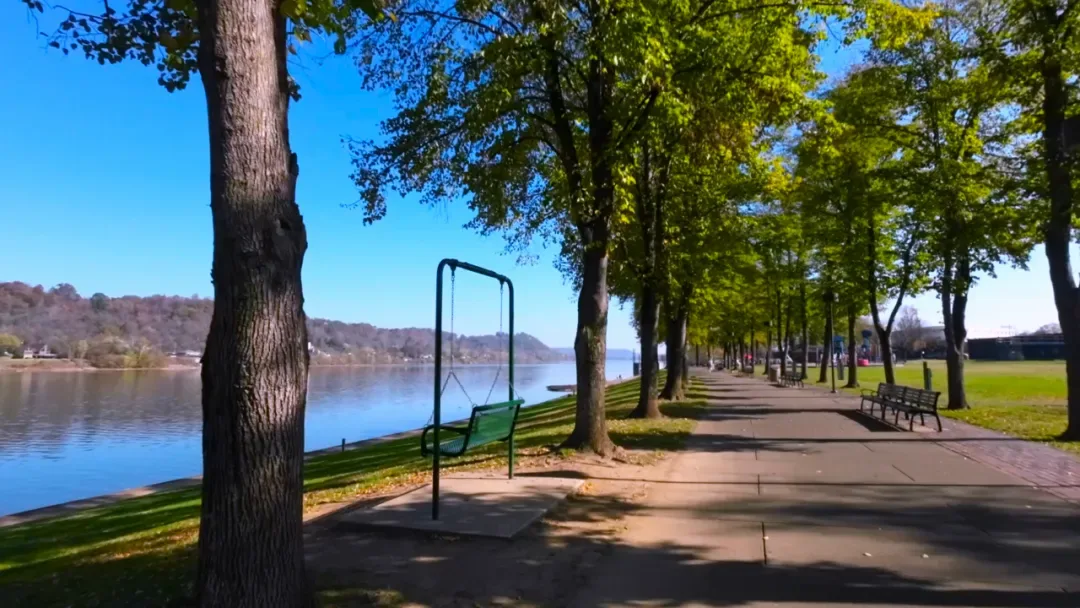
I enjoyed running through the neighborhoods and looking at the houses. We ran a short stretch through Harris Riverfront Park along the river (I wish this section had been longer), looped through the larger Ritter Park, ran past the campus, and finished on the field of Joan C. Edwards Stadium.
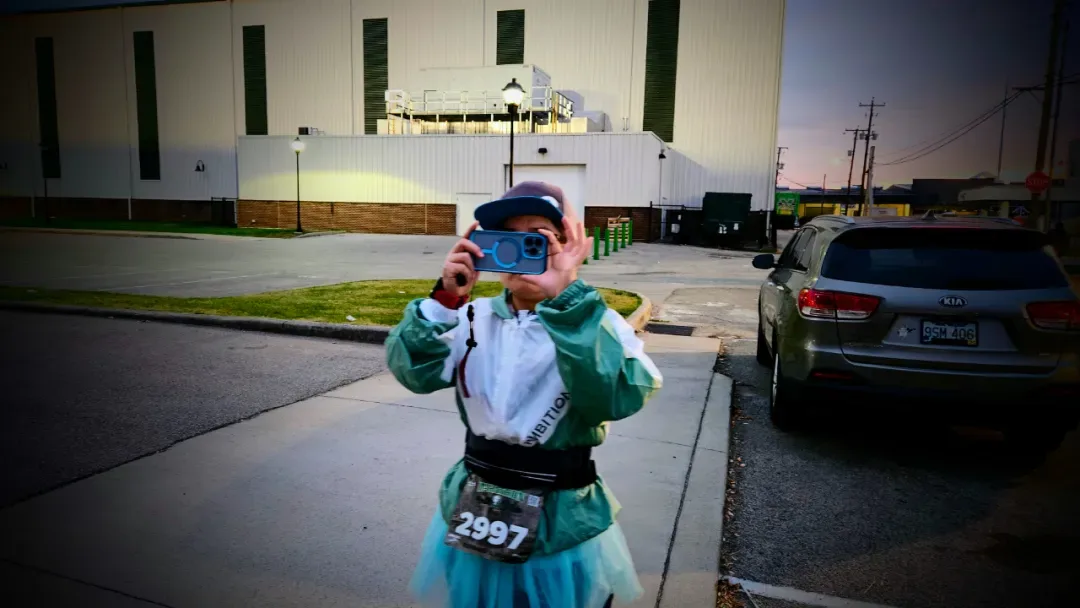
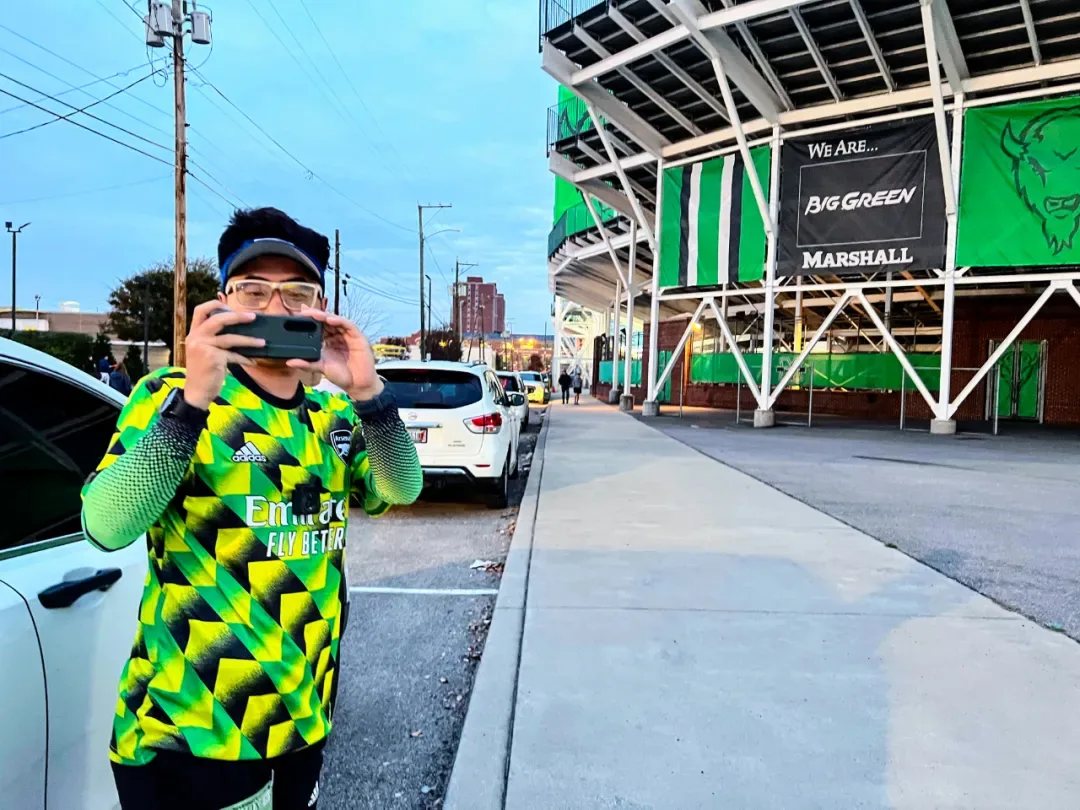
For me, the first highlight of the day was that before running through the Marshall campus for the second time, we were handed a white flower to place on the 1970 football team memorial.
Another highlight: just before the finish line, volunteers hand a football to the marathon runners, allowing them to cross the line in a 'touchdown' style. That is truly unique.
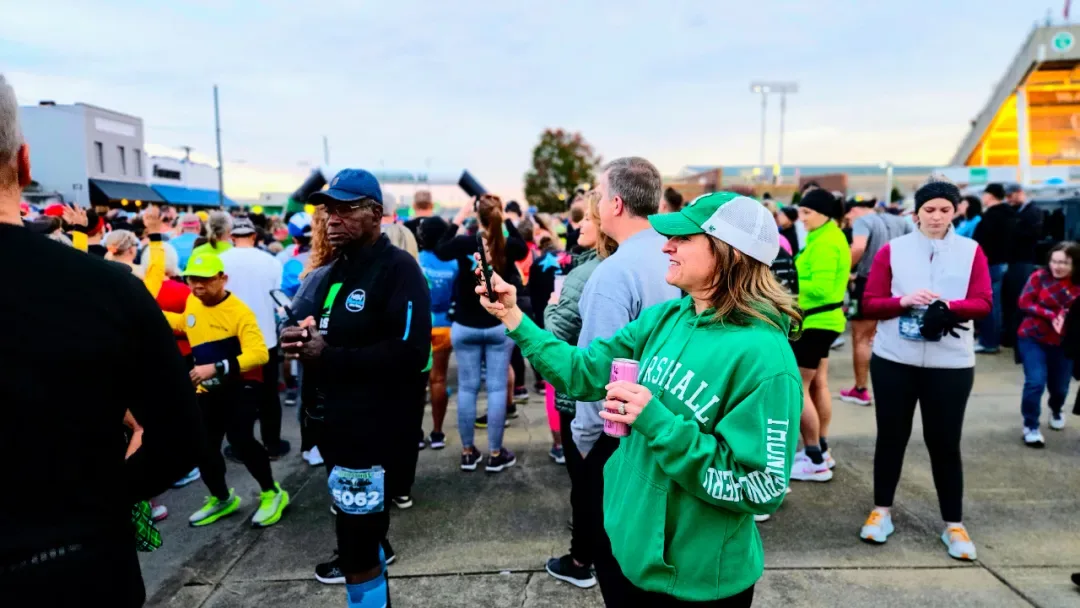
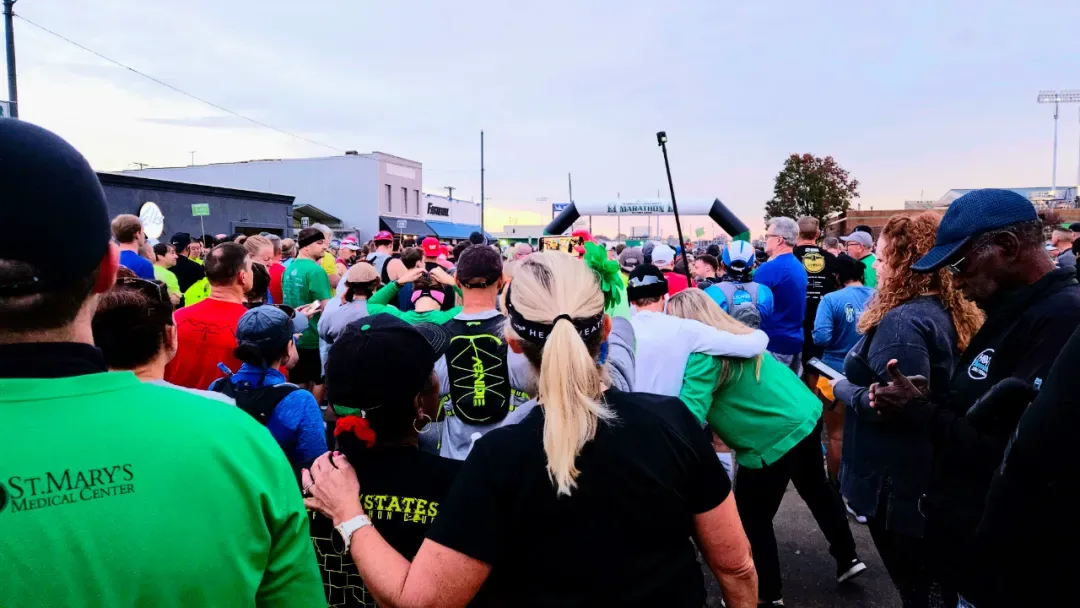
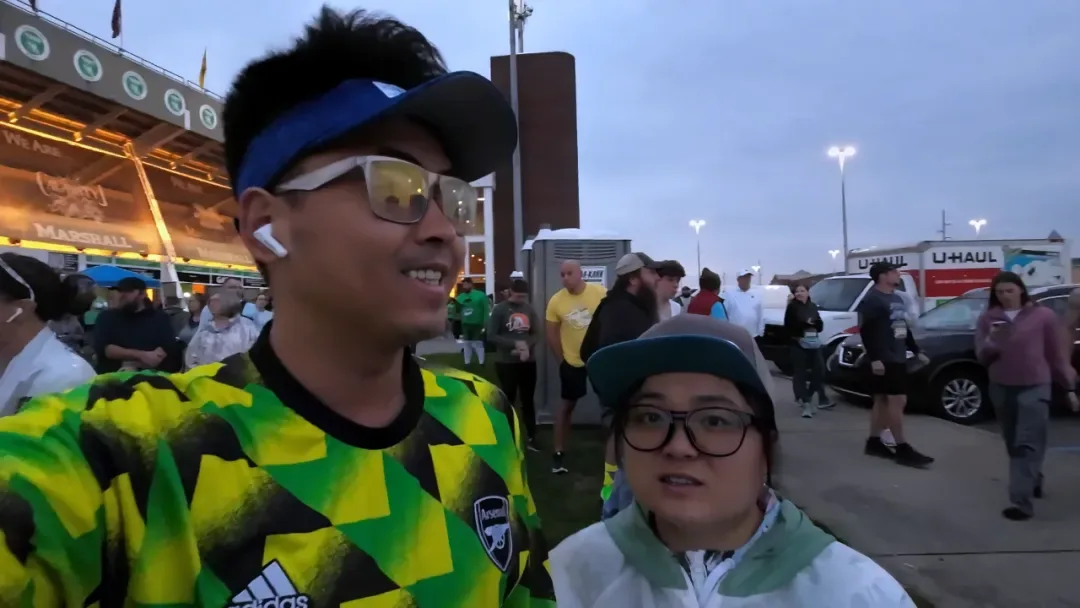
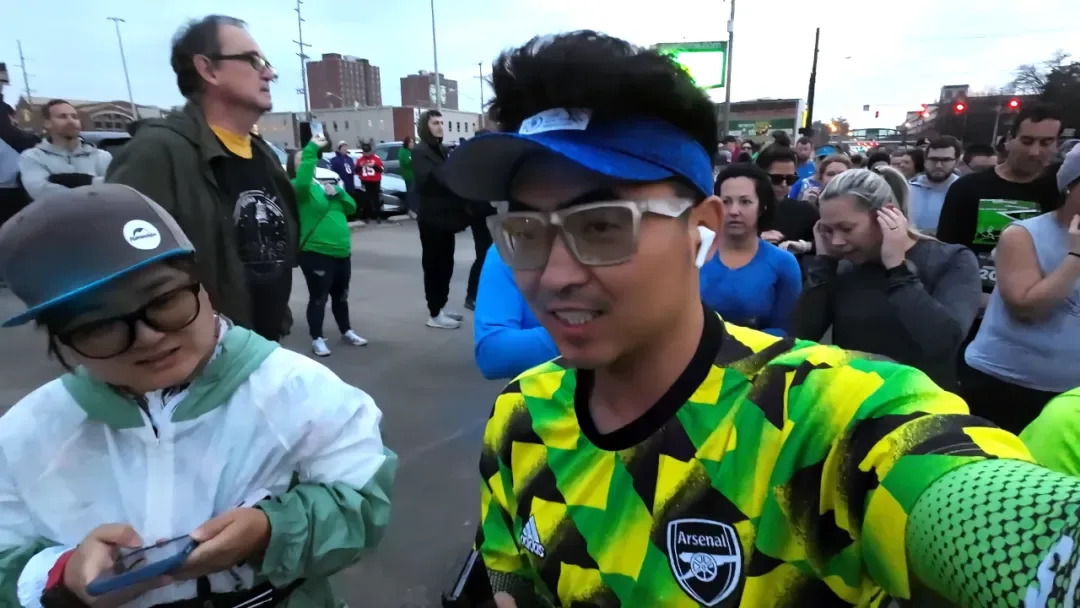
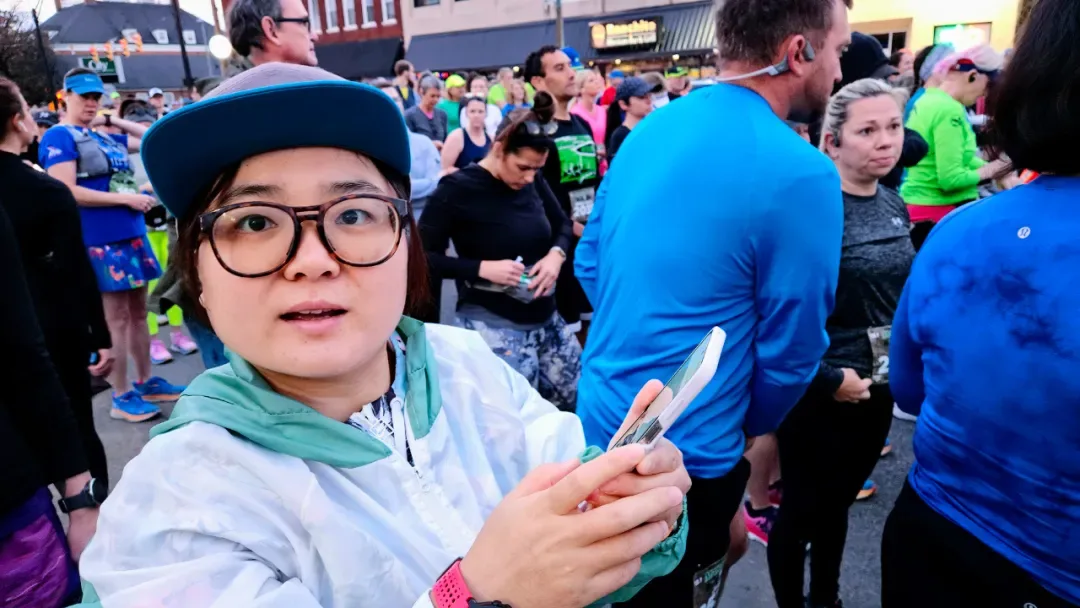
On race day, we arrived at the starting area next to the green football field right on time. A large crowd of runners had already gathered, and the energetic announcer led the crowd in chanting: 'We are—' 'Marshall!' 'Marshall!'...
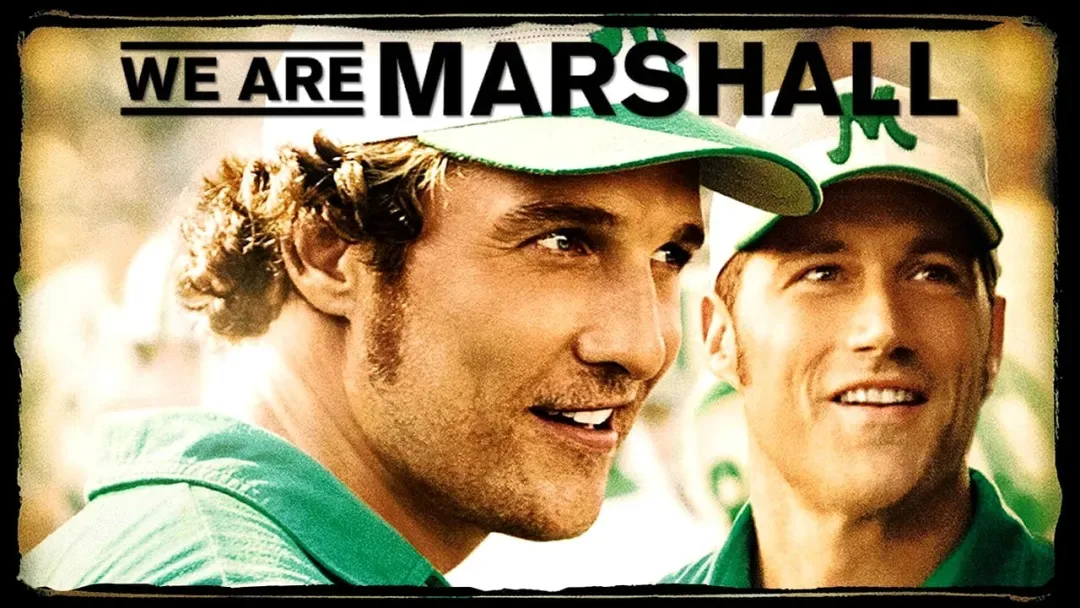
'We Are Marshall' is a 2006 sports drama film based on a true story. It tells the story of the 1971 Marshall University football team's struggle to rebuild after all 75 members of the 1970 team perished in the plane crash.
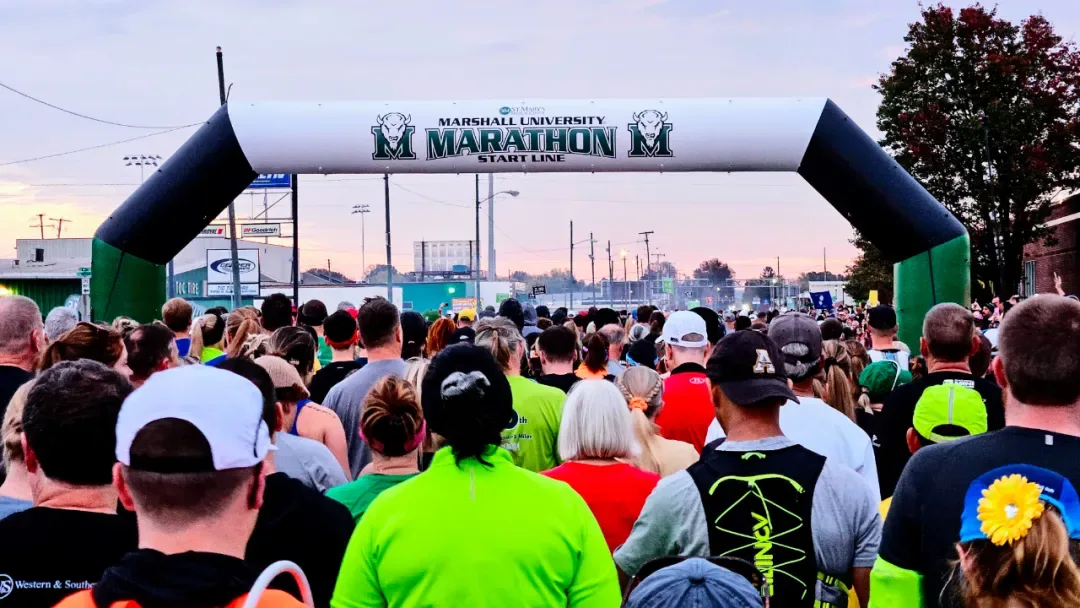
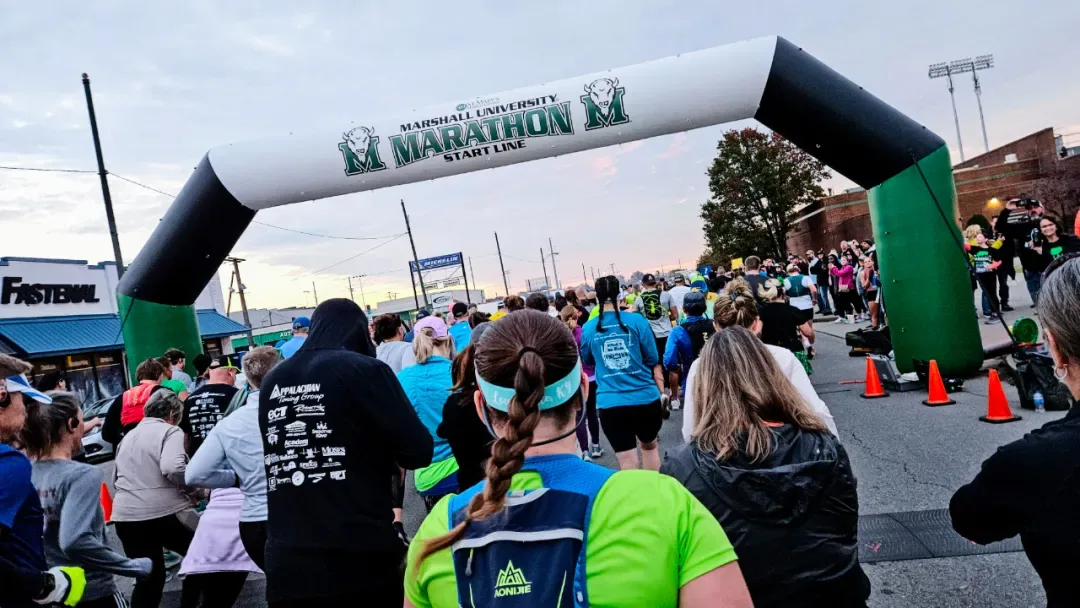
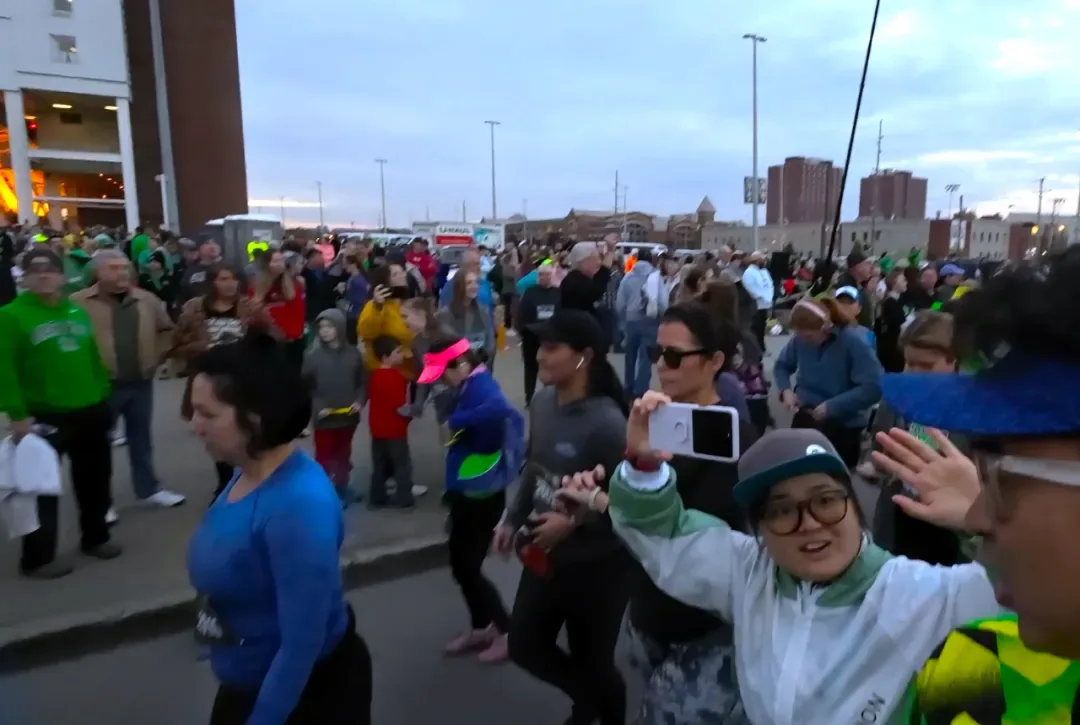
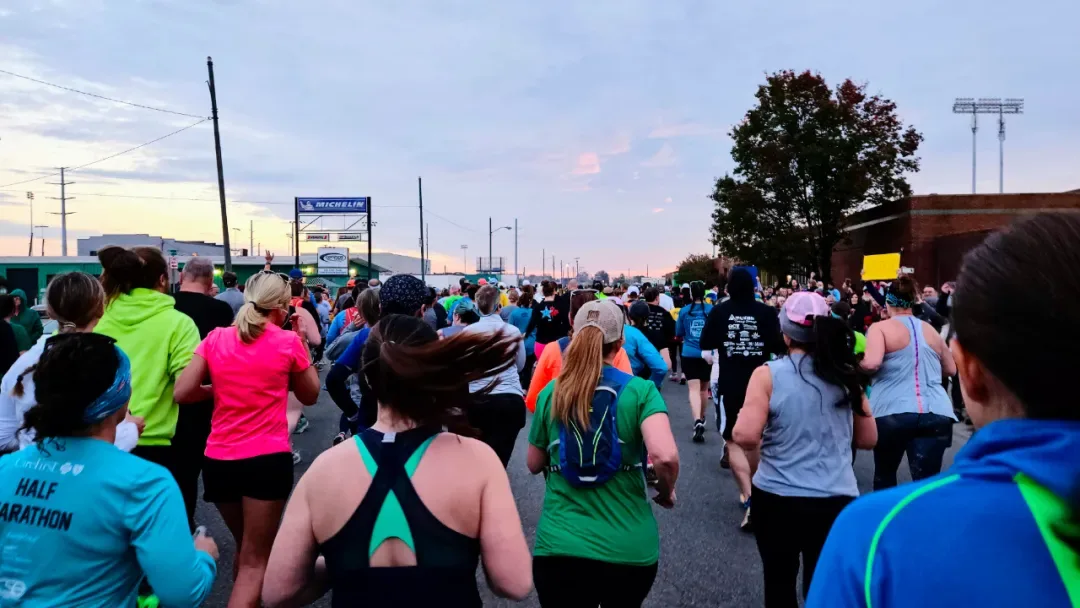
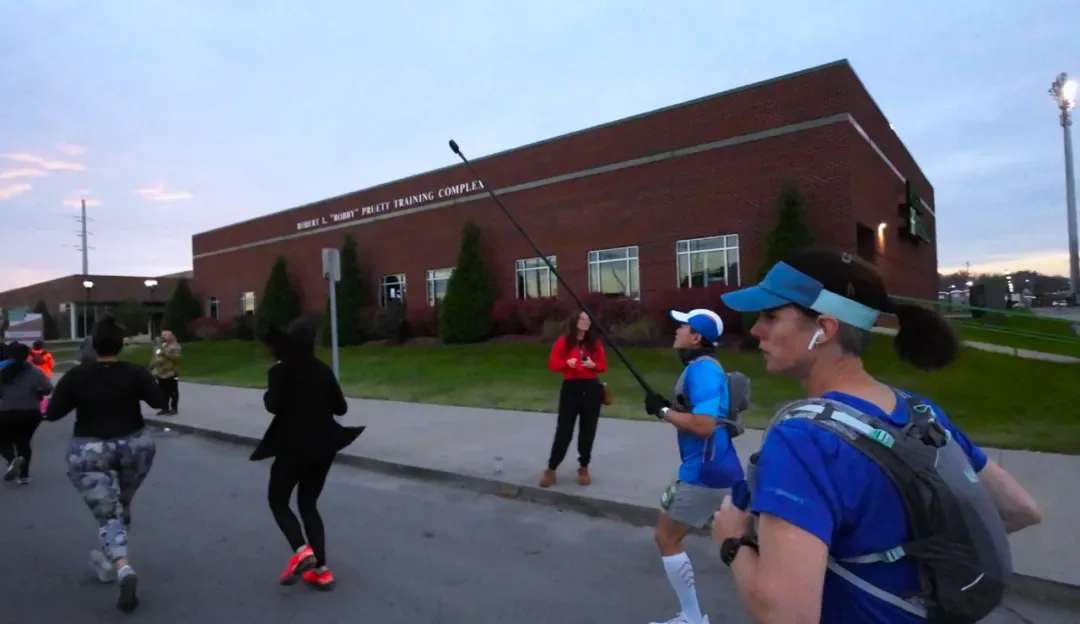
The race finally started, and our field of 1,800 runners headed west under the morning sunrise. The initial route followed 3rd Avenue. There weren't many houses, and the sunrise cast a beautiful, gentle light.
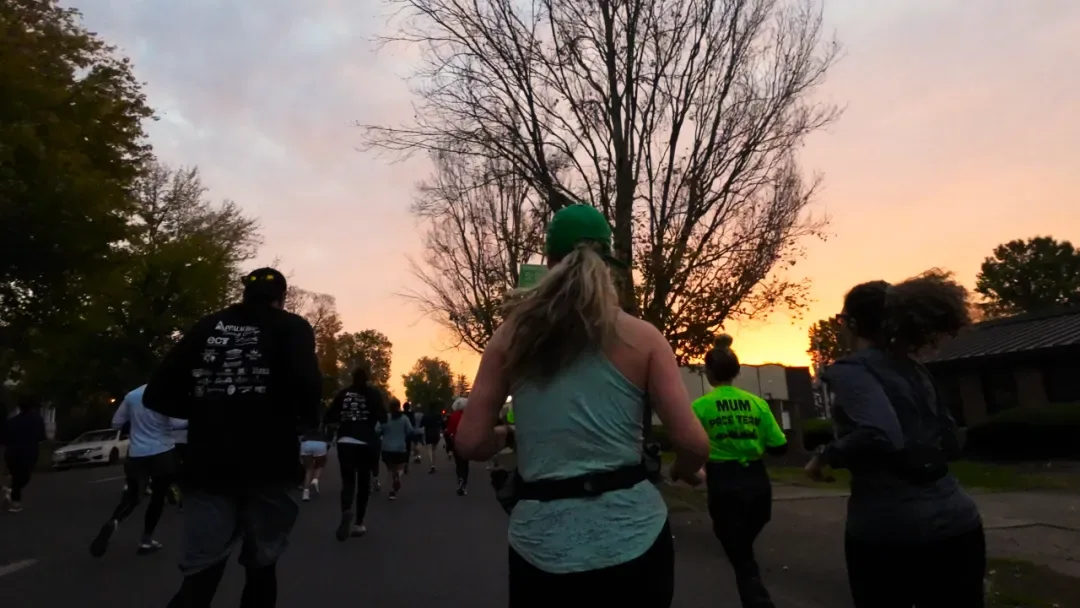
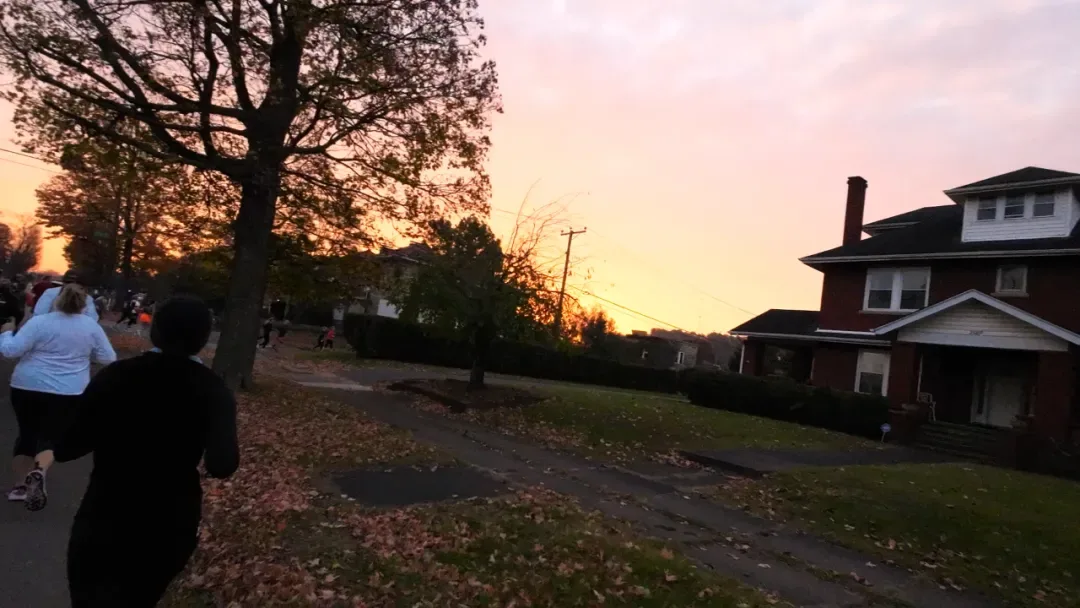
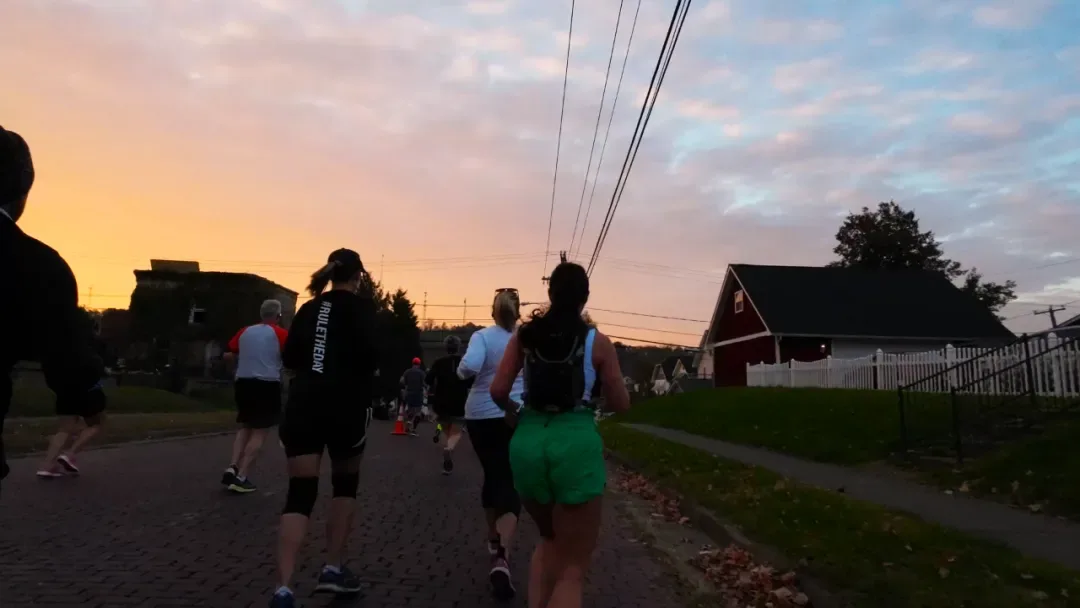
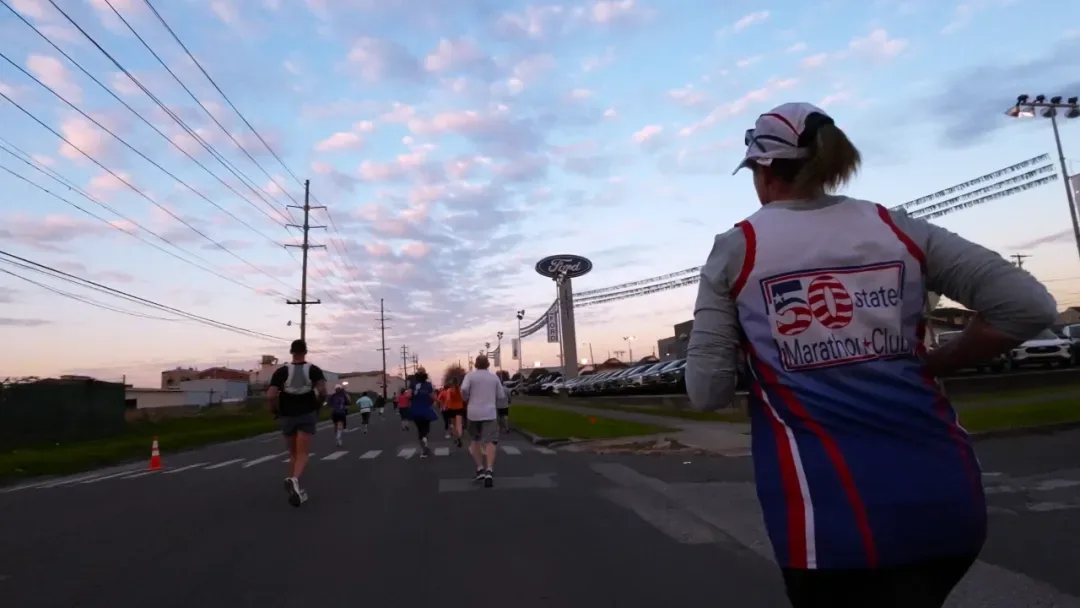
I spotted a runner wearing a 50 States Marathon Club shirt. I knew many runners choose this race to check off West Virginia. Before the race, I had seen recommendations for this event on the 50 States Club homepage.
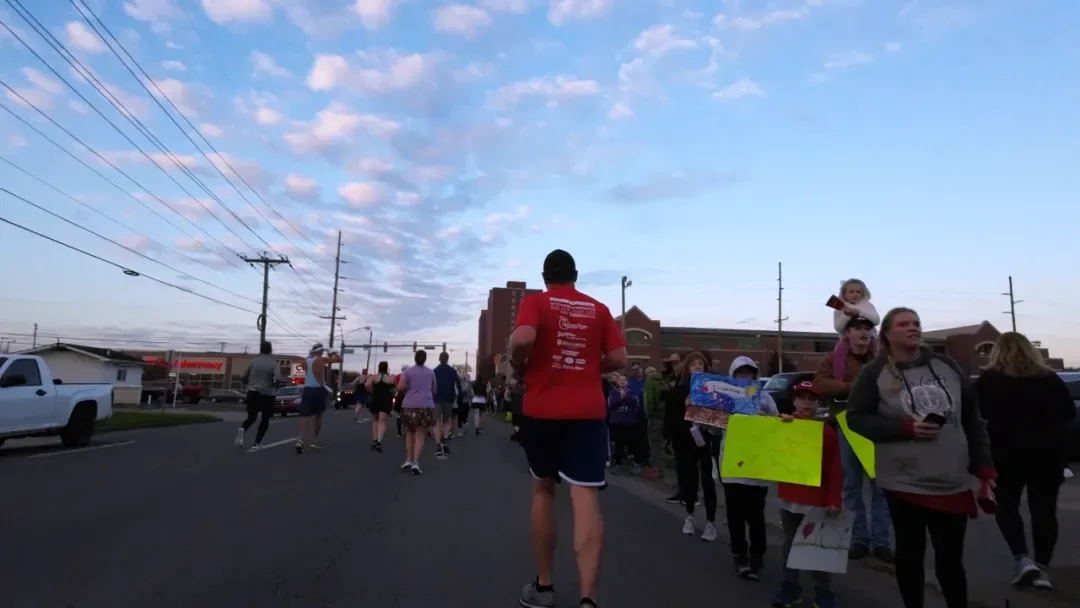
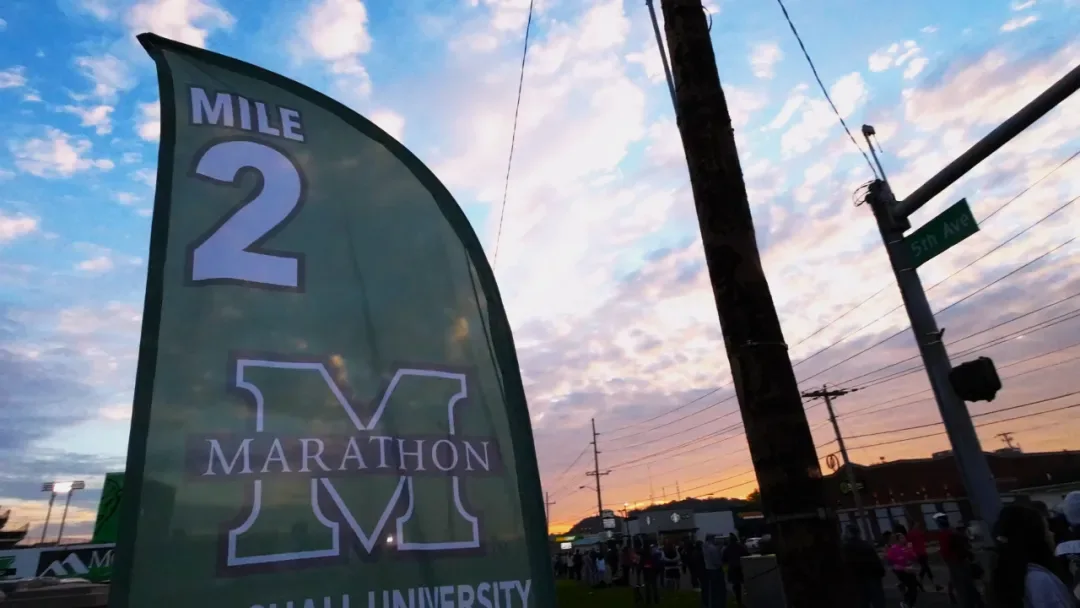
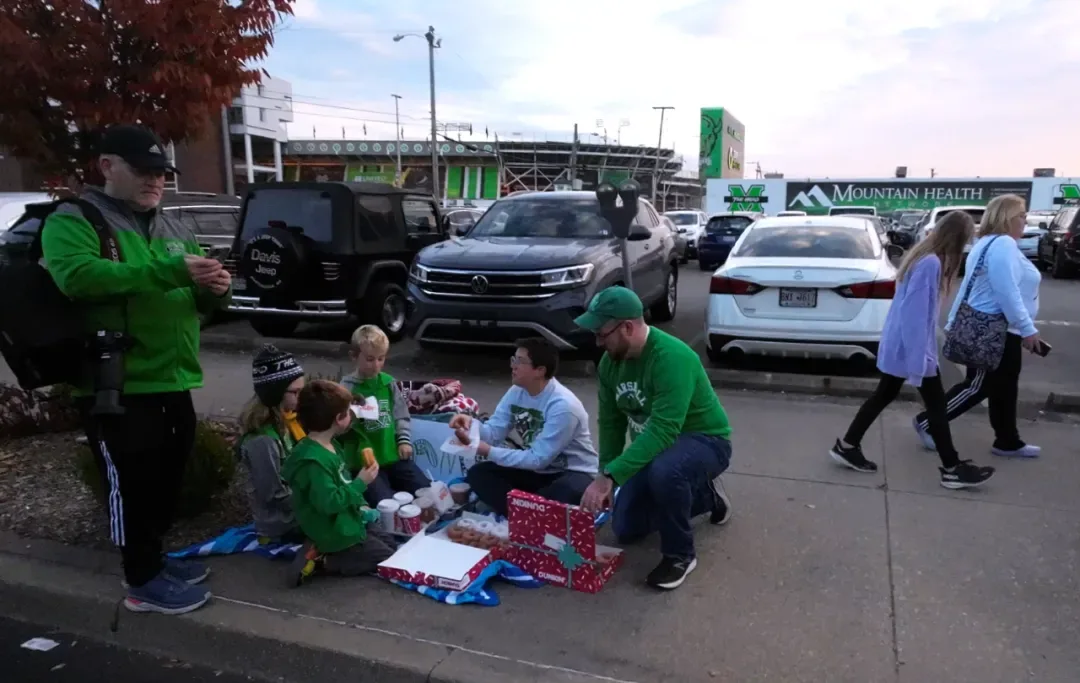
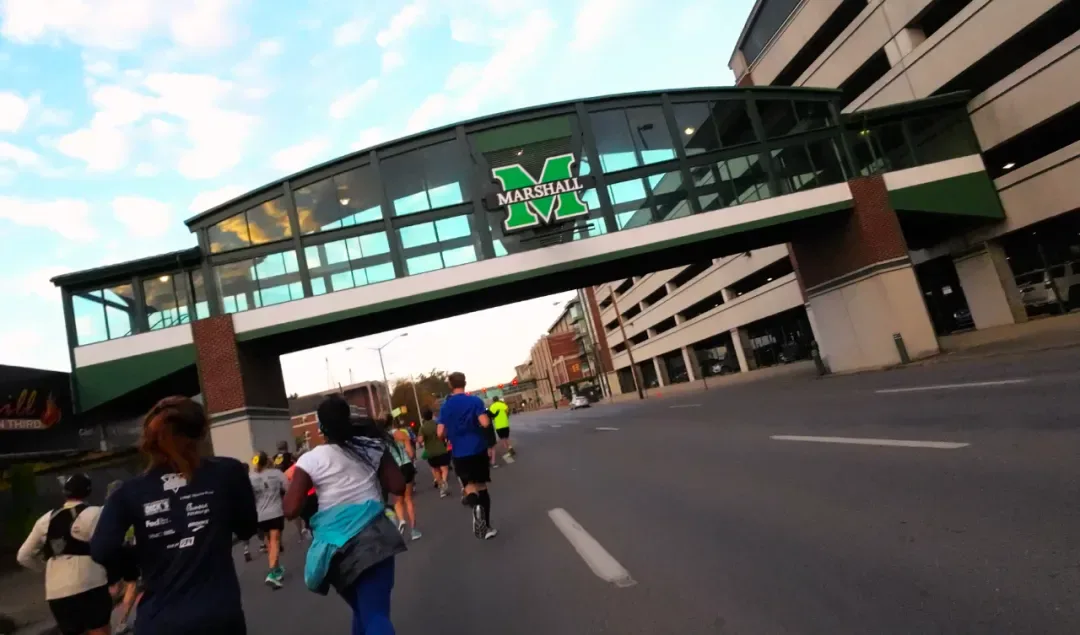
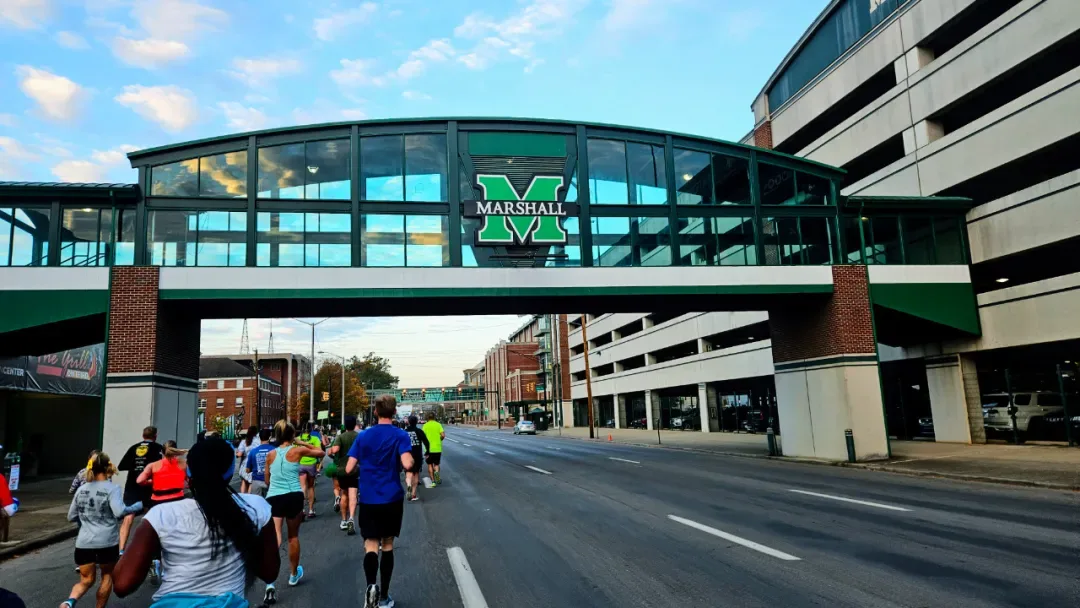
During this stretch, we ran through the university area. Families dressed in Marshall green sat along the curbs, reminding me of our childhood school field trips.
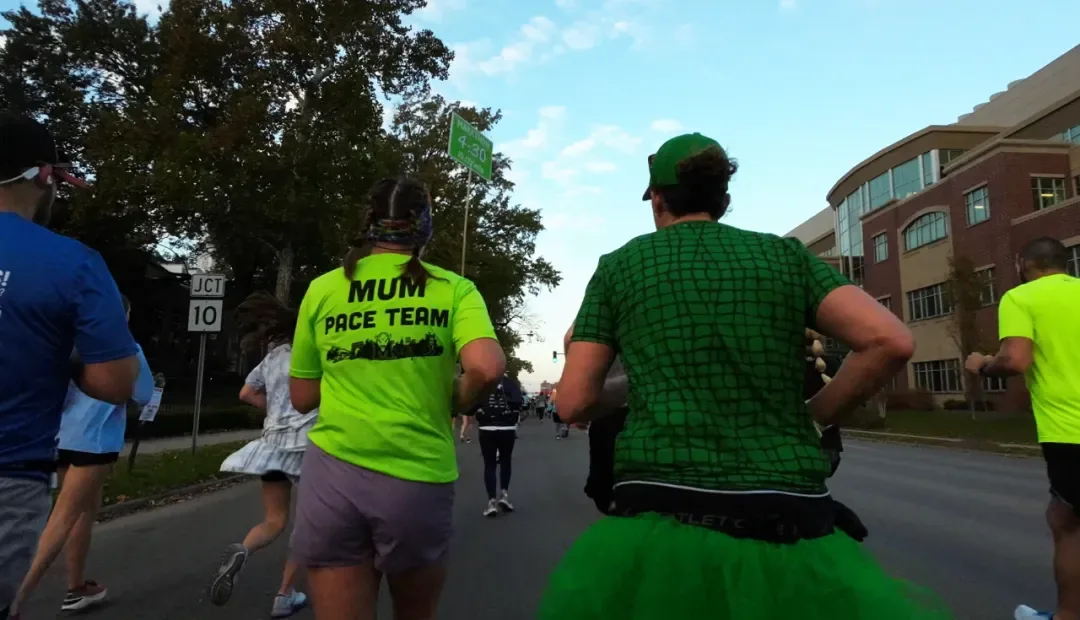
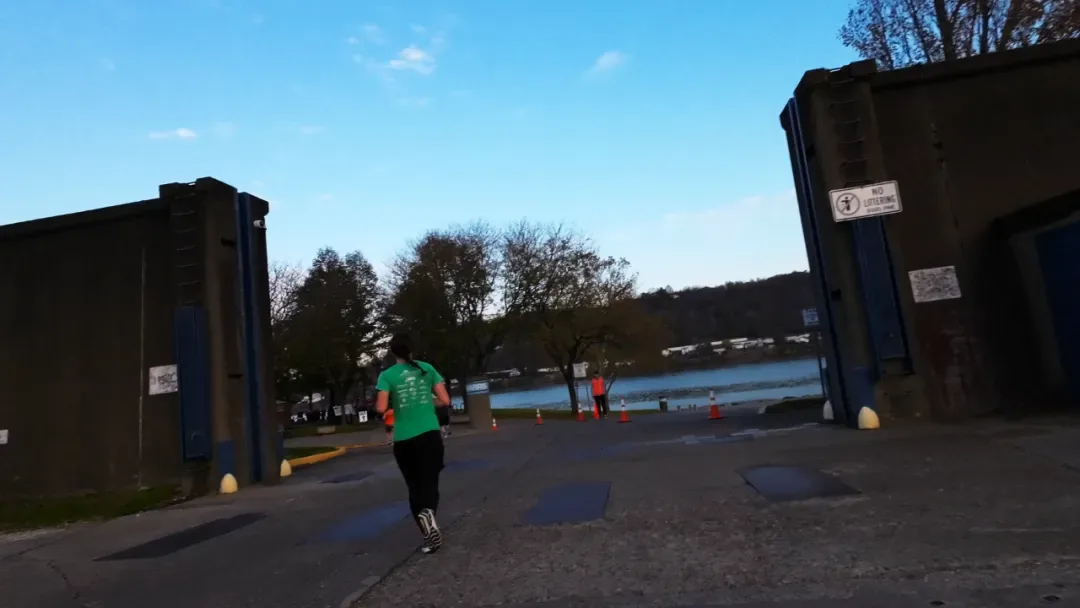
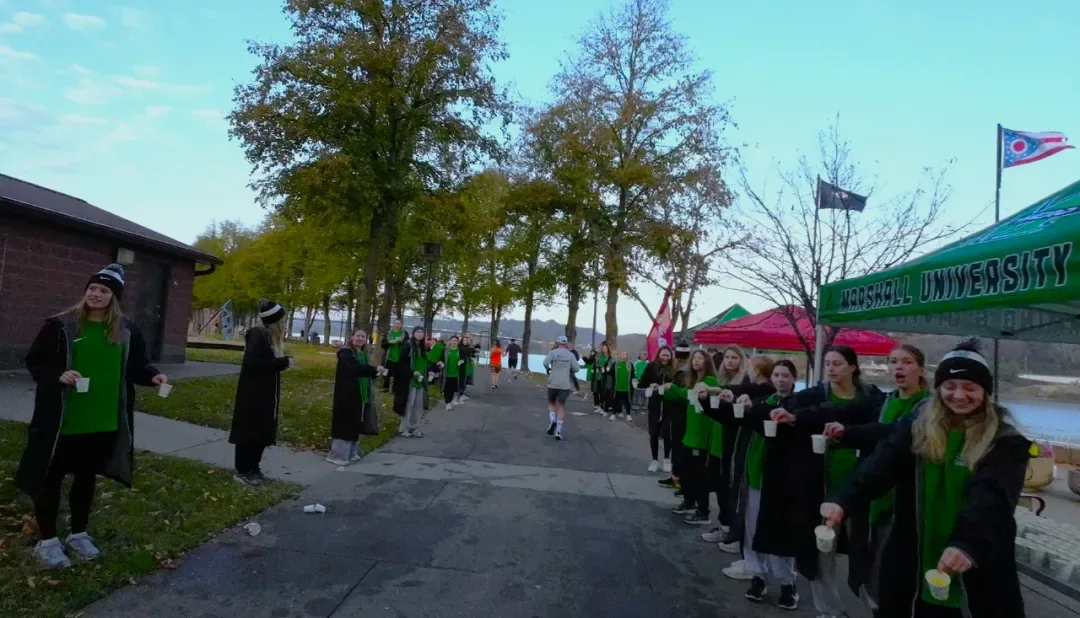
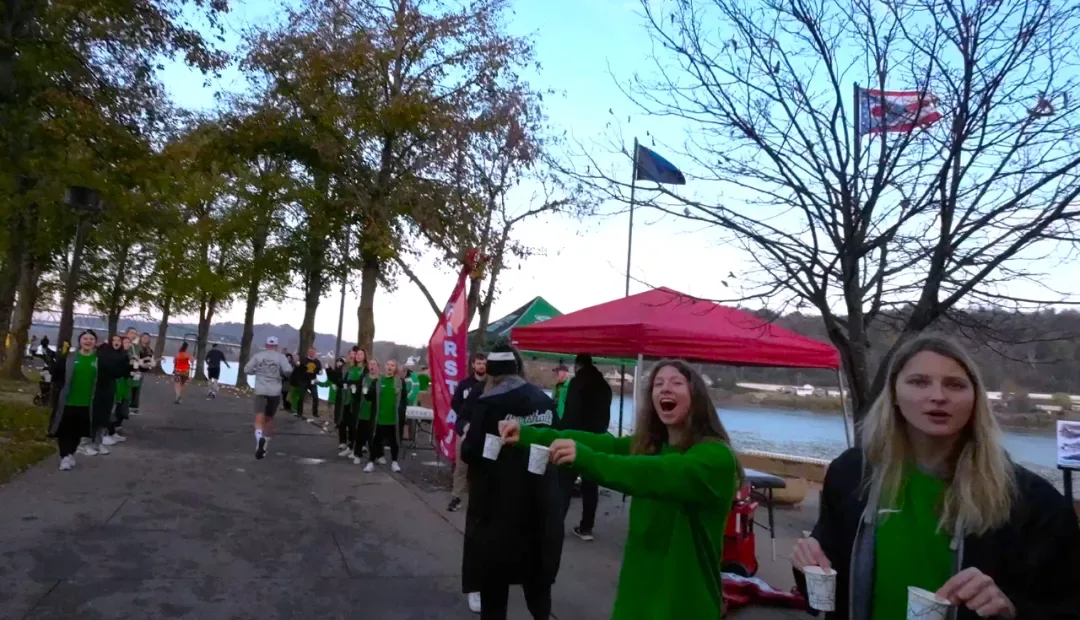
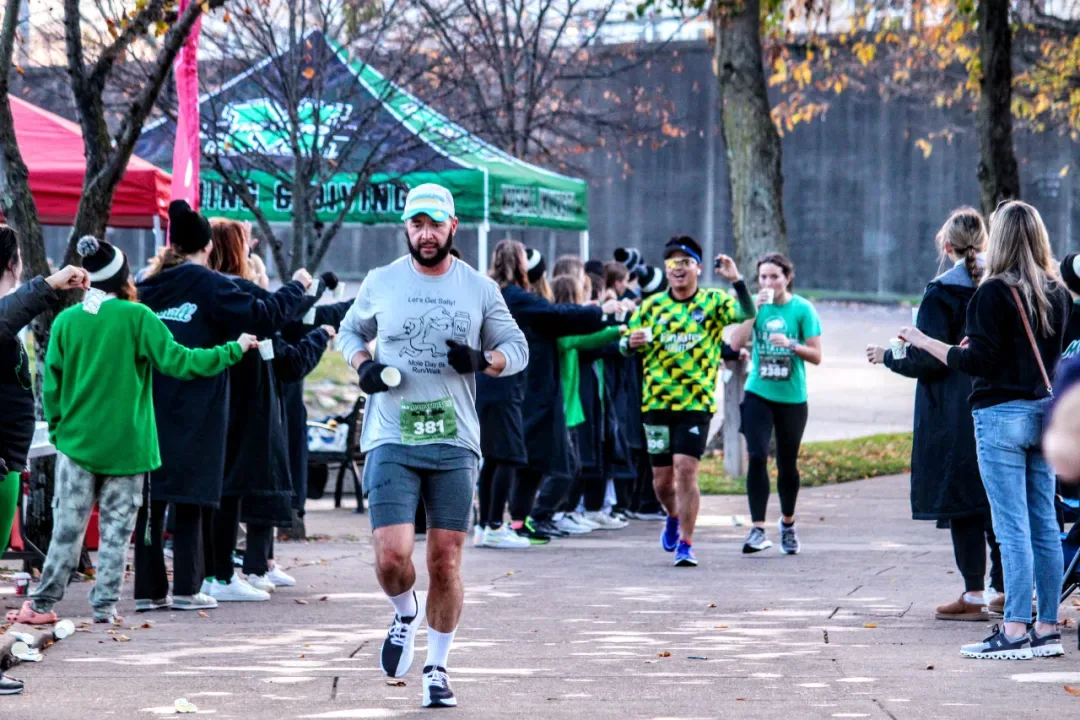
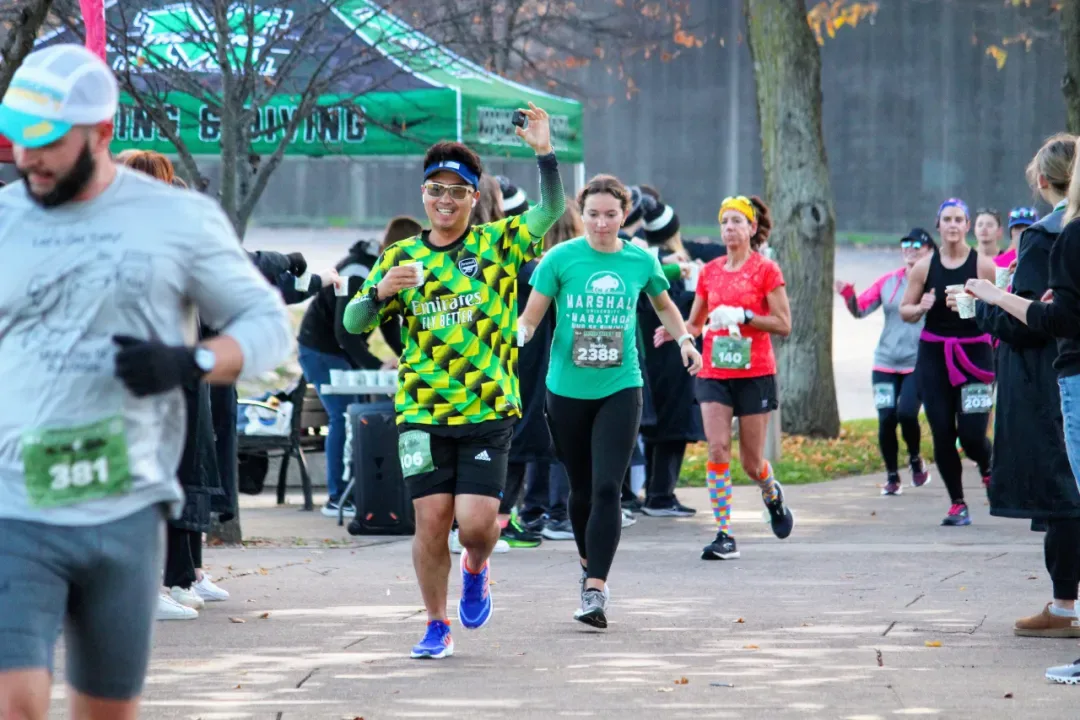
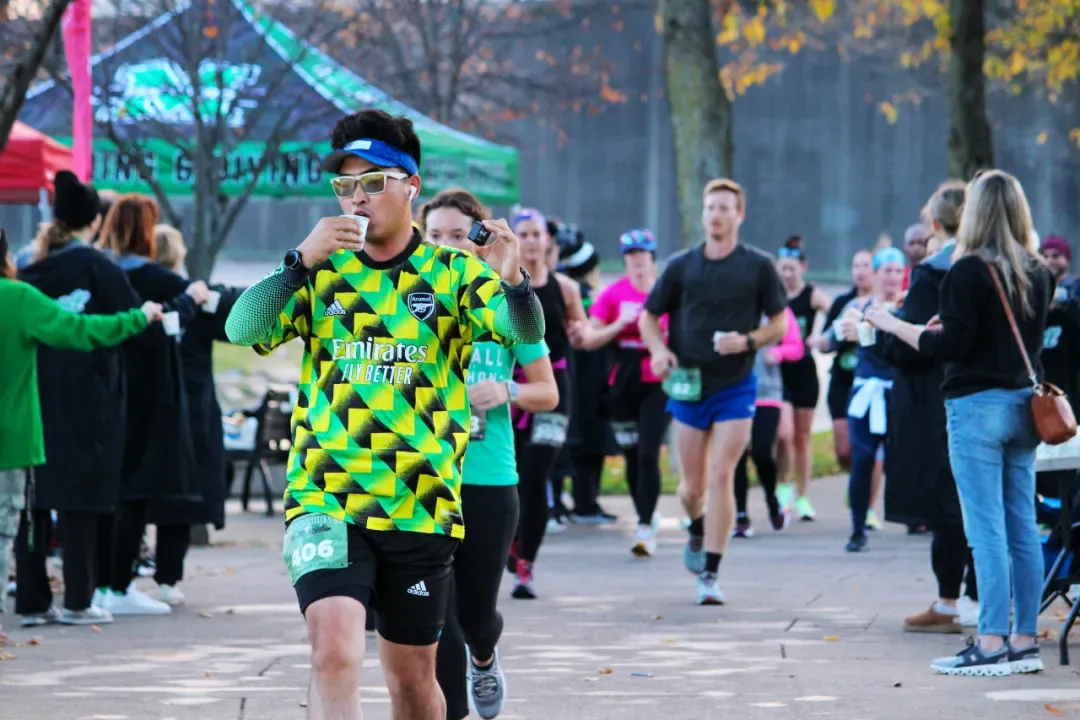
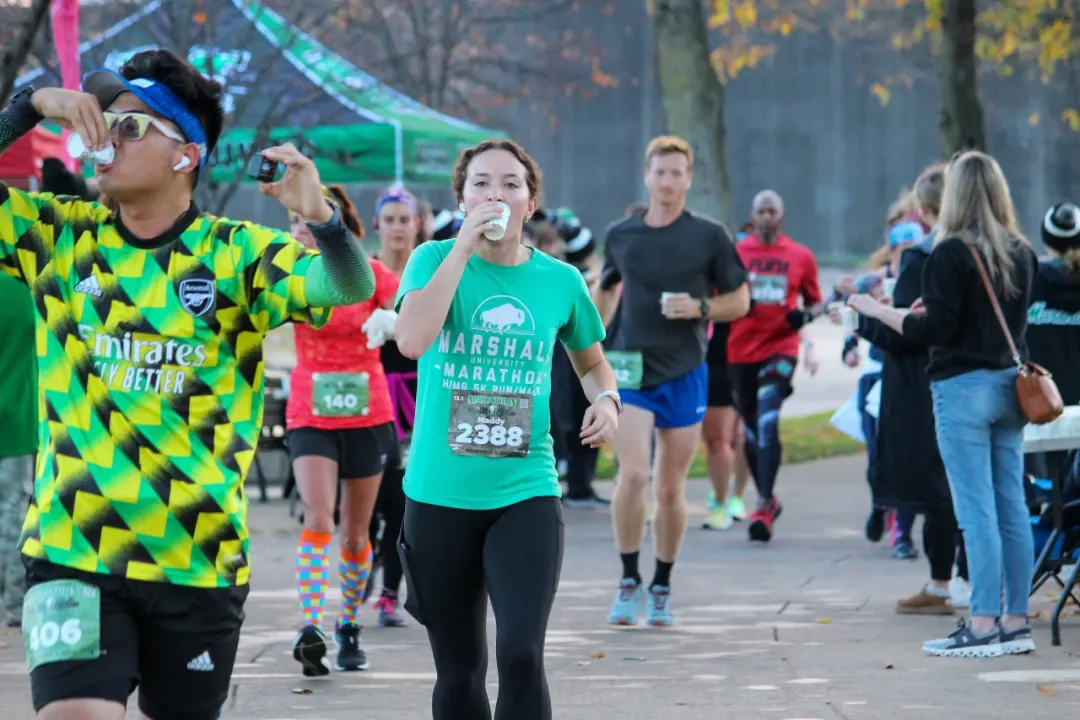
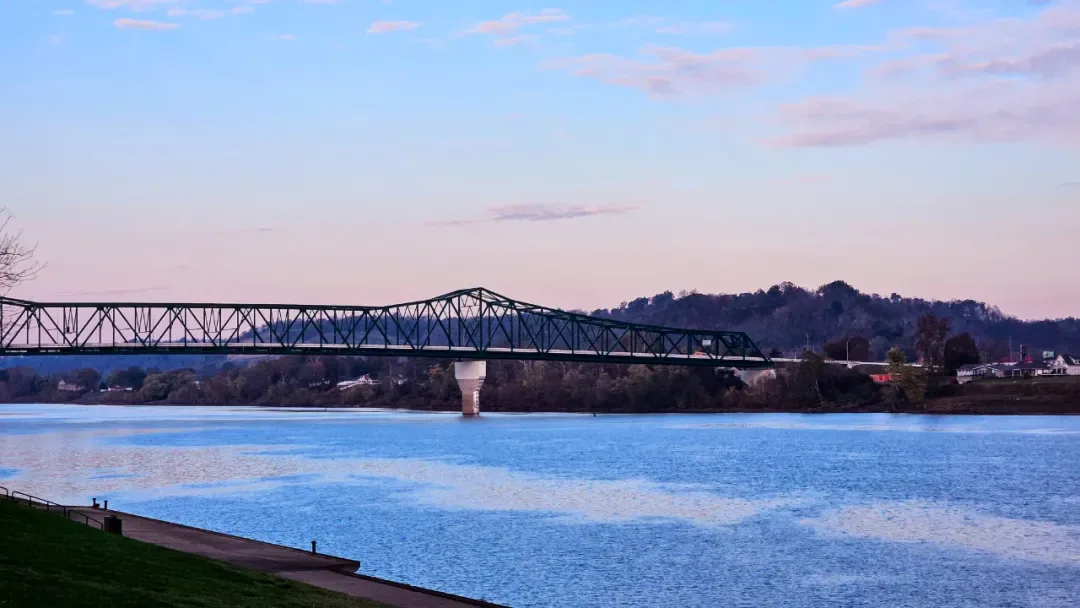
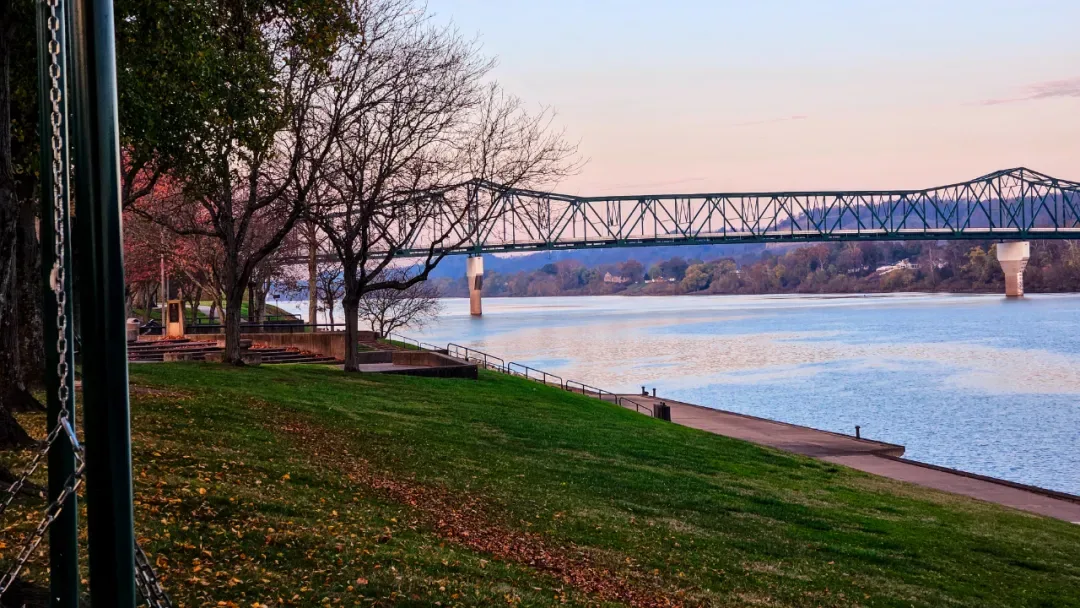
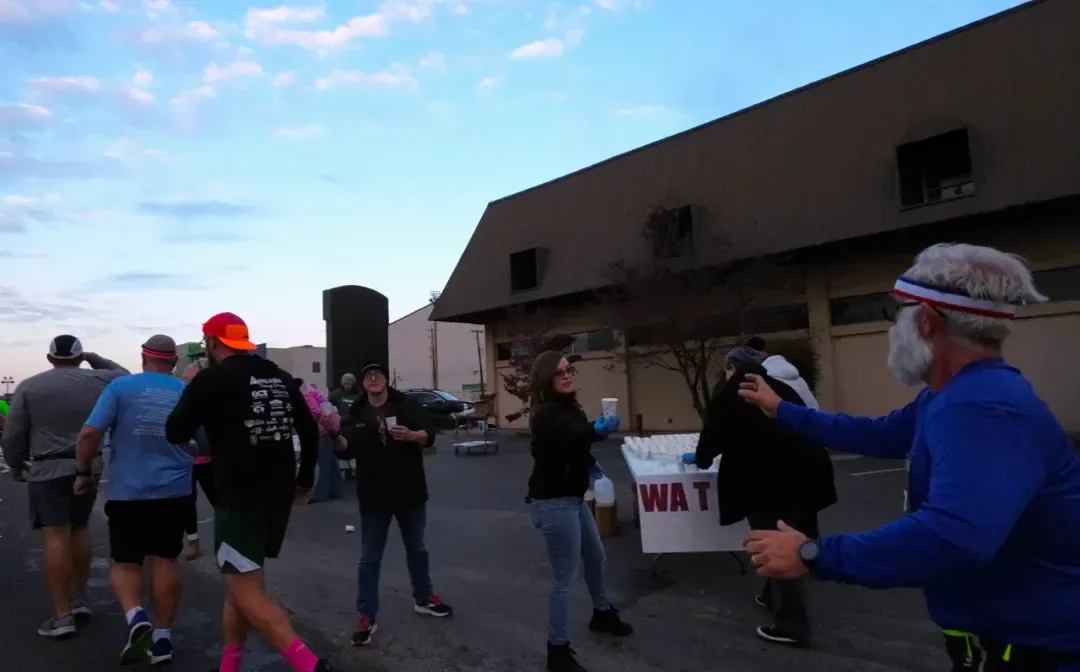
Around Mile 3, we reached Harris Riverfront Park. I absolutely loved this section. The college student volunteers were incredibly enthusiastic, making me feel almost guilty if I didn't grab a few cups of water.
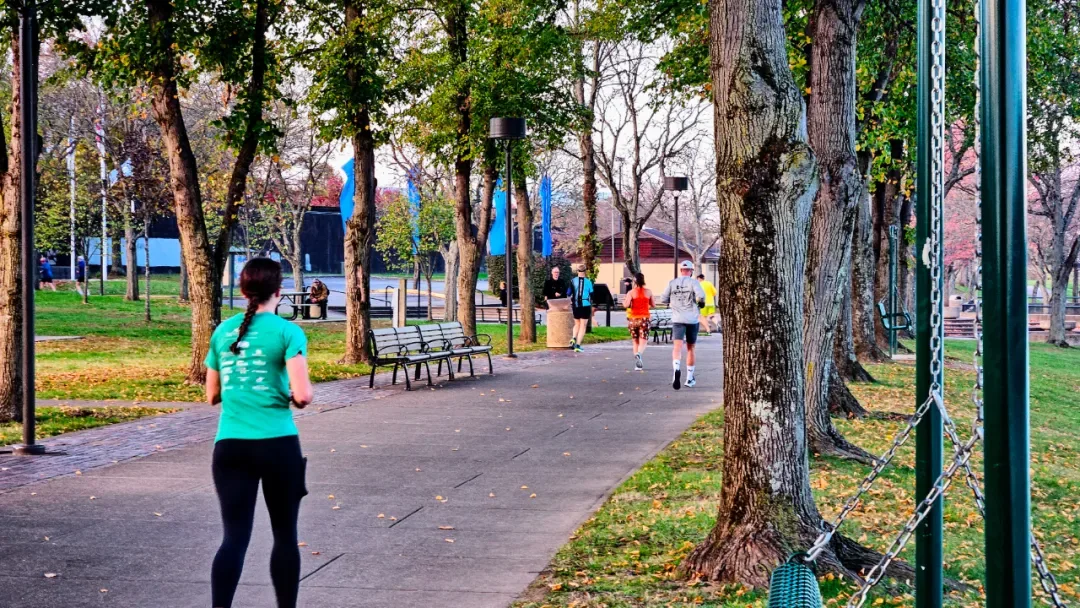
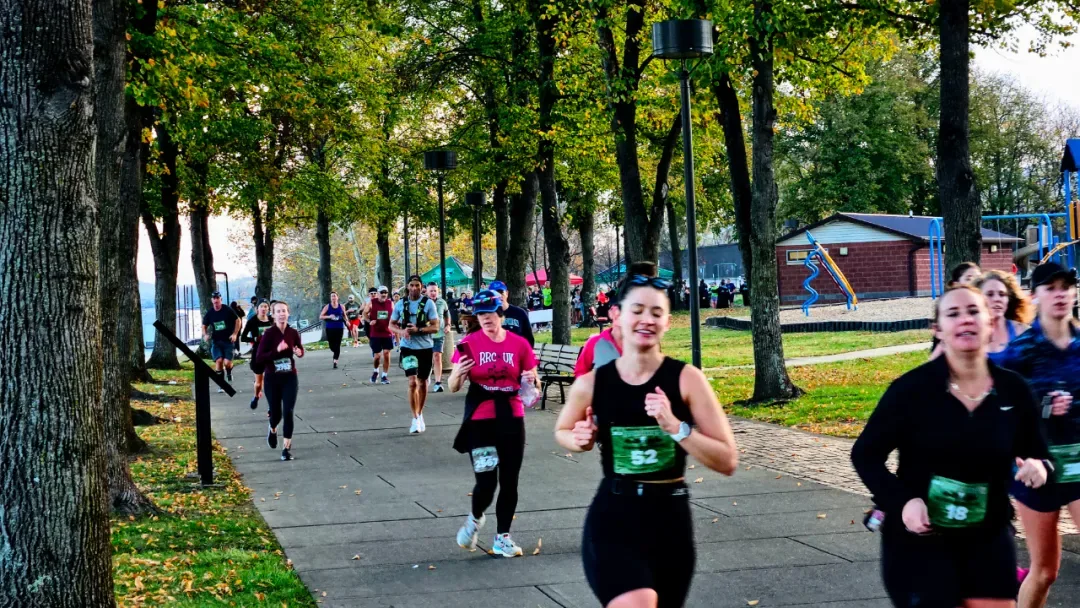
On our right was the Ohio River. It felt different from the view in Louisville. This stretch was very pleasant, just too short. But that was fine, as we would run it three more times.
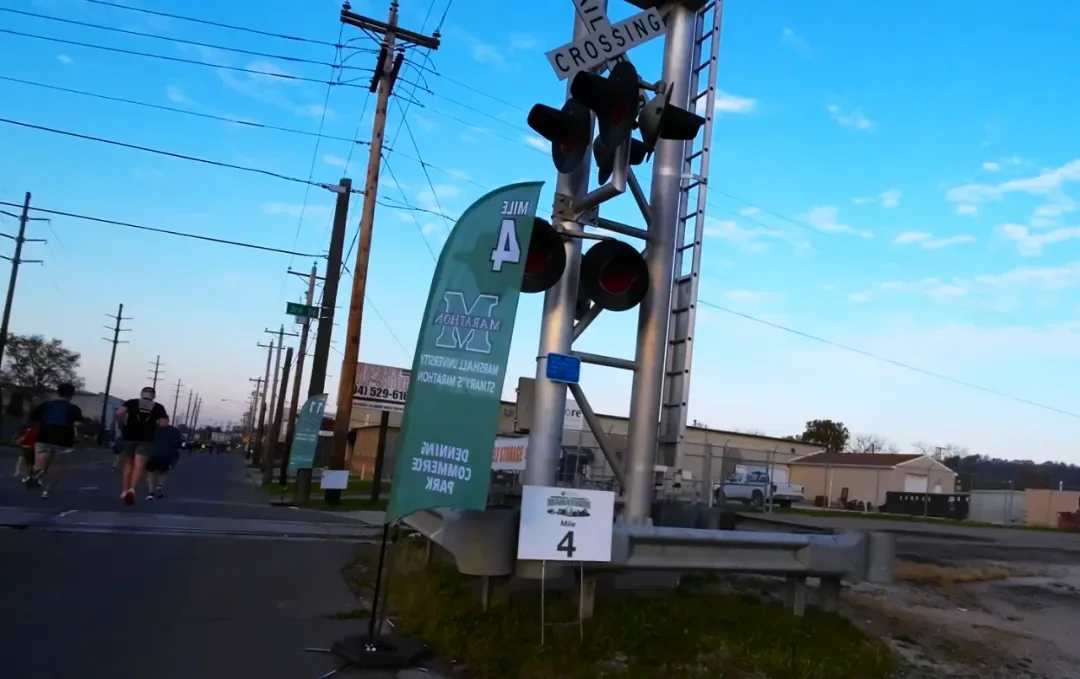
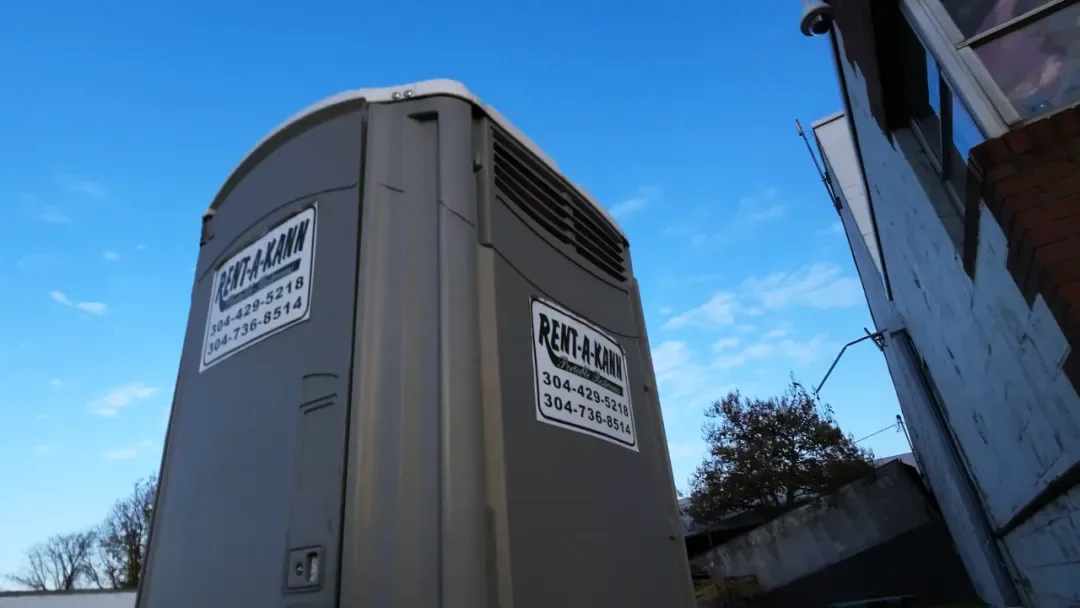
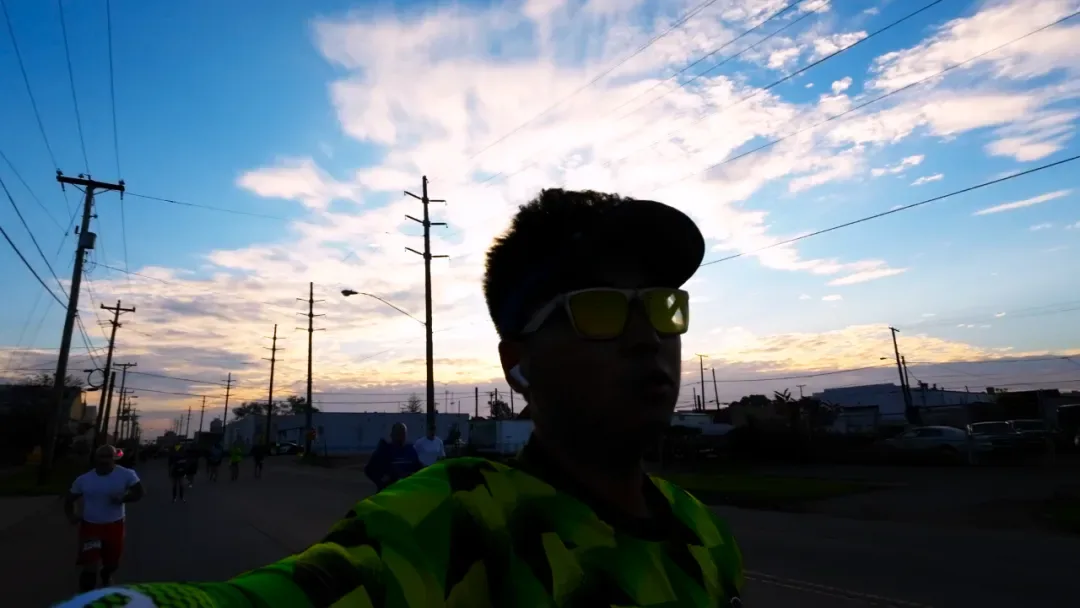
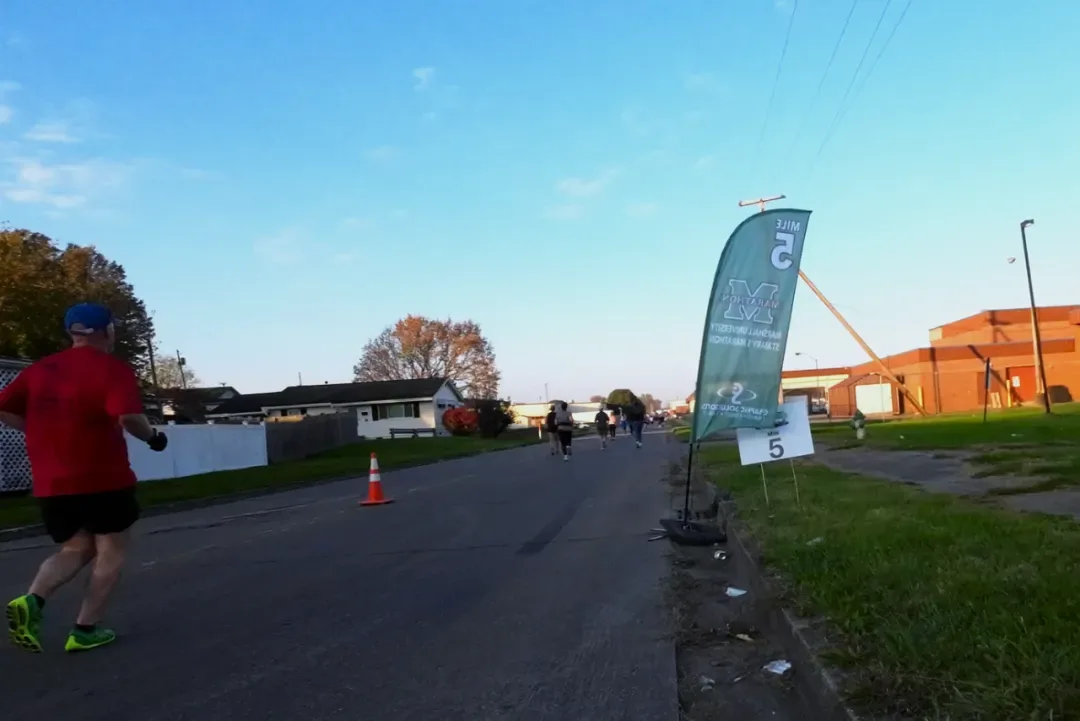
Exiting the park, we ran onto the straight Virginia Avenue. This section felt a bit desolate and quiet, but the road was wide, and the sun remained gentle. I took the opportunity to make a quick restroom stop.
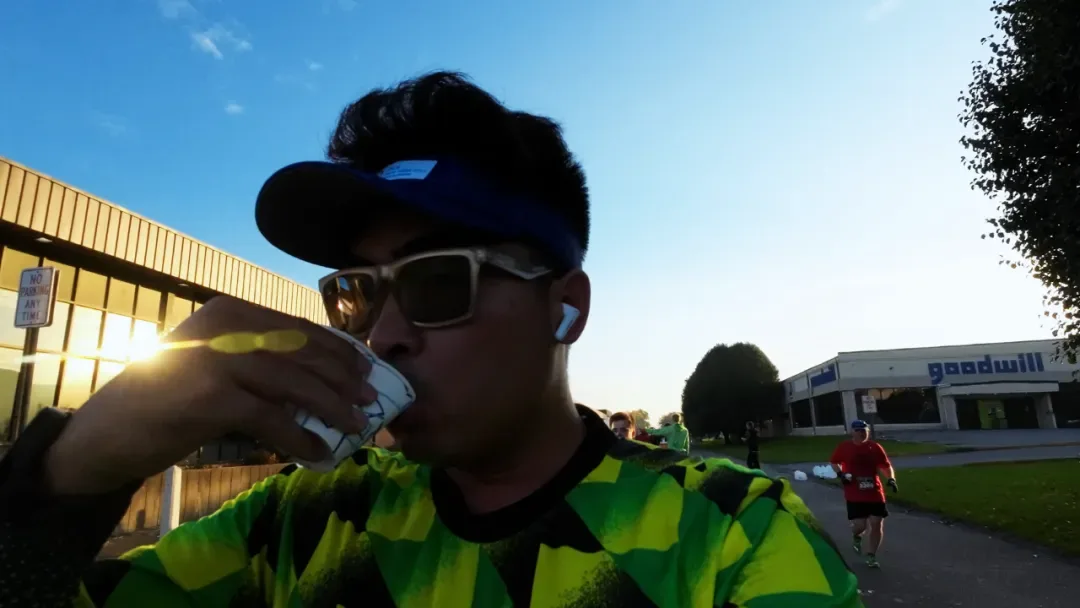
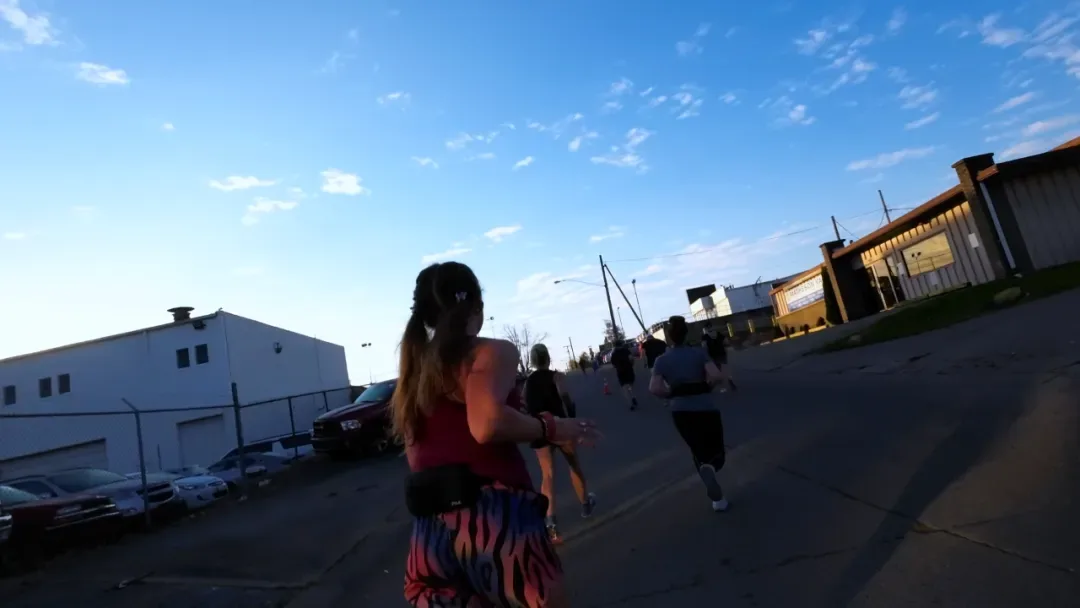
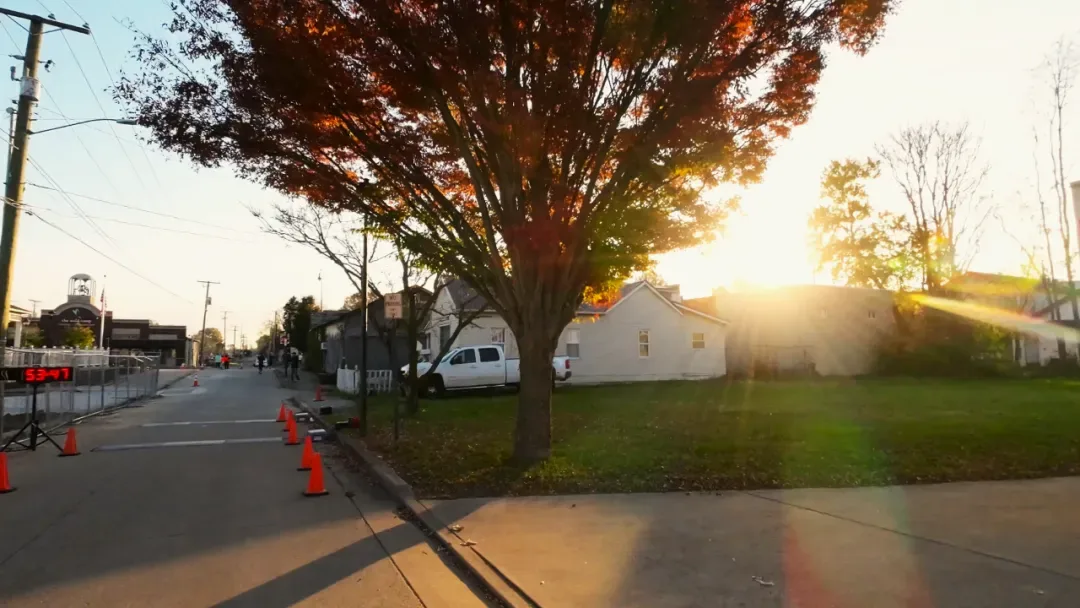
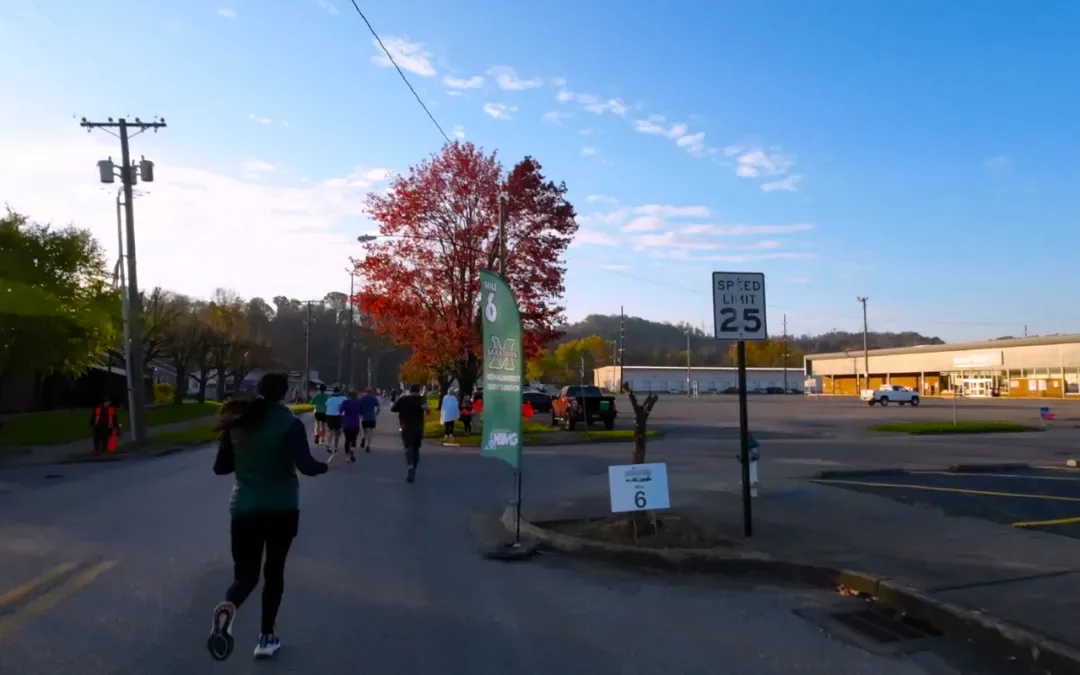
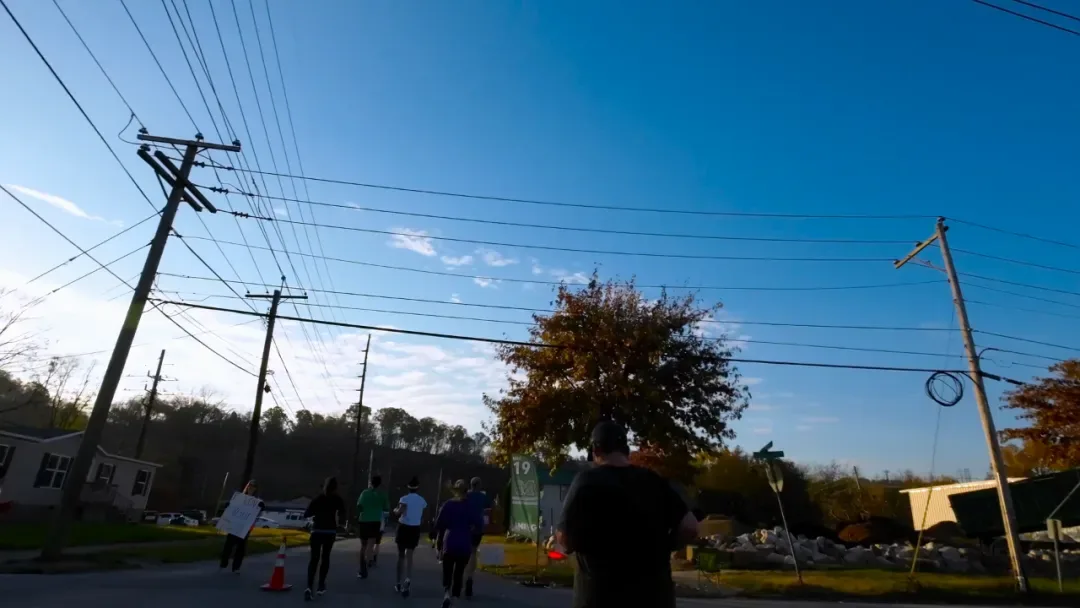
Around Mile 5, we turned left onto 14th Street. The route looped around the Old Central City Gazebo to add some distance, then passed through Central City at 14th Street West, which had a bit more crowd energy.
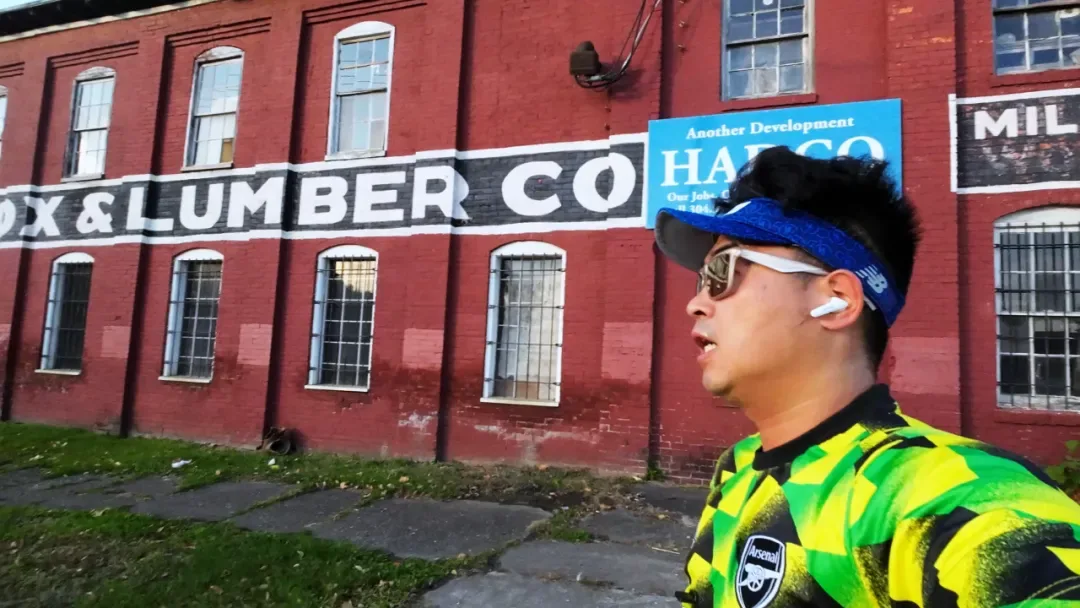
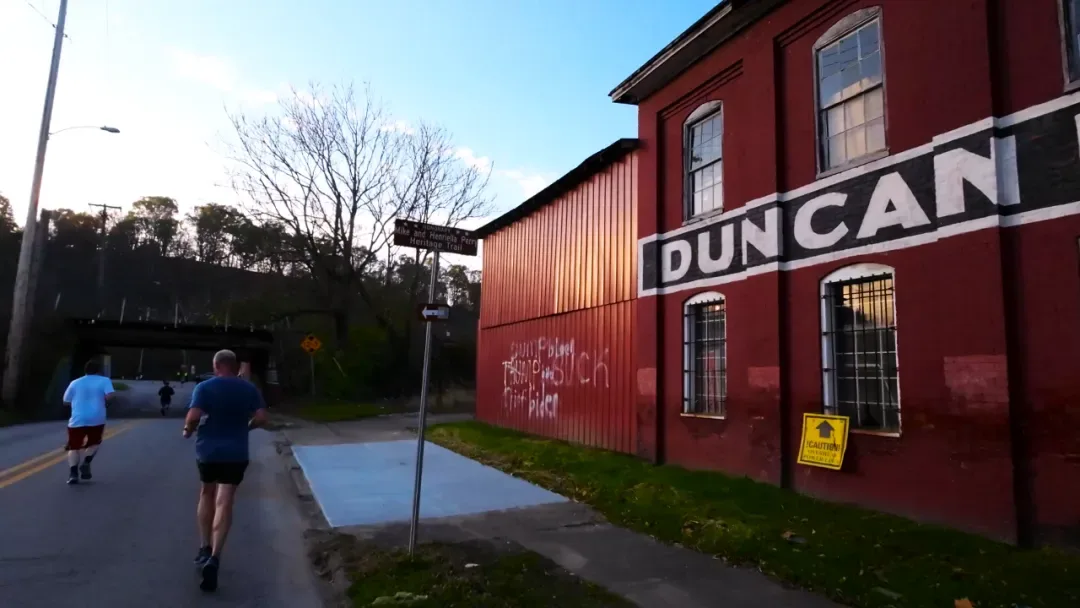
Further ahead stood a beautiful red brick building named after Chad Pennington, carrying a vintage aesthetic.
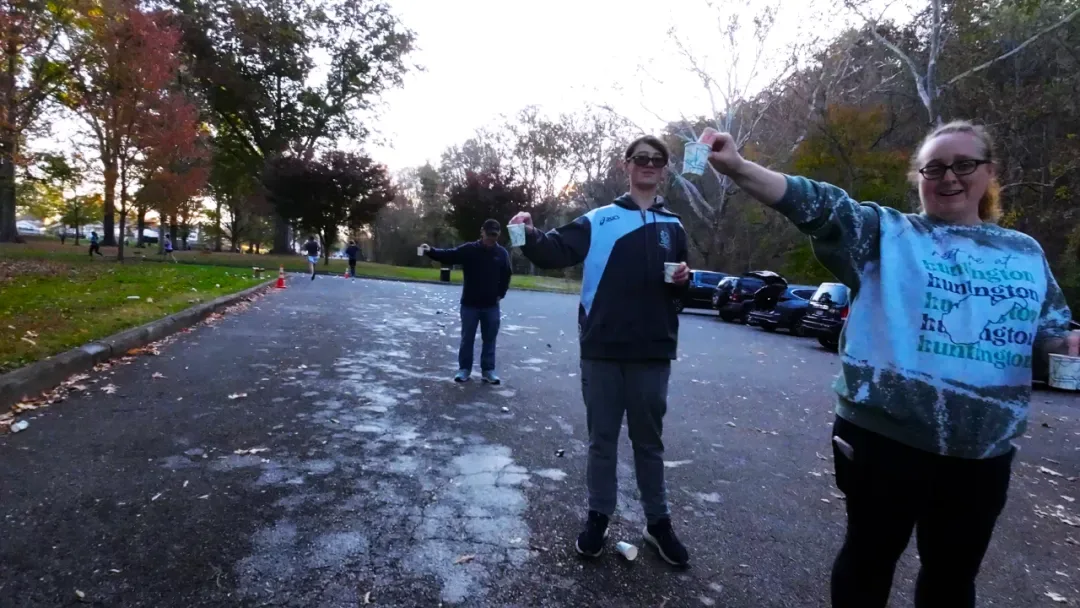
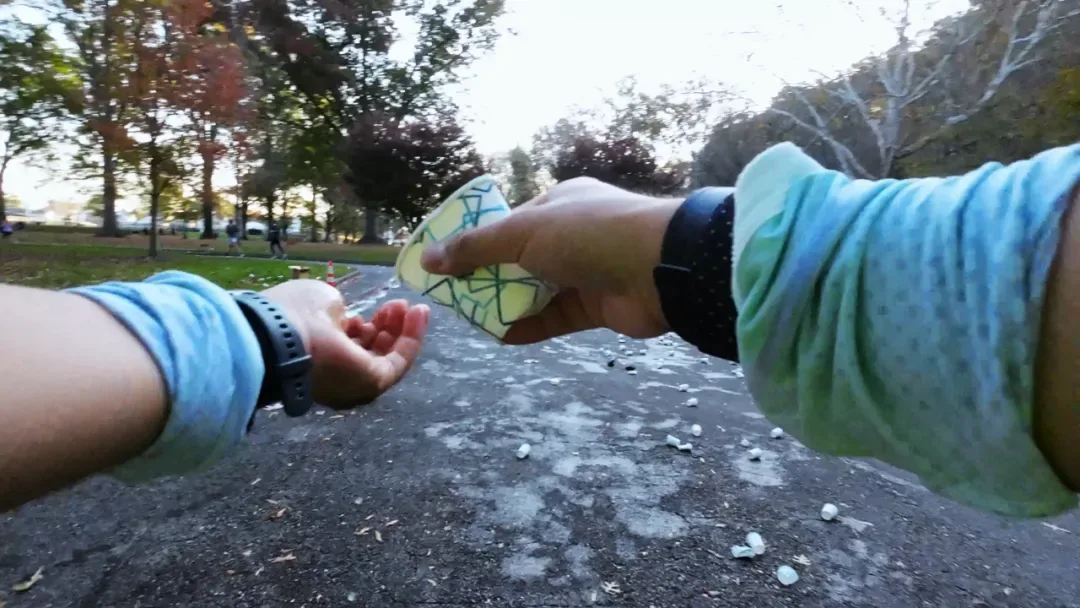
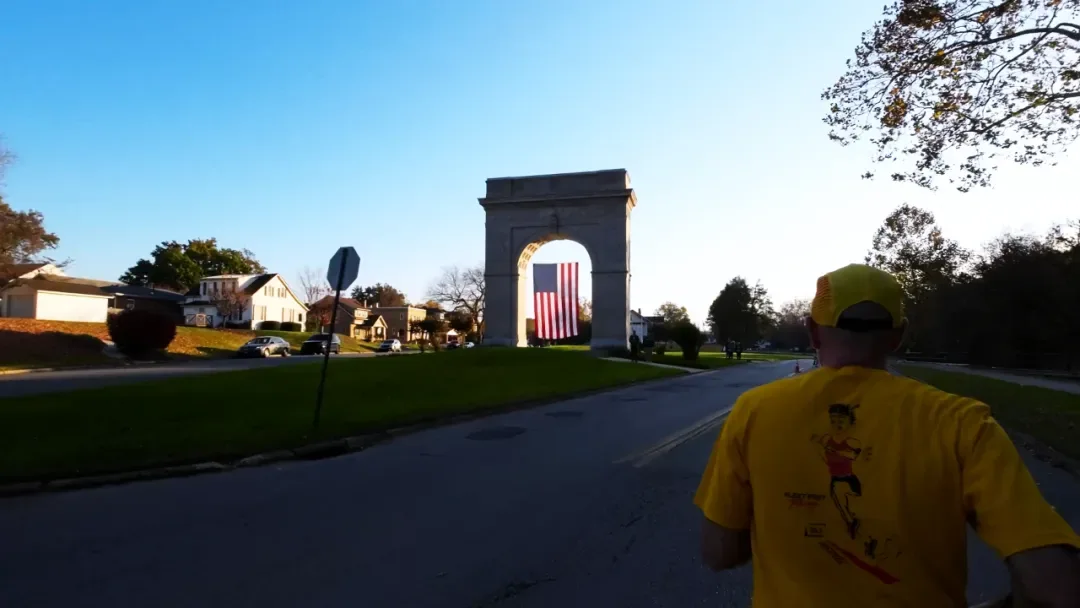
Next, we ran a short stretch through Kiwanis Park, then followed Memorial Boulevard and Fourpole Creek to the dirt paths of Ritter Park. Although the organizers described this as a fast trail, it felt a bit slippery, making it hard to push off.
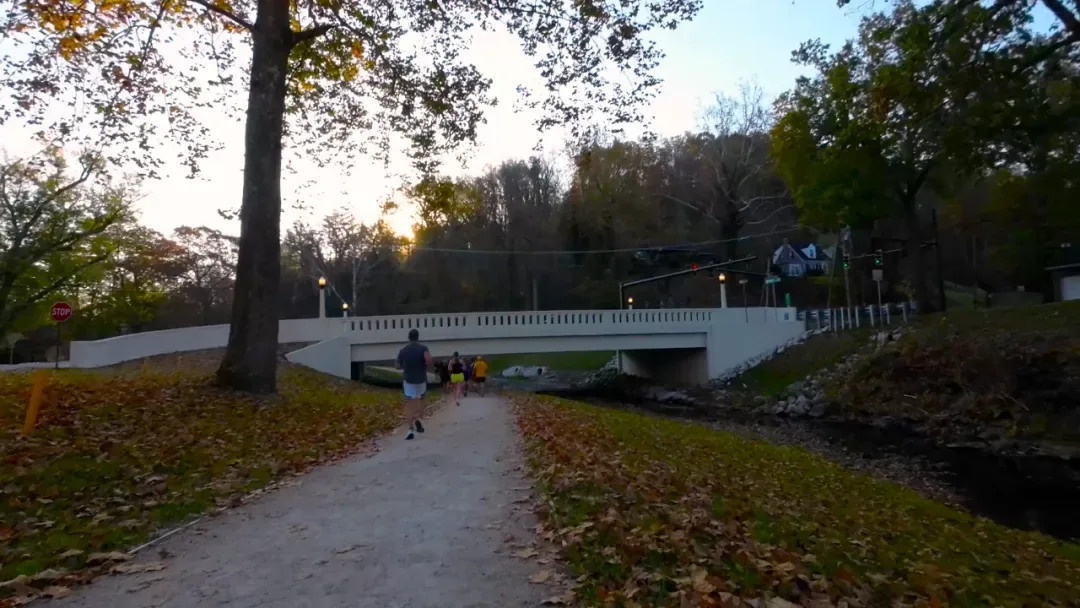
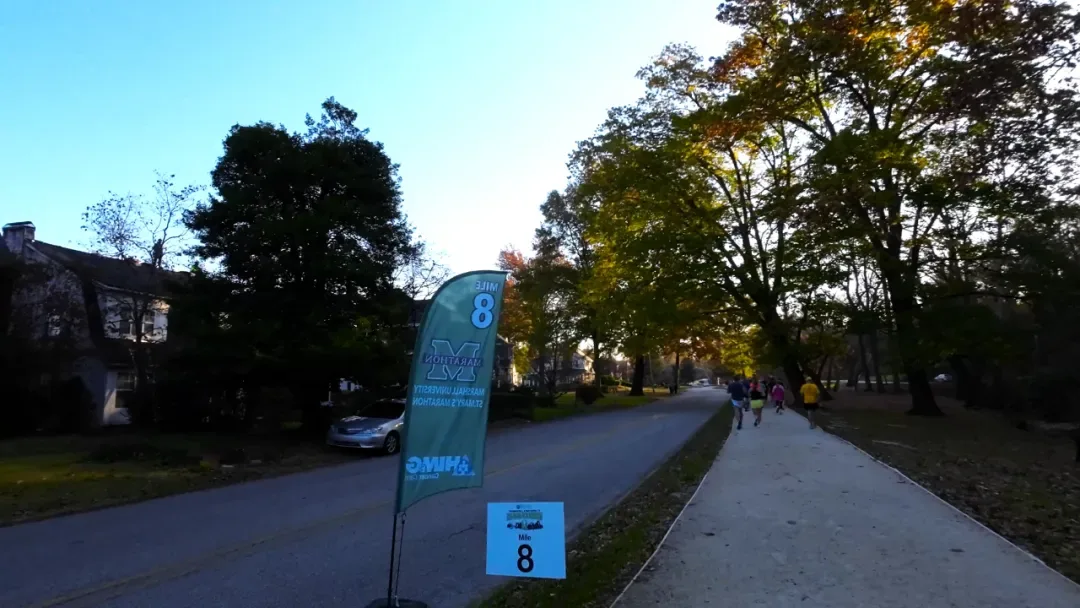
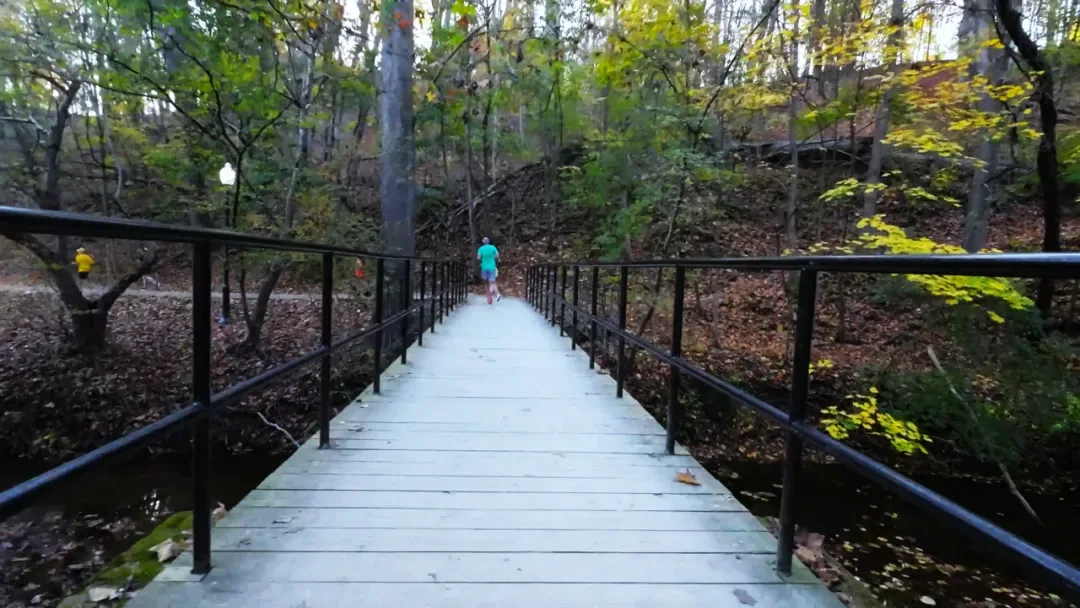
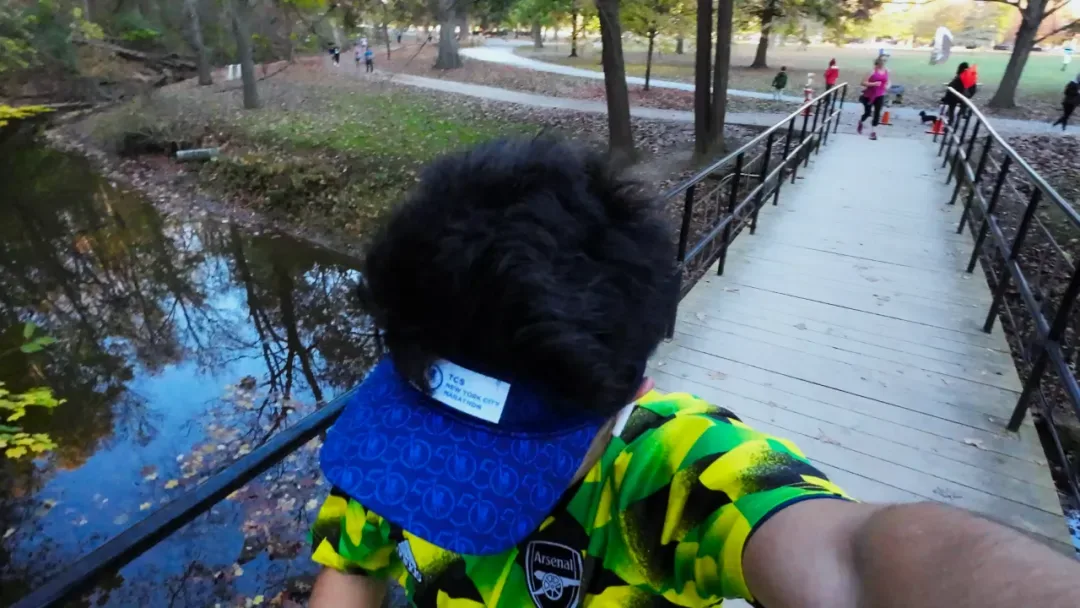
The park scenery was beautiful and refreshing. After crossing a wooden bridge, we finally finished the slippery gravel path.
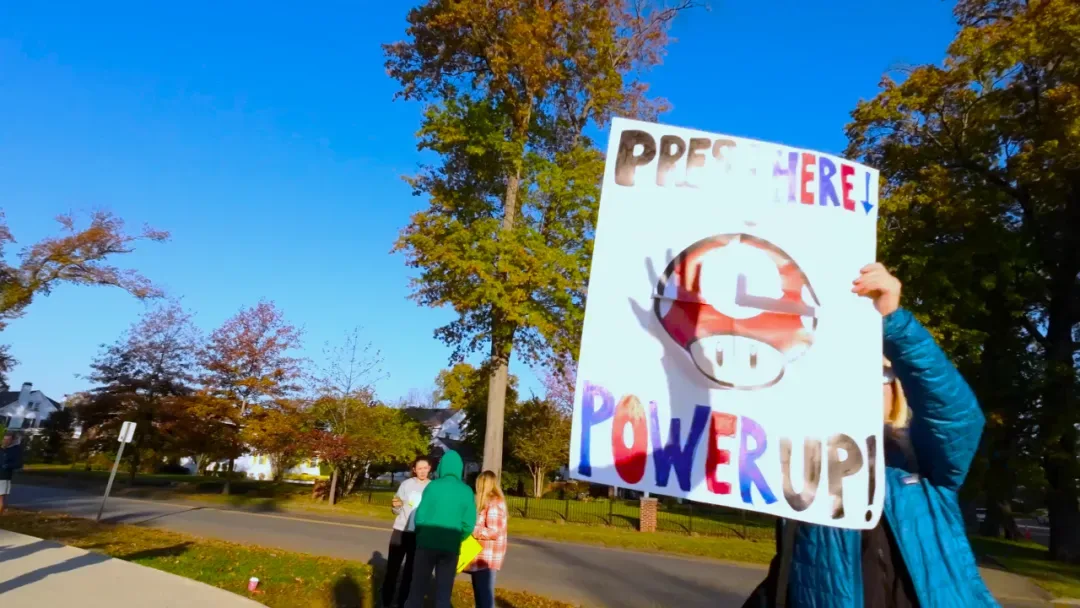
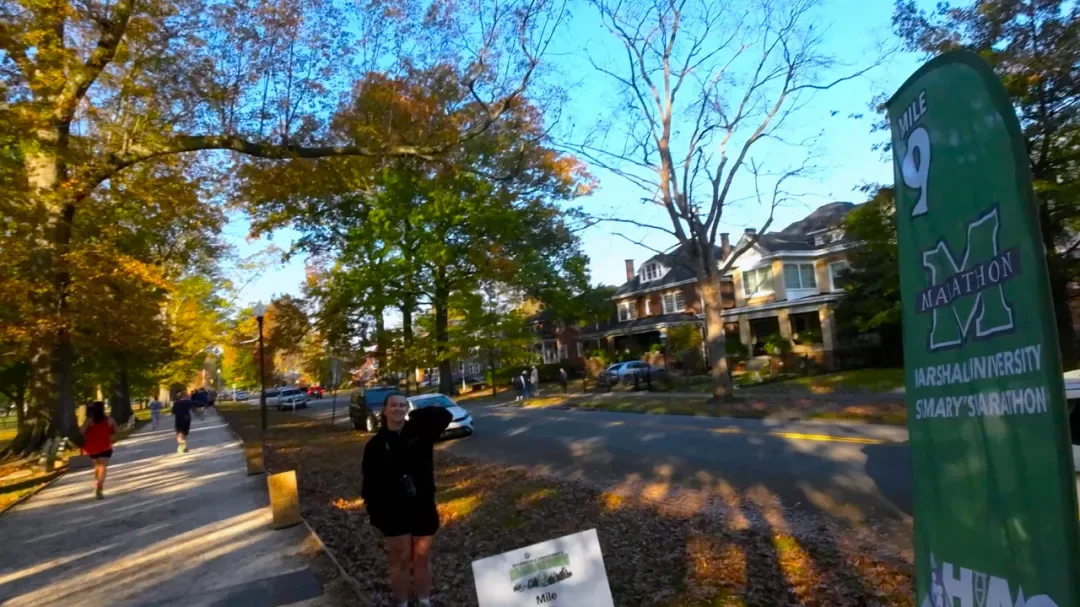
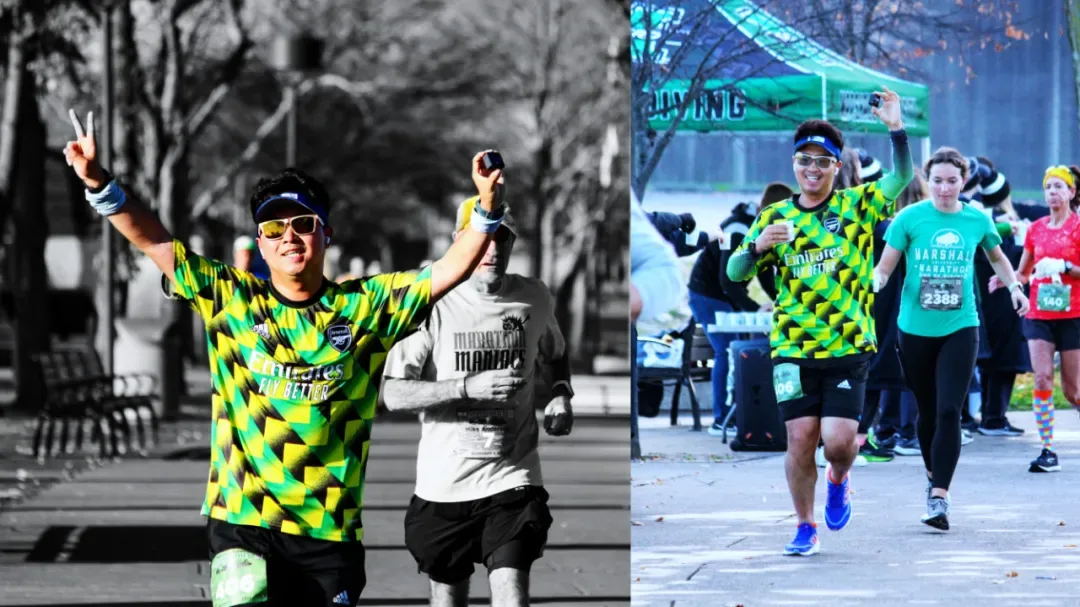
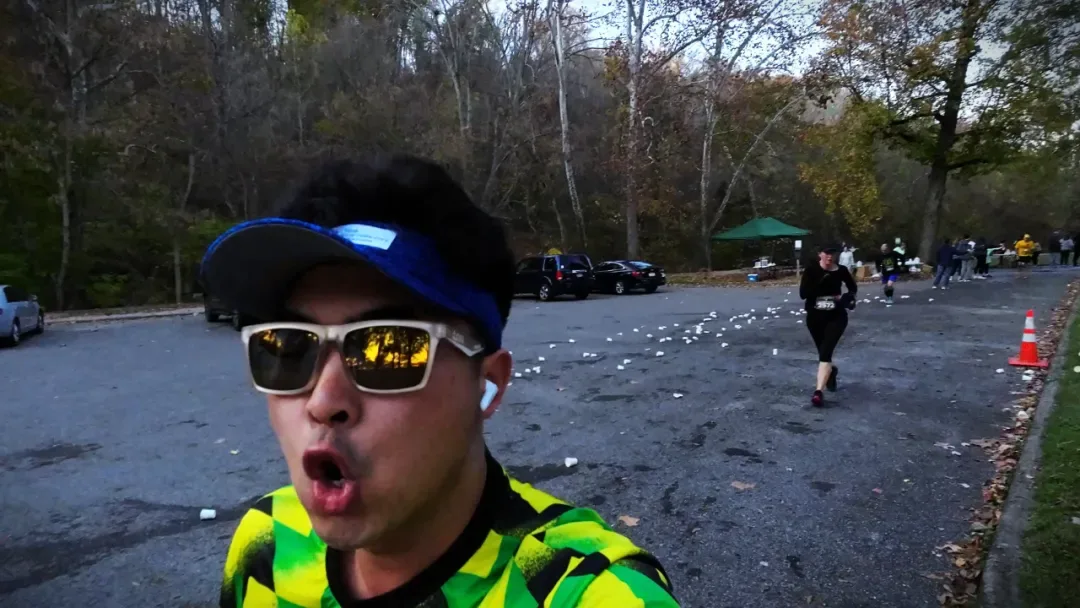
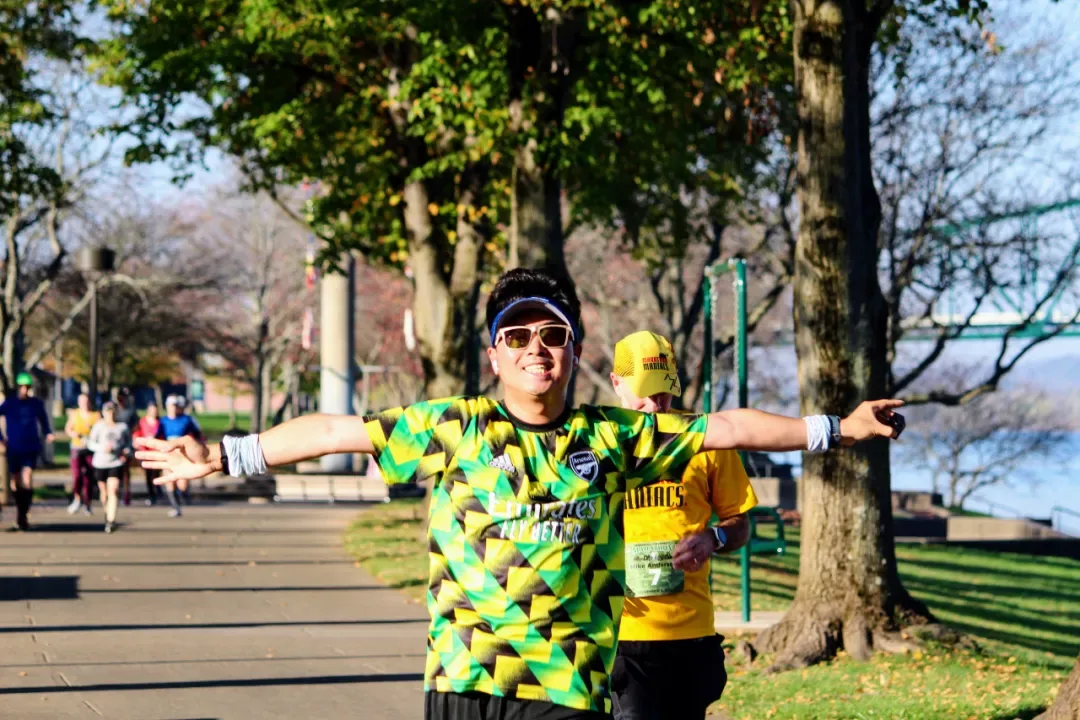
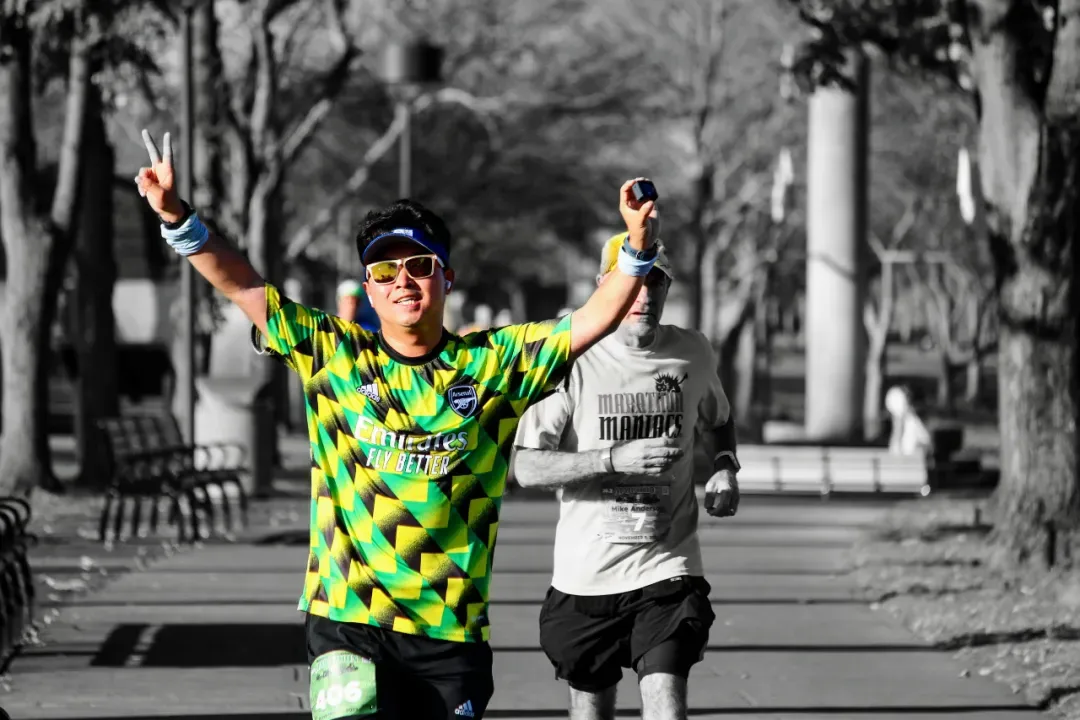
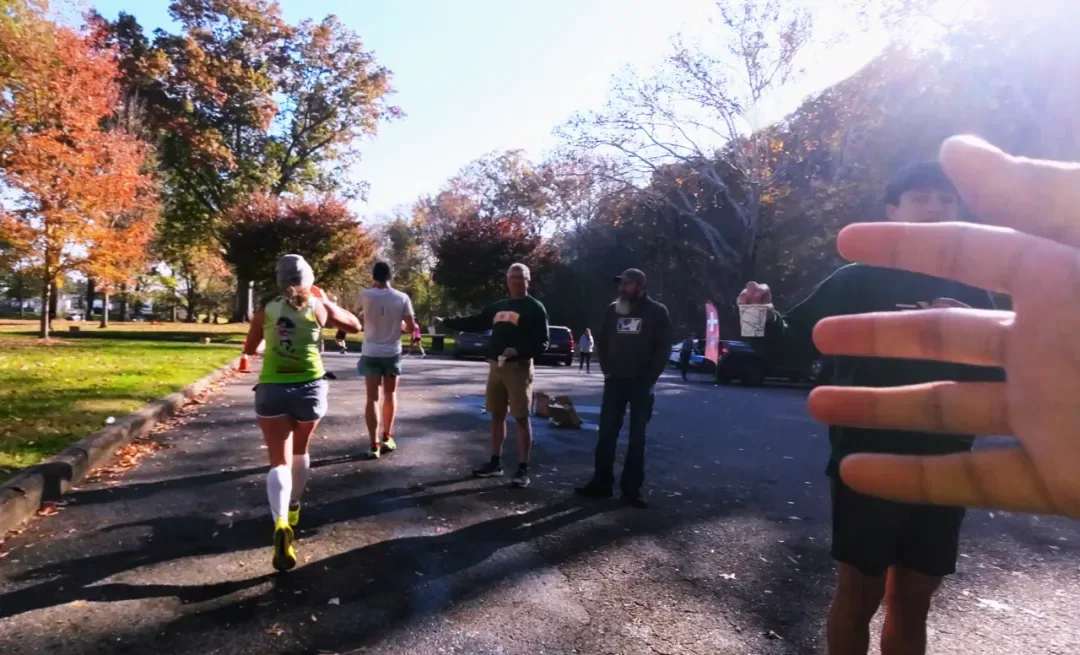
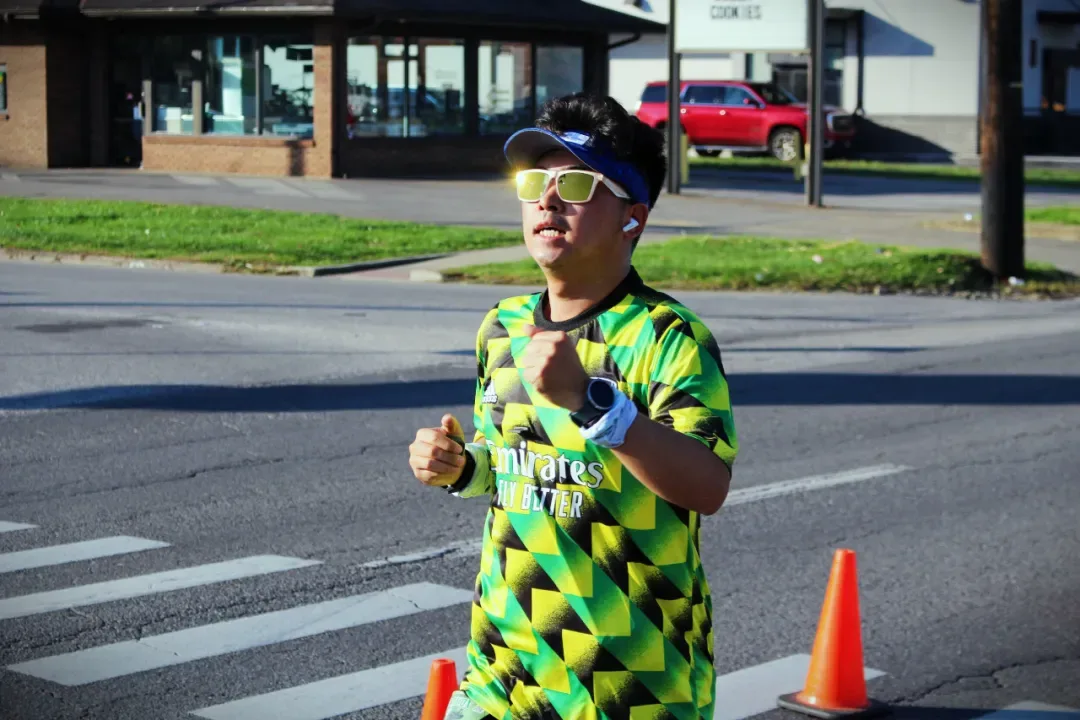
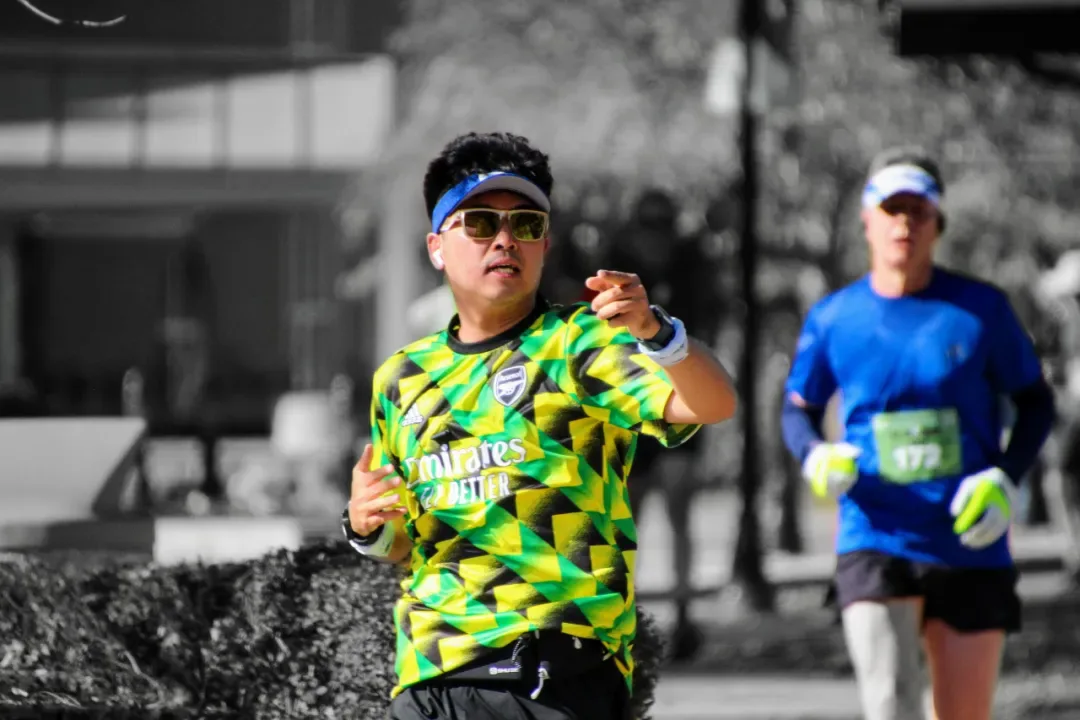
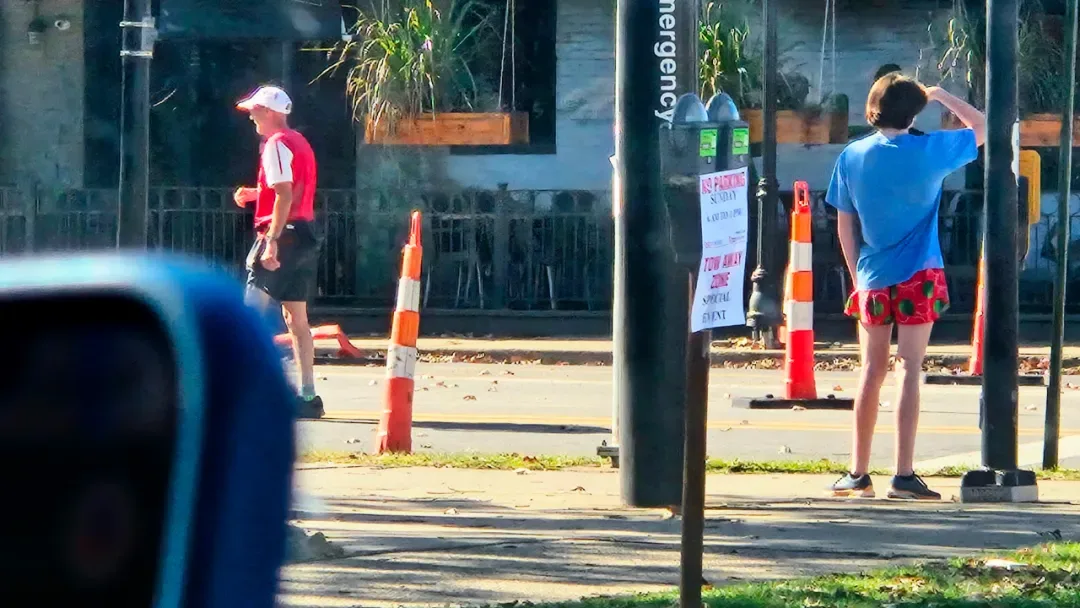
Now we reached 13th Street. After passing the Mile 9 marker, there was an Army aid station. The volunteers saw me wearing my Arsenal shirt and booed, saying Arsenal was no good and Chelsea was much better.
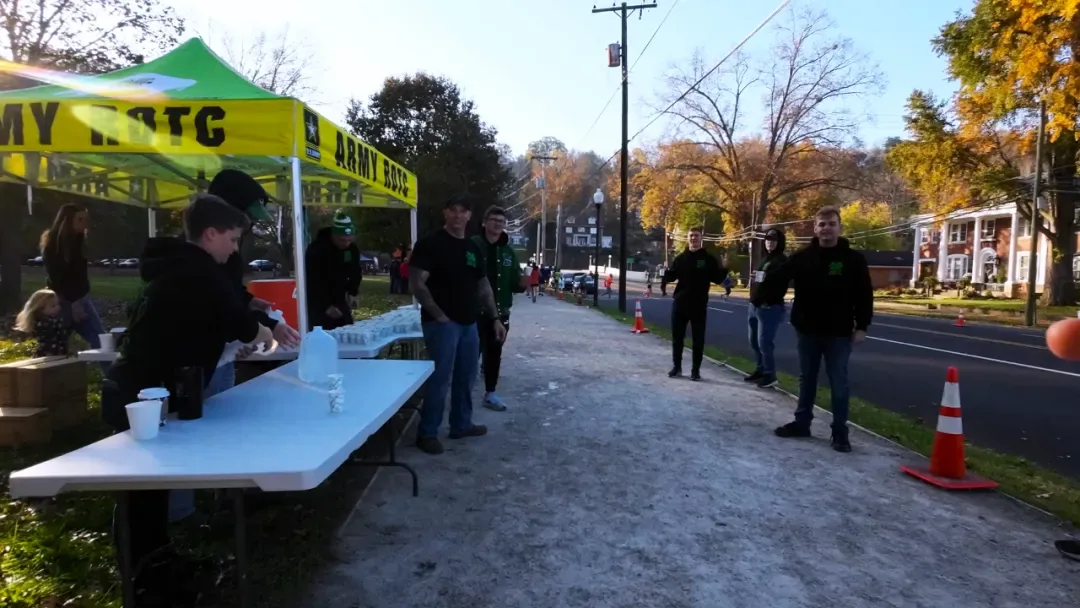
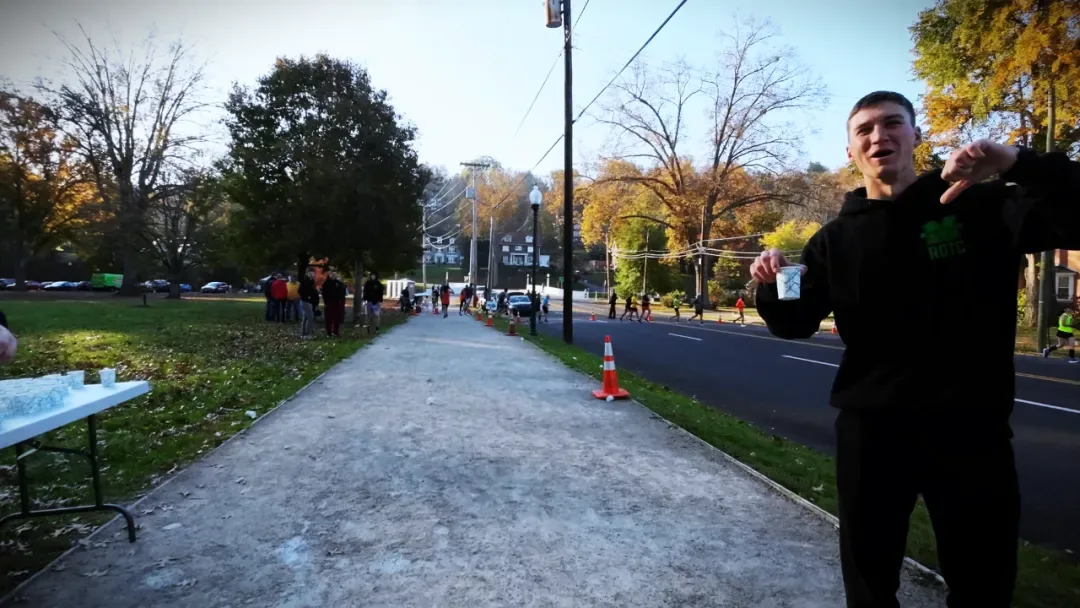
The guy who booed me was caught red-handed by my camera. Buddy, I'll remember you!
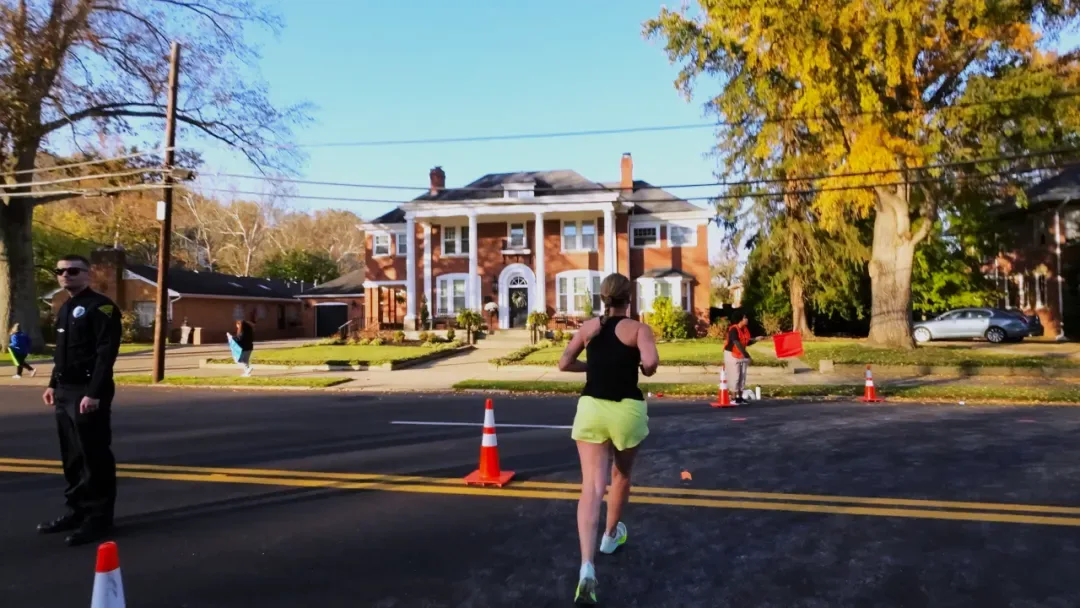
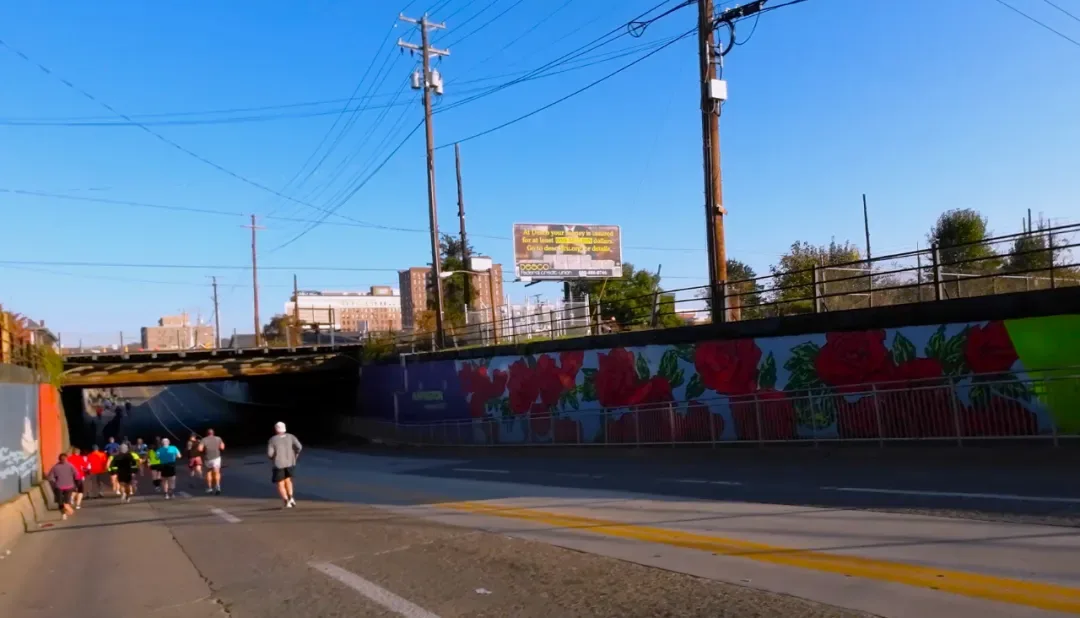
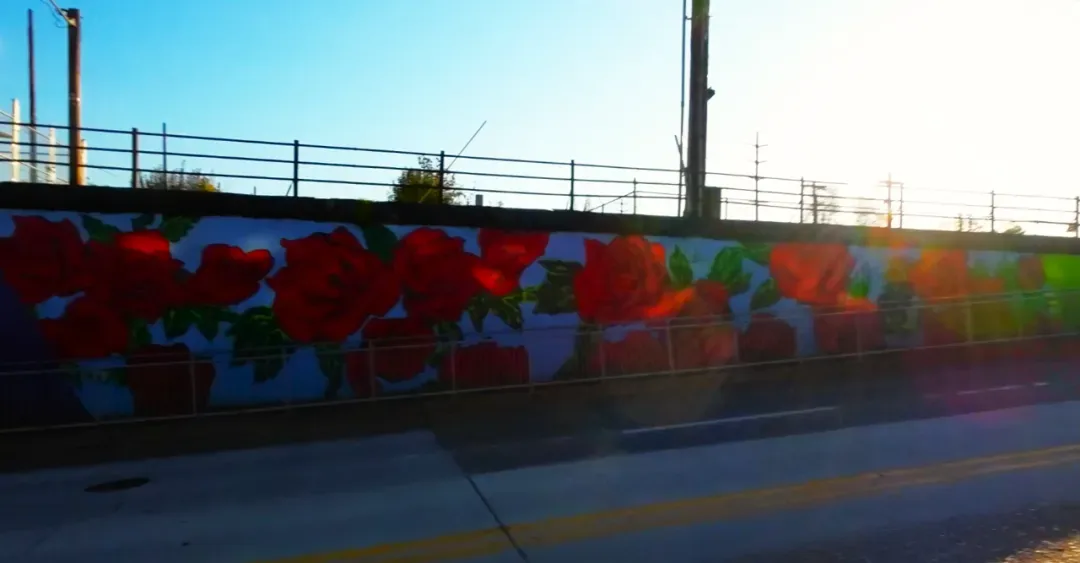
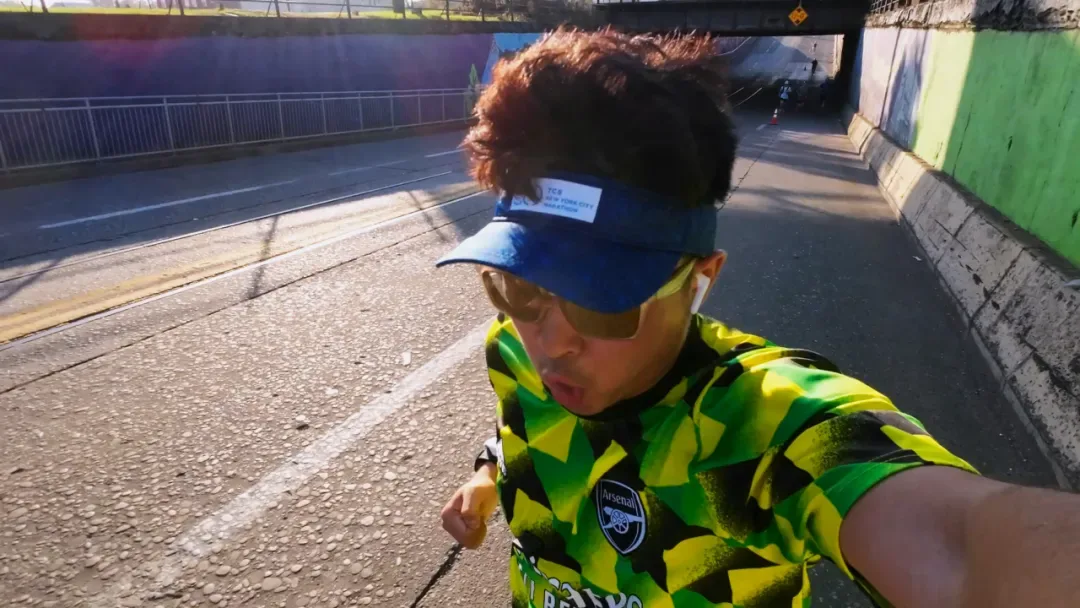
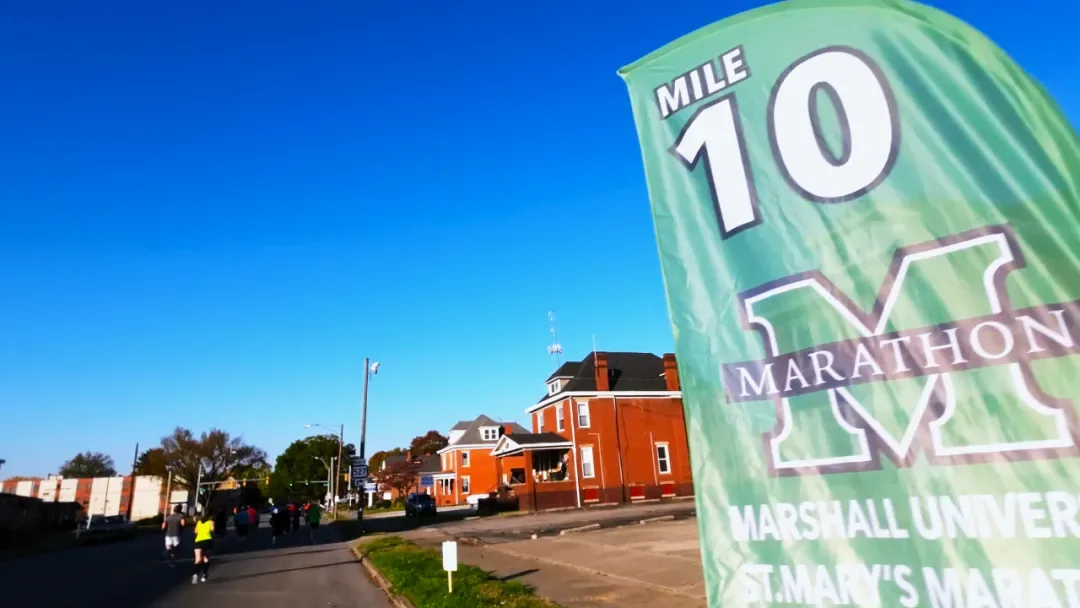
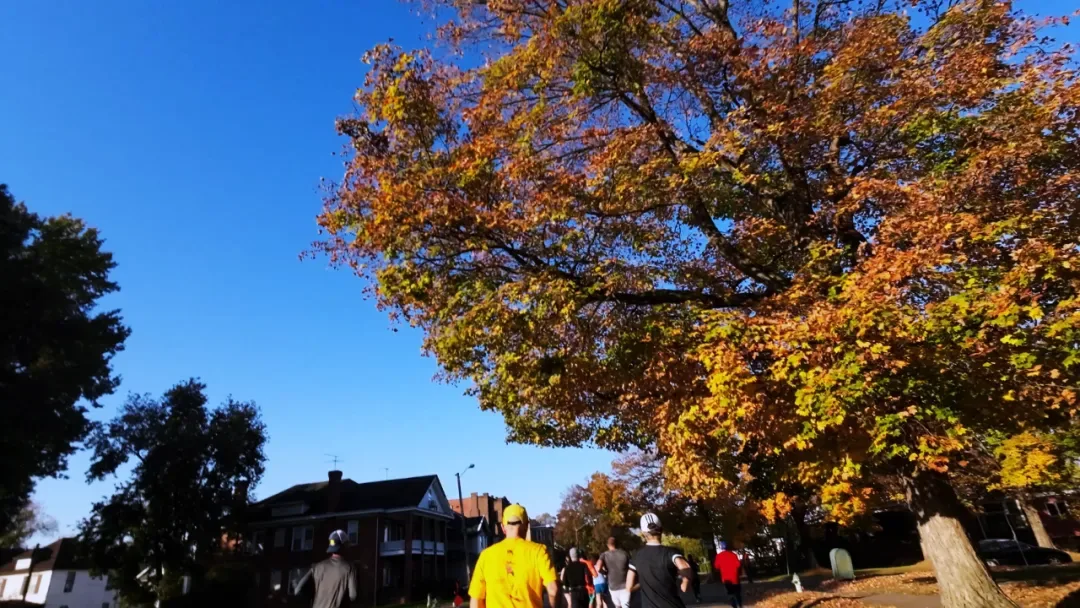
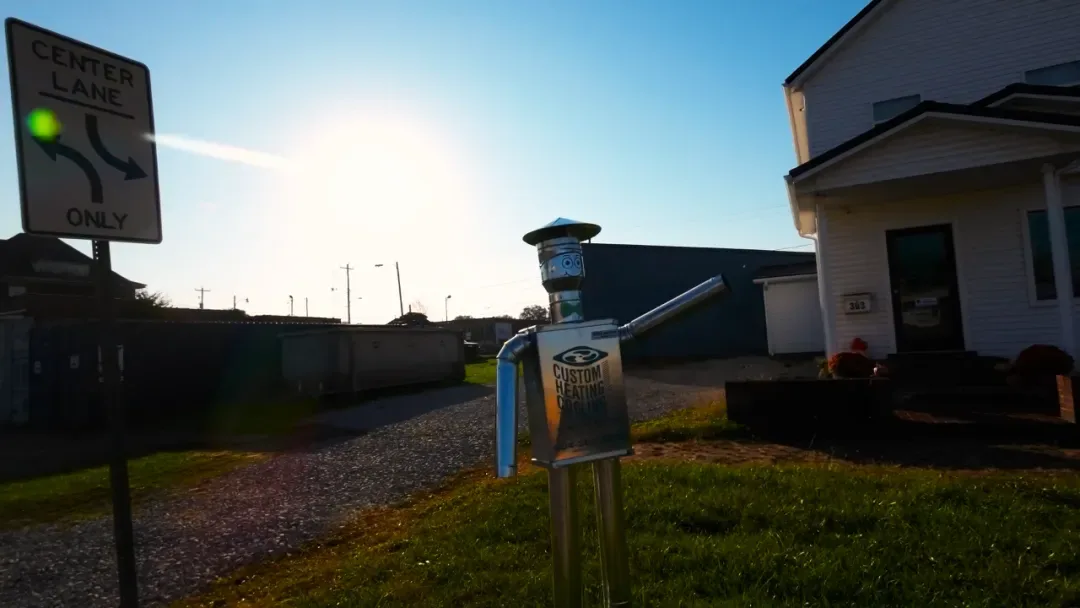
Just past the Army station was a sharp turn. We ran through the Rose Tunnel to 8th Street, then headed north back to Harris Riverfront Park.
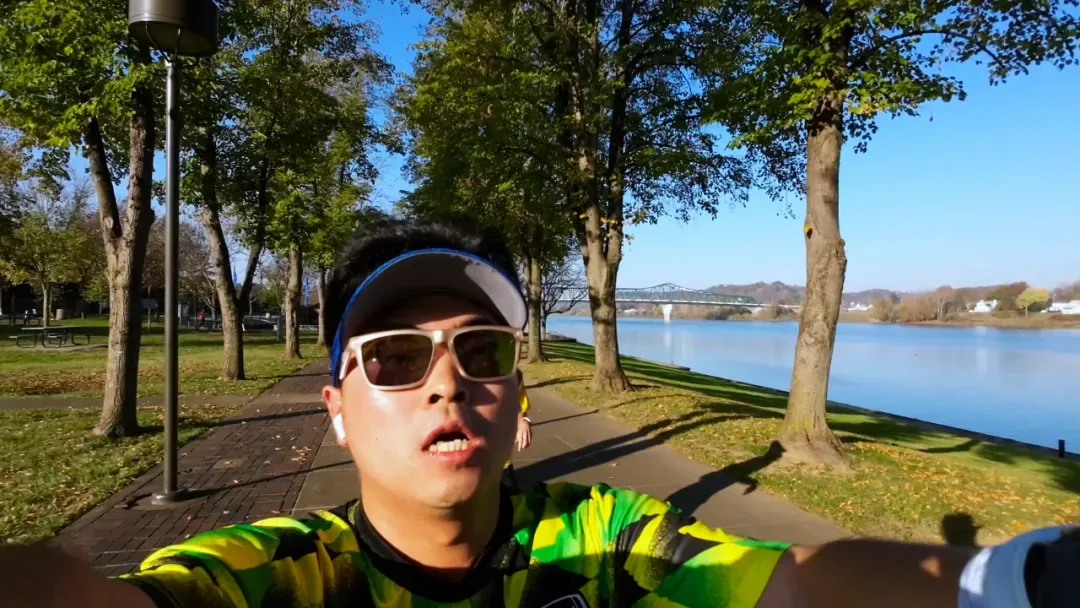
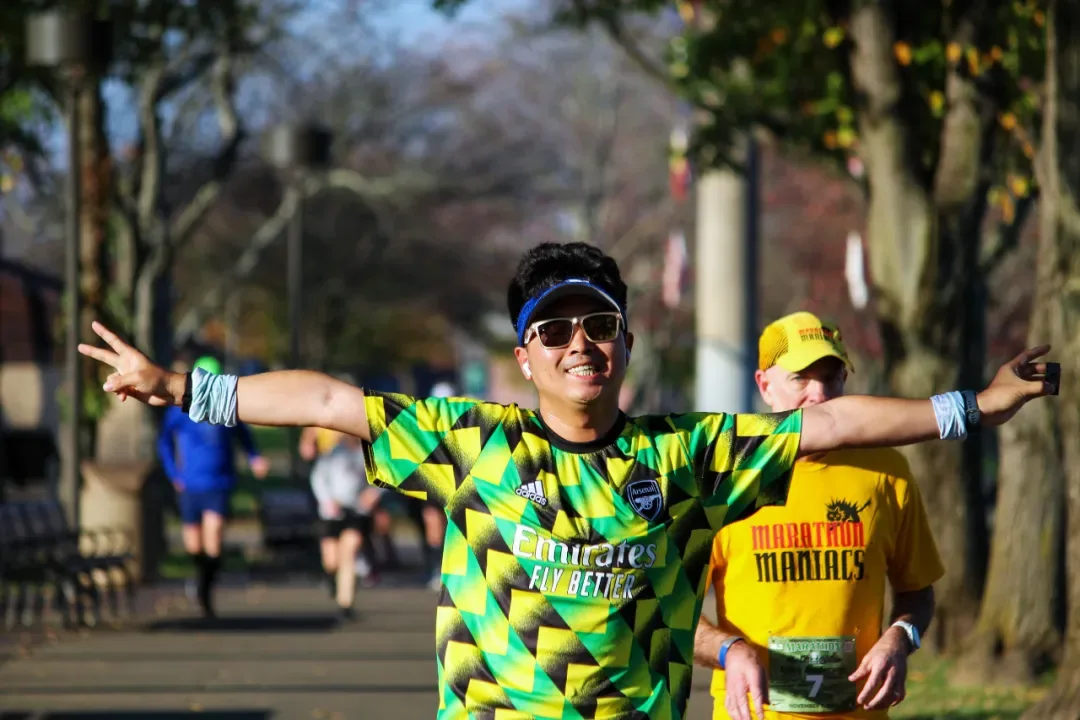
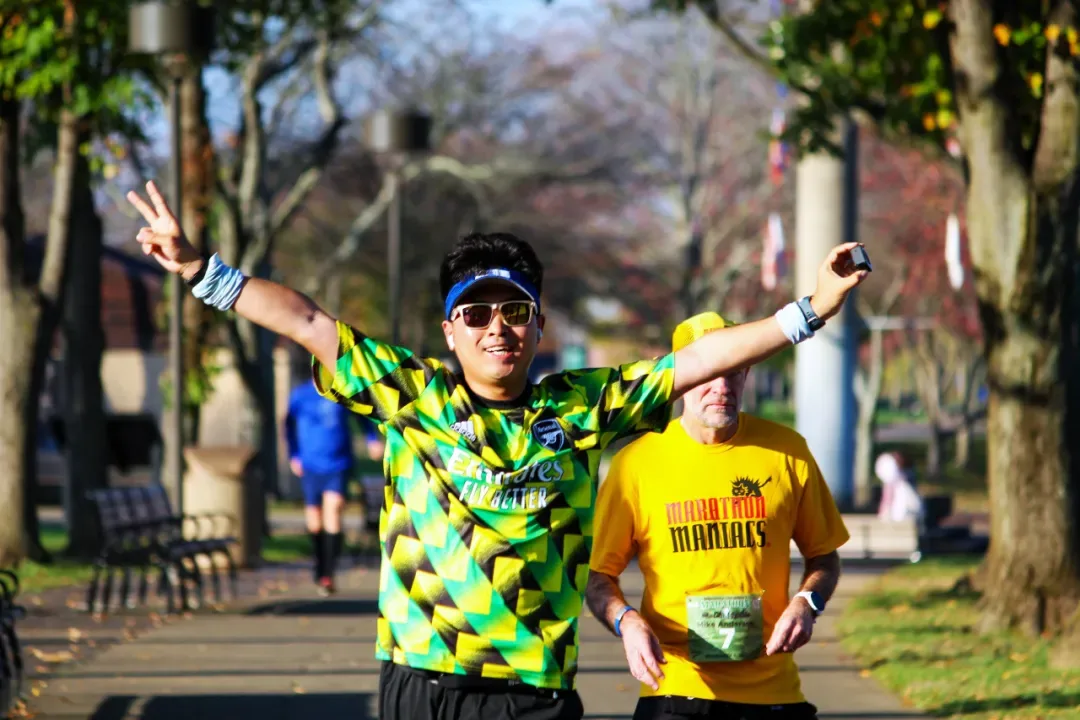
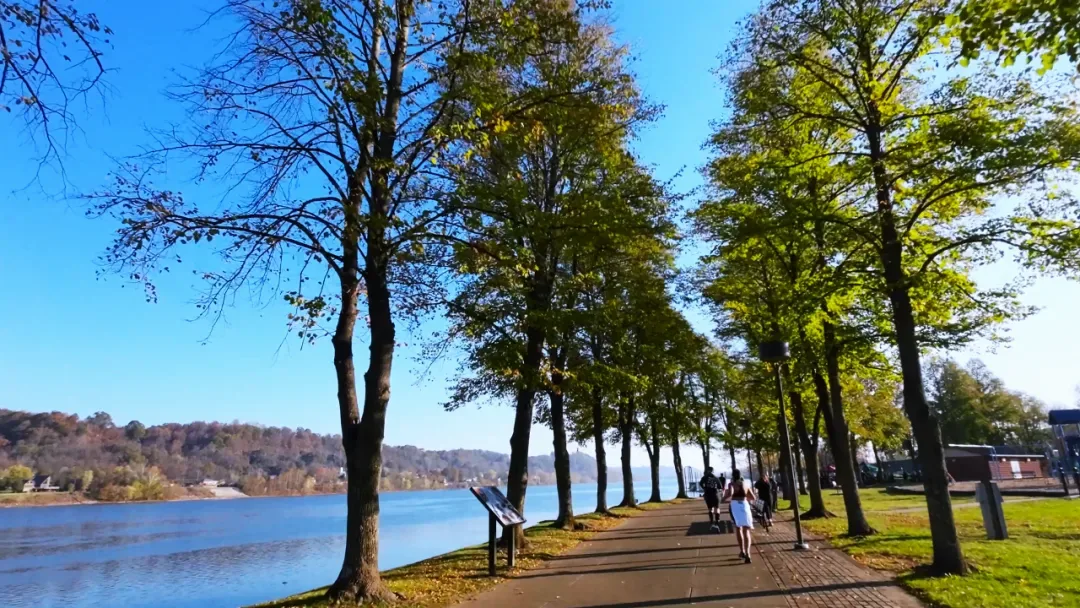
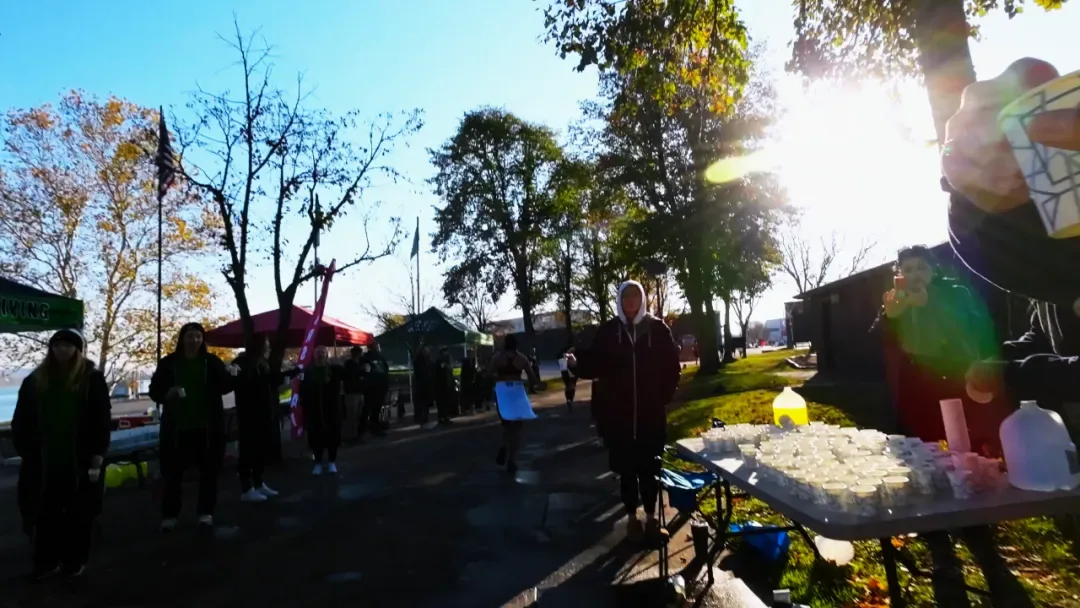
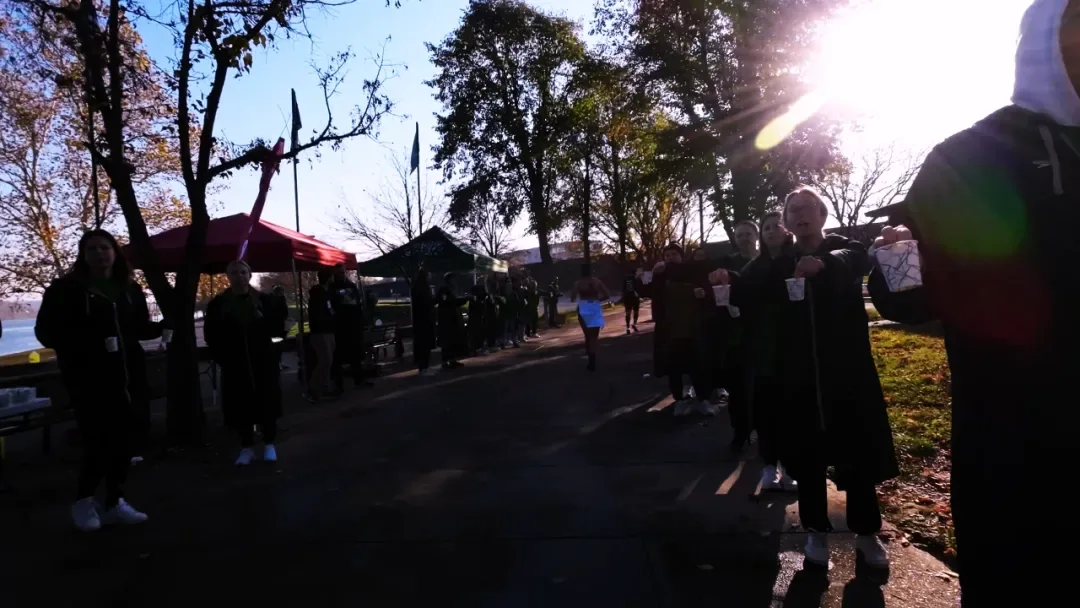
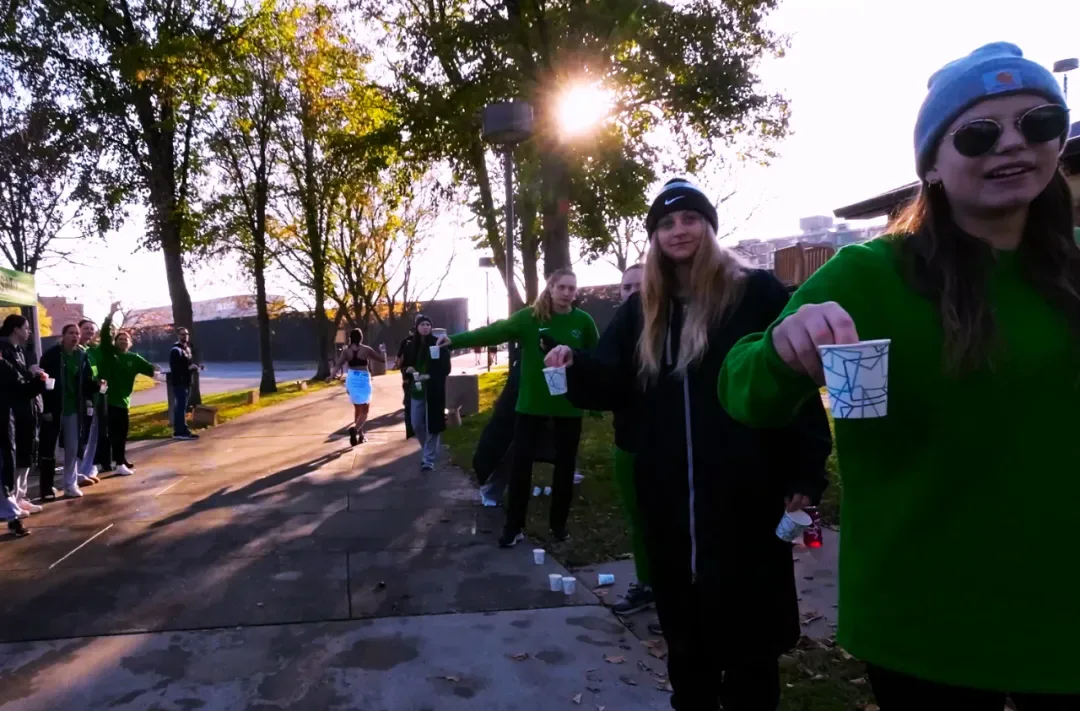
Running in the opposite direction through Harris Riverfront Park made the scenery feel completely different. The volunteers were still there, and the lively atmosphere hadn't faded at all.
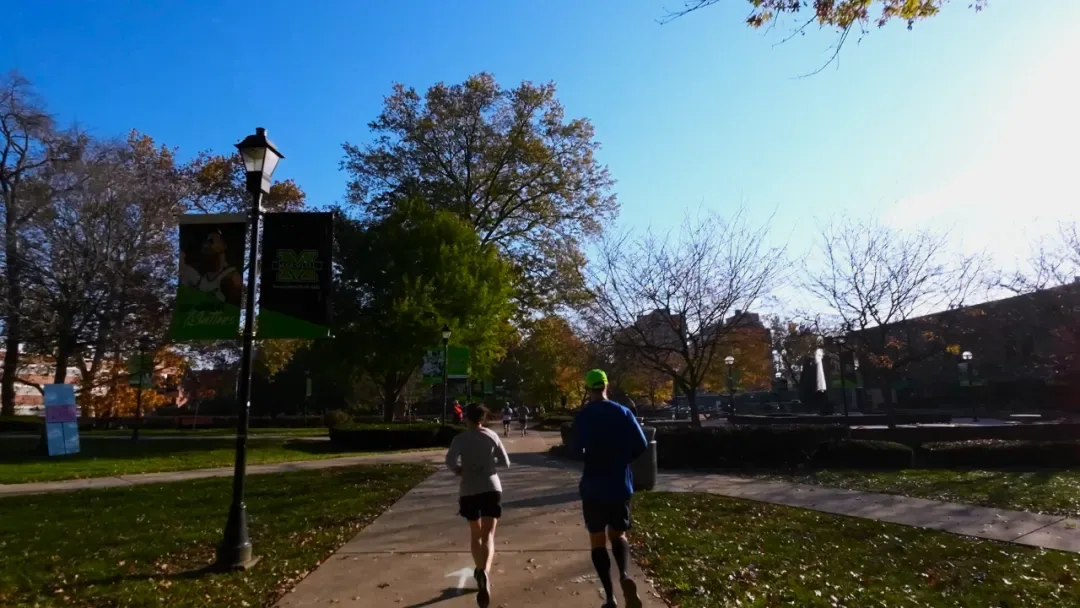
Returning to the city streets, the marathon and half-marathon runners split up. The full marathon pack headed through the Marshall University campus—a path Siqi and I knew well from our photoshoot the day before.
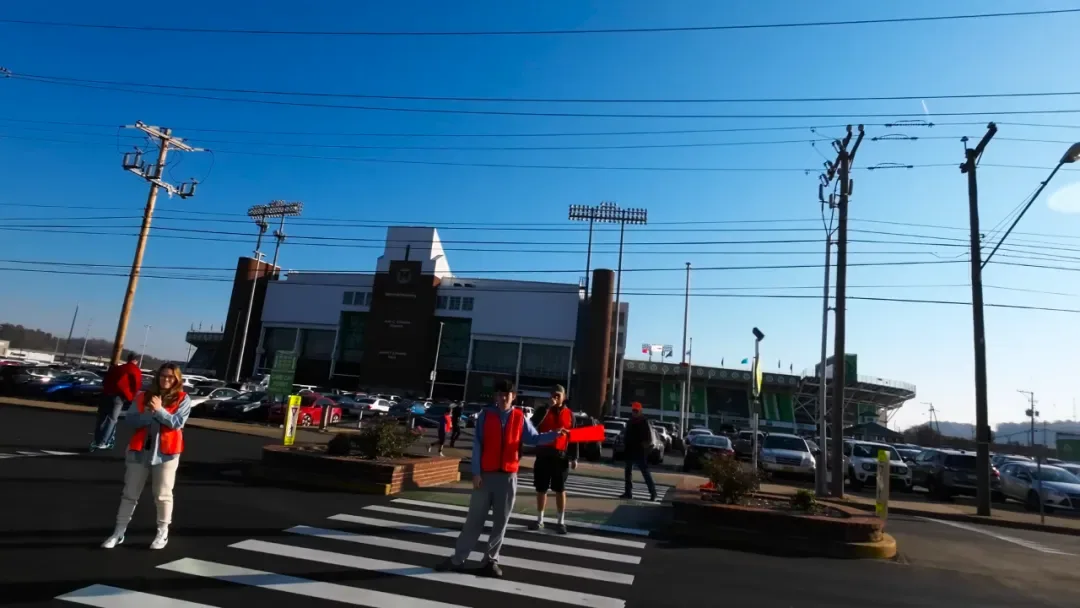
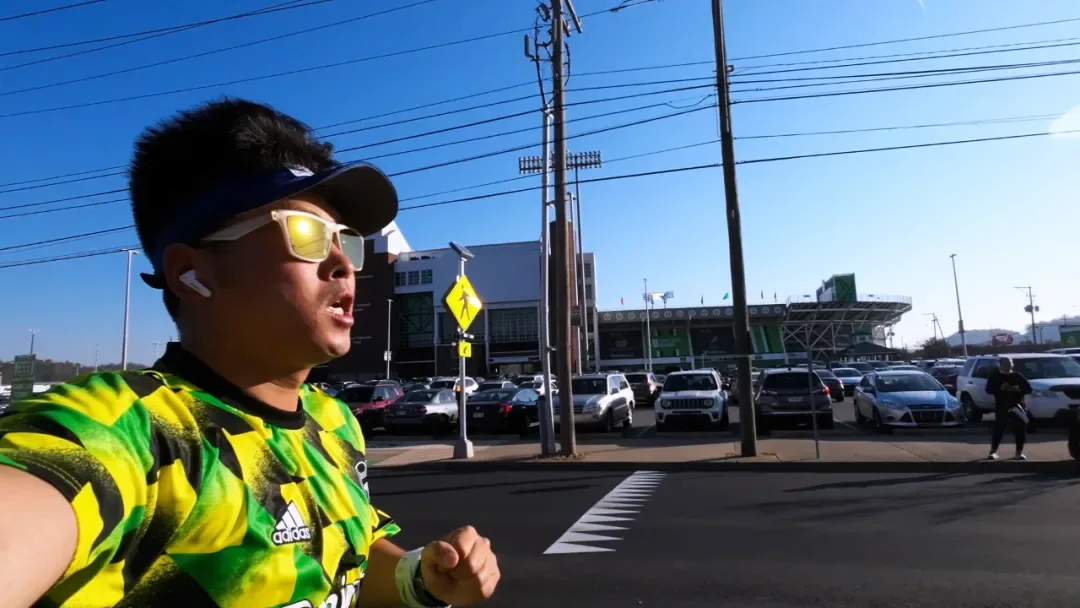
Leaving campus, the stadium stood right before us. But unlike the half-marathoners, we had to wave goodbye to it, as we still had more than half the distance left.
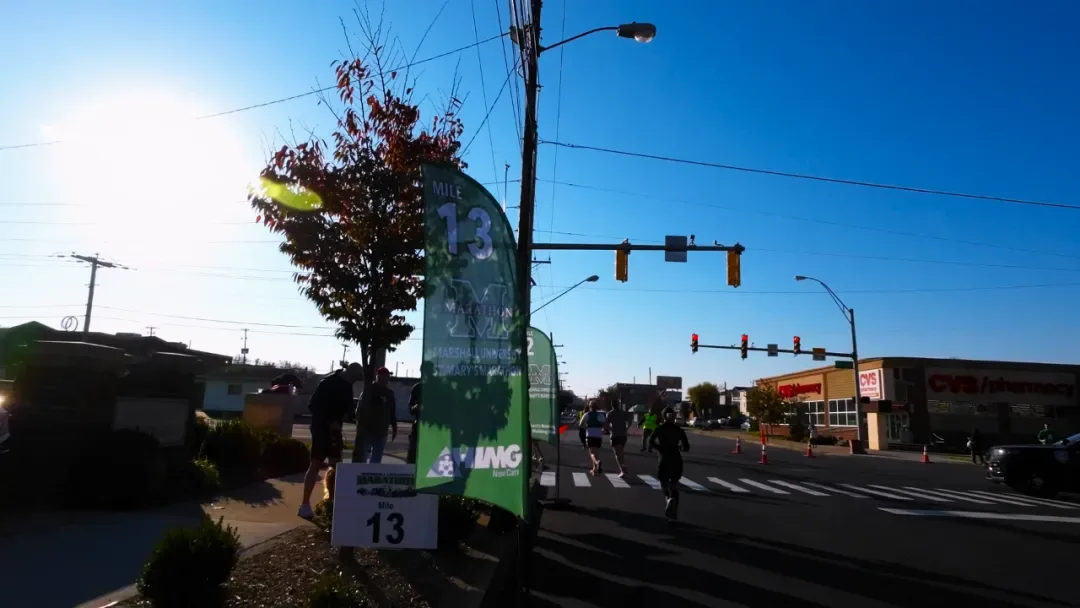
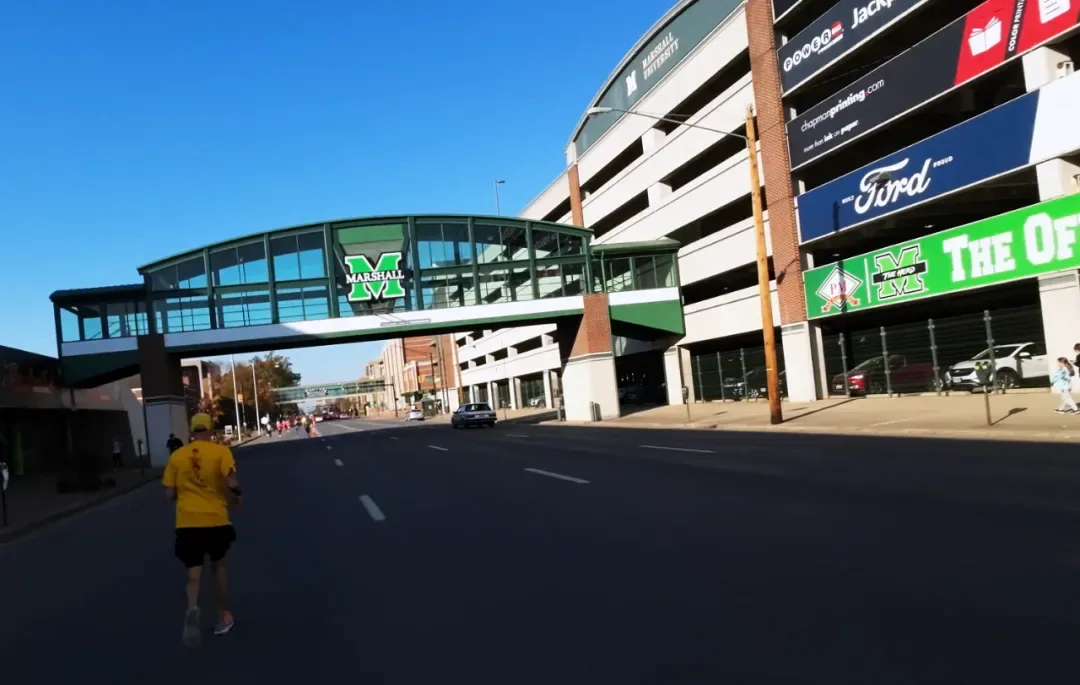
Looping back to the start, we repeated the first-lap route. I checked my watch: less than two hours for the half. This was better than expected, and since I hadn't pushed myself too hard in the first half, I felt my Nashville flag could finally stand.
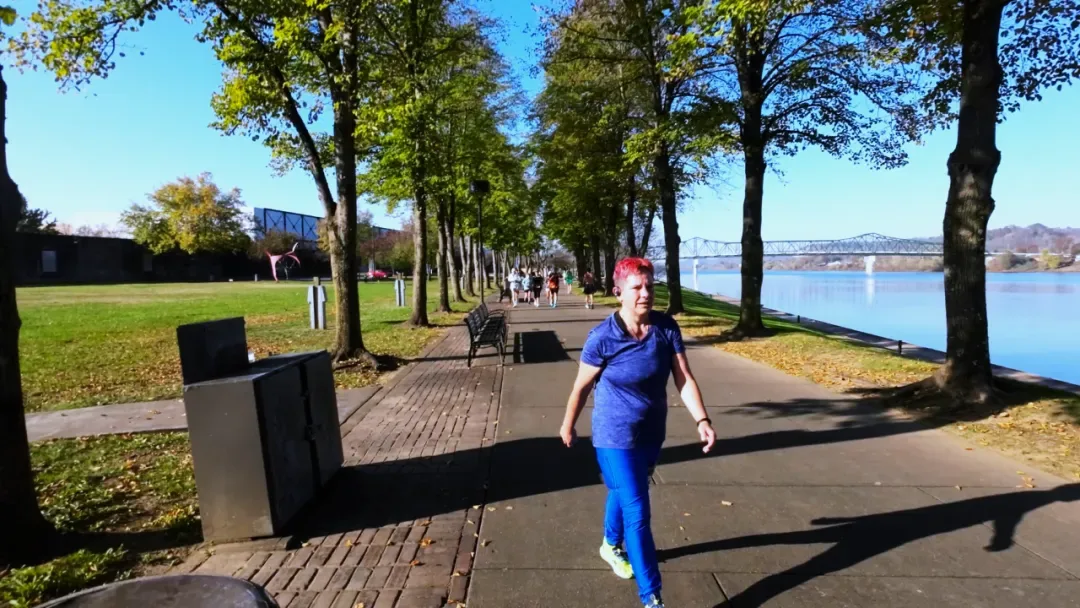
Returning to the city streets, the familiar route gave me confidence. I knew the terrain inside out. However, there were some changes: by the third time we reached Harris Riverfront Park, the volunteers' energy had noticeably dropped. But as long as the supplies were there, it was fine.
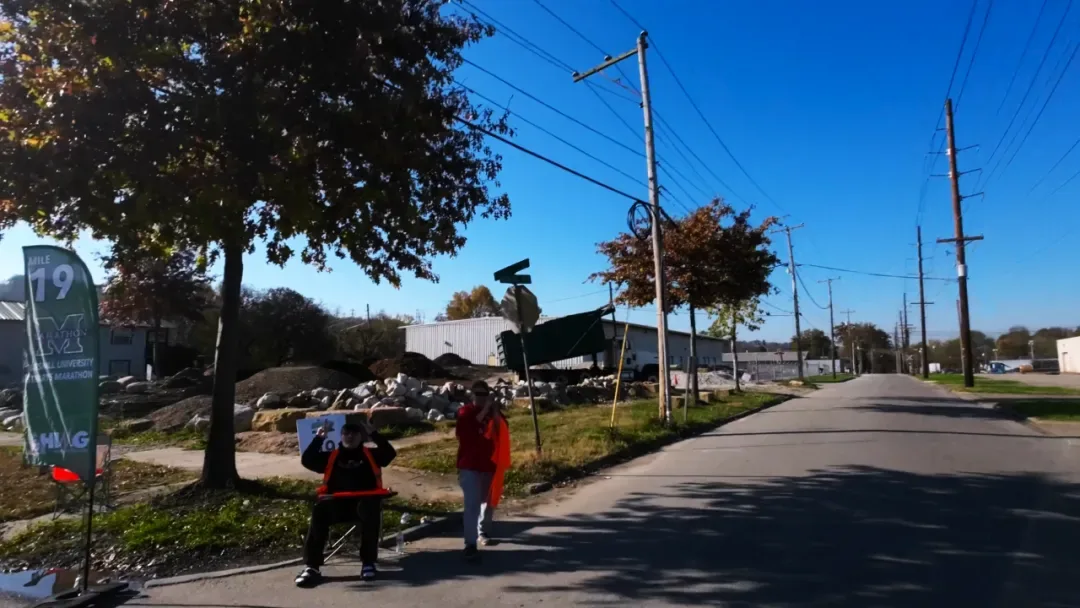
By then, my projected finish time was ahead of the 4-hour pacer. I decided to stick to the sub-4 goal and give it a push.
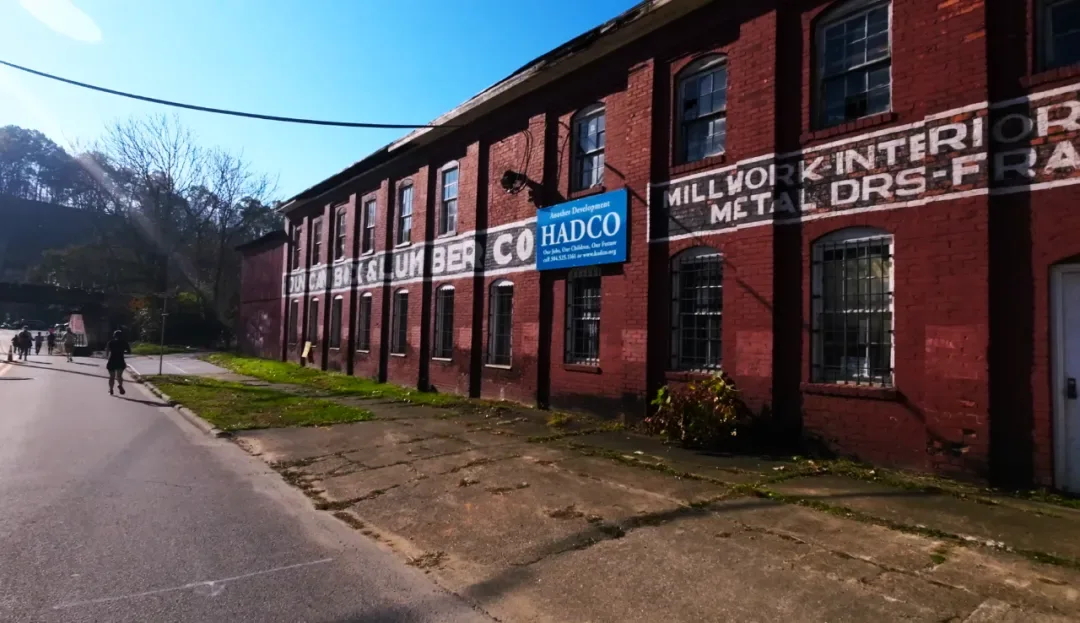
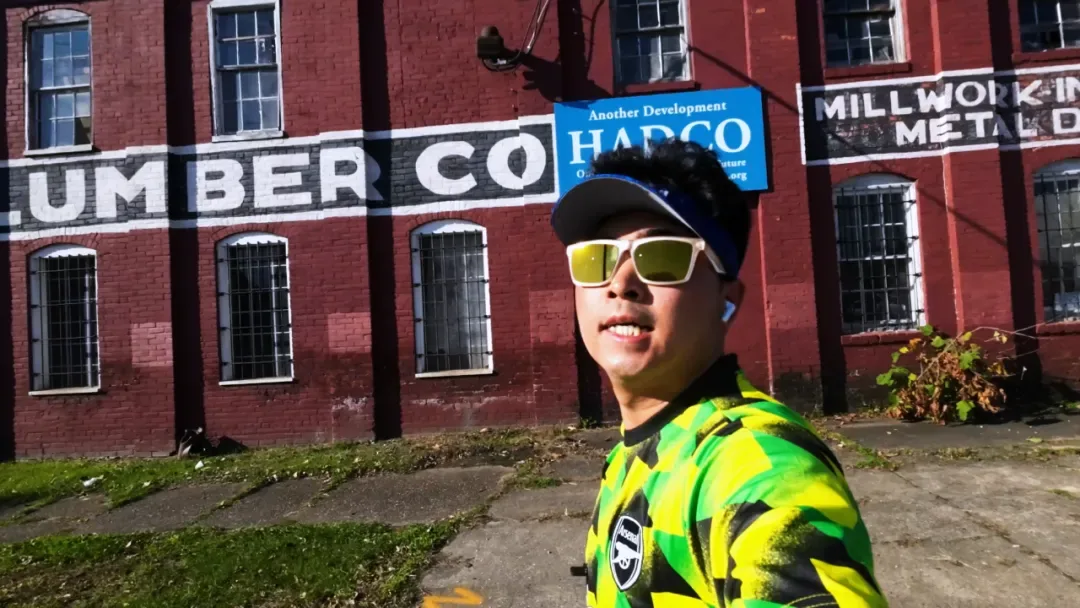
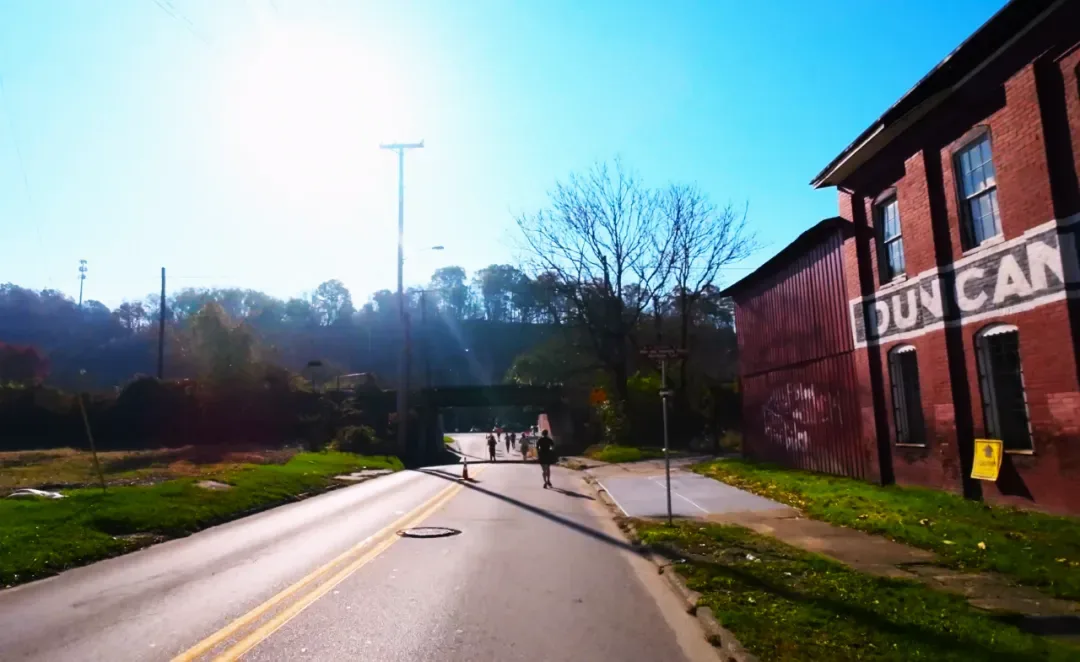
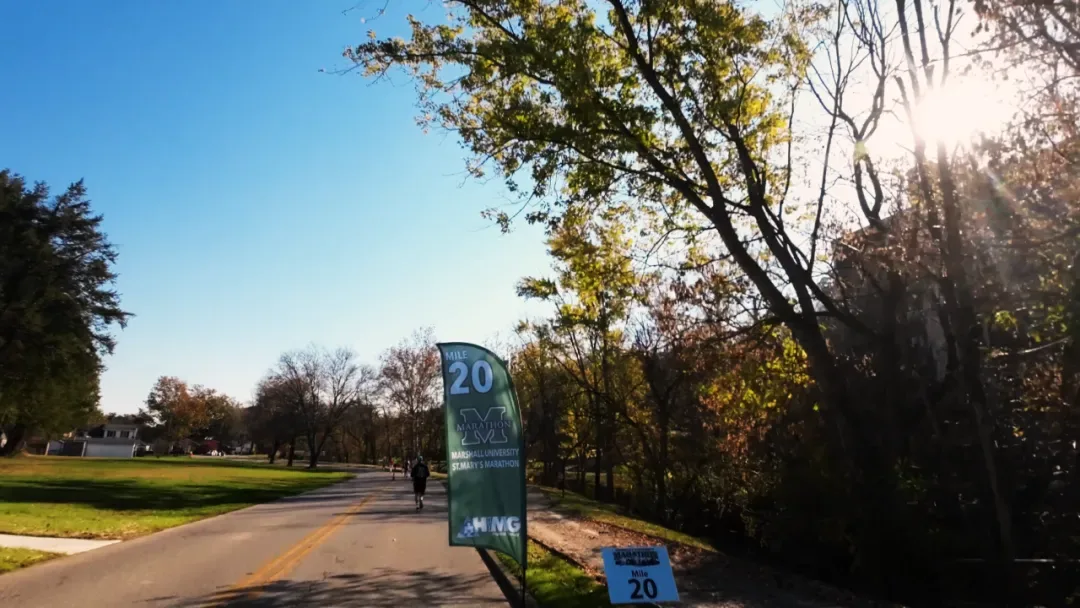
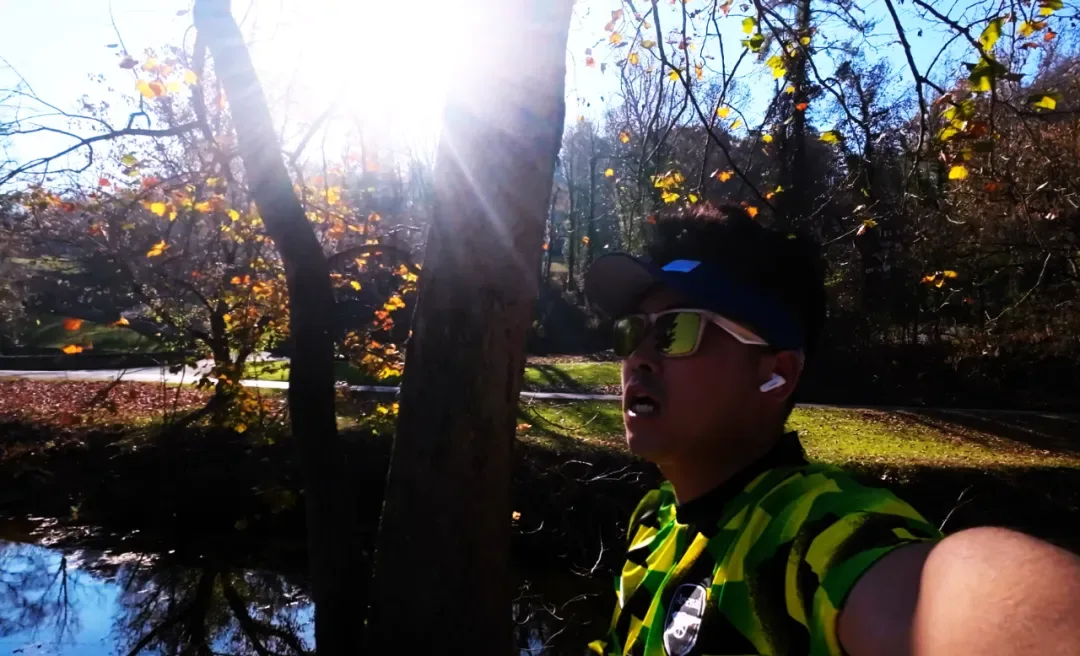
My pace was steady, and in a flash, I reached Mile 19. The red brick building looked different under the stronger sunlight. The sun lit up my face, and I looked in good shape.
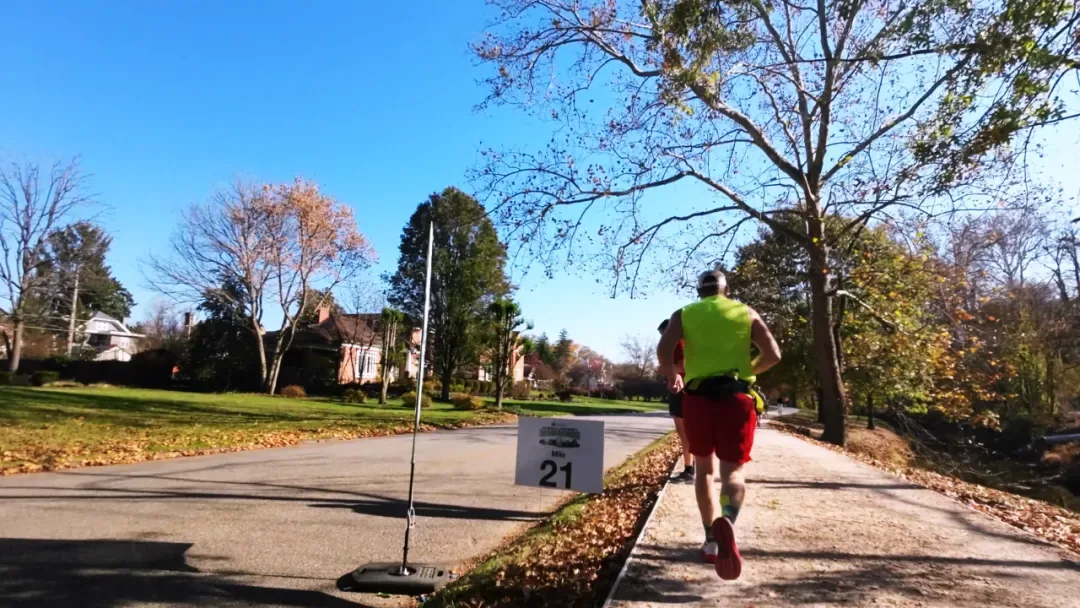
I made sure to grab supplies; you can't skip aid stations just to save a few seconds. I realized it had been a while since I ran so seriously. I kept calculating the time: Mile 20, Mile 21...
When I returned to the Army aid station, I had another friendly battle with the Chelsea guy. I yelled that Arsenal was the best. By then, they were already packing up.
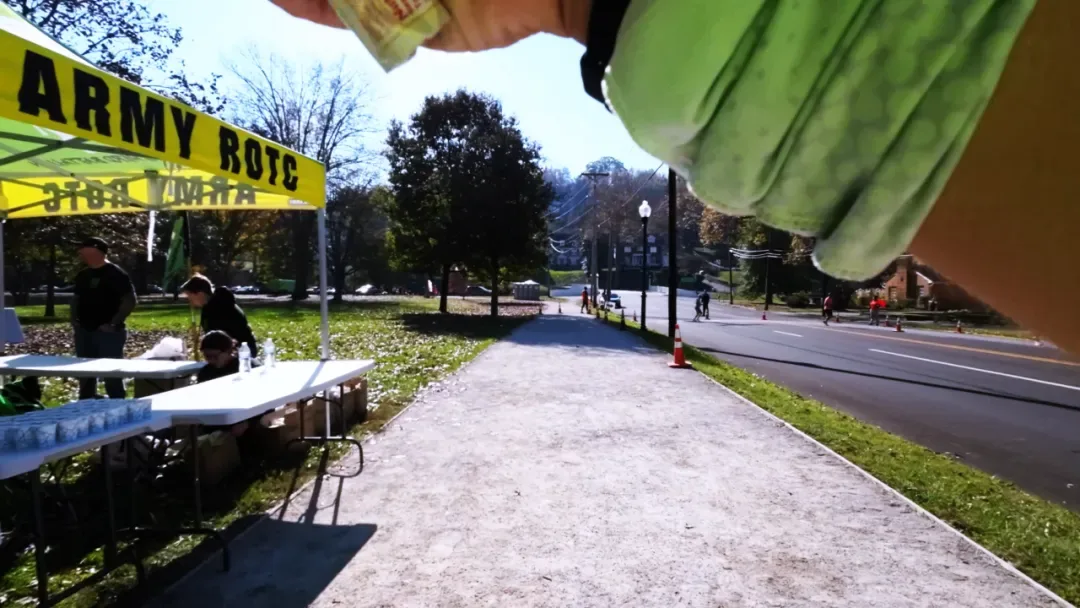
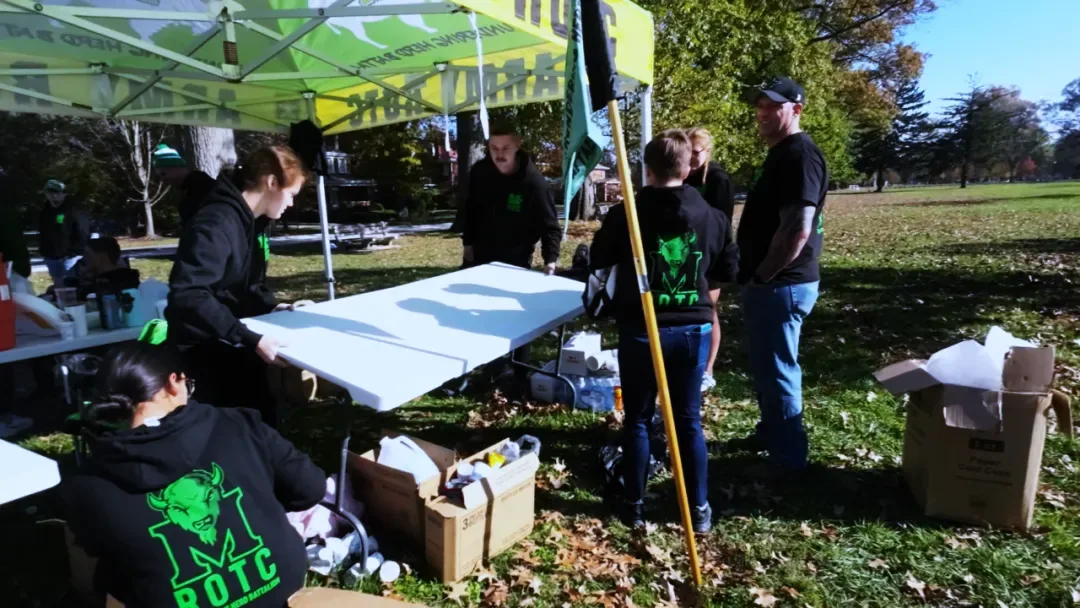
Returning to the Rose Tunnel, the downhill slope wasn't easy, and the uphill climb was even tougher. As the miles piled up, fatigue began to set in.
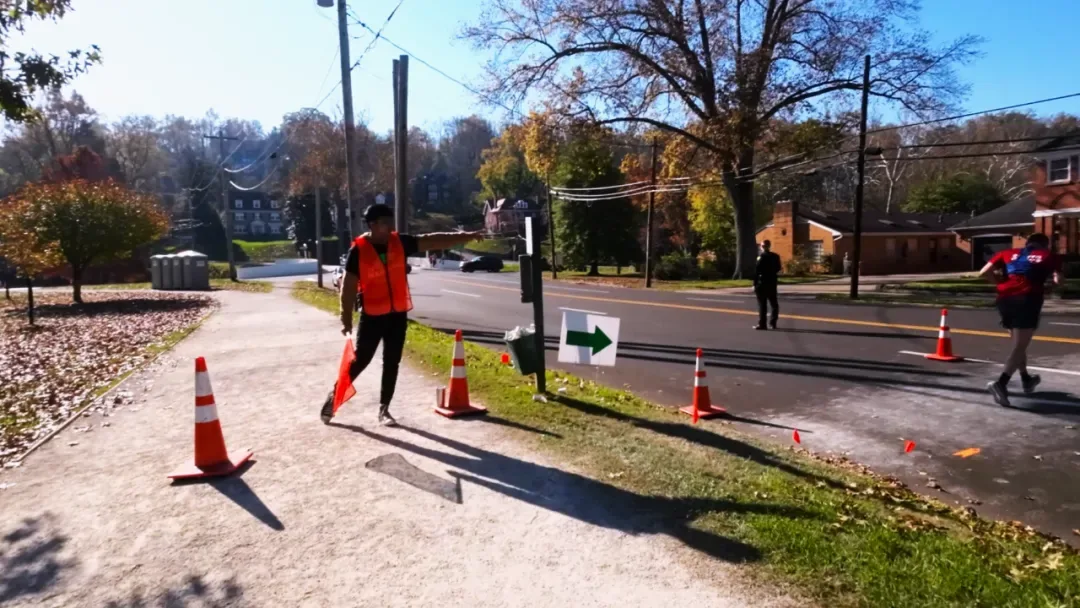
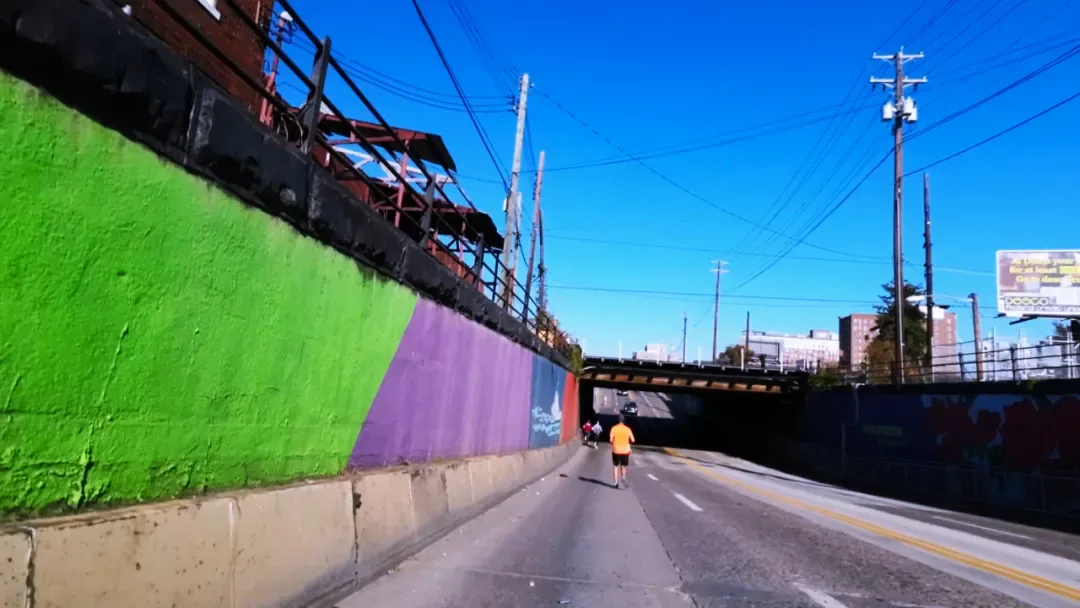
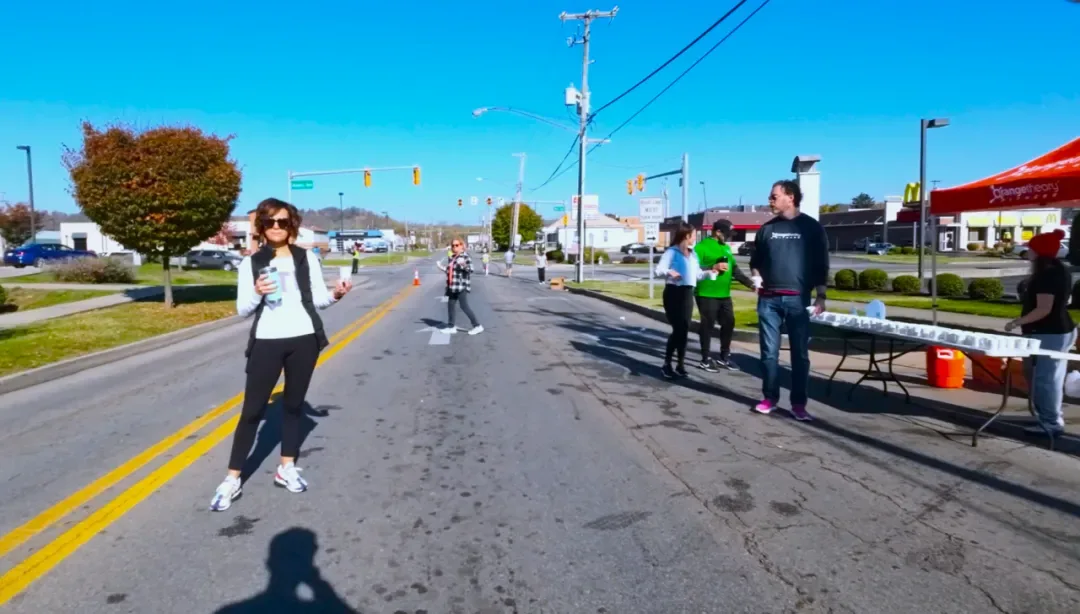
I didn't miss a single aid station, calculating my time and gel intake. As we neared Harris Riverfront Park on 1st Street, I grabbed a cup of Coke.
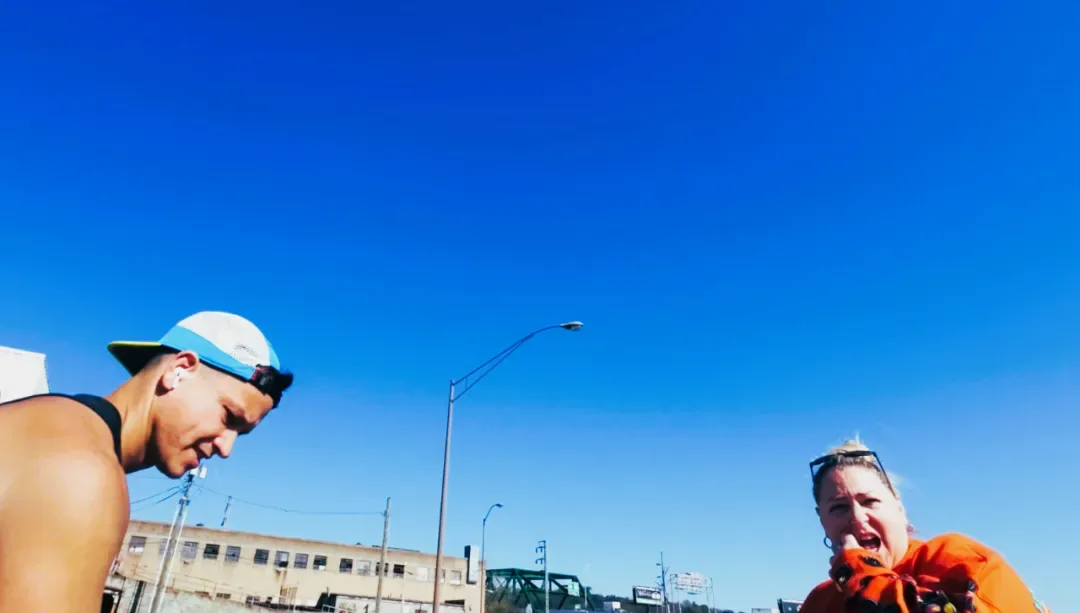
By now, Harris Riverfront Park was nearly empty of spectators, but there was still water left for us. The sun had grown intense, and my pace dropped a bit. However, I had built up enough of a cushion earlier to afford a slight slowdown. The hope of breaking 4 hours was still very strong.
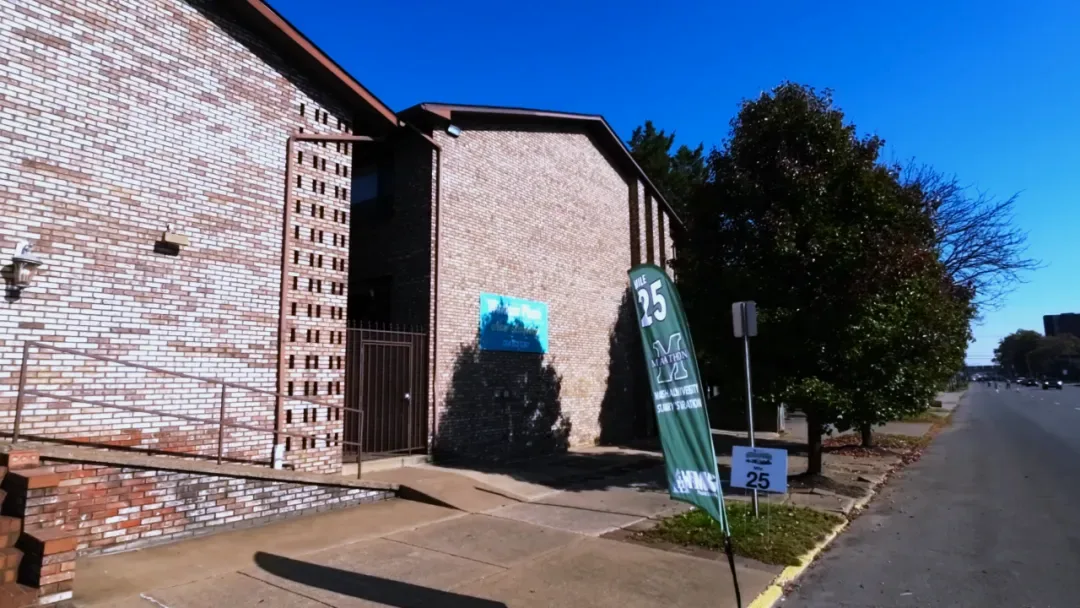
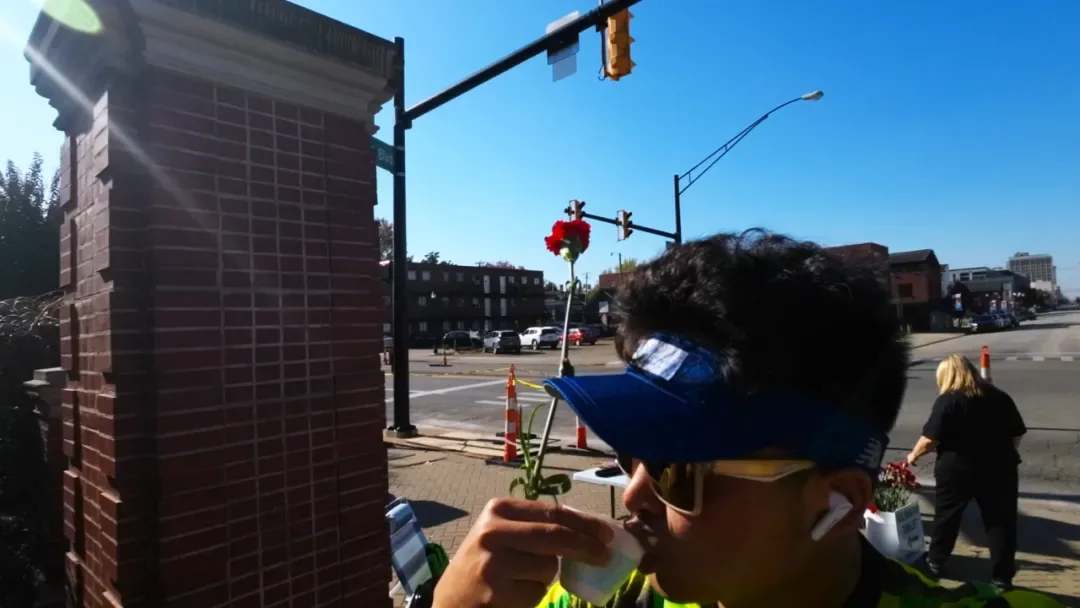
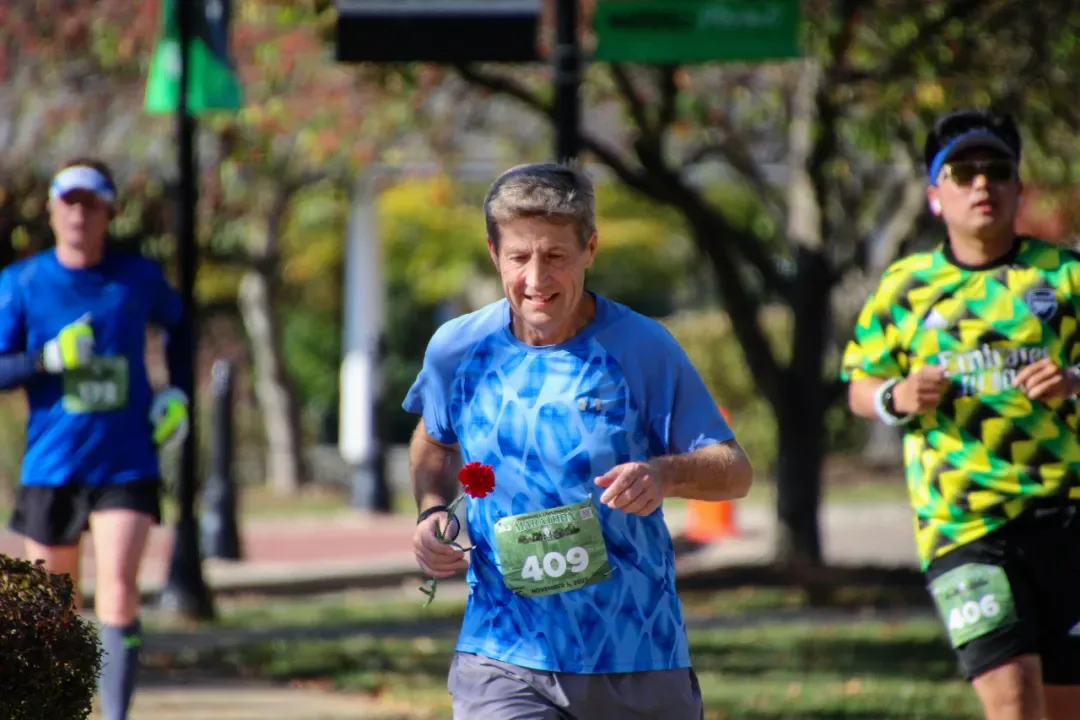
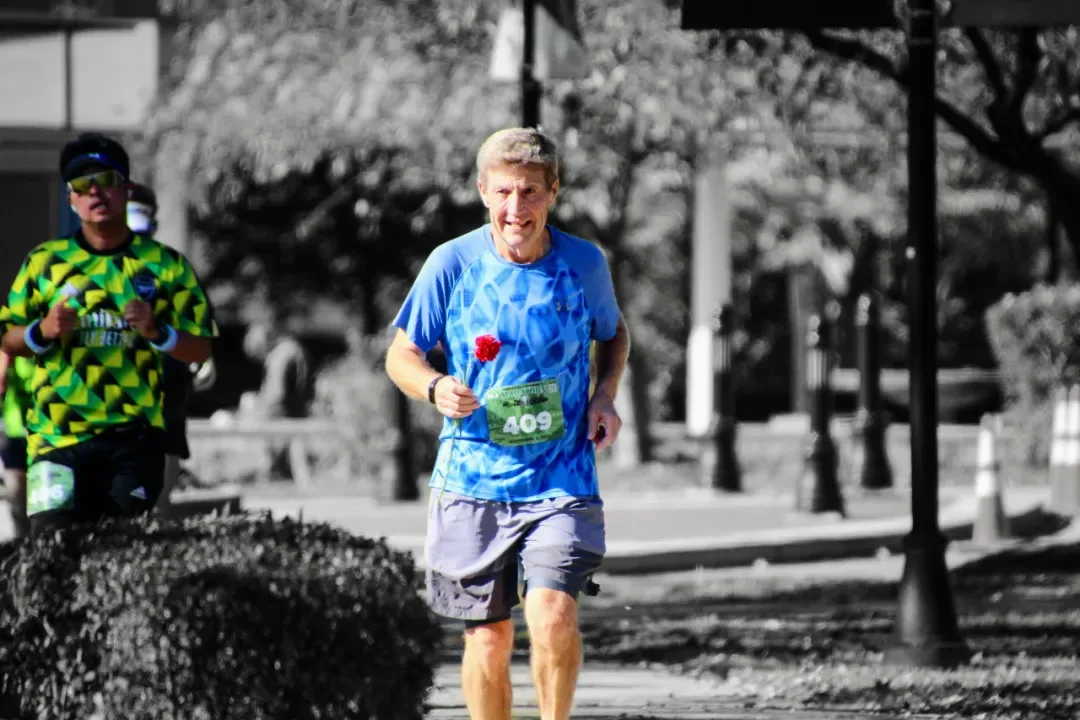
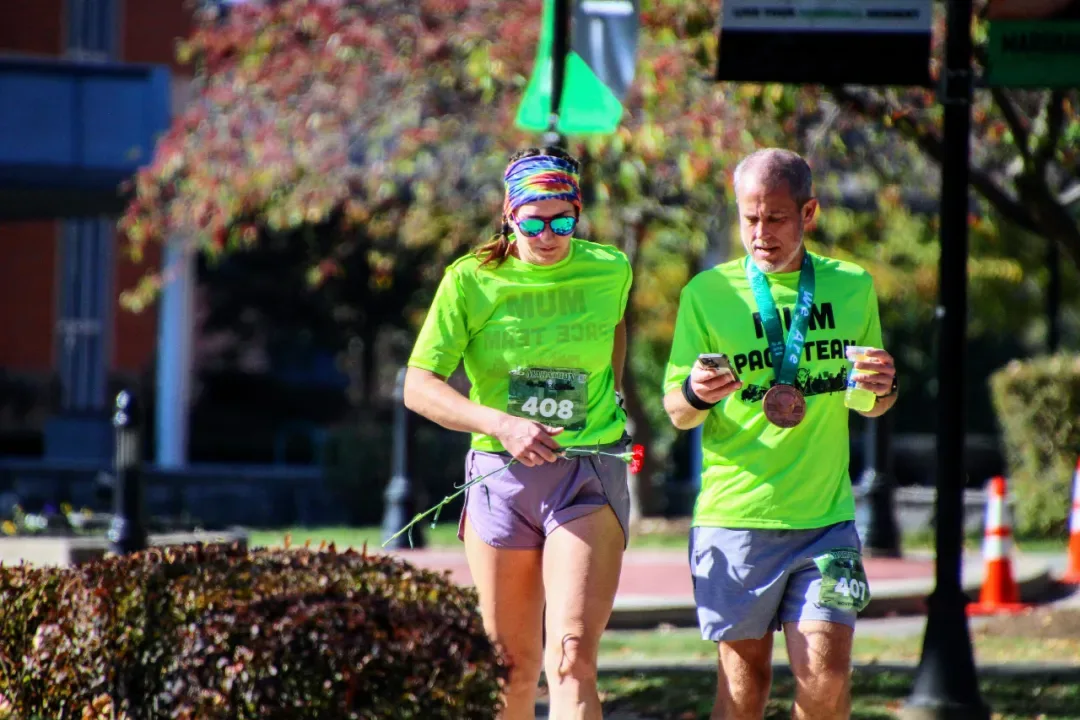
Entering the Marshall campus for the second time, volunteers at the gate handed each runner a flower to honor the 1970 victims. I didn't fully grasp the depth of the gesture at the time, and being exhausted, I didn't know where to put it. Finding it inconvenient, I gave it to a volunteer along the road. Looking back, that was a real regret of this race.
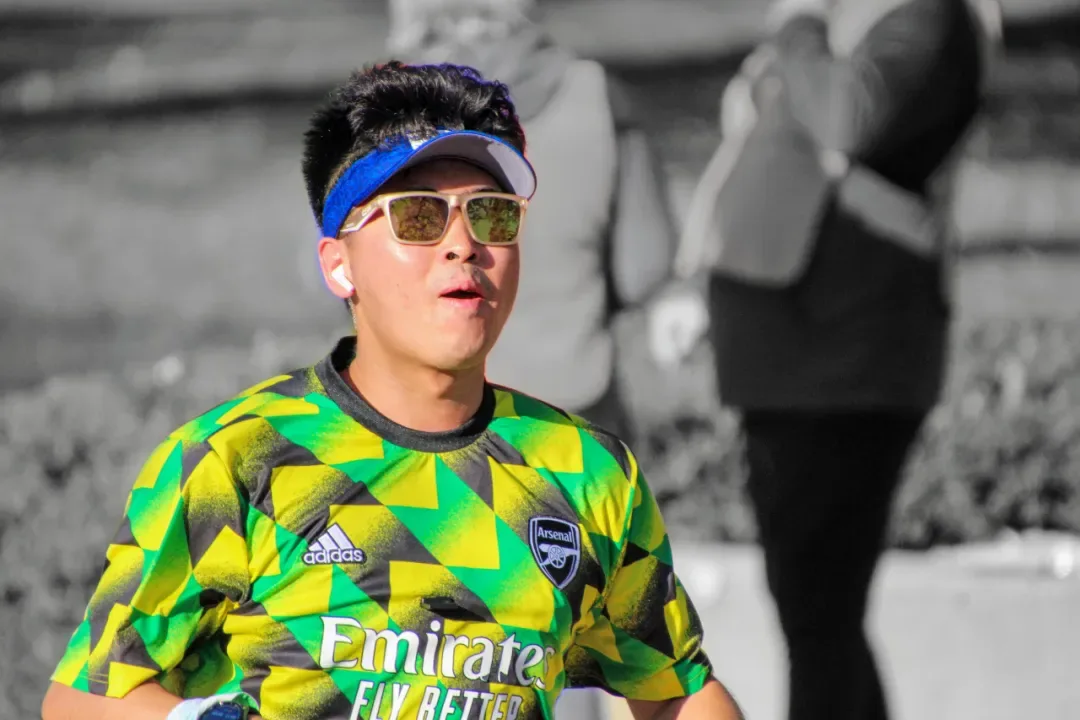
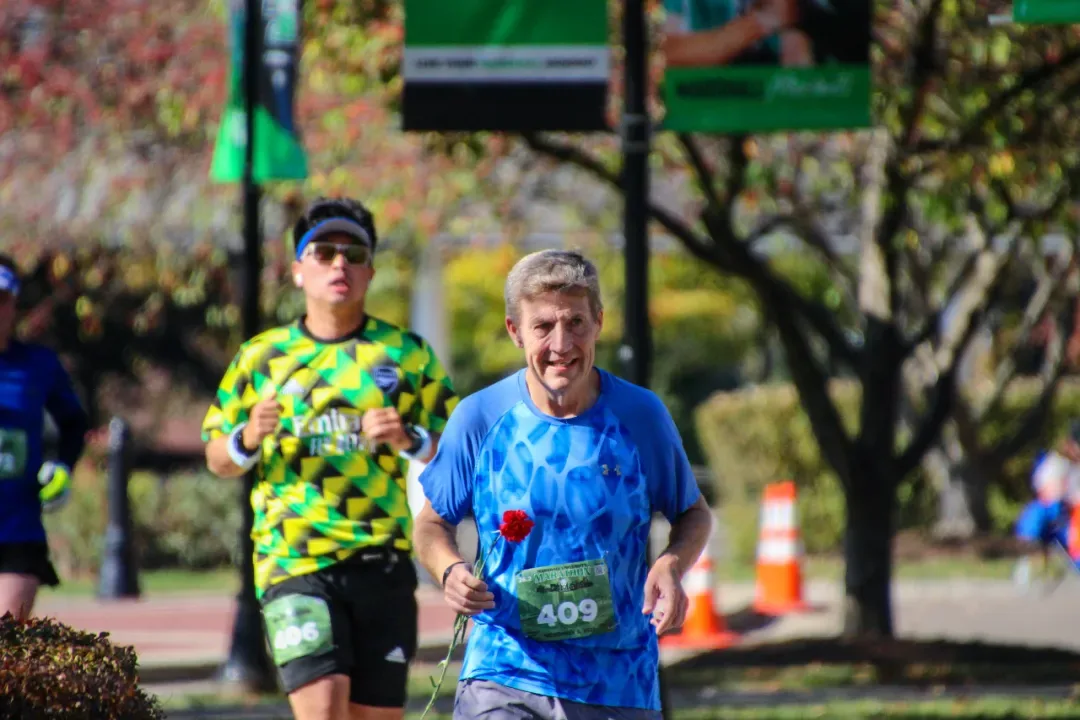
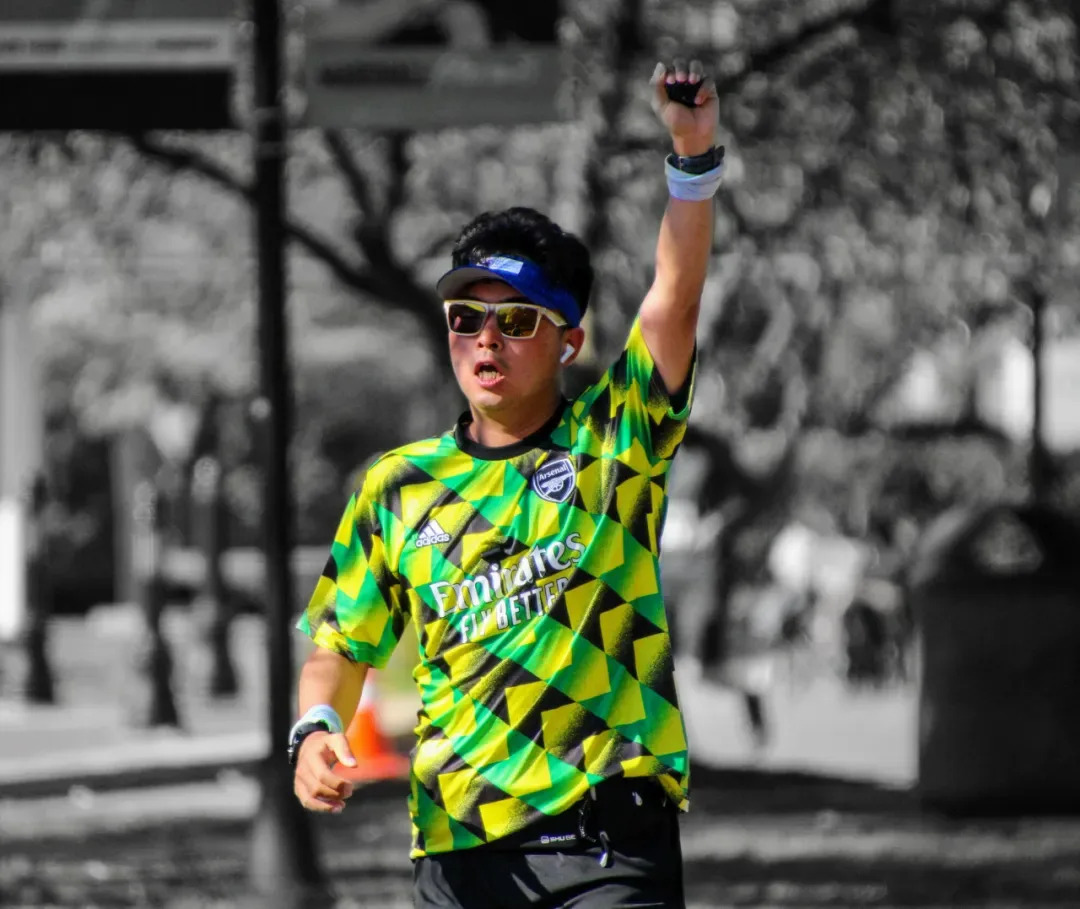
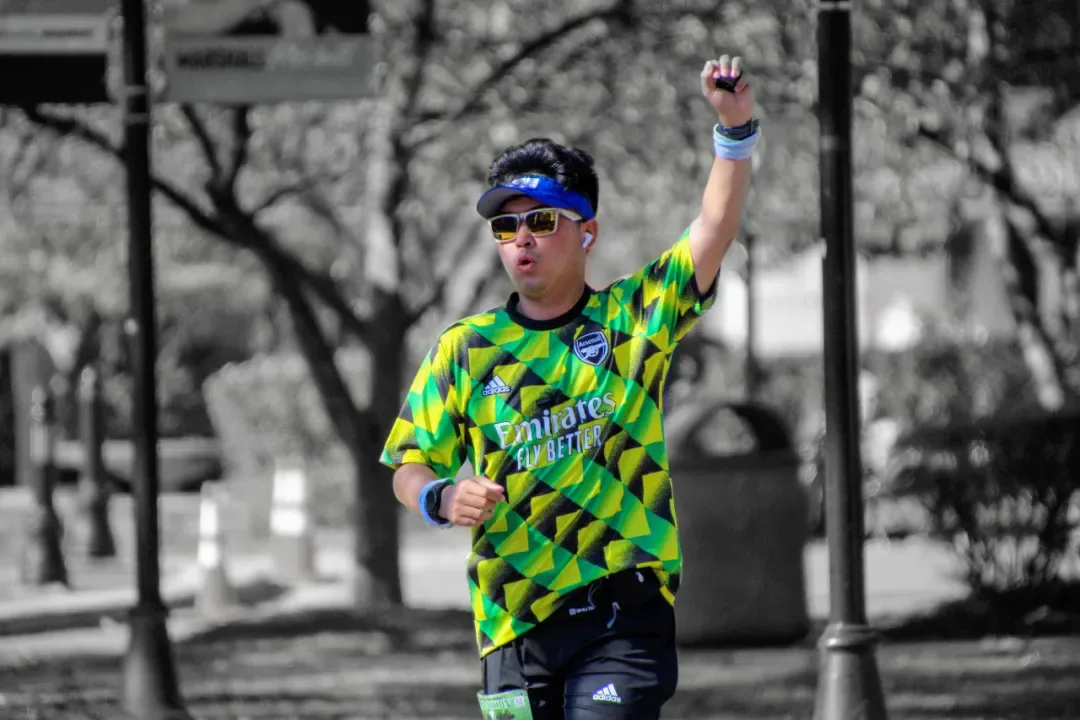
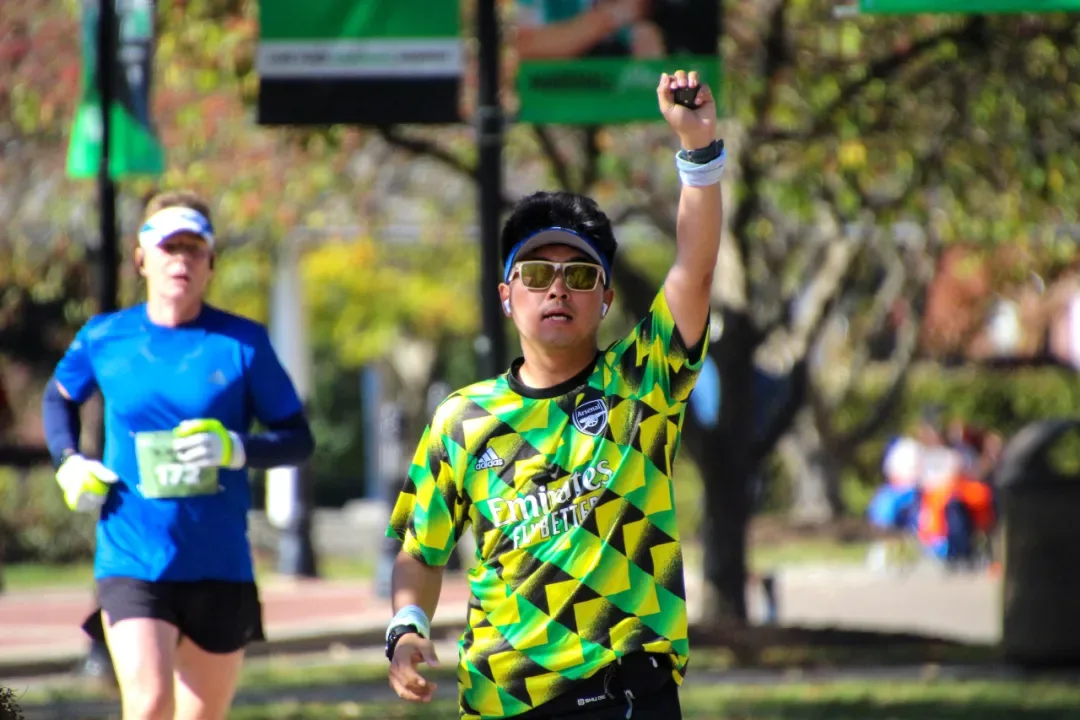
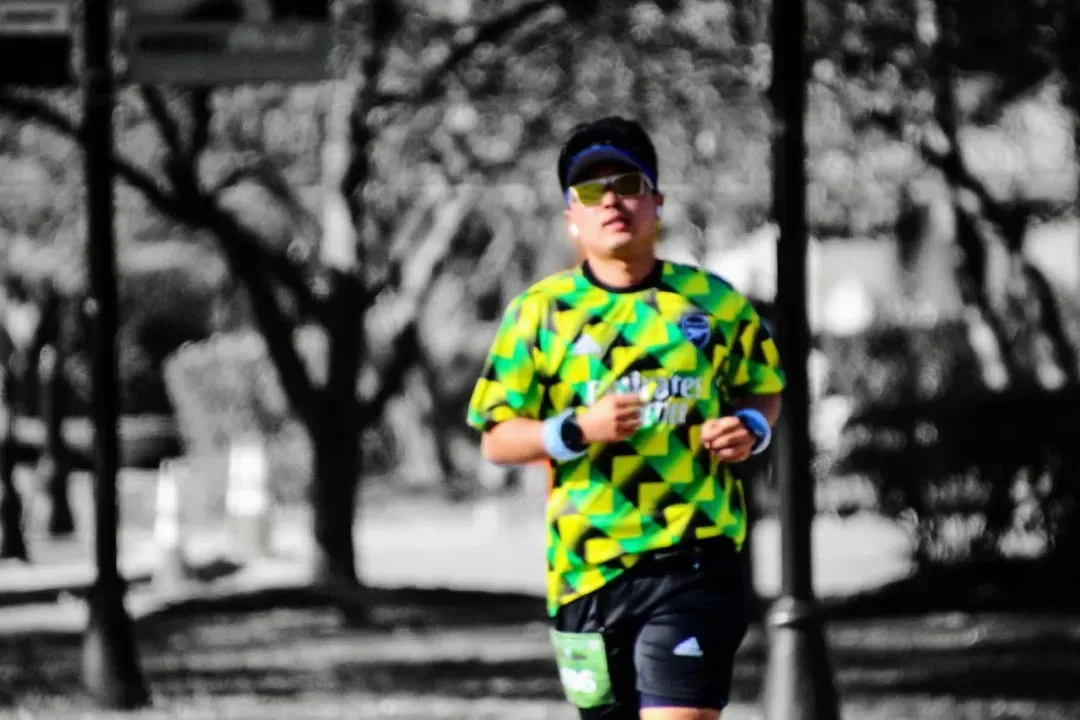
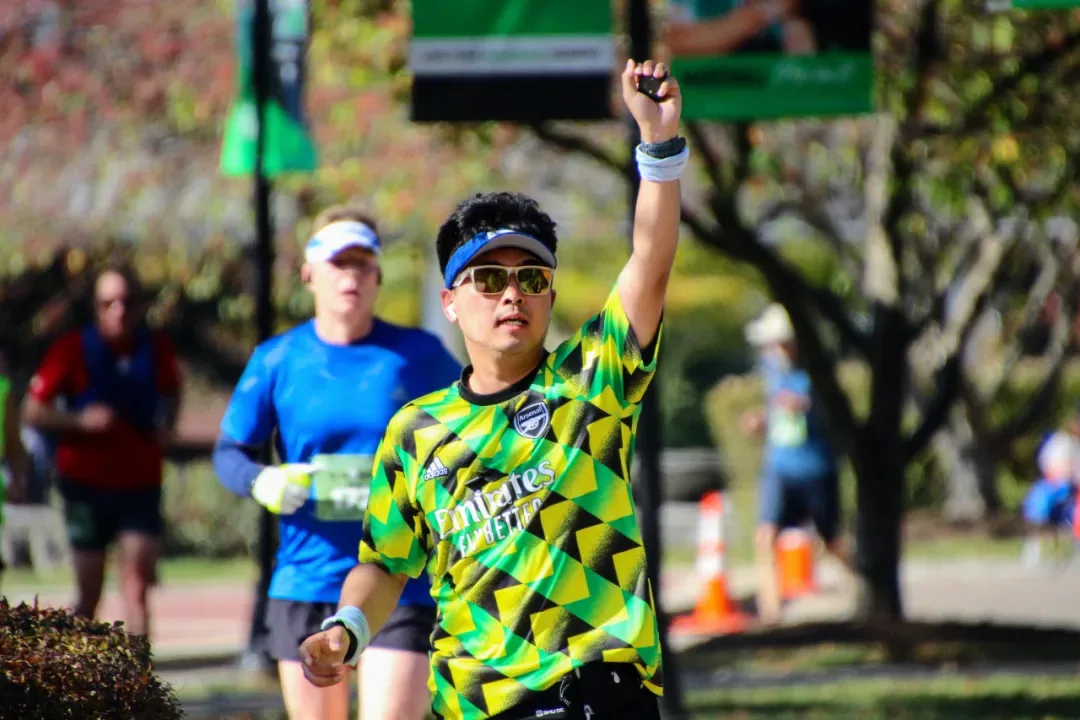
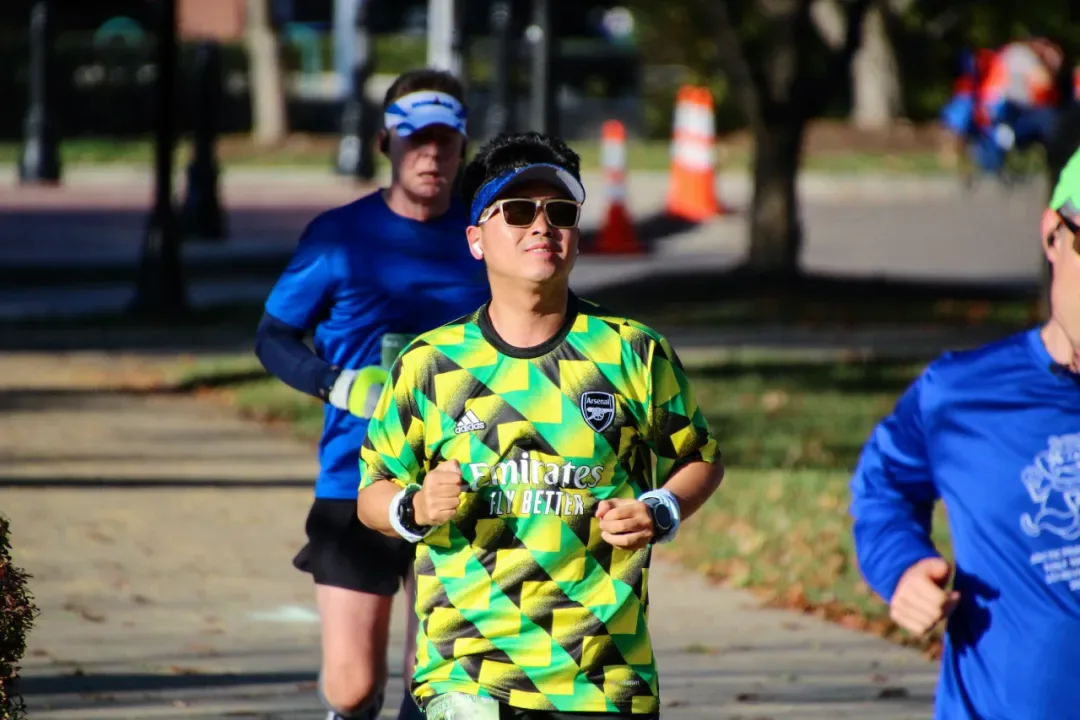
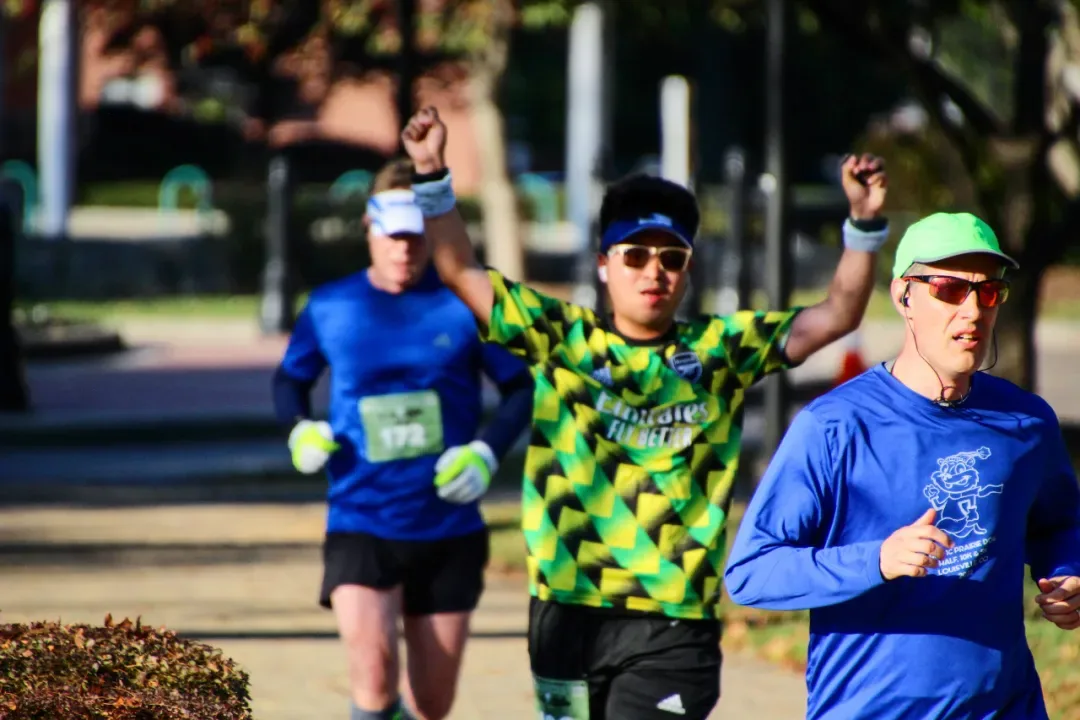
Leaving the campus, we were about to run back onto the turf of Joan C. Edwards Stadium. I kept staring at my watch; breaking 4 hours was down to a split-second decision. I decided to sprint—the atmosphere was set.
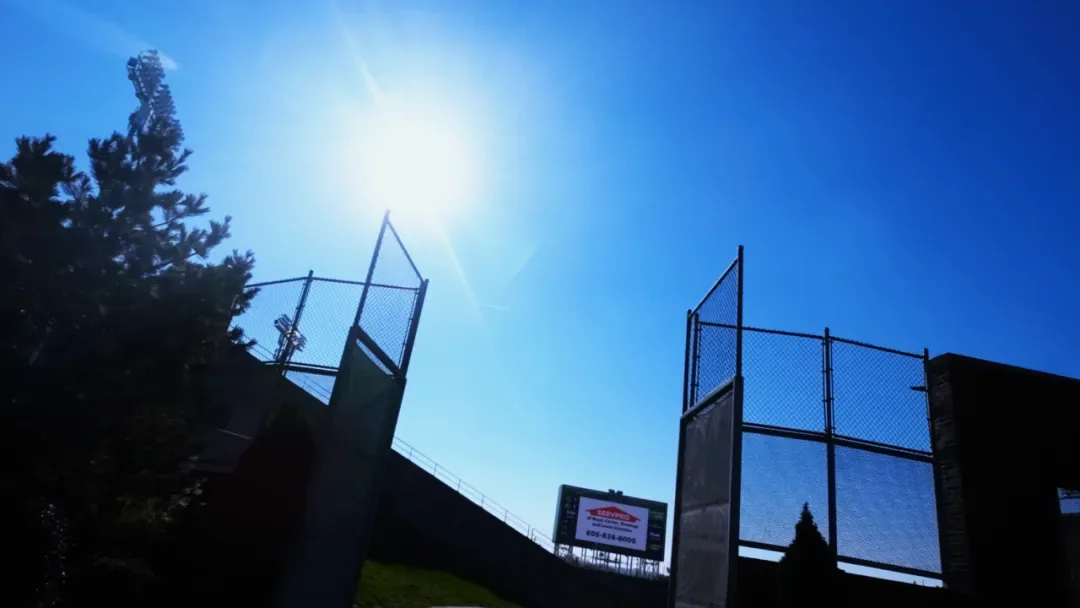
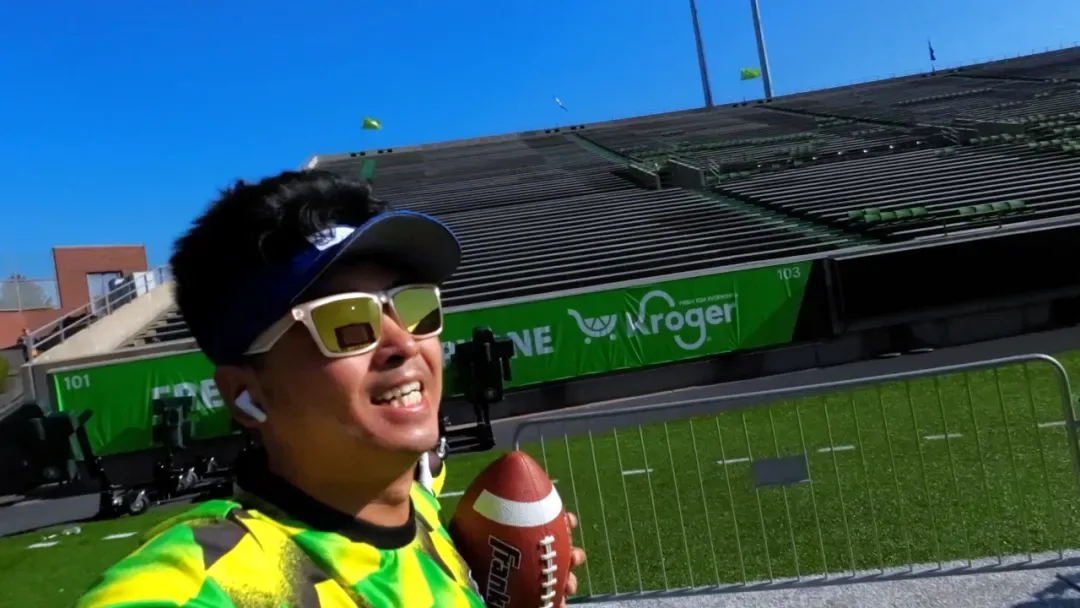
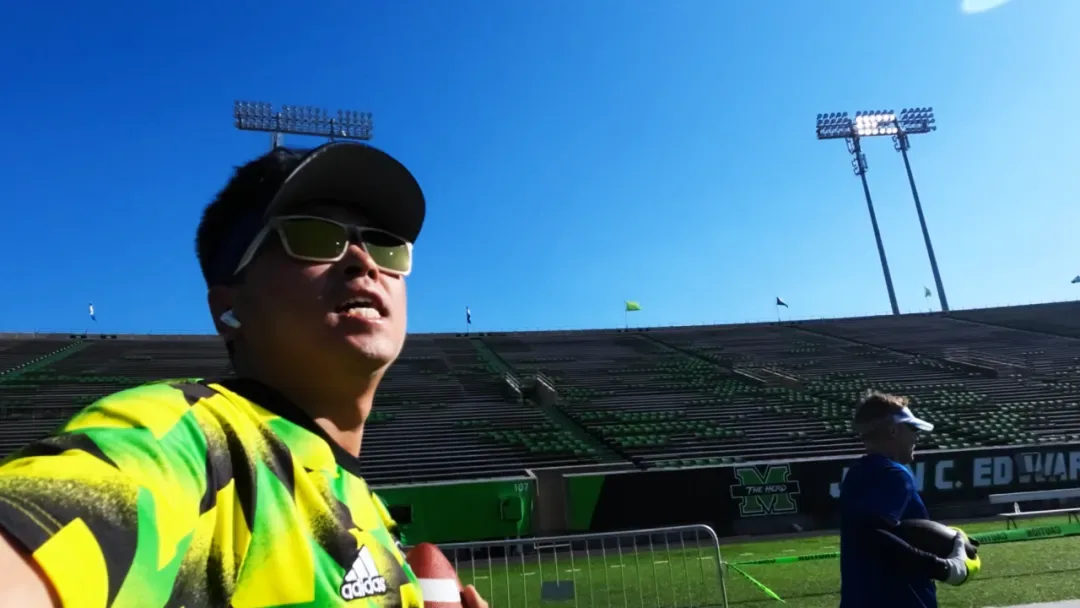
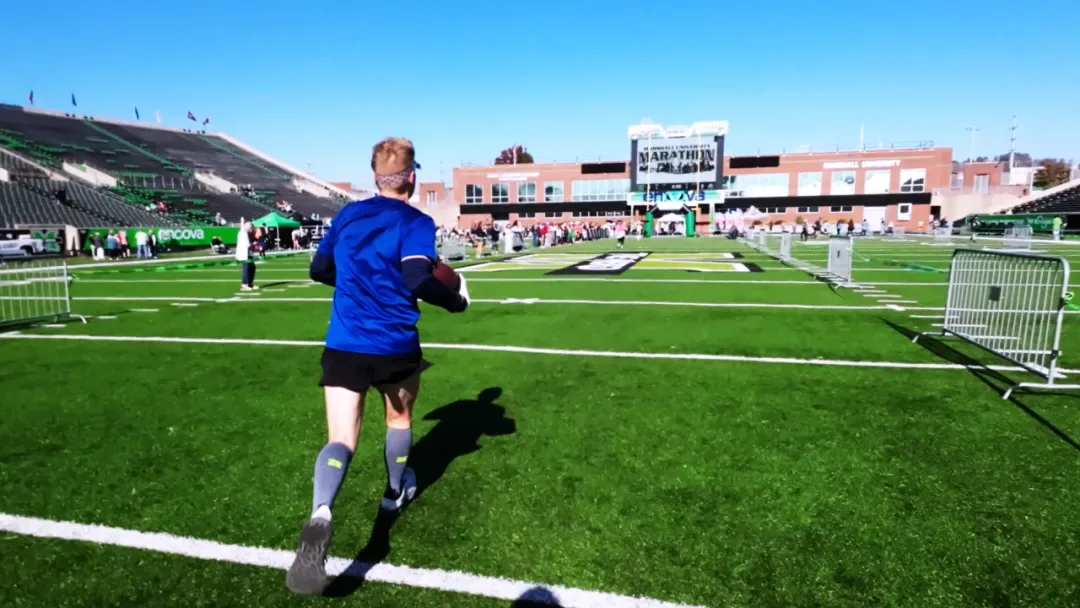
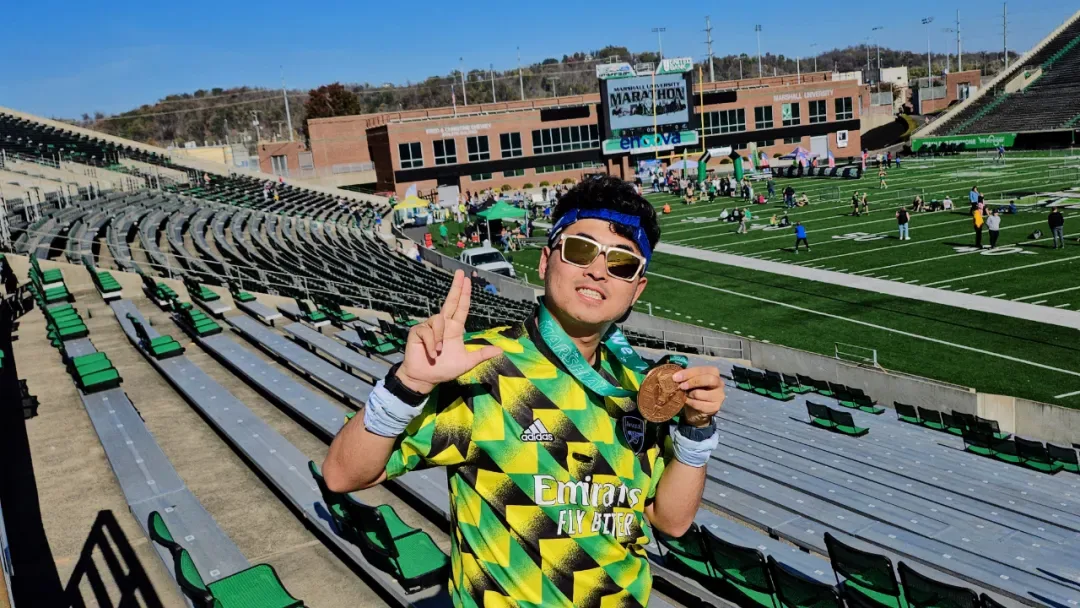
Just as I entered the stadium, a volunteer handed me a football. The runner in blue next to me was sprinting with his football, which triggered my competitive spirit. While he paused to pose near the finish line, I easily passed him, gaining one last position.
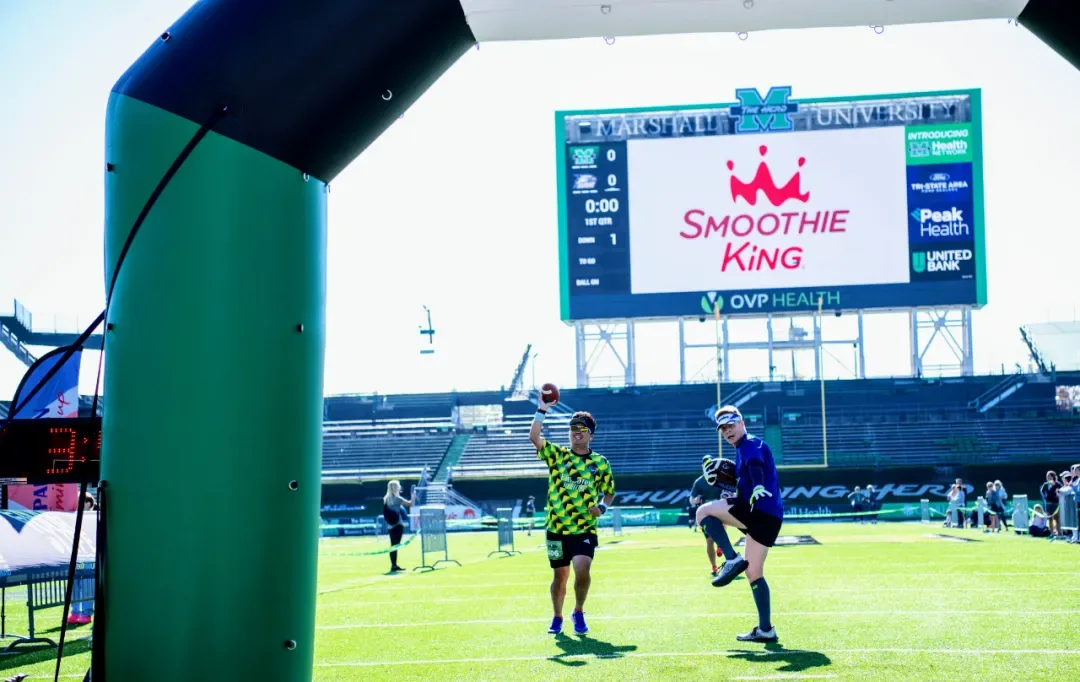
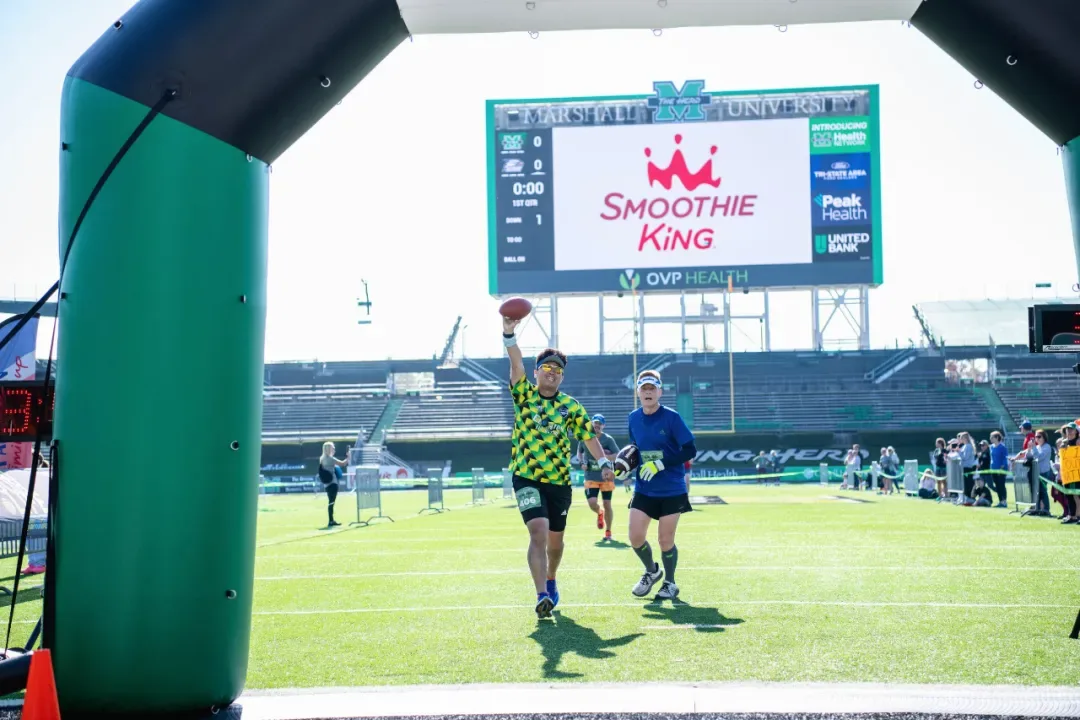
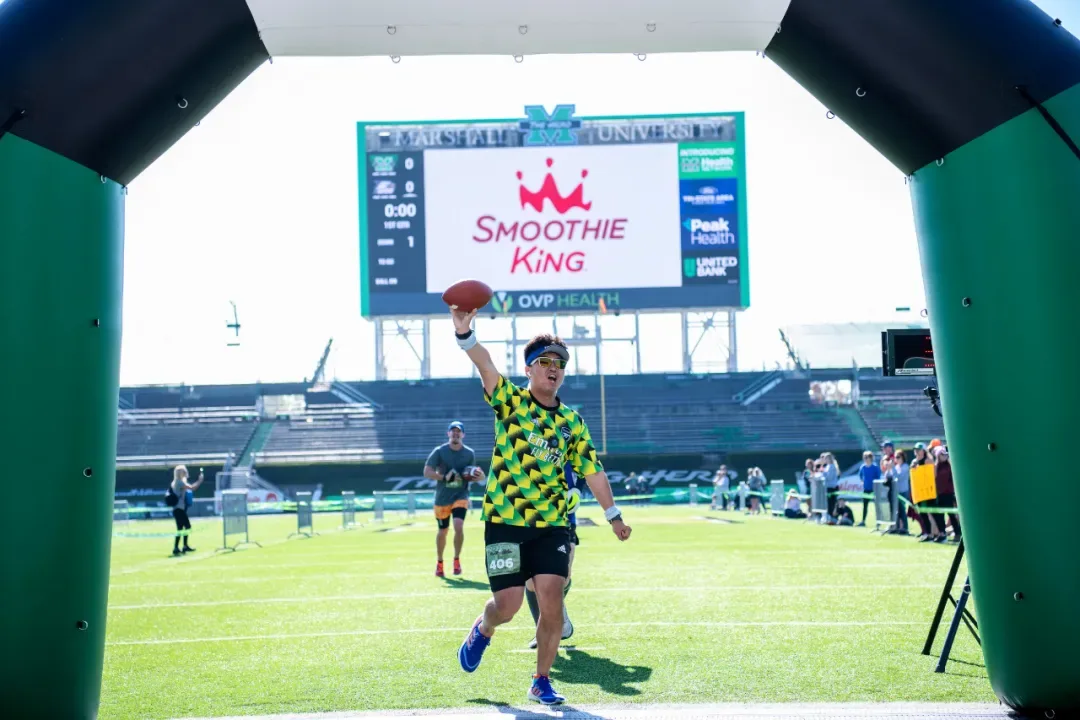
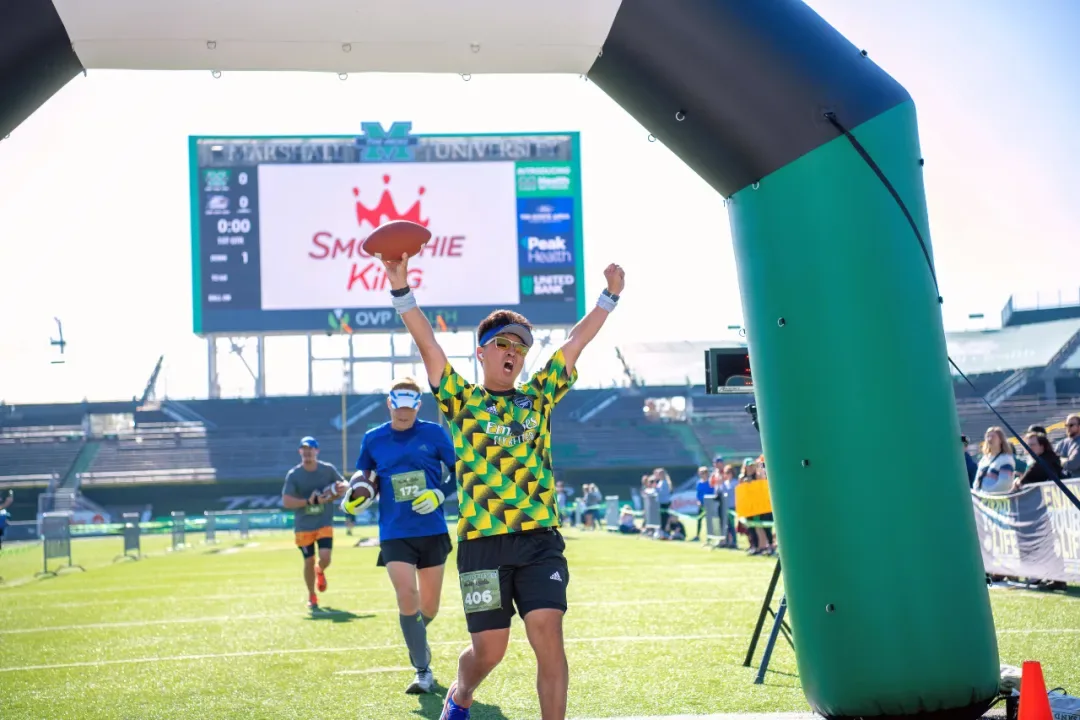
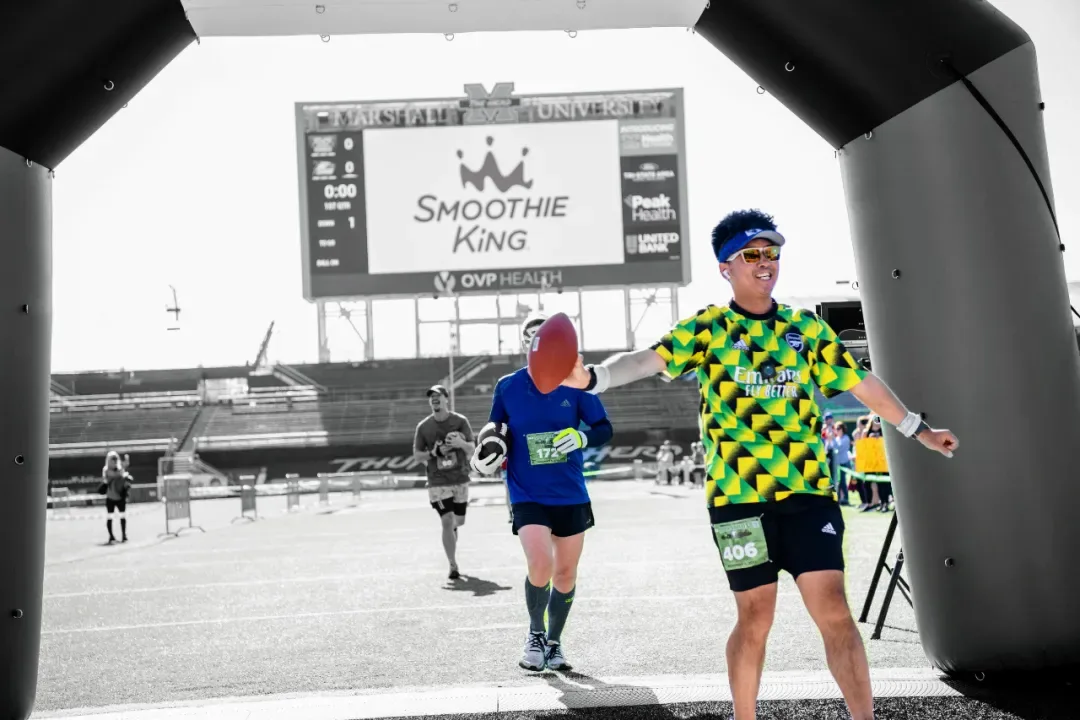
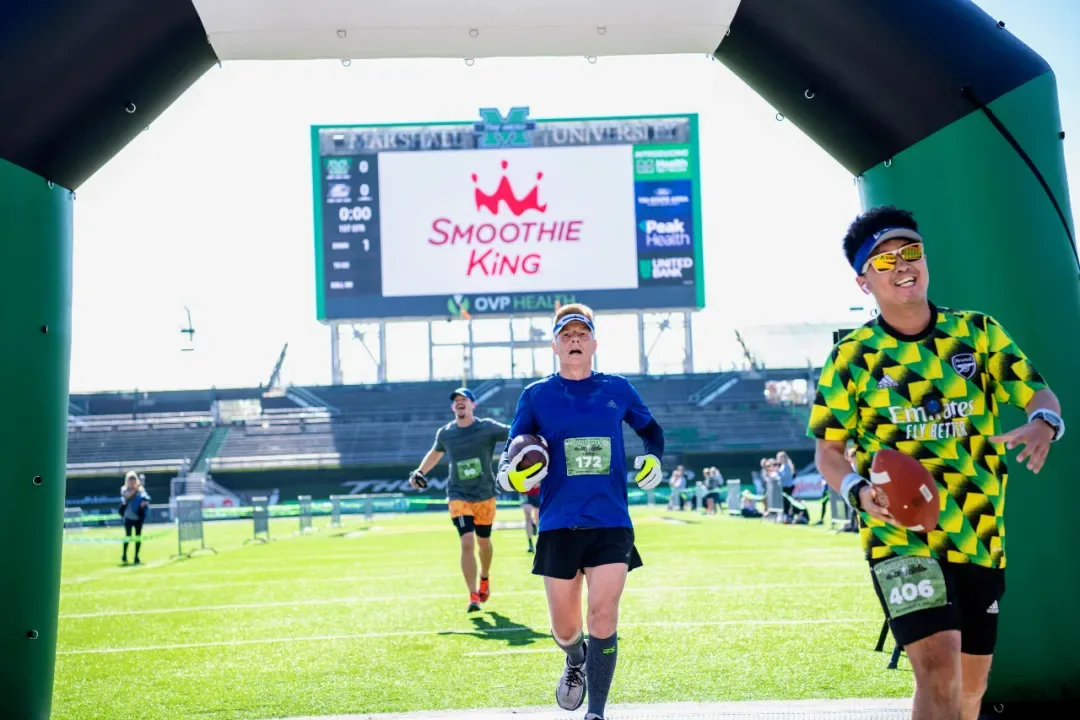
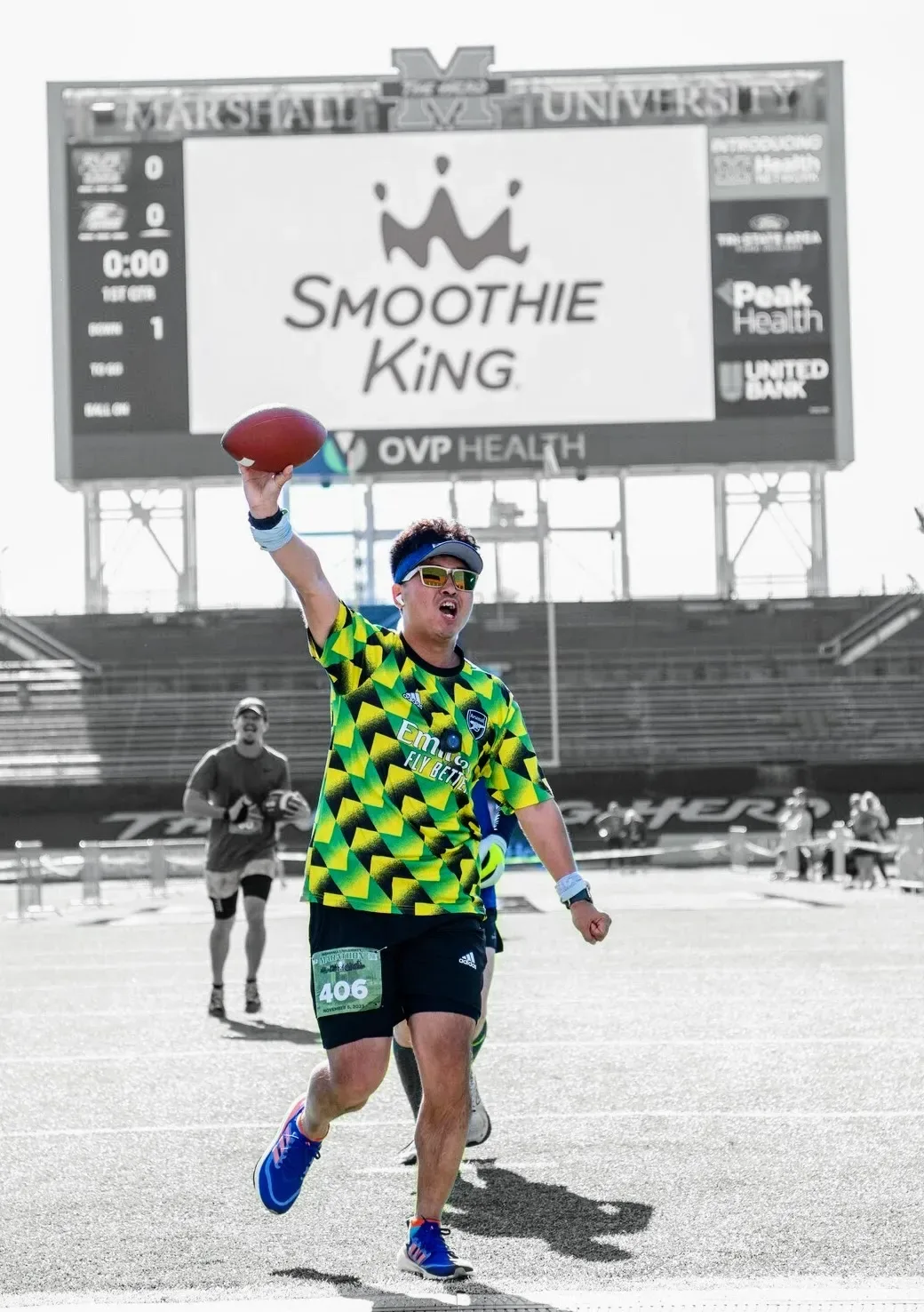
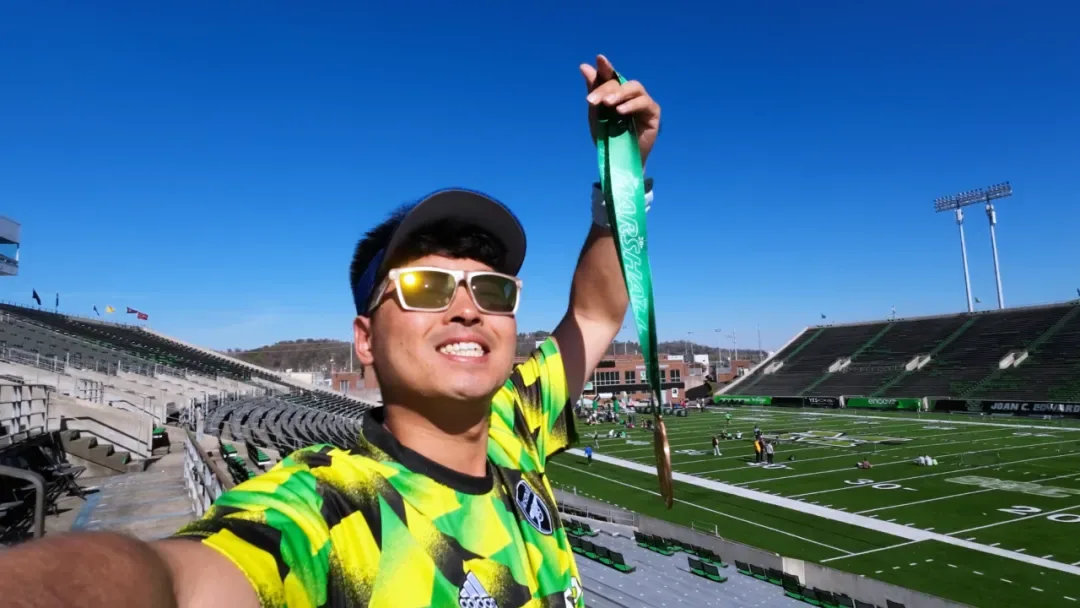
I looked at my watch: 3 hours and 58 minutes. Later, the official results confirmed I had successfully broken 4 hours. Honestly, it was a pleasant surprise.
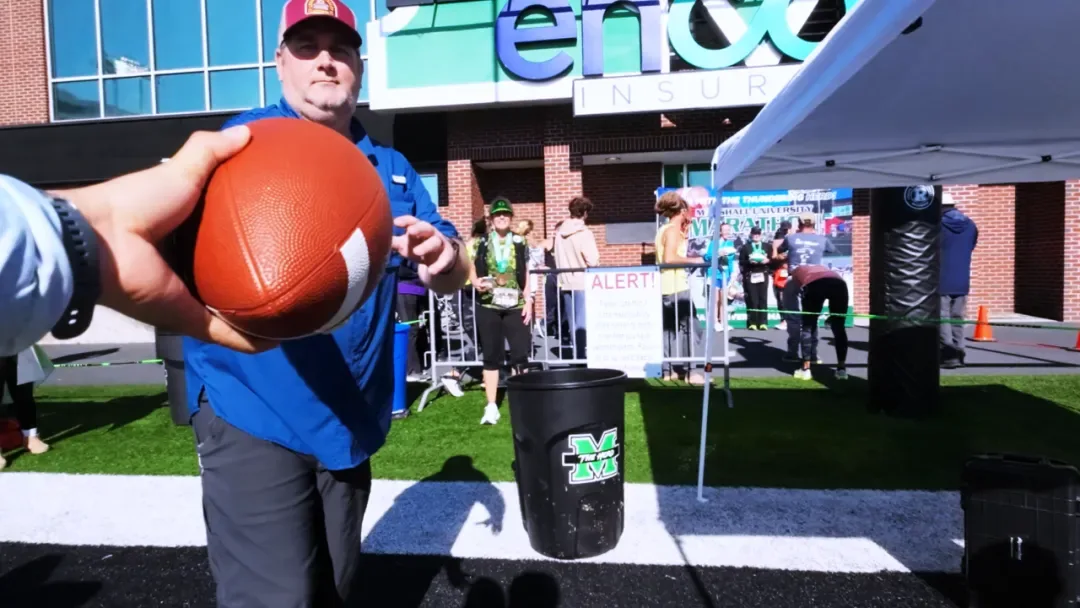
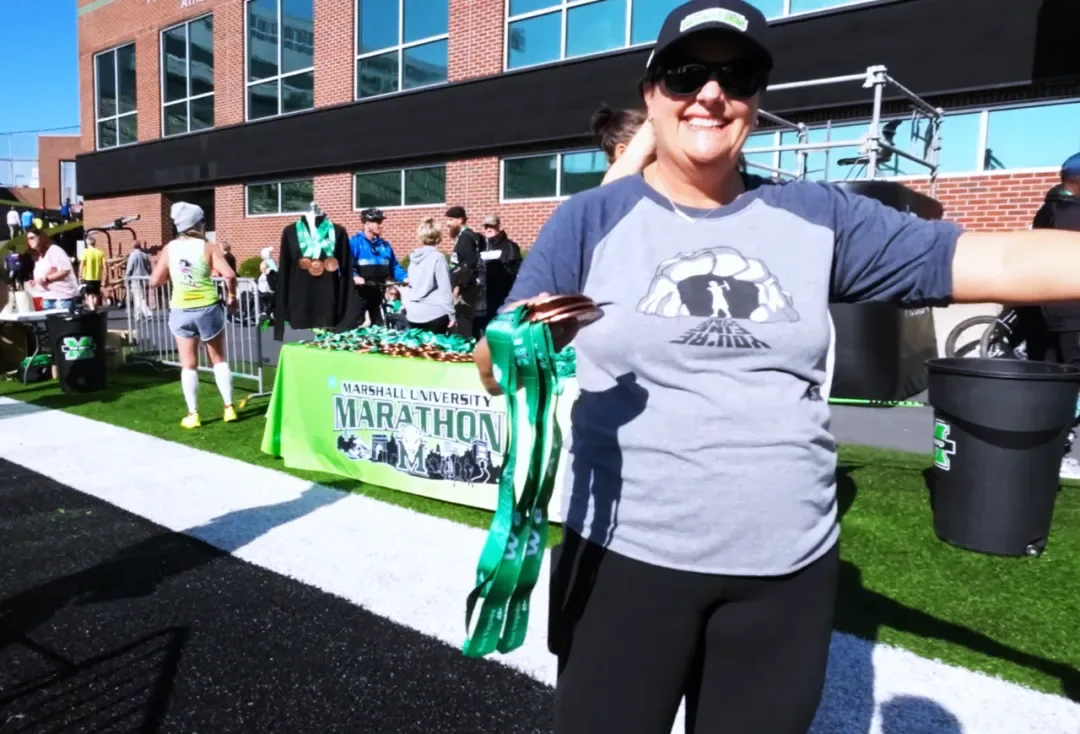
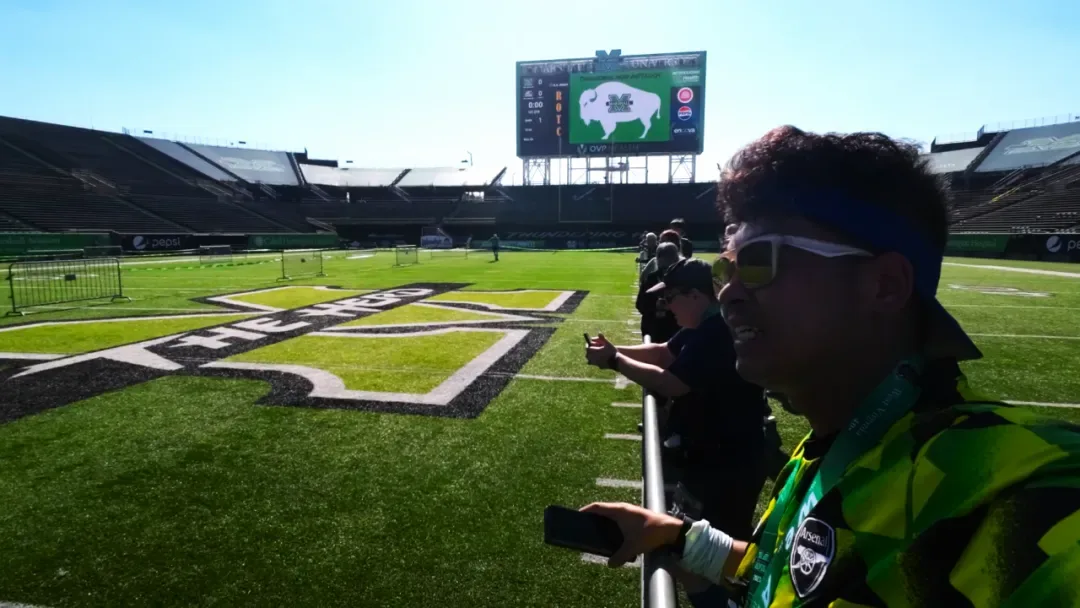
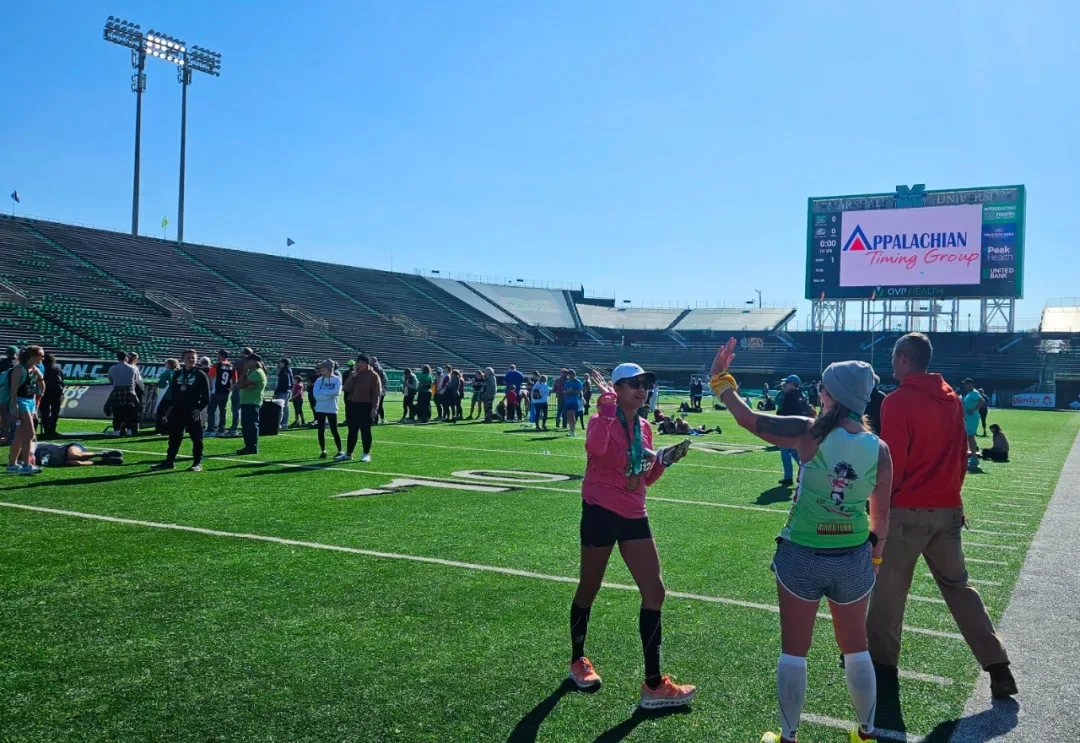
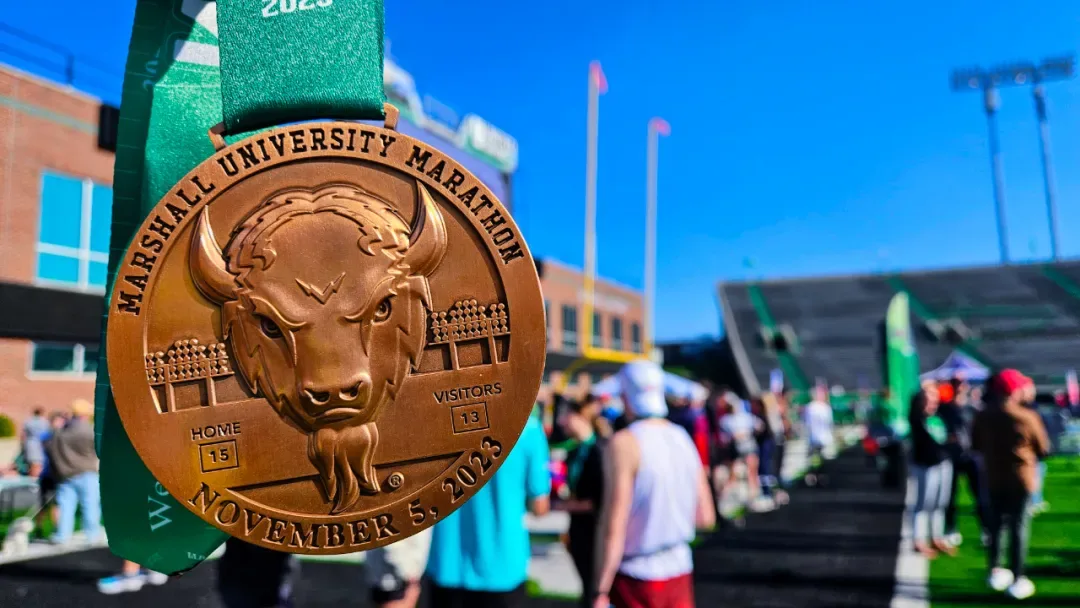
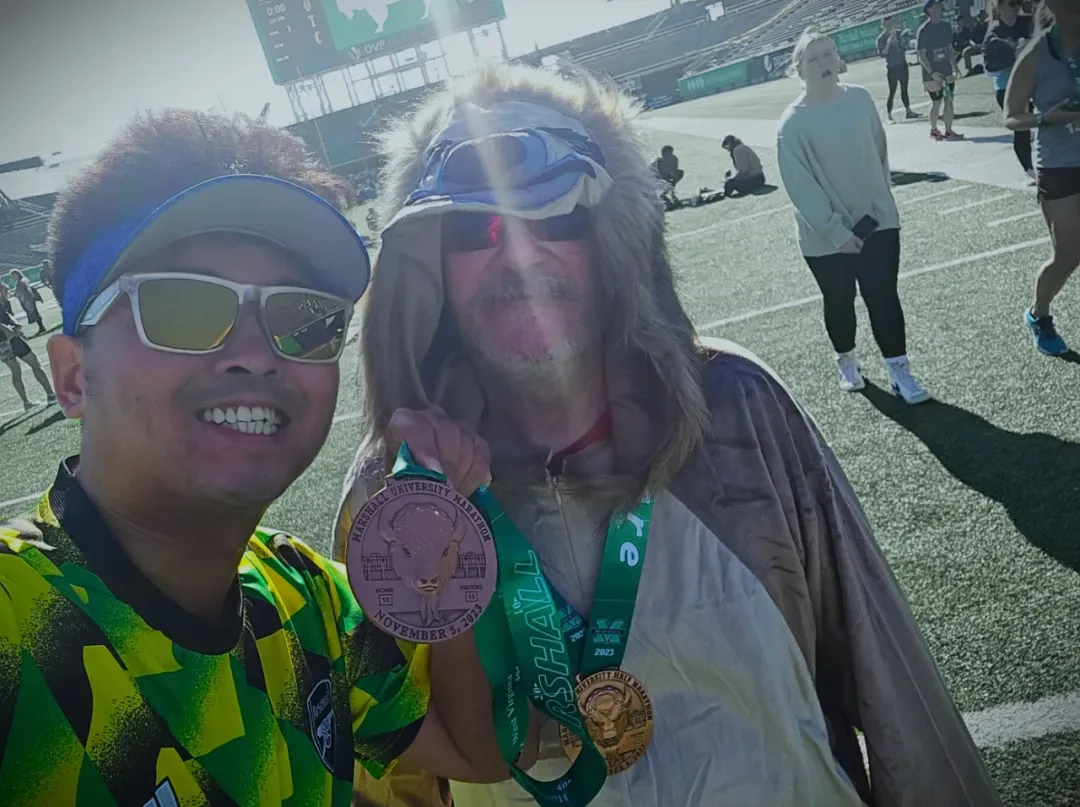
After returning the football and receiving my medal, I stood by the stadium billboard watching other runners score their 'touchdowns.' I didn't feel too exhausted, and even a butterfly hovered around to congratulate me. I felt extremely happy.
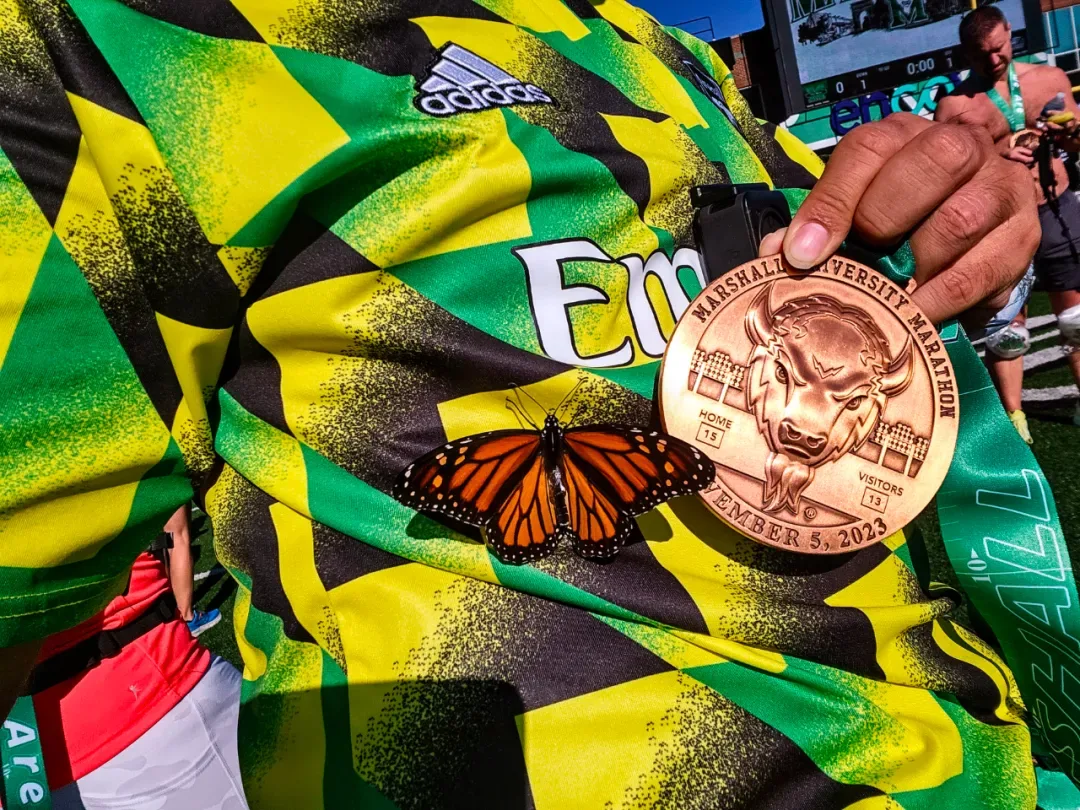
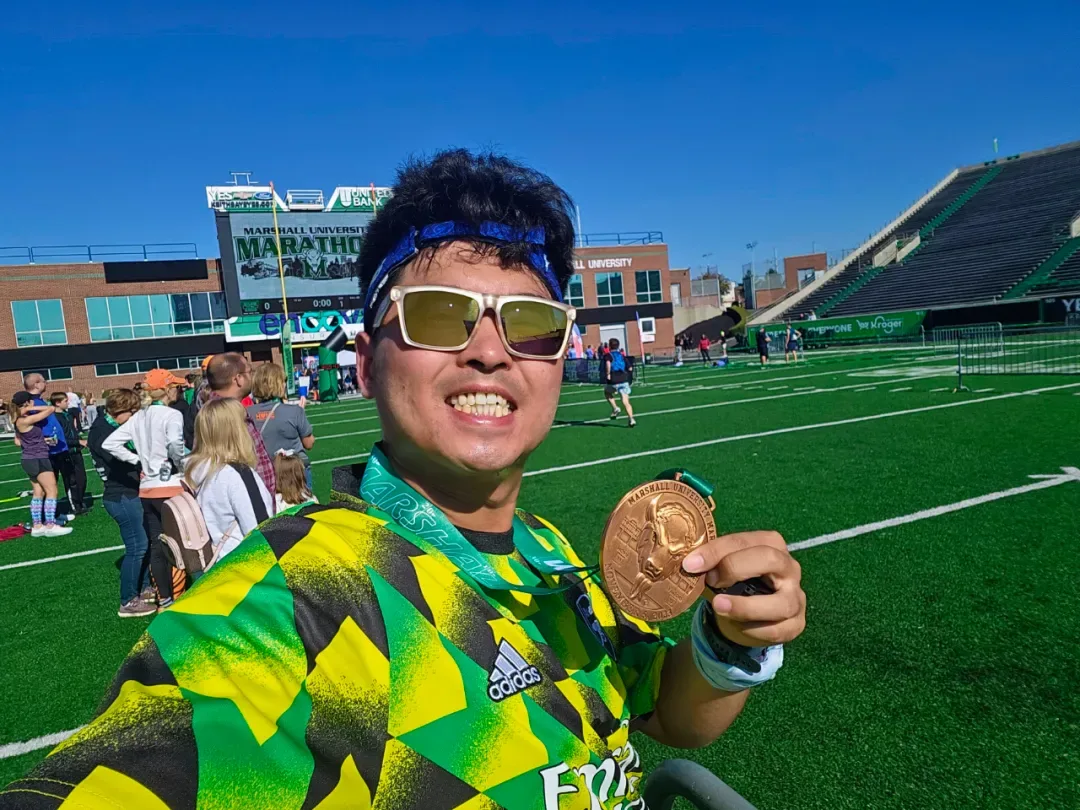
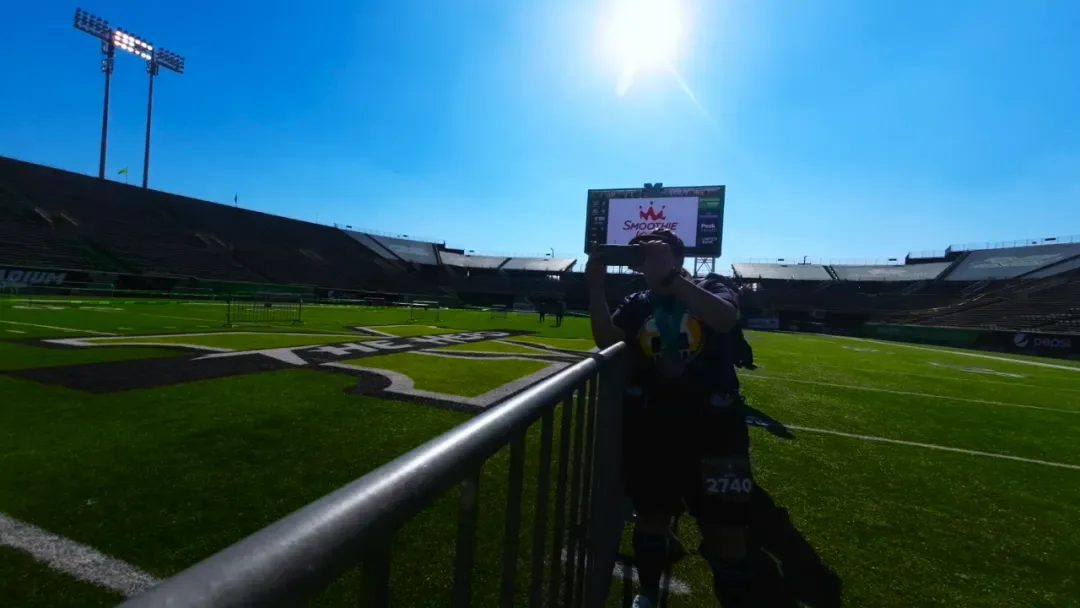
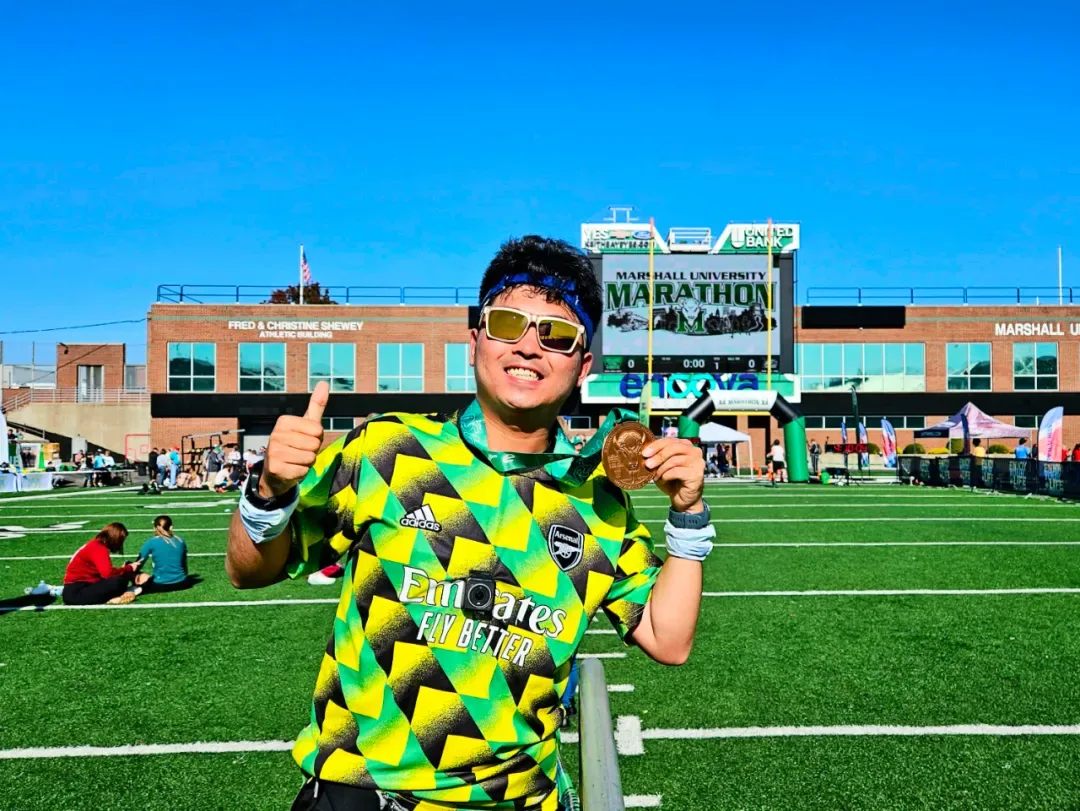
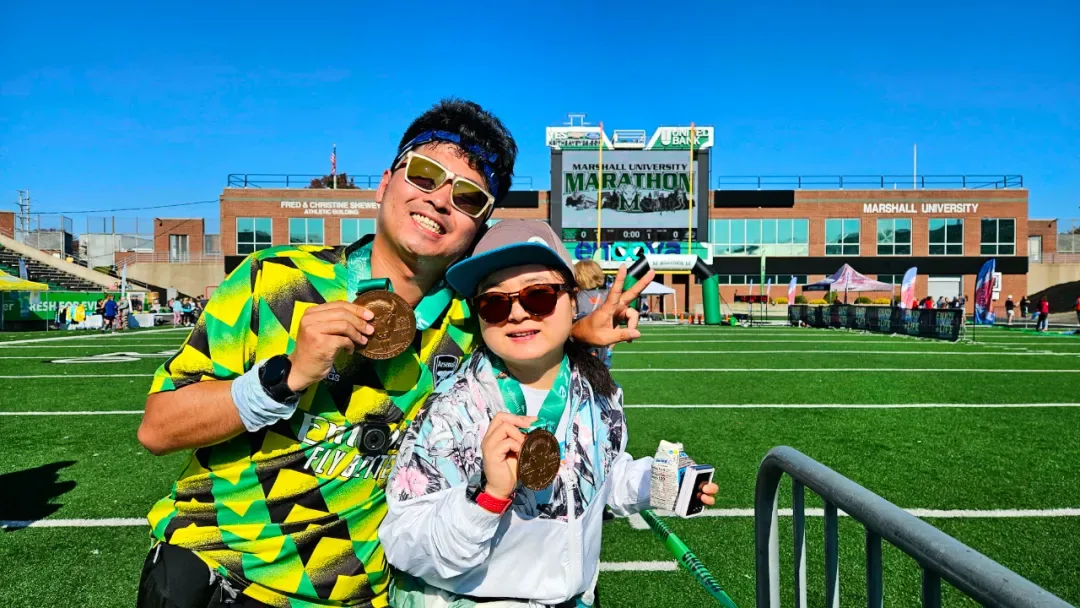
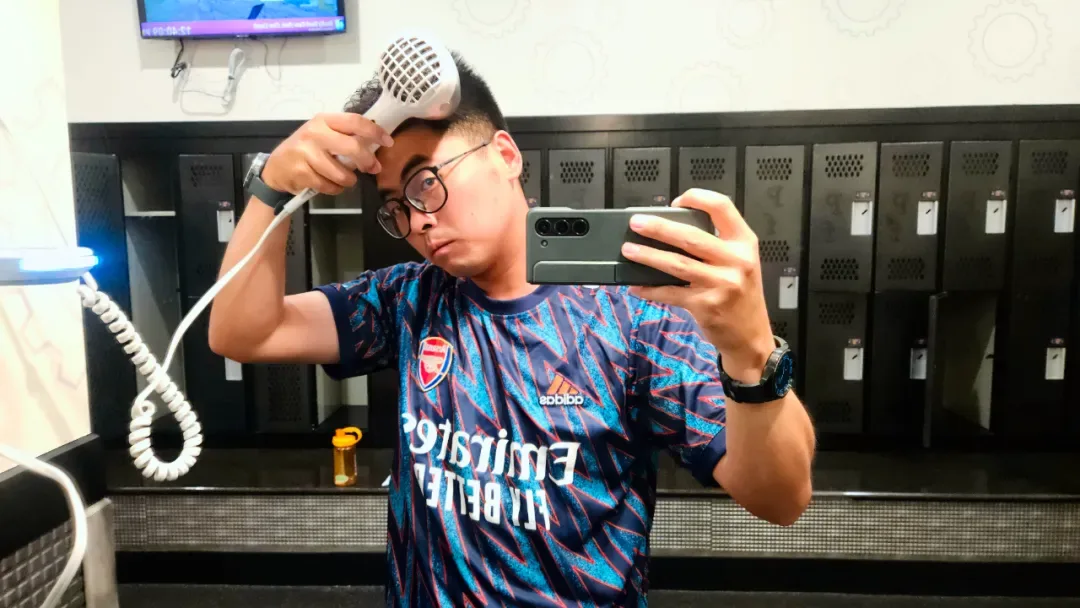
Siqi finished the race as well and was outside eating some treats. She was surprised that I finished so quickly. We took some photos in the stadium, and I queued at the recovery area to get stretched by a volunteer, which was great. Then we took some photos outside the stadium and headed happily to Planet Fitness to shower.
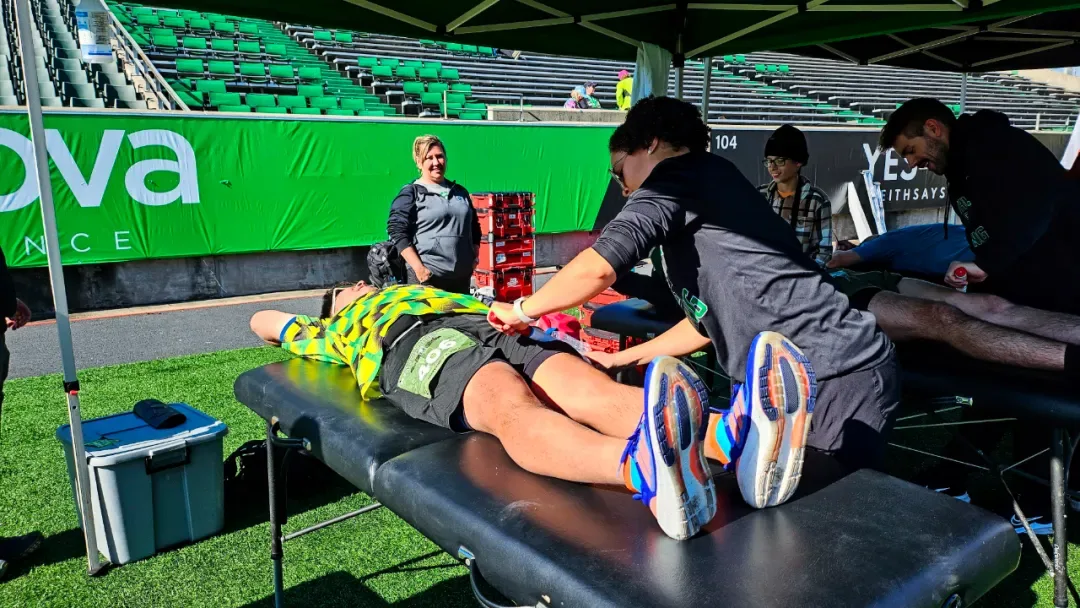
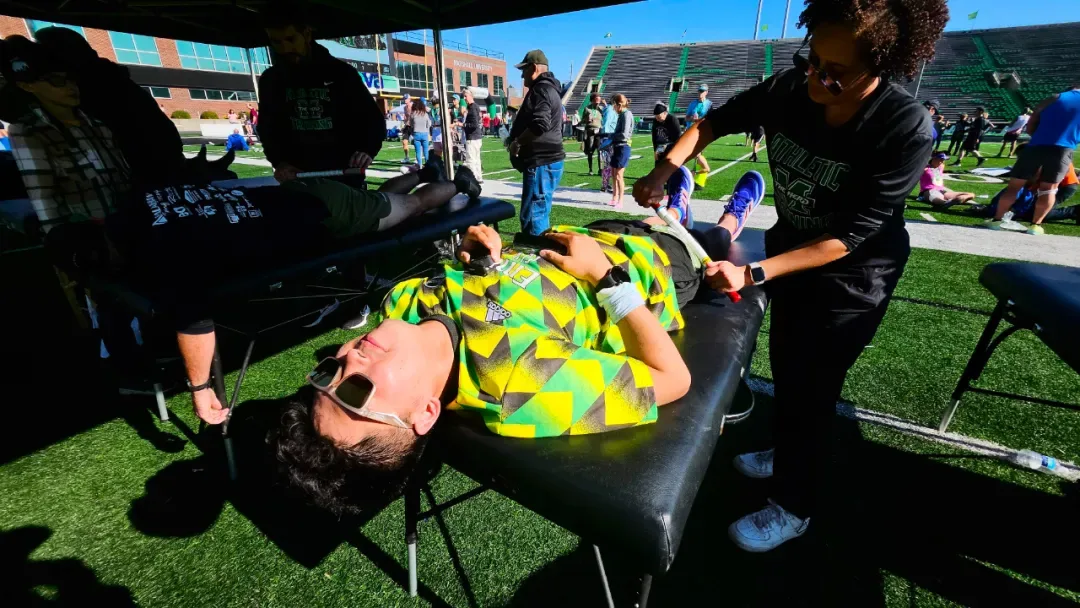
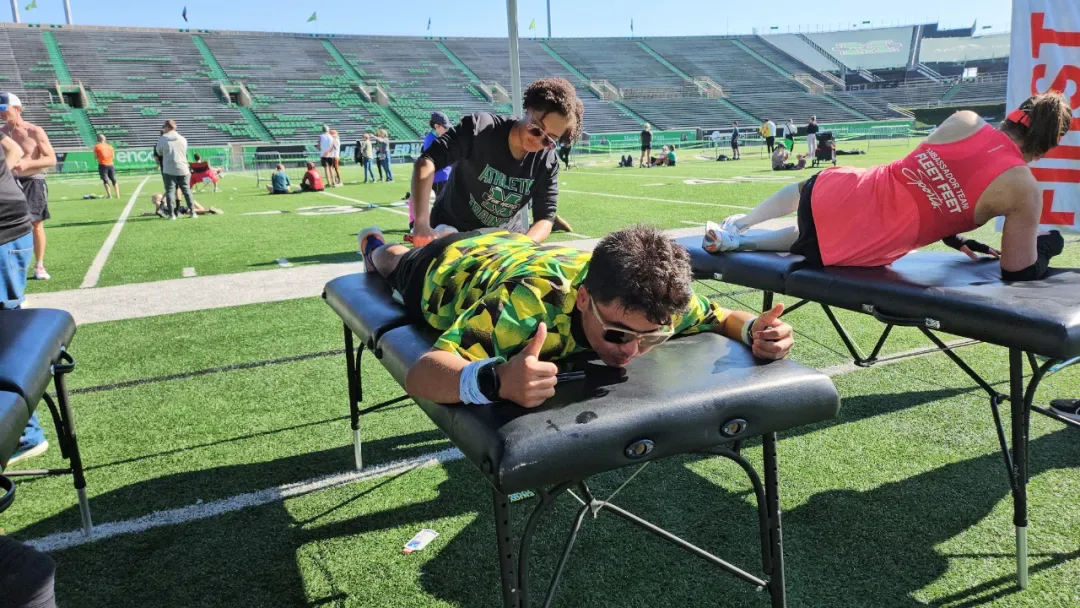
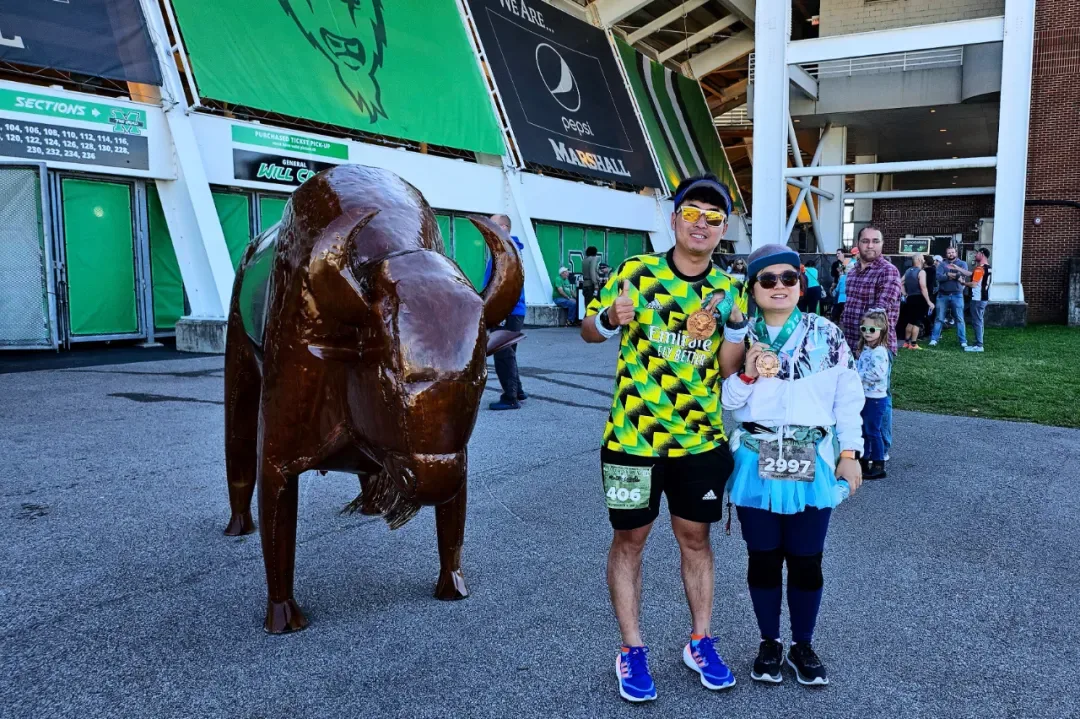
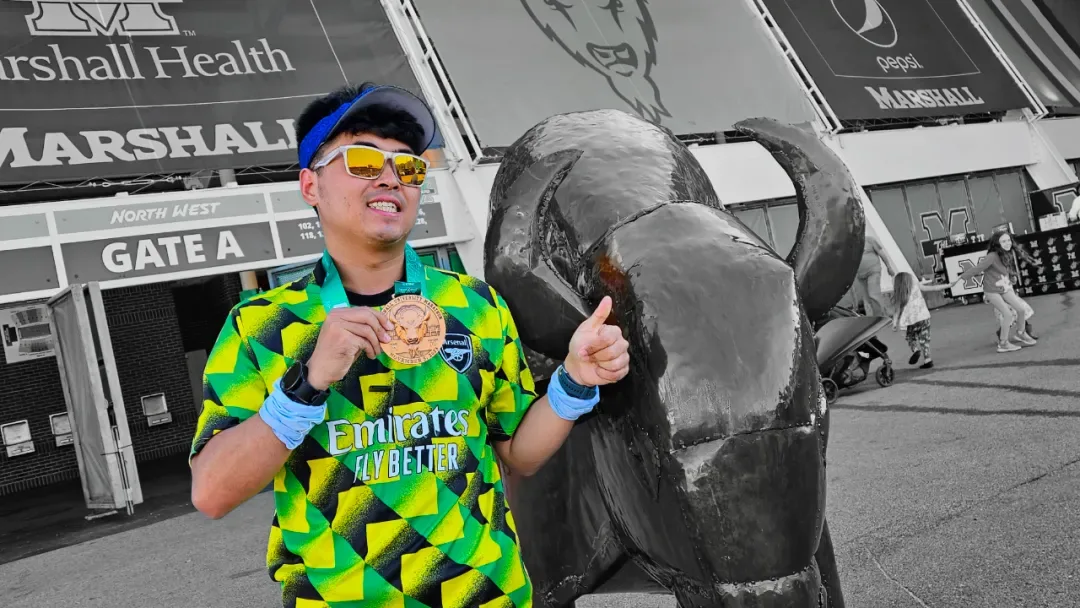
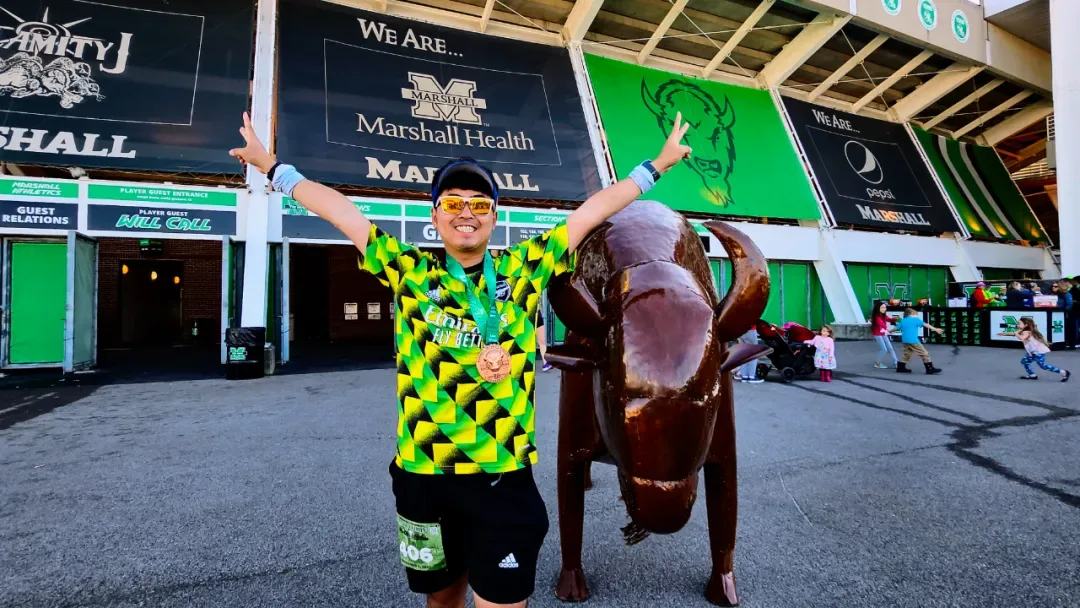
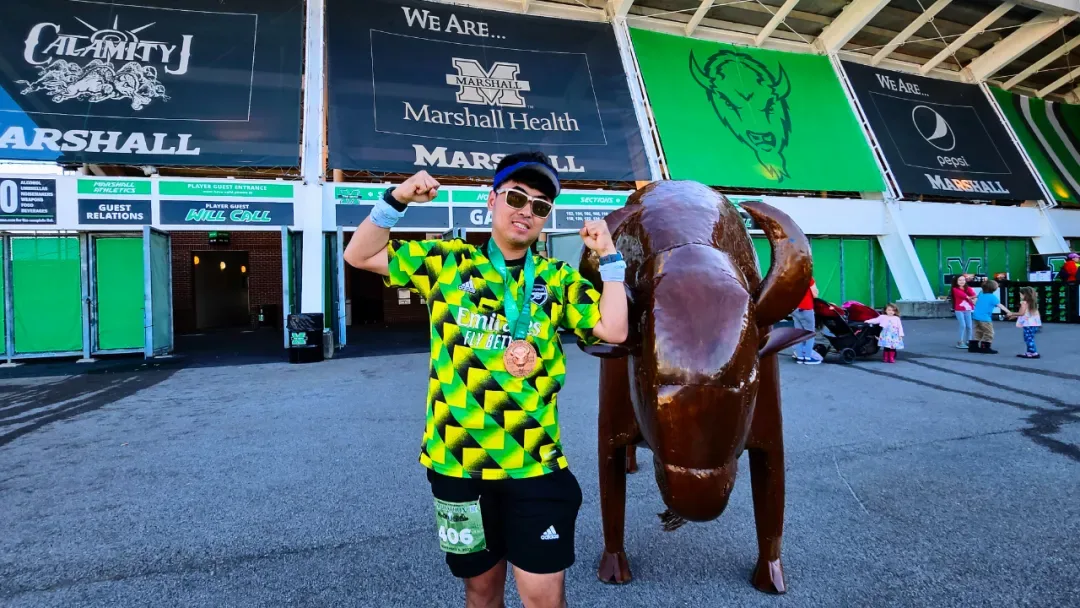
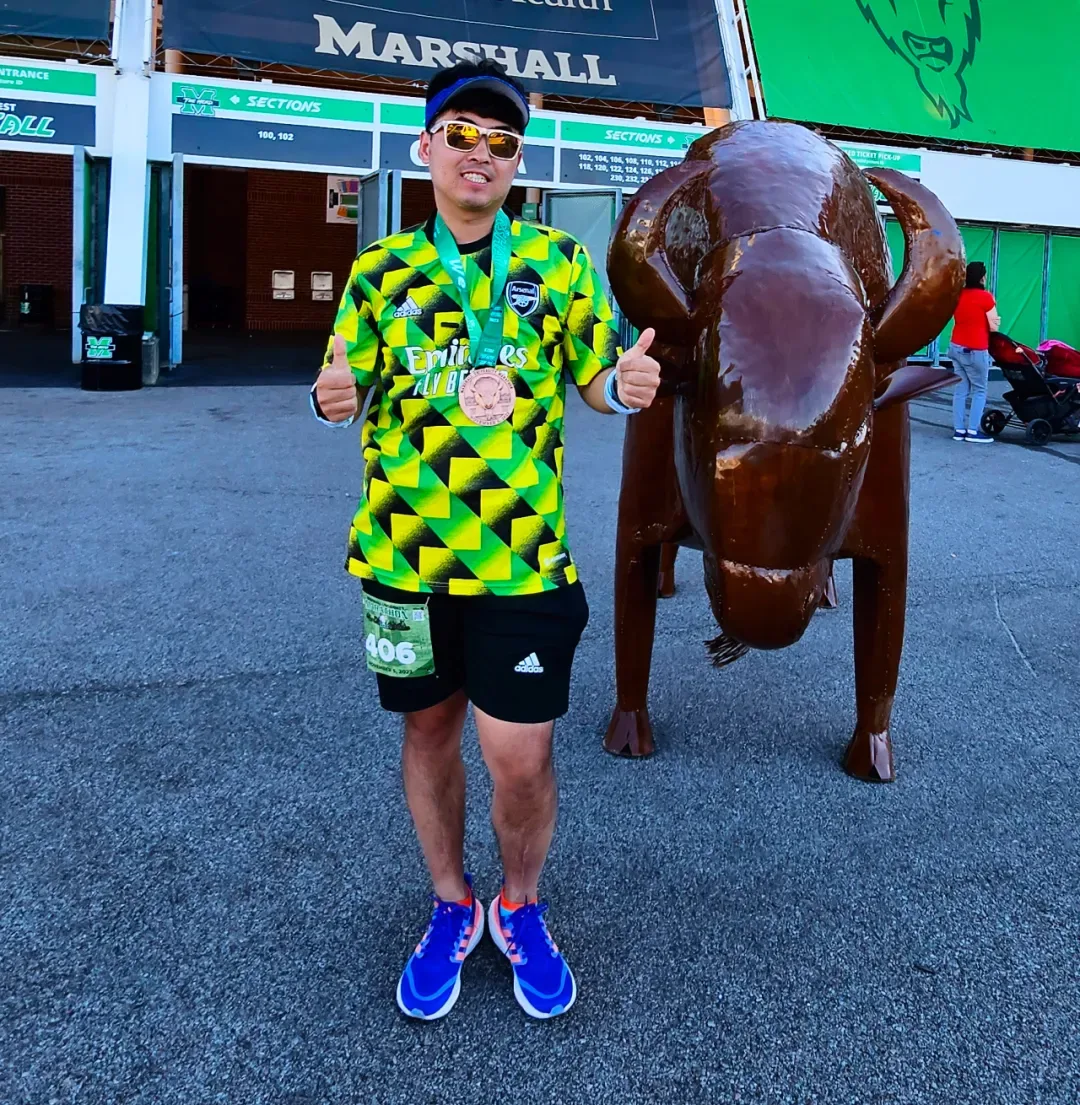
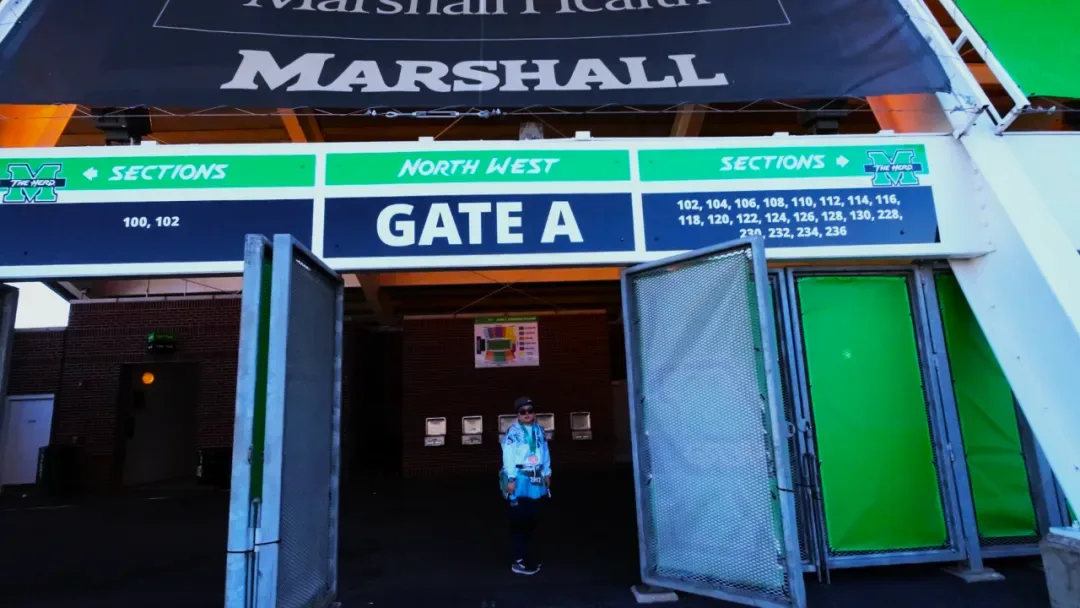
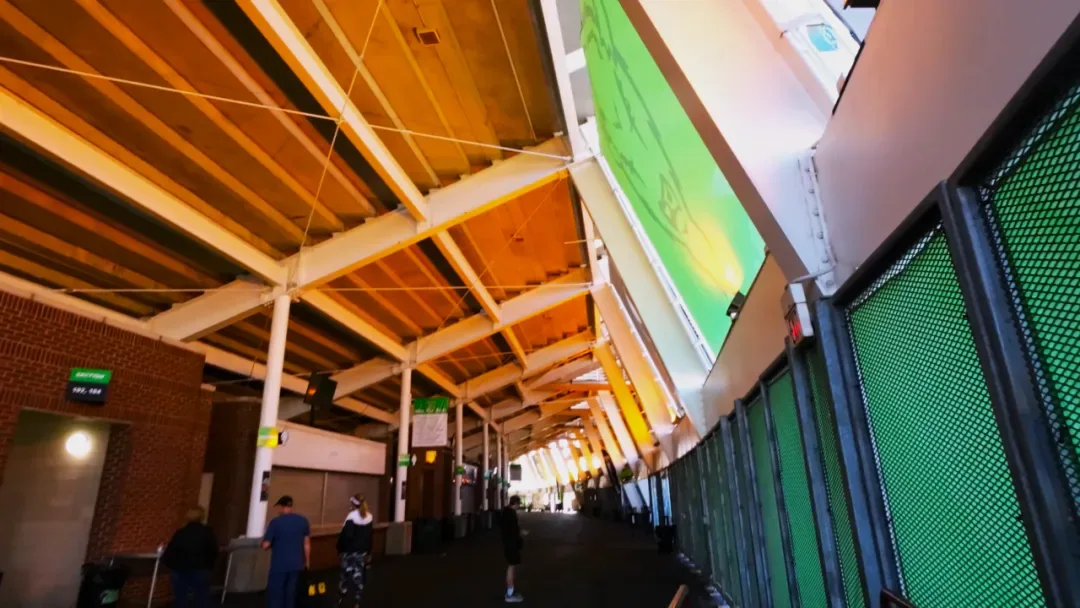
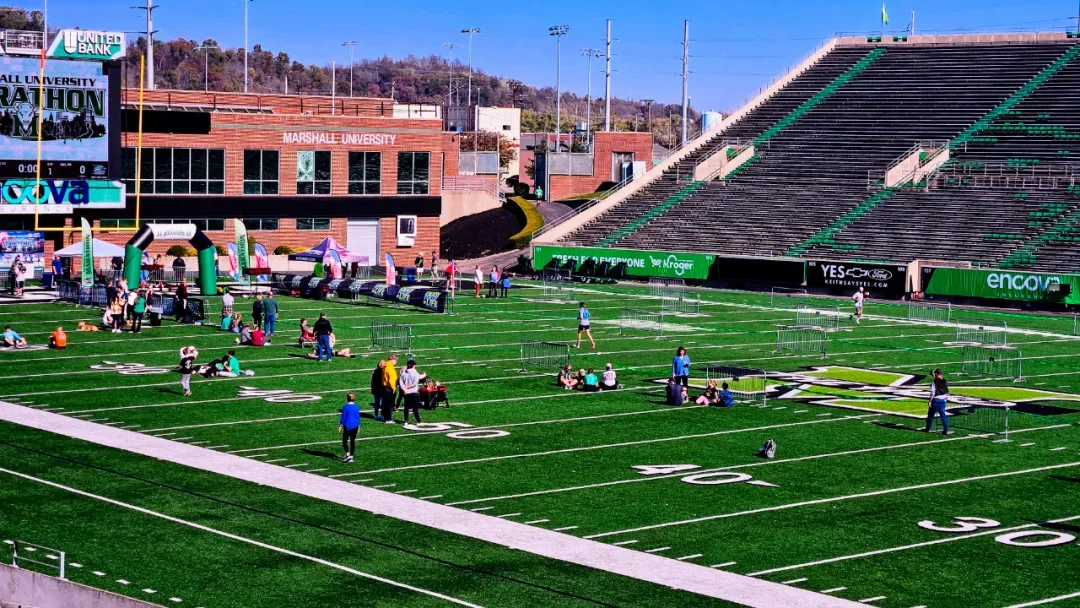
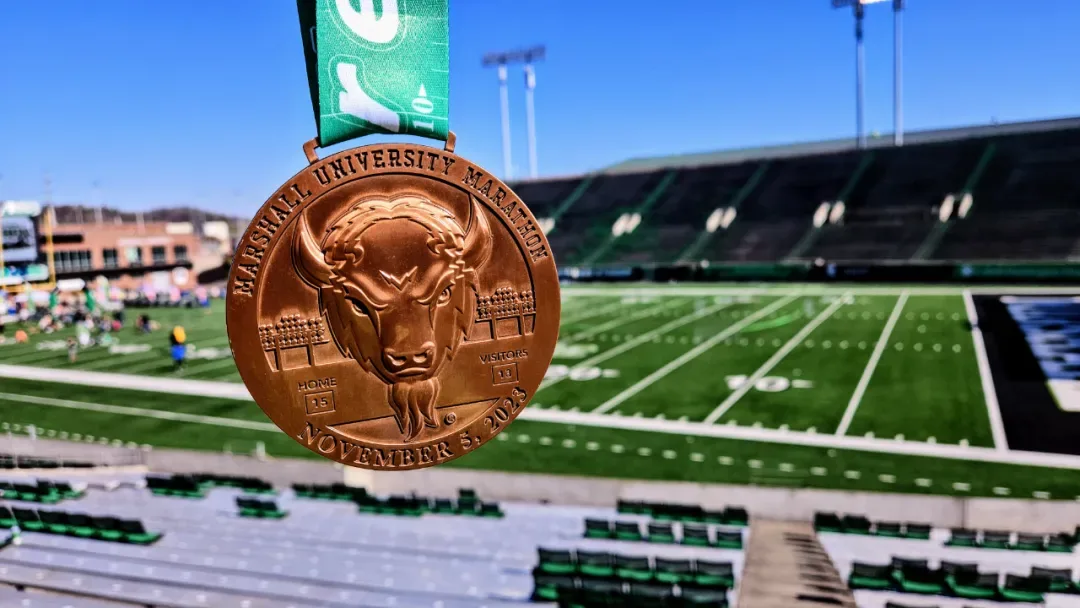
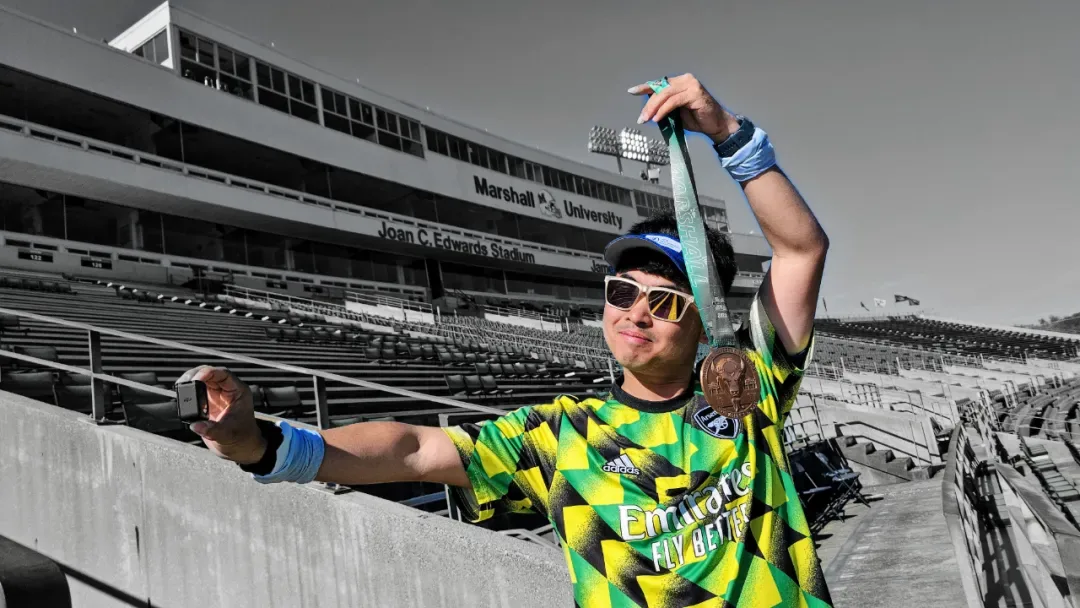
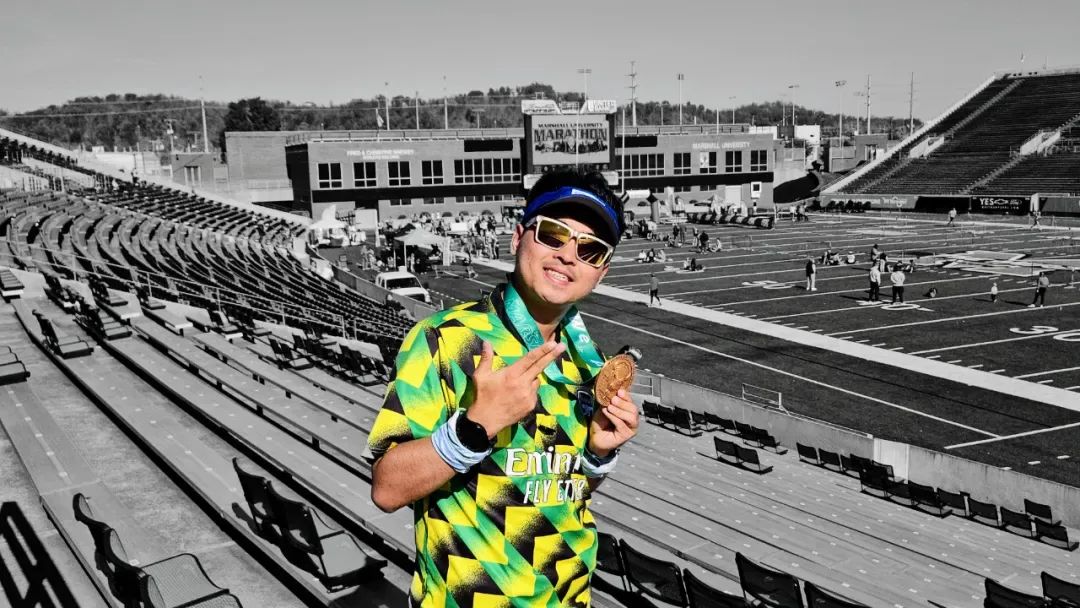
The stadium DJ's music echoed in waves, and runners were still crossing the finish line. But as our car drove away, the sounds grew fainter until everything went silent. The car drove further and further, but the impact of this marathon remained incredibly strong.
Epilogue
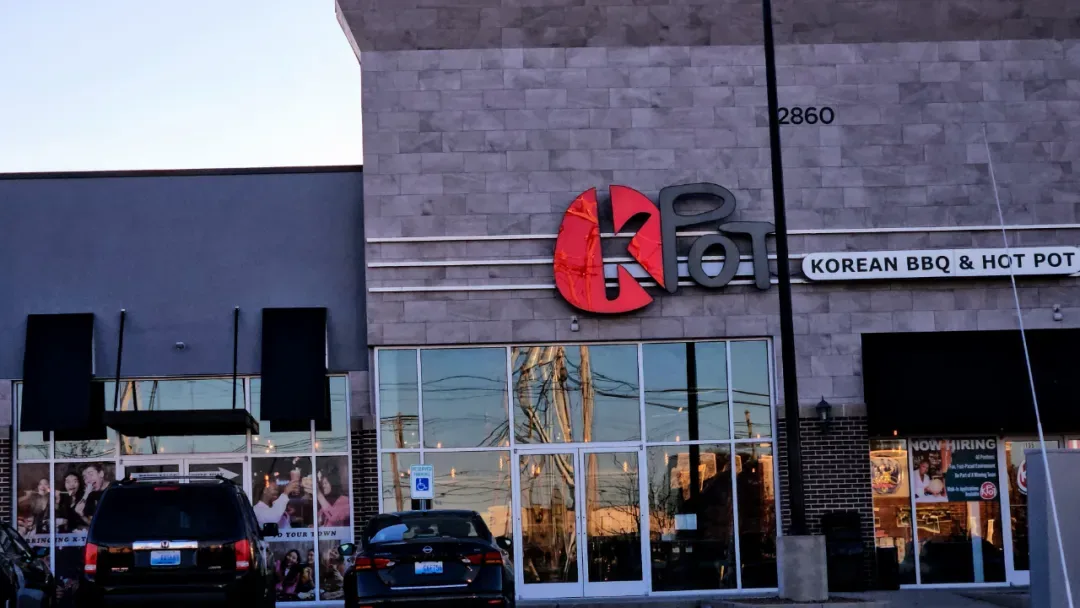
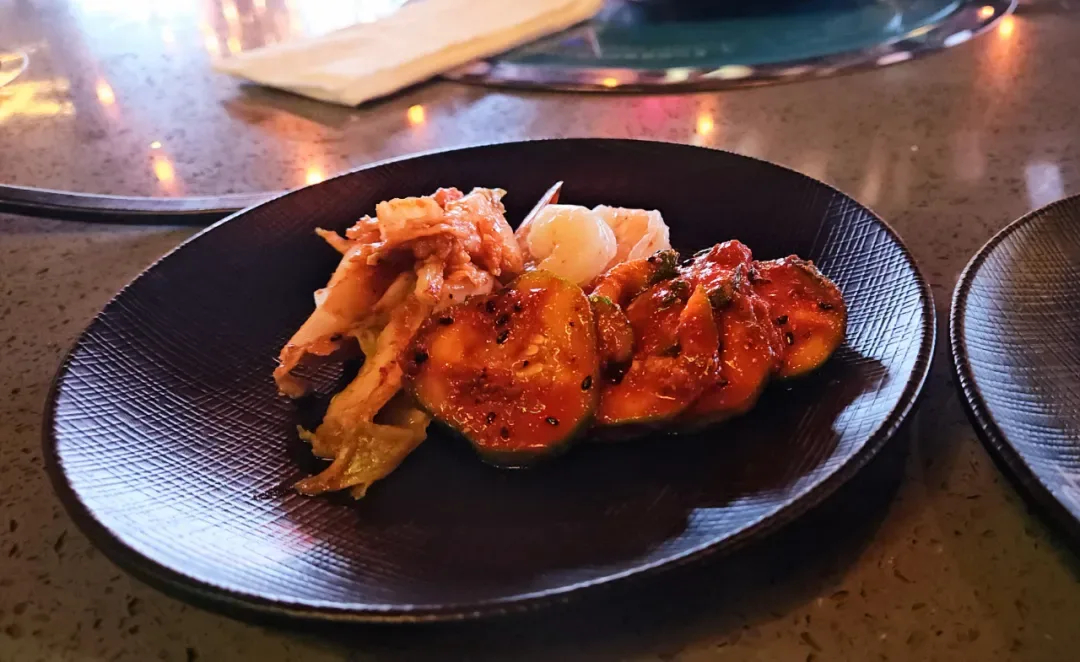
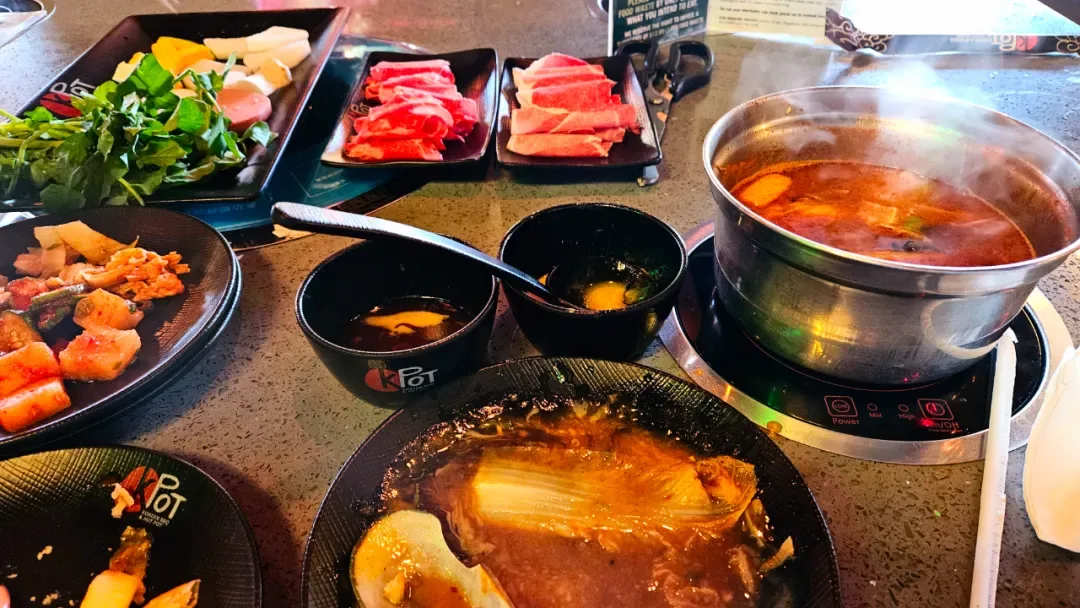
On the way back, we stopped in Lexington again. Siqi treated me to a Korean hotpot buffet at K-Pot to celebrate my sub-4 finish. The hotpot tasted great, and I heard they are planning to open a location in Louisville.
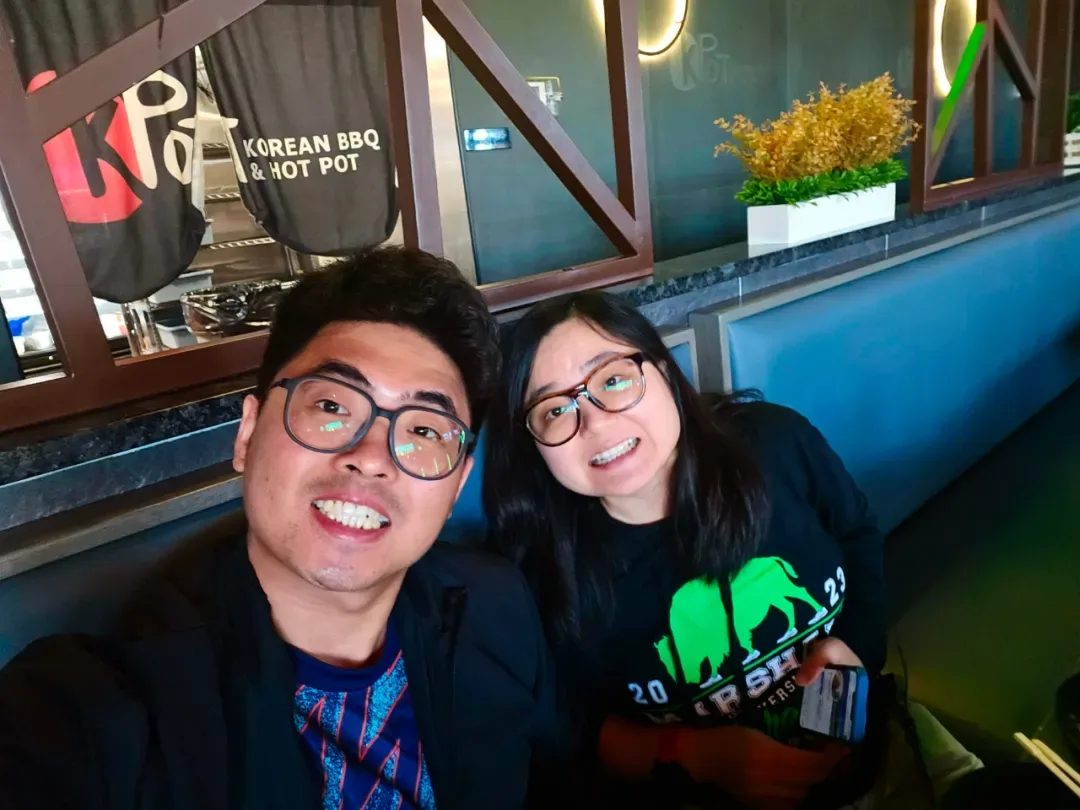
As we headed home, the evening glow painted the horizon along I-64. It was beautiful. I felt a bit proud, thinking: it had been a long time since I ran seriously, and yet with just a little effort, I broke 4 hours. It seems I am a talented and capable runner after all, and qualifying for Boston is only a matter of time. (You can get faster, or you can get older.)
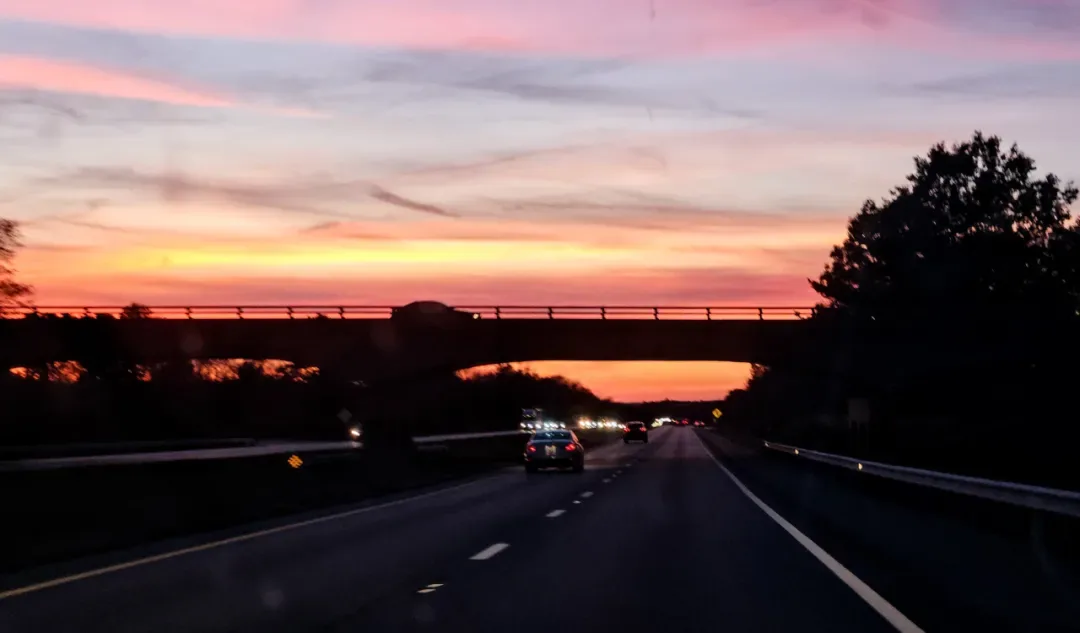
Of course, having confidence is good, but I don't want to go all out every time. Fast running has its thrill, while slow running has its own charm. This shifting rhythm is probably more interesting.
More importantly, I want to stay healthy and disciplined. I don't want to get injured. Having run for so many years, I know my body better than anyone. Running is a lifelong journey, so there is no rush.
- The end -
Words | Arsenan
Photos | Arsenan
Design | Arsenan